REVIEW · ARUBA
Aruba Downtown Historic and Cultural Walking Tour
Book on Viator →Operated by Aruba Walking Tours · Bookable on Viator
Oranjestad history at walking speed. I love how this walk turns Aruba’s capital into a readable map, with stops like Fort Zoutman Historical Museum and a climb to the old clock tower for downtown views. Guides I’ve heard described on this route, like Wendell, turn monuments into stories you can picture as you walk.
What also wins me over is the pay-off: two included tastings, including the local favorite pan bati, plus time at the National Archaeological Museum. One caution: the schedule packs in a lot, so if you like to read every sign and linger inside, you might want more time than the tour allows.
In This Review
- Key things to know before you go
- Walking Oranjestad like a local, not a checklist
- The Fort Zoutman start: old fort, then skyline
- Wilhelmina Park: statues, iguanas, and tiny detours
- National Archaeological Museum Aruba: first inhabitants, real objects
- Coco Plum Restaurant and the pan bati tasting
- Oranjestad’s stories between the big sights
- Aruba Parliament: where policy meets the street
- Protestant Church and religion on the ground
- Breakfast, parties, and local neighborhoods
- How the 2.5 hours actually play out
- Price and logistics: getting value from the $45
- Meeting point and how to show up ready
- Who should book this walking tour
- Who might want to choose something else
- Should you book Aruba Downtown Historic and Cultural Walking Tour?
- FAQ
- How long is the Aruba Downtown Historic and Cultural Walking Tour?
- What is the price for the tour?
- What’s included in the tour besides the guide?
- Where do I meet for the tour?
- Is the tour mainly walking, and is it comfortable for hot weather?
- How big are the groups?
- Do cruise passengers have special booking rules?
Key things to know before you go
- Fort Zoutman clock tower views: you get the downtown panorama after touring the old fort museum.
- Aruba’s first inhabitants, up close: museum time focused on pottery, skulls, and tools.
- Two tastings included: you’re not just learning, you’re eating local at least twice.
- About 30 stops: lots of short segments means quick hits—great for orientation, less so for deep study.
- Small groups (max 20): easier pace and more chance to ask questions.
- Start time matters: the tour is designed for a morning outing, and you’re advised to eat breakfast first.
Walking Oranjestad like a local, not a checklist
This is the kind of tour that helps you get your bearings fast in Aruba’s capital. You’ll walk through the center of Oranjestad while a local guide explains what you’re seeing—then points you to where it makes sense to go back later on your own time. With a max group size of 20 and a multilingual guide, it usually feels personal without feeling slow.
The real value is the mix of big landmarks and street-level details. You’re not only hitting museums; you’re also seeing how daily life, architecture, and even politics show up right there on the streets.
The Fort Zoutman start: old fort, then skyline
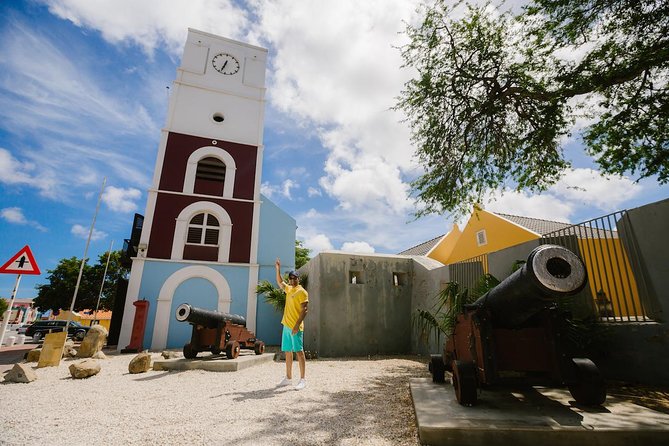
Most downtown tours begin with buildings you look at from the outside. This one starts with a proper stop: Fort Zoutman Historical Museum (when open). Inside, you learn about Aruba’s old fort—built in the 1700s—which gives you a stronger sense of why Oranjestad looks the way it does today.
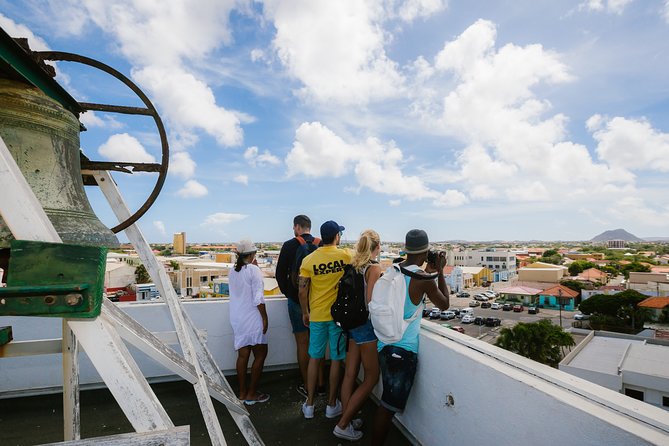
Then there’s the clock-tower moment. If the museum is open, you also climb the old clock tower (from the 1800s) for an amazing view over downtown. It’s a quick payoff, but it changes how you see the rest of the walk because you understand the layout.
Practical note: museum hours matter. The tour includes admission at museum stops when open, but you’ll still want to show up ready to roll, even if something is closed that day.
Wilhelmina Park: statues, iguanas, and tiny detours
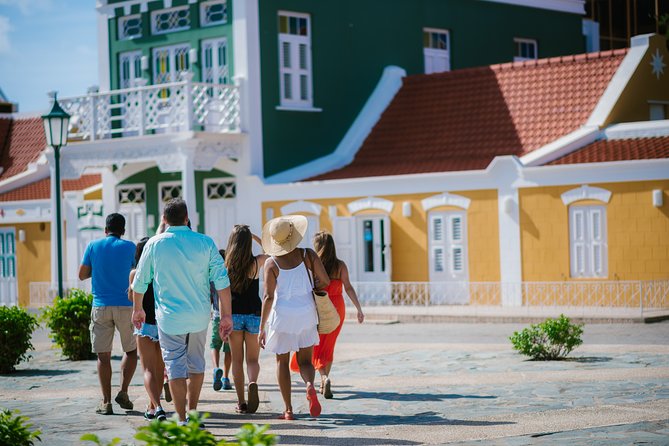
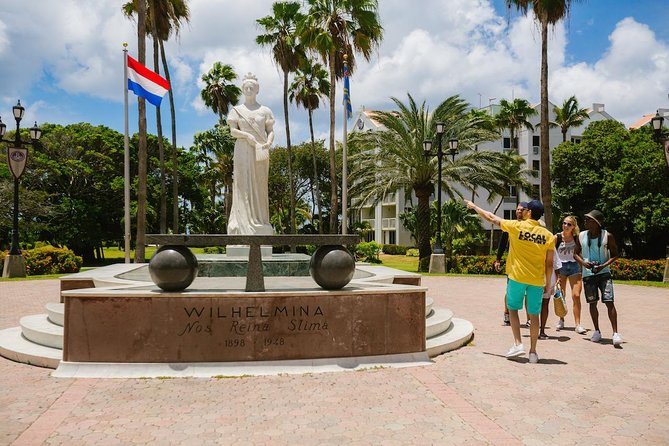
After Fort Zoutman, the tour shifts to a park stop—Wilhelmina Park—which keeps things light and scenic. You learn about the park’s two impressive statues, and you’ll likely spot a lot of iguanas around the area.
This is one of those stops that’s easy to overlook if you’re wandering on your own. With a guide, the park stops being just a place to take a photo and becomes a clue about Aruba’s public spaces and local storytelling.
National Archaeological Museum Aruba: first inhabitants, real objects
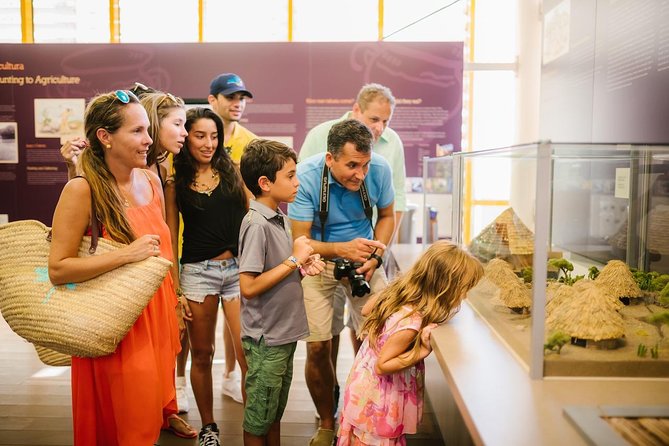
Next up is the National Archaeological Museum Aruba, focused on the island’s earliest people. When the museum is open, you’ll visit inside and look at items tied to Aruba’s first inhabitants—pottery, skulls, and tools used in early days.
The outside setting is also photogenic, so you’ll get the classic postcard angle. Still, be prepared for this to be a short stop. The tour structure is built around lots of quick segments, so you’ll learn a lot, but you won’t get hours to sit with every exhibit.
If you’re the type who likes to study captions for a long time, I’d suggest you do two things: (1) take photos of anything that interests you, and (2) plan to return later if you want deeper reading.
Coco Plum Restaurant and the pan bati tasting
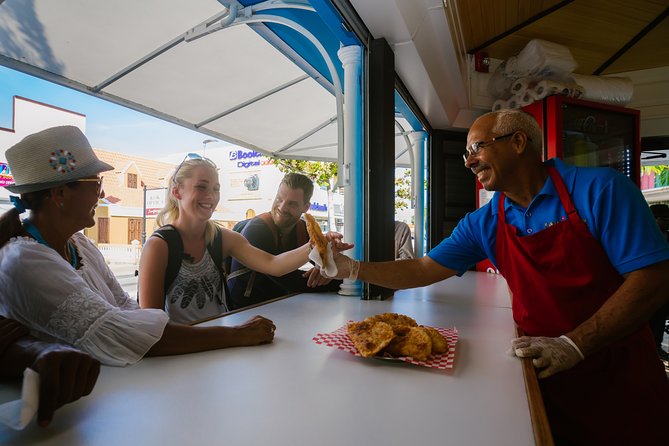
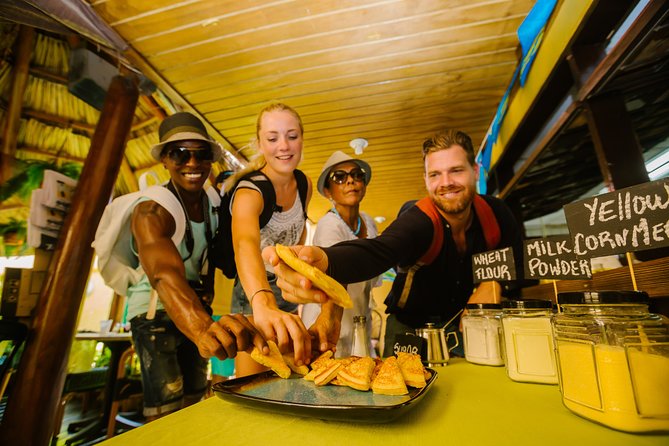
Food stops can feel random on tours. This one uses food to teach culture. You’ll visit Coco Plum Restaurant and learn and taste a local snack called Pan Bati. It’s described as still very popular and widely consumed by locals, so you’re not eating something created only for tourists.
This tasting is one of the easiest parts to enjoy because it’s hands-on and quick. It also breaks up the walking rhythm, which matters in Aruba’s heat.
Oranjestad’s stories between the big sights
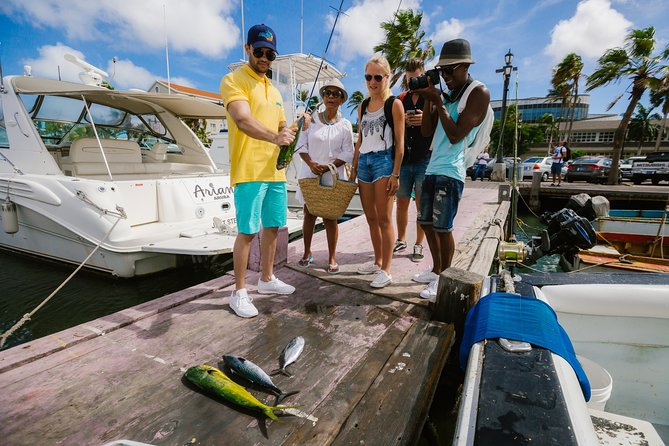
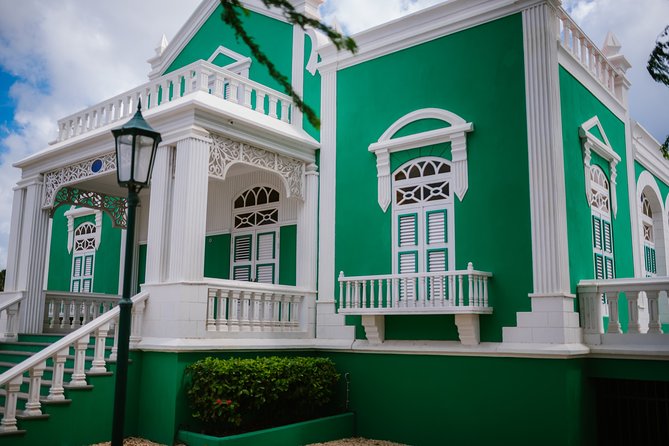
After the museum-and-food rhythm, the tour starts weaving in street history that you can’t easily spot on your own. You’ll hear a romantic story connected to one of Aruba’s iconic family mansions, built in the early 1900s. It’s the kind of detail that makes a building feel personal instead of just old.
Then you’ll spend time learning about Oranjestad’s main street—especially the commercial history. You’ll see stores that have been around since 1928 and learn how the street car or tram fits into the area. Even if you’re not taking the tram, knowing it runs through town helps you read Oranjestad as a living system, not a museum.
You’ll also pass by an early government building used for multiple purposes. Today it houses local arts and crafts by accredited locals. This is a practical stop because it points you toward legitimate makers you can seek out later without guessing.
Aruba Parliament: where policy meets the street
One of the more thought-provoking moments is a short stop at Aruba Parliament. You’ll hear about Aruba’s political system and see where local politicians debate current affairs and laws.
This is brief, but it changes your perspective. Instead of treating the island’s independence and governance as abstract, you see it attached to a physical place in the city.
If you’re hoping for a strictly neutral history lecture, keep in mind that some guides may add more political commentary than you expect. It doesn’t ruin the tour for most people, but it can shift the tone.
Protestant Church and religion on the ground
Next is a Protestant Church built in the 1800s. You’ll learn how Protestant arrived on the island and also get clarity that Protestantism is not the largest religion on Aruba. The stop is short, but it helps explain how different faiths shaped the island’s public life.
Churches are also practical for travelers. Even when you don’t share the religion, you get a visual anchor—architecture, materials, and design—that helps you understand colonial and post-colonial influences in Oranjestad.
Breakfast, parties, and local neighborhoods
Later, the tour turns more everyday. You’ll hear about what Arubans eat for breakfast and at parties, then get to taste it at Havenstraat. It’s another culture moment that feels more like you’re learning alongside someone who actually lives there.
Then you’ll walk through Wilhelminastraat, a residential street where your guide points out multiple iconic houses. This part helps you understand what “downtown” really means in Aruba—less like a single tourist strip, more like an actual neighborhood with personality.
How the 2.5 hours actually play out
The tour runs about 2 hours 30 minutes and is designed as a morning outing, starting at 9:00 am. Most stops are short—often around 10 minutes—so the walk moves. In total, you’re looking at approximately 30 stops, with a mix of quick exterior looks and a few interior visits.
That means you get a strong orientation. It also means you won’t have long, quiet time inside museums or churches. Plan to treat this as the tour that helps you choose your next moves on the island, not the tour where you read every label.
One tip that matters: you’re advised to have breakfast before you go because of the heat. That advice isn’t small. Aruba can feel intense fast, and starting with food helps your stamina.
Price and logistics: getting value from the $45
At $45 per person, this tour is priced like a guided experience that includes more than talking. You get:
- A local, multilingual guide for a long morning walk
- Included entrance fees at Fort Zoutman and the National Archaeological Museum when open
- Two tastings (including pan bati)
- Convenient pickup from selected accommodations
- A mobile ticket system
So you’re not paying only for “someone to walk with you.” You’re paying for guide interpretation plus museum access plus food. For a downtown loop that can help you plan the rest of your stay, it can feel like good value.
Also, the tour runs in all weather conditions. That’s Aruba—so bring comfortable walking shoes and dress for sun first, rain second.
Meeting point and how to show up ready
You meet at Cosecha Aruban Craft Design & Heritage, Zoutmanstraat 1, Oranjestad, Aruba. The tour ends back at the meeting point.
Because the route is mostly downtown walking and near public transportation, getting there is usually manageable. Still, I recommend arriving a few minutes early, especially if you’re not familiar with Oranjestad’s street layout.
Group size stays capped (max 20), so if you’re booking last minute, you’re not rolling the dice on an overcrowded walk.
Who should book this walking tour
This is a smart fit if you:
- Want a first-day orientation to Oranjestad
- Prefer history and culture that shows up in streets, buildings, and daily life
- Enjoy guided storytelling and want someone to point out what’s worth noticing
- Like getting one or two food moments built into your touring
It’s also a great choice for people who want structure. With so many stops, you get a plan, but you still get freedom to return later to whatever stood out.
Who might want to choose something else
If your travel style is slow and deep—long museum reading, lots of shade breaks, and long stops—this may feel like too much too fast. The schedule is built around short segments and a big number of stops.
Also, if you strongly prefer politics kept out of tours, pick based on your comfort level. Some guides’ tone can include politics and current affairs more than you expect.
Should you book Aruba Downtown Historic and Cultural Walking Tour?
Yes—if you want the best kind of “starter pack” for Oranjestad: fort + archaeology + real local food + street history in one focused morning. The $45 price makes more sense when you treat it as paid interpretation plus included entries and tastings, not just casual walking.
If you’re the kind of traveler who hates rushing, then either plan to return to museums later or consider pairing this with a slower day on your own. Either way, start early, wear good shoes, and come hungry—you’re going to get more out of the stories when your energy holds up.
FAQ
How long is the Aruba Downtown Historic and Cultural Walking Tour?
It runs about 2 hours 30 minutes.
What is the price for the tour?
The tour costs $45 per person.
What’s included in the tour besides the guide?
You get included visits to Fort Zoutman and the National Archaeological Museum when they’re open, and two tastings (including pan bati). Entrance fees at both museum stops are included when open.
Where do I meet for the tour?
The tour meets at Cosecha Aruban Craft Design & Heritage, Zoutmanstraat 1, Oranjestad, Aruba.
Is the tour mainly walking, and is it comfortable for hot weather?
Yes, it’s a walking tour. You’re advised to wear comfortable walking shoes and to have breakfast beforehand because of the heat.
How big are the groups?
The tour has a maximum of 20 travelers.
Do cruise passengers have special booking rules?
Yes. Carnival Cruise Lines, Holland America, Princess Cruises, and P&O Cruises passengers need to book through the ship’s website or onboard. Other cruise lines require ship name, docking time, disembarkation time, and re-boarding time at booking.