REVIEW · HIROSHIMA
Hiroshima Peace (Heiwa) Walking Tour at World Heritage Sites
Book on Viator →Operated by MagicalTrip Inc. · Bookable on Viator
Hiroshima hits you fast. This Hiroshima Peace (Heiwa) Walking Tour is a focused 5-hour route through world-recognized sites tied to August 6, 1945—and the city’s recovery afterward.
I love how the day mixes serious museum learning with moments that help you see Hiroshima now, not just then. A lot of people end up talking about guides like Yuji and Etsko, who bring human stories to the facts.
One thing to keep in mind: the Peace Memorial Museum can feel crowded, and if timing lines up badly you may not see every exhibit in as much detail as you want.
In This Review
- Key things to know before you go
- Enter Hiroshima Peace Park the right way
- Price and what you truly get (for $94.84)
- Meeting point and the “walkable, not stressful” pace
- Stop-by-stop: what you’ll experience and what to watch for
- Hiroshima Peace Memorial Museum: facts, artifacts, and hard context
- Peace City Monument Cenotaph and the Children’s Peace Monument
- Atomic Bomb Dome: a world-famous ruin with a purpose
- Orizuru Tower observatory: modern Hiroshima from above
- Aogiri Tree: a living symbol, not just a photo
- Lunch, food rules, and how to plan
- Small-group size: the real advantage
- Weather and timing: don’t let discomfort steal the day
- Who this tour is best for
- Should you book this Hiroshima Peace (Heiwa) Walking Tour?
- FAQ
- How long is the Hiroshima Peace (Heiwa) Walking Tour?
- What is the price per person?
- Is museum and tower admission included?
- Is lunch included?
- How many people are in the group?
- Where does the tour start and end?
- Is the tour suitable for people with mobility issues?
- Can you request gluten-free meals or guaranteed allergy-free food?
- What should I know about weather and walking comfort?
Key things to know before you go
- Max 8 travelers keeps the tour feeling personal, not like a stampede.
- Peace Memorial Museum + Orizuru Tower admission are included, so you’re not juggling tickets.
- Lunch with your guide happens partway through, giving you a built-in reset.
- Aogiri Tree + Atomic Bomb Dome add context beyond plaques and photos.
- Expect graphic imagery in some exhibits, so plan for that emotionally.
Enter Hiroshima Peace Park the right way
Start your walk at Hiroshima Peace Memorial Park, where the whole area is designed for reflection before you ever reach the museum. Even if you’ve seen pictures online, standing inside this park changes the tone. There’s a rhythm to it: you learn, you notice, then you move—slowly—toward specific sites that each carry a different piece of memory.
The format works for most people because you’re not wandering alone with a phone map. You’re following a guide who can explain what you’re seeing in plain language and connect the dots between the bombing, the aftermath, and the long rebuilding effort. That matters here, because it’s easy to get lost in names, dates, and artifacts. On this tour, you get a structure.
You can also read our reviews of more walking tours in Hiroshima
Price and what you truly get (for $94.84)
At about $94.84 per person, you’re paying for three big things: guided interpretation, museum/observation access, and a scheduled meal.
Included in the price:
- Hiroshima Peace Memorial Museum entrance
- Orizuru Tower entrance
- Lunch
- A certified MagicalTrip guide
- Tour photos
Not included:
- Any extra food and drinks you want beyond the included lunch
Is it worth it? For me, the best value is the time saved and the context you gain. You’re covering multiple high-impact stops in about 5 hours, with a guide trained to keep the experience respectful and clear. If you were doing this on your own, you’d still spend time figuring out the route, where to pause, and what matters most. This tour removes that friction and lets you focus on the places.
Meeting point and the “walkable, not stressful” pace
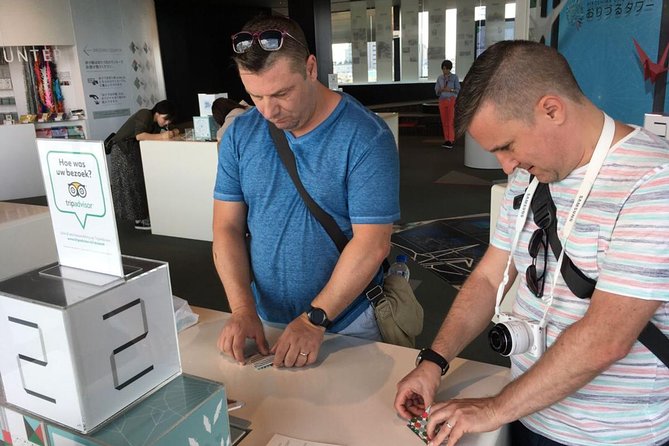
You meet at Montbell Japan in Hiroshima (Kamiyachō). This is convenient because it’s near public transport, and you start the day already in the right neighborhood. The tour also ends near your lunch area and continues toward the area of Chishaku-in Temple.
The walk is described as manageable for most visitors, but it’s not recommended for mobility issues. If walking long distances or standing for museum time is hard for you, a private tour is the safer bet.
Stop-by-stop: what you’ll experience and what to watch for
Hiroshima Peace Memorial Museum: facts, artifacts, and hard context
The day’s centerpiece is the Hiroshima Peace Memorial Museum, right in the Peace Memorial Park area. The museum experience isn’t light. You’ll learn about the atomic bombing and then, just as importantly, how Hiroshima’s residents coped and rebuilt their lives afterward.
A key detail: some exhibits include graphic imagery, which can be disturbing, especially for children. If that’s an issue for your group, tell your guide ahead of time so they can help you pace the visit and choose where you need to spend more or less time.
In real life, this museum can get crowded. One downside that shows up in feedback is that crowd levels can affect how much of the museum you can see—especially if you want to linger at the main exhibits. My advice: go in expecting a guided highlight-style visit, not an unlimited browse. If you feel you must see everything with full calm attention, plan an extra independent visit later.
You can also read our reviews of more historical tours in Hiroshima
Peace City Monument Cenotaph and the Children’s Peace Monument
After museum time, the tour moves through the memorial grounds with shorter stops that carry big emotional weight.
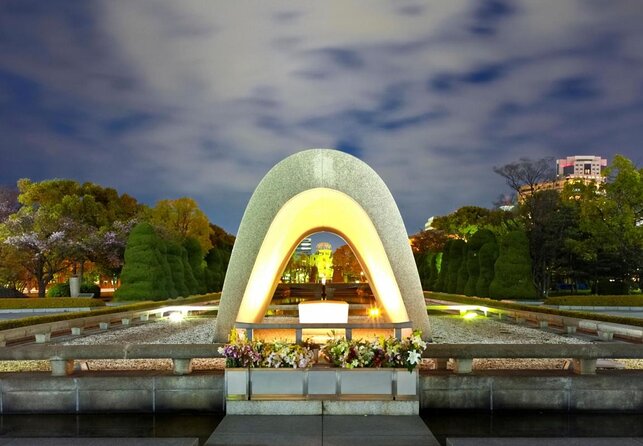
You’ll visit the Cenotaph for the Atomic Bomb Victims, which centers remembrance for those who were lost. Then you’ll see the Children’s Peace Monument and get an explanation of what it means in Hiroshima’s peace message.
These segments work well because you’re not just being shown a view. You get the purpose behind it, so the memorial language makes sense. It’s the difference between reading a sign and understanding why the site was created.
Atomic Bomb Dome: a world-famous ruin with a purpose
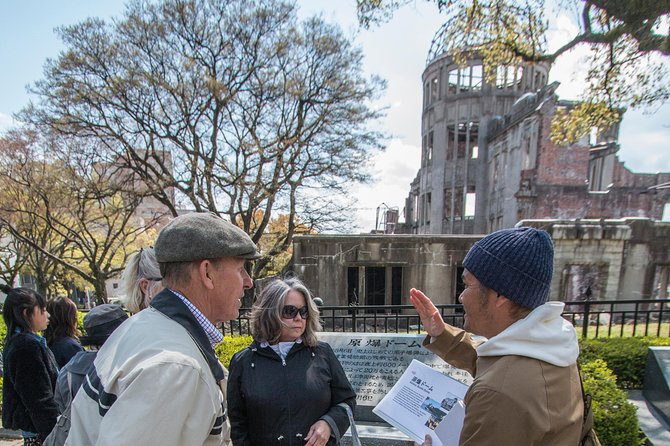
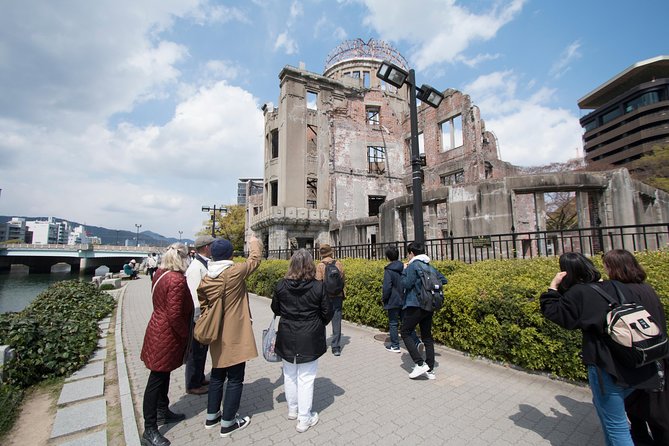
Next comes the Atomic Bomb Dome. You’ll see the structure as a symbol of survival and peace, tied directly to the bombing event on August 6, 1945.
The best way to experience it is to give it a few minutes of real attention. Even if you’ve seen the dome in postcards, viewing it in person changes your sense of scale. It also makes the museum lessons feel concrete—this isn’t just information on panels; it’s a physical reminder that history happened here.
If your group is prone to rushing, your guide should help slow things down. The ideal pace is: quick orientation, then a short pause where you just look.
Orizuru Tower observatory: modern Hiroshima from above
After the heavy stops, the tour adds contrast at Orizuru Tower. You’ll head up to the observatory for a panoramic view of modern Hiroshima, and you’ll also have lunch at the top.
This is a smart move in the itinerary. A view from above does two things:
- It helps you visualize where the city grew after the tragedy.
- It gives your brain a break from absorbing details for a while.
The lunch is included, and it’s part of why this tour feels like a complete package instead of a nonstop march. The tour also notes that you can purchase additional food and drinks if you want more.
Aogiri Tree: a living symbol, not just a photo
One of the more memorable add-ons in the tour description is a walk to see the Aogiri tree. It’s one of those places that makes the story feel personal in a different way. Instead of focusing only on buildings and exhibits, you’re seeing a living part of the landscape that people interpret as a sign of survival.
For many people, this becomes a quiet emotional moment: you stop, look, and realize the city’s recovery isn’t only historical. It’s visible.
Lunch, food rules, and how to plan
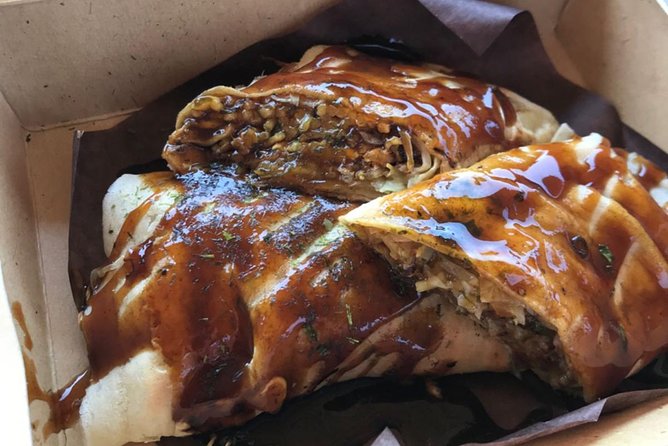
Lunch is included, but food specifics come with some practical limits. The tour operator notes that gluten-free requests can’t be accommodated. It also says they can’t guarantee allergy-free food because the meals are prepared in kitchens not belonging to MagicalTrip, and substitutions may not be possible at every stop.
Vegetarian options are described as limited because many Japanese restaurants aren’t set up for vegetarian menus. Still, at least one review mentions a vegetarian-friendly situation with two vegan choices, so it can work depending on timing and the restaurant.
What you should do:
- If you need to avoid certain ingredients, inform the operator at least one day before the tour.
- If you have serious allergies, treat the lunch as a best-effort meal, not a risk-free one.
Small-group size: the real advantage
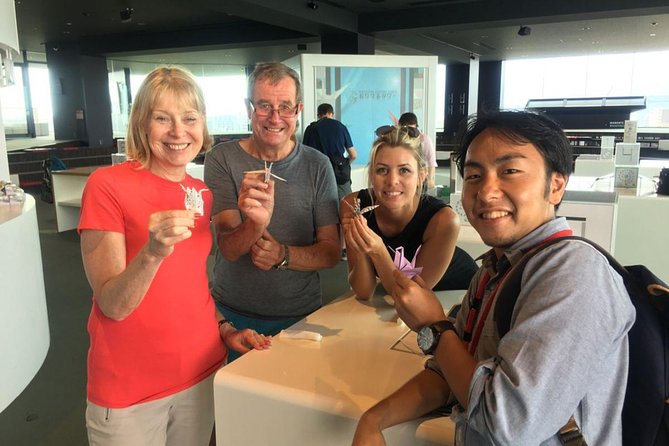
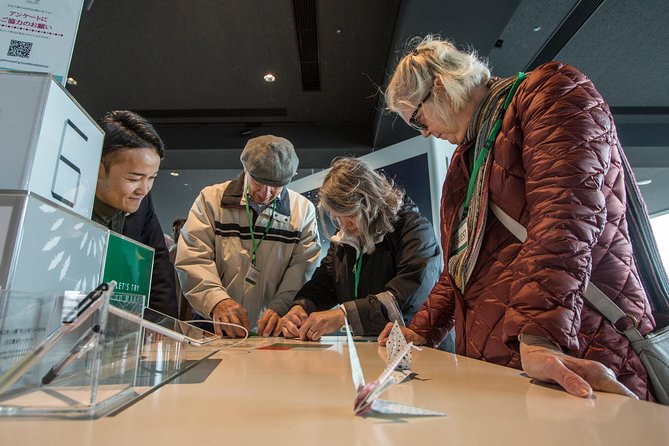
This is one of those tours where group size changes the whole feel. With a maximum of 8 travelers, you’re more likely to get answers to your questions and less likely to feel swallowed by the crowd.
That matters in Hiroshima. The topics here require patience. When a group is small, your guide can adjust the pace, explain in a way that fits the moment, and keep the mood respectful without turning it into a lecture.
You may also get tour photos included. People often appreciate this because you’re not scrambling to ask strangers to take pictures while you’re trying to look at the sites with focus.
Weather and timing: don’t let discomfort steal the day
The tour notes that it requires good weather. Hiroshima’s summers can be extremely hot and humid, with temperatures reaching up to 40°C (110°F), and winters can dip to around -5°C (20°F). That means:
- Bring water
- Wear a hat in warm months
- Dress for heat or cold rather than assuming the weather will be mild
This is also a long walk that includes museum time. If you’re the type who gets cranky when you’re overheated, plan accordingly. The day already carries emotional weight; you don’t want physical discomfort to add to it.
Who this tour is best for
This tour is a strong fit if you want:
- A guided, structured way to visit the most important Hiroshima Peace sites in one go
- A mix of memorial sites and a city-view moment
- A local perspective delivered by a MagicalTrip Certified Guide
It’s especially good for first-timers who don’t want to piece together logistics while dealing with a powerful historical story.
It may not be the best match if:
- Walking and standing are difficult for you (the tour is not recommended for mobility issues)
- You need guaranteed gluten-free or allergy-free meals
- Your group includes young kids who may struggle with graphic imagery
Should you book this Hiroshima Peace (Heiwa) Walking Tour?
If you want a meaningful Hiroshima experience with guided context, I’d book it—especially for the way it combines Peace Park learning, memorial stops, the Atomic Bomb Dome, and then the Orizuru Tower lunch/view to rebalance the day.
Skip it or plan a different format if you’re tightly focused on seeing every single museum exhibit at a slow pace, because crowding can affect how much you can absorb in one visit. And if dietary needs are strict, double-check the tour’s limits and give notice early.
Overall, this is the kind of tour that turns “I’ve seen pictures” into “I understand what I’m looking at,” without turning the day into a rushed checklist.
FAQ
How long is the Hiroshima Peace (Heiwa) Walking Tour?
The tour runs for about 5 hours (approximately).
What is the price per person?
The price is listed as $94.84 per person.
Is museum and tower admission included?
Yes. Entrance fees for the Peace Memorial Museum and Orizuru Tower are included.
Is lunch included?
Yes. Lunch is included, and it’s served as part of the experience at Orizuru Tower.
How many people are in the group?
The tour has a maximum of 8 travelers.
Where does the tour start and end?
It starts at Montbell Japan in Kamiyachō, Hiroshima. It ends near the lunch restaurant area and finishes near Chishaku-in Temple (also noted with a nearby souvenir location at Otemachi).
Is the tour suitable for people with mobility issues?
It is not recommended for individuals with mobility issues. If walking is difficult, you’re advised to book a private tour.
Can you request gluten-free meals or guaranteed allergy-free food?
Gluten-free requests cannot be accommodated. Allergy-free food can’t be guaranteed because meals are prepared in kitchens not belonging to MagicalTrip.
What should I know about weather and walking comfort?
The tour requires good weather. Hiroshima can be very hot and humid in summer, so bring water and a hat, and dress for changing temperatures.