REVIEW · HIROSHIMA
Hiroshima Walking Tour Why A Bomb was dropped to Hiroshima
Book on Viator →Operated by Localized Walking & Food Tours · Bookable on Viator
Hiroshima hits you in the streets, fast. This 2.5-hour walking tour connects the city’s landmarks to the real story of Aug 6, 1945, with guided context you won’t get from a solo stroll. You cover both the serious memorial sites and the parts of Hiroshima that show it kept living after the blast.
I love the small-group size. It keeps the pace human and makes it easy to ask questions. I also love that the walk mixes places tied to Hiroshima before and after the bombing, so the history feels like a timeline instead of a single moment.
One possible drawback: the tour covers the lead-up and aftermath as well as the memorial area. If you want only the Hiroshima-bombing story with zero broader background, you may wish for even more Hiroshima-only detail.
What makes this tour worth your time
- Small group (around a dozen): enough conversation time without feeling crowded.
- Tour guide-led history: you get the why, not just the what you see at memorials.
- A practical route: mostly flat walking with close-together stops and plenty of photo chances.
- The “before and after” mix: shrine and castle sit alongside Atomic Bomb Dome and Peace Park.
- Modern Hiroshima shows up too: you’ll pass by newer sights like Orizuru Tower and Hiroshima Green Arena.
In This Review
- First steps: the tone-setting start at Hiroshima Gokoku Shrine
- Hiroshima Castle outside: why the city’s layers matter
- Hiroshima Green Arena: seeing the city keep functioning
- Orizuru Tower by Peace Park: a modern punctuation mark
- Atomic Bomb Dome: the photo stop that needs slower attention
- Children’s Peace Monument: why you should look at the details
- Hiroshima Victims Memorial Cenotaph: the stop with the longest silence
- Peace Memorial Museum right after: what the “end point” sets you up for
- Price and value: what $28 buys you in real terms
- How the pacing works (and why it helps you absorb the heavy parts)
- Who should book this tour—and who might want a different one
- Should you book Hiroshima’s bombing explanation walking tour?
- FAQ
- How long is the Hiroshima walking tour?
- How much does the tour cost?
- Where does the tour start and where does it end?
- What’s included in the price?
- Is bottled water included?
- Can I get a free cancellation refund?
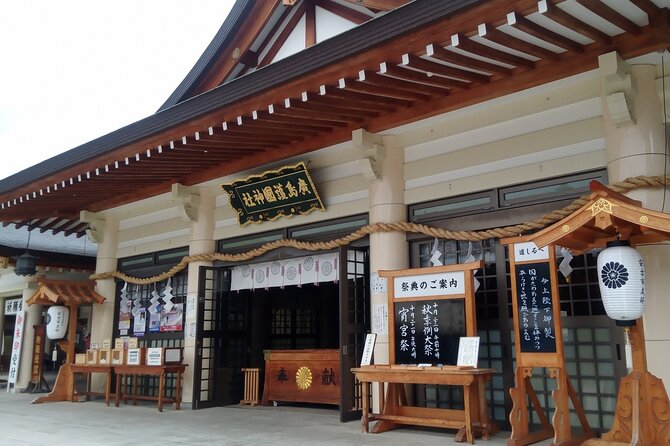
First steps: the tone-setting start at Hiroshima Gokoku Shrine
The meeting point is Hiroshima Gokoku Shrine, at 21-2 Motomachi in Naka Ward. That choice matters. You begin with a calm, traditional atmosphere before the tour moves into the heaviest parts of the city’s WWII story.
This opening sets you up to pay attention. Instead of jumping straight to the memorial area, you start by seeing Hiroshima as a place with spiritual roots and everyday meaning. It also gives your guide a chance to frame the walk: how Hiroshima’s identity and the events around the war connect to what happened on Aug 6, 1945.
The shrine stop is short, about 20 minutes, and admission is listed as free. In other words, it’s enough time to look around and get your bearings, not so long that you feel stuck before you even reach the big sites.
Hiroshima Castle outside: why the city’s layers matter
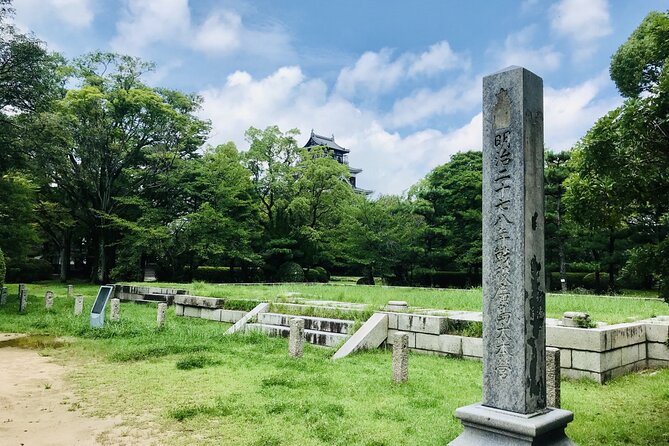
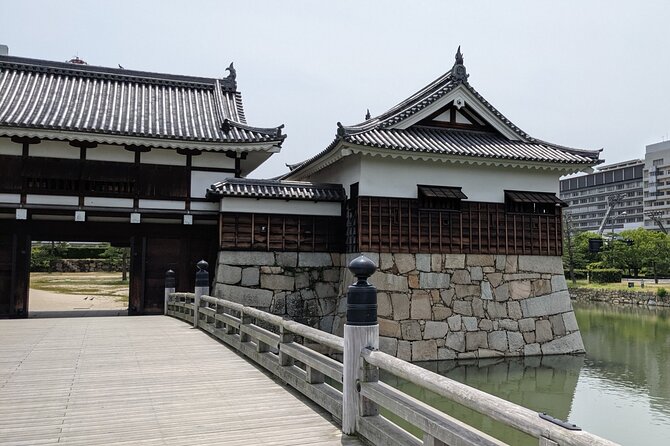
Next up is Hiroshima Castle, also called Carp Castle. The timing is about 20 minutes, and admission is free for the stop itself.
A key detail: this is a tour stop focused on the castle grounds, not an in-depth interior visit. That works well for this kind of walking tour. You’re not losing time to ticket lines or long museum-style rooms. You get a strong visual anchor—Hiroshima’s older power and architecture—before the route moves into the WWII era and its consequences.
What I like about including Hiroshima Castle is what it signals: Hiroshima isn’t only a memorial site. It had a prewar story, symbols of governance, and a built environment with meaning long before the blast. When the tour later reaches the Atomic Bomb Dome and the Peace Memorial Park, the contrast lands harder—in a good way.
You can also read our reviews of more walking tours in Hiroshima
Hiroshima Green Arena: seeing the city keep functioning
Then you head to Hiroshima Green Arena (Hiroshima Prefectural Sports Center). Expect this to be a simple, quick stop—about 30 minutes—with admission listed as free.
This is one of those choices that can feel odd on paper: a sports facility on a WWII-focused tour. But in practice, it helps you understand something real about Hiroshima. After 1945, the city did not freeze in time. It rebuilt, it raised new structures, and life kept going.
So even if you only glance at the building from the outside, the stop serves a purpose: it’s a reminder that Hiroshima’s story includes both devastation and recovery. Your guide can use the transition to explain how the city’s path after the war shaped what stands there today.
Orizuru Tower by Peace Park: a modern punctuation mark
As you approach the Peace Memorial area, you stop at Orizuru Tower, located right by Hiroshima Peace Memorial Park. It’s a modern feature of the skyline, opened in 2016 and described as a distinctive 13-story building.
This stop is useful because it bridges two worlds: contemporary Hiroshima right next to the site of unimaginable tragedy. Orizuru Tower also acts like a visual handoff. You’re walking toward memorial spaces, and this modern building helps you notice the contrast in scale, style, and purpose—without the route abruptly changing from “city sightseeing” to “only memorial.”
Even if you don’t spend a long time here, the location matters. The Peace Park area is where the emotional weight peaks, and Orizuru Tower helps you arrive with a clearer sense of how the city physically restructured around what happened.
Atomic Bomb Dome: the photo stop that needs slower attention
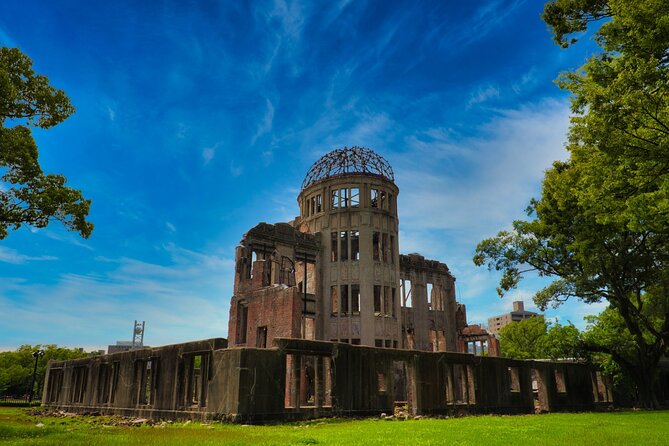
The Atomic Bomb Dome is next, and the time on it is about 20 minutes. Admission is listed as free.
This is the stop that most people recognize, and that can be a trap. It’s tempting to snap photos and move on fast. A guided walk helps because you’re encouraged to look longer than your instincts want to. The dome is described as the former Hiroshima Prefectural Industrial Promotion Hall and sits near the blast epicenter, so it’s not a generic landmark. It’s a surviving structure tied to the blast’s immediate reality.
The best part of having a guide here is the framing. You’ll hear the story connected to the site, not just a name and location. And because the tour is designed with short stops and time for questions, you can pause, ask, and keep your own pace—rather than feeling rushed by a big-group “line up and go” rhythm.
If you’re bringing a camera, this is your moment. The walk includes multiple photo opportunities, and this one is the main reason many people keep a little extra time in their day. Just don’t treat it like a checklist item.
Children’s Peace Monument: why you should look at the details
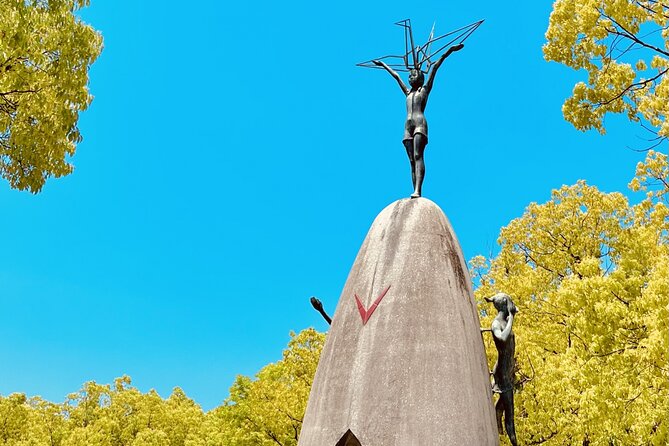
Inside the Peace Memorial Park area, you’ll see the Children’s Peace Monument. The stop here is about 10 minutes, admission free.
This monument commemorates Sadako Sasaki and the child victims of the atomic bombing. Even if you only spend those ten minutes standing there, it’s worth slowing down. The emotional power comes from the way the memorial is designed to be personal, not abstract.
A good guide makes this part easier to hold. The explanations help you connect the monument to the wider message the city carries today: peace and reconciliation, not forgetfulness.
If you’re the type who usually rushes through plaques, try the opposite here. Read the key parts, look around, and let the place do its job.
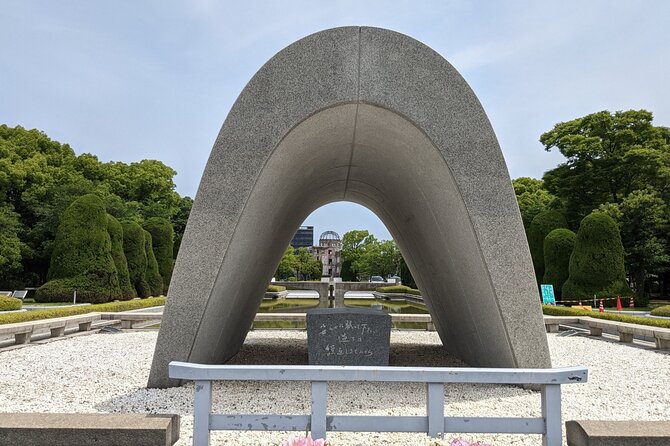
Hiroshima Victims Memorial Cenotaph: the stop with the longest silence
Next comes the Hiroshima Victims Memorial Cenotaph, with about 30 minutes set aside. It’s also in Peace Memorial Park, and admission is free.
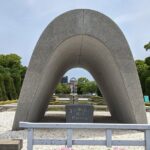
This is one of those locations where the surrounding space shapes your mood. The cenotaph is dedicated to the victims of the atomic bomb dropped on Hiroshima on Aug 6, 1945, and it’s near the epicenter.
What I appreciate about giving this stop more time is that it creates room for a different kind of attention. Instead of being a quick pause, it becomes a moment to absorb everything you’ve heard so far on the walk—why the bomb happened, what Hiroshima endured, and what the city chose to do afterward.
If you want the walk to feel meaningful rather than just informative, this is where it clicks. The schedule supports it, too: you’re not sprinting from site to site at the end.
Peace Memorial Museum right after: what the “end point” sets you up for
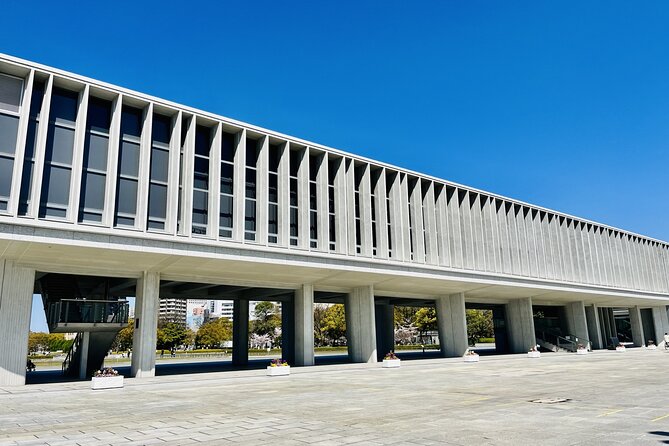
The tour ends in front of the Peace Memorial Museum. The key point is that the route funnels you there after you’ve already built the context around the memorial spaces.
Even if you don’t plan to go into the museum immediately, having the tour end here makes your next move simpler. You’ll already understand how the museum fits into the same story you just walked through—from the blast’s impact to Hiroshima’s commitment to peace.
If you do go inside, consider doing it while the walk’s themes are fresh. You’ll likely get more out of the exhibits when you’ve already seen the main landmarks outside.
Price and value: what $28 buys you in real terms
At $28 per person for about 2 hours 30 minutes, this is priced like a budget-friendly guided history walk—especially because all fees and taxes are included.
The stop admissions are listed as free at each location, so you’re really paying for:
- a route that hits the key sites without wasted walking time,
- a guide who explains the lead-up and the impact, and
- a small-group format that makes questions practical.
That’s the value. Without a guide, the sites can look like strong visuals but still feel disconnected. With the guide, the route becomes a story you can follow. Multiple guides are mentioned in positive feedback (like Chihiro, Thomas, and Katya), and what shows up repeatedly is the combination of clear explanations and a humane tone.
One small practical note: bottled water isn’t included, so bring your own. And since it’s a walking tour, wear shoes you can trust for uneven sidewalks and longer stands at the Peace Park sites.
How the pacing works (and why it helps you absorb the heavy parts)
This tour is built for a steady rhythm: multiple stops that are close enough for short walks, plus time inside certain points to hear context and ask questions.
The structure supports a pattern I like for emotionally intense history:
- start with orientation,
- cover the skyline and “before” landmarks,
- transition to the Peace Park area with modern contrast,
- then finish with the memorials where you need time to think.
You’ll also notice that the tour is set up to fit within the 2.5-hour frame, with short guided segments and photo pauses rather than one long lecture.
That’s useful if you’re traveling with kids, too. At least one family found the tour’s structure kept younger attention focused while still covering WWII details.
Who should book this tour—and who might want a different one
This walk is a great match if you:
- want a guided explanation of why the bomb was dropped (not just a sightseeing loop),
- like small-group tours where questions are welcome,
- want both the memorial landmarks and a sense of Hiroshima’s life before and after 1945.
It’s also ideal if you want to focus your day. The route gives you key stops tied to Hiroshima’s WWII story and ends right where the Peace Memorial Museum begins.
A possible mismatch: if you’re hoping for a deep, Hiroshima-only historical lecture without any broader background, you might feel it spends some time on the wider setting. A balanced tour needs context, but not everyone wants that extra layer.
Should you book Hiroshima’s bombing explanation walking tour?
If you’re spending only a day or two in Hiroshima, I think this is a smart booking. The price is reasonable, the route is efficient, and the small-group format helps the guide’s storytelling land where it should—at the domed landmark and the Peace Park memorials.
Book it if you want a route that teaches you how the pieces connect: Hiroshima as a city, what led toward the bombing, what followed, and how today’s memorial message was built from that pain.
Skip it (or consider a different option) if your priority is maximum depth on one narrow topic with no broader WWII context. For most visitors, though, this walk hits the sweet spot between meaning and logistics.
FAQ
How long is the Hiroshima walking tour?
The tour duration is listed as about 2 hours 30 minutes.
How much does the tour cost?
The price is $28.00 per person.
Where does the tour start and where does it end?
It starts at Hiroshima Gokoku Shrine (21-2 Motomachi, Naka Ward, Hiroshima) and ends in front of the Peace Memorial Museum (1-2 Nakajimachō, Naka Ward, Hiroshima).
What’s included in the price?
The tour includes all fees and taxes.
Is bottled water included?
No. Bottled water is not included.
Can I get a free cancellation refund?
Yes. Free cancellation is offered if you cancel at least 24 hours in advance for a full refund.