REVIEW · DUBROVNIK
Dubrovnik Old Town: Small-Group Walking Tour With A Local
Book on Viator →Operated by Dubrovnik Local Guides · Bookable on Viator
Dubrovnik talks back at you. This small-group Old Town walking tour threads the key sights from Ploče Gate to Pile Gate, guided by locals who bring places to life with real-life details (I’ve seen guides like Marko, Lucy, and Lucia singled out).
I love that the group is capped at eight. It stays personal enough that you can ask questions, and the tour format keeps you switched on with quick prompts and a little competition. I also love how religion, politics, and daily life all get mixed into the same walk—so you don’t just collect photos, you understand what you’re looking at.
One drawback to weigh: entrance fees aren’t included, and the tour avoids paid church or museum time. If you’re hoping for lots of interiors, plan to pair this with separate tickets later.
In This Review
- Key things that make this tour worth your time
- Why this Old Town walk beats the big-group crush
- Meeting at Harbour Viewpoint, then into Ploče Gate
- Dominican Monastery and the City Harbor: faith plus trade
- Dubrovnik’s cathedral legends, the Jesuits, and poet Ivan Gundulić
- Rector’s Palace, Sponza Palace, and the Bell Tower—how the Republic ran
- Marin Držić’s golden nose and the symbolism around Orlando Column
- Saint Blaise and the many ways legends survive in plain sight
- Jewish Dubrovnik and Stradun: from community history to the main spine
- St. Roch graffiti and the Onophrian Fountain: everyday life, not just monuments
- The Franciscan Church and the long-running pharmacy story
- Ending near Pile Gate with the Republic’s final chapter
- What to expect on the ground (so you don’t waste your time)
- Price and value: $34.59 for a full Old Town orientation
- Who this tour suits best
- Should you book this Dubrovnik Old Town small-group tour?
- FAQ
- How long is the Dubrovnik Old Town walking tour?
- Where does the tour start?
- Where does the tour end?
- What’s the group size?
- Is the tour offered in English?
- What’s included in the price?
- Are entrance fees included?
- Do I get a ticket?
- What if the weather is bad?
- Can I bring a service animal?
Key things that make this tour worth your time
- Max 8 people keeps the pace human and your questions actually get answered.
- Ploče Gate start to Pile Gate finish means you get a complete Old Town arc, not a scattered highlight reel.
- A locally raised guide adds small, practical context that maps to what you see on the street.
- UNESCO World Heritage focus helps you understand the rules, the walls, and the city’s standout landmarks.
- Landmarks without entrance pressure means you can keep moving even when church hours and queues get messy.
Why this Old Town walk beats the big-group crush
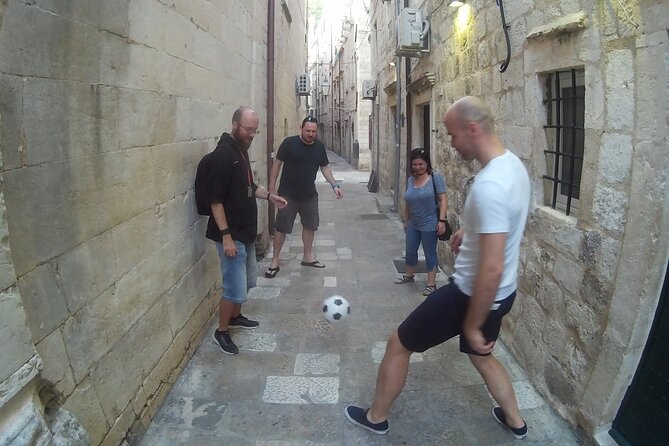
Dubrovnik’s Old Town can feel like a set built for crowds. This tour keeps the group small—eight max—so you’re not stuck listening from the back with no time to look up at carvings, doorways, and the tiny visual clues that tell you when and why something was built.
The length is tight but not rushed: about 1 hour 30 minutes to 2 hours. That window works well on a first trip, because you get an orientation sweep before you decide what you want to return to on your own.
At $34.59 per person, the pricing makes sense when you compare it to the cost of your time. You’re paying for a licensed guide, plus a route design that hits major anchors efficiently while still leaving space for questions and side stories.
You can also read our reviews of more walking tours in Dubrovnik
Meeting at Harbour Viewpoint, then into Ploče Gate
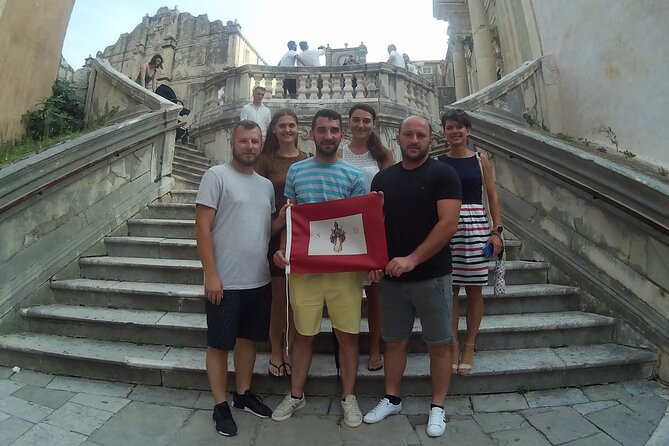
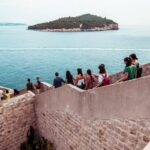
You start at Harbour Viewpoint on Ul. Svetog Dominika bb. From there, you step into the Old Town through Ploče Gate, the eastern entrance, and you get a short intro to how Dubrovnik grew and why this area mattered.
This first stretch is more than warm-up. A good guide sets you up to notice patterns—where power sits, where traders gathered, and how the city’s layout mirrors the Republic’s priorities. If Stradun later looks like just another street to you, that’s often because you missed the meaning of the city’s spine. This tour helps you catch it early.
Practical note: you’ll be walking a lot on stone streets. Wear comfortable shoes and keep water handy, especially in warmer months, because you’re outside for the whole loop.
Dominican Monastery and the City Harbor: faith plus trade
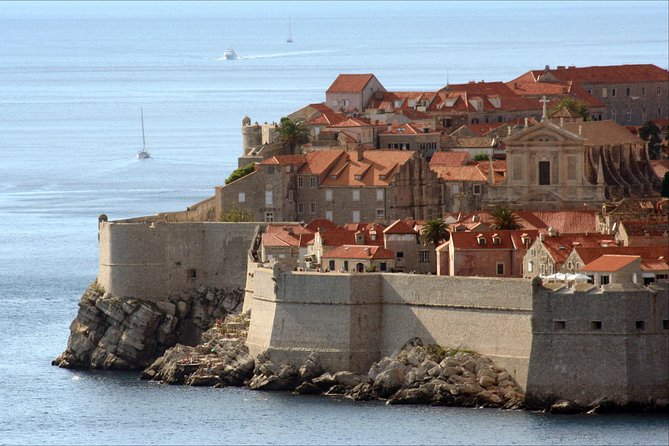
The Dominican Monastery stop is quick but purposeful. You’re looking at the oldest still active monastery in Dubrovnik, which gives you a sense of continuity—this isn’t a city of one-off monuments, it’s a place where institutions kept working across centuries.
Then you pivot toward the City Harbor story. This spot connects Dubrovnik’s reputation to something concrete: maritime trade. You’ll hear about when the harbor was the center of commerce and even when wooden galleons were built here. It’s the kind of detail that changes how you picture the waterfront once you’re back on your own.
If you care about the city as a working machine—ships, money, rules—these two stops set the tone right away.
Dubrovnik’s cathedral legends, the Jesuits, and poet Ivan Gundulić
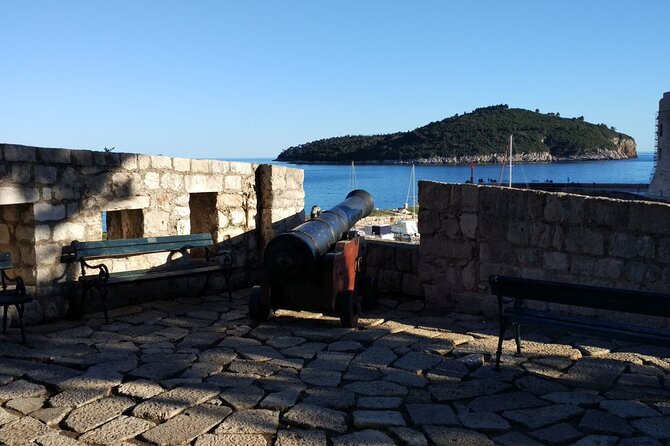
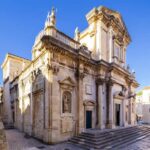
Next comes The Cathedral of the Assumption of the Virgin Mary. The guide points out the baroque architecture and then adds stories and legends connected to the cathedral’s past. Even if you don’t buy tickets for interiors, you’ll still walk away with a sharper sense of why the facades look the way they do.
Right after that is the Church of St. Ignatius of Loyola, tied to the Jesuits. The fun detail here is specific: the tour mentions the most famous Jesuit from Dubrovnik and even notes that a crater on the Moon is named after him. That kind of fact is exactly why this tour feels different from a basic photo stop—it links Dubrovnik to the wider world.
Then you reach the Monument of Poet Ivan Gundulić, and the walk shifts into the market-square energy. Poets can sound like trivia until you realize these names helped shape public identity. When you meet Gundulić in the right setting, you start to understand the Republic’s pride.
Rector’s Palace, Sponza Palace, and the Bell Tower—how the Republic ran

The Rector’s Palace stop is your political anchor. You’re shown where power sat in the Old Dubrovnik Republic, and the guide explains how the city operated through aristocracy and governance. This is where the tour’s focus feels grounded: you’re learning what made the city strong enough to defend itself and stay influential.
A few steps later, you move to Sponza Palace, once used as the customs house of the Republic. Today it’s tied to the historical archives, and the guide shares the importance of the building plus Latin proverbs. Even if you only catch a couple, it adds texture—this is the kind of place where language, law, and commerce all show up in one structure.
Then the pace turns slightly to architectural appreciation at the Bell Tower. The stop is short, but it’s designed to get you looking at what you might otherwise ignore. Small details matter here because the city rewards attention.
Marin Držić’s golden nose and the symbolism around Orlando Column
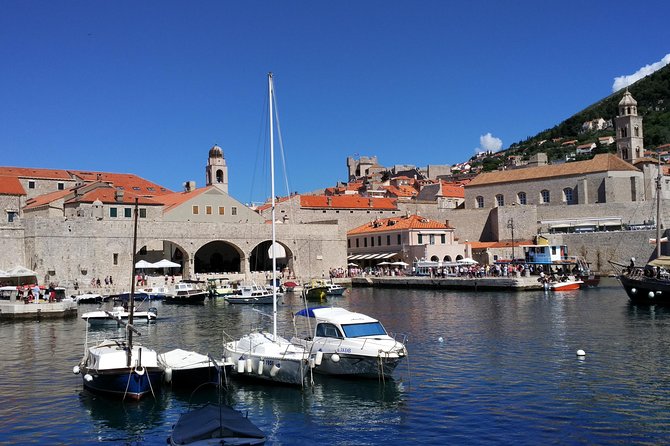
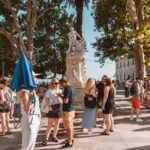
The tour includes a very “Dubrovnik” moment: the Statue of Marin Držić, the Renaissance playwright. The guide calls out the tradition around his nose—people touch it—and connects the story to why he remains one of the most recognizable figures from the Republic.
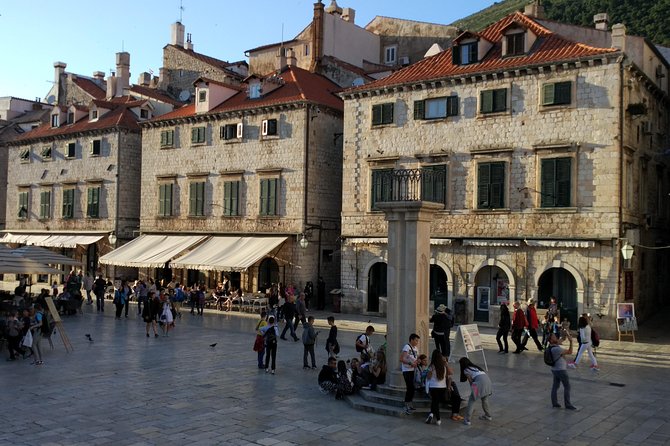
After that, you walk past the Orlando Column, where the tale turns into local symbolism. You’ll hear how the brave knight Orlando became a symbol for the Old Dubrovnik Republic. It’s not just myth for myth’s sake; it’s how cities teach values to residents and visitors in stone and metal.
These stops work best if you’re the type who likes meaning behind the look. If you mainly want strict dates and dates only, the storytelling balance might feel a bit more entertaining than academic.
Saint Blaise and the many ways legends survive in plain sight
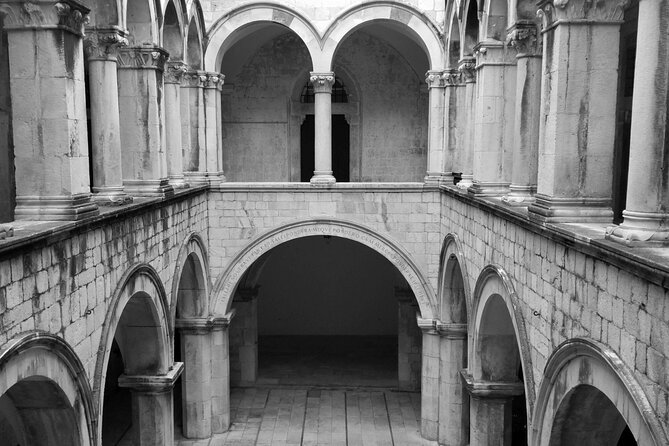
You’ll stop at Church of Saint Blaise, Dubrovnik’s patron saint. This part of the walk leans into legend, but the guide frames it alongside the city’s identity—how a community chooses symbols and then keeps using them.
What I like about this moment is the way it helps you read the city’s repeated saint imagery. Once you know the story behind Blaise, statues across the streets stop feeling random and start feeling like a system.
It’s one of those stops that takes 3 minutes, but gives you a “lens” for the rest of your walk.
Jewish Dubrovnik and Stradun: from community history to the main spine
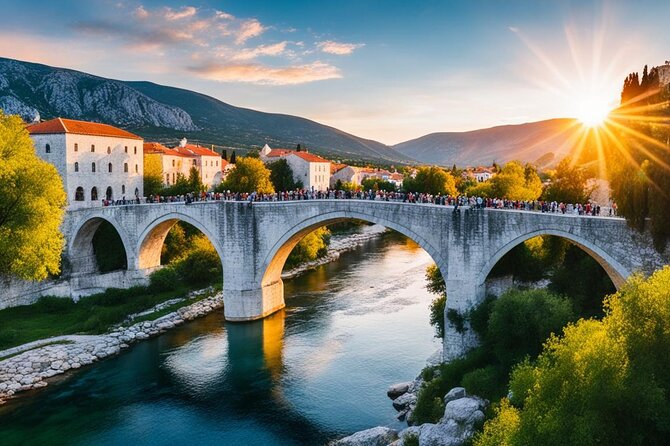
The Dubrovnik Synagogue stop is usually a standout for visitors because it’s a reminder that the Old Town wasn’t only Catholic. You’ll hear about the history of the Jewish community—from early days through difficult times to the present day—through a guide who can connect the building to the human story.
Then you hit Stradun, the shiny main street of the Old Town. Stradun can look like just a photo corridor, but once you’ve walked the earlier stops, you notice how it functions like the city’s central spine. It’s where the Republic’s public life would have flowed.
This is also a useful reset point. After learning about gates, power, and trade, you can stand on Stradun and recognize where you are in the city’s larger plan.
St. Roch graffiti and the Onophrian Fountain: everyday life, not just monuments
Next is the Church of St Roch, tucked away from the main street. The guide points out old graffiti on the side wall, with a story that kids in the 16th century used to play football in front of the church. It’s a small detail, but it makes Dubrovnik feel lived-in, not staged.
Then you reach Onophrian Fountain. Built in the 15th century, it’s described as the terminus of the old aqueduct. Water is one of those topics that makes cities click: the fountain isn’t just pretty. It’s part of how people survived, cooked, washed, and kept daily rhythm.
If you tend to overlook infrastructure, you’ll appreciate how this stop reframes the city. It’s not only walls and churches; it’s systems.
The Franciscan Church and the long-running pharmacy story
The Franciscan Church and Monastery stop brings you one of the most unique bits in the route. You’ll hear about the Franciscan connection to the continuity of pharmacy work—described as the third oldest pharmacy by continuity of work in Europe—and how the Franciscans contributed to Dubrovnik society.
Even if pharmacy isn’t your usual topic, this works because it connects institutions to daily needs. You’re not only learning about power and faith; you’re learning how the city supported ordinary people over time.
If you want a tour that treats Dubrovnik as a complete ecosystem—health, politics, religion, trade—this section helps a lot.
Ending near Pile Gate with the Republic’s final chapter
The tour ends near Pile Gate, the western entrance to the Old Town, by Onofrio’s Large Fountain. This closing stop matters because it gives you context for what comes after the Republic—so the later periods don’t feel like random history chunks.
You’ll get a simple explanation of the end of Dubrovnik Republic, tied to what you’ve seen along the route. When you leave with that framework, you can walk the walls or wander back to Stradun and feel like you’re reading the city, not just moving through it.
What to expect on the ground (so you don’t waste your time)
- Outside time is real. The tour requires good weather, so plan around sun or rain.
- Entrance fees won’t be part of the deal. The tour does not visit paid churches or museums that require entrance fees, so you’ll mostly view key sites from the street and learn through the guide.
- Pace is adjustable in practice. One review notes the guide was sensitive to a husband with minor mobility issues and kept things at an easier pace. Still, you should assume walking is central, not optional.
- Language is English, and the tour uses an engaging format that can include questions or small trivia-style moments.
Price and value: $34.59 for a full Old Town orientation
Here’s how I think about value for this tour. You’re paying for three things at once: a licensed guide, a tight route that covers major anchors, and small-group attention that makes the walk feel interactive instead of passive.
If you compare it to hiring a guide for just a single site, the pacing here is efficient. And because entrance fees are not included, you’re not getting nickel-and-dimed for every stop. You can decide later what you want to pay to enter based on what you understood on the walk.
Who this tour suits best
This is a great fit if:
- you want a structured orientation to Old Town with minimal wasted walking,
- you prefer small-group over crowded tours,
- you like stories that connect architecture to the people behind it.
It’s less ideal if:
- you’re hoping for lots of paid interior time at churches or museums,
- you want a super academic, date-heavy lecture with no storytelling.
Should you book this Dubrovnik Old Town small-group tour?
Book it if you want a fast, intelligent way to get oriented without getting swallowed by cruise-ship crowds. The small group size and the mix of gates, palaces, religious sites, and everyday-life details are exactly what make Dubrovnik feel like more than a postcard.
Skip it only if you’re fully focused on interior museum time. In that case, plan to pair this with separate ticketed visits later, once you know what matters most to you.
FAQ
How long is the Dubrovnik Old Town walking tour?
It’s about 1 hour 30 minutes to 2 hours.
Where does the tour start?
It starts at Harbour Viewpoint, Ul. Svetog Dominika bb, 20000 Dubrovnik, Croatia.
Where does the tour end?
The tour ends near Pile Gate, by Onofrio’s Large Fountain, Poljana Paska Miličevića 2000, 20000 Dubrovnik.
What’s the group size?
The experience is capped at a maximum of 8 travelers.
Is the tour offered in English?
Yes, it’s offered in English.
What’s included in the price?
A professional licensed tour guide is included.
Are entrance fees included?
No. Entrance fees are not included, and the tour does not visit churches or museums that require entrance fees.
Do I get a ticket?
Yes, you get a mobile ticket.
What if the weather is bad?
The tour requires good weather. If it’s canceled due to poor weather, you’ll be offered a different date or a full refund.
Can I bring a service animal?
Yes, service animals are allowed.