REVIEW · DUBROVNIK
Dubrovnik Discovery Old Town Walking Tour
Book on Viator →Operated by Dubrovnik Walks · Bookable on Viator
White limestone. Big history. One easy walk.
I love how this tour turns Dubrovnik into a story you can actually follow on foot, with Orlando’s Column and Onofrio’s Fountain explained in plain terms as you pass them. I also like the pace and sound setup: with audio headsets (for groups of 4+), you hear your licensed guide clearly without craning your neck in the crowd.
One thing to consider: Dubrovnik’s Old Town stones can be slippery when it rains, and the route is fairly active. If you’re not steady on your feet, wear grippy shoes and take it slow.
In This Review
- Key highlights worth planning for
- Why this 90-minute Old Town walk is such good value
- Meeting Dubrovnik Walks by the orange umbrella (and actually starting on time)
- The first stretch: Pile area, Franciscan Monastery views, and the city’s water story
- Orlando’s Column on Stradun
- Onofrio’s Fountain and the 12-km aqueduct
- Rector’s Palace, Sponza Palace, and the Cathedral after the 1667 earthquake
- Why these stops are worth your time
- Brsalje Street and Pile Gate: quick pauses that help you navigate
- If you want photos
- Luza Square: the Old Town’s biggest skyline classroom
- Old Town streets for about an hour: war stories and daily-life context
- A note on pacing
- Finishing at Porat Dubrovnik: ending near the action by the port
- Audio headsets and group size: how to keep the tour from turning into noise
- Weather, shoes, and timing: practical tips that matter in Dubrovnik
- Who should book this tour (and who might want a different plan)
- Should you book this Dubrovnik Discovery Old Town Walking Tour?
- FAQ
- How long is the Dubrovnik Discovery Old Town Walking Tour?
- How much does the tour cost?
- Is the tour offered in English?
- Where do I meet the guide?
- Does the tour use audio headsets?
- Are any entrances or admissions included?
- What happens if the weather is poor?
- Is there a minimum number of travelers?
- What is the cancellation policy?
Key highlights worth planning for
- Orange umbrella meeting point at Brsalje ul. 8, easy to spot once you know what to look for
- Licensed local expert guide who ties landmarks to how Dubrovnik lived, traded, and fought
- Iconic stops without ticket hassles at major squares and gates, with many sights right on the route
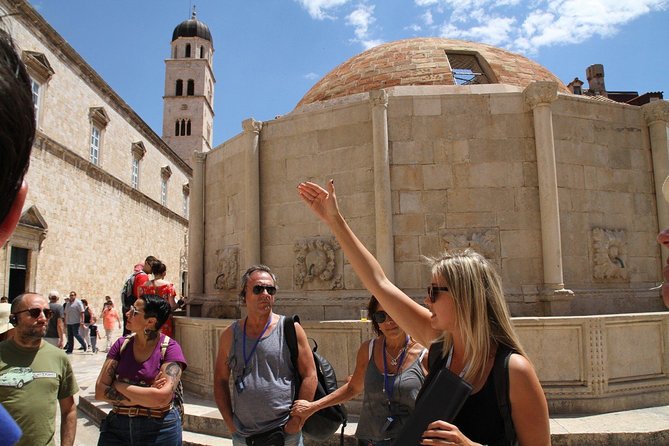
- Onofrio’s Fountain and the 12-km aqueduct bring the city’s water system to life with specifics
- Luza Square as your big “look up and take it in” moment with multiple major landmarks packed together
- 90 minutes is a sweet spot for getting bearings before you explore on your own
Why this 90-minute Old Town walk is such good value
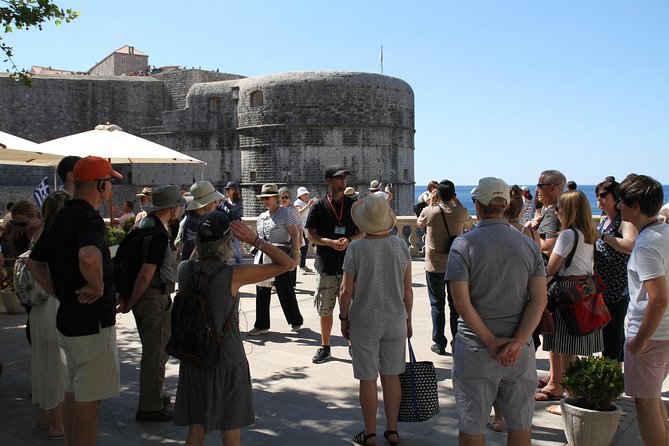
At about $24.19 per person for roughly 1.5 hours, this tour is priced like a practical intro, not a “major attraction” ticket. You’re paying for interpretation: a local expert to connect what you’re seeing (columns, palaces, churches, gates, squares) to what they meant.
What you get is a guided route that helps you stop wandering and start understanding. Dubrovnik can feel like one long photo strip, but a good guide turns those white limestone streets into a timeline, so the city stops being only scenery.
You’ll also have flexibility. The tour offers departure times that fit your schedule, which matters in Dubrovnik when you’re juggling heat, cruise-ship crowds, and the late-day light.
You can also read our reviews of more walking tours in Dubrovnik

Meeting Dubrovnik Walks by the orange umbrella (and actually starting on time)
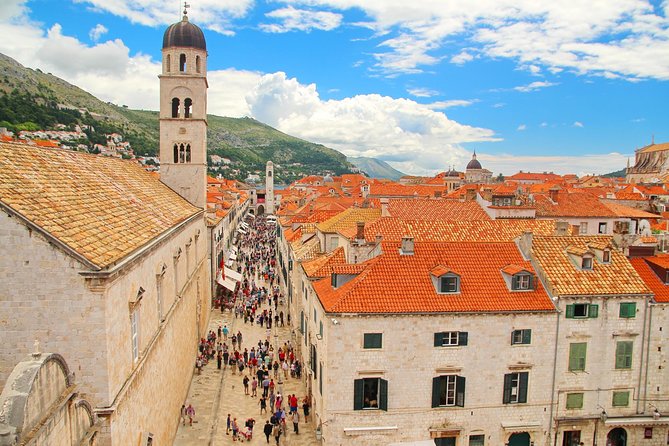
Meet at Dubrovnik Walks, Orange umbrella, Brsalje ul. 8, 20000 Dubrovnik. The tour starts in the Pile area, near where you’d find the Sky Bar area.
Here’s my practical take: arrive a few minutes early and get eyes on the orange umbrella before you try to blend in with the crowd. One small clarity issue can waste time in a place where everyone is looking up at the walls.
The tour ends near the old town port, so you finish in the part of town that naturally leads to more sightseeing, food, and wandering.
The first stretch: Pile area, Franciscan Monastery views, and the city’s water story
Right at the start, your guide gathers the group and sets the tone. This portion matters because it frames what you’re about to see—Dubrovnik as a working port city with a long memory, not just a medieval set.
From there, you’ll move through Old Town past the Franciscan Monastery, then toward a sequence of landmarks that visitors often see, but don’t always understand:
Orlando’s Column on Stradun
You’ll admire Orlando’s Column, inspired by Dubrovnik’s tradition of freedom and sovereignty. It’s a monument, yes—but your guide gives it context so it reads like a civic symbol, not just another sculpted stop.
Onofrio’s Fountain and the 12-km aqueduct
You’ll also see Onofrio’s Fountain, built in 1438 at the end of an 8-mile (12-km) aqueduct that supplied the city’s water. This is one of those details that sticks because it’s so concrete. Instead of vague “the city had water,” you get the real distance and date, which makes Dubrovnik’s planning feel shockingly modern.
One small drawback to keep in mind: if the crowd is heavy, moving along Stradun-style streets can feel brisk. The walking is part of the point, but your best bet is to stay close to the guide and listen for the next landmark name.


Rector’s Palace, Sponza Palace, and the Cathedral after the 1667 earthquake
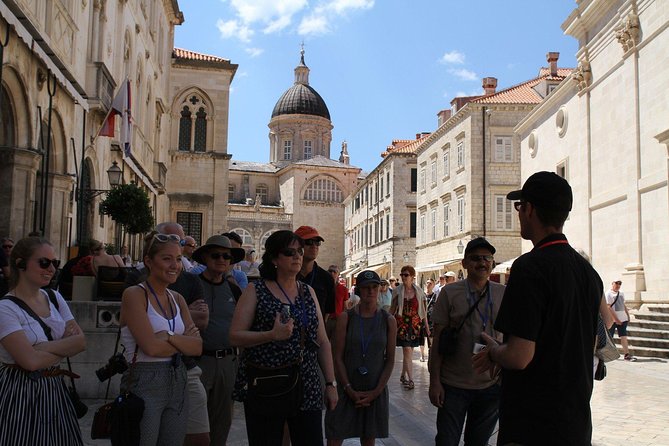
The heart of the Old Town story comes through the official-looking buildings and the big public spaces.
As you continue, you’ll pass:
- Rector’s Palace
- Sponza Palace
- The Cathedral of the Assumption
The cathedral portion is especially important. It’s a baroque church built after the devastating earthquake of 1667. That one fact changes how you look at the architecture—baroque here isn’t just a style choice. It’s also a rebuilding story, tied to a major rupture in the city’s life.
Why these stops are worth your time
These aren’t random photo moments. They’re where power, trade, and public life intersected. If you’ve ever walked through an old city and thought, I see buildings, but what did they do?—this segment is made for you.
And if you like clear, story-driven guides, you should know the tour’s English hosting is consistently praised for making facts easier to follow. Names that come up in the guide feedback include Branko and Lana, both noted for humor and clear communication.
Brsalje Street and Pile Gate: quick pauses that help you navigate
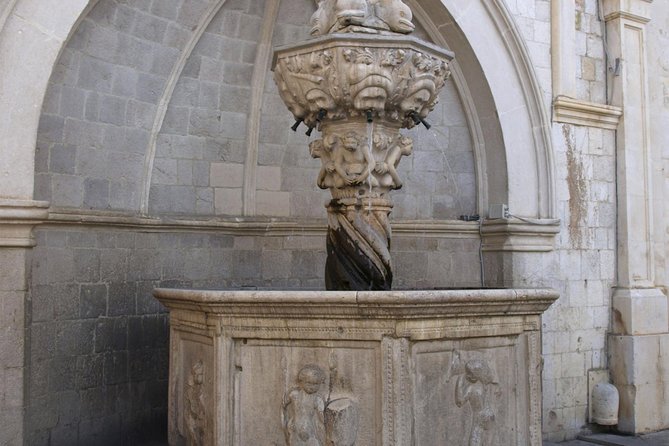
Not every stop here is a long sit-down. Some are short, but they still do their job.
You’ll pause at Brsalje Square for a brief summary—no entrances, just a reset on what you’re going to see next and why it matters.
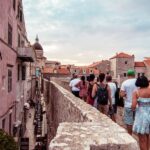
Then you’ll reach Pile Gate, the main western entrance to the old town. This is one of those “you’re really in it now” moments. Once you’ve passed the gate, the city’s layout starts to make sense: you’re moving inside an old defensive and civic system, not just strolling in a tourist corridor.
If you want photos
This isn’t a slow, stop-and-pose tour. It’s better for people who like to take photos while they keep moving, then come back later for extra angles.
Luza Square: the Old Town’s biggest skyline classroom
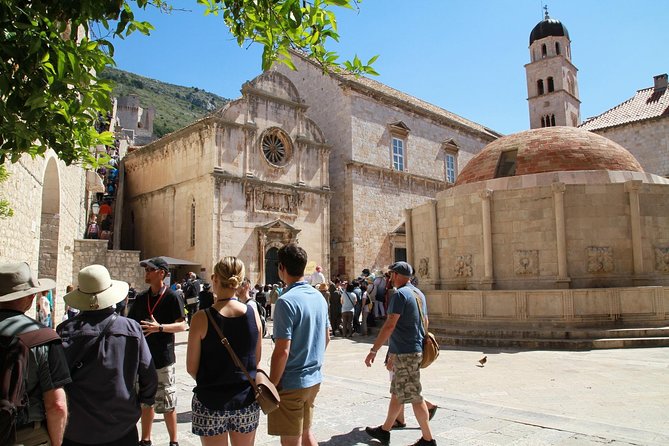
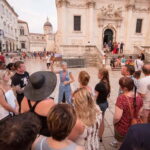
Luza Square is where the tour turns into a visual checklist. It’s described as the main square, and it’s packed with multiple landmarks close together, including:
- St. Blaise’s Church
- Orlando’s Column
- Sponza Palace
- Small Onofrio’s Fountain
- Bell tower
Your guide uses this cluster to tie together street-level landmarks into one bigger picture. Instead of treating each building as isolated, the tour helps you see how the square functioned as a civic stage.
The best way to enjoy this part is to look up and then look around. Standing in one spot, you can connect multiple sight lines that otherwise feel scattered. And because you’re only there for about 10 minutes, you get a focused hit without spending your whole tour stuck in one place.
Old Town streets for about an hour: war stories and daily-life context
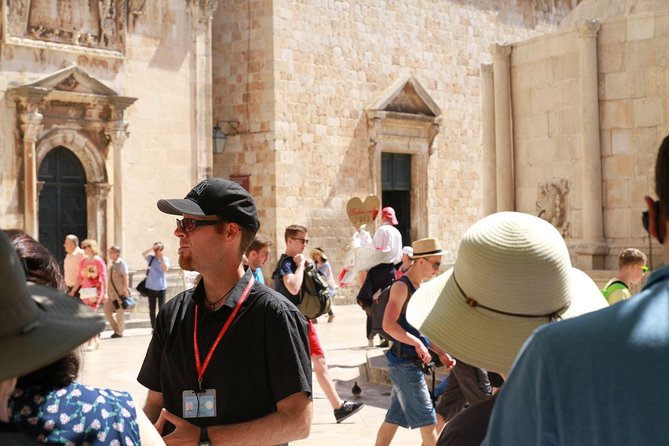
The tour’s main walk through Old Town runs about 1 hour. This is where you’ll hear the long-view history: Dubrovnik as a prosperous port city for centuries, and the way conflict shaped the city’s identity.
A key value here is that your guide doesn’t keep it in the distant past. You’ll hear about war and how it affected families and the present-day city culture—so the landmarks stop being postcard objects and start feeling like the backdrop to real lives.
A note on pacing
The stone streets can crowd up fast, and at times the group moves with purpose. If you prefer slow sightseeing, you may want to scan the pace early and decide where you’ll linger after the tour ends.
Finishing at Porat Dubrovnik: ending near the action by the port
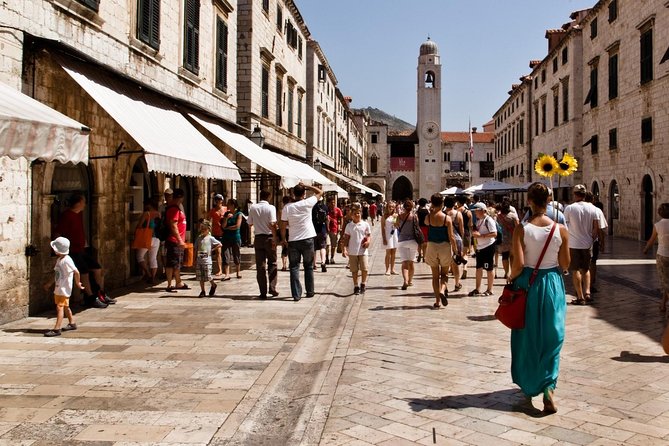
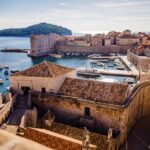
The last stretch ends near Porat Dubrovnik, with about 5 minutes at the final area. This finish location is helpful because it naturally lines you up for more roaming and food without needing to re-navigate across the Old Town.
Ending near the port also makes the theme of the walk click. Dubrovnik was, for a long time, defined by shipping, trade, and contact with the wider world. Finishing close to where the city meets the water makes that point feel physical.
Audio headsets and group size: how to keep the tour from turning into noise
The tour uses audio headsets in groups of 4+ people, which is a big quality-of-life feature in a place with echoing stone streets and lots of background noise.
Group size is capped at 99. That’s big, but the small-to-medium speaking setup and headsets help keep things understandable. Still, in the tight Old Town sections, you’ll want to keep your spot and not fall too far behind.
Also, this is offered in English with a mobile ticket. If you’re traveling with your phone as your main tool, that’s convenient.
Weather, shoes, and timing: practical tips that matter in Dubrovnik
This tour needs good weather. If poor weather cancels it, you’ll be offered a different date or a full refund.
Since it runs on stone walkways, plan for traction. If rain is in the forecast, I’d treat this as a slip-risk walk and bring grippy shoes. One more practical move: avoid losing time at the start by showing up a bit early and verifying the exact meeting spot under the orange umbrella.
Timing can also change the feel. If you pick a later departure, you may get different light and fewer crowds in some sections, but you’ll still be walking through the core Old Town with the same landmarks.
Who should book this tour (and who might want a different plan)
This walking tour is a strong fit if you want:
- a first-time orientation to Dubrovnik’s Old Town
- a guide who connects monuments to the city’s civic identity and hard history
- a short, efficient way to get the story behind Rector’s Palace, Sponza, Onofrio’s Fountain, and Luza Square
It’s also a good companion to other activities. Even if you plan additional sightseeing, you’ll understand what you’re looking at once you’ve heard the basic timeline in the streets.
You might want a different pace if:
- you struggle with longer walks over stone surfaces
- you prefer spending lots of time inside buildings (this tour, based on its structure, focuses on seeing key landmarks from the outside rather than long museum-style stops)
Should you book this Dubrovnik Discovery Old Town Walking Tour?
Yes—if you want a smart first pass through Dubrovnik’s Old Town for a reasonable price. The $24.19 cost buys you more than movement: it buys context at landmarks you’ll see anyway, like Orlando’s Column, Onofrio’s Fountain, Rector’s Palace, and Luza Square.
Book it if you like walking with a guide, hearing the story behind what you’re photographing, and leaving with your mental map cleaned up. Just plan for stone sidewalks, show up early for the orange umbrella meeting point, and you’ll get a lot out of your 90 minutes.
FAQ
How long is the Dubrovnik Discovery Old Town Walking Tour?
It lasts about 1 hour 30 minutes.
How much does the tour cost?
The price is $24.19 per person.
Is the tour offered in English?
Yes, it’s offered in English.
Where do I meet the guide?
Meet at Dubrovnik Walks (Orange umbrella), Brsalje ul. 8, 20000 Dubrovnik, Croatia.
Does the tour use audio headsets?
Yes. Audio headsets are used in groups of 4+ persons.
Are any entrances or admissions included?
The tour mentions free entry/ticket for the listed stops. At the Brsalje Street stop, it specifies that you do not enter any facilities.
What happens if the weather is poor?
If it’s canceled due to poor weather, you’ll be offered a different date or a full refund.
Is there a minimum number of travelers?
Yes. A minimum of 4 people is required for the tour to run.
What is the cancellation policy?
You can cancel for free up to 24 hours in advance for a full refund. Cancellation less than 24 hours before the start time isn’t refunded.