REVIEW · DUBROVNIK
Dubrovnik: Ancient City Walls & Wars Walking Tour
Book on Viator →Operated by Dubrovnik Walks · Bookable on Viator
Walls tell stories when you walk them. This Dubrovnik Walls & Wars tour connects the City Walls and the city’s difficult past with clear guidance, in English, starting by Pile Gate.
I really like two things. First, the tour points out key defensive spots like Fort Revelin and Minceta Tower so you understand why Dubrovnik was built the way it was. Second, you get real help turning views into context, and guides like Davor and Goran keep the pace friendly while answering questions.
One consideration before you book: this is a stairs-forward walk, and there are no restroom stops planned. Add summer heat on limestone stone, and you’ll want good shoes and a smart plan.
In This Review
- Key highlights you’ll actually feel
- Walls & Wars in Dubrovnik: what makes it more than a photo stop
- Where the tour starts: finding Dubrovnik Walks under the orange umbrella
- The Stari Grad-to-walls transition: getting the city’s layout before the climb
- Walking the City Walls (2 km): what you’re really paying for
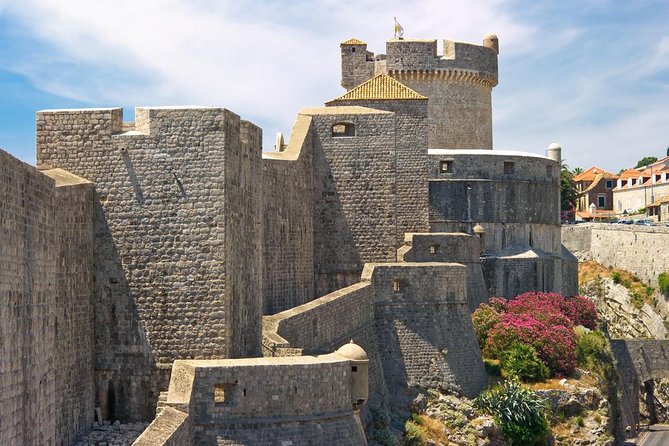
- Fort Revelin and Minceta Tower: the wall becomes a map
- Fort Lovrijenac in the distance: the separated fort that matters
- The Stari Grad landmarks and the wars theme: why the guide matters
- Stairs, heat, and pacing: the practical stuff that decides if you enjoy it
- Price and value: paying for stories plus the wall ticket
- Who should book this Walls & Wars tour
- My booking advice: when to go and how to get the most out of the walls
- Should you book Dubrovnik Ancient City Walls & Wars?
Key highlights you’ll actually feel

- Pile Gate start with a licensed local guide who sets the story fast
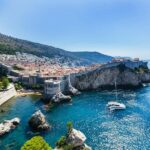
- 2 km City Walls walk with big views over the Old Town and harbor
- Fort Revelin, Minceta Tower, and Fort Lovrijenac explained in plain terms
- Stari Grad deep context for churches, monasteries, and palaces you pass on the way
- Wars and diplomacy stories that connect the wall to real survival
- Audio headsets help when your guide moves ahead in the group
Walls & Wars in Dubrovnik: what makes it more than a photo stop
Dubrovnik’s City Walls are famous for a reason. You can do them on your own, sure. But this guided version gives you the missing layer: why those stones exist, how the city handled pressure from neighbors, and how the view from the top ties directly to the risks below.
This tour is designed as a fast, high-impact route. In about 2 hours you move through Stari Grad (Old Town) atmosphere, then you work your way along the walls at a steady pace. The guide’s job is to translate architecture into strategy and history into something you can picture.
What I’d call the “sweet spot” is the balance. You get both the scenic part and the story part. The walk gives you distance over the Adriatic and the port. Then the guide fills in the human details: the sea channel that was filled in centuries ago, the defensive planning, and the way Dubrovnik tried to stay independent through diplomacy and fortifications.
And yes, guides bring personality. People in the group I’m thinking of (like Davor, Goran, Mara, and Andrea) are clearly comfortable with questions and keep the tour lively. That matters because the walls can otherwise feel like you’re just following a line.
You can also read our reviews of more walking tours in Dubrovnik


Where the tour starts: finding Dubrovnik Walks under the orange umbrella
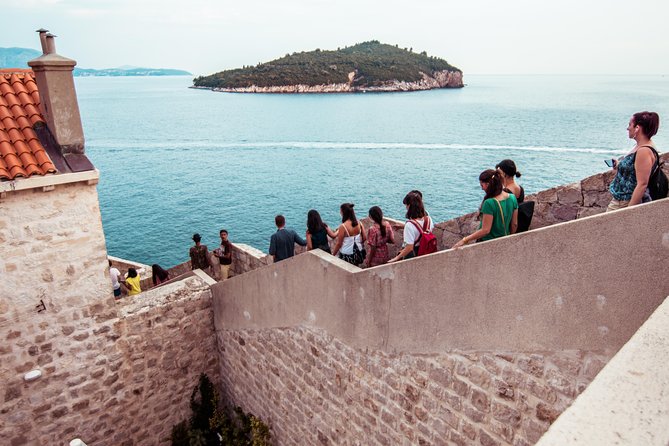
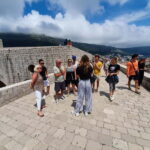
The meeting point is easy to miss if you’re the type to stroll while searching. Look for the Dubrovnik Walks Orange umbrella at Brsalje ul. 8, 20000 Dubrovnik, and plan to link up near Pile Gate.
This matters because Pile Gate is the natural gateway into Stari Grad. If you arrive late or scattered, the whole rhythm slows down—especially since the walking includes stairs and you’ll want to settle into the pace right away.
Also keep in mind the tour is in English and uses audio headsets in groups of 4+. That means you don’t have to crane your neck at every stop. It also means you’ll want to keep your headset secure and pay attention when the guide moves ahead.
Timing helps too. If you can pick a start time, earlier or later can feel easier than midday. One strong theme from the experience: hot summer walls make everything harder, even when the tour offers limited shade breaks.
The Stari Grad-to-walls transition: getting the city’s layout before the climb
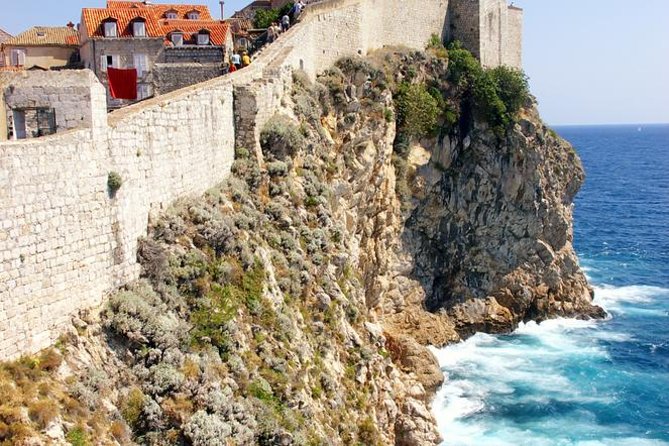
Before you even reach the paid section of the walls, you’ll be set up for success. The tour leads you through the limestone-paved feel of Stari Grad and points out churches, monasteries, and palaces—then connects those landmarks to the city’s bigger story.
This is a smart approach. If you jump straight to the wall without context, you’ll see buildings but you might not understand the logic behind where they are and how the city defended itself. With the guidance here, the Old Town doesn’t feel like a postcard loop.
Then you head to the wall entrance. This is when the practical part kicks in: the tour price does not include City Walls admission.
So your first “do this right” moment is ticket planning. Some people buy on the spot. Others use the Dubrovnik Pass. Either way, you’ll want to know what line you’ll likely face and how long you can stand in sun.
Walking the City Walls (2 km): what you’re really paying for
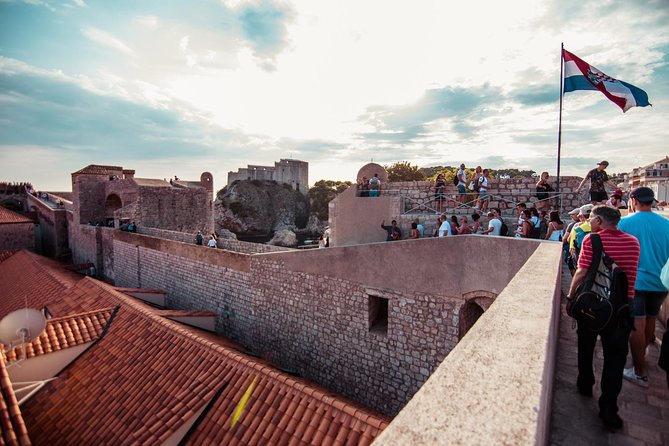
The wall walk is the centerpiece: about 1.2 miles (2 km) along the fortifications. The structure has medieval roots, including early construction phases dating back to the 12th century, with the defensive complex often described in later medieval terms as well. The key point for you: these walls weren’t built once and forgotten. They were restored multiple times so what you see today reflects ongoing rebuilding and adaptation.
As you walk, you’re not just collecting views. You’re tracing how a fortified city thinks. The guide explains how Dubrovnik’s geography shaped its defense—especially the long story tied to the sea channel that, in the 11th century, was later filled in to connect the city to the mainland side in what is now Stari Grad.
From the wall path, you’ll see:
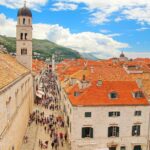
- the port area and the Old Town layout from above
- the shifting angles of the coastline toward the open Adriatic
- key forts and towers positioned for control and visibility
You’ll also learn how the walls helped Dubrovnik survive political pressure—by design, by planning, and by choosing diplomacy when it could.
One thing to know: this walk has stairs and climbs. Even though the distance isn’t huge, the elevation changes add effort. If your knees or balance aren’t great, you may feel it more than you expect.
Fort Revelin and Minceta Tower: the wall becomes a map
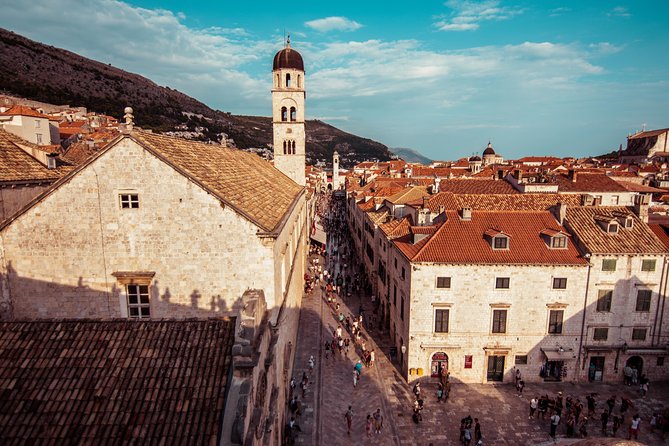
Half the fun of the guided walk is when the guide turns a view into a labeled system.
Within the city wall circuit, you’ll hear about:
- Fort Revelin, positioned to protect approaches
- Minceta Tower, a key lookout and defensive point
Even if you’ve seen photos of these places, you’ll get more out of them once you understand their purpose. The guide frames them as parts of a defense line and also parts of power—how the city signaled strength and control to whoever threatened it.
This is where the tour moves from sightseeing to real understanding. Without guidance, those towers and forts can blur together. With guidance, you start to see sightlines, choke points, and the logic behind the placement.
And because the guide’s job is to keep the story moving, you get a sequence of facts that feels like a guided walk-through of how the city worked.
You can also read our reviews of more city tours in Dubrovnik


Fort Lovrijenac in the distance: the separated fort that matters
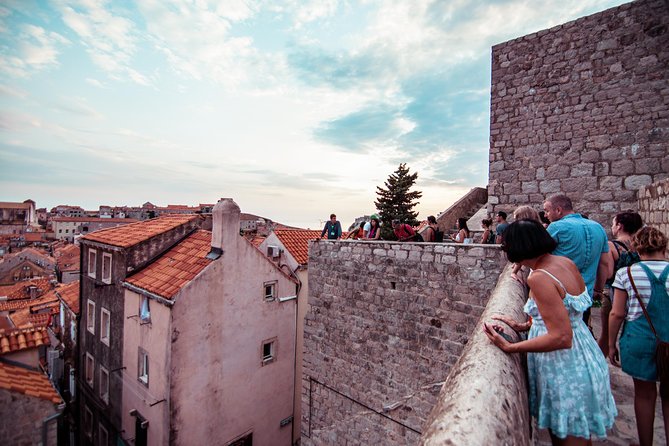
You’ll spot Fort Lovrijenac in the distance. It’s an interesting detail because it’s described as belonging to the city walls in spirit and strategy, yet physically separated from them.
That distinction is the kind of information that makes the whole wall circuit click. You stop thinking of the walls as a single barrier. You start seeing it as a network—walls plus forts plus geography—built to keep the city standing even when conditions were brutal.
Even if you don’t visit Lovrijenac during the tour, you’ll leave with a clearer mental map of Dubrovnik’s defensive layout. That helps if you later explore more on your own.
The Stari Grad landmarks and the wars theme: why the guide matters
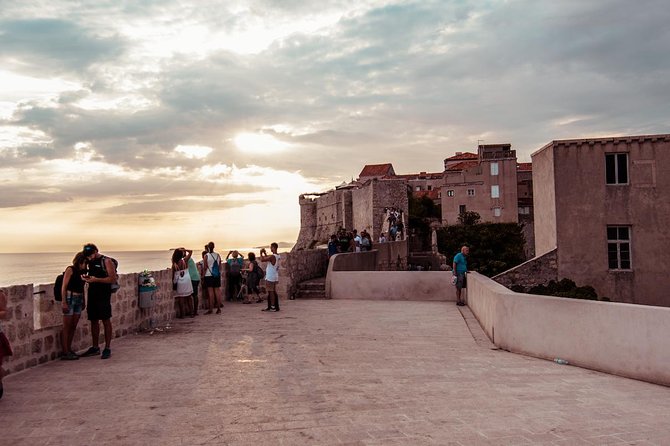
This is a Walls tour, but it earns its name with the wars theme. You’ll hear about defensive and political challenges faced by Dubrovnik and about the way the city tried to remain an independent republic despite pressure from major regional powers.
The tour connects the physical wall to human survival. It references Dubrovnik’s autonomy and its balancing act between the Ottoman and Venetian Empires. Then it brings you into a more modern frame—discussing the wars in a way that helps you understand what the city has endured.
If you’re the type who likes history delivered with emotion and context, the guide stories can be a standout. People highlight how guides handle war topics with seriousness while still keeping things understandable.
One caution: if you want strictly military history and nothing else, keep an eye on guide style. There can be side talk—at least once, a guide’s detour into pop culture like Game of Thrones was mentioned as taking longer than expected. So if your priority is the war-and-walls connection, you can set that expectation in the moment.
Stairs, heat, and pacing: the practical stuff that decides if you enjoy it
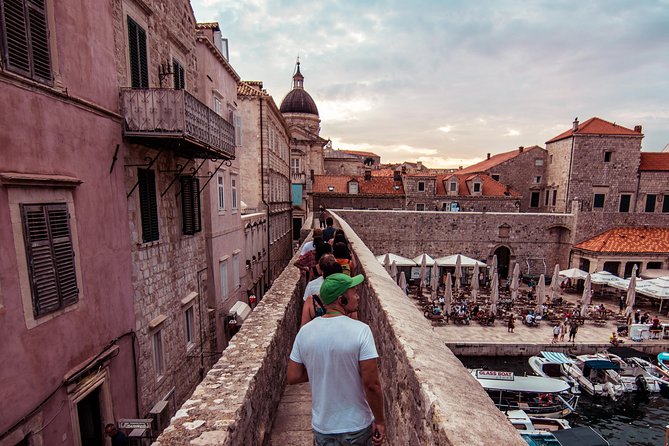
This tour is listed with a moderate physical fitness level, but the fine print is the stairs. You should assume you’ll climb. You should also assume you’ll feel it more in summer.
A few details help you plan:
- the walls are built in a way that still leaves limited shade stops
- it can get hot in warmer months, and you’ll be walking on limestone
- there are no restroom stops planned
How I’d prep:
- wear grippy shoes with good support
- bring water (you’ll likely be able to buy drinks along the wall at points, but don’t bank on it)
- start early or late if heat is your enemy
- pace yourself on the climbs; don’t sprint just because you’re excited
One more tip: if you’re traveling with anyone who struggles with heights, this is still doable for many people, but the exposed wall segments can feel intense. If your group is uneasy on elevated paths, you might consider a less vertical plan.
Price and value: paying for stories plus the wall ticket
The tour itself is priced at $30.23 per person, for about 2 hours and an English-language guide. That’s the guided walking and storytelling portion.
The City Walls entrance fee is not included. The data you’ll see can vary depending on whether you buy on the spot or based on the listed estimate:
- one listing shows 40€ per adult and 15€ per child (7–18)
- another note says tickets can be bought on spot with 35€ per adult and 15€ per child (7–18)
To keep it simple: budget about the cost of a standard City Walls ticket plus the tour price.
If you’re using the Dubrovnik Pass, it covers one visit to the City Walls, but you’ll need to purchase and collect it in advance.
Is this good value? For most people, yes—because you’re paying for interpretation. The wall is expensive enough on its own. The guide turns it into a structured narrative, pointing out Fort Revelin, Minceta Tower, and explaining why Dubrovnik’s defensive choices made sense.
Also, the group size is capped at 35 and the tour requires a minimum of 4 people. In practice, smaller groups often feel easier on a stair-heavy route.
Who should book this Walls & Wars tour
This tour is a great match if you want:
- the fastest route to understand the City Walls without getting lost in details
- a guided explanation of forts like Revelin and Minceta
- context for Dubrovnik’s independence story and the war theme
- help turning big views into something you can remember
You might want to skip or choose a gentler alternative if:
- stairs and climbs are a problem
- you’re hoping for a mostly flat stroll
- your group needs restroom access at intervals (since none are planned)
Kids can join too. The tour notes that children aged 0–11 are welcome to join for free, and it also gives specifics about free walls entrance eligibility (with 0–6 being eligible for free walls entry, while 7–11 are not). If you’re traveling with children, double-check the walls entrance rules before you go.
Service animals are allowed, and the meeting point is near public transportation, which can help you plan arrival and departure.
My booking advice: when to go and how to get the most out of the walls
If you want cooler conditions and nicer light, consider a start time that avoids the harshest midday heat. People have mentioned that later options like around 6pm can feel perfect for a cooler walk and even a sunset payoff.
Also, if you’re trying to dodge peak crowds, an early start often helps. Dubrovnik’s Old Town can get packed, and the wall walk is one of those places where crowd pressure makes the experience feel shorter.
Bring a simple plan:
- ticket ready for the wall entrance
- water + sun protection
- shoes for stairs
- a headset-friendly mindset (especially when the guide moves ahead)
And one more thing: ask questions. This tour works best when you treat it like a conversation with the guide. Guides like Davor and Goran are comfortable with dialogue, and that’s where the history becomes personal.
Should you book Dubrovnik Ancient City Walls & Wars?
Book it if you want the walls with a reason. You’ll walk the 2 km circuit, see the big defensive landmarks, and understand Dubrovnik’s independence story and war context in a way that makes the city feel real instead of just scenic.
Skip it if your main goal is a flat, low-effort sightseeing day. The stairs and climbing can be a dealbreaker, and with no restroom stops planned, you’ll want to be confident in your stamina.
My rule of thumb: if you’re okay with steps and you like history connected to what you’re physically standing on, this is one of the best value ways to experience Dubrovnik’s Old Town from the top down.