REVIEW · PRAGUE
Prague Old Town and Jewish Quarter Walking Tour
Book on Viator →Operated by McGee's Trips & Tickets · Bookable on Viator
Two hours can change how Prague feels. This walk gives fast orientation plus real local storytelling as you bounce between Old Town landmarks and the Jewish Quarter. I like the mix of big-square icons and quieter, off-the-radar spots—and the fact that you’re guided through them at human speed. The one thing to keep in mind is that several stops are mainly exterior views, and access to places like the Spanish Synagogue can depend on Jewish holidays.
Expect a small-group feel when possible, with a maximum of 30 and a start time of 10:30am. Guides named Allen, Radek, Vojta, and Vojtech have been praised for clear English, solid context, and stories that make the stones feel less like set dressing.
In This Review
- Key Points I’d Use to Pick This Tour
- Finding the Group at Týnská 627/7 and Kicking Off in Old Town
- Staroměstské náměstí to the Astronomical Clock: The Best Place to Get Your Bearings
- Charles IV’s Neighborhood, Karolinum, and Mozart’s Don Giovanni Moment
- Cubism on a Corner: The House of the Black Madonna and St. James
- Tyn Yard–Ungelt: A Medieval Courtyard You’d Walk Past
- Jewish Quarter Synagogues Circuit: What You’ll See (and What Might Be Closed)
- Kafka’s Statue and the Tone Shift That Works
- How Much Walking Is It, and Who Should Take This Tour?
- Value Check: Why This Price Makes Sense for Two Hours
- Should You Book This Prague Old Town and Jewish Quarter Walk?
- FAQ
- How long is the Prague Old Town and Jewish Quarter walking tour?
- Where does the tour start?
- What time does the tour start?
- Is the tour offered in English?
- What’s included in the price?
- Do children get a discount?
- Can I cancel and get a refund?
Key Points I’d Use to Pick This Tour
- Easy Old Town meeting point near Týnská 627/7 so you can get started without stress
- Astronomical Clock explained with the idea of multiple time systems plus the Moon and Sun
- A smart blend of architecture from Gothic exteriors to cubism, baroque rebuilding, and Moorish styling
- Jewish Quarter route with multiple synagogue exteriors plus a cemetery stop that’s not included in the ticket price
- Short, efficient timing at about 2 hours, great when you want highlights without a full-day commitment
Finding the Group at Týnská 627/7 and Kicking Off in Old Town
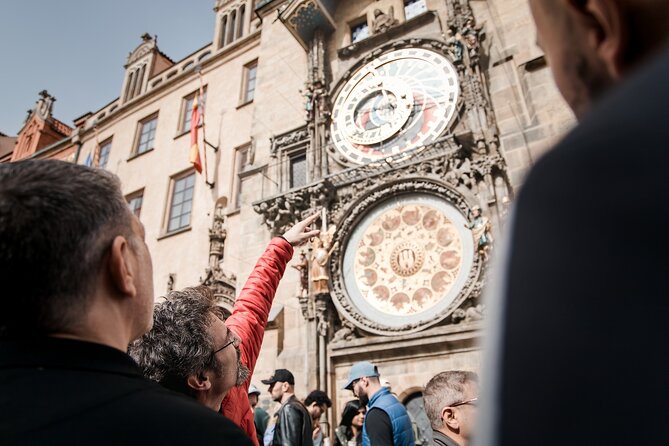
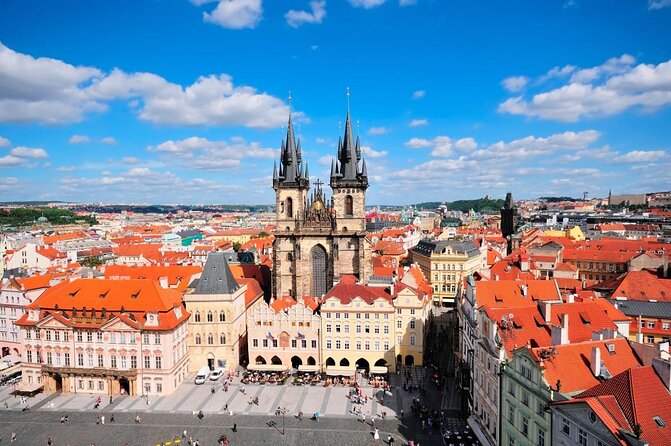
The tour starts at Týnská 627/7 in Staré Město, right in the Old Town core. You’ll meet in front of Mcgee’s Trips & Tickets, and the walk ends back at the same meeting point, so you don’t have to figure out where to go next.
I like that this is set up for quick arrival. The area is central, it’s near public transportation, and you don’t need hotel pickup to make it work. You get a mobile ticket, which is handy in a city where paper tickets can turn into a scavenger hunt.
Because it’s only about 2 hours, the pace matters. This isn’t the kind of tour that asks you to wait around for long museum queues. Instead, it’s built around stepping from landmark to landmark while your guide helps you connect what you’re seeing to why it matters.
Also: most people can take part, and service animals are allowed. If you’re traveling with kids, children up to 6 are free, as long as they’re with an adult.
You can also read our reviews of more walking tours in Prague

Staroměstské náměstí to the Astronomical Clock: The Best Place to Get Your Bearings
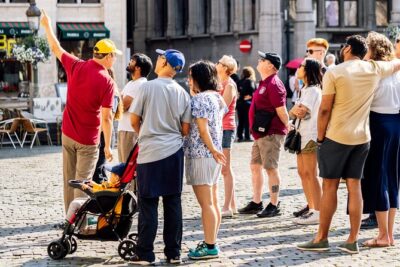
You begin on Staromestske namesti, the main Old Town square, where your guide sets the stage with Czech history so the buildings don’t feel like a random photo lineup. The early stops are brief, which actually helps if you’re short on time—you get orientation first, then the rest clicks faster.
Right near there, you’ll also get a quick stop at the Church of Our Lady before Tyn. Even if you don’t go deep inside, you’ll get context on what you’re looking at, and you’ll learn how this part of Prague got its identity over time.
Next comes a quick exterior look at a famous palace in the Old Town square area—again, short and to the point, but perfect for building a mental map. This is where I’d tell you to slow down and look up: most of the “story” here is on façades.
Then the tour shifts into more specific landmark territory:
- The Stone Bell House exterior gives you a Gothic reference point, and your guide connects it to Charles IV (noting that he was presumably born there).
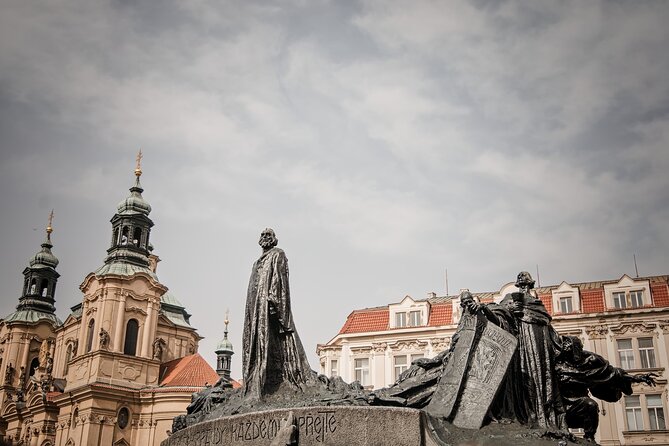
- The Jan Hus Monument stop comes with a clear explanation of who Jan Hus was and why his ideas mattered—often described as a Czech parallel to Martin Luther, and tied to church reform that led to his execution.
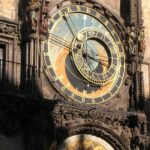
From there, the highlight for most people is the Old Town Hall with the Astronomical Clock. Your guide explains the clock as a medieval miracle and also points out the fun idea that it uses multiple time systems at once. You’ll also learn what it shows—stars, and the Moon and Sun—so you’re not just hearing a generic “cool clock” line. If the clock is high on your Prague list (and for good reason), this is the stop where the tour earns its keep.
Charles IV’s Neighborhood, Karolinum, and Mozart’s Don Giovanni Moment
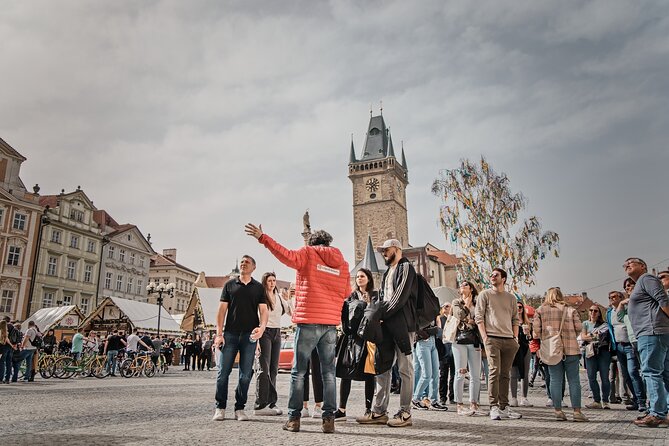
After the square-and-clock core, you move into a stretch where Prague’s layers start to feel like they overlap.
At the Karolinum, you’ll see the exterior of what’s described as the first university in Central Europe. This is a quick stop, but it’s a useful one because it reminds you Prague wasn’t only about castles and kings. Education and civic life belonged to the same city.
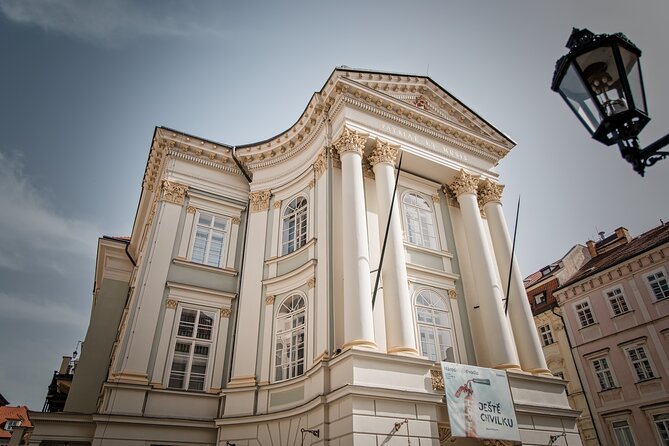
Then you head to Theatre des Etats, another exterior stop with a specific payoff: it’s tied to a major art-world moment. Your guide explains that Mozart’s Don Giovanni premiered here. That detail matters because it turns a pretty theater façade into something you can place in a wider European story. If you already know Don Giovanni, you’ll probably enjoy this more; if you don’t, it still helps you see why the building mattered.
This part of the walk is also a good pacing reset. You’ve just taken in reform-era religious figures and a complex clock. Now you get to switch gears and see Prague as a place where music and learning fit into the same streets.
Cubism on a Corner: The House of the Black Madonna and St. James
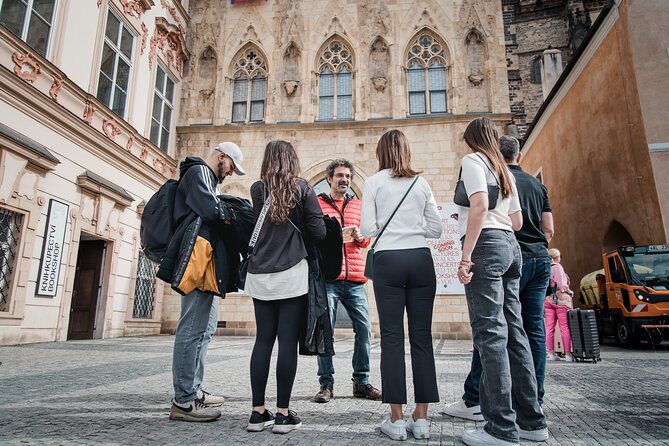
One of Prague’s most fun “wait, what?” contrasts shows up in the Old Town, and your route includes it.
You’ll stop at the House of the Black Madonna, described as the only pure cubistic building in Prague, with cubism being an architectural style associated with Czech lands. If you think of Prague as strictly medieval spires and baroque curves, this is a reality check—in a good way. It also helps you spot why Prague feels so visually layered: different eras weren’t erased; they were added.
Right after that comes Church of St. James. The key points are practical and story-driven:
- It was founded in a Gothic style.
- It burnt out and was rebuilt in the baroque style.
- Inside, there’s a legend tied to a hand hung from the ceiling on the right side of the main entrance.
Even when you’re mostly getting your look from the outside, the guide’s context changes how you view the façade. You start thinking: is this surface hiding earlier work? Was it rebuilt after damage? In a city like Prague, that kind of question makes the walking feel active instead of passive.
One more note: if you’re the type who likes to take in details slowly, you’ll probably want a second pass at a couple of these churches later on. This tour is made for recognition and orientation, not long interior time.
Tyn Yard–Ungelt: A Medieval Courtyard You’d Walk Past
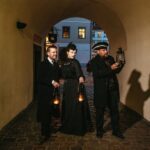
After the big landmarks, the tour drops you into a small, tucked-away vibe at Tyn Yard – Ungelt. This is described as a unique medieval courtyard hidden in the center of Prague.
What makes it interesting is the practical commercial story: it used to be a place where merchants from foreign countries paid customs for goods brought into Prague. So you’re not just seeing a pretty courtyard. You’re seeing where a money-and-trade system lived.
This stop is also a great example of why a guide matters. Left on your own, you might walk straight by and only register it as a narrow passage. With a guide, you understand what kind of city infrastructure you’re looking at.


Jewish Quarter Synagogues Circuit: What You’ll See (and What Might Be Closed)
Then the route settles into the Jewish Quarter, with several key synagogue-related stops. This is where the walking tour turns from “Prague highlights” into something more specific and meaningful.
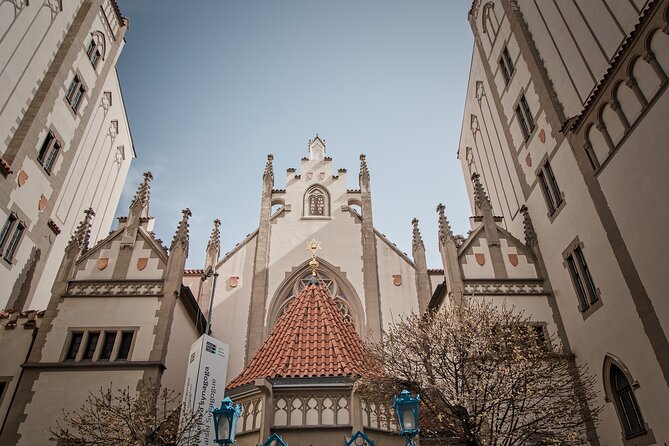
You’ll start with Maisel Synagogue (neo-gothic exterior). It’s a short stop, but the guide’s goal here is to connect architectural style to Jewish community life in the Czech lands.
Next is the Old Jewish Cemetery. This is the one stop where admission isn’t included. Even without going deep into ticket logistics, the cemetery stop is framed as a jewel of Prague’s Jewish history, known for layers and gravestones. This is also where you should plan to pause and take your time. A cemetery can’t be rushed like a clock.
After that you’ll see the exteriors of:
- Klausen Synagogue, described as the largest synagogue in the former Prague Jewish ghetto, with explanation of Jewish customs and burial ceremonies.
- The Old-New Synagogue, described as one of the first Gothic buildings in Prague and the oldest surviving medieval synagogue with a twin-nave design. Your guide also notes an interesting legend: it’s allegedly built from stones from Solomon Temple in Jerusalem.
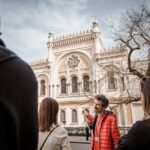
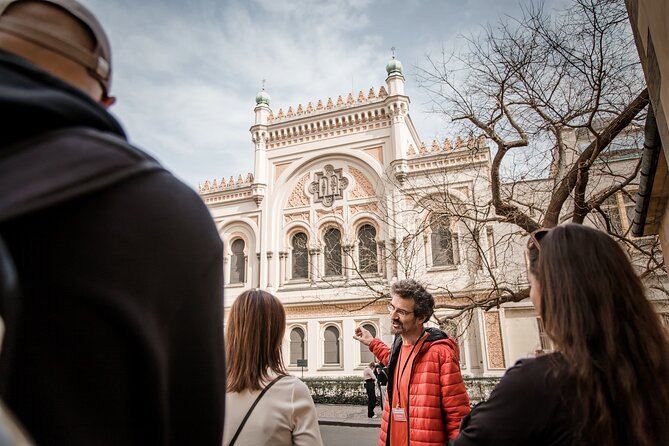
Finally, you reach the Spanish Synagogue (also called the Jewish Museum area in Prague). It’s associated with Moorish interior design influenced by the Alhambra. On paper, this is presented with an exterior focus, and in practice, access can vary. In one case, the Spanish Synagogue was closed to the public for Jewish holidays, so the expectation should be: you’ll learn and see what you can, but interior access may not always be available.
If your top priority is synagogue interiors, this is still a strong orientation tour. But I’d treat it like a route for understanding and recognizing the sites first, then deciding later which building you want to return to when you’re in control of opening hours.
Kafka’s Statue and the Tone Shift That Works
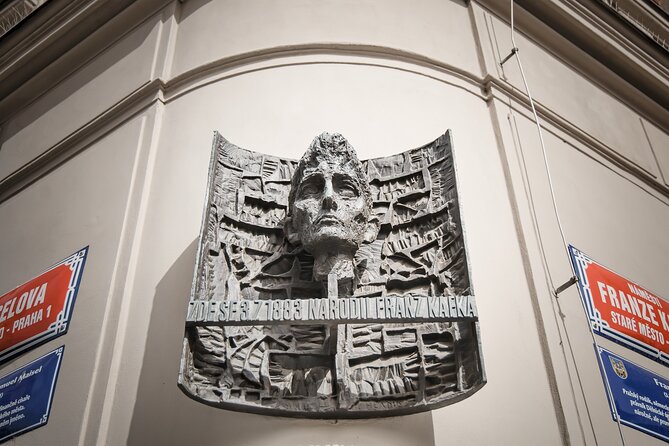
The walk ends with a statue of Franz Kafka by Jaroslav Rona. It’s a quick stop, but it’s memorable because it shifts the tone from architecture and communal memory to literature and mood.
Your guide’s framing is playful and a little dark: Kafka is tied to a feeling you can get from reading his work. Even if you’re not a Kafka superfan, it’s a nice capstone because it reminds you Prague’s influence doesn’t stop at monuments—it spills into ideas.
And because the tour ends back at the meeting point, you finish in a place where it’s easy to keep going on your own.
How Much Walking Is It, and Who Should Take This Tour?
This is about 2 hours total, with lots of short stops. That makes it ideal if you have a packed day and want a guided foundation without eating up your afternoon.
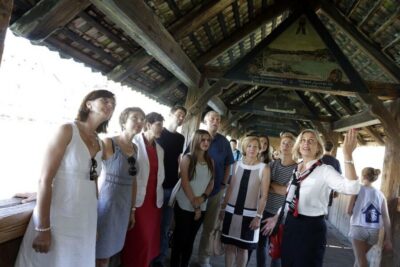
The pace also depends on the group. The tour caps at 30 travelers, and smaller groups have made it easier to hear clearly and ask questions. If you like learning on your feet—without being stuck in a classroom vibe—this format works.
That said, it’s still a walking tour in an older city. One guest flagged lots of steps (around 82) and suggested stairs can be a lot if you have a heart condition. That doesn’t mean everyone will struggle, but it does mean you should be honest with yourself about stamina. If you have mobility limits, it’s smart to ask ahead what the walking/stairs are like.
Who I think benefits most:
- First-time Prague visitors who need a fast way to connect landmarks
- Travelers who want Old Town plus the Jewish Quarter in one shot
- People who like stories tied to buildings, clocks, and streets—not just facts on a screen
If you’re expecting nonstop museum entry, this might feel too “outside-looking-in.” But for value and orientation, it does what it promises.
Value Check: Why This Price Makes Sense for Two Hours
At $24.19 per person, you’re paying for a local guide and an efficient route through high-demand sites like the Astronomical Clock and multiple Jewish Quarter landmarks. Most stops are quick and admission is free at many of them, with only the Old Jewish Cemetery listed as not included.
So the value isn’t about “you get everything inside.” It’s about getting a guided framework fast, so when you explore later you know what you’re looking at and why it’s there.
Should You Book This Prague Old Town and Jewish Quarter Walk?
If your goal is to get your bearings fast, learn the story behind the big Old Town names, and still fit the Jewish Quarter into a short window, I think this is a good choice. It’s also a solid pick if you enjoy exterior architecture stops paired with clear explanations—because the tour is structured for that.
I’d book it if:
- you want 2 hours of guided orientation
- you like asking questions and getting context beyond guidebook captions
- you’re comfortable with the idea that interiors can vary
I might skip or pair it with a separate plan if:
- synagogue interiors are your top priority
- you have trouble with stairs and want a route with minimal steps
FAQ
How long is the Prague Old Town and Jewish Quarter walking tour?
It lasts about 2 hours, so it’s a good fit for a half-day plan or a “first day in Prague” orientation.
Where does the tour start?
You meet at Týnská 627/7, Staré Město, Prague 1 (in front of Mcgee’s Trips & Tickets). The tour ends back at the meeting point.
What time does the tour start?
The start time listed is 10:30 am.
Is the tour offered in English?
Yes, the tour is offered in English.
What’s included in the price?
A local guide is included. Most stops list admission as free, and the Old Jewish Cemetery is marked as not included.
Do children get a discount?
Children up to 6 years old are free of charge, but children must be accompanied by an adult.
Can I cancel and get a refund?
Yes. You can cancel up to 24 hours in advance of the experience for a full refund.