REVIEW · MADRID
Madrid Best Walking Tour: Old city and Royal sites
Book on Viator →Operated by BEST MADRID TOURS · Bookable on Viator
Madrid clicks into place fast. In just 2.5 hours, this small-group walk links Debod Temple to the grand Royal Palace area, with classic plazas and photo stops in between. You’ll move at a steady pace, get an official English-speaking guide, and come away with the key stories that connect Madrid’s different eras.
What I really like is how small the group is (max 18). That means you can ask questions and get clear answers, like when guides such as Maria or Ignacio explain the architecture and the politics behind what you’re seeing. I also like that you get admission tickets included for the stops that require them, so you’re not stuck hunting for entry times while your feet are already in motion.
One heads-up: it’s a walking tour with lots of plaza-to-plaza transfers, and you should expect some uphill effort and stairs in spots. If you want to linger for long stretches, the timing is tight at each stop.
In This Review
- Key highlights worth looking for
- Debod Temple to Parque del Oeste: the best kind of surprise start
- Plaza de España and Plaza de Oriente: Don Quixote meets the royal “sculpture wall”
- Almudena Cathedral exterior and the Royal Palace: big symbols, quick context
- Calle Mayor and Plaza de la Villa: the old Madrid street rhythm
- San Miguel Market and Plaza Mayor: where the tour hands you the city
- Pace, group size, and what you’ll learn from guides like Maria or Ignacio
- Value check: is $36.30 a good deal for a Madrid orientation walk?
- Who should book this Old City and Royal Sites walking tour?
- Should you book this Madrid tour?
- FAQ
- How long is the Madrid Old City and Royal sites walking tour?
- Is the tour in English?
- Where does the tour start and end?
- Are admission tickets included?
- Does the tour include inside visits to buildings or museums?
- What group size should I expect?
- What is the cancellation option?
Key highlights worth looking for
- Templo de Debod’s Egypt-to-Madrid story: an ancient Egyptian temple rebuilt stone by stone in Madrid
- A true viewpoint sequence: Debod’s area transitions into a panoramic overlook at Parque del Oeste
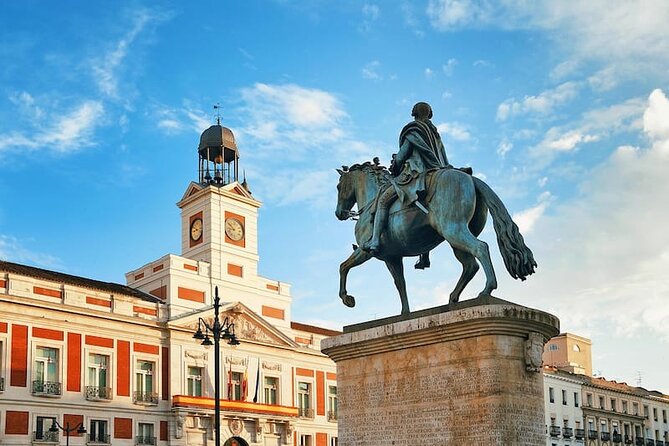
- Royal Madrid from the outside: Plaza de Oriente and the Royal Palace area set the scene fast
- Art and history in the same frame: Philip IV’s bronze presence and the Visigoth king sculptures
- Old-town street texture: Calle Mayor’s stone paving and the Habsburg quarter feel
- Big-square finish: Plaza Mayor, where Madrid’s public life has echoed for centuries
Debod Temple to Parque del Oeste: the best kind of surprise start
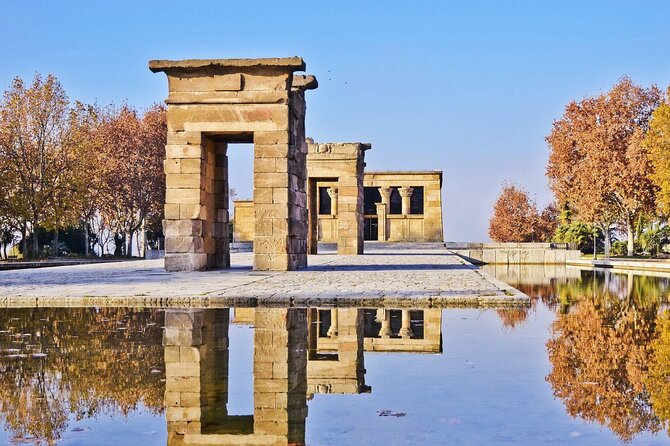
This tour kicks off at C. de Ferraz, 22 (Moncloa–Aravaca area), and it starts with a moment that feels almost impossible in Madrid: Templo de Debod. The guide will point out that this temple is more than 2,200 years old and was dedicated to Amon—and then rebuilt in Madrid stone by stone as part of the rescue from the Aswan Damm project. Even if you’ve seen Egyptian artifacts before, it lands differently when the stones are sitting in a Madrid setting. You’re not just looking at history; you’re seeing history relocated.
You only get about 10 minutes here, so think of it as a “see it, understand it, then move on” stop. In that time, focus on orientation: the doorway shapes, the stone work, and the way the temple sits in its hilltop environment. If you like photos, this is one of your best early shots because the story is instantly recognizable and the setting has strong lines.
Then the walk continues toward Parque del Oeste, where you get one of Madrid’s classic panoramic outlooks. The guide will connect this viewpoint to the idea that Madrid’s early growth traces back to the 9th century—so you get a quick sense of the city’s origins from the same general hilltop area where Debod stands. It’s not a museum stop. It’s a “get your bearings” stop. You’ll start noticing how Madrid stretches and how the royal center sits in relation to the older neighborhoods.
Tip: wear shoes that forgive uneven pavement. You’re on stone and up-and-down surfaces, and the tour is built on short stops, not leisurely strolling.
You can also read our reviews of more walking tours in Madrid



Plaza de España and Plaza de Oriente: Don Quixote meets the royal “sculpture wall”
After Debod and the viewpoint, you head to Plaza de España. This stop is about one thing: the tribute statue to Don Quixote and Miguel de Cervantes. It’s a quick photo moment, but the guide usually uses it to set up Spain’s habit of mixing literature, monarchy, and public monuments. Don Quixote isn’t just a book in this city—you feel how deeply Madrid’s public spaces treat storytelling as a form of identity.
Next comes one of my favorite sections: Plaza de Oriente. You’re in the royal orbit here, and the guide will help you read the square like a diagram. This garden-monument area is where you’ll see:
- 20 sculptures of the ancient Visigoth kings of Spain, carved in stone
- The way the square is framed by the Royal Opera House and the Royal Palace
- At the center, the equestrian bronze sculpture of King Philip IV, designed by Galileo Galilei and painted/associated with the style of Velázquez (the tour wording highlights both names)
The trick to enjoying this with only around 10 minutes is to pick one “anchor” and let everything else orbit it. For example: start with Philip IV in the middle, then look outward at the line of the Visigoth statues, and finally glance back at the Opera House and Palace framing. In a short time, you get a full sense of what kind of power the monarchy wanted to project—continuity, legitimacy, and cultural clout.
Potential drawback: if you’re the type who likes to sit on a bench and stare, this section may feel fast. The trade-off is you’ll get to more high-impact sites before your legs call it quits.
Almudena Cathedral exterior and the Royal Palace: big symbols, quick context
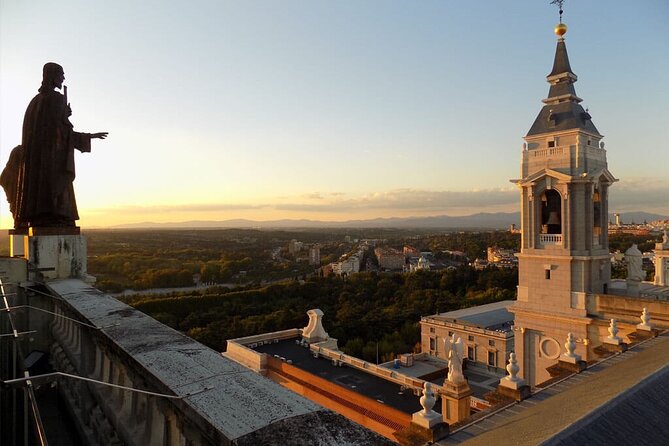
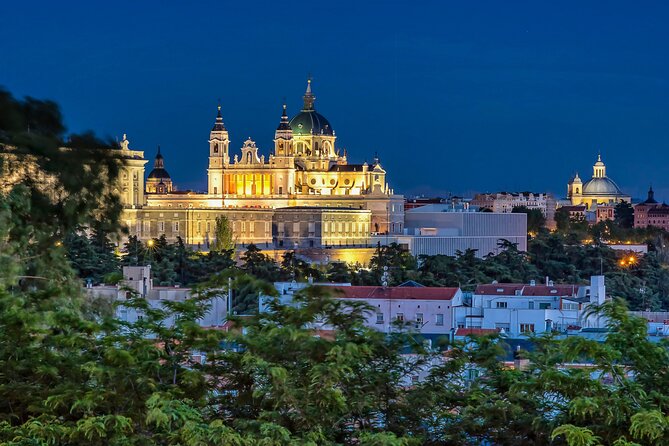
From Plaza de Oriente, you move toward Catedral de Santa María la Real de la Almudena. The tour focuses on the outside view, with the guide describing the cathedral’s neo-gothic style and the surrounding setting. Since there’s no inside museum or cathedral visit included, you’re relying on the guide’s explanation. This is where an attentive guide matters, because the exterior alone won’t tell you everything.
The timing here is around 10 minutes, which means you’ll mostly do three things: identify the style, understand why it was placed here, and learn how it fits into the royal and civic layout of central Madrid. If you want more detail than that, you’ll likely want to come back later on your own, but the tour gives you the context to appreciate it.
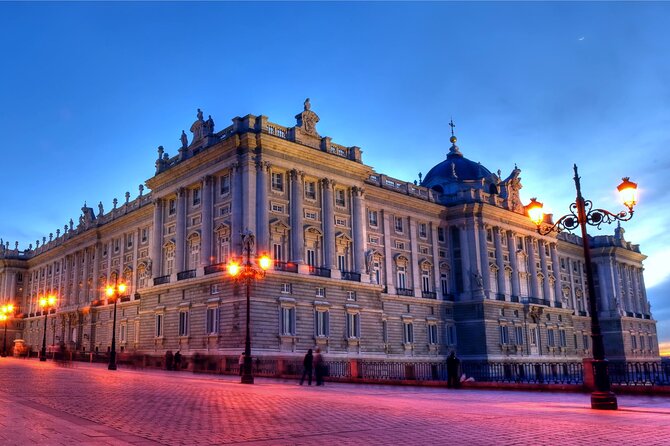
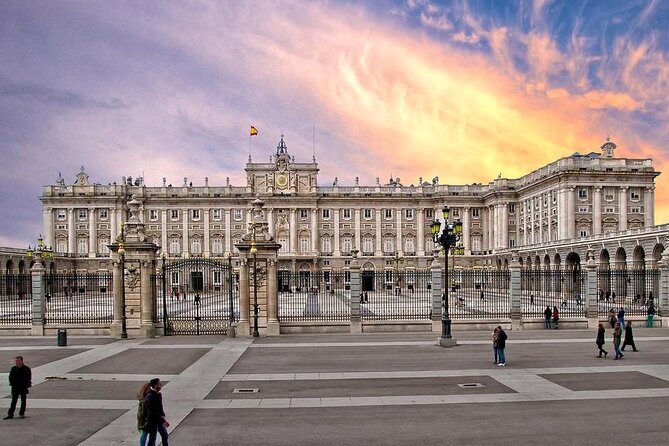
Then it’s on to Royal Palace of Madrid—again, this is an outside visit. The palace is described as the official residence of Spain’s kings, and the guide connects its size and artistic heritage to the role the monarchy played in shaping Madrid’s public image. You get a real-feeling sense of scale just from standing outside and looking up, but the tour intentionally keeps it exterior-focused.
Why this works for most people: inside palace visits often take planning and extra time. This tour gives you the historical and artistic framing quickly, so you know what to notice if you later decide to pay for inside access during your free time.
Calle Mayor and Plaza de la Villa: the old Madrid street rhythm
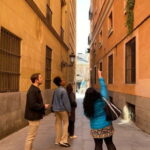
Now the tour leans into atmosphere. You’ll walk along Calle Mayor, described as old Madrid’s main street with old stone-paved lanes, plazas, and narrow alleys. This is tied to the 15th-century Habsburg quarter, so expect the guide to connect the street’s layout to Spain’s broader political story. Calle Mayor is one of those streets where the city feels layered—commercial today, but historically important in its bones.
This section is about about 10 minutes, so don’t expect a deep neighborhood exploration. Instead, treat it like a “feel it” walkthrough. Look at the paving, the tight alley angles, and how the street pulls you toward open squares.
Then you’ll reach Plaza de la Villa, described as the heart of ancient Madrid. This square has the city hall (Plaza de la Villa) and a statue of Álvaro de Bazán, identified as the Grand Admiral of the Spanish Armada. That’s a key moment because it ties Madrid’s civic life to Spain’s maritime and military history. The guide will typically help you connect why the Armada figure matters in public symbolism.
Short stop, big takeaway: you leave with a mental map of where Madrid’s old civic center sits—and how power was displayed in both royal and city-government space.
One small practical note: this part can involve uneven ground, and the walk is continuous enough that you’ll want shoes with grip.
San Miguel Market and Plaza Mayor: where the tour hands you the city
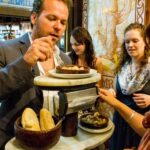
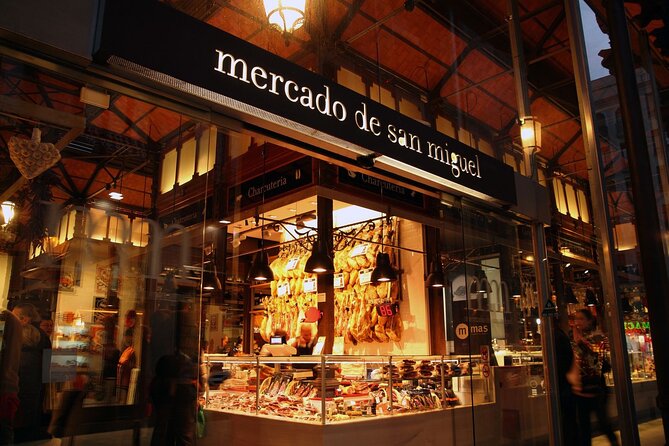
The tour then heads to Mercado San Miguel. This stop is centered on the market’s reputation for tapas and delicatessen stores. While you’re on a structured walk, the market is also where you can make your own choices—snacks, a quick drink, or just browsing the stalls. Your guide’s value here is steering you toward the kind of bites that match your tastes and timing.
Plan on about 10 minutes at the market. It’s not a slow-food hangout. Think of it as a tasting-or-browse interruption that makes the tour feel like Madrid, not like a history lecture on legs.
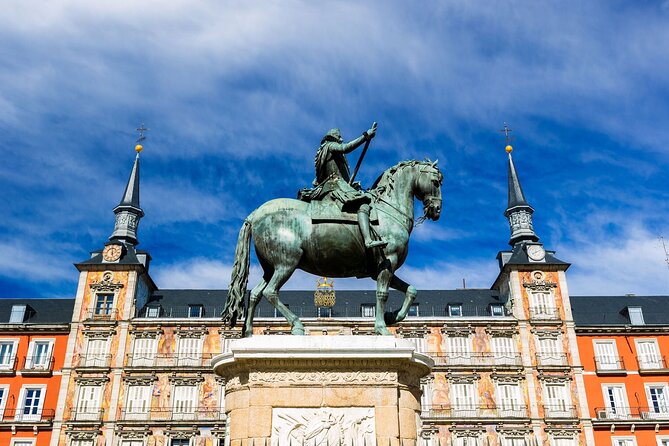
Finally, the tour ends at Plaza Mayor. Expect the biggest “Madrid postcard” payoff. The square has a record of public events like medieval tournaments and inquisition trials, and it’s also described as a location for bullfights. In the center is an equestrian statue of Philip III, and the square is ringed with restaurants and tapas bars. The tour framing leans into how Plaza Mayor became the stage for public life—official, dramatic, and everyday at the same time.
This final stop gets about 15 minutes, which is just enough time to soak it in and decide where you want to go next. The tour ends at Pl. Mayor, 2–22 (Centro), which is also a smart landing point because you’re close to transit options for heading back to your hotel or continuing your day.
You can also read our reviews of more city tours in Madrid

Pace, group size, and what you’ll learn from guides like Maria or Ignacio
This experience is built for orientation. At 2 hours 30 minutes with stops averaging around 10–15 minutes, the guide has to hit the important connections without dragging the group. That’s why the pacing feels “just right” for many people. You’ll be walking most of the time, pausing in places with enough visual clues for a quick explanation to click.
The small-group format (max 18) matters here. When the group is small, guides can handle questions in real time. One of the most repeated guide strengths is how guides like Maria and Ignacio explain not just what you’re seeing, but why it’s there—stories about architecture, political symbolism, and the cultural jokes or context that turn landmarks from random objects into meaningful pieces of Madrid.
You may also find audio support helpful. One guide-related tip from experiences like this: traffic can be noisy, and ear pieces can make the difference between hearing only half the story and following the whole thread.
Expect some stairs. You’ll likely deal with uphill bits and steps as you move between viewpoints and squares. The upside is that those climbs are part of why you get the best views and the most dramatic royal squares.
Value check: is $36.30 a good deal for a Madrid orientation walk?
At $36.30 per person for about 2.5 hours, you’re paying for three things at once:
- A guide who connects the dots between Egypt-to-Madrid, royal power, and old street layout
- Time savings—you hit the major sights in an efficient route instead of stitching them together yourself
- Included admission tickets for the stops that require them
In plain terms, this is a good value if you’re a first-timer or if you want a reliable starting backbone for your stay. You’ll likely use the information to plan where to eat, where to wander next, and what to prioritize later. The tour also comes with a promise of a refund if you are not 100% satisfied, which is a confidence signal that the operator expects quality.
If you already know Madrid deeply and you just want to follow your own itinerary at your own speed, you might find the short stop times limiting. But for most visitors, the efficiency plus context is the point.
Who should book this Old City and Royal Sites walking tour?
I’d book this if:
- You want a first-time Madrid orientation that ties major sites together
- You like your landmarks with clear explanations, not just photos
- You prefer a small group and practical guidance during the walk
- You want a day that ends in the easiest possible place to keep going: Plaza Mayor
You might skip it if:
- You hate walking hills or stairs
- You want inside visits to the cathedral or palace (this tour is focused on exteriors and street-level views)
- You need long, quiet time at each stop instead of short stops and moving on
Also, if you’re traveling during weather that can slow outdoor walking, keep an eye on updates. One cancellation experience was tied to bad weather conditions, so having flexible plans helps.
Should you book this Madrid tour?
Yes—if you want to understand Madrid quickly, this is one of the strongest ways to get bearings fast. The route is cleverly set up: it starts with a surprise (Egyptian temple stones), adds a panoramic reset, then builds toward the royal core, and finishes in Plaza Mayor where you can turn the tour into your next few hours of wandering.
Book it if you like guided stories, included tickets at key stops, and ending right where Madrid’s central action begins. I’d also recommend locking it in ahead of time since it’s commonly booked about a month out.
If you want inside access to buildings later, treat this tour as the warm-up—the guide gives you the framework, and you choose which places deserve your paid time afterward.
FAQ
How long is the Madrid Old City and Royal sites walking tour?
It runs for about 2 hours 30 minutes.
Is the tour in English?
Yes, it’s offered in English.
Where does the tour start and end?
It starts at C. de Ferraz, 22, Moncloa – Aravaca, 28008 Madrid, Spain and ends at Pl. Mayor, 2-22, Centro, 28012 Madrid, Spain.
Are admission tickets included?
Yes. Admission tickets are included for the listed stops.
Does the tour include inside visits to buildings or museums?
No. Inside visits to buildings or museums are not included.
What group size should I expect?
The tour has a maximum of 18 travelers.
What is the cancellation option?
You can cancel up to 24 hours in advance for a full refund.