REVIEW · CHICAGO
Chicago Walking Tour: Historic Treasures of Chicago
Book on Viator →Operated by Chicago Architecture Center · Bookable on Viator
Skyscraper stories start with a short walk. This Chicago Architecture Center tour puts big ideas behind famous facades, from Michigan Avenue to the Loop, with docents who explain what you’re seeing as you go. You’ll also get admission to the Chicago Architecture Center galleries, which helps you decode the city fast.
I love the small-group size—it stays personal, so you can ask questions without shouting over the sidewalk. I also really like the mix of exterior landmarks plus artful interiors, especially the Palmer House Hilton lobby and the Chicago Cultural Center.
One thing to plan for: access to interiors can change, and entering the Palmer House Hilton Historic Lobby requires proof of COVID-19 vaccination. If you’re not ready with that, you might get more exterior time than interior time.
In This Review
- Key Highlights You’ll Actually Feel on This Walk
- Two Hours in the Loop: How This Tour Keeps Chicago Architecture Manageable
- Starting at 111 E Wacker: The Chicago Architecture Center Galleries Setup
- Wrigley Building Views: The Fast Stop That Still Matters
- Palmer House Hilton Historic Lobby: One Interior Stop You Must Plan Around
- Carbide and Carbon Building: Exterior Details That Make the City More Fun
- Reliance Building: Another Side of Chicago’s Building Ambition
- Chicago Cultural Center Ending: Exterior Plus Interior Payoff
- Price and Value: Is $35 a Good Deal for This Architecture Walk?
- Practical Tips for a Smooth Walking Day in Chicago
- Who This Tour Fits Best (And Who Might Want a Different Plan)
- Should You Book Historic Treasures of Chicago?
- FAQ
- Where does the tour start and end?
- How long is the tour?
- How much does it cost?
- Is it a small-group tour?
- What’s included in the ticket price?
- Which stops include admission, and which don’t?
- Do I need COVID-19 vaccination proof?
- Is the tour mostly outdoors?
- Can I bring a pet or service animal?
- What if access to interiors changes?
Key Highlights You’ll Actually Feel on This Walk
- Docent-led start at the Chicago Architecture Center with galleries admission included
- Classic Loop landmarks in one route across Michigan Avenue and State Street
- Quick, efficient stops (about 2 hours total) without feeling rushed
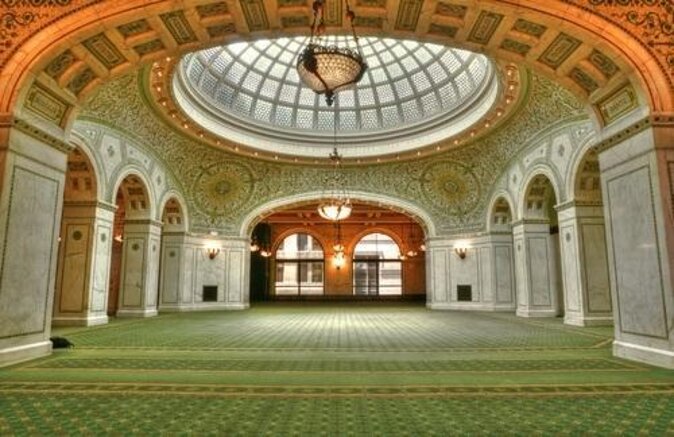
- Palmer House Hilton Historic Lobby interior visit with vaccination proof required
- Chicago Cultural Center exterior and interior views as a satisfying end point
- Max 15 people for a calmer pace and real conversation
Two Hours in the Loop: How This Tour Keeps Chicago Architecture Manageable
Chicago can feel like a blur of glass and steel. This tour solves that by turning the city into a guided story you can follow on foot. It’s set up as a smart, tight loop through the Loop area: you’ll cover major buildings, then learn why they matter without needing a full-day plan.
The duration is about 2 hours, and the stop times are short enough to hold attention but long enough to get explanations. That matters because architecture is all about details—cornices, setbacks, materials, and design goals—and you won’t have to sprint between concepts.
The small group cap of 15 is a real advantage. You’re not just herded past landmarks; you can ask what you’re noticing. And based on the guides people mention—like Bob P. and Russell, plus John, Jim, and others—there’s a pattern of people being friendly and interactive, not lectured at.
You can also read our reviews of more walking tours in Chicago



Starting at 111 E Wacker: The Chicago Architecture Center Galleries Setup
The tour begins at the Chicago Architecture Center at 111 E Wacker Dr. You start with an intro from the docent and an included stop at the Chicago Architecture Center galleries. This is the part that makes the rest of the walk click.
I like when an architecture tour doesn’t just throw building names at you. Here, you get that quick foundation first, so when you reach the streets, you’re looking for the right clues. Think of it like learning a few words before you read a sign—suddenly the city starts making sense.
Also, starting at CAC is convenient. It’s a central Loop address and an easy place to orient yourself. And since the tour ends at the Chicago Cultural Center, this route gives you a strong before-and-after feel: you begin with context, then finish in a building that’s visually memorable and open for interior viewing.
Wrigley Building Views: The Fast Stop That Still Matters
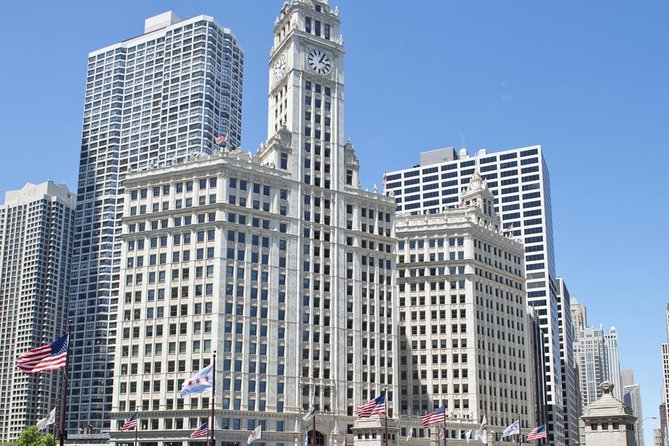
Next up is the Wrigley Building. The time here is brief, and you’re mainly getting a view rather than an in-and-out interior experience. Still, it’s a good stop because it anchors the tour in an era when Chicago branding and building design went hand in hand.
Why it works: this is the kind of landmark that looks great from the sidewalk, but it also rewards observation. When you know what to look for—style cues, facade intent, and the idea of a building as an identity—you stop treating the skyline like wallpaper.
A short stop can feel like filler on some tours. Here, it’s more like a palate cleanser. You see a major building, you get a quick frame for what makes it important, and then you move on without losing momentum.
Palmer House Hilton Historic Lobby: One Interior Stop You Must Plan Around
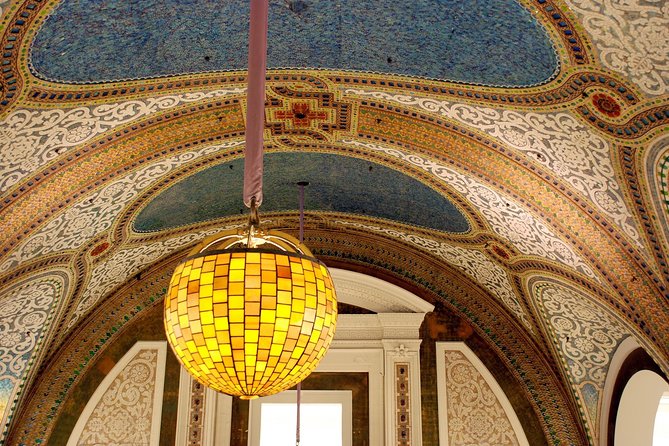
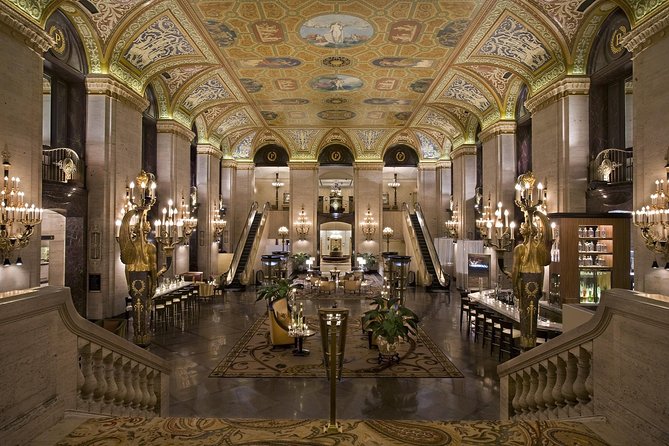
One of the tour’s biggest draws is the Palmer House Hilton Historic Lobby. You’ll view the exterior and then get interior time—about 10 minutes—which is rare on a walking route.
There’s a catch: proof of COVID-19 vaccination is required to enter the Palmer House Historic Lobby. This isn’t a small footnote. If you don’t have what’s needed, you may miss the lobby interior moment, which is one of the more “wow” parts of the tour.
If you do have the proof, this stop is worth it. Hotel lobbies in old Chicago buildings often show a mix of ambition and craftsmanship, and that’s exactly what this tour is trying to help you notice—how design worked to impress people before you even reached the elevators.
Carbide and Carbon Building: Exterior Details That Make the City More Fun
After Palmer House, you shift to the Carbide and Carbon Building. Like the Wrigley stop, it’s an exterior view. But it’s not just a photo op. This is the sort of building where you learn to slow down and look at ornament as information.
Chicago is famous for skyline giants, but the city’s character also lives in “design personality”—the industrial-era creativity and the way buildings display their identities on the street. This stop helps you connect that creativity to the larger architecture story you’ll hear all day.
Short stop length here keeps the pacing smooth. You won’t get stuck in one place waiting for the group, which helps when weather or street traffic changes.






Reliance Building: Another Side of Chicago’s Building Ambition
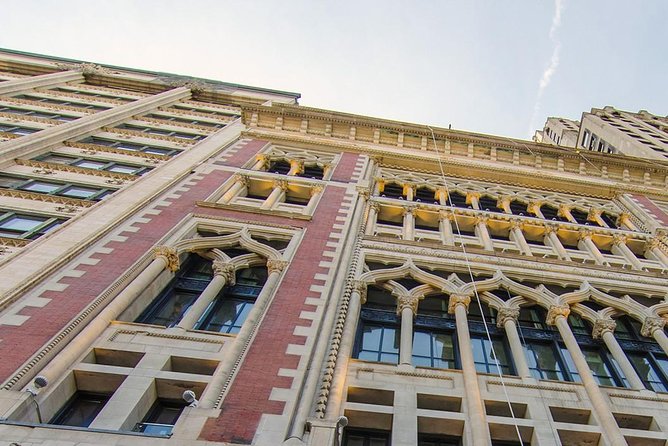
Then you’ll see the Reliance Building. Again, expect a view from the street rather than a long interior visit. This works because the Reliance stop helps you compare what you’ve already seen—how different buildings communicate status, function, and style, even when you’re just looking at the exterior.
One value of having multiple exterior stops in a row is pattern recognition. You start noticing similarities and contrasts: massing, facade rhythm, and how buildings project confidence at pedestrian scale.
It also sets up the final big finish nicely. By the time you reach the Chicago Cultural Center, you’ll be better at “reading” what you’re seeing rather than just admiring it.
Chicago Cultural Center Ending: Exterior Plus Interior Payoff
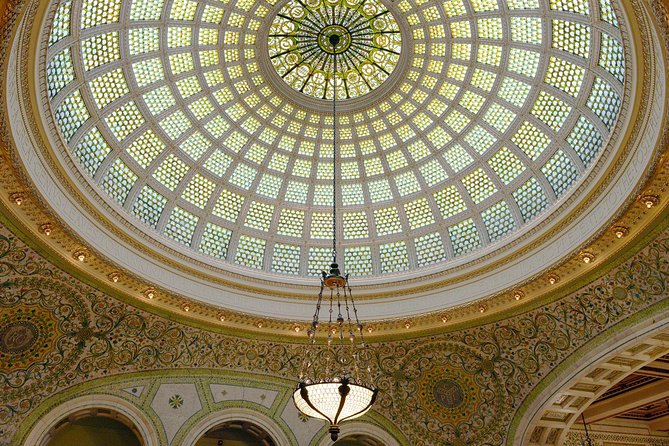
Your tour ends at the Chicago Cultural Center at 78 E Washington St. You’ll see both the exterior and the interior, with about 10 minutes allotted for that final block.
This stop is a strong finish because the Cultural Center doesn’t feel like a random final photo. It’s a meaningful capstone: you finish with a building you can actually enjoy once you’ve built up context from the morning start.
The tour also includes a nice practical detail: the docent returns to the Chicago Architecture Center, and participants are welcome to accompany them back. That can help if you want to keep the walking day going with a plan, or if you just prefer a guided exit rather than figuring everything out solo.
Price and Value: Is $35 a Good Deal for This Architecture Walk?
At $35 per person, this tour is priced for value if you’re the kind of visitor who likes a guided plan. Two big reasons:
First, admission to the Chicago Architecture Center galleries is included. That alone can turn a “walking tour” into a better deal—because you’re not paying extra to add context.
Second, you’re paying for structure and interpretation. The tour includes narration by a professional and certified guide, plus an intro from the docent at CAC. A good architecture guide helps you see why a building matters, not just what it looks like.
Your best “value multiplier” is whether you care about interiors. Palmer House has an interior window, and the Cultural Center includes interior time too. If you’re mainly an exterior watcher, you’ll still get a lot out of the route, but your biggest payoff comes if you can access those interior parts.
Practical Tips for a Smooth Walking Day in Chicago
This is a walking tour in the Loop. That means comfort matters more than you’d think, especially when the day includes multiple short stops. I’d wear shoes you can handle for the full route, and dress for wind and sudden temperature changes.
Plan around the fact that storage for luggage or strollers isn’t provided, and there’s no coat check. If you’re traveling light, great. If you have a backpack, keep it manageable so you’re not constantly juggling it.
Also note that access to featured building interiors may change depending on schedules or unforeseen closures. That’s common in cities with live public buildings. The smart move is to treat interior time as a bonus—while still expecting excellent exterior views and clear explanations.
Who This Tour Fits Best (And Who Might Want a Different Plan)
This tour is a strong match if you want a fast architecture education without building a self-guided itinerary. It’s also ideal if you like history but hate wandering around guessing what to look for.
I’d especially recommend it for:
- First-time visitors who want to understand the Loop architecture quickly
- People who enjoy art deco-era interiors and classic Chicago landmarks
- Anyone who likes a Q-and-A style walk, not a one-way lecture
If you’re looking for deep, hour-by-hour interior access to many buildings, this may feel limited. It’s built for breadth and direction. The payoff is learning enough to appreciate what you see later, on your own.
Should You Book Historic Treasures of Chicago?
Yes—if you want a focused, efficient architecture introduction that leaves you better at seeing the city. The included CAC galleries admission, the certified guide narration, and the combination of major exterior landmarks with interior moments at Palmer House and the Chicago Cultural Center make the price feel fair.
Book it soon if your dates are fixed, since it’s commonly booked around 10 days in advance on average. And if you’re planning to enter the Palmer House lobby, make sure you’re ready with the required vaccination proof so you don’t miss the interior highlight.
If you want to understand why Chicago’s buildings look the way they do—this is an easy yes.
FAQ
Where does the tour start and end?
It starts at the Chicago Architecture Center, 111 E Wacker Dr, Chicago, IL 60601, and ends at the Chicago Cultural Center, 78 E Washington St, Chicago, IL 60602.
How long is the tour?
The tour runs about 2 hours (approx.).
How much does it cost?
The price is $35.00 per person.
Is it a small-group tour?
Yes. The tour has a maximum of 15 travelers.
What’s included in the ticket price?
You get a walking tour of Chicago architecture with narration by a professional and certified guide, plus admission to the Galleries of the Chicago Architecture Center.
Which stops include admission, and which don’t?
Admission to the CAC galleries is included. Other stops—like the Wrigley Building, Carbide and Carbon Building, and Reliance Building—are listed as no admission included, while the Palmer House and Chicago Cultural Center are free for those stops as noted.
Do I need COVID-19 vaccination proof?
Yes, proof of COVID-19 vaccination is required to enter the Palmer House Hilton Historic Lobby.
Is the tour mostly outdoors?
You’ll be outside for most of the stops to view the buildings, with interior time at places like the CAC galleries, the Palmer House lobby, and the Chicago Cultural Center.
Can I bring a pet or service animal?
Pets are not allowed. Service animals are allowed.
What if access to interiors changes?
Access to building interiors featured on the tour may change due to weekend and holiday schedules or unforeseen closures. You may still enjoy the sightseeing and commentary even if an interior isn’t available.