REVIEW · CHICAGO
Chicago’s Secret Interiors Architectural Walking Tour
Book on Viator →Operated by Chicago River Boat Architecture Tours · Bookable on Viator
Skyscrapers meet secret interiors. This is a tight Loop walk where you trade sidewalk staring for real access to impressive interiors and courtyard moments most people never see. I love how you also get the bigger structural story behind why Chicago rebuilt and reinvented itself so fast, and the skyline views change from one block to the next.
Two things I really like: you get a small group (up to 15) pace that stays friendly, and the tour mixes famous names with “how did they pull that off?” design details—think Burnham, Wright’s fingerprints, and Art Deco craftsmanship. One consideration: the Rookery Building is closed on Sundays, so that star stop won’t be on the route that day.
In This Review
- Key highlights you’ll feel right away
- Why Chicago’s “secret interiors” tour is more than a photo walk
- The Loop start: from art deco to the money-canyon feeling
- La Salle’s “financial canyon” effect and why skyscrapers feel personal
- Union Station: Burnham’s Beaux-Arts entrance and the Great Hall mood
- The Rookery Building: light court, ironwork, and the Sunday skip
- Field Building: Art Deco detail that reads like design shorthand
- Marquette Building: Chicago window ideas and mosaic storytelling
- Palmer House (Hilton): Gilded Age luxury after the Great Fire
- Cultural Center or Monadnock: how Chicago shifted between work and art
- Marshall Field and Company Building: Tiffany glass and department-store theater
- Price, time, and group size: does $35 feel fair?
- Guides, pacing, and weather: what to expect day-to-day
- Should you book Chicago’s Secret Interiors tour?
- FAQ
- What’s the starting point and where does the tour end?
- How long is the Chicago Secret Interiors walking tour?
- How many people are in the group?
- Is the Rookery Building included on every day?
- What stops are included during the tour?
- What’s included in the ticket price?
- What happens if weather is poor?
Key highlights you’ll feel right away
- Rare interior access in landmark buildings, not just exterior photos
- Compact timing: about 2 hours total with short stops (around 10 minutes each) and indoor time
- Design stories you can picture: light courts, terra cotta, mosaics, and structural challenges
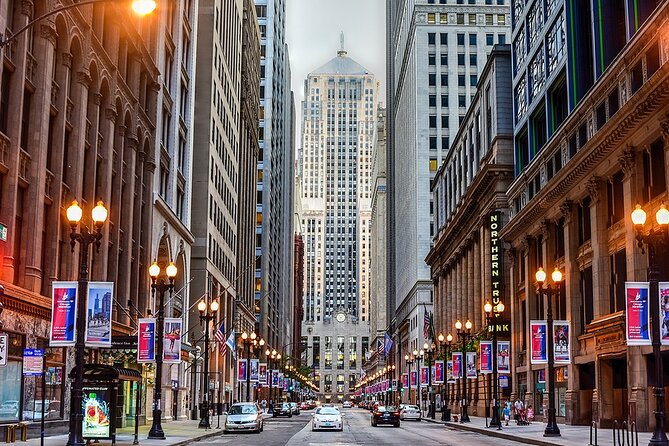
- Classic Chicago skyline perspective from the financial district’s “canyon” streets
- Guides with energy named often include Ethan, Grant, Ty, Matt, Avery, and Matthew
Why Chicago’s “secret interiors” tour is more than a photo walk
This tour works because it’s built for people who notice details. You’ll move through the heart of the Loop, but the payoff is inside: lobbies, hallways, and design features that explain what makes Chicago architecture feel different from the rest of the country.
The other big reason it’s worth it: you’re paying for a guide, not just a stroll. At $35 for about two hours with an expert guide and mobile ticket, you’re basically buying interpretation—what you’re looking at and why it matters—while the tour also lines up stops in places most people would walk past without realizing what’s there.
One more practical note: even on a day that’s cold or rainy, the route is designed so you’ll spend meaningful time indoors. You’ll still walk, of course, but you won’t feel stuck outside the whole time.
You can also read our reviews of more walking tours in Chicago


The Loop start: from art deco to the money-canyon feeling
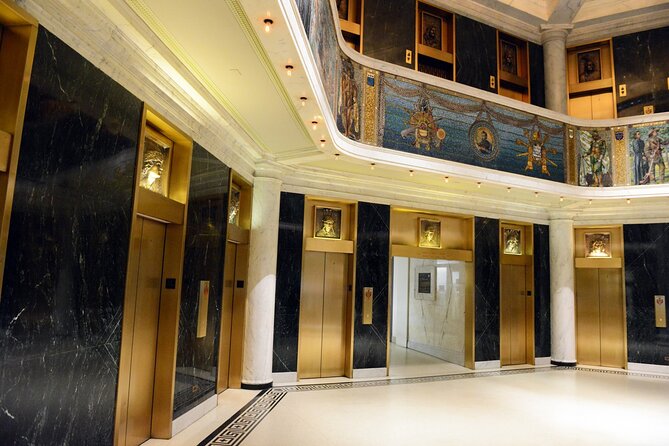
You begin at Chicago Union Station (225 S Canal St) and soon shift into the Loop’s architectural powerhouse. This is where Chicago’s commercial energy shows up in buildings you recognize instantly—and in the smaller interior features you might not notice from across the street.
In this opening stretch, you’ll get oriented fast. The guide connects the dots between major landmarks along the financial corridor and the people who drove the city’s growth: the Gilded Age and Roaring Twenties names that shaped fortunes, and the architects and engineers who had to solve very real structural problems as buildings climbed.
What I like about this first chunk is that it sets your “architecture lens” for the rest of the walk. Once you understand the trade-off between height, materials, and light, you start seeing patterns everywhere. And because the Loop is walkable and dense, you can feel how quickly each block changes the skyline.
La Salle’s “financial canyon” effect and why skyscrapers feel personal
Next you move to La Salle, still in the Loop, where the streets between tall buildings can feel like a canyon. The architecture here isn’t just big—it’s positioned so you experience scale up close, with towers acting like walls that narrow the sky.
This stop is especially good if you like cause-and-effect stories. The guide explains how architects and engineers thought through the need for strong foundations, safe structure, and usable interior space. You also get context on how the industries inside these buildings shaped the city’s identity.
One underrated aspect: the tour doesn’t treat the skyscrapers as a single style. Even within the same area, you’ll see how different eras and design ideas coexist. That makes the walk more satisfying because it doesn’t feel like the same view repeated with different names.
Union Station: Burnham’s Beaux-Arts entrance and the Great Hall mood
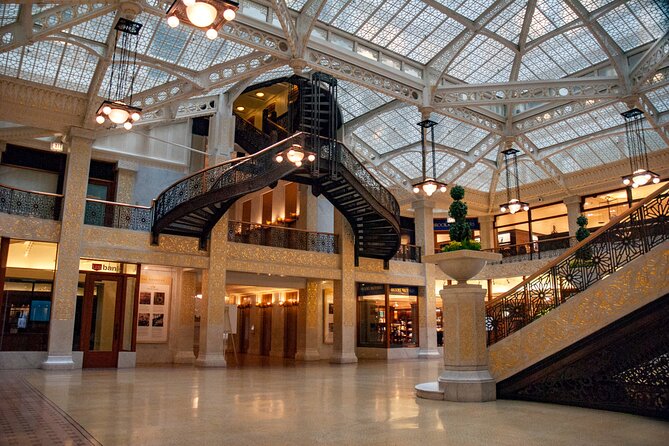
Then comes Union Station, and this stop is all about contrast. The building is an early 20th-century statement—designed by Daniel Burnham and completed in 1925—set up to impress anyone arriving for the first time.
You’ll look at the Beaux-Arts facade, then shift attention to the Great Hall and its dramatic skylight. What makes this more than a sightseeing moment is the feeling of passage: Union Station isn’t a museum interior. It’s a working gateway that has welcomed millions over the years.
If you’re the kind of person who likes architecture that blends function and showmanship, this is a great pause in the middle of a walking route. It also gives your eyes a break from the tight street canyon effect and resets your sense of space.
The Rookery Building: light court, ironwork, and the Sunday skip
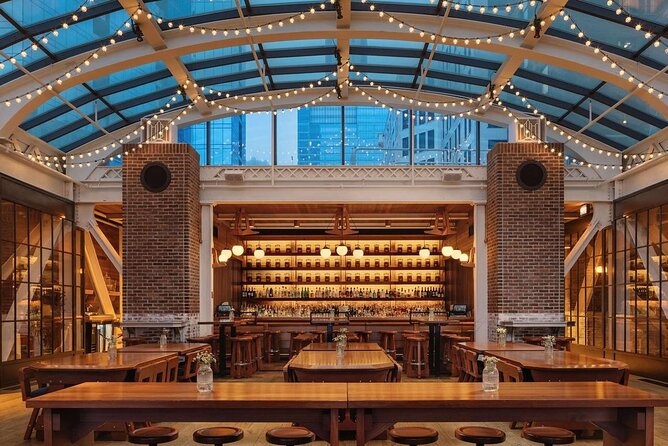
One of the most talked-about interior stops is the Rookery Building. It’s designed by Burnham and Root (1888), and the lobby was later reimagined by Frank Lloyd Wright, so you get a kind of timeline inside a single building.
Expect to focus on the reasons it became famous:
- the light court, which pulls daylight into interior space
- intricate ironwork
- the iconic oiel staircase
- a style mix that includes Romanesque and Moorish influences
This is the stop where the tour feels most “secret.” From the sidewalk, you’d have no clue how much thought is going into the interior flow and light. Once you see the court and staircase concept in person, you understand why Chicago architects were experimenting with form at the same time the city was growing fast.
Important note: The Rookery is closed on Sundays, so you’ll need a different expectation if your trip lands on a Sunday.




Field Building: Art Deco detail that reads like design shorthand
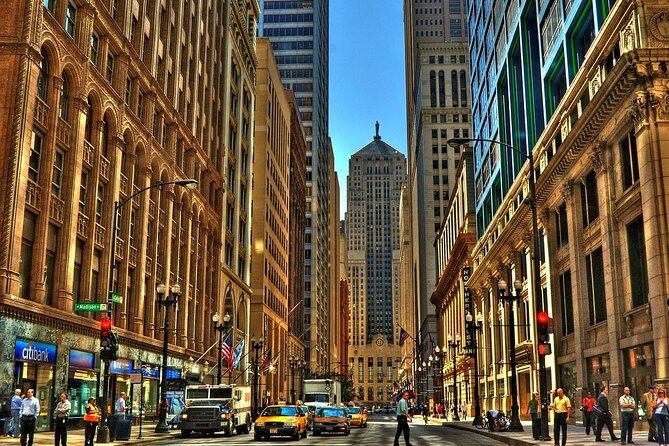
Next is the Field Building, a standout for Art Deco fans. This is one of those Chicago interiors you can appreciate even if you’re not a design nerd, because Art Deco communicates energy through shape, rhythm, and material choices.
You’ll spend time on the specifics the guide points out—details that help you “read” the building rather than just admire it. What I like here is that it shows you how Chicago styles evolve across decades without turning the city into one uniform look.
Also, because this is still a downtown area stop, the Field Building helps you keep moving at a steady pace. You’re not stuck in one place for long, but you’re given enough time indoors to feel like the stop mattered.
Marquette Building: Chicago window ideas and mosaic storytelling
The Marquette Building is a strong “why this matters” stop. It’s known for pioneering use of the Chicago window and for its terra cotta facade, both tied to the Chicago School style.
Inside, you’ll see how the interior continues the storytelling. The lobby includes ornate mosaics that narrate Jacques Marquette’s exploration of Illinois. That’s a key detail: this building isn’t only about structural form. It uses decorative art to connect the place to regional identity.
I also like the way this stop balances technical and human themes. You get the design innovation in the windows and facade, then you get the cultural message in the mosaics. It’s a reminder that “architecture” in Chicago often meant buildings with civic intent.
Palmer House (Hilton): Gilded Age luxury after the Great Fire
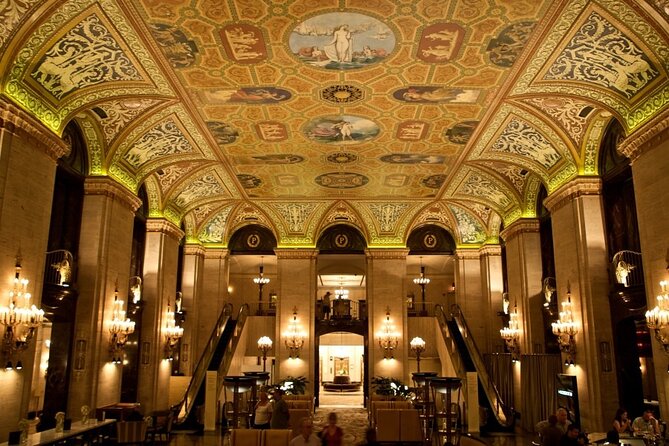
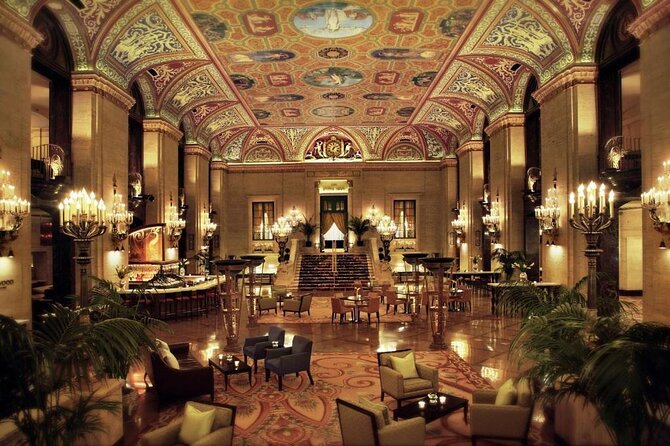
Now you reach the Palmer House, one of Chicago’s grand hotels and a highlight if you like Gilded Age elegance. The building was rebuilt in 1871 after the Great Chicago Fire, so it carries resilience in the bones of the structure.
Expect to focus on lavish interior details:
- a breathtaking lobby
- a frescoed ceiling
- mosaic floors
- bronze peacock doors
This stop is fun because you’re not just learning design terms—you’re getting a feel for how Chicago marketed itself to visitors and dignitaries. The Palmer House has also hosted celebrities and dignitaries over the years, which adds an extra layer to the “why does this feel important” question.
If you want a break from skyscraper scale and enjoy the drama of classic hotel grandeur, this is your moment.
Cultural Center or Monadnock: how Chicago shifted between work and art
Stop 8 gives you a choice depending on the day: either the Chicago Cultural Center or the Monadnock Building.
The Cultural Center is the more straightforward architecture-meets-culture option, and it’s a good fit if you like public spaces that make art feel accessible. The Monadnock Building leans more into commercial-era style, and its reputation comes from its late 19th-century design approach—especially if you like how older buildings solved practical needs without losing visual punch.
Either way, this is a helpful pivot point. After all the finance-and-commerce architecture, you get to see how Chicago identity expands beyond business into institutions and street-facing purpose.
Marshall Field and Company Building: Tiffany glass and department-store theater
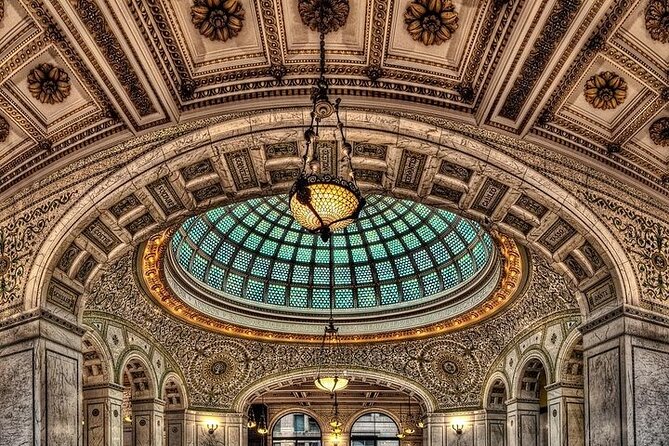
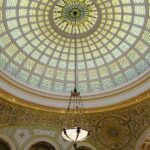
The final major stop is the Marshall Field and Company Building. This is a department store interior story with a serious architecture brain behind it—now part of Macy’s, but still shaped by its original legacy.
Two details make this stop stand out on the architecture level:
- the famous Tiffany glass mosaic dome
- the walnut-paneled Tea Room
The guide also ties the design to the department store role in early 20th-century luxury. In other words, this wasn’t just retail. It was a showcase of taste, money, and consumer ambition—built into a building you can walk through.
Ending here at 111 N State St is also smart. You finish near more dining and transit options, so you don’t feel trapped at the end of a long loop.
Price, time, and group size: does $35 feel fair?
For $35, this tour is priced like a value play—especially because entry is included for the stops listed and you get an expert guide for the full walk. You’re not paying extra for each building, and you’re getting explanation, not just access.
The tour runs about 2 hours, with short stops (roughly 10 minutes each) and some indoor time along the way. Group size maxes out at 15, which matters. In a smaller group, it’s easier to hear the guide and stay together without constant sprinting to catch up.
If you only have half a day and want more than just exterior icons, this cost-to-time ratio is tough to beat.
Guides, pacing, and weather: what to expect day-to-day
The guides for this tour tend to be energetic and organized. Names like Ethan, Grant, Ty, Matt, Avery, and Matthew show up in standout feedback for being warm, focused, and able to keep groups moving—even in cold or rainy weather.
The route is still a walking tour, so wear shoes you’d use for a city day. And because the experience depends on good weather, check the forecast. If weather gets too rough, you’ll be offered a different date or a full refund.
One more practical caution: in any small-group tour, the “you show up on time and the guide has everyone” part matters. There’s at least one case of a guide not showing, which caused a long delay until a refund was offered later. To protect your day, arrive early and confirm you’re at the right starting point.
Should you book Chicago’s Secret Interiors tour?
Book it if you:
- want rare interior access in major downtown buildings
- like architecture stories that explain the structure and the people behind it
- prefer a smaller, guided pace over hopping into bigger sightseeing crowds
- plan to walk anyway and would rather learn something while you do
Skip it (or think twice) if:
- you’re only interested in exterior skyline photos and don’t care about lobbies, courts, mosaics, and hotel interiors
- you’re visiting specifically on a Sunday and the Rookery stop is your main must-see
- you hate any chance of weather disruption and would rather do an all-weather indoor plan
If you want a classic Chicago day with real interior design moments—plus an easy way to make sense of the Loop—this is a strong choice. It’s compact, well paced, and it helps you see the city like it was built for people who notice details.
FAQ
What’s the starting point and where does the tour end?
The tour starts at Chicago Union Station, 225 S Canal St, Chicago, IL 60606 and ends at the Marshall Field and Company Building, 111 N State St, Chicago, IL 60602.
How long is the Chicago Secret Interiors walking tour?
The tour runs for about 2 hours.
How many people are in the group?
The tour has a maximum group size of 15 travelers.
Is the Rookery Building included on every day?
No. The Rookery Building is closed on Sundays, so it won’t be included on Sunday routes.
What stops are included during the tour?
The tour includes stops such as Union Station, the Rookery Building, the Field Building, the Marquette Building, Palmer House, the Chicago Cultural Center or the Monadnock Building, and the Marshall Field and Company Building.
What’s included in the ticket price?
The ticket includes an expert tour guide. The itinerary stops listed are marked as admission ticket free in the tour summary.
What happens if weather is poor?
This experience requires good weather. If it’s canceled due to poor weather, you’ll be offered a different date or a full refund.