REVIEW · CHICAGO
Chicago Walking Tour: A Walk Through Time
Book on Viator →Operated by Chicago Architecture Center · Bookable on Viator
Chicago’s skyline reads like a timeline. This 90-minute walking tour strings together Chicago’s most famous buildings in chronological order, with a guide leading the way so you can focus on the story (and the photos) instead of maps. I like that the narration is built around architectural themes, not just dates, and I also like that your ticket includes access to the Galleries at the Chicago Architecture Center.
The one thing to consider: this is a walk designed to stay speedy, so you’ll get mostly exterior views and quick context stops—not a slow, in-depth look at every building. If you’re hoping for long interior time at multiple landmarks, you may feel a bit time-hungry by the end.
In This Review
- Key Takeaways Before You Go
- A Fast, Chronological Primer on Chicago’s Architecture
- Starting at the Chicago Architecture Center (and What You’ll Get There)
- The Tour Rhythm: How a Small Group Keeps You From Feeling Rushed
- 177 N State St: Cast Iron Charm Without the Museum Line
- Virgin Hotels Chicago: A Modern Pause on an Old Timeline
- Hampton Inn Chicago Downtown/N Loop/Michigan Ave and the Renovated Motor Club
- Aqua Tower and Lakeshore East: The Skyline Shot That Ends Too Soon
- NBC Tower: Post-Modern Art Deco Energy, Explained Clearly
- Carbide and Carbon Building: The Exterior Stop That Still Feels Like a Finale
- Price and Value: Is $35 Worth It for 90 Minutes?
- Timing Tips: When to Book and How to Plan Your Day
- Who This Tour Is Best For (and Who Might Want Something Else)
- Should You Book This Chicago Architecture Walk?
- FAQ
- How long is the Chicago Walking Tour: A Walk Through Time?
- Where does the tour start and end?
- What is included in the ticket price?
- Is admission included for the building stops?
- What group size should I expect?
- Are pets allowed?
- When can I cancel for a full refund?
Key Takeaways Before You Go
- Chronological route: you’ll move through architectural eras instead of randomly hopping around the city
- Guide-led no-map format: fewer logistics, more listening, easier for first-timers
- Chicago Architecture Center Galleries included: you start with context in the right place
- Photo-friendly stop rhythm: short pauses keep things moving without making you feel rushed
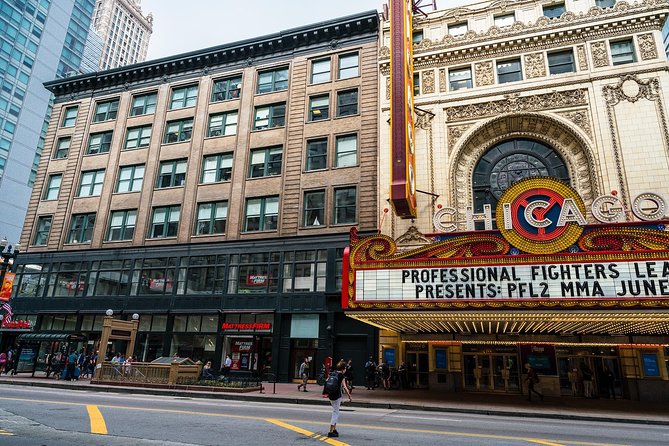
- Most iconic exteriors in a compact loop: from cast iron to Post-Modern Art Deco
- Small group limit (max 15): it stays intimate enough for questions
A Fast, Chronological Primer on Chicago’s Architecture
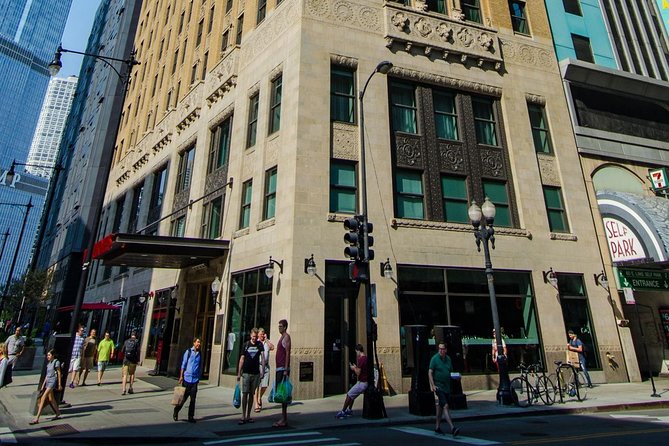
Chicago looks best when you know what to look for. This tour is built for that exact moment—when your feet are ready, but your brain needs the framework. The route is organized in time order, so the buildings don’t feel like random postcards. You start with the Chicago Architecture Center area, then you work through later landmark styles, finishing with some of the city’s signature twentieth-century icons.
You’ll walk with a professional, certified guide, and the tour is designed to be quick enough for time-pressed schedules. At about 1 hour 30 minutes, it’s long enough to feel like a real orientation and short enough that you can still squeeze in another neighborhood after.
What I like most is the focus on interpretation. Instead of just saying a building is tall or old, the guide connects design choices to what Chicago was becoming—commercial power, new technologies, changing tastes in facades, and the way architecture became a language for the city.
You can also read our reviews of more walking tours in Chicago



Starting at the Chicago Architecture Center (and What You’ll Get There)
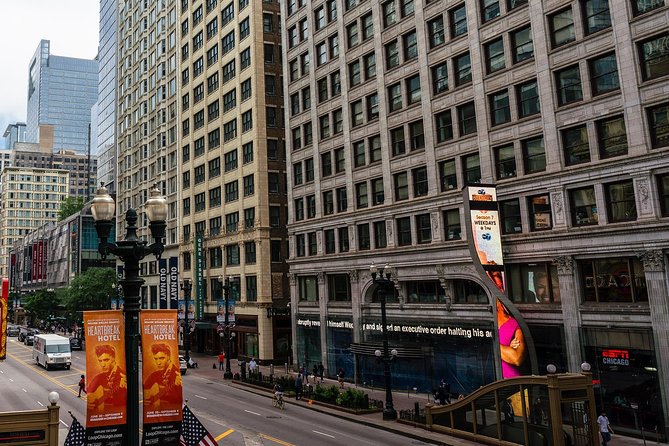
The tour begins and ends at the Chicago Architecture Center, at 111 E Wacker Dr. It’s smart to anchor here because the building sets the stage. You get an included admission ticket to the Galleries of the Chicago Architecture Center, so before you even hit the streets you’re seeing architecture explained in plain terms.
That matters because the rest of the walk is all about spotting features fast. Once you’ve seen the galleries, the outdoor stops hit harder. You’re not just staring at facades—you’re matching details to the eras the guide is describing.
Also, the ticket inclusion is real value. Even if you’re only planning a quick museum-style stop, this tour stacks that admission into a single ticket price, instead of making you decide whether to add a museum later.
The Tour Rhythm: How a Small Group Keeps You From Feeling Rushed
This is a small-group tour with a maximum of 15 travelers, which makes a difference. In a group that size, the guide can actually keep track of what people are asking and adjust the commentary without losing the timeline.
Stops are typically around 5 minutes each, plus the short in-between walking time. That structure helps you in two ways:
- You get just enough time to read the building from street level and get a photo.
- You don’t spend your whole day waiting at one location.
The guide also keeps the lead position, so you’re not splitting attention between navigation and listening. If you’re the kind of traveler who hates losing time to map-checking, you’ll appreciate this style.
One more practical note: there’s no mention of luggage storage, strollers, or coat check. If you’re traveling light, great. If you’ve got a heavy daypack, plan to keep it with you.
177 N State St: Cast Iron Charm Without the Museum Line
One of the early street-level highlights is 177 N State St, a late-1800s building with a distinctive cast-iron front. This is exactly the kind of landmark you’d miss if you walked past quickly without clues. Cast iron is a Chicago signature, and the guide’s commentary helps you spot why these facades mattered—how they let buildings look more ornate while still being practical for the era.
This stop is also listed with admission noted as free, so it’s set up as a simple, easy win on the route. You’ll get a short window to look closely at details from the outside and connect them to the guide’s bigger “then and now” storyline.
If you like architecture because it feels like engineering, this is a good moment. The “skin” of a building tells you a lot about the tools and ambitions behind it.
Virgin Hotels Chicago: A Modern Pause on an Old Timeline
Next up, you’ll view Virgin Hotels Chicago. This stop isn’t about museum entry—it’s about seeing how the city keeps rewriting itself. Since the tour is chronological, this kind of modern anchor is useful. You’re watching Chicago transition through time, and the guide uses that contrast to help you recognize what changes and what stays recognizable.
Admission here is listed as not included, and the time window is short. So think of it as a quick skyline and facade moment rather than a deep architectural inspection.
This is still worth it. Chicago’s best moments come when you can compare eras side by side without leaving the sidewalk.






Hampton Inn Chicago Downtown/N Loop/Michigan Ave and the Renovated Motor Club
At Hampton Inn Chicago Downtown/N Loop/Michigan Ave, the tour points your attention toward the renovated Chicago Motor Club. This stop gives you that “watch the city evolve” feeling again, but with a more specific architectural payoff.
You might not get a long look inside on this format, since the stop is described as a view. But one of the standout details from the experience is that you can sometimes get a peek at the Automobile association building foyer—a rare treat during an outdoor-forward walk.
If you enjoy architecture that has a human scale—spaces that connect the sidewalk to the building interior—that foyer kind of detail is a big reason this tour works well. Even when you’re pressed for time, it hints at how these structures functioned for real people.
Aqua Tower and Lakeshore East: The Skyline Shot That Ends Too Soon
There’s also a stop focused on Aqua Tower and the entire Lakeshore East development. This is one of those “look up, then look again” moments.
Aqua Tower is famous, and the Lakeshore East area gives you context for how Chicago uses redevelopment and planning to create a new identity for the lakefront-adjacent core. Since the walk keeps moving, you won’t spend forever here. But it’s a valuable pivot: after earlier-era facades, you’re suddenly looking at an idea of modern city life—design-led, place-based, and meant for a full neighborhood experience, not just a single address.
If you’re planning your photo, bring a phone with enough storage. This kind of skyline view can eat time quickly if you’re not ready.
NBC Tower: Post-Modern Art Deco Energy, Explained Clearly
Then you’ll reach NBC Tower, which houses NBC’s Chicago offices. The building is described as a Post-Modern interpretation of the Art Deco style, and that’s the kind of phrasing that can mean different things unless someone explains it.
Here, that guide narration matters. You’re not just looking at shapes—you’re learning what the style references, how it changes the rules, and why Chicago keeps remixing earlier design language instead of only moving forward.
Admission is noted as free for this stop, which fits the tour format: quick exterior viewing and immediate interpretation. In about 5 minutes, you should be able to “read” the facade more confidently than when you started.
If you want architecture to feel like culture, not just construction, this is one of the most satisfying stops. It’s a good example of how corporate buildings can carry style messages.
Carbide and Carbon Building: The Exterior Stop That Still Feels Like a Finale
The last architecture exterior stop on your list is the Carbide and Carbon Building. The tour description keeps it simple: you’ll view the exterior, with no admission required at this point.
Still, this can be a great closing note. By the time you reach it, you’ve already walked through different eras and design impulses. The guide’s chronological structure means you can see this building not as a standalone icon, but as part of the arc you’ve been building in your head.
Also, the tour ends back where it starts, at the Chicago Architecture Center. That loop is convenient. After 90 minutes on your feet, you don’t have to figure out a new pickup point or hunt down transit from a far-flung edge of the loop.
Price and Value: Is $35 Worth It for 90 Minutes?
At $35.00 per person, this tour is positioned as an easy add-on for short visits. But the real value isn’t only the duration. It’s what you get packed into that time:
- Professional, certified guide narration
- Admission to the Galleries of the Chicago Architecture Center included in the price
- A planned set of stops with built-in time for photos
If you’re traveling for a weekend and you want one “orientation-first” activity, this price makes sense because you’re buying structure. Without a guide, you’d likely spend more time reading on your own and less time understanding why Chicago’s buildings look the way they do.
You’ll also avoid some friction. There’s no need to fuss over maps or worry about directions because the guide leads you.
One more value factor: the maximum group size of 15. This isn’t a giant bus-style crowd. You’re paying for a tighter experience, which can make questions feel normal instead of rushed.
Timing Tips: When to Book and How to Plan Your Day
The tour is commonly booked about 11 days in advance on average. That’s not a huge lead time, but it’s enough that you shouldn’t assume you can walk up last minute and get a spot—especially if you’re in town on a busy weekend.
Since the tour lasts around 1 hour 30 minutes, I recommend slotting it early in your trip, or at least before you go too far deep into neighborhoods. You’ll get your bearings fast. The Chicago skyline details start making sense quicker when you’ve already heard the timeline.
Also, plan to wear comfortable shoes. The stop rhythm is short, but you’re still walking a loop.
If you’re heading out for more architecture after, you’ll be in a better position to pick buildings on purpose instead of randomly.
Who This Tour Is Best For (and Who Might Want Something Else)
This tour fits best if:
- You’re visiting Chicago for the first time and want a fast orientation
- You’re short on time but still want real context for landmark buildings
- You like architecture as a story, not a checklist
- You want a small-group experience with time for questions
It may not fit if:
- You want lots of lengthy interior access at multiple stops
- You’re looking for a slow, museum-style pacing
- You’re traveling with pets or need luggage/coat solutions (there’s no storage or coat check mentioned)
If you’re someone who enjoys quirky facts and little details, this format also works well. The guide’s delivery is part of the appeal—friendly, approachable, and willing to handle questions without making you feel rushed.
Should You Book This Chicago Architecture Walk?
If you want a smart first bite of Chicago architecture, I’d book this. For a single ticket, you get a guided timeline walk plus included access to the Chicago Architecture Center galleries. It’s built for people who don’t want to get stuck planning, and it rewards you with a clearer way to look at the city the rest of your trip.
I’d especially book it if you’re traveling with limited time or you’re the kind of person who likes architecture but doesn’t want to turn your day into homework. This tour does the organizing for you, so you can enjoy the walk and come away with a real sense of how Chicago’s buildings got to where they are now.
FAQ
How long is the Chicago Walking Tour: A Walk Through Time?
It’s approximately 1 hour 30 minutes.
Where does the tour start and end?
It starts and ends back at the Chicago Architecture Center, 111 E Wacker Dr, Chicago, IL 60601, USA.
What is included in the ticket price?
The tour includes the walking tour with narration by a professional and certified guide, plus admission to the Galleries of the Chicago Architecture Center.
Is admission included for the building stops?
Admission is included at the Chicago Architecture Center. Other stops vary: 177 N State St and NBC Tower are listed as free; Virgin Hotels Chicago and the Hampton Inn Chicago Downtown/N Loop/Michigan Ave are listed as not included.
What group size should I expect?
The tour has a maximum of 15 travelers.
Are pets allowed?
No, pets are not allowed.
When can I cancel for a full refund?
You can cancel up to 24 hours in advance for a full refund. If you cancel less than 24 hours before the start time, the amount paid is not refunded.