REVIEW · BOSTON
Boston History and Freedom Trail Private Walking Tour
Book on Viator →Operated by WeVenture · Bookable on Viator
Freedom Trail on foot beats a bus tour. This private, up-to-12 group format pairs real small-group time with a guide who can tailor the pacing to what you care about. One heads-up: it’s a timed walk, and not every stop on the outline is guaranteed, so you’ll want sturdy shoes and a bit of patience at busy intersections.
You also get an efficient route that strings together the big Revolutionary-era landmarks without turning it into a classroom. I like that it starts in the Seaport-area core and ends near Boston Public Garden, so you can roll right into the rest of your day. The overall feel is practical and fun, especially when the guide is Alan, Allison, Lexie, Molly Mitchell, Trey Petrella, Michael, or Dillion.
If you’re the type who wants to linger for long stretches at every site, you may feel a little “on-the-move.” This experience is best when you want context fast, great photo moments, and clear explanations you can carry with you afterward.
In This Review
- Key highlights worth planning around
- Price and group value: when $245 makes sense
- Where the tour starts (191 Atlantic Ave) and how the walk ends near the Public Garden
- The big idea: how the route turns “history stops” into a story
- Stop-by-stop: what you’ll actually see and why each place matters
- Beacon Hill-style red-brick streets and neighborhood context
- Granary Burying Ground (free) and the Revolutionary names behind the stone
- North End flavor: Paul Revere’s home area and the Italian streetscape
- Old North Church (built in 1723): the church that shaped early Revolutionary momentum
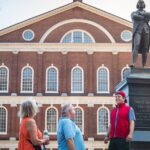
- Faneuil Hall Marketplace: speeches, assemblies, and the public square energy
- Boston Tea Party foundations: the church where it kicked off
- Massachusetts State House dome views: Bulfinch’s federal-era look with modern skyline payoff
- First bookstore stop: publishers and the literary trail around key names
- Old State House and the Boston Massacre site: why the story was moved into the street level
- Seaport District city views: art and food energy on the edge of downtown
- Walking pace, time on site, and what to wear
- The guides: what “good” looks like on this tour
- Weather, timing, and the best way to use this tour in your itinerary
- Who should book this Freedom Trail private walking tour
- Should you book it? My quick decision guide
- FAQ
- How much does the Boston History and Freedom Trail private walking tour cost?
- How long is the tour?
- Is it a private tour?
- Where do I meet the guide?
- Where does the tour end?
- What sites are included?
- Do I need a ticket on my phone?
- Is Granary Burying Ground admission required?
- Are all listed locations guaranteed?
- Can I cancel for a full refund?
Key highlights worth planning around

- Private small-group format (up to 12) so questions don’t vanish into the crowd.
- Freedom Trail landmarks with a street-level route that connects neighborhoods, not just monuments.
- Revolutionary stop trio you’ll cover in the walk: Boston Massacre, Boston Tea Party, and Bunker Hill.
- Beacon Hill-style streets and city views plus a finish near Boston Public Garden.
- Big guide energy, adaptable pacing (I’ve seen guides ask what matters most and adjust on the fly).
Price and group value: when $245 makes sense
This tour costs $245 per group for up to 12 people. On paper that can sound pricey, but the math changes fast depending on your group size.
- If you’re 2 people, you’re effectively paying $122.50 per person.
- If you’re 6 people, it becomes about $40.83 per person.
- If you’re 10–12 people, it lands around $20–$25 per person.
So I’d frame it like this: it’s a strong value for families and small friend groups who want a curated walking route, but it’s also a smart splurge if you care about getting the story straight without wrestling with huge tour groups.
A detail that matters for planning: this is often booked about a month in advance. If you’re traveling in a busy season or want a specific day/time, booking earlier keeps options open.
You can also read our reviews of more walking tours in Boston


Where the tour starts (191 Atlantic Ave) and how the walk ends near the Public Garden
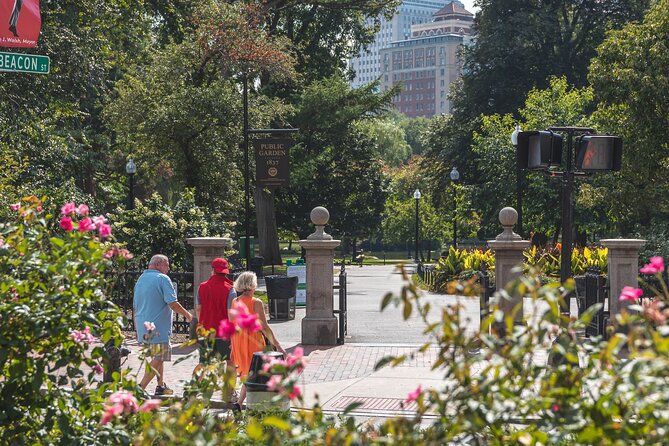
The meeting point is at 191 Atlantic Ave in Boston, with the tour starting at 1:00 pm. That’s a convenient spot if you’re staying in or near the Seaport / downtown edge of the city.
The walk winds toward the Boston Public Garden, where the tour ends. That end location is a gift: it gives you a clean off-ramp into sightseeing, shopping, or an easy return toward public transportation.
The tour also uses a mobile ticket, which is exactly what you want for a day built around walking. Just make sure you have your ticket ready before you meet the guide.
The big idea: how the route turns “history stops” into a story
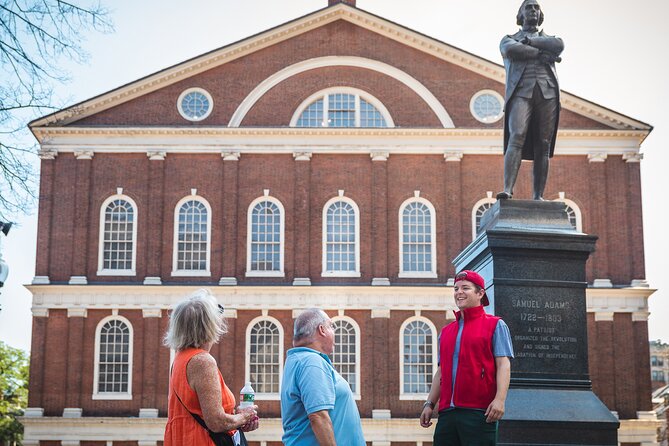
What makes this Freedom Trail experience work is the way it connects places you’d otherwise see as separate postcards.
Instead of bouncing from one site to another with little context, you’ll be shown how Boston grew from its colonial core into a city people still recognize today. The guide’s role is to link the why behind the landmarks—how streets, meeting places, and buildings shaped political momentum.
It also helps that the group stays small. In practice, that means you can ask the follow-up question that would feel awkward in a crowd. Guides on this tour (for example, Alan and Lexie) are praised for being personable and for answering questions without dumping too much information at once.
Stop-by-stop: what you’ll actually see and why each place matters
Beacon Hill-style red-brick streets and neighborhood context
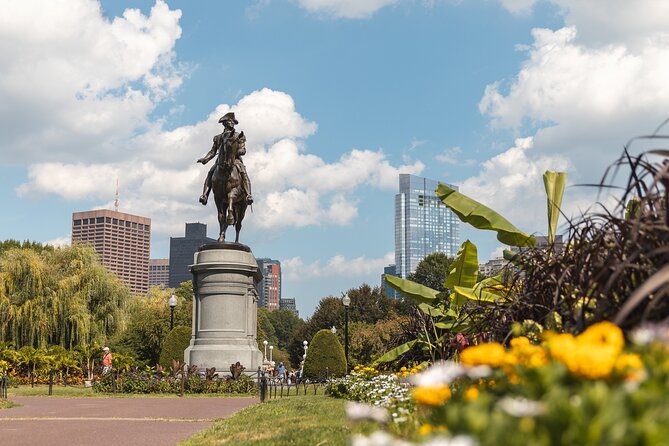
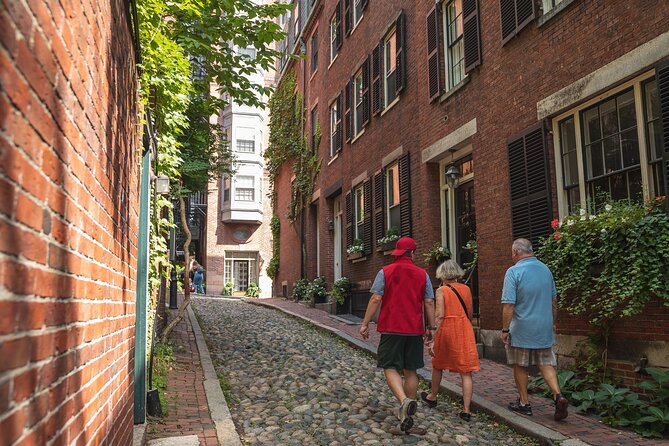
The walk begins by shifting you into a Boston neighborhood feel—think red-brick roads and the kind of old-street geometry that makes you slow down and look up.
This segment matters because it gives you a “city layout” lesson. Boston’s Revolution story isn’t only about buildings. It’s also about how people moved, where they gathered, and how power showed up in everyday space.
If you enjoy architecture and street-level atmosphere, you’ll likely enjoy this part a lot, and the pace here is a good warm-up before the main marker sites.
You can also read our reviews of more private tours in Boston

Granary Burying Ground (free) and the Revolutionary names behind the stone
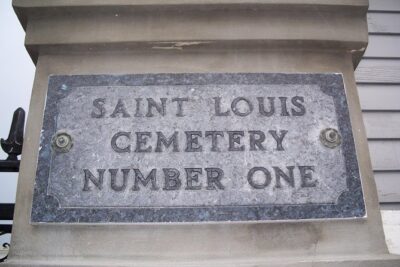
Your next stop is Granary Burying Ground, originally part of Boston Common and dating back to 1660. Admission here is free, and that’s a real plus for value.
The cemetery is famous for the final resting spots of Revolutionary heroes like John Hancock, Paul Revere, and Sam Adams. What the guide adds is the human side of those names—how these people connect to events you’ll see later on the trail.
Practical note: cemeteries can involve uneven ground. If you have arch or ankle issues, go slow and watch your step.
North End flavor: Paul Revere’s home area and the Italian streetscape
Then you move through the North End, a neighborhood known for historic buildings and food culture—along with locally roasted coffee you may spot at small cafes.
Even if you’re not planning to eat on the tour, this section helps you understand Boston as a living city. The Freedom Trail isn’t frozen in time; it’s layered over centuries.
This part also sets you up for Old North Church, because the neighborhood walk gives your brain a geography anchor.
Old North Church (built in 1723): the church that shaped early Revolutionary momentum
You’ll visit Old North Church, built in 1723 and recognized as Boston’s oldest standing church building. This matters because the building wasn’t just religious space—it played a key role in the lead-up period to the Revolution.
A good guide here helps you connect the dots between local decisions, communication, and action. It’s the kind of stop where the story makes the bricks feel “busy,” not just old.
If you care about how events unfolded rather than just what happened, this is a strong highlight.
Faneuil Hall Marketplace: speeches, assemblies, and the public square energy
Next comes Faneuil Hall Marketplace, originally built as a public market house and assembly room. Over time, it became a landmark for major speeches and public gathering energy.
Even today, the area feels like a civic stage: shops and food stands keep it active. On this tour, the value is how the guide frames Faneuil Hall as a place where ideas didn’t stay private.
If you’ve only ever seen Faneuil Hall from outside, this is the stop that makes it feel like a centerpiece of public decision-making.
Boston Tea Party foundations: the church where it kicked off
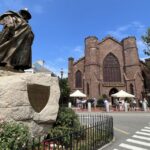
You also stop at the location connected to the Boston Tea Party. Here, the story centers on a church where it began—one night in 1773, with the note that it was the largest building in the city at the time.
This stop is striking because it shows how political action can come from ordinary community networks. And it’s a reminder that the Freedom Trail isn’t only about battles. It’s also about organizing and choosing risk.
Massachusetts State House dome views: Bulfinch’s federal-era look with modern skyline payoff
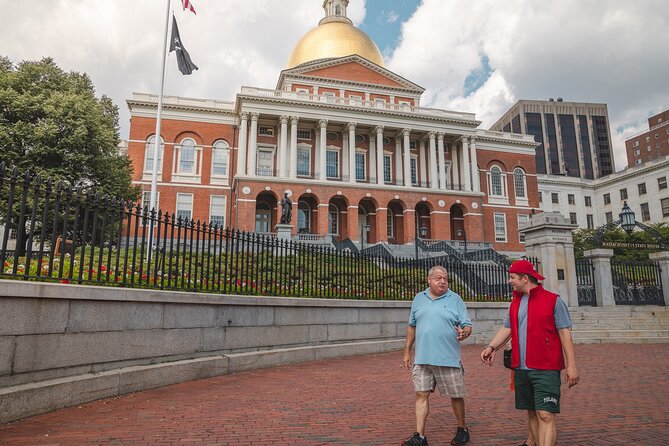
One of the most visually satisfying parts of the walk is seeing the Massachusetts State House and its dome. The building was designed and built by Charles Bulfinch in 1798, and your guide will point out how that federal-era look still reads clearly from the outside.
From here you’ll also get views across modern Boston—Downtown and the Financial District—and a look toward the John Hancock Tower, the tallest building in New England.
This section is a great reset. You move from Revolutionary rooms and gatherings to a skyline view that helps you understand why cities keep building upward.
First bookstore stop: publishers and the literary trail around key names
Next you pass by the site of the first bookstore in Boston. The tour frames it around major publishers tied to writers like Thoreau, Hawthorne, and Longfellow, with the note that it also connects to the story setup you may have heard as the Midnight Ride.
This is a stop for people who like history that travels through culture and words—not just political speeches.
Don’t expect a long museum-style hang here. It’s more of a “you’re standing near this idea” type moment.
Old State House and the Boston Massacre site: why the story was moved into the street level
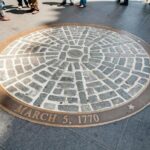
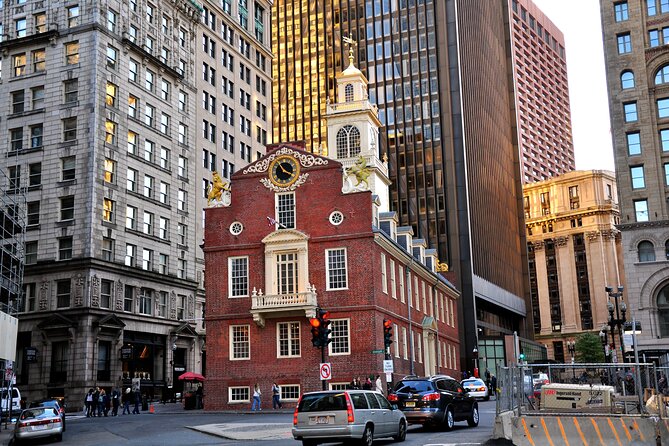
In the downtown core, you stop in front of the Old State House and the area associated with the Boston Massacre. The Old State House is described as one of the most iconic buildings in Boston and one of the oldest public buildings in the country.
This stop tends to stick with people because the guide explains not only what happened, but why the location matters in how the city grew around it—and how the story has to be understood in context.
If you like hearing how historians interpret events, this is where the walk turns from “names and dates” into clearer cause-and-effect.
Seaport District city views: art and food energy on the edge of downtown
The tour also includes passing through the Seaport District area, with city views and the local art-and-food scene around you.
I like this part because it gives the day a modern Boston contrast. You can appreciate the historic stops more when you can still see what the city is becoming.
Also, if you’re trying to squeeze in dining or a quick drink after the tour, this is the area where you’ll likely find options without needing a long detour. (Food and drink aren’t included, but the route gives you convenient chances if your schedule allows.)
Walking pace, time on site, and what to wear
The tour typically runs 2 to 4 hours. That range is normal for walking tours, but it also means the guide keeps you moving enough to hit the landmarks and still explain them clearly.
The best advice is simple: wear comfortable shoes. You’ll be on foot for a while, and some stops include uneven surfaces or tight curbside navigation.
A plus from the guide feedback: multiple guides were praised for keeping a comfortable pace, not overwhelming people, and making sure everyone stays oriented.
The guides: what “good” looks like on this tour
The experience is strongly shaped by the guide. In feedback, I saw several repeat strengths:
- Alan and others adjusting the route based on what you want most.
- Allison and Molly Mitchell delivering clear, lively commentary without making the pace feel like a lecture.
- Trey Petrella keeping everything organized and compact.
- Dillion adding humor and anecdotes while still covering the key historical points.
- Michael making time for questions and even a brief opportunity for a nearby pub stop for a local beer (not included, but sometimes possible if timing allows).
That flexibility is a big reason to book a private small-group tour instead of relying on a standard bus-and-bundle approach.
Weather, timing, and the best way to use this tour in your itinerary
This starts at 1:00 pm, so it’s a smart move if you want a first-week-day anchor or a mid-afternoon history hit.
I recommend pairing it with something light afterward:
- If you end near Boston Public Garden, you can take a slow walk, grab coffee, or pivot to another neighborhood.
- If you’re hoping to do photos, plan a little time to linger around the State House and downtown intersections after the tour ends.
On hot days, you’ll still be outside most of the time. Build in water and sunscreen.
Who should book this Freedom Trail private walking tour
This is a strong fit if you:
- Want the Freedom Trail story without getting buried by a large group.
- Like history that explains context, not just facts.
- Are traveling with family or friends and want a shared experience that’s easy to customize.
You might consider another option if you:
- Need long time at each location (this is a walk-through format).
- Prefer a purely self-guided, slow museum-style itinerary.
- Want every single marker on the Freedom Trail list without variation (not all stops are guaranteed).
Should you book it? My quick decision guide
Book this tour if you want a well-paced route that connects major Revolutionary-era sites with local neighborhood context, and you’ll value one-on-one questions in a group of up to 12.
Skip (or pick a different style tour) if you’re the kind of traveler who plans to “stay put” at landmarks for extended periods. This one is about seeing the trail and understanding it, not camping at each stop.
Finally: before you go, double-check the meeting point details in your confirmation materials and app. One common frustration on walking tours is simple address confusion. When the meeting point is clear, this experience runs smoothly.
FAQ
How much does the Boston History and Freedom Trail private walking tour cost?
It costs $245.00 per group (up to 12 people).
How long is the tour?
The duration is approximately 2 to 4 hours.
Is it a private tour?
Yes. It’s a private tour/activity, and only your group participates.
Where do I meet the guide?
The meeting point is 191 Atlantic Ave, Boston, MA 02111.
Where does the tour end?
The tour ends in Boston near the Boston Public Garden area.
What sites are included?
The tour includes stops connected to the Boston Massacre, Boston Tea Party, and Battle of Bunker Hill, plus views connected to Paul Revere’s home and Old North Church.
Do I need a ticket on my phone?
Yes, you’ll receive a mobile ticket.
Is Granary Burying Ground admission required?
No. Admission for Granary Burying Ground is free.
Are all listed locations guaranteed?
Not all locations listed are guaranteed stops.
Can I cancel for a full refund?
Free cancellation is available up to 24 hours in advance for a full refund.