REVIEW · BOLOGNA
Bologna Walking Tour with Audio and Written Guide
Book on Viator →Operated by Walking Cap · Bookable on Viator
Porticoes, squares, and food notes in one easy loop. This self-guided Bologna audio tour is designed to help you move at your own pace while still covering the classics. I like that you can download the audio in advance, and I also like the fact that each stop links to Google Maps so you spend less time guessing. The main drawback to plan for is simple: you’ll need a smartphone with an internet connection to get the guide working smoothly.
You start and end at the Two Towers area, and the route strings together nine well-chosen sights without turning your day into a sprint. You’ll also get short, focused explanations plus a digital written guide you can use when you want to read instead of listen. One more practical note: headphones are not included, so you’ll be using your phone’s speaker or your own earbuds.
In This Review
- Key highlights at a glance
- Price and pacing: why this half-day works for Bologna
- What you need to make the audio tour actually work
- Two Towers start point: the easiest way to frame your walk
- Stop 1: Via dell’Indipendenza and Bologna’s long porticoes
- Stop 2: Piazza del Nettuno (with its god-and-sea vibes)
- Stop 3: Piazza Maggiore, the beating heart of Bologna
- Stop 4: Basilica di San Petronio and the famous unfinished façade
- Stop 5: Mercato di Mezzo and Bologna’s food culture
- Stop 6: Archiginnasio di Bologna (optional interior visit)
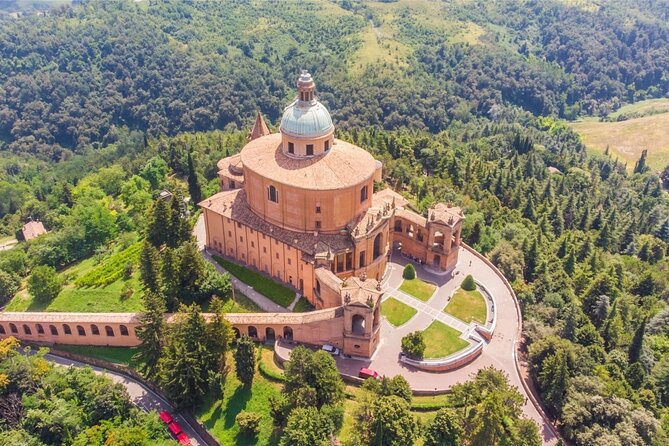
- Stop 7: Basilica / Santuario di Santo Stefano, the Seven Churches Complex
- Stop 8: Le Tre Frecce and the legend of the three arrows
- Stop 9: Le Due Torri and Torre degli Asinell (view-only)
- Aperitivo and food pointers: how this guide helps you plan meals
- Audio vs. written guide: short clips, maps, and what to do if something fails
- Is this the right fit for you?
- Should you book this Bologna Walking Tour?
- FAQ
- FAQ
- How long is the Bologna walking tour?
- Where do I start and end?
- Is the tour offered in English?
- Do I need internet on my phone?
- Are headphones included?
- Are there entrance fees for the stops?
- Can I take breaks during the walk?
- Is the tour flexible in terms of accessibility for different people?
- Can I cancel and get a full refund?
Key highlights at a glance

- Download the audio ahead of time so you can start fast once you’re in Bologna
- Google Maps-linked navigation to help you stay on track
- Aperitivo and restaurant pointers connected to Bologna’s food culture
- Short stops and flexible breaks, since the whole tour is self-paced
- Several major squares and churches covered in about half a day
- An optional paid interior at Archiginnasio (3€), with the rest free to view
Price and pacing: why this half-day works for Bologna
At $7.86 per person for about 4 hours, this is priced like a smart “move-through-the-city” tool, not a classic live guided tour. That matters in Bologna, where the big payoff is often the street level experience: walking, looking up at porticoes, and popping into squares and church façades when you feel like it.
The schedule also makes sense. You’re not locked into a tight sequence of timed entrances. Instead, each stop is built around a quick orientation and a few key things to notice, so you can spend longer where you care and skim past what you don’t. For people on a short stay or planning one solo half-day, the format is very practical.
You can also read our reviews of more walking tours in Bologna

What you need to make the audio tour actually work
This tour runs on your phone. You’ll need a smartphone with internet connection, and the voucher details explain how to activate the digital guide. The tour also has a mobile ticket, and it’s designed to be used on the spot rather than as a printed map.
Two other practical points:
- Headphones are not included. You’ll either listen through your phone’s speakers or use your own earbuds/headphones.
- The audio is delivered in short clips per stop. That’s efficient, but it means you won’t get long, layered storytelling in every location.
If you rely on spotty data, have a plan. I’d strongly suggest turning on your internet before you start and keeping your phone charged, so you don’t get stuck when the route updates.
Two Towers start point: the easiest way to frame your walk
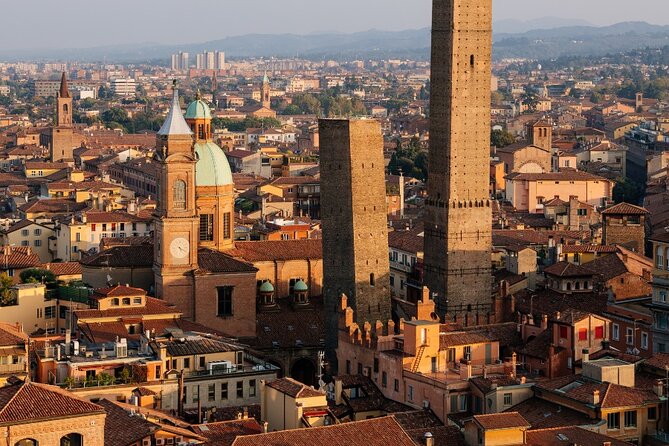
You begin at Two Towers (P.za di Porta Ravegnana, 40126 Bologna) and you end at the same place. That’s a quiet advantage in a city full of small detours: you don’t have to reorganize your day around where the tour finishes. You can also pair this walk with food plans later, since you’ll return to the same central area.
The tour time is listed as about 4 hours, and it’s set up for a max group size of 99. Even with that cap, your experience is still self-guided, so you’re not stuck behind a slow-moving pack.
Stop 1: Via dell’Indipendenza and Bologna’s long porticoes
This is a great opener because it sets the mood fast. Via dell’Indipendenza is where you really understand Bologna: those continuous porticoes that turn walking into shelter, rhythm, and social space.
What to do here:
- Look up. The porticoes are the point, not just the street.
- Notice how the street’s shape keeps you moving even when the weather changes.
Practical drawback: if you’re expecting grand monuments right away, this stop is more about atmosphere than a single must-see site.
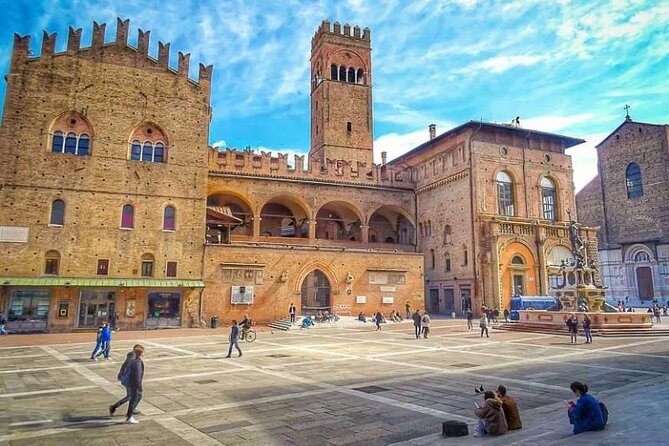
Stop 2: Piazza del Nettuno (with its god-and-sea vibes)
Piazza del Nettuno is named for a sea-related god, but the space works more broadly as a little cultural crossroads. It’s the kind of square where history, art, and everyday conversation overlap.
What to watch:
- The square layout and how it frames the civic feel of Bologna.
- The general “microcosm” energy—people gather, and the location carries stories even if you don’t read every detail.
This is a quick stop, so don’t treat it like a slow museum moment.
You can also read our reviews of more guided tours in Bologna
Stop 3: Piazza Maggiore, the beating heart of Bologna
Piazza Maggiore is the main stage: it’s described as the center of long-running transformations and a hub for social and commercial life. In other words, this is where Bologna shows you its public face.
How to use this stop:
- Pause long enough to reorient yourself. This square is an anchor.
- Let the audio give you the timeline idea, then spend your own time scanning the architecture.
Practical tip: it’s a natural place to take a breather before the next cluster of churches and market sights.
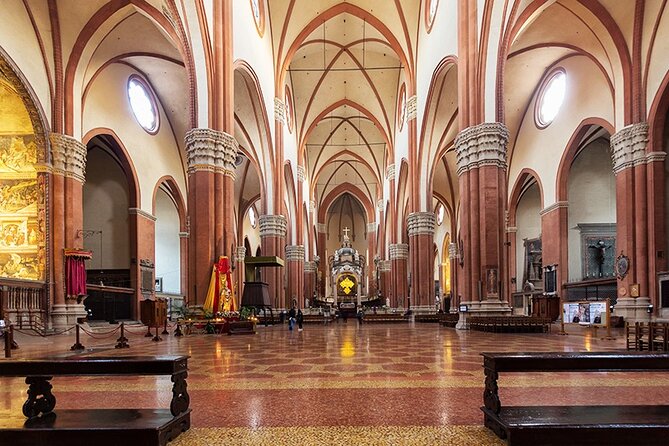
Stop 4: Basilica di San Petronio and the famous unfinished façade
The Basilica di San Petronio has that striking look of being unfinished. The tour also hints at a mix of reality and legend around its history, which is exactly the right kind of starting point for a big façade like this.
What you’ll get out of it:
- A visual argument for why the façade is memorable.
- A short set of stories that help you interpret what you’re seeing.
Even if you don’t go inside, the outside is worth your attention here.
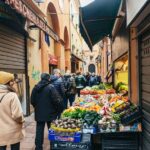
Stop 5: Mercato di Mezzo and Bologna’s food culture
Mercato di Mezzo sits close to the main square area and connects the walking theme to a very real Bologna pleasure: food. This stop is all about culinary identity.
What to do:
- Treat it as a cue for where to eat next, not just a photo stop.
- Use the guide’s context to understand why this market area matters.
If you’re traveling with a tight schedule, this is one of the easiest stops to turn into a concrete plan: eat later, not just admire now.
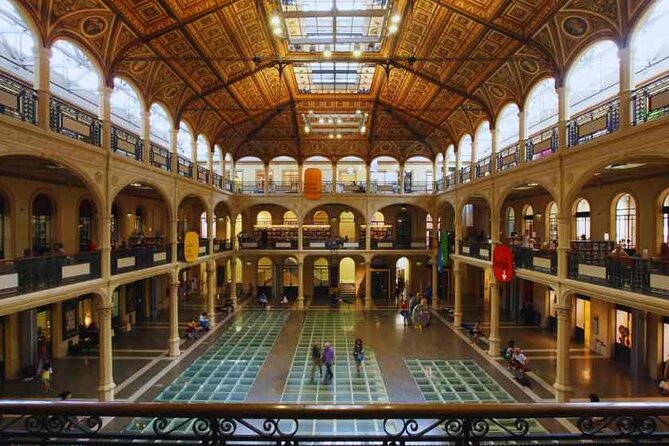
Stop 6: Archiginnasio di Bologna (optional interior visit)
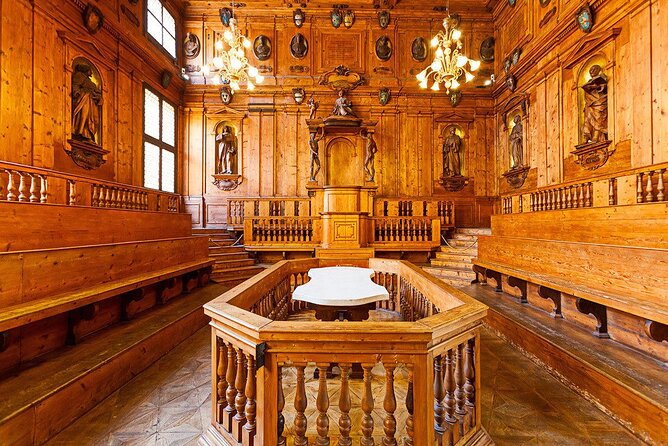
Archiginnasio is special because it’s a place with a strong academic identity—and it can include interiors that tourists might not always seek out. The tour notes that it’s beautiful, and that there’s an anatomy room plus other rooms that you can visit for 3€.
How to handle this:
- Consider it an add-on if you want something more than exterior sightseeing.
- If you skip the paid interior, you can still use the stop as a “context” moment.
Practical drawback: because the 3€ admission is not included, you’ll need to decide on the spot if the interior is worth the extra cost.
Stop 7: Basilica / Santuario di Santo Stefano, the Seven Churches Complex
This is described as the “Seven Churches Complex,” though the origin of the nickname is presented as a credited hypothesis. Either way, the key point is the sense of a multi-church experience in a single area.
What to focus on:
- The complex layout and how the name helps you expect variety.
- The guided explanation that gives you something to look for, even if you only glance around.
This stop is a good place for a short stretch break, since the walking density is high around here.
Stop 8: Le Tre Frecce and the legend of the three arrows
Bologna is full of curious stories, and this is one of the fun, legend-driven stops. Le Tre Frecce is short, which is fine, because it works best as a mental bookmark: you’ll remember the story later when you see the location again.
If you like local legends:
- Stay a minute longer than you think you need.
- Let the audio give you the gist, then look for the details that match the tale.
Stop 9: Le Due Torri and Torre degli Asinell (view-only)
Le Due Torri is the icon moment. You’ll see the towers up close, including Torre degli Asinell, but the tour also flags that the facilities are not safe for tourists, so you can’t assume you’ll climb.
That’s actually useful to know before you plan the rest of the day. You can still treat this as a victory lap for your walk, and then move on to food or a relaxed final stroll.
Aperitivo and food pointers: how this guide helps you plan meals
One of the most practical parts of this tour is how it ties into Bologna’s eating culture. The guide is designed to teach you about aperitivo culture and it points you toward restaurants of Bologna, which is valuable because it turns sightseeing into an actual plan.
Here’s the way I’d use that:
- Don’t just use the stops as sights. Use them as hints about what neighborhood vibe you’re in.
- When Mercato di Mezzo or the central squares come up, decide whether you want a quick bite, a longer lunch, or an aperitivo later.
Bologna is great for eating your way across a day. A tour that gives you food context helps you make that happen without doing extra research.
Audio vs. written guide: short clips, maps, and what to do if something fails
The tour approach is “bite-sized.” Audio per stop is short, and the delivery can feel more like a straight facts-and-curiosities format than a long narrative. If you prefer deeper history in every location, you might find yourself wanting more after the clip ends.
Still, the format has real strengths:
- You’re not stuck listening for a long time when you’d rather walk and look.
- The written guide gives you a fallback when audio is inconvenient.
One practical concern is internet dependence. Because you need internet connection to use the digital guide, weak signal can slow you down. If audio drops out, you’ll likely want to switch to reading where available, and keep your phone on the correct route through Google Maps.
Is this the right fit for you?
This tour is best for you if you want:
- A low-cost, high-efficiency Bologna overview in about half a day
- A route through major highlights like Piazza Maggiore, San Petronio, and Santo Stefano
- Self-paced flexibility, with the ability to pause and continue on your own schedule
- A smartphone-based guide with Google Maps help
It may not be the right fit if you:
- Don’t want to rely on your phone’s internet connection
- Expect long, story-heavy narration at each stop
- Want to pay once and have every interior included (Archiginnasio’s 3€ is extra, and the towers can’t be climbed)
Should you book this Bologna Walking Tour?
Book it if you want an easy, budget-friendly way to get oriented and enjoy Bologna’s top landmarks without getting lost. The value comes from the mix of Google Maps navigation, downloadable audio, and food context that helps you turn a walk into real plans.
Skip or rethink it if you hate depending on connectivity, or if you’re the type who needs deep, long-form history at every stop. In that case, you might still visit these places, but you’d probably want a different style of guide.
FAQ
FAQ
How long is the Bologna walking tour?
The tour is listed as about 4 hours.
Where do I start and end?
It starts and ends at Two Towers (P.za di Porta Ravegnana, 40126 Bologna, Italy).
Is the tour offered in English?
Yes. It’s offered in English, and the audio/text are also available in Eng, Esp, Ita, Ger, Fra.
Do I need internet on my phone?
Yes. You’ll need a smartphone with internet connection to use the digital guide.
Are headphones included?
No. Headphones are not included. You can listen through your phone’s speakers or use your own headphones.
Are there entrance fees for the stops?
Most stops are listed as free. Archiginnasio di Bologna has an optional interior visit for 3€ that is not included.
Can I take breaks during the walk?
Yes. It’s designed so you can explore at your own pace and stop for breaks when you want.
Is the tour flexible in terms of accessibility for different people?
Most people can participate. Service animals are allowed, and it’s near public transportation.
Can I cancel and get a full refund?
Yes. You can cancel for a full refund if you cancel at least 24 hours in advance of the experience start time.