REVIEW · OSLO
Oslo: Historic Myths & Legends Evening Walking Tour
Book on GetYourGuide →Operated by Oslo Walking · Bookable on GetYourGuide
A night walk full of Norse spookiness helps the city click fast. This Historic Myths & Legends Evening Walking Tour turns central Oslo into a storybook, from Viking belief to medieval justice.
What I like most is the way the guide links folklore to real places, so you see meaning in the City Hall wooden friezes instead of just buildings. I also love the lively storytelling tone—guides such as Maria and Anastasia come up again and again in reviews for being funny and easy to follow.
One thing to consider: this is outdoors in an evening winter chill, and several reviews mention wind that can cut right through. Bring proper layers and plan on a relaxed walk with crowds moving at pedestrian pace.
In This Review
- Key Things You’ll Notice on This Oslo Myths Walk
- Meeting at Oslo City Hall: Swans Fountain to Vikings in Wood
- City Hall Stories: trolls, nisse, and huldra with real cultural context
- Christiania Torv: a historic square where Oslo’s story keeps moving
- Akershus Fortress: medieval engineering and protection you can still feel
- Bankplassen: audacious thefts and the justice system behind medieval rules
- Oslo Cathedral and the bigger picture of capital history
- How the 2-hour evening walk feels in real Oslo winter weather
- Price and value: $42 for a guided shortcut through Oslo’s meanings
- Who should book this tour, and who might skip it
- Final call: should you book the Historic Myths & Legends evening walk?
- FAQ
- Where do I meet the guide for the Oslo City Hall starting point?
- How long is the walking tour?
- Is the tour guided in English?
- Is this tour suitable for children?
- Will the tour go underground for ghost hunting?
- What should I bring?
- Is it accessible for wheelchair users or people with mobility impairments?
Key Things You’ll Notice on This Oslo Myths Walk
- Oslo City Hall friezes explained as Viking belief, not just decoration
- Folklore cast list: trolls, nisse, and huldra, tied to what locals feared and protected against
- Akershus Fortress engineering in plain language, plus stories of prisoners inside its walls
- Bankplassen justice stories, including audacious thefts and how punishment worked
- A real evening feel in winter, from dark streets to landmark glow in the cold air
- Guides like Maria or Anastasia praised for humor, interaction, and clear English
Meeting at Oslo City Hall: Swans Fountain to Vikings in Wood
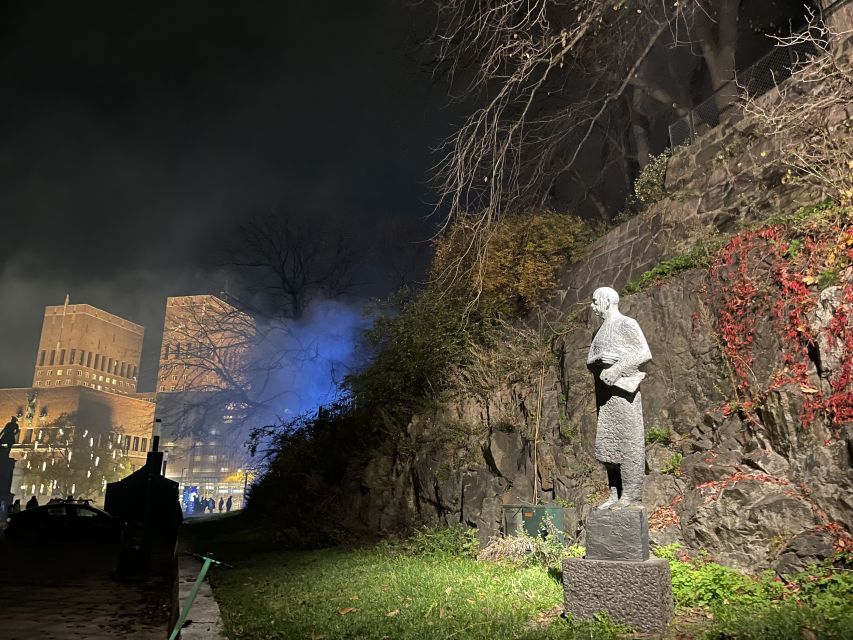
The tour starts at Oslo City Hall, right by the Swans fountain near the entrance on Fridtjof Nansen’s square. It’s a smart start point. You’re in the center of the city, and City Hall gives you an immediate visual hook: this is not a museum talk you half-listen to while scrolling your phone.
Inside City Hall, the guide draws your attention to wooden friezes that depict Viking beliefs. That’s the key idea here. Instead of treating Norse mythology as random spooky bedtime stories, the tour treats it like a living cultural system—how people explained the world, what they feared, and what they tried to keep away from daily life.
If you’re the kind of person who likes getting your bearings fast, this start helps. You go from landmark to landmark with a clear thread tying it all together.
You can also read our reviews of more walking tours in Oslo


City Hall Stories: trolls, nisse, and huldra with real cultural context
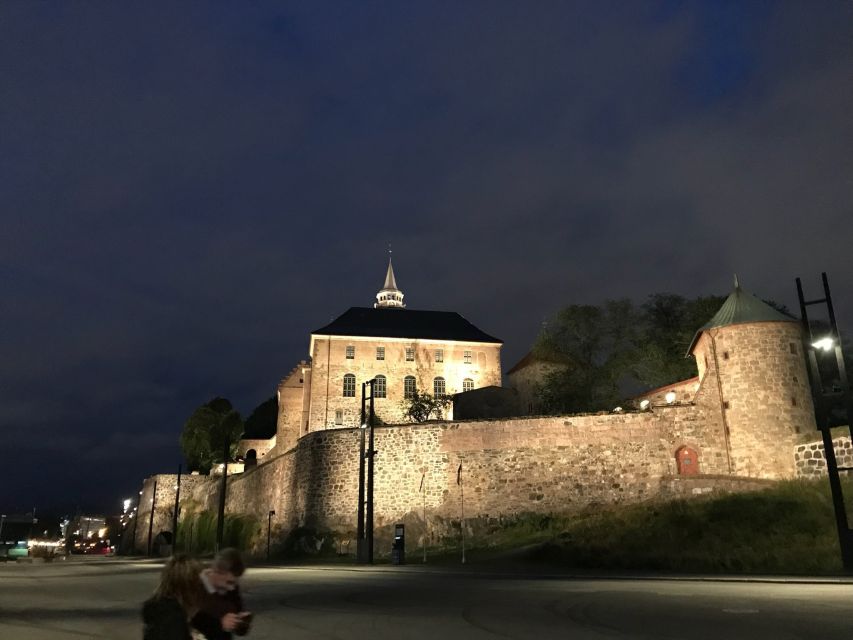
From City Hall, the tour shifts into myth mode, but it stays grounded. You’ll hear stories about trolls, nisse (those familiar Scandinavian household spirits), and huldra, the kind of legend that makes you look twice at the forest edge even when you know you’re standing on pavement.
One reason I think this works well is that the guide doesn’t treat the myths like a punchline. You’re not just collecting names. You’re learning how superstition shaped behavior: what people worried about, what they believed offered protection, and why those beliefs turned up in art and architecture.
Several reviews specifically mention details like fear tied to sound and protection themes like bells, which gives the stories extra bite. Even if you don’t remember every character, you’ll start spotting the logic behind the legends: these aren’t random creatures. They’re tools people used to explain danger, luck, and the unseen.
And yes, you get humor. Reviews praise the guides for a good sense of humor and for answering questions without turning it into a stiff lecture.
Christiania Torv: a historic square where Oslo’s story keeps moving
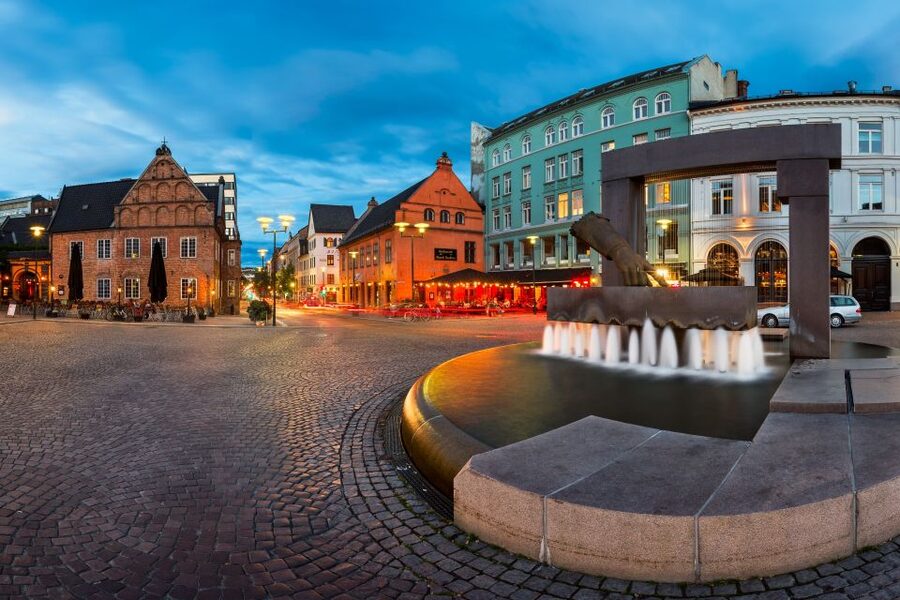
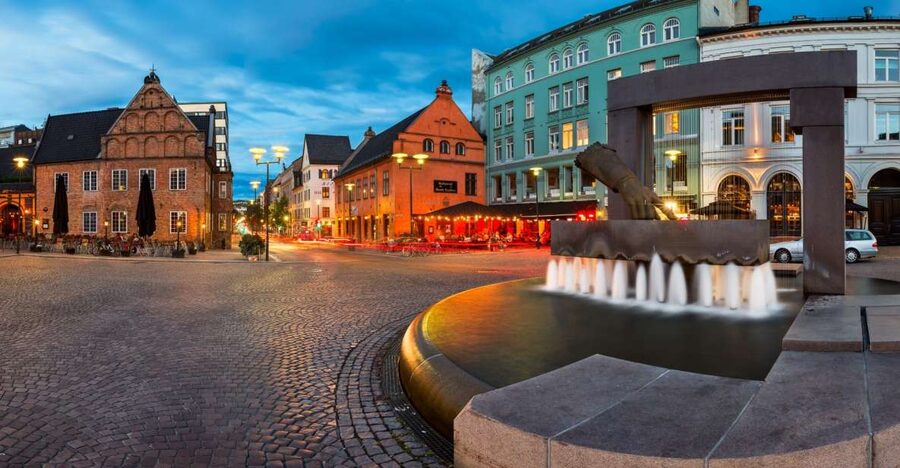
Next you’ll walk to Christiania Torv, a historic square that’s watched Oslo change over centuries. This isn’t a stop where you stare at a single monument for five minutes. It’s more like a pause point where the guide connects the city’s past to how the streets function now.
The tour here works best if you look around as you listen. Notice the mix of old and newer city rhythms. A square like this isn’t just a pretty background—it’s where people gathered, traded, argued, celebrated, and dealt with the everyday side of history.
The guide weaves in stories tied to events and cultural shifts that left marks on Oslo’s layout. That’s a big reason this kind of walking tour can beat a classic “hit the highlights” route. It makes the space feel intentional.
Akershus Fortress: medieval engineering and protection you can still feel

Then comes Akershus Fortress, and it’s one of the strongest parts of the evening. The tour frames the fortress as more than a dramatic ruin. You hear about it as medieval design and engineering, built because a city needed protection for real reasons.
What I like about this stop is that it teaches you how to read the structure. When you walk around a fortress, it’s easy to think only about battles. This tour nudges you to think about logistics: lines of defense, walls built to last, and the idea that protection was a daily concern—not a movie backdrop.
You’ll also hear darker stories, including accounts of prisoners within the fortress walls and what happened to them. It’s not gore. It’s history with consequences, and it fits the tour’s theme of justice, fear, and control.
If you’re wondering why a fortress belongs in a myths and legends tour, this is your answer. Fear isn’t only supernatural here. People feared invasion, captivity, and punishment too. The legends and the fortress stories sit side by side like two versions of the same human need: safety.
Bankplassen: audacious thefts and the justice system behind medieval rules
After the fortress, the walk turns toward Bankplassen, and the tone shifts to crime and punishment. The tour highlights audacious thefts and complicated robberies, then connects them to a medieval justice system—how crimes were handled and what punishments people faced back then.
This part is a good match for an evening walk because it’s story-driven. You’re not memorizing dates. You’re following the logic of how authorities tried to restore order. It also helps explain why myths mattered. When people feel threatened—by criminals, by chaos, by the unknown—they look for explanations and safeguards.
Even if you’re not a “true crime” person, this stop is worth paying attention to. You start seeing how cities govern themselves in hard times, and that makes the architectural stops feel less like postcards and more like lived-in spaces.



Oslo Cathedral and the bigger picture of capital history
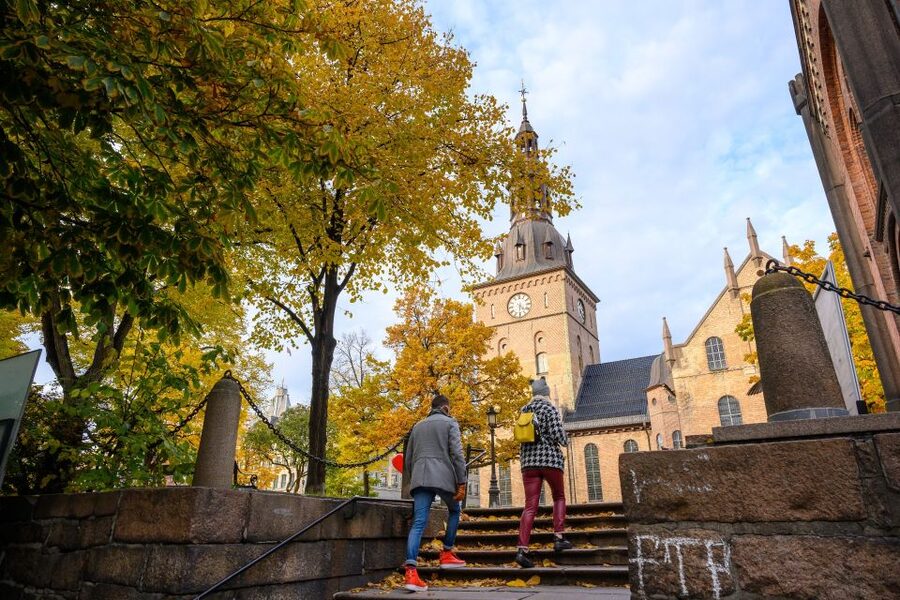
The tour includes famous landmarks like Oslo Cathedral (along with other central stops), and the guide uses them to broaden the context. Even if the myths are the hook, the route doesn’t stay stuck in legend land.
You get a clearer sense of how Oslo developed as a capital—politically, culturally, and spiritually—because the guide connects each place to the story theme. Reviews also mention the range of timelines, including stories that run from early origins up through the Second World War.
That span matters. It means the tour isn’t just “Vikings and then done.” It shows you how older beliefs and later realities overlap in the city’s identity.
How the 2-hour evening walk feels in real Oslo winter weather
The tour runs about 2 hours, and that time is the sweet spot. Long enough to feel like you’re getting a real orientation, short enough that you’re not stuck outside forever while the light fades.
Weather is the main practical factor. Multiple reviews mention battling snow and wind, including one person praising the guide for managing those conditions, and another warning that wind can be piercing. If you’re visiting in winter (or any season with cold evenings), bring more than you think you need.
Comfortable shoes are required. I’d also add a simple rule: dress for being outside, not for a quick stroll between doorways. When the sun drops early, the city looks different, and that’s part of the point. Reviews talk about how Oslo can feel almost magical in winter, including moments like an amazing sunset sky on a clear night.
If you can handle a steady walking pace for two hours, you’ll be fine.
Price and value: $42 for a guided shortcut through Oslo’s meanings
At $42 per person for 2 hours, this tour isn’t trying to compete with a free walking route you invent yourself. It pays for something you can’t easily DIY: a guide who turns folklore + architecture + city history into a single thread.
You also get a live English-speaking guide, and taxes are included. Food and drinks are not included, so plan to eat before or after.
Here’s the value angle I’d use to decide: if your goal is to understand Oslo quickly—why people built things where they did, why legends show up in public art, and what medieval life felt like—this is a compact way to get it. If your goal is only photos and the top landmarks at your own pace, you might prefer a self-guided plan.
But if you like stories with structure, the price starts to make sense fast.
Who should book this tour, and who might skip it
This is best for adults and older teens who enjoy legends, history, and a guide who talks like a storyteller (not like a textbook).
It’s also a great first-day option. Several reviews describe it as a smart introduction to Oslo, with guides offering tips for where to go next. If you like getting your bearings and learning what to look for while you wander later, you’ll get value even after the tour ends.
A couple of practical limits are worth noting:
- It’s not suitable for children under 13
- It’s not suitable for wheelchair users or people with mobility impairments
Also, while the name can sound spooky, the tour is not a ghost-hunting expedition. The focus is historical and cultural, and you won’t be going underground.
Final call: should you book the Historic Myths & Legends evening walk?
I’d book this tour if you want Oslo to feel human. Not just pretty. Human—full of fears, rules, beliefs, jokes, and consequences.
Skip it if you hate cold-weather walking, want fully guaranteed minimal walking, or prefer history without folklore. And if you’re expecting actual ghost stories as an attraction, this one leans more toward cultural meaning than paranormal thrills.
If you’re somewhere in the middle—curious, open-minded, and comfortable with a two-hour evening outdoors—this is one of the better “pay once, learn a lot” ways to start seeing Oslo differently.
FAQ
Where do I meet the guide for the Oslo City Hall starting point?
Meet your guide near the Swans fountain at the entrance of Oslo City Hall on Fridtjof Nansen’s square.
How long is the walking tour?
The tour lasts 2 hours.
Is the tour guided in English?
Yes. The experience includes a live English-speaking guide.
Is this tour suitable for children?
It is not suitable for children under 13.
Will the tour go underground for ghost hunting?
No. It is not a ghost-hunting expedition, and you will not be venturing underground.
What should I bring?
Bring comfortable shoes. Dress for the evening weather, since the walk happens outdoors.
Is it accessible for wheelchair users or people with mobility impairments?
No. The tour is not suitable for wheelchair users or people with mobility impairments.