REVIEW · BARCELONA
Barcelona: Barri Gotic Small Group Walking Tour
Book on GetYourGuide →Operated by The Touring Pandas · Bookable on GetYourGuide
Barcelona’s old streets can feel like a puzzle. This 2-hour Gothic Quarter walking tour helps you connect the signs, symbols, and stonework into a story you can actually picture. You’re moving through one of the oldest parts of the city, with a guide steering you to the spots that most people walk right past.
What I like most is that it’s built around the neighborhood’s real power and real tragedy—think Plaça del Rei and Plaza de San Felipe Neri—so the Gothic Quarter stops being just pretty buildings. And I love that you get a local guide in several languages (English, Japanese, Chinese, and Korean), which matters when you want details, not just dates.
One thing to plan for: it’s not suitable for people with mobility impairments, and in busier moments you may need to stand closer to hear everything clearly.
In This Review
- Key highlights to look for
- Why the Barri Gòtic works so well in just 2 hours
- Where you meet up near Pl. de Catalunya (and how to be ready)
- Plaza de San Felipe Neri: where the drama behind the stone makes sense
- Plaça del Rei: Barcelona’s political center, in plain street-level form
- Chasing Roman-era clues through Gothic Quarter streets
- Guide performance and small-group comfort: Patrice, Patrick, Gemma, Chessie, and more
- Photo stops that don’t feel like a scavenger hunt
- Cost and value: is $35 fair for two hours in the old city
- Weather, rescheduling, and the reality of walking
- Who should book this tour, and who should skip it
- Should you book the Barcelona Barri Gòtic Small Group Walking Tour?
- FAQ
- How long is the Barcelona Barri Gòtic walking tour?
- How much does the tour cost?
- Where does the tour start?
- What is included in the tour price?
- What languages are available for the live guide?
- Is the tour refundable if plans change?
- Can I reserve without paying right away?
- What if the weather is bad?
- Is this tour suitable for people with mobility impairments?
Key highlights to look for
- Plaça del Rei puts Barcelona’s political center into human-scale walking territory
- Plaza de San Felipe Neri comes with a tragic story behind the scenes
- Photo-focused route helps you find angles that are hard to spot on your own
- Expert local guide keeps the stops connected, not random sightseeing
- 2 hours is long enough to get oriented, short enough to stay flexible
Why the Barri Gòtic works so well in just 2 hours
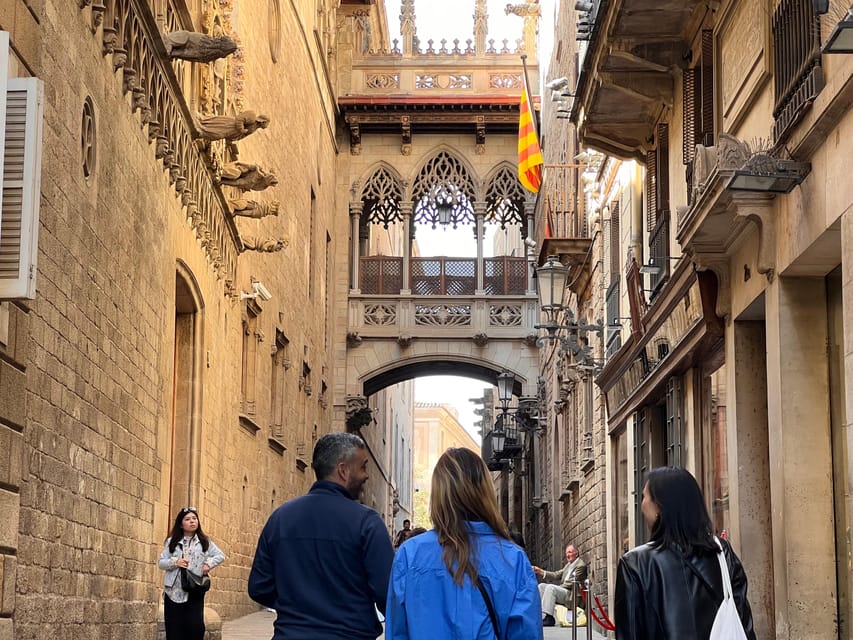
The Gothic Quarter is one of those places where you can spend a whole day getting fascinated and still feel like you missed the point. Narrow streets, reused medieval spaces, and layers of older building all blend together fast.
That’s exactly why a guided walk makes sense here. In about two hours, you’ll get oriented and you’ll learn what to look for: political power, religious life, and the dramatic human stories that sit behind the architecture. You’re not just collecting landmarks. You’re learning how the neighborhood functioned—and why those squares matter.
Also, the pacing is realistic. You’re on foot through an old-town maze, so the route can’t be rush-rush. You get time to stop, look, and take photos without feeling like you’re sprinting between ticket lines.
You can also read our reviews of more walking tours in Barcelona


Where you meet up near Pl. de Catalunya (and how to be ready)
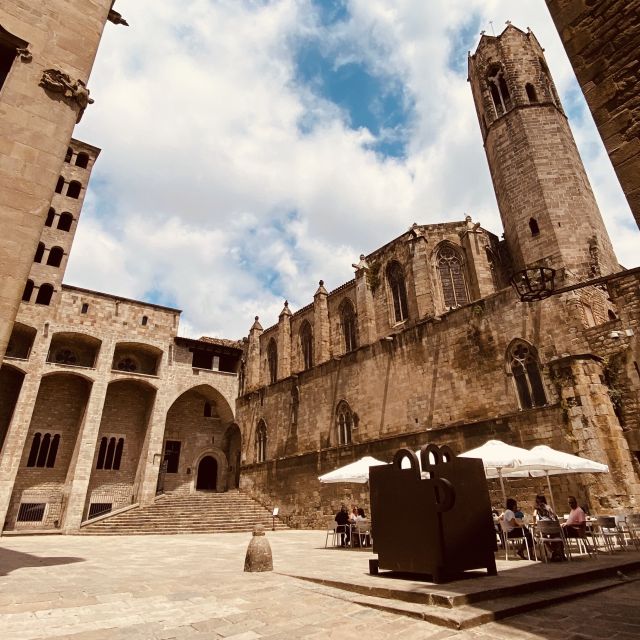
Meeting points can vary depending on the option you book. One listed starting point is the Hard Rock Cafe near Plaça de Catalunya (Pl. de Catalunya, 22).
Here’s how I’d handle it in real life: arrive 10 minutes early, then do a quick visual scan for your guide and group. Old streets + multiple tour departures = easy to lose each other if you’re late.
For the walk itself, you’ll want comfortable shoes. This is a historic neighborhood laid out for feet that had nowhere else to go. Also, be ready for weather—this tour is subject to conditions, and rescheduling depends on availability.
One more practical point: your guide language may affect how quickly you process details. If you’re in a language you’re comfortable with (English, Japanese, Chinese, or Korean), you’ll likely get more out of the stories and the photo stops.
Plaza de San Felipe Neri: where the drama behind the stone makes sense
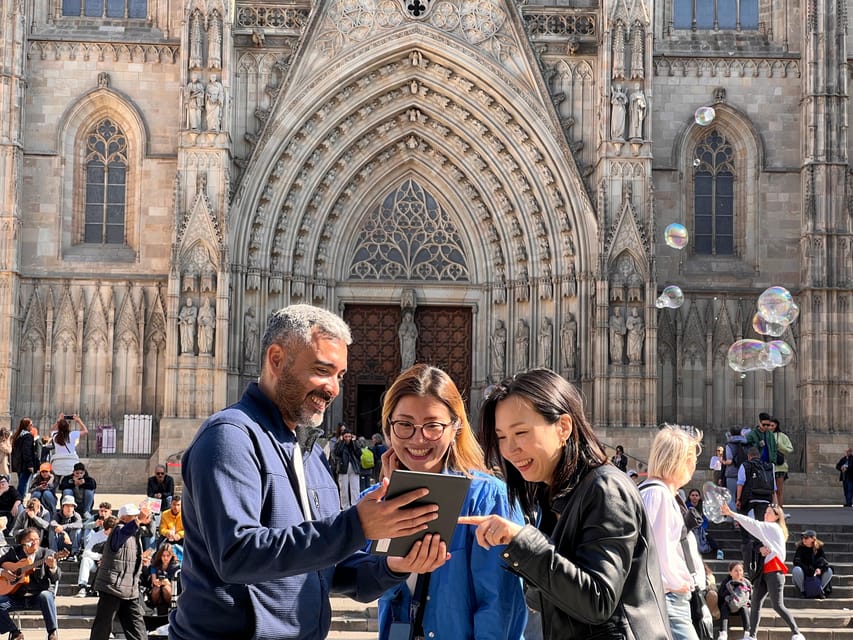
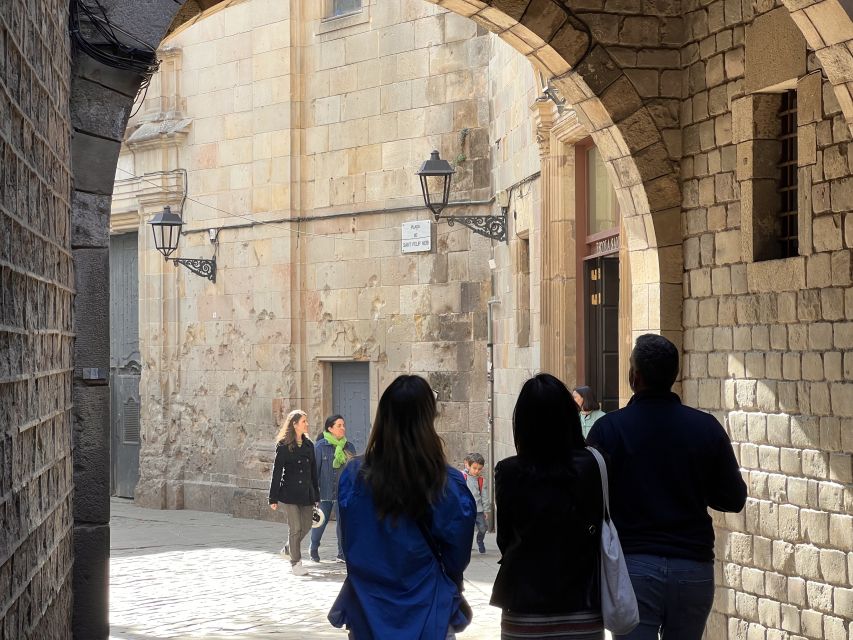
Plaza de San Felipe Neri is one of those squares that looks like it belongs in a movie—quiet, photogenic, surrounded by old facades. But what makes the stop worthwhile is the story context your guide brings along.
You’ll hear about the tragic background tied to the plaza. That matters because the Gothic Quarter can feel like an art exhibit unless someone explains why certain places became important. When you understand the human side of the square, you start noticing details you’d otherwise ignore: the layout, the sense of enclosure, and how people would have moved through the area.
This is the kind of stop where your photos get better, too. Not because the guide tells you where to stand for a perfect shot, but because they show you which features are actually meaningful. You’ll come away with pictures that match what you learned—not just images you took while walking.
Plaça del Rei: Barcelona’s political center, in plain street-level form
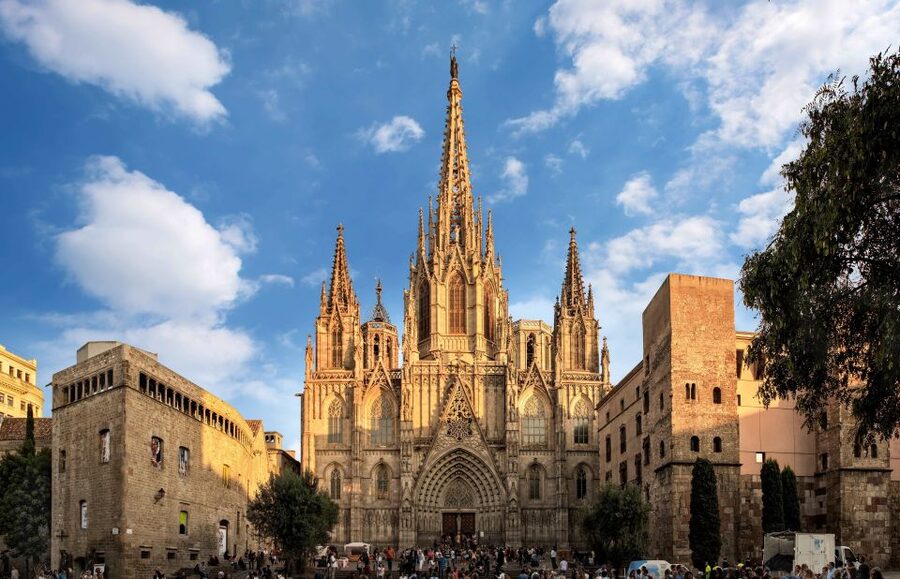
If you want one “aha” stop, it’s Plaça del Rei. This is described as the political center of the city, and that framing changes how you see what’s around you.
Think of the plaza as the stage for decisions—governmental life, influence, and control. In other parts of Barcelona, power is hidden inside big buildings. Here, the power feels exposed in open space. It’s easier to grasp the scale and the purpose because you’re standing where people once had to gather.
Your guide will walk you through what happened there and why it mattered. That’s the difference between sightseeing and understanding. When you connect the plaza to the city’s political storyline, the Gothic Quarter becomes more coherent, like the pieces are finally clicking into place.
And yes, it’s also great for photos. You get wide angles and good depth because the plaza layout gives you options—so you’re not just shooting straight-on street walls.
Chasing Roman-era clues through Gothic Quarter streets
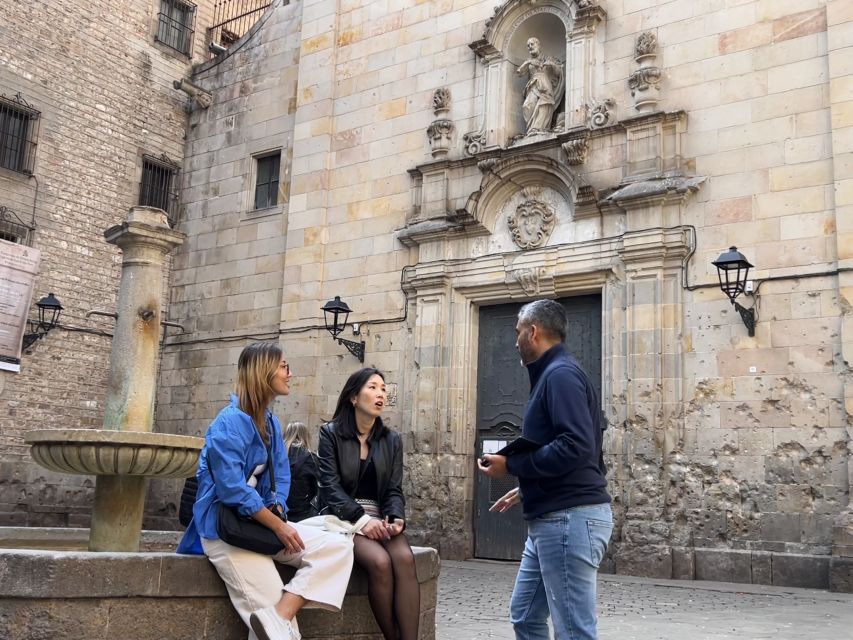
The Gothic Quarter is described as being founded by the Romans more than two thousand years ago. Even when you’re seeing medieval and later architecture, that Roman timeline changes how you interpret the neighborhood.
Here’s the practical takeaway: old neighborhoods reuse space. That means street alignments, building sites, and the general logic of where people naturally gather often have older roots than the buildings you see today.
On this walk, your guide leads you to “magical corners” and the best photo spots around the area. I like this approach because it turns the Gothic Quarter from a confusing grid into a guided route of discoveries. You start predicting what kind of detail comes next—small squares, transitions between lanes, and the little visual cues that signal a bigger historical story.
If you’re the type who likes to look up at facades, scan doorways, and notice carvings, this portion will feel like you’re playing a slow detective game. Two hours is enough to start spotting patterns without exhausting your feet.



Guide performance and small-group comfort: Patrice, Patrick, Gemma, Chessie, and more
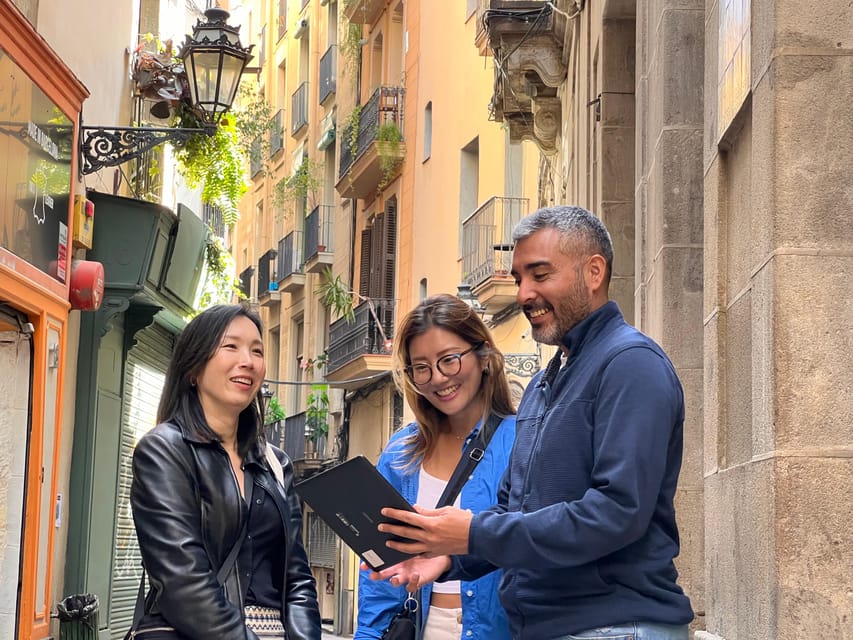
This is a live tour with a local guide. Languages offered are Japanese, Chinese, Korean, and English, which is a big plus for clarity and comfort.
What really shows up in the experience is how guides connect the dots. Names mentioned by guests include Patrice, Patrick, Gemma, Chessie, Patrice again under a slightly different spelling, and Sophia. Across these guide mentions, the common theme is this: the guide explains what you’re seeing and keeps the information tied to the places, not just random facts.
I’d also plan around group size. The tour is marketed as small group, which usually helps you ask questions and get closer to landmarks. One caution from real feedback: when groups get bigger, hearing the guide can become harder because there’s no mention of audio headsets. If you’re visiting in peak season or with a larger group, step forward when your guide stops talking long enough for everyone to listen.
A good sign to watch for is how the guide handles flow. Some guides are particularly good at keeping the pace steady while still answering questions. If you want a tour where you’re not just standing in line behind a crowd, this style of guidance is a big part of the value.
Photo stops that don’t feel like a scavenger hunt
A lot of walking tours promise photos but never really help you see. This one is set up for photo spots across the Gothic Quarter, and that’s meaningful.
Old-town Barcelona is full of backdrops, but the best shots come from angles that you wouldn’t naturally pick. With a guide leading you through the neighborhood’s quieter corners and notable squares, you spend less time turning around and more time composing.
A practical tip: treat photos as a reward for stopping. If you’re always holding your camera while walking, you’ll miss the story parts. But if you pause for 20 seconds when the guide points something out, your photos will match what you learned—and your memory will stick later.
This tour also helps you avoid the “same photo, same street” problem. The route is built around specific places like Plaza de San Felipe Neri and Plaça del Rei, so you’re not just capturing endless stone textures.
Cost and value: is $35 fair for two hours in the old city
At $35 per person for a 2-hour guided walking tour, this is priced like a practical add-on rather than a big-ticket attraction. And that’s the right way to think about it.
You’re paying for:
- a local guide who connects the architecture to political and personal stories
- a route that helps you find key corners and photo angles faster
- time efficiency in a neighborhood that can feel endless if you’re wandering blindly
If you’re planning to explore the Gothic Quarter anyway, $35 often feels like paying for clarity. Without a guide, you’ll still see beautiful places. But you’ll likely miss why those places mattered.
Is it worth it if you only want basic sightseeing? Maybe not. If you’re more of a museum and ticket-line person, this might feel too “people-walking-and-explaining.” But if you want to understand how the city worked in its darkest and most powerful moments, the value is strong.
Weather, rescheduling, and the reality of walking
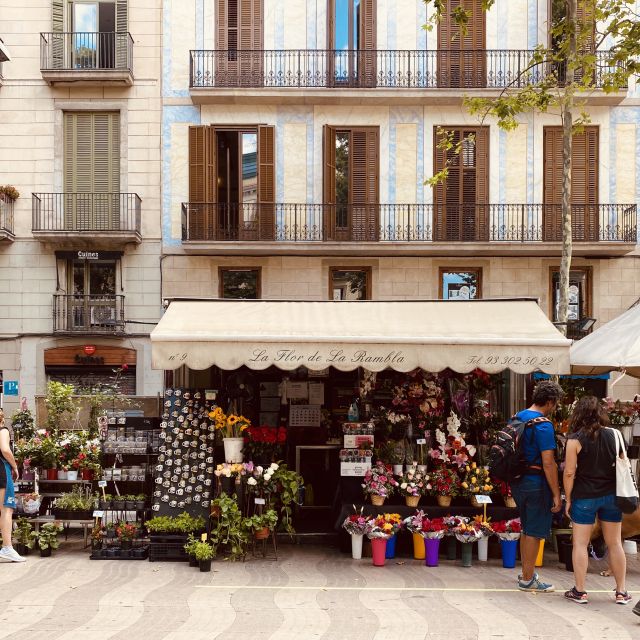
This tour runs on foot and is subject to weather conditions. Rescheduling is subject to availability, so keep a flexible mindset if you’re traveling in shoulder season or planning a day with unpredictable forecasts.
Also, it’s not suitable for people with mobility impairments. That’s not just a wording issue. Historic districts usually have uneven streets, tight turns, and surfaces that are hard to manage with mobility aids. If you fall into that category, you’ll likely have a rough time.
For everyone else, plan for sun and shade shifts. Bring what you’d normally bring for walking in the city—water if you tolerate it well, and a hat if the day is bright. The route isn’t described as indoors, so you’ll rely on street-level comfort.
Who should book this tour, and who should skip it
This tour is a great fit if you:
- want to understand the Gothic Quarter beyond photos
- like stories tied to specific places (not a generic lecture)
- want a small-group guide experience with English, Japanese, Chinese, or Korean support
- enjoy political and human stories tied to the architecture
I’d skip it if you:
- need mobility accessibility support, since it’s not suitable for mobility impairments
- struggle with hearing in group situations and you know you’ll be near the back
- only want major landmarks with minimal explanation
It’s especially good for first-time visitors who feel overwhelmed by Barcelona’s neighborhoods. Two hours gives you direction for the rest of your day—so you can explore afterward with better instincts.
Should you book the Barcelona Barri Gòtic Small Group Walking Tour?
If you’re debating booking, I’d make the decision based on one question: do you want meaning, not just scenery?
For the $35 price and two-hour format, this tour earns its keep when you care about why Plaza de San Felipe Neri and Plaça del Rei are important. The guide-led approach also helps you get the best photo corners without spending your limited time wandering in circles.
Book it if you’re comfortable with walking and you want guided context in your preferred language. Skip it if mobility accessibility is a concern, or if you know you’ll struggle to hear in a group setting.
If you choose to go, go in with shoes ready for cobblestones and curiosity ready for politics, tragedy, and Roman-era echoes. That’s where this tour delivers.
FAQ
How long is the Barcelona Barri Gòtic walking tour?
The duration is 2 hours.
How much does the tour cost?
The price is $35 per person.
Where does the tour start?
Meeting point may vary depending on the option booked. One listed starting option is the Hard Rock Cafe near Plaça de Catalunya (Pl. de Catalunya, 22).
What is included in the tour price?
The tour includes a walking tour and a local guide.
What languages are available for the live guide?
The tour offers Japanese, Chinese, Korean, and English.
Is the tour refundable if plans change?
Yes. You can cancel up to 24 hours in advance for a full refund.
Can I reserve without paying right away?
Yes. The experience offers reserve now & pay later, so you can book and pay nothing today.
What if the weather is bad?
The tour is subject to weather conditions, and rescheduling is subject to availability.
Is this tour suitable for people with mobility impairments?
No, it is not suitable for people with mobility impairments.