REVIEW · MEXICO CITY
Mexico City: Guided walking tour through the most historic parts of the city.
Book on GetYourGuide →Operated by KactusMX · Bookable on GetYourGuide
History has a way of showing up.
This guided walk through Mexico City’s Centro Histórico connects three major periods—pre-Hispanic, the viceroyalty, and the Republic—using real landmarks you can actually see up close. You start at the Metropolitan Cathedral area and work your way toward Bellas Artes, with stops built around how the city layers its past and present.
What I like most: the guides bring stories that feel specific to the route, not recycled facts. Guides like Oscar, Areli, and Luis come up in recent experiences for their energy, respectful tone, and ability to answer questions without rushing.
One thing to consider: this is a solid walking tour, and it’s not for everyone—wheelchair users and people over 95 years aren’t suited, and you’ll want comfortable shoes for the day’s pace.
In This Review
- Key things you’ll notice on this Mexico City historic walk
- A 3-hour Mexico City timeline you can walk, not just read
- Finding your group at the Catedral Metropolitana de la Ciudad de México
- Zócalo first: the square where Mexico’s eras overlap
- Inside the Metropolitan Cathedral: architecture as a history lesson
- Templo Mayor Museum area: seeing the Aztec capital’s afterlife
- Plaza Santo Domingo and Plaza Manuel Tolsá: the kind of stops most people skip
- Palacio de Correos and Casa de los Azulejos: classic Centro highlights with a practical twist
- Palacio de Bellas Artes finish: closing the loop on the city’s story
- The hidden-corner promise: what it means for you
- Street food and daily-life tips (without the food bill surprises)
- Weather, timing, and walking comfort: how to set yourself up for success
- Who this tour is best for
- Should you book this Mexico City historic walking tour?
- FAQ
- How long is the Mexico City guided walking tour?
- Where do I meet the guide?
- Is the entrance fee included for places like the cathedral or museums?
- Are food and drinks included?
- What languages is the tour available in?
- Does the tour run in bad weather?
Key things you’ll notice on this Mexico City historic walk
- A three-era storyline that keeps the history connected as you move block to block
- Landmark focus plus “don’t-miss” extras like Plaza Manuel Tolsá and the equestrian Carlos IV statue area
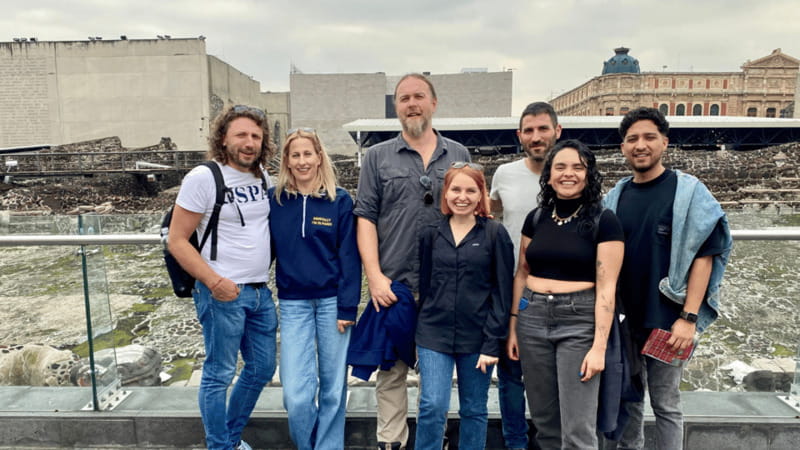
- Temple Mayor context tied directly to what you see in the central zone
- Local-food know-how to help you choose street tacos safely and confidently (food isn’t included)
- A weather-ready approach that keeps the tour moving when conditions change
- English and Spanish guiding, plus didactic material to follow along
A 3-hour Mexico City timeline you can walk, not just read
If your Mexico City plan starts with a big-picture wish—Where do I begin?—this kind of guided historic walk is a smart answer. You don’t just point at famous sites. You get a connected story that explains why the same blocks can carry Aztec, colonial, and post-independence meaning at the same time.
The price is $30 per person for about 3 hours, which is a good deal for a guided walking route through major landmarks. The catch is also simple: entrance fees aren’t included, and food isn’t included. That’s normal for walking tours in big centers, but it’s worth planning for so you don’t end the day surprised by extra costs.
This is also the sort of tour that helps you get oriented fast. You learn how locals move through the area—especially public transport—and you’ll pick up practical city habits along the way, not just dates and rulers.
You can also read our reviews of more walking tours in Mexico City


Finding your group at the Catedral Metropolitana de la Ciudad de México
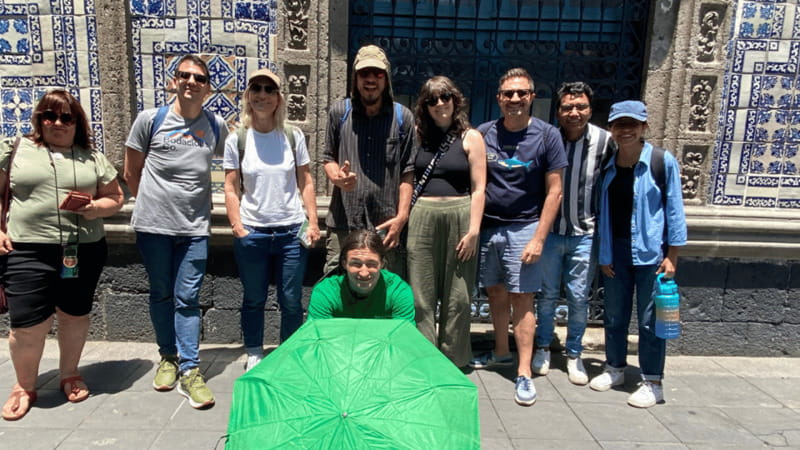
The meeting point is the main entrance of the Metropolitan Cathedral, facing the main square with the flag. Your guide will be outside on the sidewalk with a green uniform and a green umbrella, waiting by a large wooden door.
That detail matters because Mexico City’s Centro Histórico can feel like a maze when you’re arriving. Showing up a bit early helps you avoid stress—especially because the instructions suggest allowing at least one hour for transportation to the meeting point.
Bring a few basics too. The tour asks for comfortable shoes, plus sunglasses, a hat, and sunscreen for daytime glare. It also encourages cash, which is useful for street snacks or any small purchases you decide to make.
Zócalo first: the square where Mexico’s eras overlap
You start at the Zócalo, around the most important buildings in the center. This spot works as a warm-up because it’s instantly legible: you can see power, faith, politics, and crowd life in one view.
From here, the guide frames the origins of Mexico-Tenochtitlan and then explains the shift from the Aztec empire into modern Mexico City. The goal isn’t to overload you with names. It’s to give you the skeleton of the story so every later stop makes sense.
At this early stage, I’d pay attention to how your guide explains transformation. That’s where you start learning how the city’s layers sit on top of each other—literal ruins beneath later structures, and later political meaning carved into older space.
Inside the Metropolitan Cathedral: architecture as a history lesson
Next comes the Metropolitan Cathedral visit (about 20 minutes). This is a time-boxed stop, so don’t expect a long, slow museum experience. Instead, you’re meant to notice the architecture and hear why it matters in the larger narrative.
For me, this kind of inside stop is one of the best uses of a short walking tour time. Outside buildings give you scale. Inside, you get texture—materials, style choices, and how the site was built to communicate authority over generations.
If you’re photo-focused, this is also a good place to pause and reset your camera settings before the route gets denser.
Templo Mayor Museum area: seeing the Aztec capital’s afterlife
Then you head to the Templo Mayor Museum for about 30 minutes with guided time. The tour centers on the ruins of the Templo Mayor as a reminder of the ancient Aztec capital, and it ties that meaning to what you’re walking among today.
This is where the tour’s “three eras” idea becomes practical. Pre-Hispanic Mexico isn’t treated as a separate topic in a box. It’s presented as a foundation that still shapes the central city.
Because the Templo Mayor area has such strong cultural weight, the best guides manage pace well. You get explanations, but you also get enough time to look without feeling rushed.






Plaza Santo Domingo and Plaza Manuel Tolsá: the kind of stops most people skip
You’ll have photo time at Plaza de Santo Domingo (about 25 minutes). From the outside, you’ll learn about the influence of the Dominican order—one of those details that makes the streets feel less random.
Then you move to Plaza Manuel Tolsá, where the guide points out 19th-century architecture and the monumental equestrian statue of Carlos IV (included as an exterior photo stop/spotlight). These pauses are short, but they’re useful. They show you how the Centro Histórico evolved stylistically, not only politically.
In a city like Mexico City, it’s easy to treat plazas as just backdrops. On this walk, they become story nodes—places where power, religion, and civic identity changed hands over centuries.
Palacio de Correos and Casa de los Azulejos: classic Centro highlights with a practical twist
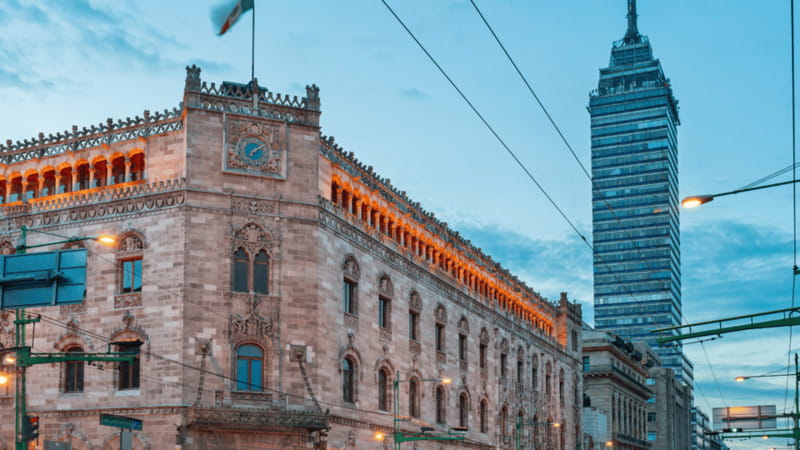
Next up: Palacio de Correos de México. You’ll have a photo stop plus visit and some free time (about 25 minutes total). This stop gives you a feel for how the city’s historic center functioned as a communications and commerce space as it modernized.
After that, you’ll stop at Casa de los Azulejos for a photo moment and a visit (about 20 minutes). This is one of those places people recognize in pictures, and it’s even better in person because the building details explain why it became so visually famous.
These two stops are a nice contrast to cathedral-and-ruins history. They help balance the day with what you’d call built “everyday grandeur”—the city showing off while it grows.
Palacio de Bellas Artes finish: closing the loop on the city’s story
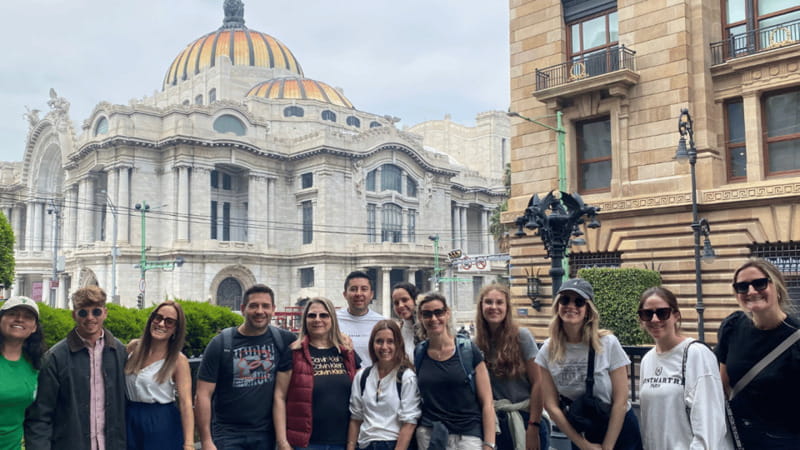
The tour wraps at Palacio de Bellas Artes. You’ll have a photo stop here as the end point (about 20 minutes).
Even if you don’t go inside on this tour, the exterior finish works. It closes the loop from earlier eras to the modern Mexico City image people associate with art, national identity, and big-city cultural life.
If you still feel energetic after the walk, this ending location also gives you options. Bellas Artes is a natural launchpad for additional exploring—cafes, galleries, and more wandering through the center.
The hidden-corner promise: what it means for you
The listing style for this tour leans on hidden corners and local places that aren’t in typical scripts. In plain terms, that usually means two things on the ground:
1) You get guided explanations at spots that aren’t the biggest postcard winners.
2) You’re shown how to find local food and daily-life rhythms without feeling like you’re aimlessly chasing rumors.
This matters because Mexico City is huge. A walking tour that simply hits the headline sites can still leave you feeling like you saw things, but you don’t know where to go next. This one tries to make the day useful beyond pictures—street food choices, local customs, and how to get around.
One of the clearest values from recent guide experiences is the help choosing street food wisely and pointing out what to look for. Food isn’t included, but the guidance is.
Street food and daily-life tips (without the food bill surprises)
Food is not included in the $30 price. But you can absolutely plan to eat during the walk if you want, and the tour is designed to help you do it smart.
So, here’s how I’d approach it:
- Bring some cash so you can buy small bites without hunting for an ATM.
- If you’re trying street tacos, listen to your guide’s guidance on safe, sensible choices.
- Don’t count on lunch being covered. If you want a full meal, plan it after the tour.
Also, if you’re traveling with kids, the tour notes it’s helpful to bring what they’ll need for enjoyment—like toys plus water or snacks—so the whole group stays comfortable.
Weather, timing, and walking comfort: how to set yourself up for success
The tour takes place regardless of weather conditions, but it’s also described as flexible and adaptable to events and conditions to keep things enjoyable. Translation: you should dress for real weather, assume the route may run with some adjustments, and expect you’ll be outdoors for most of the experience.
Timing is also worth respecting. It’s 3 hours, and the itinerary moves through many major sites. If you’re prone to stop-and-stare for 10 minutes at every corner, you might feel a little rushed. The good part is that your guide keeps the story flowing so you don’t lose the thread.
For your comfort:
- wear shoes you can walk a long time in
- bring sunscreen and a hat if it’s sunny
- keep a phone number handy for your group; the instructions recommend leaving a cell phone with a reachable contact, ideally WhatsApp
Who this tour is best for
This guided walking tour is ideal if you want:
- a first visit to Centro Histórico and a clear place to start
- a history framing that connects eras instead of listing monuments
- an interactive guide who can handle questions about culture and everyday life
It’s also a strong pick for couples and solo travelers who want structure but still enjoy strolling. The walk’s pacing tends to work well when you like asking questions and learning how locals think about their city.
It’s less ideal if you need step-free access (it’s not suitable for wheelchair users) or if the walking pace won’t work for you.
Should you book this Mexico City historic walking tour?
If your goal is a smart, story-led introduction to the Centro Histórico, I’d book it. The value at $30 makes sense for three hours with major sites plus didactic material, and the focus on pre-Hispanic, colonial, and Republic eras helps you understand what you’re looking at.
I’d think twice only if:
- you strongly prefer museum-style time (this is a walking tour with time-boxed stops)
- entrance fees matter to your budget (those aren’t included)
- long outdoor walking in real weather will be a problem for you
If you want to leave Mexico City knowing not just what you saw, but why it’s there, this tour is a solid bet.
FAQ
How long is the Mexico City guided walking tour?
It lasts about 3 hours.
Where do I meet the guide?
You meet at the main entrance of the Catedral Metropolitana de la Ciudad de México, facing the main square with the flag. The guide will be outside with a green uniform and a green umbrella.
Is the entrance fee included for places like the cathedral or museums?
No. Entrance fees are not included.
Are food and drinks included?
No. Food and beverages are not included in the tour price.
What languages is the tour available in?
The live tour guide is available in English and Spanish.
Does the tour run in bad weather?
Yes. The tour takes place regardless of weather conditions, and the guide adapts to weather and events to keep the experience going.