REVIEW · BARCELONA
Private Barcelona Old Town and Gothic Quarter Walking Tour
Book on Viator →Operated by In Out Barcelona Tours · Bookable on Viator
Barcelona tells its story on foot. This private 2.5-hour walk through Ciutat Vella and the Barri Gòtic pairs you with a local guide who can point out Roman hints, medieval corners, and why major stops like Barcelona Cathedral and Santa Maria del Mar matter. I especially like the easy meetup in the center of town and the way the route balances big landmarks with quieter squares so you get your bearings fast. One drawback to plan for: it’s a long stretch on stone streets, so eat before you go.
Guides such as Steven, Baggio, and Montse are known for humor, clear context, and adjusting to the pace of the group. It’s a small, private format, and the tour runs in English (other languages are available on request), which makes a big difference when you want questions answered as you walk.
In This Review
- Key things to know before you go
- Finding the start: Carrer de Fontanella 2 by Plaça de Catalunya
- A 2.5-hour plan that actually helps first-timers
- Ciutat Vella: Roman Barcelona clues in medieval alleys
- Barri Gòtic: the Gothic Quarter’s mix of past and present
- Las Ramblas: street performers, cafes, and the “food map” starting
- Mercat de la Boqueria: using the market as a culture lens
- Barcelona Cathedral: gargoyles, Saint Eulalia, and where power lived
- Santa Maria del Mar: Catalan Gothic made by the people
- Plaça Sant Jaume, Plaça Reial, and Plaça del Rei: power and calm in three squares
- The guide factor: humor, patience, and customizing the walk
- Price and value: what $96.75 covers
- Practical tips for a smoother Old Town walk
- Who should book this private Gothic Quarter and Old Town walk
- Should you book this Private Barcelona Old Town and Gothic Quarter Walking Tour?
- FAQ
- How long is the Private Barcelona Old Town and Gothic Quarter Walking Tour?
- Where does the tour start and where does it end?
- Is this tour private or do I join other travelers?
- What’s included in the tour price?
- What languages are available?
- Is free cancellation available?
Key things to know before you go
- Meet right by Plaça de Catalunya so you’re not hunting for a starting point
- Private means only your group (no joining strangers mid-walk)
- No paid entry required at the stops—you’ll mainly see things from the street and inside-the-area vantage points
- You cover the core Old Town arc from Ciutat Vella into the Gothic Quarter and toward the Born area
- Guides are strong on stories and practical tips—expect a mix of history, humor, and what to do next
Finding the start: Carrer de Fontanella 2 by Plaça de Catalunya
The whole trip feels easier because the meetup is centrally located at Carrer de Fontanella, 2, in Ciutat Vella (Barcelona’s Old Town). That area is one of the most convenient places to arrive to on foot or by public transport, and you don’t need a hotel pickup.
You’ll also want to have your mobile ticket ready. The experience is confirmed at booking, and the tour is run as a private activity limited to your group, so the guide is expecting you rather than herding people into a mass start.
You can also read our reviews of more walking tours in Barcelona


A 2.5-hour plan that actually helps first-timers
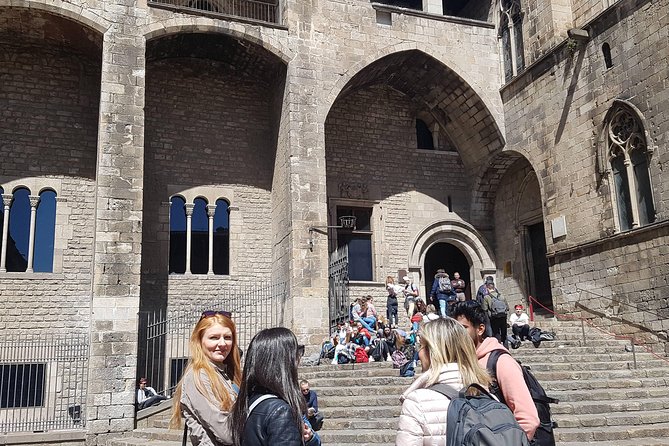
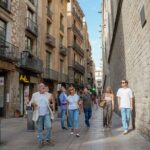
This is an approximately 2 hours 30 minutes walking tour, and the time is used to string together a logical Old Town loop. You’ll move through Ciutat Vella, spend real time in the Gothic Quarter, and keep heading toward the Born district zone—so the end point lines up with where many people want to go next.
The stops are listed with short segments, and the guide’s pacing tends to land in the “moderate” zone. That matters because the Old Town can feel overwhelming if you try to DIY it. With a guide, you’re not just looking at buildings—you’re getting the why behind what you see, then moving on before your attention fades.
Also, the tour is built to be flexible for your group. People have been happy about guides tailoring the experience to interests and even adjusting for kids in the group, without turning it into something childish or too slow.
Ciutat Vella: Roman Barcelona clues in medieval alleys
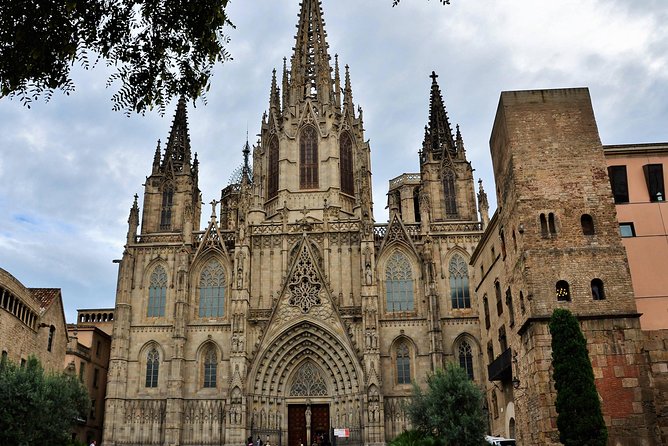
Your first area is Ciutat Vella, the ancient part of the city where Barcelona’s story starts. You’ll walk the old network of alleys and get explanations tied to the Roman origins, not just generic “this is old” commentary.
What I like about this opening is the way it sets context before you get to the postcard squares. Once you understand that the Gothic Quarter isn’t floating in time—it grew over older layers—then the street corners stop feeling random. You’ll start noticing patterns: where the city’s power shifted, how the old street fabric stays readable, and why the medieval atmosphere feels so thick in your senses.
Admission is free at this stop, and in practice that usually means you’re getting the sights through walking and storytelling, not through paid entry.
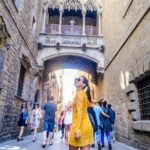
Barri Gòtic: the Gothic Quarter’s mix of past and present
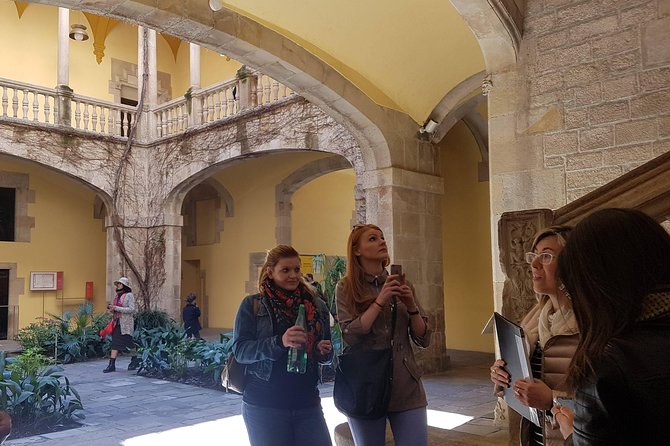
Next comes the Gothic Quarter, known in Catalan as Barri Gòtic. This neighborhood is famous for relics of earlier centuries, but it’s not a museum with only one era. You’ll see a blend of ancient buildings and more recent constructions—sometimes even from later decades—which is part of why the area feels like Barcelona now, not only Barcelona then.
Here’s the payoff: your guide doesn’t just list monuments. You’ll connect the street vibe—small boutiques, bars, and restaurants—with the layers underneath. In a place this famous, that combination helps you avoid the common trap of walking past everything because you already recognize the name.
If you want a shortcut to understanding the Gothic Quarter, this is it: you learn the layout and the symbolism while you’re still fresh from the Roman-to-medieval framing at Ciutat Vella.
Las Ramblas: street performers, cafes, and the “food map” starting
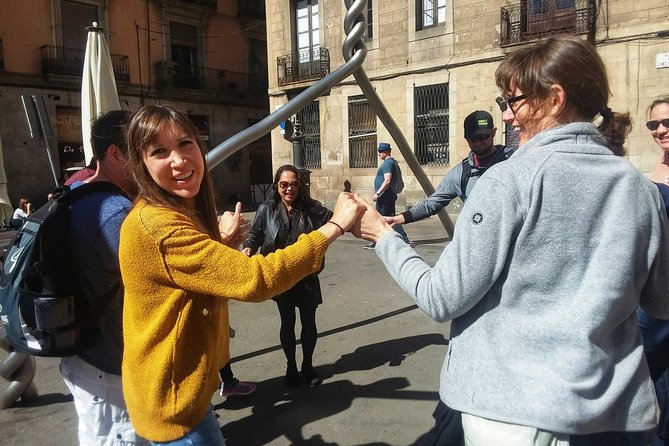
After the Gothic Quarter, you’ll head onto Las Ramblas, Barcelona’s pedestrian street. Expect a lively mix: street performers, small cafes, and Catalan cuisine shops along the way.
The smart thing here is that Ramblas isn’t treated as a separate “show street.” It’s used as a corridor to explain why places like La Boqueria matter to the Catalan food tradition. You’ll also hear the kind of details that help you decode what’s being sold and why it’s part of local culture—like the references to Iberian cured ham.
Admission is free for these passes, so you’re not stuck waiting for tickets. You’re moving through the energy with commentary that gives you something to look for besides crowds.
You can also read our reviews of more private tours in Barcelona


Mercat de la Boqueria: using the market as a culture lens
You’ll pass in front of Mercat de la Boqueria, an open market and a benchmark of Barcelona’s food scene. Even if you don’t plan to eat there during the tour, it’s worth seeing because the stalls visually explain what Catalonia takes pride in.
The market is described as colorful and exuberant, and the best part of a guided walk is that you’re not just staring at displays. You get context on traditions—what products mean locally and why this market has become a must-see stop for people visiting the city.
Because food and drinks aren’t included on the tour, this is also a good moment to decide on your own plan for later. If you want to come back with appetite, you’ll have a much clearer sense of where things are after you’ve walked past once.
Barcelona Cathedral: gargoyles, Saint Eulalia, and where power lived
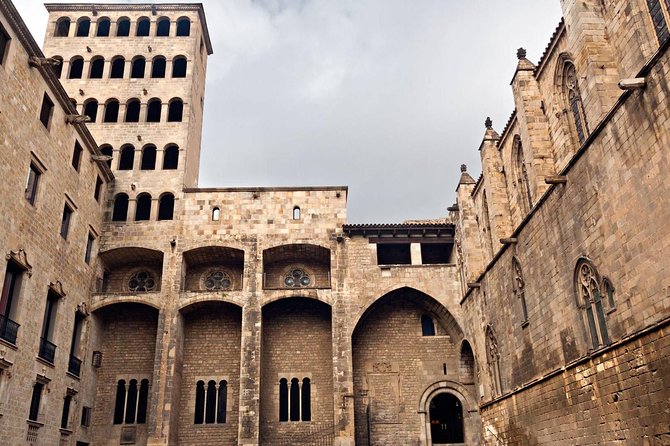
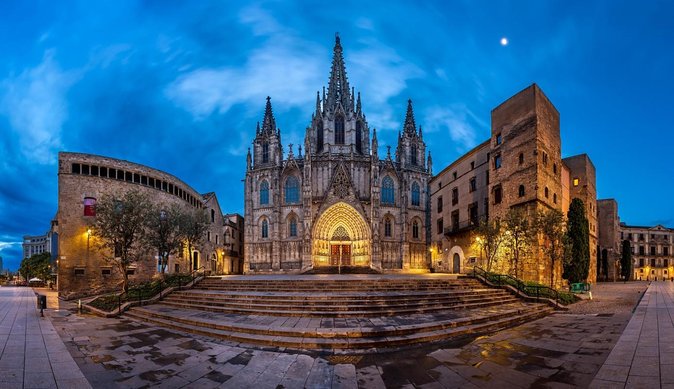
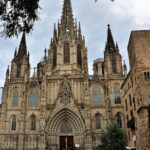
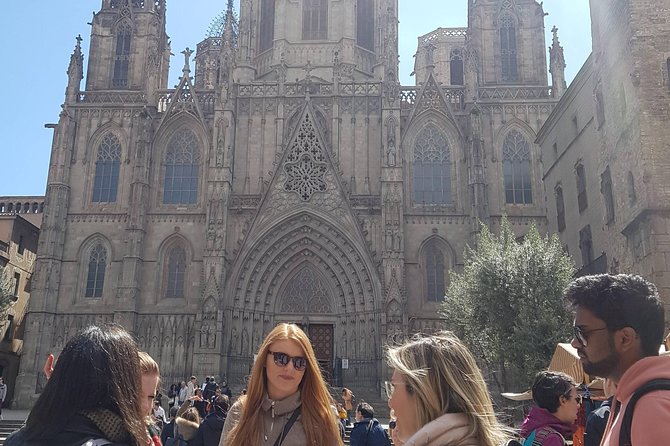
One of the big visual anchors is Barcelona Cathedral. You’ll pass by and admire the cathedral, including the gargoyle sculptures up near the towers. That top detail is easy to miss if you’re looking only at the main facade.
Your guide ties the cathedral to its dedication: it’s devoted to Saint Eulalia, and it also connects to the archbishopric seat of the city. In other words, it’s not only an architectural landmark—it’s part of the historical power structure of Barcelona.
The best way to enjoy this stop is to let your guide point out what you’re seeing first, then look again yourself. Once you know the key story beats, the building becomes easier to read like a text instead of a background object.
Santa Maria del Mar: Catalan Gothic made by the people
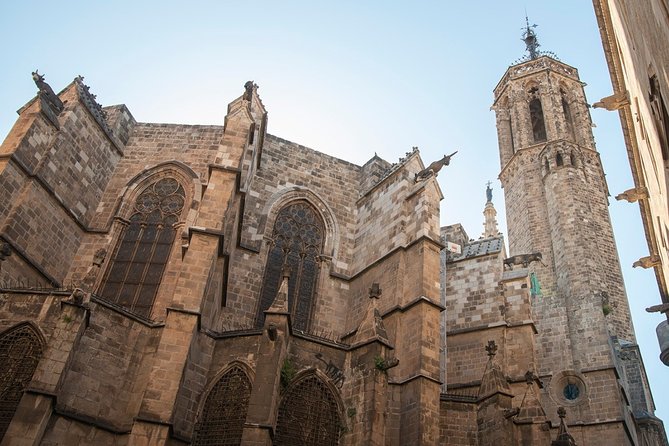
Next is Basilica de Santa Maria del Mar, a standout for anyone who likes Catalan Gothic. This church is described as an emblem of Catalan Gothic art and something the citizens raised, which gives it a grounded, communal feeling.
I love having a stop like this after the cathedral, because it’s a change in tone. If Barcelona Cathedral represents a certain kind of institutional story, Santa Maria del Mar connects to civic effort and local identity. You don’t have to be a church expert to appreciate that shift, either—your guide will keep the meaning tied to what you can actually see while walking through the area.
Again, admission is listed as free here, so you’re getting value through sight and explanation rather than spending time on entry logistics.
Plaça Sant Jaume, Plaça Reial, and Plaça del Rei: power and calm in three squares
The walking tour continues through a set of squares that act like punctuation marks in the Gothic Quarter.
At Placa de Sant Jaume, you’re in one of the city’s oldest representative squares, tied to Catalan political power even after centuries. This is one of those stops where context matters: once you understand what the square represents, it feels less like a pretty backdrop and more like a stage where history keeps repeating itself.
Then you’ll reach Plaza Reial, known for its fountain, elegant lampposts, and big palm trees. The yellow walls around the square create a warm atmosphere, which is exactly the kind of detail a guide helps you notice. It’s also a reminder that the Gothic Quarter isn’t only heavy stone and medieval angles—it has places that feel social and human.
Finally comes Plaça del Rei, one of the Gothic nooks that best illustrates medieval spirit. It’s enclosed by the Royal Palace and surrounding buildings, and the feeling here is quiet. This is a good time to slow down mentally. You get a sense of why this part of town feels protected and inward, even while the city outside keeps moving.
The guide factor: humor, patience, and customizing the walk
This is a private tour, but the real difference is the human style of the guide. In the examples shared for this tour, guides like Steven are described as hilarious, with humor plus solid history. Baggio is highlighted for being engaging and clearly passionate, and there’s a strong theme of being inclusive—especially for children.
Other guides have been praised for hitting a moderate pace so the tour stays fun and not exhausting. Jose Carlos and Joris are noted for tailoring to interests and for not overwhelming you with nonstop facts.
There’s also a practical angle: guides have been able to answer questions and adjust when the group’s energy shifts. If your group has an introverted member, a guide like Isabel has been described as making people comfortable rather than forcing participation. If you want your walk to feel like exploring with a knowledgeable friend, that style shows up again and again in how this tour is run.
One small but important tip: if you have specific priorities, come in with them. A good guide will use the time to match your interests, whether that means more architecture focus or more context on Catalonia’s story.
Price and value: what $96.75 covers
At $96.75 per person, this is priced as a private guided experience for an approximately 2.5-hour walk through Barcelona’s most story-dense neighborhood zones. The value isn’t in ticking off landmarks. It’s in turning the Old Town from confusing into clear.
You’re getting:
- a professional local guide
- a private walking format
- a route that hits Ciutat Vella, the Gothic Quarter, and the transition toward the Born district
- major highlights plus the smaller squares that many self-guided walks miss
Also, the listing notes group discounts, and the tour tends to be booked about 61 days in advance. That suggests it’s popular, so if you’re traveling at peak times, earlier booking can be worth it.
Because food and drinks aren’t included, I treat this tour like a starter course. Use it to learn where you want to eat later, not to eat during the walk.
Practical tips for a smoother Old Town walk
Old Town streets are uneven, and this tour is long enough that comfort matters. One direct piece of advice from how this walk is described: eat before you go. If you show up hungry, the charm of the Gothic Quarter can get lost in fatigue.
Wear shoes you trust. You’ll cover multiple areas without big breaks, and each stop is designed around a quick rhythm—look, listen, then move.
Bring your mobile ticket and arrive a bit early at Carrer de Fontanella 2. It’s near public transportation, so you can arrive without stress. If you’re traveling with a child, the tour mentions child pricing rules when sharing with paying adults, and you should plan your group setup accordingly.
If you need a specific language besides English, other languages are available on request, so check when you book.
Who should book this private Gothic Quarter and Old Town walk
This tour fits best if you want:
- a strong orientation to Barcelona’s history without getting lost in details
- a route that balances famous sights with quieter squares
- a private format where pace and questions can flex
- a first-timer friendly introduction that still feels thoughtful
It’s also a good match for families, including groups with kids, because guides are described as inclusive and patient. For couples or small groups, the private nature means you can linger at stops that catch your eye, then keep moving before you’re bored.
If you already know you want deep structure in your photos and a short list of where to return for a longer look, this kind of guide-led loop is a smart first move.
Should you book this Private Barcelona Old Town and Gothic Quarter Walking Tour?
If your goal is understanding Barcelona’s Old Town—not just passing through it—this tour is a strong yes. The route makes sense, the timing is workable, and the best part is the guide connection: humor, patience, and explanations that help you read the city as you walk.
I’d skip it only if you want a self-guided adventure with zero structure, or if you’re determined to spend most of the day wandering without stops or guidance. Otherwise, you’ll likely leave with a clear mental map of Ciutat Vella, the Barri Gòtic, and the squares that define the mood of the Gothic Quarter.
FAQ
How long is the Private Barcelona Old Town and Gothic Quarter Walking Tour?
It’s listed as approximately 2 hours 30 minutes.
Where does the tour start and where does it end?
The tour starts at Carrer de Fontanella, 2, Ciutat Vella, 08002 Barcelona, Spain. It ends at Passeig del Born / Pg. del Born, Ciutat Vella, 08003 Barcelona.
Is this tour private or do I join other travelers?
This is a private tour/activity. Only your group will participate.
What’s included in the tour price?
Included are a private walking tour, a professional local guide, and an Old Town walking tour covering the Gothic Quarter and Born District, including Barcelona Old Town highlights. Food and drinks are not included.
What languages are available?
The tour is offered in English. Other languages are available upon request.
Is free cancellation available?
Yes. You can cancel up to 24 hours in advance for a full refund. If you cancel less than 24 hours before the start time, the amount paid is not refunded.