REVIEW · BARCELONA
Barcelona: City Walking Tour with a Local Guide
Book on GetYourGuide →Operated by Carpe Diem Tours · Bookable on GetYourGuide
Barcelona’s Gothic Quarter tells stories fast. I like how this Gothic Quarter tour links everyday street corners to a timeline that runs from Roman Barcino to modern Barcelona, with a real local guide leading the way. I also appreciate the mix of headline sights (like the Barcelona Cathedral) plus quieter stops such as Placa Sant Felip Neri, where your guide adds context and a few surprising details.
The main trade-off: it is a 2-hour walking tour, and entry tickets are not included. If you’re hoping to go inside a bunch of buildings, you’ll need to plan that on your own after the walk, and you’ll want comfortable shoes.
In This Review
- Key highlights
- Why this 2-hour Gothic Quarter walk is a smart Barcelona start
- Price and value: why $29 works if you want context
- Meeting point at Plaça del Vuit de Març (and how not to waste time)
- What the route feels like: 2,000+ years on foot
- Stop-by-stop: what you’ll get at each highlight
- Els Quatre Gats: a pause that sets the tone
- The Kiss Of Freedom: a landmark built for a story
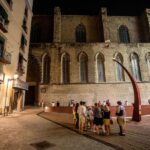
- Barcelona Cathedral: the anchor sight
- La Casa de l’Ardiaca and Carrer del Bisbe: street-level history
- Plaça Sant Felip Neri: a quieter kind of stop
- MUHBA El Call: history you can feel nearby
- Plaça de Sant Jaume and Plaça del Rei: the civic heartbeat
- Plaça de Santa Maria, 1: finishing with a strong reference point
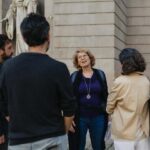
- Your guide is the real difference (and you’ll feel it)
- Tips to make the most of a short walking tour
- Who should book this tour (and who might want a different plan)
- Should you book this Barcelona City Walking Tour?
- FAQ
- How long is the Barcelona walking tour?
- What does the tour cost?
- Where is the meeting point?
- What is the guide language?
- Is entry included for attractions?
- Will I need to walk a lot?
- Can I book a private group?
- Is there free cancellation or flexible payment?
Key highlights
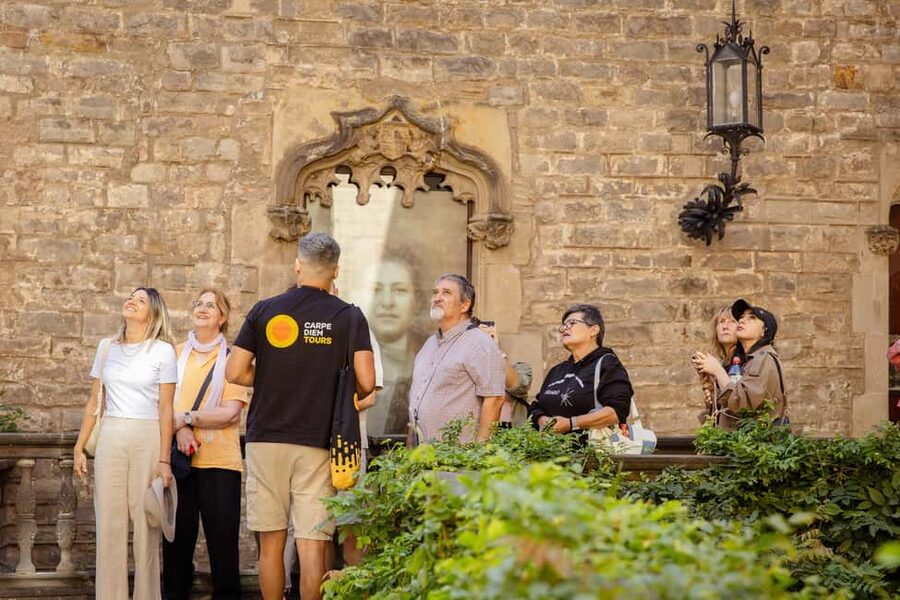
- Local, English-speaking guide with a private group option if you want it more personal
- Meet near the Roman Aqueduct remains at Plaça del Vuit de Març, by the Balmesiana Biblioteca Balmes
- Top sights plus story stops including Barcelona Cathedral, Plaça Sant Jaume, and MUHBA El Call
- A guided timeline across 2,000+ years, from the early colony to the city you see today
- Great short tour for your first day, helping you understand the old-town layout fast
Why this 2-hour Gothic Quarter walk is a smart Barcelona start
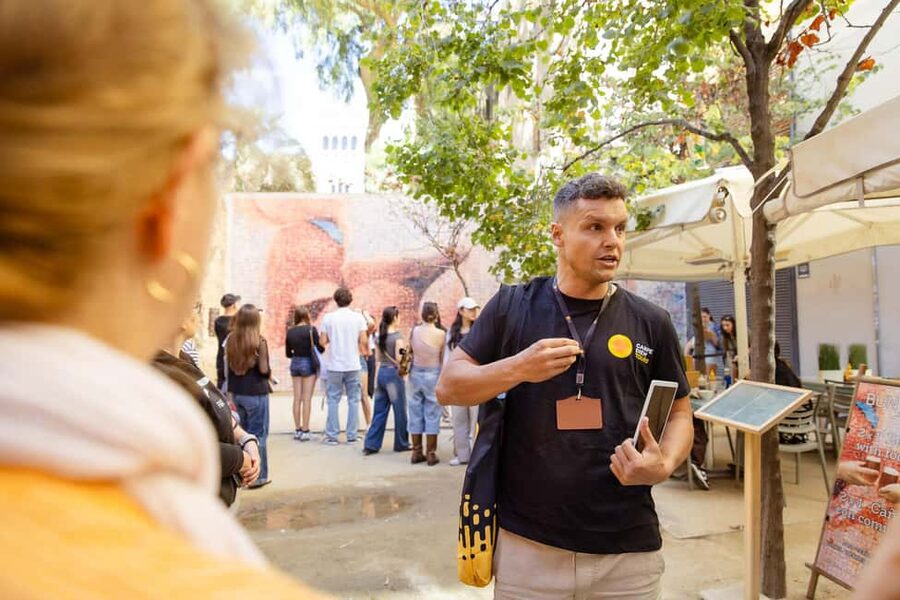
Barcelona can feel like two different cities at once: the one you explore casually, and the one with layers—Roman streets underneath medieval walls, then modern life threaded through older spaces. This tour is built for that exact moment when you want to “get” the city quickly without turning your day into a museum marathon.
At 2 hours, it hits a sweet spot. You get enough stops to form a mental map—cathedral area, medieval-style streets, major squares—while still keeping the pace light enough for real questions. And because it’s guided, you’re not just collecting landmarks. You’re learning what each area meant over time, which makes everything you see later feel less random.
For me, the best part is the storytelling approach. A local guide doesn’t just point; they connect. When you hear how Barcelona grew from Roman beginnings to later periods, suddenly the Gothic Quarter isn’t only pretty stone—it’s a timeline you can walk through.
You can also read our reviews of more walking tours in Barcelona


Price and value: why $29 works if you want context
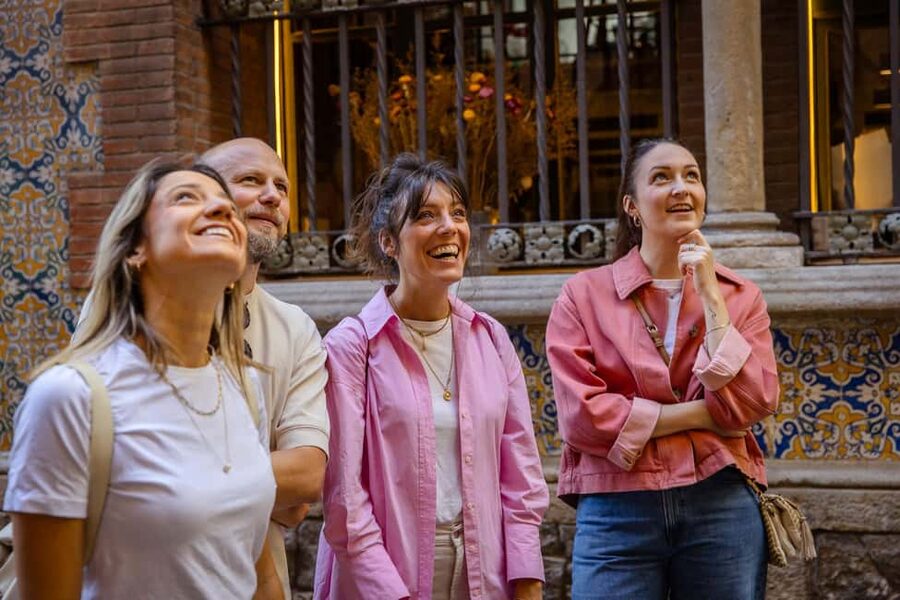
$29 for a 2-hour guided walking tour is a reasonable price for what you get: a live guide in English, organized stops, and a focus on both major sights and lesser-known corners. The key is what is included versus what is not.
Included: you get the walking guide and the city highlights presented as a coherent route. Not included: any entry tickets. That means you’re paying for guidance and interpretation, not for admissions. If you’re the type who learns fast by walking and asking questions, the value is strong.
If you’re the type who needs inside access to feel satisfied, you may feel a bit restricted. But that’s also easy to solve: use this tour to learn the area, then pick the places you want to enter later when you have time.
Meeting point at Plaça del Vuit de Març (and how not to waste time)
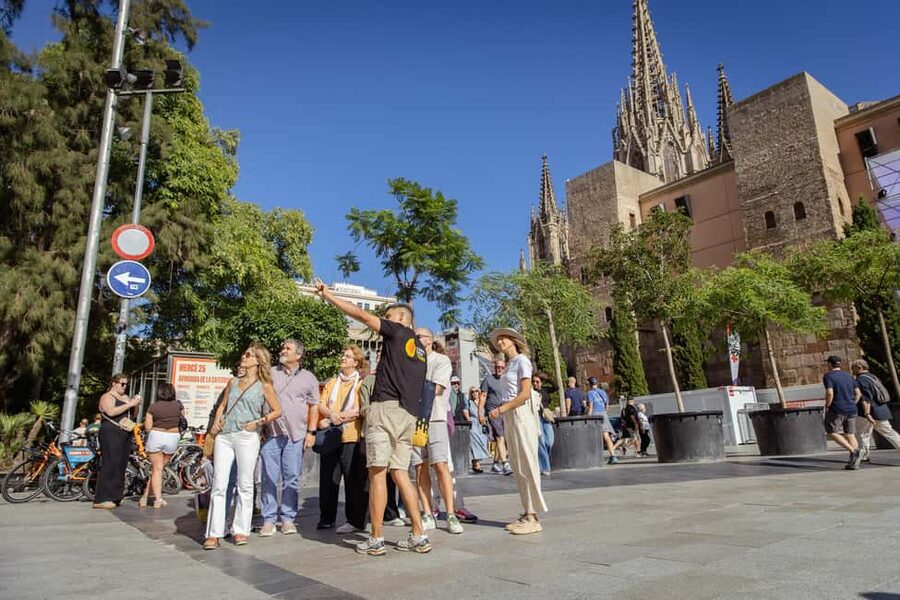
You meet at Plaça del Vuit de Març, inside the park area near Balmesiana Biblioteca Balmes and the Roman Aqueduct remains. It’s next to a white van, and you should look for the yellow Carpe Diem Tours flag. Arrive about 10 minutes early so you can settle in before the group moves off.
This matters more than you might think. Barcelona’s old streets can be confusing even for people who have strong map skills. Starting near the Roman Aqueduct remains gives you an immediate “oh right, this city has deep roots” moment before you even hit the Gothic Quarter proper.
Also, it helps to show up ready to walk. This is a short tour, so you won’t have long gaps to regroup.
What the route feels like: 2,000+ years on foot
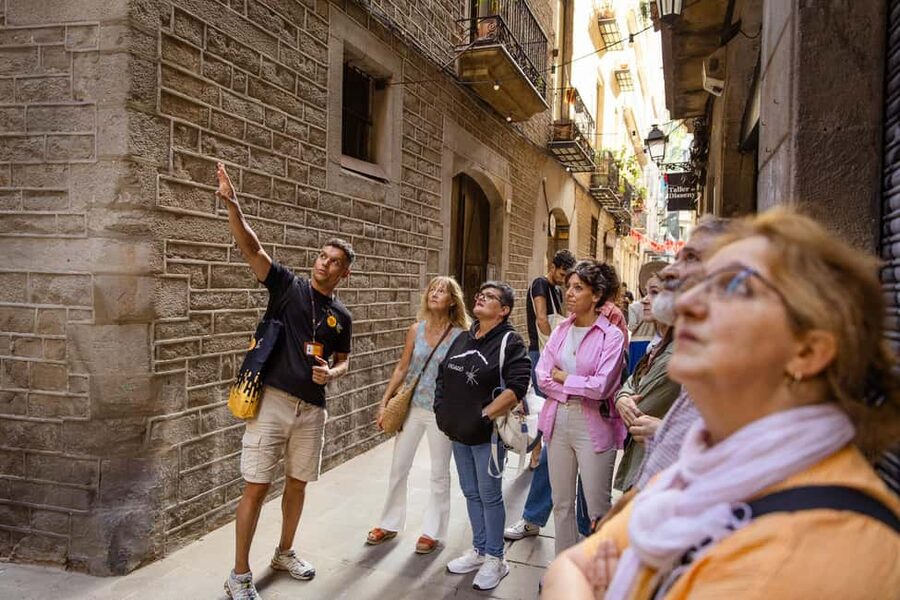
This is a guided walk through Barcelona’s old center, with a route designed to make history feel chronological. Your guide sets the stage with how the Roman colony of Barcino developed over time, then brings you forward through later eras and the legends connected to the streets you’re standing on.
Expect the vibe to shift stop by stop. Narrow streets give you a different sense of scale than open squares. Small landmarks like The Kiss Of Freedom or La Casa de l’Ardiaca work like narrative anchors: your guide uses them to explain how the city’s identity kept changing, even when the street plan stayed recognizable.
The stops are brief—think about 10 minutes of guided time at each major location. That’s not long, but it’s enough time to learn what to notice, ask one or two questions, and get a photo or two without feeling rushed.
Stop-by-stop: what you’ll get at each highlight
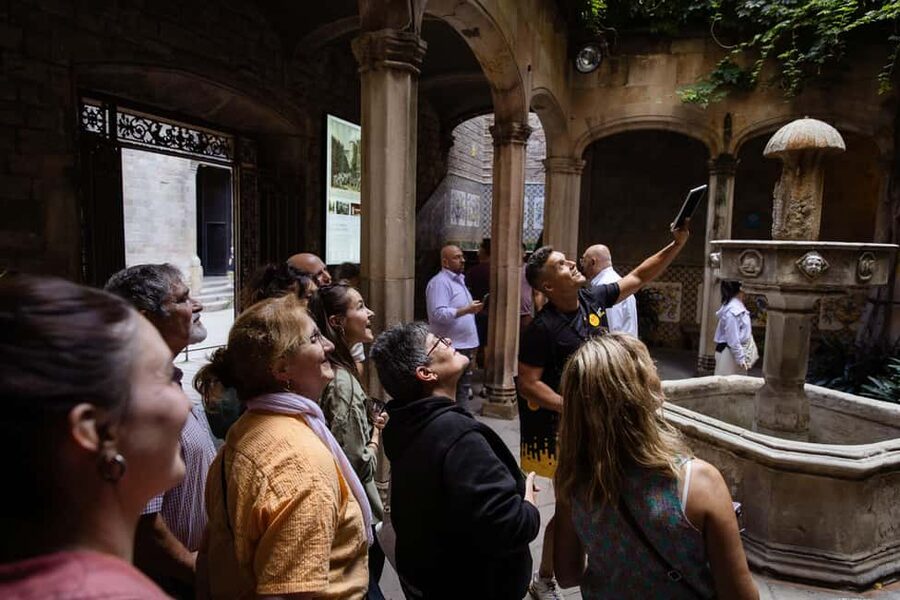
Here’s how the tour reads as a story, from start to finish.
You can also read our reviews of more guided tours in Barcelona



Els Quatre Gats: a pause that sets the tone
You’ll begin with a stop at Els Quatre Gats. Even though the guided time is short, your guide uses it as a setup point—an early moment where the tour’s themes start clicking: people, place, and the way Barcelona keeps reinventing itself without fully erasing what came before.
Practical tip: use this first segment to get your bearings. If you get turned around later on your own, this stop helps you remember where the tour is steering you.
The Kiss Of Freedom: a landmark built for a story
Next is The Kiss Of Freedom. This is the kind of stop that makes you slow down for a second because it’s easy to treat as just a point on a map. Your guide turns it into something you can connect to the city’s wider past—stories and anecdotes that make the area feel human, not textbook.
If you like your history with a side of drama, this is usually where your guide’s personality shows. Some guides bring a playful edge to darker tales, which can make the whole walk feel more memorable.
Barcelona Cathedral: the anchor sight
Then you reach Barcelona Cathedral. This is the most obvious “big ticket” on the route, and it’s there for a reason: it gives you a central reference point for the rest of the Gothic Quarter.
Even with a short guided stop, you’ll get context that helps the cathedral area make sense. Instead of only noticing architecture, you learn how this part of town fits into the broader timeline your guide is following.
Practical tip: if it’s busy, don’t fight for the perfect photo. Take one quick shot, then listen. The guide’s explanation is the value.
La Casa de l’Ardiaca and Carrer del Bisbe: street-level history
After the cathedral area, the tour moves through La Casa de l’Ardiaca and then Carrer del Bisbe. This is where the walk starts to feel more like a traditional guided stroll: you’re not just at monuments, you’re moving through the narrow rhythm of the old streets.
Your guide uses these stops to show how the city’s layers sit close together. It’s a reminder that in older European centers, you don’t have to choose between history and everyday life—you often get both within a few minutes of walking.
Plaça Sant Felip Neri: a quieter kind of stop
Placa Sant Felip Neri comes next. This is the sort of square that gives you a small breath in the middle of the Gothic Quarter maze. It’s also a great place to hear how guides frame “why this spot matters,” because your guide can connect the square’s atmosphere to the stories of the surrounding streets.
If you like ambiance, this stop is often where it clicks. It’s not only a landmark; it’s a place where the city’s mood changes.
MUHBA El Call: history you can feel nearby
Then you’ll visit MUHBA El Call. Your guide uses it as another narrative marker in the larger story of how Barcelona evolved over time. Even with limited guided time, this stop helps you understand that the city’s identity isn’t one straight line—there were shifts, communities, and changes that shaped what you see today.
Practical tip: if you’re the type who likes to follow up later, this is a good place to jot a note or take a photo so you remember to look up more after your walk.
Plaça de Sant Jaume and Plaça del Rei: the civic heartbeat
Plaça de Sant Jaume and Plaça del Rei are the tour’s next major square pair. These stops give you an immediate sense of where authority, institutions, and public life tend to cluster in old European cities.
Your guide connects these spaces to the story of Barcelona’s evolution, helping you understand why so many important landmarks gather around key squares.
Plaça de Santa Maria, 1: finishing with a strong reference point
Plaça de Santa Maria, 1 is the final guided stop on the route before you finish back at Escultura Barcino.
By the time you get here, you’ve walked a loop that gives you a mental map. The last few minutes are perfect for asking about what to do next, because your guide can point you toward the right neighborhoods and the right kind of day.
Your guide is the real difference (and you’ll feel it)
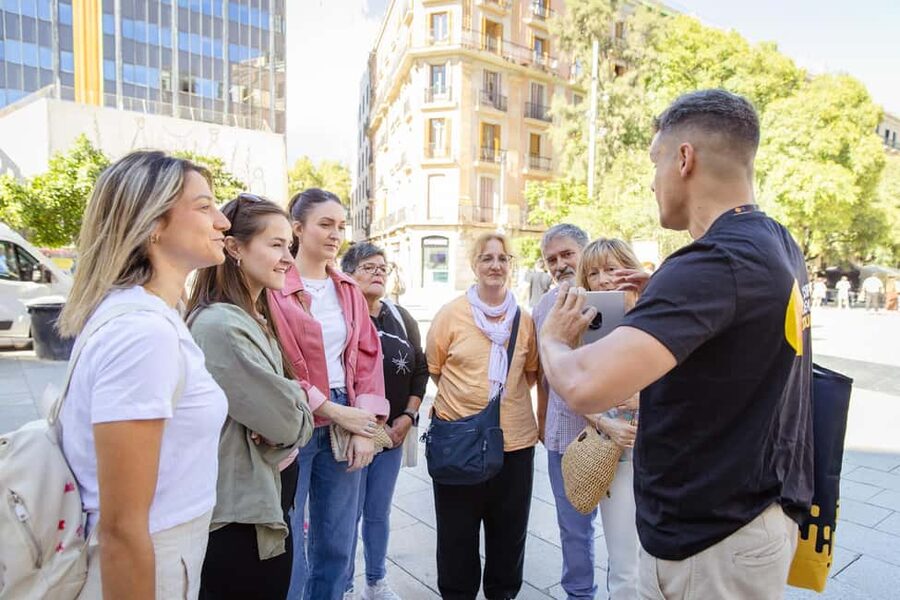
The landmarks are great. But what makes this tour work is the guide’s storytelling style.
You may hear Sara’s clear explanations, Ezekiel’s energy, or Lidia’s friendly, fun pace. If your guide is Mariah, the stories can carry extra weight—like a view of the Gothic Quarter through tragedy and courage tied to Catalan identity. Juan often blends city history with practical suggestions for where to eat and shop, and Petra has a habit of steering people toward good places and away from trouble spots.
Craig adds humor and mixes in darker tales in a way that keeps the group engaged. And no matter who’s leading, the best guides encourage questions, so you’re not just watching and nodding. You can ask what you should do next in Barcelona based on what you’re actually seeing around you.
That’s also why this is a great value for solo travelers. You get a local brain for a couple of hours, instead of relying only on your own instincts in streets where your first turn can feel like a gamble.
Tips to make the most of a short walking tour
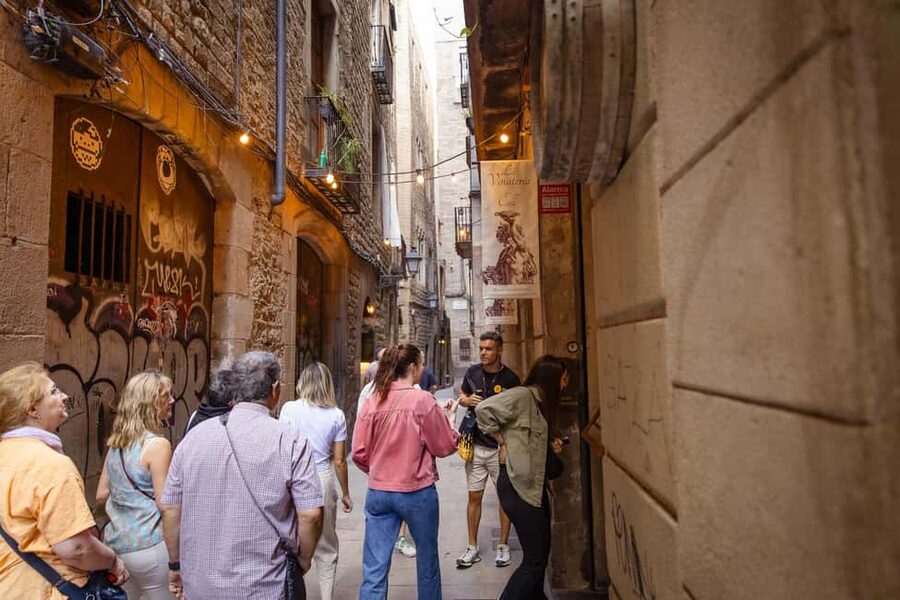
A 2-hour walk doesn’t give you much buffer, so a few smart choices help.
Wear comfortable shoes. The tour is short, but it’s still old-town walking with uneven sidewalks. Bring a camera so you can capture the key landmarks fast—because some stops are brief.
Wear comfortable clothes that handle sun or light rain. If the weather is rough, your guide will still keep moving and keep the story flowing, so you’re not stuck standing around.
Finally, go in with one goal: learn the layout. You don’t need to memorize every detail. If you can later find your way back to major squares, the tour has already done its job.
Who should book this tour (and who might want a different plan)
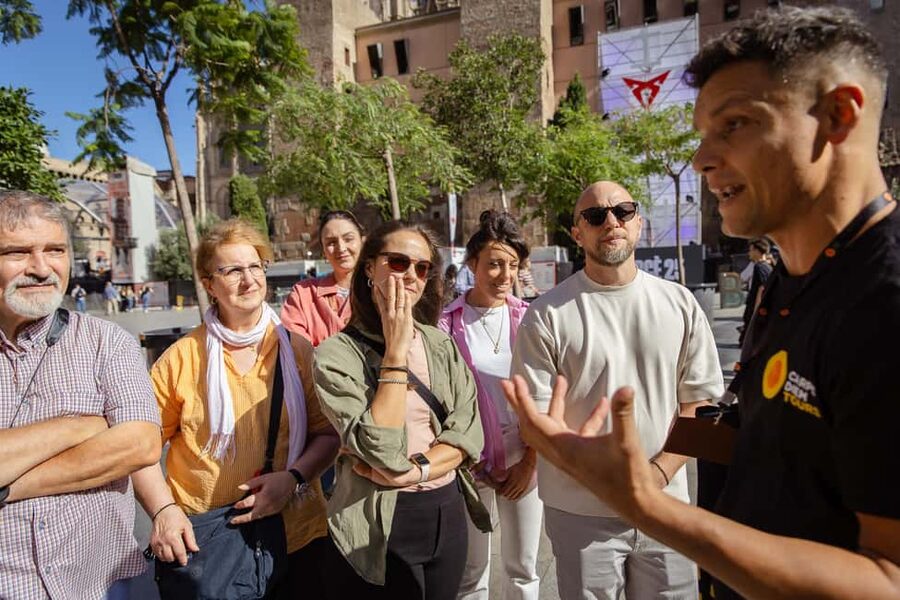
This works especially well if:
- You want a solid first-day introduction to the Gothic Quarter
- You like walking and learning stories as you go
- You want both famous sights and quieter stops without planning a route yourself
- You’ll use the guide’s suggestions for restaurants or local places afterward
You might consider a different option if:
- You only care about inside museum-style visits, since entry tickets are not included
- You need a longer guided experience to feel satisfied
- You prefer a slow, sit-down tour rather than a short, moving route
Should you book this Barcelona City Walking Tour?
Yes, if your priority is understanding the old center fast and turning Barcelona into a story you can follow on your own later. At $29, you’re paying for a guide-led route that mixes landmark highlights with smaller story-driven stops—exactly what you need for a first or mid-trip reset.
Book it with confidence if you want a walk with context, not just photos. Just bring good shoes, accept that it’s about seeing and learning rather than ticketed entries, and use your guide’s energy to ask what to do next in the city.
FAQ
How long is the Barcelona walking tour?
The tour lasts about 2 hours.
What does the tour cost?
The price is listed as $29 per person.
Where is the meeting point?
Meet at Plaça del Vuit de Març, inside the park near Balmesiana Biblioteca Balmes and the Roman Aqueduct remains, next to the white van. Look for the yellow Carpe Diem Tours flag.
What is the guide language?
The live guide is available in English.
Is entry included for attractions?
No. Entry tickets are not included.
Will I need to walk a lot?
Yes. It’s a guided city walking tour, and you’ll be moving between multiple stops over the 2-hour duration.
Can I book a private group?
Yes. Private group availability is listed.
Is there free cancellation or flexible payment?
Free cancellation is available up to 24 hours in advance for a full refund, and there is a reserve now & pay later option.