REVIEW · BARCELONA
Barcelona Architecture Walking Tour With Casa Batlló Upgrade
Book on Viator →Operated by ExperienceFirst · Bookable on Viator
Barcelona’s buildings speak—if you know what to hear. This architecture-focused walk links modernist giants from the Recinte Modernista de Sant Pau to Sagrada Família, with an option to add a Casa Batlló visit if you want the interior wow-factor. It’s built for people who like to understand what they’re looking at, not just take photos.
I especially like the way the tour starts with the Art Nouveau hospital at Sant Pau, a place that used to function as a working hospital well into the late 1990s. I also love the ending stretch on Passeig de Gràcia, because you’re guided through the city’s big-name façades and you get a chocolate sample at Casa Amatller.
One consideration: most stops are view-from-the-street moments, and entry tickets aren’t included for buildings like Sagrada Família and the others. If you’re sensitive to noise or prefer a slower stroll, you’ll want comfortable shoes and good positioning near the guide.
In This Review
- Key things to know before you go
- A modernist hit list from Sant Pau to Passeig de Gràcia
- Stop 1: Recinte Modernista de Sant Pau (the Art Nouveau hospital-palace)
- Stop 2: Sagrada Família facades and the symbol hunt
- Stop 3 & 4: CaixaForum Macaya and Casa de les Punxes
- Stop 5-7: Passeig de Gràcia, Casa Batlló, and La Mansana de la Discordia
- Casa Amatller: chocolate with a purpose
- Casa Batlló upgrade: what the extra ticket really adds
- How the guide experience changes everything
- Price and value: $35.07 for a guided modernist day
- Who should book this tour (and who should skip it)
- Should you book this Barcelona Architecture Walking Tour with Casa Batlló upgrade?
- FAQ
- Is Casa Batlló entry included?
- How long is the tour?
- What’s included in the ticket price?
- Where does the tour start and end?
- Is the tour in English?
- Can I get a refund if I cancel?
Key things to know before you go
- A modernism route with clear pacing that fits a 2 to 2.5 hour visit window
- Optional Casa Batlló admission for the upgrade crowd who want interiors too
- Sant Pau first, then Sagrada Família so you can compare Catalan modernism themes as you go
- Real food moment at Casa Amatller with a ground-level chocolate shop stop
- Small group size (up to 20) which usually makes it easier to hear and ask questions
A modernist hit list from Sant Pau to Passeig de Gràcia
This tour is a smart way to see Barcelona’s modernist architecture without spending your entire day in ticket lines. In a short time, you’ll move through three of the city’s most important zones for Catalan modernism: the Sant Pau complex, the Sagrada Família area, and the high-density architectural candy store along Passeig de Gràcia.
What makes it especially good value is the “why it matters” framing. You’re not just walking past pretty buildings. Your guide is there to point out symbols, design ideas, and the names behind the styles—so the street becomes a museum you can navigate on foot.
If you’re going for a first serious architecture day, this works. It gives you a mental map you can use later when you explore on your own.
You can also read our reviews of more walking tours in Barcelona



Stop 1: Recinte Modernista de Sant Pau (the Art Nouveau hospital-palace)
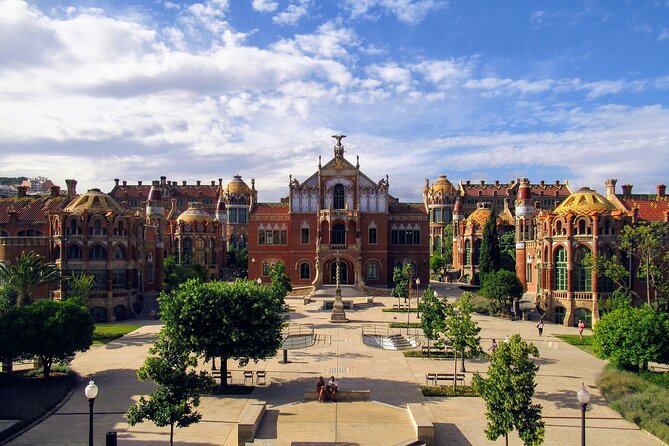
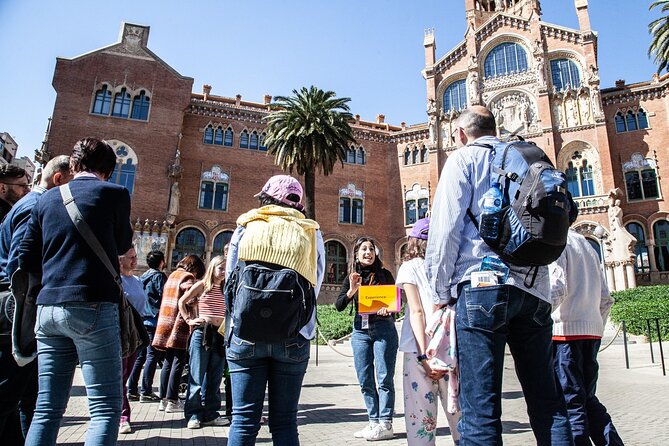
Your tour kicks off at Recinte Modernista de Sant Pau, designed by Lluís Domènech i Montaner—a major figure in Catalan modernism. This site is described as the largest Art Nouveau complex in the world, and it’s also tied to a real hospital history. Even after it was designed as a grand healthcare complex, it stayed in use until the late 1990s, which adds weight to the beauty.
You’re there for about 15 minutes. That’s not long enough to “tour” every nook, but it’s enough to grasp the overall scale and the design thinking. Expect a quick orientation: what you’re looking at, why it looks the way it does, and how it fits the broader modernist story.
Practical tip: this is a strong start point because you’ll get context before Sagrada Família. If you know what modernism was trying to do, the later stops hit harder.
Stop 2: Sagrada Família facades and the symbol hunt
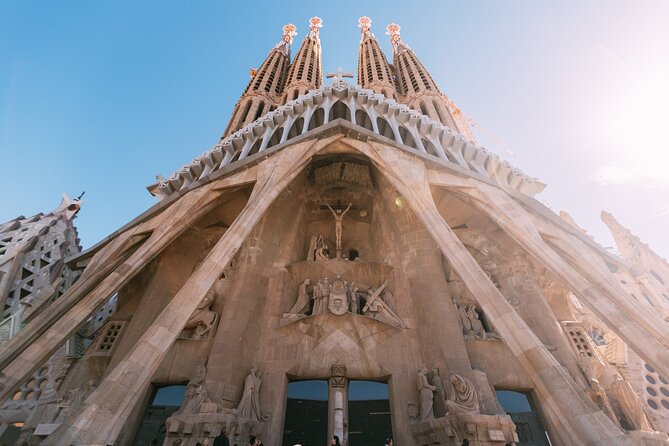
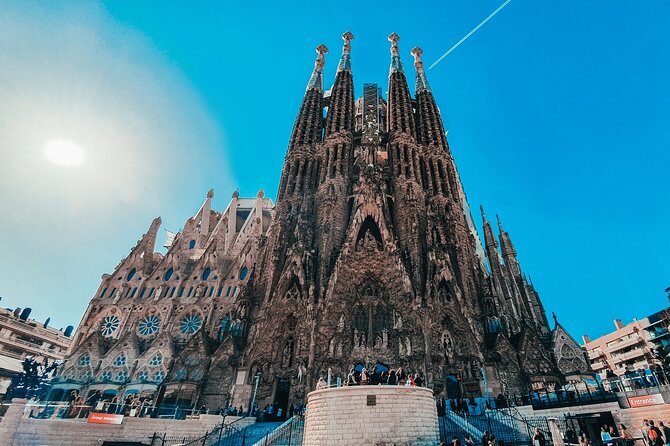
Next comes Sagrada Família. You’ll stroll along Avinguda Gaudí and reach the church, which is often treated as the symbol of Barcelona. You’ll also learn how Antonio Gaudí used visual language—especially on the two façades—so you can see more than just shapes.
The tour time here is about 30 minutes, and it’s specifically framed as an exterior viewing experience. Admission tickets for Sagrada Família aren’t included, so you’re not aiming to go inside during this walk. Instead, you’ll be guided to look from different angles and pick out symbolic details.
This is where a good guide matters. One person’s city “wow” is another person’s visual confusion. The payoff here is when your guide translates design choices into meaning—why certain elements are there, what they suggest, and how they connect to Gaudí’s broader approach.
Note: this is also a high-traffic area. Streets can feel loud, and that can make it harder to hear every word unless you’re near the front. If you’re easily distracted by noise, you might want to position yourself early and keep your phone tucked away unless your guide pauses.
Stop 3 & 4: CaixaForum Macaya and Casa de les Punxes
After Sagrada Família, you’ll get two shorter stops that work like breathing spaces between the big hitters.
First is CaixaForum Macaya. You’re only scheduled for about 10 minutes, so think of it as a quick story stop: you get the context for why the place matters and what’s going on with the building’s setting. It’s the kind of stop that helps you connect the dots so Passeig de Gràcia doesn’t feel like an abrupt jump.
Then comes Casa de les Punxes, a place people often describe as a fairy-tale looking house. You’ll spend about 15 minutes here, listening to the story behind its design. Even without an interior visit, it’s a memorable moment because the façade is such a visual statement—sharp lines, a distinct “character,” and plenty for your guide to interpret.
Why I like these quick stops: they prevent the tour from feeling like a straight checklist. They add variety so you don’t burn out before you reach the real architecture showdown on Passeig de Gràcia.
Stop 5-7: Passeig de Gràcia, Casa Batlló, and La Mansana de la Discordia
Now you reach the main event: Passeig de Gràcia and the famous cluster known as La Mansana de la Discordia. This is where Barcelona stacks several modernist façades close together, including work tied to architects like Gaudí, Domènech i Montaner, and Puig i Cadafalch, plus others.
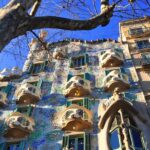
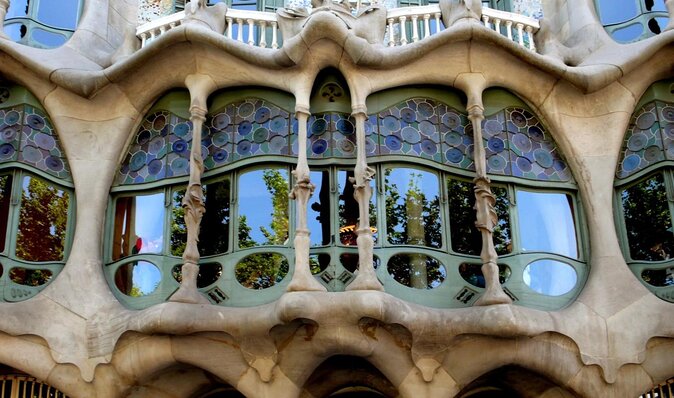
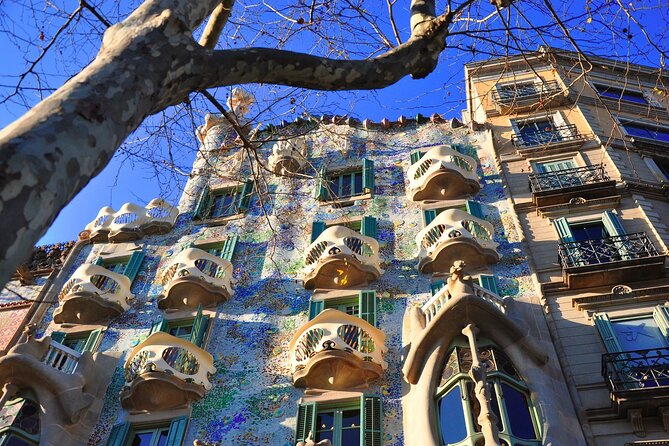
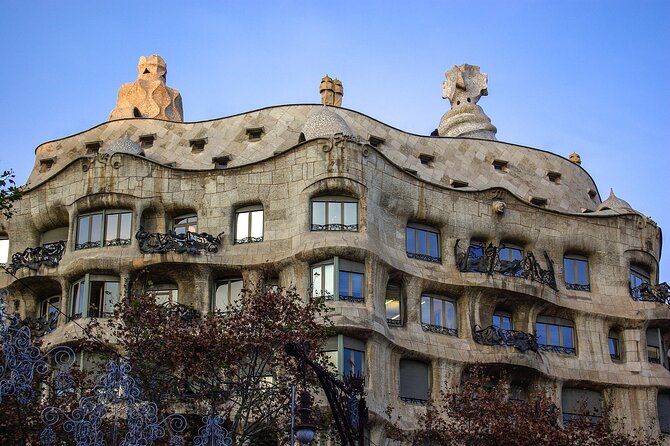
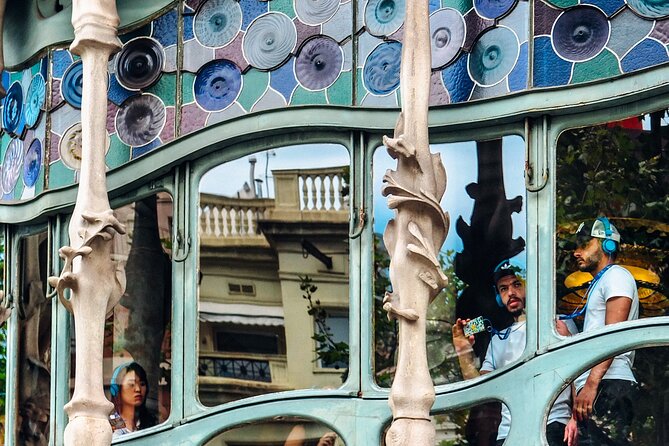
You’ll spend about 30 minutes on Passeig de Gràcia learning about key houses including Casa Milà, Casa Batlló, Casa Amatller, and Casa Lleó Morera. The tour also spotlights Casa Batlló’s elaborate exterior details—especially the colors and the decorated window elements that make it feel almost alive.
Then you’ll continue into the Mansana de la Discordia stretch for another 30 minutes. This is where your guide should help you compare. The fun isn’t just seeing famous buildings—it’s noticing how each architect’s style differs, even when they’re creating within the same city block neighborhood.
If you’re a visual learner, this segment is ideal. You’re walking slowly enough to compare façades, but not so long that you lose the thread.




Casa Amatller: chocolate with a purpose
One of the most enjoyable non-museum moments is the Casa Amatller stop. You’ll enter the ground-level shop for a guided bit about the place and sample Barcelona chocolate. This is about 15 minutes, and it’s included.
I like this kind of stop because it adds contrast. You’re studying design and symbols, then you get something simple and local. It also gives you a chance to reset your brain before the tour finishes in the Passeig de Gràcia area.
Casa Batlló upgrade: what the extra ticket really adds
This tour offers an optional Casa Batlló admission upgrade. If you choose it, you get more than exterior design education—you get access to the interior experience.
Why that matters: Casa Batlló is famous for more than its façade. Interiors often make it easier to understand the logic behind the surface look—how the building’s imagination connects across rooms, not just on the street.
Also, the upgrade typically turns the day from a great viewing tour into a full “Barcelona architecture” day. If you only have time for one Gaudí interior, this is the kind of choice that can pay off.
But there’s a tradeoff. When you add admission to a schedule, you’re committing to extra time at that site. If you prefer flexible roaming afterward, consider whether you want this tour to be your end point or just your foundation.
How the guide experience changes everything
The backbone of this tour is the guide. You’ll hear it in the praise for specific names and styles. People have highlighted guides like Perrine for enthusiasm and for connecting the architecture to cultural, political, and economic context. Others have credited Cal with an engaging approach and local tips, including having another guide in training join the group and add perspective. Patricio has also been praised for being very knowledgeable and making it easy to learn a lot.
At the same time, one caution comes from a negative experience: a guide’s walking pace can feel fast for a group, and there may not be audio support. One person noted no listening devices, plus difficulty hearing due to street noise. That same review also complained that the guide didn’t offer enough pacing info about walks between stops.
Here’s how to protect yourself:
- Stay near the front so you can hear over street noise.
- If you need slower breaks, ask early and clearly.
- Bring patience. You’re walking between major sites, and the city does not quiet down for your schedule.
Price and value: $35.07 for a guided modernist day
At $35.07 per person, this is priced like a “guided highlights” tour, not a full museum pass. That makes sense because entry tickets for buildings are not included in the base tour plan.
So where does the value come from?
- You get a local guide and an architecture-focused narrative.
- You get coverage of multiple marquee modernist landmarks within a short window.
- You get a chocolate sample at Casa Amatller.
- You can choose whether to add Casa Batlló admission, which is where the money can shift depending on what you want.
This is also the kind of tour that tends to book ahead. With an average booking window around 28 days in advance, plan to lock in early if your dates are fixed.
Group size is capped at 20. That’s not tiny, but it’s small enough to still feel like a real guided walk.
Who should book this tour (and who should skip it)
This is ideal if you:
- Love architecture and want someone to point out what you’re seeing
- Want an efficient first taste of Catalan modernism
- Like a mix of famous sights and one fun local stop (the chocolate)
It might not be ideal if you:
- Want mostly indoor visits and full ticketed access (many stops are exterior viewing)
- Need a slow, comfortable walking pace with frequent breaks
- Rely on hearing devices and can’t manage without them
If you’re the type who reads plaques and wants the story behind the design, you’ll be in your element.
Should you book this Barcelona Architecture Walking Tour with Casa Batlló upgrade?
Yes, if you want a guided modernism day that makes the city’s architecture feel understandable instead of random. The route is built to connect themes—from Sant Pau’s modernist hospital origins to Gaudí’s Sagrada Família façades, and then into the high-density modernist showcase of Passeig de Gràcia.
Upgrade to Casa Batlló if you want the interiors, not just exterior viewing. If you’re on a tight schedule or want to keep your day flexible, you can still enjoy the walk without it because the guide spends time on the exterior design details.
My practical advice: wear comfortable walking shoes, get ready for city noise, and position yourself where you can hear the guide. Do that, and this turns into one of the more satisfying architecture days in Barcelona.
FAQ
Is Casa Batlló entry included?
Casa Batlló admission is an optional upgrade. Entry to buildings in general is not included.
How long is the tour?
The experience runs about 2 hours to 2 hours 30 minutes.
What’s included in the ticket price?
You’ll get a local guide and a walking tour of Barcelona architecture. A chocolate sample at Casa Amatller is included, and the expert architect guide and Casa Batlló admission are included only if you choose the optional upgrade.
Where does the tour start and end?
It starts at Recinte Modernista de Sant Pau, Carrer de Sant Antoni Maria Claret, 167 (near public transportation). It ends at Pg. de Gràcia, 35, Eixample, in front of Casa Lleó i Morera.
Is the tour in English?
Yes, the tour is offered in English.
Can I get a refund if I cancel?
Yes. You can cancel up to 24 hours in advance for a full refund.