REVIEW · BAMBERG
Bamberg: Guided Walking Tour
Book on GetYourGuide →Operated by BAMBERG Tourismus · Bookable on GetYourGuide
Bamberg makes you slow down. This short guided walk is one of the easiest ways to see why it’s a UNESCO World Heritage town, with enough stops to keep you interested and enough time to actually look. I like that the route covers both the grand set pieces and the smaller streets, so you don’t just “check boxes.” I also like that the guide often brings medieval and city-development details into the story, which is exactly what you want when you’re staring at centuries of buildings.
The only real catch is language: the tour is German-only, and the cathedral interior is not included. If you want church interiors, or you don’t feel comfortable with German, you’ll need a different plan.
In This Review
- Key highlights to look for
- Bamberg’s UNESCO magic, in a 2-hour walking format
- Meeting at BAMBERG Tourismus: where your 2-hour route starts
- Getting your first big view: the cathedral area, without interior tickets
- Old Court and the New Residenz: architecture that tells you who mattered
- Rose Garden: a break from the heavy highlights
- Old town hall and half-timbered streets: the everyday center becomes history
- Little Venice and the bridges: the photo stop that also makes sense
- What’s covered besides the headline stops
- Price and duration: is $14 really good value?
- German-only guide: how to make it work without getting stuck
- Who this walking tour suits best
- Should you book this Bamberg guided walking tour?
- FAQ
- FAQ
- How long is the Bamberg guided walking tour?
- How much does it cost?
- Where do I meet the guide?
- Is the cathedral interior included?
- What sights are included in the tour?
- Is the tour private or public?
- What language is the guide?
- Is transfer included?
- How do tickets work after booking?
Key highlights to look for
- Old Court + New Residenz: Baroque-era power and elegance in walking distance
- Cathedral views only: impressive from the outside, with no interior visit
- Little Venice + bridges: the photogenic Bamberg corners you’ll understand better on foot
- Rose Garden: a calmer pause after the busier sight clusters
- UNESCO focus: why Bamberg’s 2,400+ historic buildings matter and how they connect
Bamberg’s UNESCO magic, in a 2-hour walking format
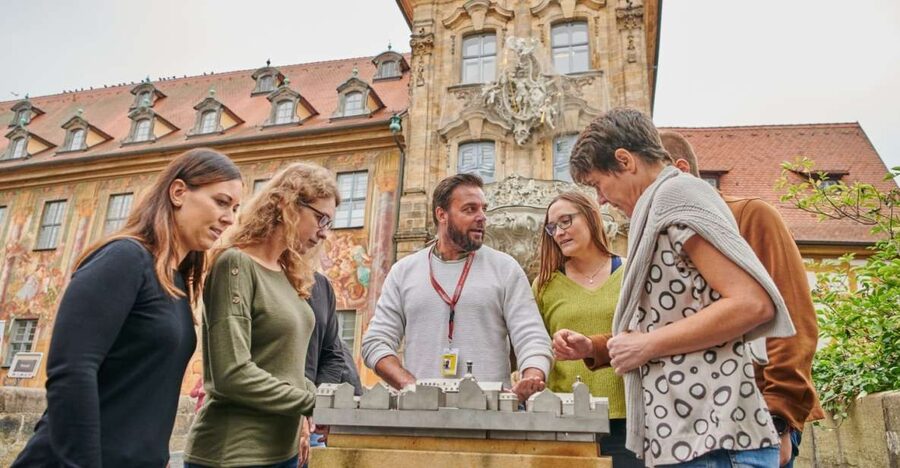
Bamberg feels like a town built for people who like details. You’re surrounded by historic buildings—the town is known for having more than 2,400 historic structures—and that’s why it earned UNESCO World Heritage status in 1993. Even if you’ve seen German towns before, Bamberg has a special mix: big architecture paired with snug, older lanes, plus Baroque facades layered over older bones.
A good guided walk helps you read what you’re seeing. Without a guide, you can still enjoy the sights, sure. With a guide, you start noticing patterns: where authority sat, how religious life shaped the center, and why the bridges and water views matter so much to Bamberg’s layout.
You’ll likely find the tone of the tour friendly and story-driven. In past tours, guides such as Christine and Werner have been praised for making medieval history feel lively, even a bit humorous, instead of sounding like a lecture. If you like learning through walking—rather than sitting—you’re in the right place.
You can also read our reviews of more walking tours in Bamberg
Meeting at BAMBERG Tourismus: where your 2-hour route starts
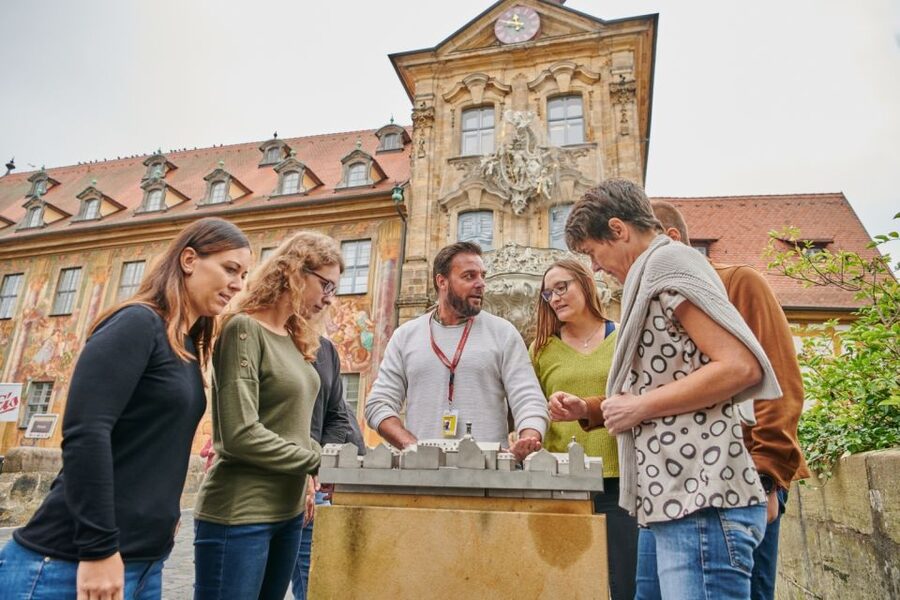
You meet at BAMBERG Tourismus – Tourist Information, Geyerswörthstraße 5. That’s useful for planning because you can aim your day around a clear starting point, then spend the next couple hours staying in the heart of town.
This is a public tour, and it lasts about 2 hours. For most people, that’s the sweet spot: long enough to hit major highlights like the cathedral area and the New Residenz, but short enough that you’re not exhausted before the rest of your Bamberg day.
Because the tour is guided on foot, wear shoes you can trust on uneven historic streets. Even if the walk is not described as strenuous, Bamberg’s center means you’ll be dealing with narrow lanes, stairs or gentle slopes, and lots of “stop-and-look” moments.
Getting your first big view: the cathedral area, without interior tickets
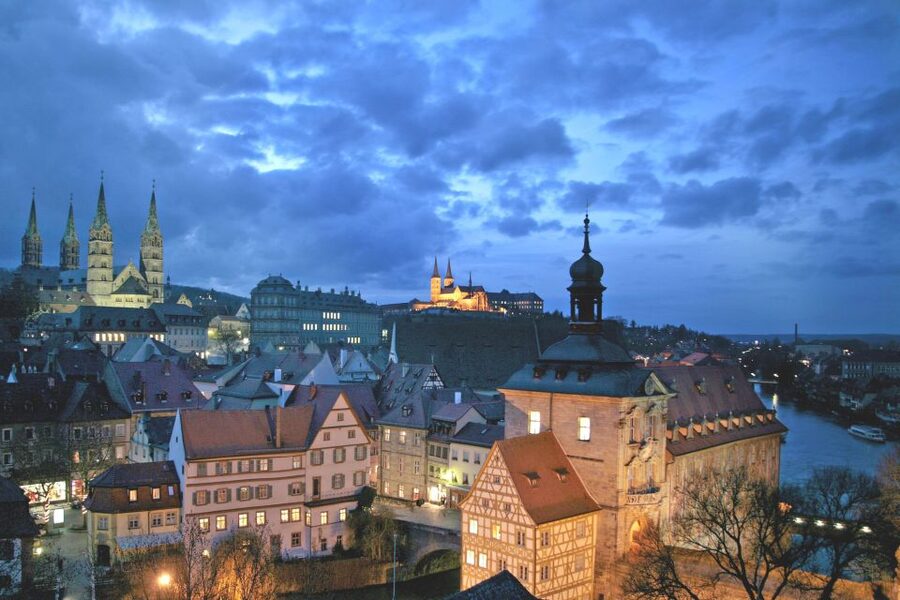
One of the first major anchors on this tour is the cathedral. You’ll admire it from the outside as part of the sightseeing loop. The interior tour is explicitly not part of this experience, so don’t plan around going inside or lingering for an interior visit.
That limitation matters more than it might sound. Churches can offer serious payoff when you go in—art, altars, and atmosphere. Here, the focus stays on Bamberg’s overall city composition: the way religious buildings sit within the urban plan, and how the cathedral area connects to the surrounding streets and squares.
Still, “outside only” isn’t a downgrade. Bamberg’s cathedral and surrounding structures are designed to be seen as landmarks, and you’ll get the chance to take in the scale and the setting. Think of this as an orientation tour that helps you understand where later you might choose to return for interiors—if that’s your style.
Old Court and the New Residenz: architecture that tells you who mattered
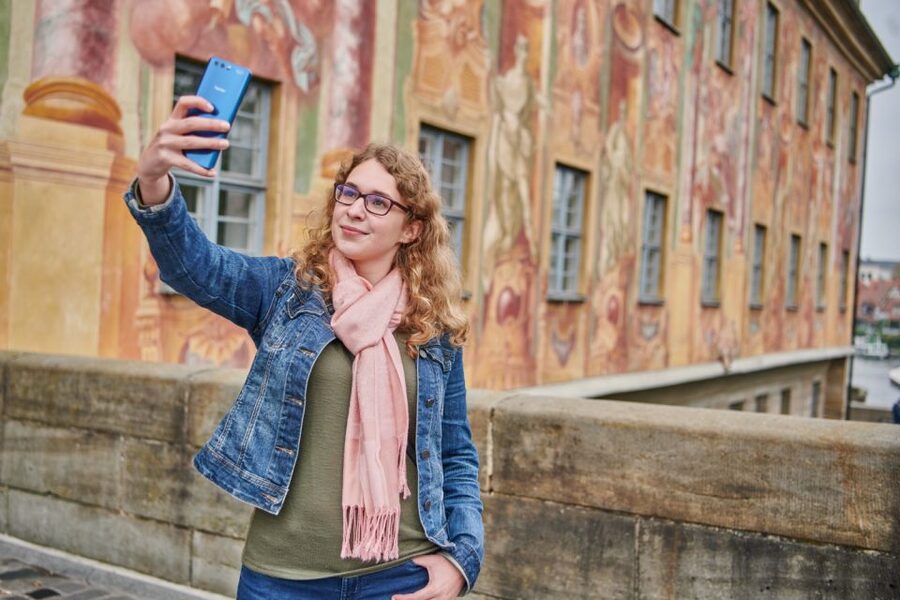
The tour moves from landmark religion into civic and courtly space, which is where Bamberg’s personality really comes through. You’ll see the Old Court and the New Residenz, and those names aren’t just sightseeing labels. They hint at how power and culture played out here.
The Old Court area gives you a sense of older governance and official life. The New Residenz shifts the mood toward a more impressive, later architectural language, with Baroque influence showing up in facades and city presence. If you like architecture, this is one of the key reasons this tour is worth doing even if you’re the type who can “wander” on your own.
The guide’s job in this section is to connect the visual cues to story. When you’re standing in front of big buildings, it’s easy to miss what makes one era different from another. With a German-speaking guide, you get explanations that help you spot those shifts faster—especially when the tour emphasizes the combination of impressive architecture and Baroque town houses.
Practical tip: in this part of the walk, you’ll want to pause for a full look up and around, not just a front-facing photo. These buildings make more sense when you understand how they sit relative to nearby streets and squares.
Rose Garden: a break from the heavy highlights
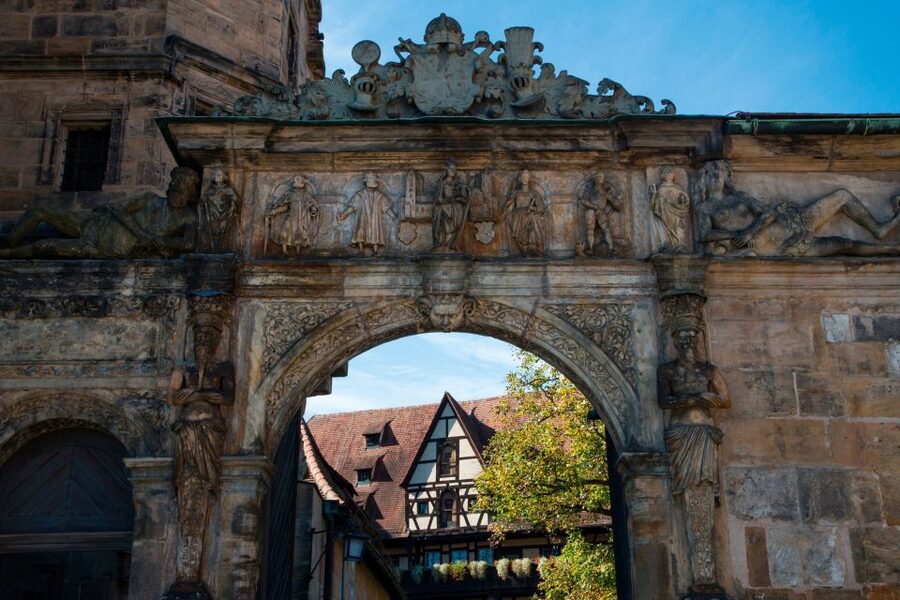
After the major historical showpieces, the Rose Garden works like a reset button. It’s the kind of stop that’s easy to skim if you’re tired, but it often refreshes you because it slows the pace of your attention.
Even if you go in a season when flowers aren’t at peak, the value is still there. Garden stops give you a different view of the town and a calmer breathing space, which helps you process what you just learned about the city’s development. If you’re the type who needs a visual pause to remember details, this is a smart inclusion.
This also matters because you’ll be walking through areas full of churches, monasteries, bridges, and narrow lanes. A garden stop gives your feet and your brain a breather without turning the tour into dead time.
Old town hall and half-timbered streets: the everyday center becomes history
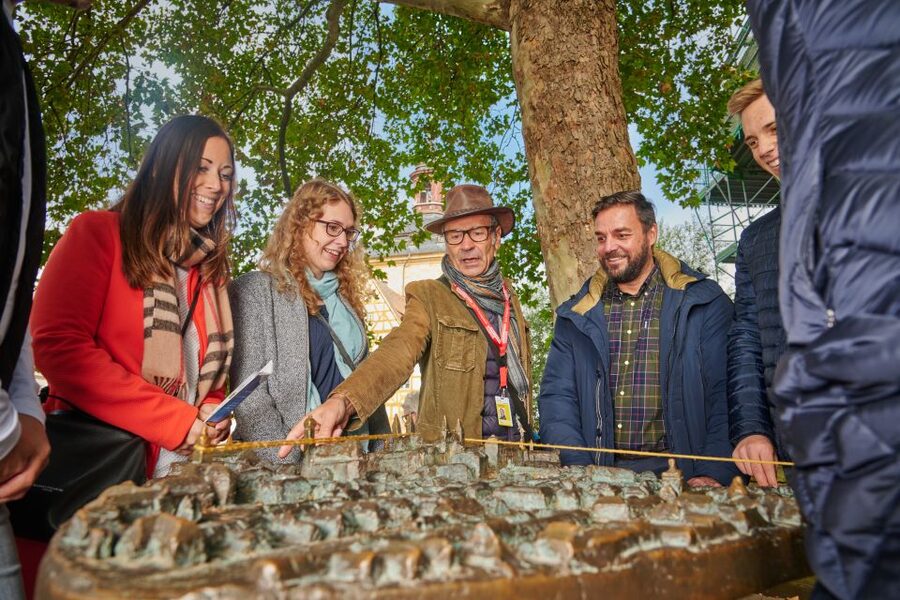
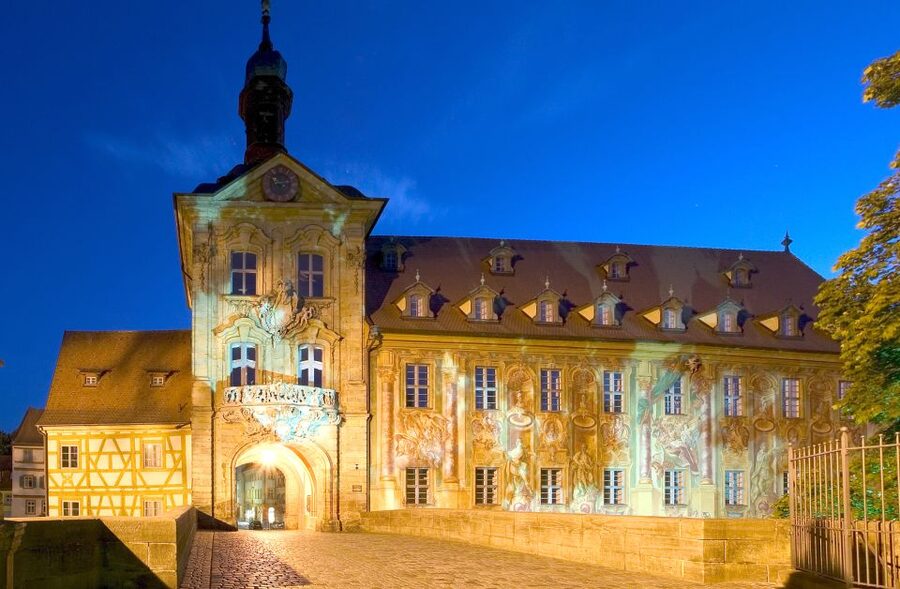
Bamberg’s charm isn’t only in grand monuments. During the walk, you’ll also see the old town hall, and you’ll move through the kind of streets that look “ordinary” until you realize they’re part of the historic fabric.
That’s the point of a guided tour in a place like this. You start noticing features such as half-timbered houses, wide squares, and the mix of narrow streets with open spaces. And you begin to understand how Baroque facades can sit beside older street geometry, instead of replacing it.
If you like to travel with curiosity instead of speed, this part is where the tour tends to feel most satisfying. A guide can explain why those patterns exist and what they suggest about the town’s growth. You leave with a mental map, not just a list of sights.
Little Venice and the bridges: the photo stop that also makes sense
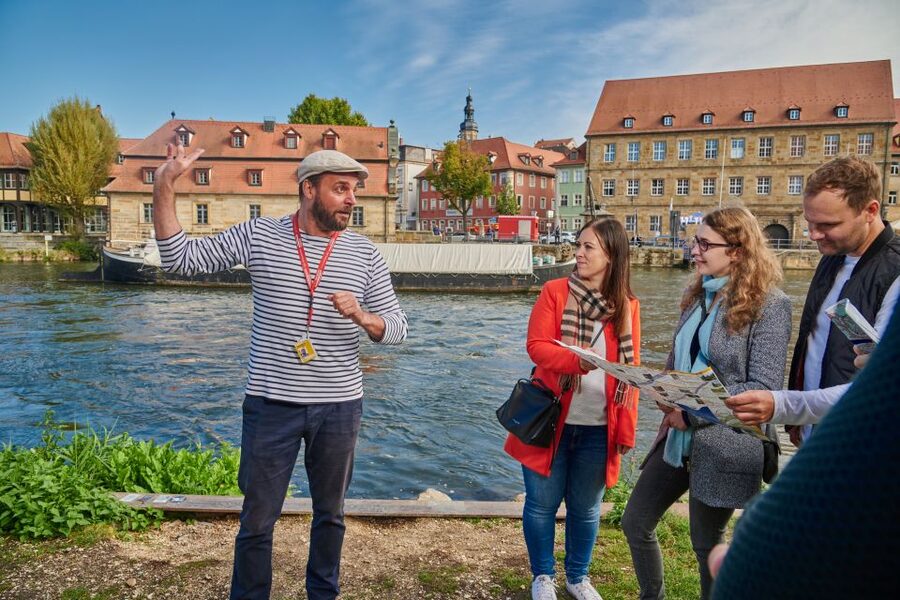
There’s a reason Little Venice is highlighted on this route. It’s one of those Bamberg scenes you’ve probably heard about, but the real value comes when you see it in context. On foot, with explanations from the guide, the water-adjacent layout and bridge connections start to click.
Bridges are a major theme in Bamberg sightseeing. This tour includes views of bridges as you stroll through the historic center, and that matters because Bamberg’s layout relies on its waterways and crossings. You’re not just walking from point A to point B—you’re tracing how the town is connected.
The “Little Venice” moment usually feels like a change in atmosphere: narrower views, water nearby, and postcard framing opportunities. Even if you don’t care about photos, it’s worth paying attention here, because it’s the best place on the route to understand how Bamberg’s city design relates to its geography.
What’s covered besides the headline stops
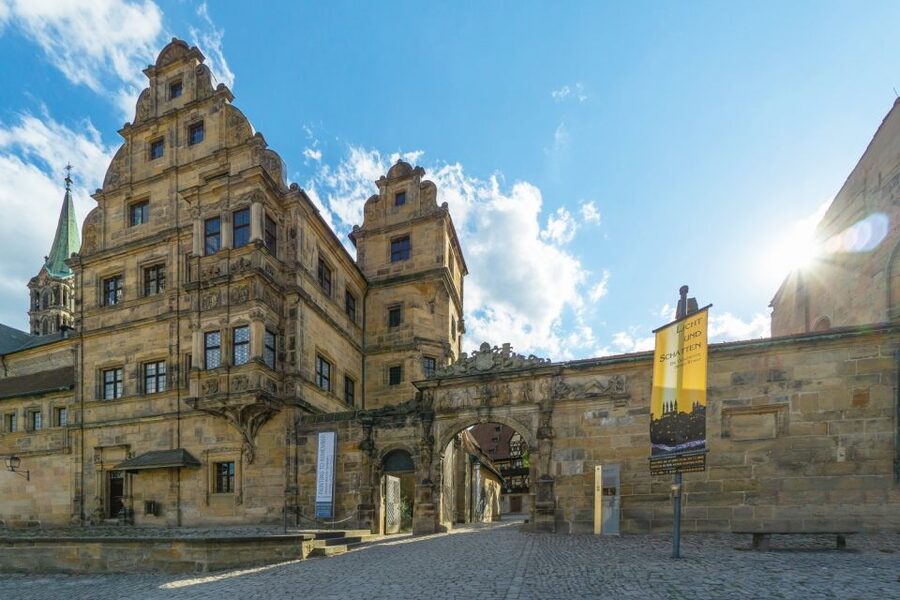
This walking tour isn’t just a short list of famous buildings. It’s built around the idea that Bamberg is a work of art made from many pieces: medieval churches, monastery areas, narrow streets, wide squares, bridges, and Baroque facades.
You’ll also spend time around major sight clusters, including churches and monastery sites. And the route is designed to keep you moving through the center so you see a blend of architectural styles rather than one “zone.”
Here’s how that benefits you: Bamberg is easier to remember when you connect styles to locations. By the end of the 2 hours, you should be able to recall not only that you saw the cathedral, but also how the cathedral area relates to court buildings, town squares, and the river-side views.
If you’re visiting in a short window, this kind of focused overview is practical. If you have more time, it’s a strong starting point that helps you decide what to revisit later.
Price and duration: is $14 really good value?
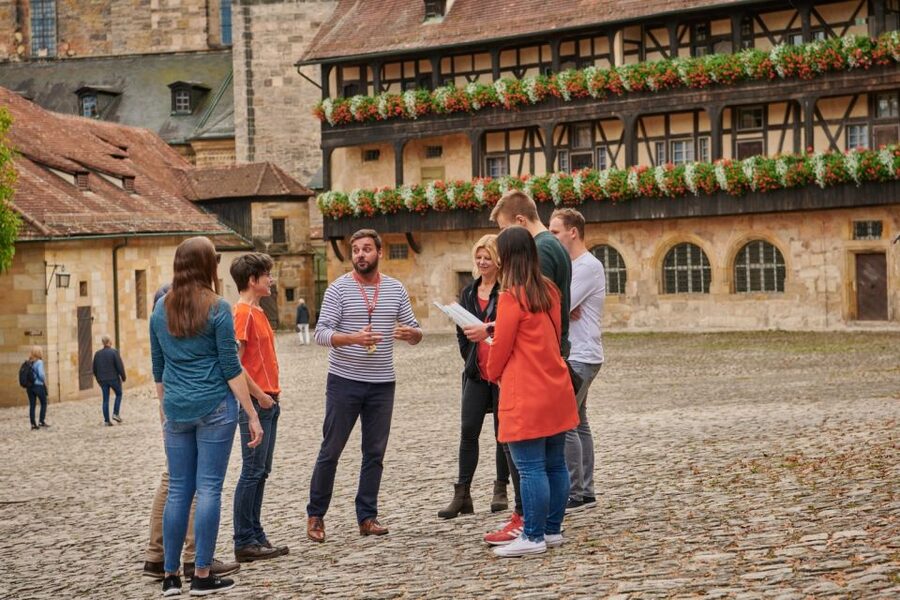
At $14 per person for about 2 hours, this tour is priced like a solid local-guidance deal. The biggest value isn’t the price tag. It’s the fact that you’re paying for interpretation—someone helping you connect buildings, dates, and urban development so you get more out of the time you spend in Bamberg.
Also, you’re not getting a bus or a long transfer. This is a walking experience anchored in the historic center. That’s ideal if you want your money to go toward guidance and sight value, not transportation.
One thing to keep in mind: transfers are not included. That’s normal for a central walking tour, but it means you should plan your own way to the meeting point at Geyerswörthstraße 5.
Another practical point: the guide is only in German. If you’re not comfortable following German explanations, you may not get the full value of the $14. In that case, you might prefer a self-guided approach or an English tour option elsewhere.
German-only guide: how to make it work without getting stuck
This tour is described as live and only in German. That limits you in a straightforward way, and it’s better to face that early rather than hope you’ll “pick it up” on the go.
Still, German-only doesn’t mean you won’t enjoy the walk. You’ll still physically see the cathedral area, the Old Court, the New Residenz, the Rose Garden, Little Venice, and the old town hall. Even without perfect language, architecture is visual, and the route itself helps you understand the city layout.
If you want to make it easier, bring a simple strategy: listen for place names and dates, and rely on what you can see while you walk. If you read a bit of Bamberg context before you go, the guide’s German explanation will land better.
In the strongest cases, guides like Christine and Werner have been praised for their enthusiasm and humor, which often helps when language skills are imperfect. You still get the human tone, even if every word isn’t clear.
Who this walking tour suits best
This is a great match if you want a structured way to see UNESCO Bamberg highlights without spending a full day on sightseeing. It also suits you if you enjoy medieval-to-Baroque city storytelling—because the tour’s focus is on how the pieces fit together across time.
You’ll also like it if you prefer walking over museum time. Churches, monasteries, bridges, and squares are “atmosphere” you can experience directly, and this route is built around that.
On the other hand, skip it or plan differently if you:
- need an English-speaking guide (the tour is only in German)
- expect the cathedral interior (this tour is outside only)
- want transfers included (not included here)
Should you book this Bamberg guided walking tour?
If your goal is to get oriented and see the big Bamberg hits in one smooth 2-hour walk, yes, you should book. The combination of UNESCO focus, major landmarks (cathedral area, Old Court, New Residenz, Rose Garden), and signature Bamberg moments like Little Venice makes this a high-return use of limited time.
Before you book, decide one thing: your comfort with German explanations. If you can handle a German-speaking guide, this is excellent value at $14. If not, you can still enjoy the sights, but the real payoff of the tour depends on understanding the story behind what you’re seeing.
FAQ
FAQ
How long is the Bamberg guided walking tour?
The tour lasts 2 hours.
How much does it cost?
It’s $14 per person.
Where do I meet the guide?
Meet at BAMBERG Tourismus – Tourist Information, Geyerswörthstraße 5.
Is the cathedral interior included?
No. The tour does not include an interior tour of the cathedral.
What sights are included in the tour?
You’ll see highlights such as the cathedral area, Old Court, New Residenz, Rose Garden, the old town hall, and Little Venice, plus other historic streets and buildings in the center.
Is the tour private or public?
This is a public tour.
What language is the guide?
The live guide operates only in German.
Is transfer included?
No. Transfer is not included.
How do tickets work after booking?
After booking, you receive a booking confirmation without a ticket. You can get the ticket through the GetYourGuide app, so download the app in advance.