REVIEW · STOCKHOLM
Walking Tour of Stockholm’s Old Town, Gamla Stan
Book on Viator →Operated by NORDIC FREEDOM TOURS · Bookable on Viator
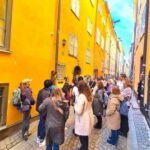
Gamla Stan clicks into focus fast. This 2-hour walking tour stitches together the big landmarks and the tiny street details in Stockholm’s Old Town (Gamla Stan), guided in English with a small group feel. I like that the route mixes famous photo stops with real context, and that guides like Ben and Märta keep it fun without losing the thread.
The other win for me is value: you pay a low $13.30 for an organized walk that points you to free-to-see sights, so you get more mileage than wandering alone. One possible drawback: you’re outside for much of the tour on cobblestones, with limited places to sit and weather that can turn windy near the water.
In This Review
- Key Highlights You’ll Feel Right Away
- Starting At Mälartorget And Getting Oriented In Gamla Stan
- Järnpojken: The Tiny Statue With Big Stockholm Charm
- Medieval Power Points: Riddarholm Church And St. Gertrud’s Church
- Prästgatan, Mynttorget, And The Feel-Good Streets Of Old Town
- Tyska Brunnen: A 17th-Century Well You Actually Remember
- Marten Trotzigs Gränd: Europe’s Narrowest Alley Moment
- Nobel Museum And The Alfred Nobel Link In Old Town Stockholm
- Storkyrkan And Stortorget: The Cathedral And The Classic Square
- Finska Kyrkan And The Finnish Community Thread
- Finishing Near The Royal Palace: Your Next Steps After The Tour
- Price, Group Size, And Why $13.30 Feels Fair
- Comfort Tips: Shoes, Seating Limits, Cobblestones, And Cold Weather Gear
- Who Should Book This Gamla Stan Walk
- Should You Book This Old Town Walk?
- FAQ
- How long is the Walking Tour of Stockholm’s Old Town?
- How much does the tour cost?
- Is the tour offered in English?
- Where does the tour start and end?
- What’s included, and do I need to pay for anything extra?
- Can I cancel if plans change?
Key Highlights You’ll Feel Right Away
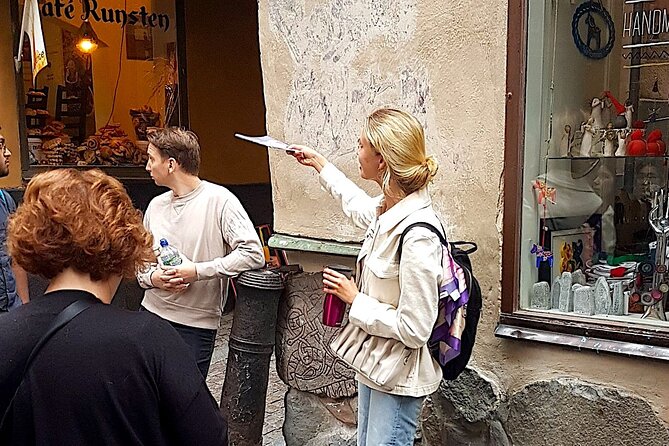
- Small-group pacing (up to 25) with a guide who stays involved with the group
- English guidance and easy-to-follow storytelling at each stop
- Järnpojken tradition (the tiny Iron Boy statue you rub for good luck)
- Medieval churches and world-famous streets, all within a compact walk
- Nobel Museum stop inside an older building tied to Alfred Nobel’s legacy
- Finish near the Royal Palace, so you can keep exploring immediately
Starting At Mälartorget And Getting Oriented In Gamla Stan
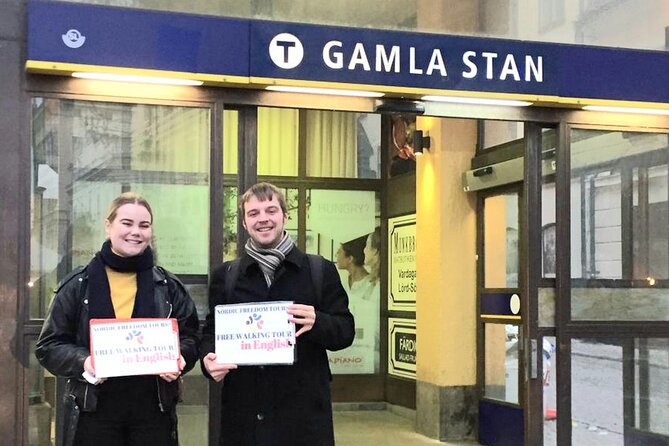
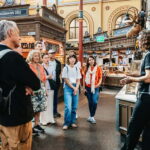
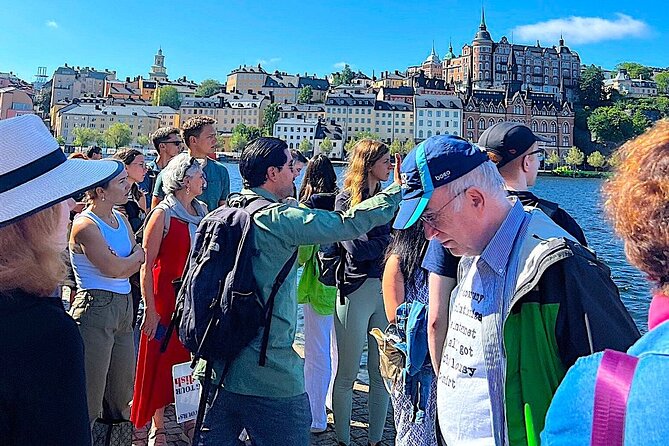
The walk starts at Mälartorget 4, right in the historic pull of the city. From the first minutes, the tour does what a great Old Town orientation should: it helps you read the place. Gamla Stan is a maze of narrow streets and sudden squares, and without context it can feel like you’re just collecting landmarks. With the guide’s pacing, you start to understand why these spots sit where they do and how they connect.
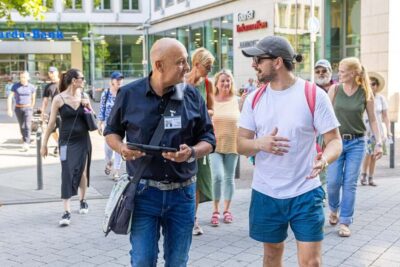
You’ll also appreciate the group size. With a maximum of 25, the guide can keep track of where everyone is going and how they’re doing. That matters on cobbled streets where slow walkers can get separated fast on bigger tours.
And yes, this is an outdoors walk. Plan for real weather, not “light drizzle vibes.” If it’s cold or windy, bring layers.
You can also read our reviews of more walking tours in Stockholm
Järnpojken: The Tiny Statue With Big Stockholm Charm
The first stop is Järnpojken, a small bronze statue fondly known as the Iron Boy, or the Boy Looking at the Moon. It’s easy to miss if you’re rushing—small things are a theme in Gamla Stan—but it’s also exactly the kind of stop that makes the whole neighborhood memorable.
Here’s the local ritual: visitors rub the Iron Boy’s head for good luck. It’s a quick moment, but it gives you something to do that feels playful instead of performative. And it’s a perfect warm-up for your eyes—once you find this tiny marker, the rest of the old town feels more human-sized.
This stop is free, short, and low effort. Even if your legs are protesting, it works.
Medieval Power Points: Riddarholm Church And St. Gertrud’s Church

Next you’ll head toward two church stops that anchor the medieval story of Stockholm.
Riddarholm Church sits on Riddarholmen Island, near the Royal Palace. It’s known for medieval architecture and for being the final resting place for Swedish monarchs. The location matters here. Standing near the water and looking toward the palace area, you start to get a sense of how Stockholm’s power and prestige were laid out in the center of everything.
Then you’ll visit St. Gertrud’s Church, with origins dating back to the 1300s. This one is a strong reminder that Old Town buildings weren’t just for decoration. Churches like this were part of daily life for centuries, and even when your visit is brief, you can feel the long timeline through the architecture.
Drawback to consider: churches are great, but they do require you to be comfortable standing. There aren’t lots of built-in rest spots along the route.
Prästgatan, Mynttorget, And The Feel-Good Streets Of Old Town
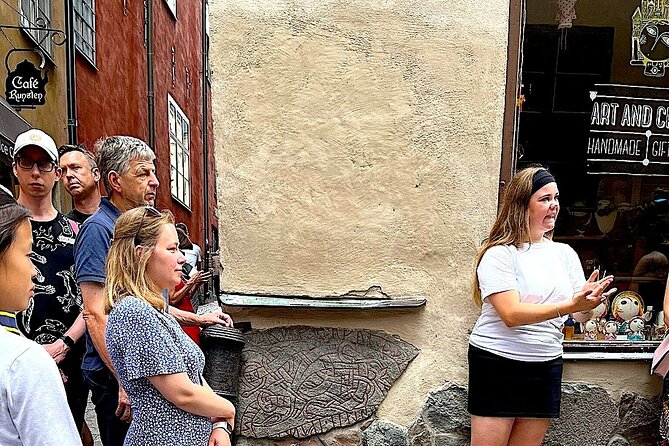
Some stops on this walk are about the architecture, but others are about atmosphere—and two of the best “walk and look” moments happen in the street segments.
Prästgatan is a narrow cobblestone street lined with colorful historical buildings, plus small shops and cozy cafés. It’s the kind of street where you can slow down without feeling like you’re taking too long. The guide’s job here is to help you notice what you’d otherwise pass by: the shapes, the placement of buildings, and what makes this stretch distinct.
Then you’ll reach Mynttorget, a historic square close to the Royal Palace area. It’s known for a lively feel, and it also works as a breather point in the walk—still outdoors, still moving, but easier to orient yourself around. Think of it as a “landmark square” that turns the tight streets into something you can map in your head.
Tyska Brunnen: A 17th-Century Well You Actually Remember
Not every Old Town tour gives you a stop like Tyska Brunnen. This historic well dates back to the 17th century, and it’s one of those odd-but-important details that makes the medieval city feel real. Wells mattered. They weren’t just decorative—they supported daily life.
What I like about including something like this is that it broadens the story beyond kings, churches, and big buildings. When you pause at Tyska Brunnen, you get a feel for how the old town functioned at ground level.
It’s also free and quick, which makes it a good match for the overall tour rhythm.



Marten Trotzigs Gränd: Europe’s Narrowest Alley Moment
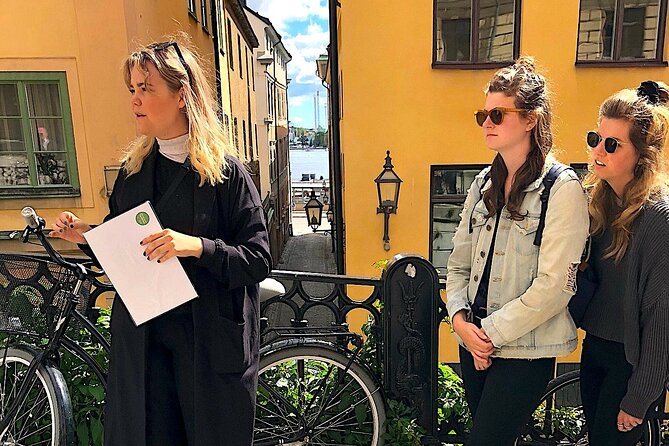
Then comes one of the most fun stops: Marten Trotzigs Gränd, described as Europe’s narrowest alleyway. It’s a medieval alley that’s about 90 cm wide—wide enough for a person to slip through, but narrow enough to make you stop and laugh a little as you picture how it was used.
This is a perfect “photo + story” stop. The point isn’t just the trivia. It’s the way it demonstrates how small-scale decisions and dense building shaped daily life in Gamla Stan.
Nobel Museum And The Alfred Nobel Link In Old Town Stockholm
One of the more interesting twists in this walk is the Nobel Museum stop. The museum covers Nobel Prize laureates and their achievements, and it’s set in a building dating back to the 18th century. It opened in 2001, but it’s housed in a much older shell—so you get a modern global story inside an old Stockholm setting.
For your visit, the value here is orientation. The Nobel Prize can feel abstract until you see the museum’s themes in context. Even if you don’t plan a long deep visit, this stop helps you connect Stockholm’s identity to international science and ideas.
It’s also a nice change of pace from churches and streets. You still stay in the historic core, but the subject expands outward to the world.
Storkyrkan And Stortorget: The Cathedral And The Classic Square
After the Nobel Museum area, you’ll reach St. Nicholas Cathedral, also called Storkyrkan. It’s the oldest church in Stockholm’s Old Town, with origins in the 13th century. It has served as a main place of worship, and its architecture blends Gothic and Baroque styles.
This stop helps you understand the “center of gravity” of Gamla Stan’s spiritual life. When you connect it to the Royal Palace area you’ll finish near, you see how different kinds of authority—church and monarchy—were built side by side.
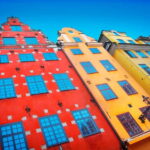
Then you’ll visit Stortorget, one of the historic squares in Gamla Stan dating back to the 13th century. It’s known for colorful buildings and is closely associated with the Nobel Museum area. Squares like this are part of why Old Town feels walkable and memorable: they act like outdoor rooms where streets funnel into something open.
Finska Kyrkan And The Finnish Community Thread
You’ll also include the Finnish Church (Finska Kyrkan), originally constructed in 1725. This church serves the Finnish-speaking community and showcases baroque architecture.
I like this stop because it adds a modern layer to the idea of Old Town as a lived-in neighborhood. Stockholm hasn’t always been one uniform story, and a church for a specific language community is a practical reminder of how cities absorb different cultures over time.
Finishing Near The Royal Palace: Your Next Steps After The Tour
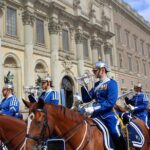
The tour ends nearby at the Royal Palace (Kungliga slottet) area. The palace is the official residence of the Swedish monarch, and the baroque structure has over 600 rooms. There are also museums you can explore after your guided walk.
This finish is smart. Instead of ending in a random spot, you get a powerful “wrap-around” view of where everything you just saw points. Even if you don’t go inside right away, being close lets you plan your next move on your own schedule.
Price, Group Size, And Why $13.30 Feels Fair
Let’s talk value. At $13.30 per person, you’re not paying for museum tickets. Many of the stops are free admission, so your money goes mostly to the guide, the pacing, and the connections between places.
That’s why this works well if you’re short on time. Two hours is enough to get oriented, but not enough to wander aimlessly. Having a guide reduces the “what am I even looking at?” problem, especially in a place like Gamla Stan where streets twist and viewpoints pop up without warning.
The group max of 25 also matters for value. You’re less likely to feel like you’re being rushed past things, and the guide can keep everyone together.
Booking ahead helps too. On average, this is booked about 16 days in advance, which is a clue it’s popular for exactly the kind of “first-day” orientation people want. If your dates are set, I’d lock it in sooner rather than later.
Comfort Tips: Shoes, Seating Limits, Cobblestones, And Cold Weather Gear
A great walking tour can still be uncomfortable if you ignore the practical stuff. Here’s what you should plan for based on what people tend to notice on this route:
- Expect lots of cobblestones and some small hills in spots. Comfortable walking shoes are non-negotiable.
- The tour is mostly outdoors. Wind off the water can make it feel colder than you expect.
- There are very few places to sit during the walk, even though stops are included.
- If you’re visiting in winter, bring hand warmers and dress in layers.
Also, the route is near public transportation, which is handy if you want to start early or you’re pairing it with other plans the same day.
If you use a mobility aid, you might find the cobbles and the limited seating challenging. The tour says most people can participate, but your comfort matters more than the marketing line.
Who Should Book This Gamla Stan Walk
This tour is a strong fit if you:
- Want a quick orientation to Old Town, not a long museum day
- Like your history stories mixed with street-level details and humor
- Prefer walking with a guide who keeps the group together
- Plan to explore more after you finish near the Royal Palace
It’s also a good choice early in your trip because it gives you a map in your head—where the squares are, where the churches “anchor” the area, and which streets you’ll want to revisit on your own.
You may want to skip or reconsider if you need frequent breaks to sit, or if cobblestones and standing for extended chunks are a deal-breaker.
Should You Book This Old Town Walk?
Yes, if you want a practical, fun way to understand Gamla Stan in a short window. At $13.30, with an English-speaking guide and a route that hits iconic spots like Järnpojken, Storkyrkan, Stortorget, the Nobel Museum, and then leaves you by the Royal Palace, it’s a tidy package.
Book it early if you can. Bring layers and good shoes. And if you care about getting recommendations for what to see next, ending near the palace is a great launch point.
FAQ
How long is the Walking Tour of Stockholm’s Old Town?
It lasts about 2 hours.
How much does the tour cost?
The price is $13.30 per person.
Is the tour offered in English?
Yes, it’s offered in English.
Where does the tour start and end?
It starts at Mälartorget 4, 111 27 Stockholm and typically ends near the Royal Palace (Kungliga slottet), 107 70 Stockholm.
What’s included, and do I need to pay for anything extra?
The guide is included and the tour uses a mobile ticket. Tips are not included.
Can I cancel if plans change?
Yes. You can cancel for a full refund if you cancel at least 24 hours before the experience’s start time.