REVIEW · STOCKHOLM
Walking Tour of Stockholm Old Town
Book on Viator →Operated by Rainbow Tours Stockholm · Bookable on Viator
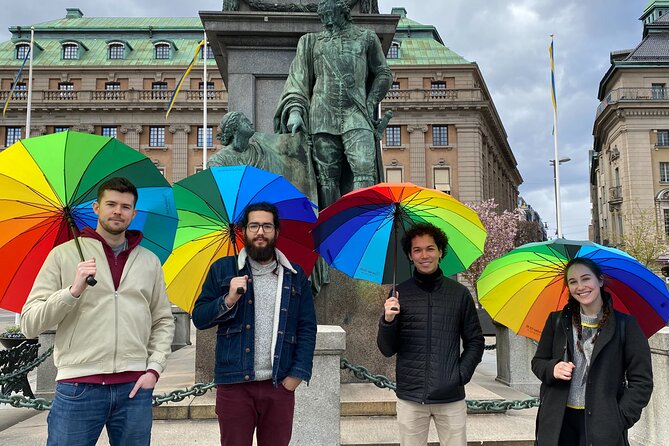
Old Town is best with a guide’s map of stories. This 2.5-hour walk strings together the political, religious, and street-level history of Stockholm in a way that feels practical, not academic. I like that it hits big “first trip” stops and still keeps moving on foot, and I especially like that the route includes well-known places like Stortorget, Järnpojke, and the St. George & the Dragon statue in a tight timeframe. One thing to plan for: you’ll mostly be outside, and several stops do not include admission tickets.
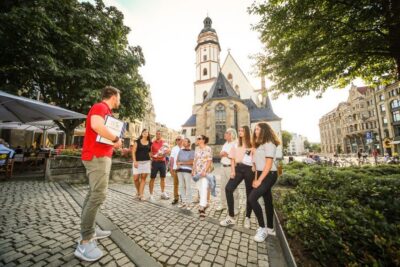
What really makes this tour work is the human element. Guides such as Gaia, Sophie, Aggie, Olivia, and Dante show up in the guide stories you’ll hear—often with humor, clear pacing, and answers that go beyond dates. At up to 20 people, it tends to feel like a real group walk, not a crowd herding exercise. My only caution: this is a walking tour, so cold streets plus slippery cobblestones can turn “quick stops” into a longer physical effort than you expect.
In This Review
- Key points before you go
- A 2.5-hour Stockholm Old Town plan that actually fits real days
- From Parliament to orientation at Gustav Adolfs torg
- Gamla Stan fundamentals: a guided walk around Stockholm’s Old Town core
- German Church in Gamla Stan: neoclassical style with centuries of continuity
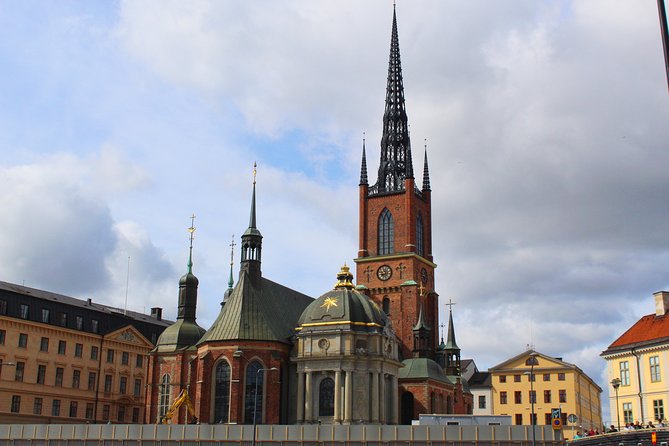
- Knights Islet and Riddarholmen Church: where the city’s early story feels close
- Järnpojke: Stockholm’s tiny statue that gets a lot of attention
- Storkyrkan (Stockholm Cathedral): St George and the dragon connection
- Nobel Prize Museum and the Swedish Academy: the prize you can point to
- Royal Palace: four museums and a whole lot of royal geography
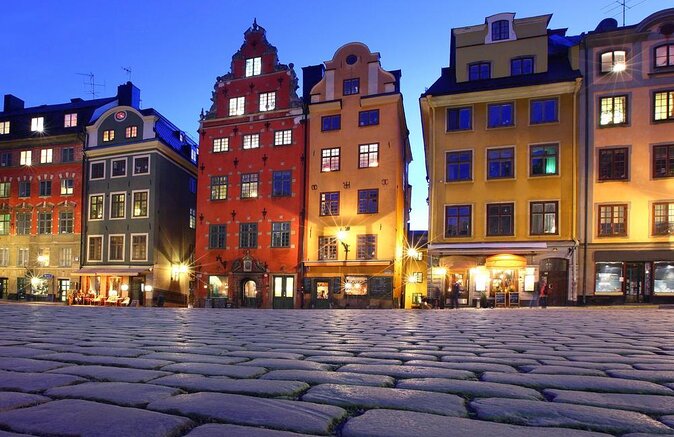
- Stortorget: the main square and the Stockholm bloodbath story
- Marten Trotzigs grand: the narrowest street moment
- Royal Swedish Opera: a quick hit on cultural Stockholm
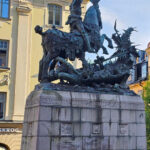
- St. George & the Dragon Statue: a final battle story in stone
- Is the $24.07 price fair for 12 stops in 2.5 hours?
- Who should book this Stockholm Old Town walking tour?
- Should you book the Walking Tour of Stockholm Old Town?
- FAQ
- How long is the Walking Tour of Stockholm Old Town?
- Where does the tour start?
- Where does the tour end?
- What time does the tour start?
- How much does the tour cost?
- Is the tour offered in English?
- Are admission tickets included for all stops?
- How large is the group?
- When should I book?
- What happens if weather is bad?
Key points before you go
- Tight 2.5-hour route that fits a busy Stockholm day, without turning into a half-day commitment
- Small groups (max 20), which makes it easier to ask questions and keep the pace comfortable
- A mix of landmarks and street-level details across Gamla Stan, Riddarholmen, and the Royal area
- Some admissions are included (not all stops), so you avoid surprise costs at the right moments
- Guides with lively delivery are a big theme, with stories that connect politics, church life, and everyday streets
- Weather matters since it runs outdoors and requires good conditions
A 2.5-hour Stockholm Old Town plan that actually fits real days
If Stockholm is your first stop in Sweden, Gamla Stan is the part you want to understand fast. This tour is built for that moment. In about two and a half hours, you get a guided tour of the places that shaped the city’s power and identity—without asking you to give up your entire afternoon. I like that the schedule is compact. You’re not just looking at pretty buildings; you’re being taught how they connect.
Also, Stockholm’s Old Town is small, but it’s not simple. The city grew on islands, power shifted over centuries, and the city center kept changing hands. A walking format helps because you experience the geometry: squares open up, churches anchor neighborhoods, and narrow streets suddenly change the feel of the block you’re in. This tour leans into that.
One practical note: the tour lasts roughly 2 hours 30 minutes, and you’ll be walking the whole time. If you’re the type who gets cold easily, plan layers. If you’re the type who hates standing still, you’ll probably enjoy this pacing.
You can also read our reviews of more walking tours in Stockholm

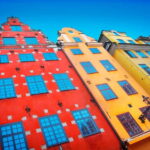
From Parliament to orientation at Gustav Adolfs torg
You start at Gustav Adolfs torg (10:00am). It’s a smart starting point because it sets you up for the big-picture part of Stockholm: government power first, then the older city fabric right after.
The first stop is the Riksdagshuset (Parliament Building), constructed between 1895 and 1904. This isn’t just a dramatic building photo. It’s a useful “today and then” reference point. When you later see medieval-era architecture and church sites, you’ll understand how Stockholm’s story didn’t freeze in time. New power showed up, old power adapted, and the city’s center stayed important.
Admission here is not included, and the stop itself is short (about five minutes). Treat it like a quick orientation chapter. You’ll move on before you get stuck in one spot trying to read every detail.
Gamla Stan fundamentals: a guided walk around Stockholm’s Old Town core
The tour’s heart is in Gamla Stan, Stockholm’s Old Town. The second stop is a walking segment where you explore the area and hear about the story behind its foundation and how it became what you see today. It lasts around 10 minutes, and admission ticket is included for that stop.
Even if you’ve seen photos of Stockholm’s Old Town, this is the moment where it clicks. You learn why the street layout matters. You learn how the city’s shape supported defense and control. And you also learn what kinds of buildings became symbols of authority—churches, squares, and civic structures.
The benefit of having the history at the same time as the walking is that you stop guessing. Without a guide, you wander. With a guide, you connect dots: what you’re looking at and why it was placed there.
German Church in Gamla Stan: neoclassical style with centuries of continuity
Next comes Esglesia Alemanya (the German Church in Gamla Stan), a stop about five minutes long. This church has served the German community there for centuries, and it’s known for its neoclassical style.
The value here isn’t just architectural. It’s the way the guide connects religion, migration, and community identity in a city that grew through trade and mixed populations. You’re seeing one thread of Stockholm’s social history—how groups formed institutions, then held onto them long enough to shape the city’s physical look.
Admission ticket is not included for this stop, so you’ll want to be ready to pay if you’re hoping to go inside. Even if you don’t, the exterior context helps you make sense of the church’s place in the neighborhood.
Knights Islet and Riddarholmen Church: where the city’s early story feels close
The route then shifts toward Riddarholmen Church on the Knights Islet. This stop is around 10 minutes. You’ll hear about the history of how Gamla Stan was founded, and you’ll also learn that this area includes a palace of its own—described as the first palace in Stockholm.
This is one of those stops where the “location” is the point. Islands and water routes mattered, and Riddarholmen is one of the places that makes Stockholm’s geography feel real rather than map-only. The guide’s stories tend to make it easier to imagine how power moved around the city—literally by moving across water.
Admission ticket is not included here, so plan for possible entry fees if the group stops inside.



Järnpojke: Stockholm’s tiny statue that gets a lot of attention
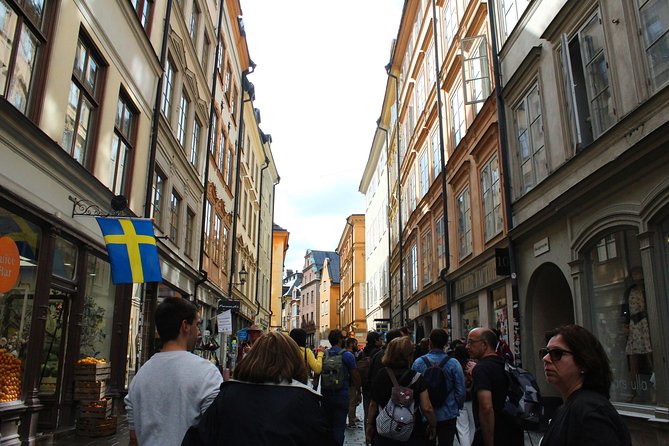
Then you hit one of the tour’s most memorable “pause and look” moments: Järnpojken. This is the smallest statue in Stockholm, built in 1950. It’s also called the kid looking at the moon, and it’s described as the most visited statue in Stockholm.
This stop lasts around 10 minutes and includes admission ticket. That might sound odd for a statue, but the inclusion likely means you’ll be set up to spend time at the exact spot with the right context from the guide—rather than just a quick glance from the sidewalk.
Why I like this stop for first-time visitors: it balances the heavier history. After Parliament and churches, this gives you a human, slightly playful symbol. It also teaches you how Stockholm enjoys mixing solemn civic identity with small moments of character.
If you’re short on patience, you might think, really, a “kid statue”? But it works because the guide ties it to local culture and the idea of public memory.
Storkyrkan (Stockholm Cathedral): St George and the dragon connection
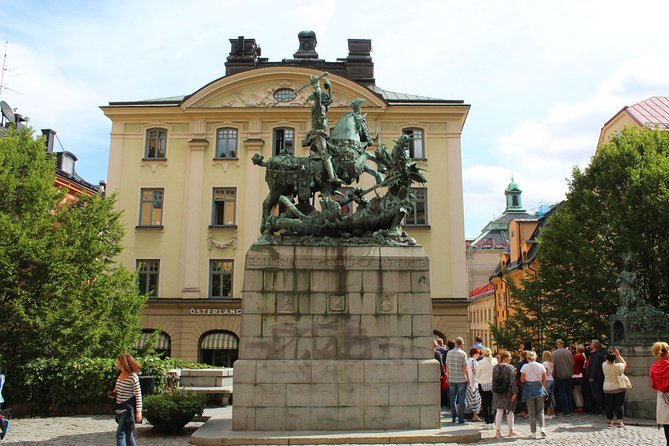
Next is Storkyrkan, the cathedral of Gamla Stan. The stop is about five minutes, and admission is not included.
This is the church where you’ll hear about Saint George and the dragon sculpture. The guide uses this moment to connect the city’s religious iconography with the kind of storytelling you see in public art and legends. It’s also an easy stop to remember because it sits in the core of the old-town area, where everything else feels close together.
If you want to maximize your experience here, watch how the guide uses the statue and church setting to explain symbolism—who it’s meant to represent, and why that matters in a city that built itself over centuries.
Nobel Prize Museum and the Swedish Academy: the prize you can point to
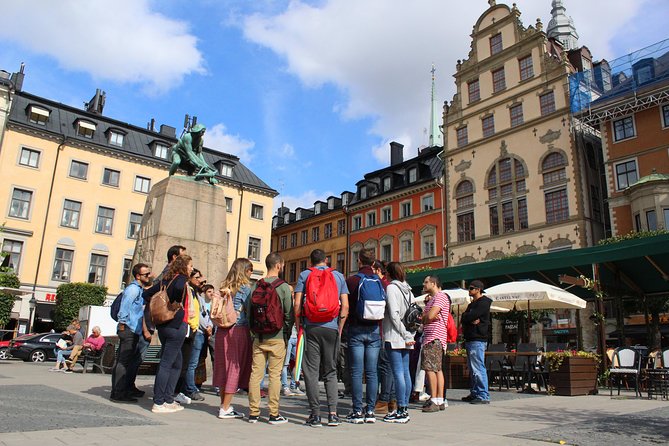
The tour includes a stop at the Nobel Prize Museum. It’s around 10 minutes, and admission ticket is not included.
Even if you don’t plan to go deep into the museum galleries, this stop adds a useful modern layer. You’re learning how Stockholm is still a center of global culture and decision-making. The tour also points out that the literature prize is decided through the Swedish Academy and Nobel Prize systems, tying this landmark to the kind of influence you don’t automatically associate with medieval streets.
Admission isn’t included, so don’t assume this stop automatically replaces an actual museum visit. But the context helps if you decide later to go back on your own when you want to spend more time indoors.
Royal Palace: four museums and a whole lot of royal geography
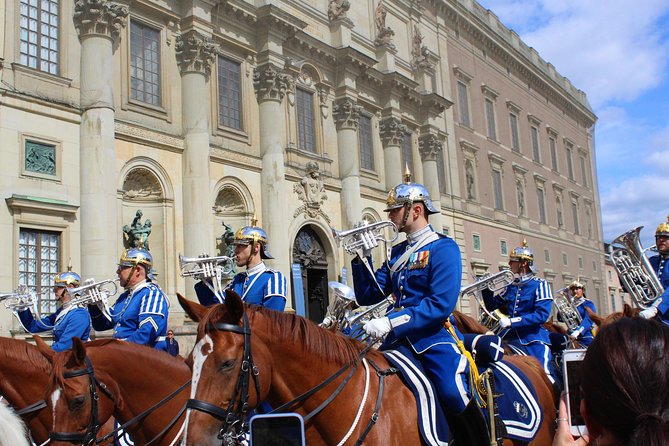
After that, you walk to the Royal Palace of Stockholm. It’s about 10 minutes, and admission ticket is not included.
The Royal Palace stop can feel both huge and confusing if you’re just wandering. That’s why a guided walk matters. Even with limited time, you get the big picture: the palace is tied to the broader royal area and includes four museums. The guide’s role is to help you decide what kind of royal history you’re most curious about, so you don’t end up paying for the wrong indoor stop later.
If you’re the kind of visitor who likes choosing one main museum rather than doing everything, this stop is useful. You’ll know what options exist even if you can’t fit all of them.
Stortorget: the main square and the Stockholm bloodbath story
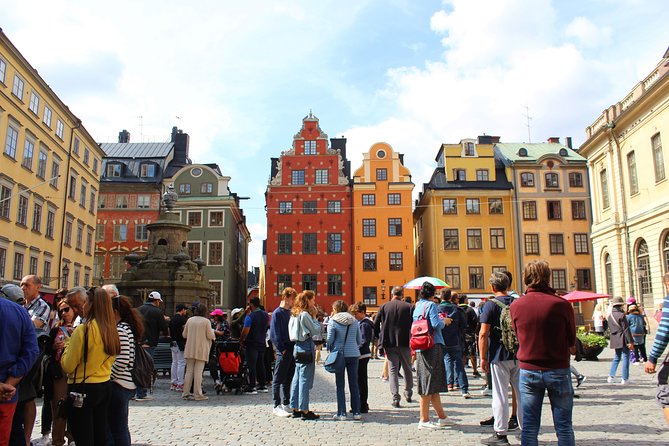
One of the tour’s included ticket stops is Stortorget, Stockholm’s main square, where you spend about 10 minutes and admission ticket is included.
This is where you connect the city’s political story to real public space. Stortorget is described as the setting for some of the most important events, including the Stockholm bloodbath. That’s the kind of historical reference you’ll want explained with context, because without a guide, it’s easy to just learn a phrase and move on.
I love squares on walking tours because they’re where history becomes physical. Buildings face inward. Streets funnel toward the same corners. When the guide points out what happened here, you feel the logic of crowd and power.
Plan to slow down in this area. Even though the group time is limited, it’s a great place to take notes and orient yourself for later self-guided wandering.
Marten Trotzigs grand: the narrowest street moment
After Stortorget, the route brings you to Marten Trotzigs grand, described as the narrowest street in Stockholm and named after a major business man in Stockholm. This stop lasts about five minutes and includes admission ticket.
Yes, it’s a narrow street. But the reason it lands well on this tour is that it changes your sense of scale. Gamla Stan can feel like a continuous maze from a distance, but when you step into the tight corridor, the city’s design choices feel intentional. You stop seeing it as a postcard and start seeing it as a lived urban system.
If you’re traveling with someone who likes quirky photo stops, this is an easy win. If you prefer history, the narrowness also helps you imagine how people moved—especially around the time when streets and bottlenecks mattered.
Royal Swedish Opera: a quick hit on cultural Stockholm
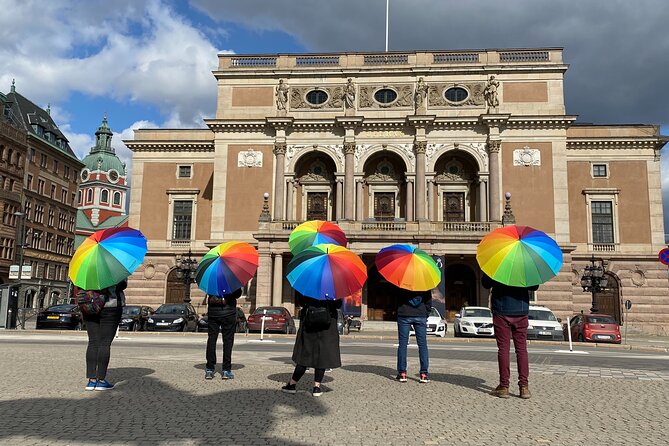
The tour includes a stop at the Royal Swedish Opera. It’s about 10 minutes and admission ticket is not included.
This is a shorter cultural stop, but it matters because it shows Stockholm isn’t only old-world stones and church spires. The opera house represents the city’s long-running relationship with performance, arts, and patronage. Even a brief look here rounds out the day nicely.
If you’re planning your evenings, this stop can also help you think about where you might want to spend your next hours—after the walking and museum context.
St. George & the Dragon Statue: a final battle story in stone
The last included ticket stop is the St. George & the Dragon Statue, around five minutes. The guide connects it to the representation of the battle of Brunkeberg in 1471, when Sten Sture defeated the armies of Christian I of Denmark.
This is a strong “closing note” because it links back to earlier church symbolism and keeps the historical energy moving forward in time. You’re not just seeing an artwork. You’re learning a specific event, tied to the city’s conflicts and power shifts.
Admission ticket is included for this stop, so you’ll likely have time to take it in properly rather than just passing through. It’s the kind of ending that makes the walk feel like a narrative, not a checklist.
Is the $24.07 price fair for 12 stops in 2.5 hours?
At $24.07 per person for about 2 hours 30 minutes, this is priced like a value-oriented city tour. For me, the key is how much you get in that time: Parliament orientation, multiple Old Town landmarks, major civic and cultural sites, and several included admission moments (including Gamla Stan core time at least once, plus included stops at Järnpojken, Stortorget, Marten Trotzigs grand, and St. George & the Dragon).
A fair price depends on what you’d otherwise pay for. Since not every stop includes admission, this tour works best if you’re okay with a mix: some paid entries you’ll handle on your own, and some already built into the experience. If you’re the type who wants every single sight included, you might find you still need to plan a second trip for indoor tickets.
The other value factor is group size: maximum 20 travelers. That supports better questions and a pace that usually stays human.
Who should book this Stockholm Old Town walking tour?
Book this if:
- You’re a first-time visitor and want a clear orientation around Gamla Stan
- You like history told through real places—squares, churches, and street geometry
- You want a tour that fits into a busy itinerary without draining your day
Skip it (or at least think twice) if:
- You hate walking for 2.5 hours total, especially on uneven cobblestones
- You want a fully indoor day with lots of museum time—this is a street tour first
It’s also a good match if you enjoy asking questions. Many of the guide stories emphasize humor and engagement, which tends to make the walk feel less like a lecture.
Should you book the Walking Tour of Stockholm Old Town?
Yes, I’d book it if you’re trying to get your bearings fast and you want to understand why Gamla Stan looks the way it does. The route hits a smart set of landmarks—Parliament, key churches, squares, the narrow street, and the Royal Palace area—without chewing up your whole day. At roughly $24, it’s also an easy decision for a “get the story + see the sights” morning.
Just go in with the right expectations: it’s outdoors, it relies on good weather, and some stops do not include admission. If you pack good walking shoes and plan to layer up, you’ll come away with Stockholm’s Old Town making sense, not just looking pretty.
FAQ
How long is the Walking Tour of Stockholm Old Town?
It’s about 2 hours 30 minutes.
Where does the tour start?
It starts at Gustav Adolfs torg, 111 52 Stockholm, Sweden.
Where does the tour end?
It ends at Stortorget, 111 29 Stockholm, Sweden.
What time does the tour start?
The listed start time is 10:00am.
How much does the tour cost?
The price is $24.07 per person.
Is the tour offered in English?
Yes, it’s offered in English.
Are admission tickets included for all stops?
No. Some stops include admission tickets, while others explicitly note that admission ticket is not included.
How large is the group?
The tour has a maximum of 20 travelers.
When should I book?
On average, this tour is booked about 45 days in advance.
What happens if weather is bad?
This experience requires good weather. If it’s canceled due to poor weather, you’ll be offered a different date or a full refund.