REVIEW · VERONA
Verona: Highlights Walking Tour with Arena Priority Access
Book on GetYourGuide →Operated by Ways Tours | B Corp certified · Bookable on GetYourGuide
Verona’s Arena magic starts with a bypass. You’ll walk the UNESCO city core and enter the 2000-year-old Arena with skip-the-line entry, guided by a local in a small group capped at 12.
I love how the route strings together major stops like Castelvecchio and Juliet’s balcony in just a few hours, with stories that tie the myths to the actual streets. Guides such as Frank (Francesco) and Isabella are praised for clear explanations and humor that keeps the walking fun, even when the forecast looks messy.
One possible drawback: the 30-minute break at Piazza Bra can feel short if you want a long sit-down coffee.
In This Review
- Key highlights that make this tour work
- Getting your bearings in Verona’s historic core
- Castelvecchio Bridge and the Scaliger fortress that sets the tone
- Arco dei Gavi and Porta Borsari: Roman structure with street-level scale
- Piazza Erbe and Piazza dei Signori: the city’s political and social heartbeat
- Arche Scaligere: where Verona’s power shows up in stone
- Juliet’s House and Romeo-and-Juliet legends without the tourist blur
- Piazza Bra break, then a straight shot to the Arena
- Entering the Verona Arena: gladiators, architecture, and opera nights
- How much is $81 worth for this 3-hour Arena experience?
- Who should book this walking tour (and who might skip it)
- Quick tips so you enjoy it more on the day
- Should you book the Verona Highlights Walking Tour with Arena Priority Access?
- FAQ
- How long is the Verona highlights walking tour with Arena priority access?
- What group size should I expect?
- Does this tour include skip-the-line Arena entry?
- Which major sights are covered on the walking portion?
- Where do I meet the guide?
- Is there a break during the tour?
- How long do I spend inside the Arena with the guide?
- What languages are offered?
- Does the tour run in bad weather?
- Is the tour suitable for people with reduced mobility?
Key highlights that make this tour work
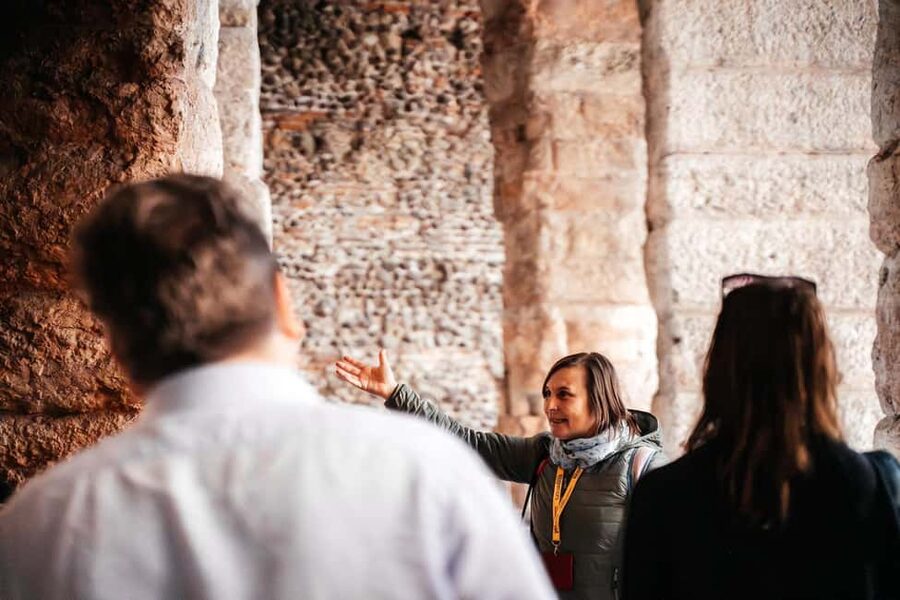
- Arena skip-the-line access saves time when you’d rather be sightseeing.
- Max 12 people keeps it conversational, not crowded.
- Castelvecchio at the start gives you context before you wander the older streets.
- Romeo and Juliet, grounded in real locations rather than just postcard talk.
- Piazza Bra + a 45-minute Arena visit means you get inside the amphitheater, not only around it.
Getting your bearings in Verona’s historic core
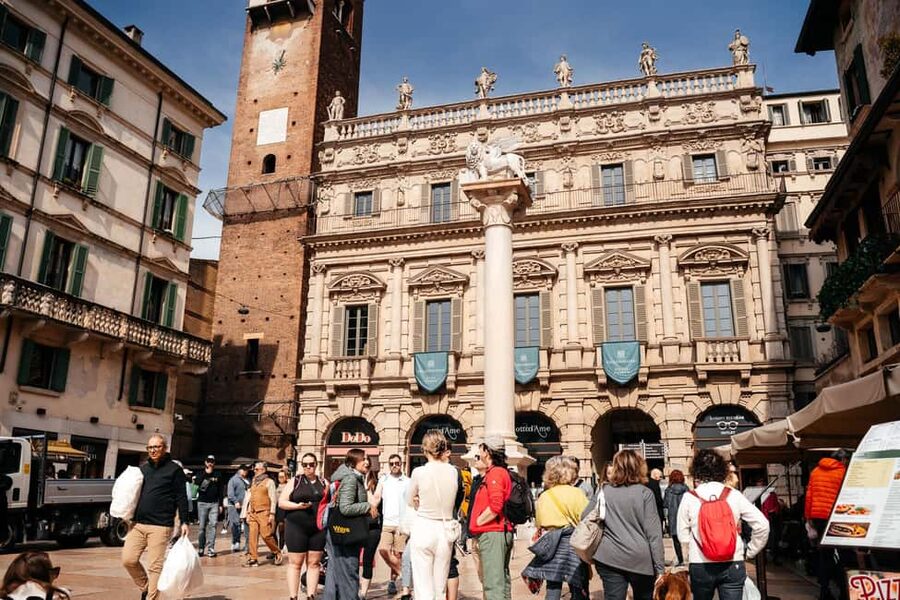
This is a smart first-choice tour if you want Verona to click fast. You’ll meet in the city center at Via Teatro Ristori, 3, with your guide standing out in front of the theater holding a yellow sign that says Tour. From there, you move on foot through some of the city’s most important landmarks—so after three hours, you can actually navigate on your own.
The big practical win is pacing. You’re not trying to cram everything in with a half-day bus tour. Instead, you get a focused route that covers medieval Verona, Roman-era architecture, and the famous Shakespearean sites. And because it’s a small group, you’re more likely to ask questions and get answers that fit what you’re curious about.
Also, this tour runs rain or shine. That matters here because a lot of the walking is on old stone streets, and wet weather can change the feel of the visit. Bring grippy shoes and be ready for a brisk walk.
You can also read our reviews of more walking tours in Verona

Castelvecchio Bridge and the Scaliger fortress that sets the tone
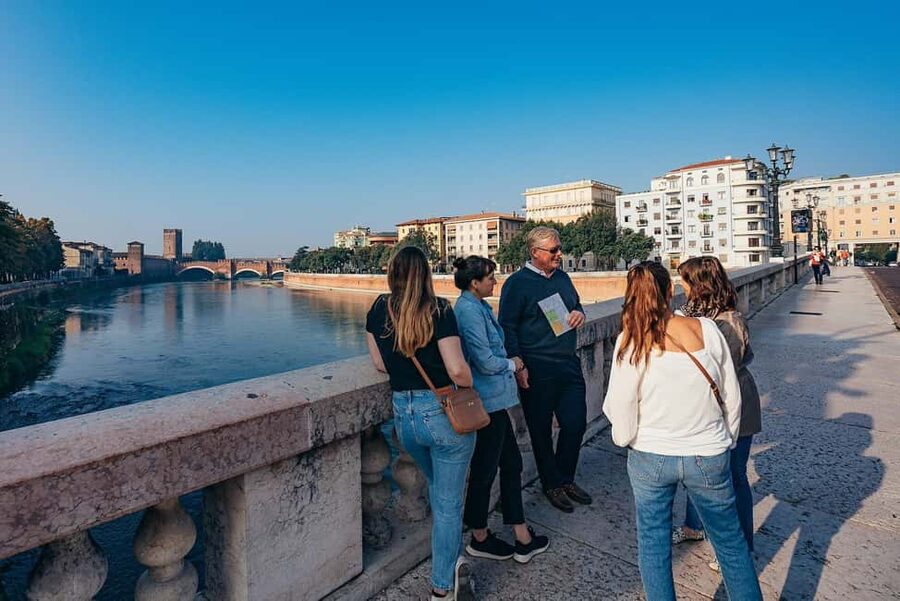
Your tour starts with Castelvecchio, and I like that the itinerary begins with a place that explains power. Castelvecchio is the medieval castle built by the Scaligeri family, and starting here helps you understand why Verona looks the way it does—stone walls, strategic layouts, and the idea that this city was built to defend itself.
Even before you enter the main area, you’ll hit a Castelvecchio Bridge photo stop. It’s one of those moments where you get a quick view and then the guide’s context makes it snap into place. This is also where the tour often feels most visual: you can see how the river and bridges shape the walk, and you begin to spot the “backstory” behind the monuments you’ll visit later.
What to watch for: ask your guide to point out details in the stonework. The tour is built around those small observations, and it’s the difference between seeing a landmark and actually understanding what you’re looking at.
Arco dei Gavi and Porta Borsari: Roman structure with street-level scale
Next you’ll move through the lanes and squares, with stops like Arco dei Gavi and Porta Borsari. These are not just pretty backgrounds. They show you how Verona once worked as a Roman city—organized, fortified, and designed to move people through controlled entry points.
Porta Borsari is especially useful because it gives you a real sense of scale. When you’re standing in front of it, you can imagine how people would have passed through centuries ago. And because your guide keeps the route moving, you’re not stuck listening in one spot for too long.
If you like architecture that still feels practical and lived-in, you’ll enjoy this part. The sights aren’t isolated in a museum context; they’re woven into streets you’ll keep walking after the tour ends.
Piazza Erbe and Piazza dei Signori: the city’s political and social heartbeat
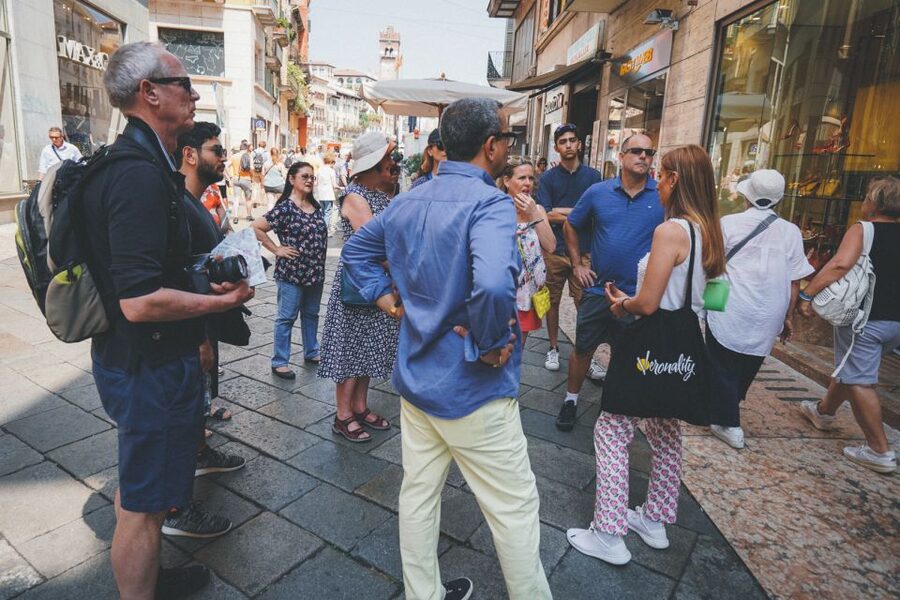
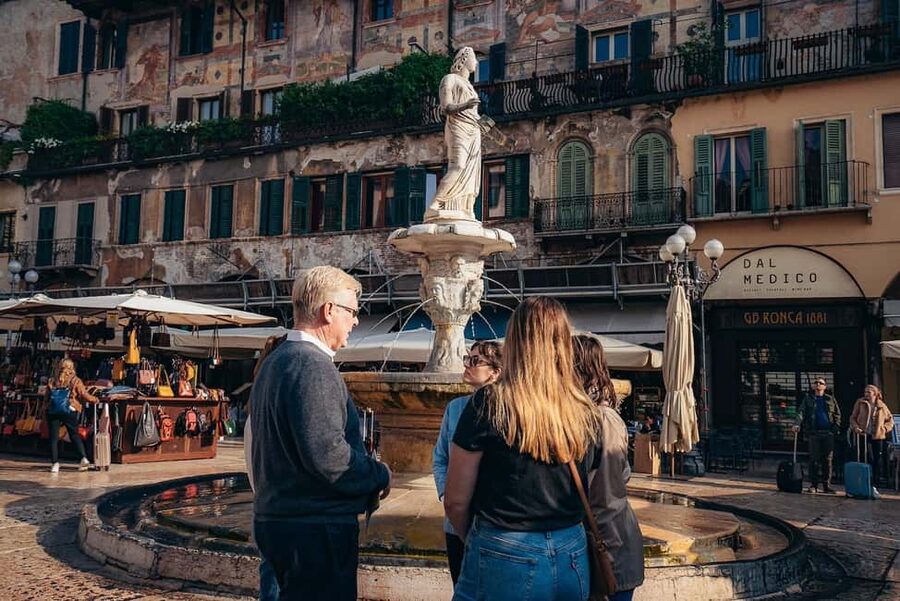
Piazza Erbe is one of Verona’s best-known squares, and your route uses it in a helpful way. You’ll make a photo stop and then a guided walk through the area with scenic views on the way. This is where the tour shifts from “monuments and structures” into “how people used to gather,” and that’s an important mental upgrade.
Then you head toward Piazza dei Signori, another high-impact stop. Here you’ll get guided visits that connect the stone spaces to the people who shaped the city. Your guide will also cover legends and local tales, including the Romeo and Juliet stories, but the key is that they’re framed around real places you’re standing in.
What I like about the tour approach here is balance. Yes, you’ll hear romantic stories. But you’ll also get the civic context—how Verona’s public spaces worked and why they mattered.
Arche Scaligere: where Verona’s power shows up in stone
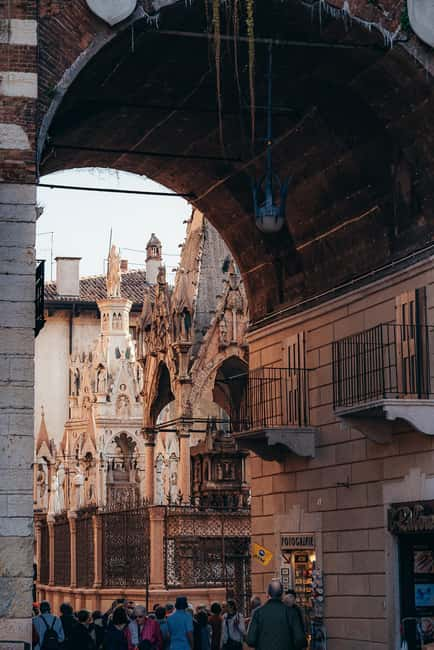
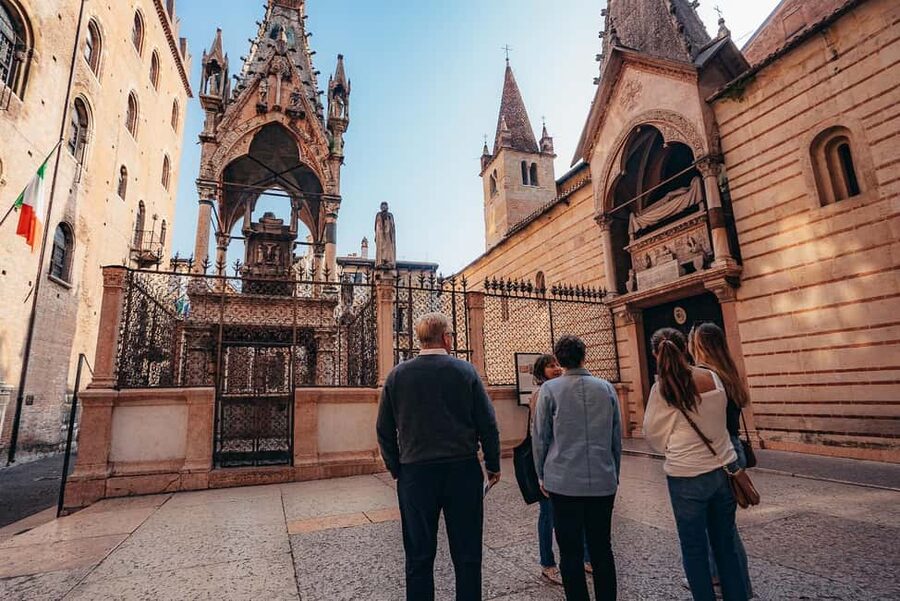
The tour includes the Arche Scaligere. This stop is worth your attention because it’s one of those places where the “history talk” can become visual fast. It’s not just a landmark you pause at; it’s a chance to see how families in power left marks that still read today.
If you’ve got any interest in medieval rulers, this is a strong moment. You’re walking through the results of Verona’s long leadership story, and your guide’s job is to connect names, families, and the city’s look to what you’re seeing in front of you.
It’s also a good break from photo sprinting. You can slow down, listen, and let the details land before you move on to the more famous, more crowded sites.


Juliet’s House and Romeo-and-Juliet legends without the tourist blur
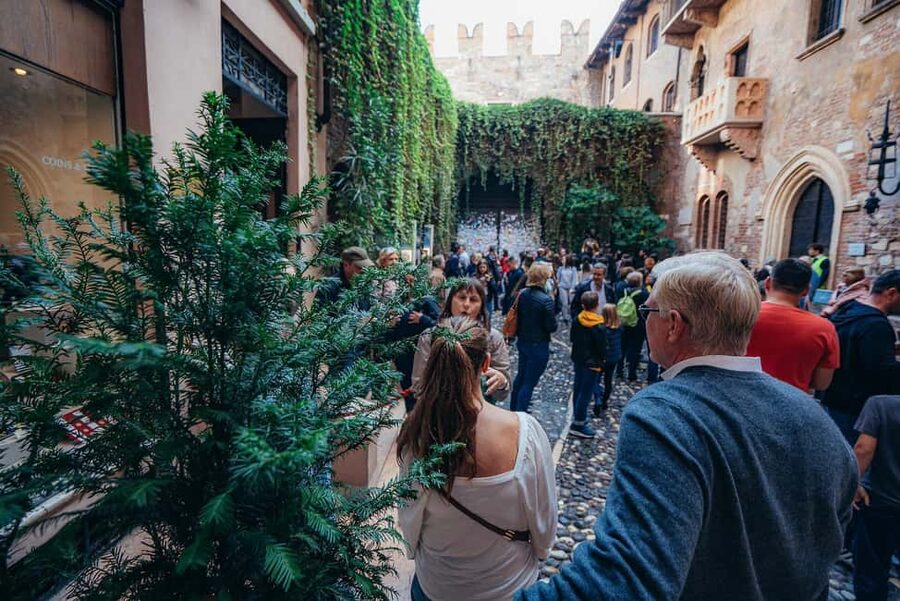
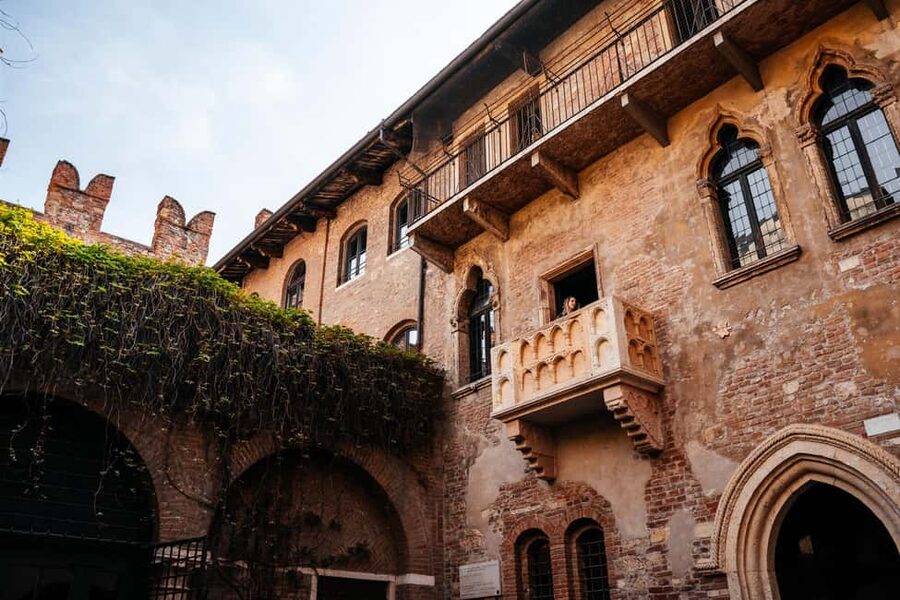
Then comes one of the main reasons people book Verona: Juliet’s House and the romantic balcony area. Your guide will point out the story locations and add legends and tales about Romeo and Juliet while you stop for photos and guided viewing.
Here’s the real value: you’re not just being told the plot. You’re being shown where the legends sit in the city. That makes Juliet feel less like a single Instagram stop and more like part of the city’s cultural identity.
One thing I suggest: don’t let the Romeo-and-Juliet excitement rush you through. Even if you’ve read the play, the best moments usually happen when you step back and look at how people move around the space, and when your guide points out small context that you’d miss if you were just scanning for the balcony angle.
Guides like Frank (Francesco), Isabella, and Maria are mentioned for turning history and local stories into something you actually remember, and this is the section where that storytelling payoff shows.
Piazza Bra break, then a straight shot to the Arena
By the time you reach Piazza Bra, you get a 30-minute break. The timing is smart. You’ve walked enough that you need a breather, but you’re close to the Arena, so you’re not losing momentum.
Piazza Bra itself is iconic, and your guide will have you look at the pink marble monument façade before you go inside. It’s the kind of square that feels built for grand buildings, and that contrast helps you appreciate what the Arena is: an enormous open-air stage with centuries of use behind it.
A practical note: don’t count on this break to be your full meal plan. If you want a slower coffee break or a sit-down lunch style pause, come with a plan for after the tour too. The break is there, but it’s not designed to turn into an all-you-want pause.
Entering the Verona Arena: gladiators, architecture, and opera nights
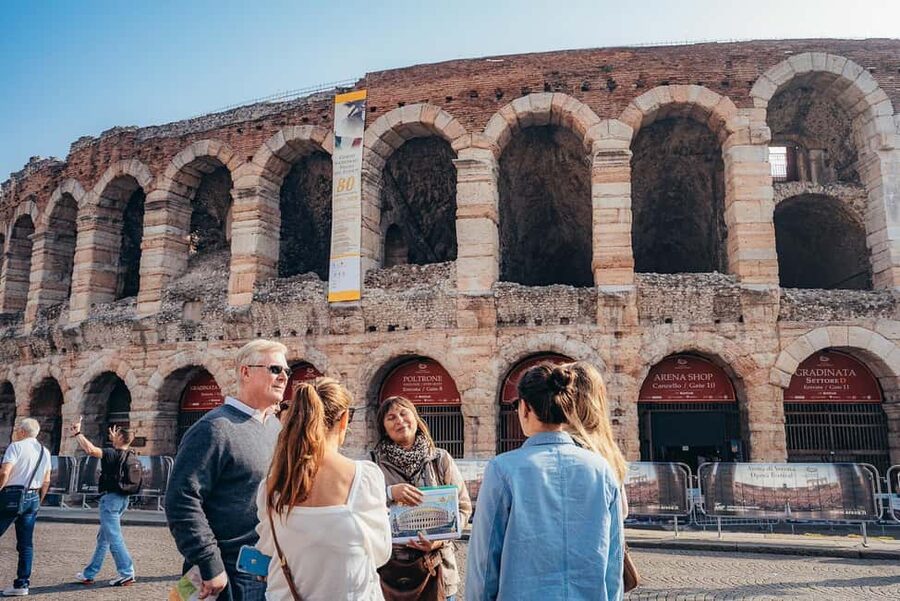
Now for the headline. You’ll reach the Arena and get a photo stop plus a guided visit, then enter the Arena di Verona with your skip-the-line ticket. The guided time inside is about 45 minutes, and that’s enough to understand what makes it special.
The Arena is a 2000-year-old Roman amphitheater, and the guide explains its architecture and what old gladiator games were like. Then the story shifts to modern use: today, the Arena hosts international festivals, music events, and the famous opera season (Opera Lirica). So you’re seeing a building that stayed alive by adapting.
What to pay attention to while you’re inside:
- How the open-air design changes your sense of sound and space
- How the stonework frames the stage-like feel of the arena
- Any details your guide points out that you’d normally miss looking only at the big view
This is also where the best guides really make a difference. Multiple guides are described as energetic and engaging—Priscilla, Andrea, Andre, Benedetta, and others. That matters because in a place this famous, it’s easy for explanations to get generic. A good guide keeps it human: you hear stories about what the Arena looked like in use, and you get context for how opera now fits into the same walls.
How much is $81 worth for this 3-hour Arena experience?
At $81 per person for about three hours, this tour isn’t the cheapest way to see Verona. But it’s built around one thing that’s hard to replicate on your own: guided context plus Arena skip-the-line access.
Think of the value like this:
- You’re paying for a local licensed guide who helps you connect monuments to real stories.
- You’re paying for access that avoids time lost in queues.
- You’re getting multiple major stops in one run: Castelvecchio, key Roman sites, central squares, Juliet’s House, and then inside the Arena.
If you only have a short window in Verona and you want to leave with a stronger mental map, this price starts to make sense. If you already plan to visit each site independently and you’re fine reading your own context guides, you might save money. But you’ll also trade away the “this is why it matters” layer that makes the walk feel like more than a checklist.
Who should book this walking tour (and who might skip it)
I’d steer you toward this tour if:
- You want a quick, high-impact overview of Verona in one morning or afternoon block
- You care about both Roman-era and medieval Verona, plus Juliet legends
- You like small groups and live guide storytelling (you’ll get that with a max of 12 people)
You might choose differently if:
- You dislike walking on older uneven streets and would need more flexible timing
- You want lots of time to linger in each stop rather than moving with a set route
- You need a longer sit-down break than the 30 minutes provided
It can also be a poor fit for families needing lots of breaks, since the day is paced to fit the Arena timing.
Quick tips so you enjoy it more on the day
- Wear grippy shoes. Verona’s stones can be slippery in rain.
- Bring a light rain layer or umbrella, since it runs rain or shine.
- Plan to keep your bag minimal. Luggage or large bags aren’t allowed, and pets aren’t allowed either.
- If you’re traveling with minors, they must be accompanied by an adult.
One more point: because it’s a guided route, your best strategy is to look up from your phone occasionally. The guide’s points about stonework and overlooked details are part of what makes this tour feel worth it.
Should you book the Verona Highlights Walking Tour with Arena Priority Access?
Yes, if you want Verona to feel understandable fast. This is one of those tours where the “skip-the-line” element plus a tight route through the city’s biggest stories saves you both time and mental effort. The small-group size, plus guides who bring energy (people like Frank (Francesco), Isabella, and Priscilla come up again and again), makes it easier to ask questions and stay engaged.
Book it especially if:
- You’re trying to see Arena di Verona but don’t want queue stress
- You want Castelvecchio, central squares, Juliet’s story sites, and an inside Arena view in one go
- You’d rather spend your limited time listening to context instead of piecing history together alone
If your priority is maximum free time at each stop, you might want a more flexible option. But if you want a strong Verona overview with a real payoff inside the Arena, this one is a solid bet.
Ways Tours, the B Corp certified provider, is also the kind of operator you can feel good about in terms of structure and professionalism.
FAQ
How long is the Verona highlights walking tour with Arena priority access?
It lasts about 3 hours.
What group size should I expect?
The tour is a small-group experience with a maximum of 12 people.
Does this tour include skip-the-line Arena entry?
Yes. You get an Arena skip-the-line ticket included.
Which major sights are covered on the walking portion?
You’ll see Castelvecchio, Arco dei Gavi, Porta Borsari, Piazza Erbe, Piazza dei Signori, Arche Scaligere, Juliet’s House, and Piazza Bra before entering the Arena.
Where do I meet the guide?
Meet in front of the theater at Via Teatro Ristori, 3. The guide will be holding a yellow sign with Tour written on it.
Is there a break during the tour?
Yes. There is a 30-minute break at Piazza Bra before the Arena portion.
How long do I spend inside the Arena with the guide?
The guided Arena portion is about 45 minutes.
What languages are offered?
The tour is offered with a live guide in Italian and English.
Does the tour run in bad weather?
Yes. It runs rain or shine.
Is the tour suitable for people with reduced mobility?
Some parts may not be easily accessible for people with reduced mobility or disabilities. If you’re unsure, contact the activity provider to confirm details. Also note that pets and luggage or large bags are not allowed.