REVIEW · VERONA
Verona: Guided Small Group Walking Tour of the City of Love
Book on GetYourGuide →Operated by Pink Umbrella Tours · Bookable on GetYourGuide
Two hours in Verona fly by. You start in Piazza Bra and head quickly to the Verona Arena, so the biggest landmark lands early and makes the rest of the walk feel more connected.
I like how the route mixes famous scenes with practical explanations from the guide, plus time to ask questions and get straight answers. One thing to consider: this is a real walking tour, and it is not set up for mobility impairments or wheelchair users.
In This Review
- Key things I’d plan around
- First stop: Piazza Bra and Verona Arena, set the tone fast
- Piazza Bra strolls and what the guide helps you notice
- Palazzo Barbieri and Verona’s civic power (Town Hall stop)
- Piazza dei Signori (Dante’s Square) and the statue moment
- Piazza delle Erbe, the oldest square, and the Roman forum above it
- Juliet’s House and the balcony from Romeo and Juliet
- Arche Scaligere: another major visual on the loop
- How the tour works in real life: timing, English-only, and weather reality
- Small group value: why $35 feels fair (and when it might not)
- Who should book this Verona walking tour
- Should you book it?
- FAQ
- Where does the tour meet?
- How long is the Verona guided walking tour?
- Is the tour offered in English?
- What major sights are included?
- How much does it cost?
- Is it wheelchair-friendly or suitable for mobility impairments?
Key things I’d plan around
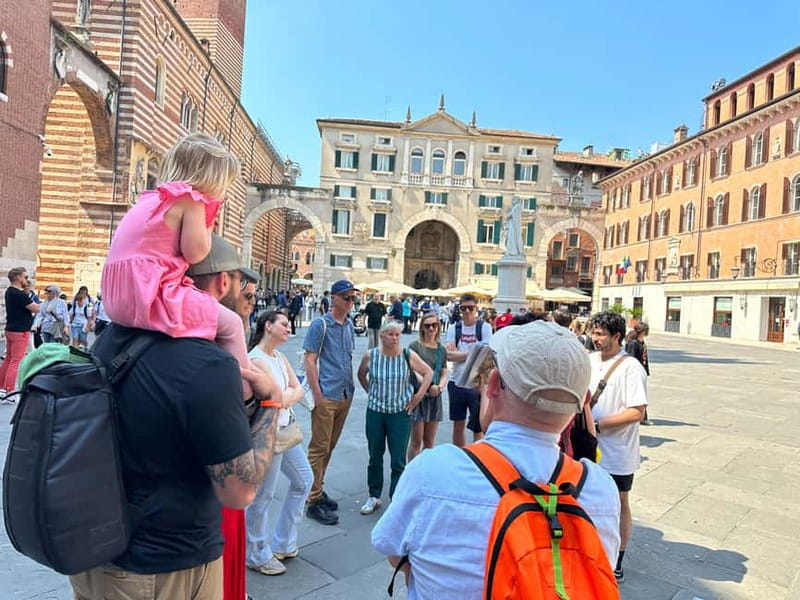
- Arena first, so photos and orientation come early: you get the most iconic stop right at the start of the route.
- Piazza Bra meeting point is easy to find: the tour meets at Piazza Bra under the clock.
- You’ll hit the main squares in a smart order: Piazza delle Erbe (the oldest square) and Piazza dei Signori (Dante’s Square) are both on the loop.
- Juliet’s House is a dedicated stop: you’ll visit Juliet’s House and see the famous balcony from Romeo and Juliet.
- Expect clear, lively guiding in English: the tour is ONLY in English, with a live guide leading you through the sights.
- Small-group feel with room for questions: reviews often describe friendly, engaging guides and an easy pace for Q and A.
First stop: Piazza Bra and Verona Arena, set the tone fast
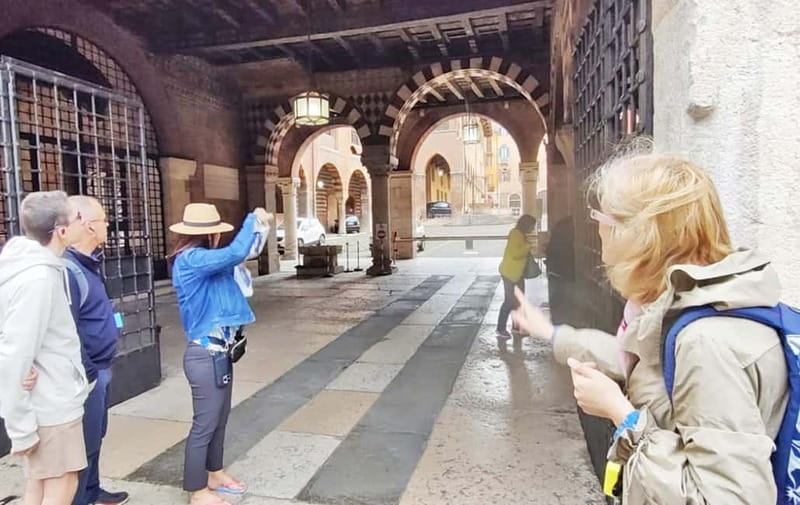
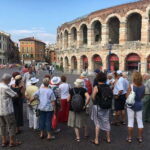
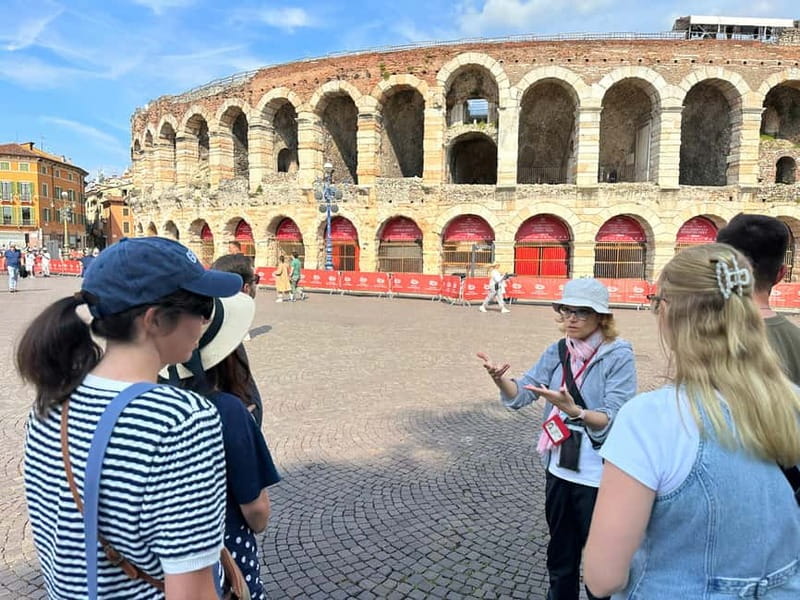
Meet your guide at Piazza Bra under the clock. From there, the tour gets moving toward the Verona Arena with an efficient walking flow. This matters because Verona’s center can feel maze-like on your first day. Starting at a big, recognizable square helps you build bearings quickly, then everything else clicks into place.
The Arena is the star attraction, and this tour doesn’t treat it like a quick photo stop. It’s introduced as the largest and most famous amphitheater in Italy, and your guide points out what you’re looking at and why it’s such a big deal. Even if you know the word amphitheater, you’ll still appreciate how the Arena sits in the city and how it influenced Verona’s identity.
A plus here is pacing. The guided stops are short but purposeful, which keeps the walk from turning into a long series of standing still. One reported highlight is how guides handle the flow through busy areas while keeping the group together—useful if you’re traveling solo or you hate losing track of your meeting point.
You can also read our reviews of more walking tours in Verona


Piazza Bra strolls and what the guide helps you notice
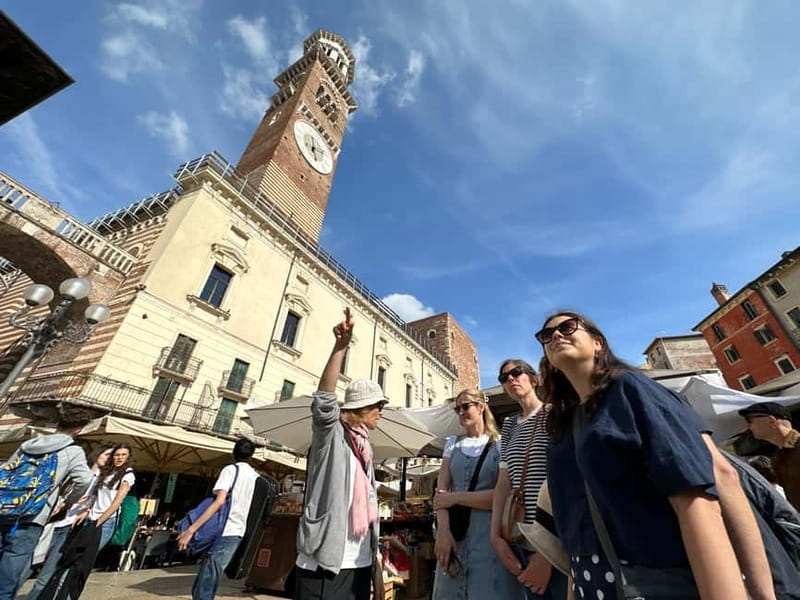
After you arrive at the heart of Piazza Bra, the tour uses this space for more than orientation. It’s a practical launchpad for the rest of the old center, including the route into the Roman-era layers and the cluster of squares around the forum area.
This is also one of those sightseeing moments where your guide’s commentary changes how you see the streets. Instead of just passing facades, you’re nudged to look for the logic in where buildings sit and how the squares connect. That’s one of the most valuable parts of a two-hour tour: you end with a mental map, not just a list of attractions.
If you’re the type who likes to understand the why behind famous places, you’ll probably appreciate the story-led style described in reviews. Guides named in feedback include Alessandro and Laura, and many reviewers say their guides were friendly, answered questions, and explained what mattered about each stop.
Palazzo Barbieri and Verona’s civic power (Town Hall stop)
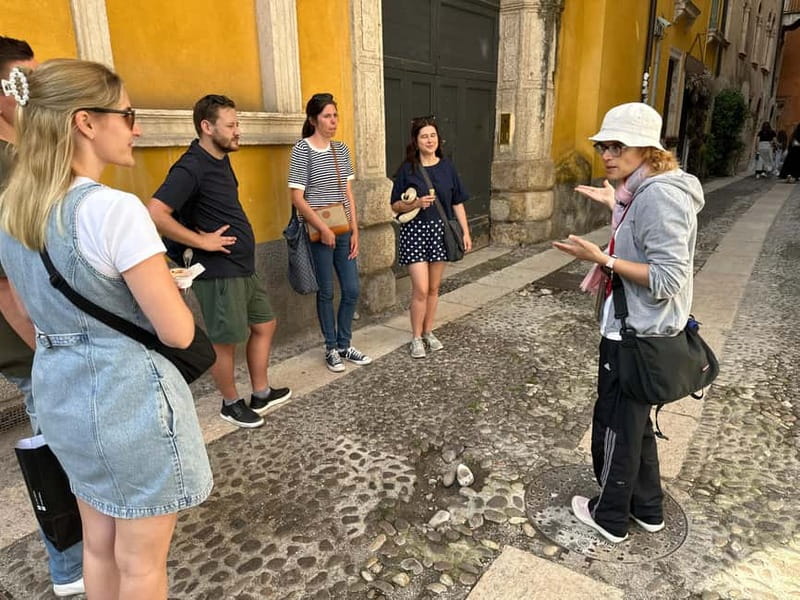
Next up is Palazzo Barbieri, which the tour describes as the Town Hall of Verona and the headquarters of the Austrian Civic Guard. That combo detail is the kind of thing that makes a building stop more interesting than it sounds at first.
A city hall (even a historic one) tells you a lot about how governance shaped a place. And the mention of the Austrian Civic Guard points to Verona’s layered political past. Your guide connects the building to what you’re seeing today, so this isn’t just a name you repeat later while walking past it.
This is also a good checkpoint for questions. A two-hour route can feel like a sprint if you don’t talk, but multiple reviews mention time for Q and A and that the guide stays responsive. If you’re curious about which sights to prioritize after the walk, this is the kind of stop where the guidance helps.
Piazza dei Signori (Dante’s Square) and the statue moment
Then the tour heads to Piazza dei Signori, also known as Dante’s Square. Your guide uses the square to point out what makes it visually and historically important, including a focus on the statue of Dante in the middle of the square.
This is one of those stops that works well for both first-timers and repeat visitors. The square is recognizable enough to find again later, and the Dante association makes it feel like more than just another pretty plaza. If you’re traveling with someone who wants literature references or you just like meaning in the monuments, this stop is a strong payoff.
Also, squares are where you can breathe. They give you a break from street-level hustle while still feeling like you’re in the action. The pacing described by reviewers is consistently positive here: people liked the walking rhythm, the photo opportunities, and the way guides kept the group moving without feeling rushed.
Piazza delle Erbe, the oldest square, and the Roman forum above it
After Dante’s Square, you’ll stroll toward Piazza delle Erbe, described as the oldest square in Verona. Even more useful: it’s said to rise above the area of the Roman forum. That detail is a big deal because it explains why the square feels so built-up and why it attracts so much activity.
On your own, you might just enjoy the square as a postcard scene. With a guide, you’ll understand the layers: Verona didn’t grow in one neat layer. It grew, shifted, and repurposed spaces. Knowing that Piazza delle Erbe sits above the forum area helps you see the city as a set of overlapping eras rather than a single theme.
This is also one of the best spots for understanding Verona’s layout. When the tour later connects you toward Juliet’s area and the Scaligera area, you’ll already have the sense of where the historic center flows.
If you like photo stops, this square is where you’ll want a few pauses. Reviews mention good spots for photos along the way, and Piazza areas like this usually deliver the best angles because you’re not fighting narrow streets.
You can also read our reviews of more guided tours in Verona
Juliet’s House and the balcony from Romeo and Juliet
Close to Piazza delle Erbe, the tour stops at Juliet’s House and you’ll see the famous balcony from Romeo and Juliet. For many visitors, this is the emotional centerpiece of a Verona visit—equal parts romance and theater.
Two things make this stop worth having on a guided walk. First, the tour places it in the right neighborhood so it feels like part of the walk, not a detour. Second, your guide can help you interpret what you’re seeing, so it feels tied to the city rather than stuck in a theme park bubble.
Now, quick reality check: this is still a famous stop. If you prefer quiet viewing and minimal crowds, plan your expectations accordingly. The tour keeps it structured, though, which usually helps you move efficiently and not spend your whole time circling for the best angle.
If you want to go deeper afterward, this is also where your questions can steer you. Many reviews mention guides shared extra recommendations—restaurant ideas, local dishes, and timing advice for other plans—so you may be able to build a better day around Juliet’s House once you’re done.
Arche Scaligere: another major visual on the loop
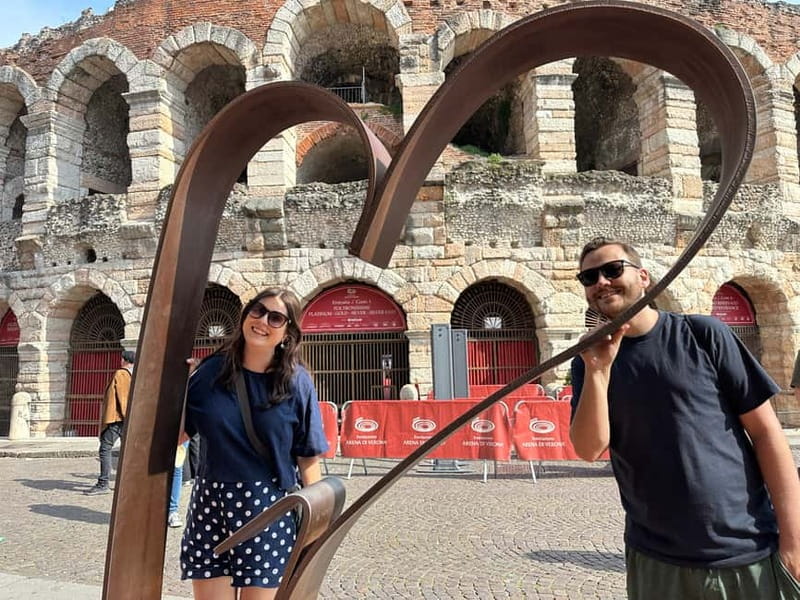
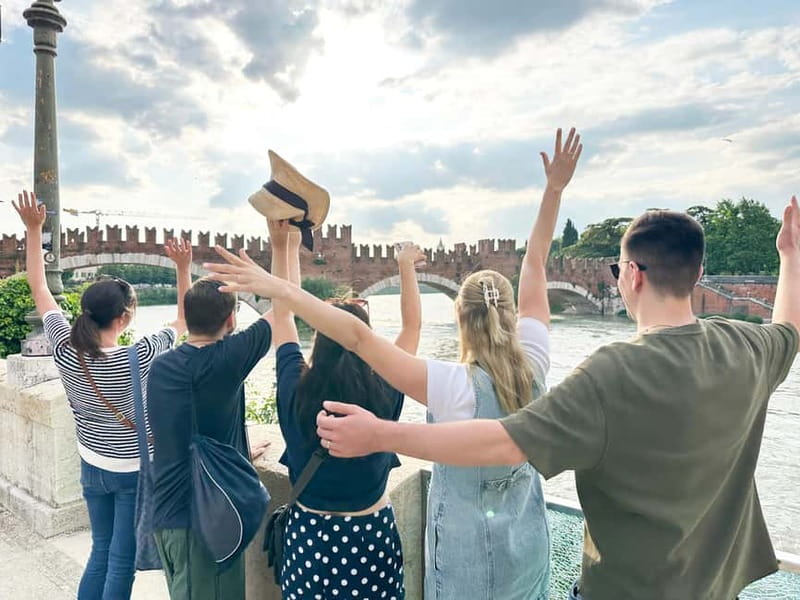
The route includes a guided stop at the Arche Scaligere. This is one of those Verona sights that looks impressive even before you learn anything about it, and it works well in a walking itinerary because it breaks up the big-name highlights with something that still feels central to the city’s identity.
Because the tour keeps the structure tight, this stop also makes sense if you’re trying to see a lot without exhausting yourself. You’ll get a guided look rather than a rushed glance, and you’ll be able to connect it to where you’ve already been in the historic core.
If the day gets tight and you want to revisit later, having a guide point out the area helps you return without needing to pull out your phone every two minutes.
How the tour works in real life: timing, English-only, and weather reality
The tour runs for 2 hours. That duration is long enough to hit the true highlights—Arena, both major squares, Juliet’s House, and the Scaligera area—without turning into a full-day walking mission.
It’s also ONLY in English, with a live guide. If you’re comfortable with English commentary, this is a big advantage. A guide named in reviews like Martina, Luisa, Laura, Alessandro, and Vale is repeatedly praised for making the information easy to follow, with clear voices and friendly interaction.
Weather happens in Veneto. One review notes heavy rain on tour day, but the guide still kept things going. Another mentions the guide trying to keep the group in the shade. Translation: you should still bring practical items for the day, but don’t assume rain will stop the tour.
One more small practical note: you’ll be on foot through historic streets. Wear comfortable shoes. This isn’t the kind of walking where you can get away with fashion footwear unless you enjoy suffering.
Small group value: why $35 feels fair (and when it might not)
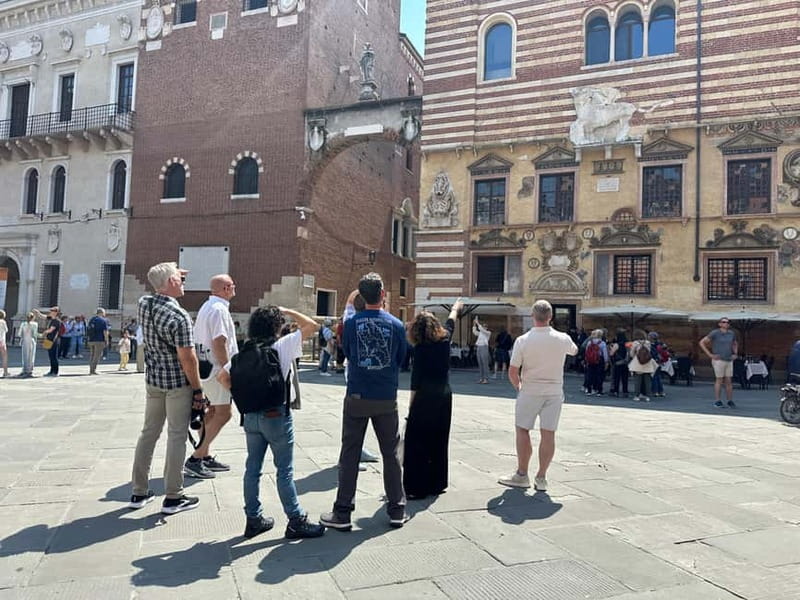
At $35 per person for a 2-hour guided walking tour with a local English-speaking guide, you’re paying for efficiency and interpretation. You’re not just paying to see landmarks—you’re paying for someone to connect the dots fast.
Here’s where the value shows:
- You cover multiple major Verona stops in one pass, including the Arena and the romance-driven Juliet’s House.
- You get guided attention at key squares: Piazza Bra, Piazza delle Erbe, and Piazza dei Signori (Dante’s Square).
- The tour is designed as a small group experience, and reviews mention very small groups—one booking described a group of 3—so you don’t feel lost in a crowd.
When it might not be the best match:
- If you already know Verona well and you don’t need the layout and context help, you might feel a guided tour is less necessary.
- If you need mobility accommodations, the tour is not suitable based on the provided access limits and restrictions.
Who should book this Verona walking tour
This tour is a great fit if:
- It’s your first visit to Verona and you want the main sights without spending your whole trip navigating.
- You like learning the meaning behind what you see, not just taking photos.
- You prefer a small group atmosphere where you can ask questions.
It’s especially helpful if you plan to explore on your own afterward. Several guides in reviews are praised for ending the walk with recommendations, and that can make the rest of your Verona day feel smoother. You’ll likely walk away with a clear sense of what’s worth revisiting and what to skip.
On the other hand, it’s not right for wheelchair users or people who need mobility support, since the tour is not set up for that.
Should you book it?
Yes, if your goal is a fast, high-impact Verona overview with a human guide in charge of the details. For $35 and two hours, you get an efficient route through the Arena, the main squares, Juliet’s balcony, and the Scaligera area, plus the kind of explanation that makes the city easier to navigate after the tour.
I’d skip it only if accessibility is a concern for your group or if you prefer to roam completely independently with no guided structure. If you’re flexible and you can handle a walking tour, this one is one of the cleanest ways to get your bearings in Verona quickly.
FAQ
Where does the tour meet?
The meeting point is Piazza Bra under the clock.
How long is the Verona guided walking tour?
It lasts 2 hours.
Is the tour offered in English?
Yes, the tour is ONLY in English language with a live tour guide.
What major sights are included?
You’ll see stops that include Piazza Bra, the Verona Arena, Palazzo Barbieri, Piazza dei Signori (Dante’s Square), Piazza delle Erbe, Juliet’s House, and the Arche Scaligere area.
How much does it cost?
The price is $35 per person.
Is it wheelchair-friendly or suitable for mobility impairments?
No. It is not suitable for people with mobility impairments or wheelchair users, and non-folding wheelchairs and electric wheelchairs are not allowed.