REVIEW · VENICE
Venice Sightseeing Small Group Walking Tour with a Local Guide
Book on Viator →Operated by Raphael Tours & Events · Bookable on Viator
Venice makes more sense with a local beside you. This small-group walk (up to 15 people) led by locals like Valentina and Gianmarco turns the city’s canals and squares into a clear story, and it’s also an efficient way to see major sights fast. The main drawback: it’s a nonstop walking route with stairs and bridges, and you won’t get a real sit-down break.
What I really like is the mix of big landmarks and “how to read Venice” guidance. You’ll hit Rialto Bridge and St. Mark’s Square, but the guide connects them to the city’s trade roots and day-to-day layout, so you leave with a mental map instead of a blur of photos.
One more consideration before you book: this is a walking tour, not an inside-seeing ticket. You’ll look at key places and learn their roles, but you should plan on returning later if you want to go inside churches or museums.
In This Review
- Key things to look forward to
- Why This 2-Hour Venice Walk Helps You Feel Oriented Fast
- Meeting at Campiello dei Squelini: What to Know Before You Start Walking
- Campo San Pantalon: Your Quick Primer on Venice’s Neighborhood Logic
- Scuola Grande di San Rocco: Why Confraternities Matter in Venetian Life
- Ponte di Rialto: The Trade Center View That Changes How You See the City
- Casa di Marco Polo: A Famous Name with a Venice Address
- San Zanipolo (Basilica dei Santi Giovanni e Paolo): Where Civic Power Takes Physical Form
- Campo Santa Margherita and Santa Maria Gloriosa dei Frari: A Titian Thread Through the City
- Piazza San Marco Finish: How to Use the Ending Instead of Just Reaching It
- Price and Pace: Does $48.37 Feel Fair for Two Hours?
- Who Should Book This Venice Walking Tour (and Who Might Prefer a Different Style)
- Should You Book This Venice Sightseeing Small Group Walk?
- FAQ
- How long is the Venice sightseeing small group walking tour?
- How many people are on the tour?
- Where does the tour start and end?
- Is the tour offered in English?
- What are some of the main sights on the route?
- Are there stairs on this tour?
- What does the tour cost?
- Is hotel pickup included?
- Is there an extra fee for day visitors to Venice?
- What is the cancellation policy?
Key things to look forward to
- Up to 15 people means you can actually ask questions and hear the guide.
- A morning or afternoon choice helps you match the tour to your Venice schedule and heat level.
- Rialto Bridge + St. Mark’s Square give you both the trade heart and the ceremonial center.
- Historic stops tied to Venice’s power: doges, confraternities, and the Marco Polo story.
- Local eating and free-time tips at the end help you keep going after the walk.
Why This 2-Hour Venice Walk Helps You Feel Oriented Fast
Venice is pretty, but it can also feel like a logic puzzle—until you understand the city’s neighborhood structure. This tour is designed for that exact moment when you arrive and think: where do I even start? You begin in Dorsoduro and end at Piazza San Marco, and along the way you cross the kinds of routes that shape how Venetians actually move.
The value isn’t just that you’ll see famous places. It’s that a local guide can explain what you’re looking at in plain terms—why Rialto mattered for commerce, what St. Mark’s represented for state power, and how smaller districts like Cannaregio fit into the bigger picture. That turns your future wandering into something with direction.
Even better, the tour wraps up with practical recommendations for where to eat and how to spend your remaining time. That matters in Venice, where the tourist center can be a trap if you don’t know which streets to trust.
You can also read our reviews of more walking tours in Venice


Meeting at Campiello dei Squelini: What to Know Before You Start Walking
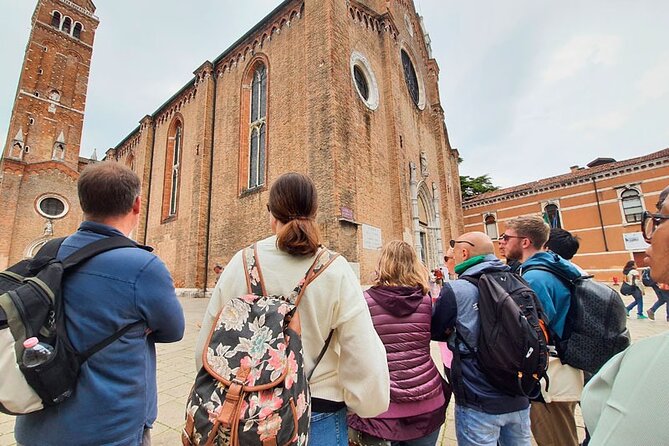
Your walk begins at Campiello dei Squelini in Dorsoduro (Sestiere Dorsoduro, 2766) and finishes in St. Mark’s Square (Piazza San Marco). That route choice is smart: you get to start away from the busiest tourist churn, then work your way toward the main showpiece.
Plan for comfort first. Wear comfortable shoes because Venice is uneven, and the route includes bridges and stairs. Even when the walking pace feels manageable, the number of steps adds up. One guide keeps the group moving while staying mindful of shade on hot days, but you still need to be ready for outdoor walking.
You also need to be ready for “Venice logistics.” The tour is near public transportation, and service animals are allowed. It’s not hotel pickup, so you’ll want to arrive on time and use the meeting point coordinates in your map app so you don’t waste your first hour looking around.
Finally, note the city’s day-visitor access rule. If you’re staying outside Venice and visiting for the day on certain dates, you may need a €5 access fee. Check the official guidance at cda.ve.it so there are no surprises.
Campo San Pantalon: Your Quick Primer on Venice’s Neighborhood Logic
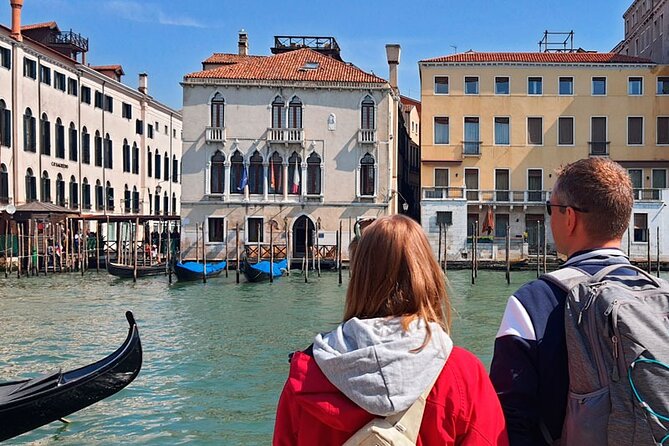
The tour starts with Campo San Pantalon, and this first stop is about orientation. You’re not just getting a landmark lesson—you’re getting a sense of how Venice is organized into areas (sestieri), and how streets and footbridges guide pedestrian movement.
This matters because Venice can look confusing even to people who love maps. A guide will help you understand why certain paths feel obvious once you know what they connect—trade routes, religious centers, and the everyday corridors between districts.
In a short walking tour, the first stop sets the tone. If you pay attention here, you’ll spot patterns later: where the city opens into larger fields (campi), where bridges change your line of sight, and where the architecture signals wealth or civic importance.
If you’re prone to photo-frenzy mode, give yourself a rule: take photos when the group stops, not mid-step. Venice streets move fast, and it’s easy to get separated from the group’s pace.
Scuola Grande di San Rocco: Why Confraternities Matter in Venetian Life
Next you’ll head to Scuola Grande di San Rocco. Even if you don’t go inside, this stop is a strong example of how Venice wasn’t only merchants and politicians—regular religious and civic groups shaped the city’s identity too.
These scuole (schools) were tied to charity, status, and community identity. A good guide will connect that to the wider Venice story: why certain buildings look the way they do, why they sit where they do, and how they reflect the city’s culture of patronage.
You’ll also get a sense of how Venetian art and devotion overlap. This is where the tour’s “history, but practical” style pays off. Instead of drowning you in dates, your guide can explain what the building signaled to locals and how it fits into the city’s larger power networks.
A small caution: this is still Venice walking. If you’re hoping for frequent photo stops or a long pause, that’s not the format. You’ll get short windows to look, and then you move on.
Ponte di Rialto: The Trade Center View That Changes How You See the City
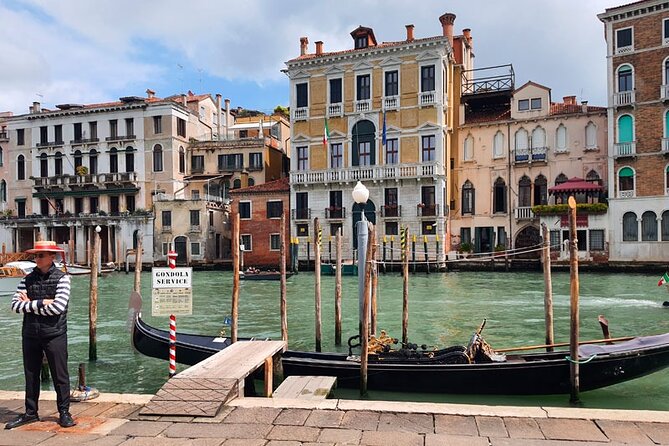
Then comes Ponte di Rialto, the kind of stop where even your first day in Venice suddenly feels real. Rialto isn’t just a postcard bridge—it’s a symbol of the city’s trading life and financial power.
Crossing or orbiting around Rialto gives you a powerful “anchor” for the whole city. After this point, you’ll start noticing how the surrounding areas reflect commercial energy: crowds, narrow lanes, and the constant movement of people and goods through a city made for foot travel and water navigation.
Practical tip: Rialto areas can be crowded. A local guide often steers you in ways that keep you from fighting the densest crush, and that’s a real comfort advantage. You’ll also learn where to look for the best context views—how to frame the bridge and canal so you understand what you’re seeing.
Also, expect stairs and bridge transitions. One review-style theme you’ll hear across many Venice walks is simple: if stairs aren’t your friend, you’ll feel it here. The route is doable for most people, but don’t pretend it’s flat.
You can also read our reviews of more guided tours in Venice
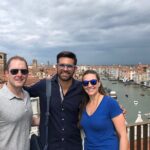
Casa di Marco Polo: A Famous Name with a Venice Address
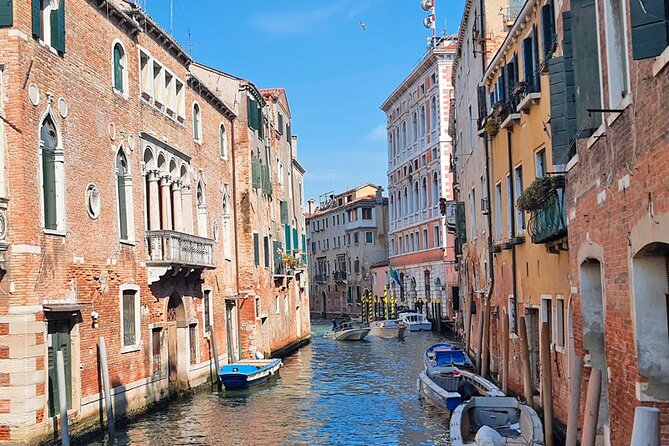
Casa di Marco Polo is where the tour connects Venice to a global travel story. You’re not going to get a fantasy museum moment here. Instead, you’ll learn how a Venetian merchant-traveler fit into a city that was literally built to trade, ship, and exchange ideas.
This stop helps you make sense of why Venice’s worldview leaned outward. When your guide explains what the city was doing economically and socially, Marco Polo stops feeling like a standalone schoolbook name and starts feeling like a natural product of Venice’s commercial culture.
Again, you’ll likely see the site from outside or as a viewpoint reference point, not as a full interior visit. If that kind of detail matters to you, plan a follow-up visit after the walking tour ends in the center.
San Zanipolo (Basilica dei Santi Giovanni e Paolo): Where Civic Power Takes Physical Form
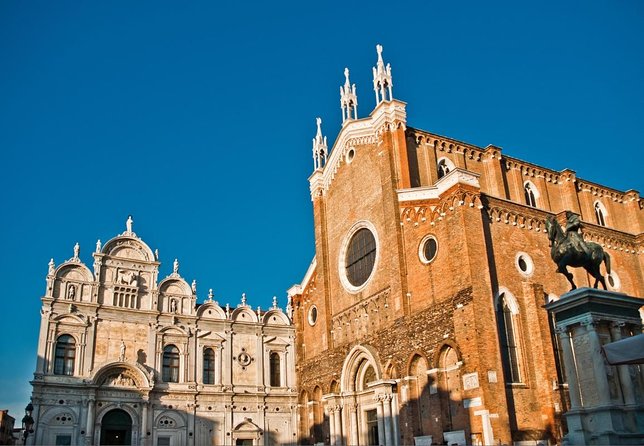
After Rialto and the Marco Polo connection, the walk shifts into politics and civic identity with Basilica dei Santi Giovanni e Paolo (also called San Zanipolo). This is one of those Venice stops where the architecture and the setting instantly tell you: this place was built to matter.
Venice doges are linked to this area, and learning why the church became a resting place for leaders gives you a clearer understanding of how Venice mixed religion with governance. You start seeing the city as a functioning system, not just a set of beautiful buildings.
Even if you’re not a museum fanatic, this is a worthwhile stop because it adds meaning. You’ll understand why certain churches and squares feel ceremonial, and why the city’s “big moments” are often anchored in the same neighborhoods.
Campo Santa Margherita and Santa Maria Gloriosa dei Frari: A Titian Thread Through the City
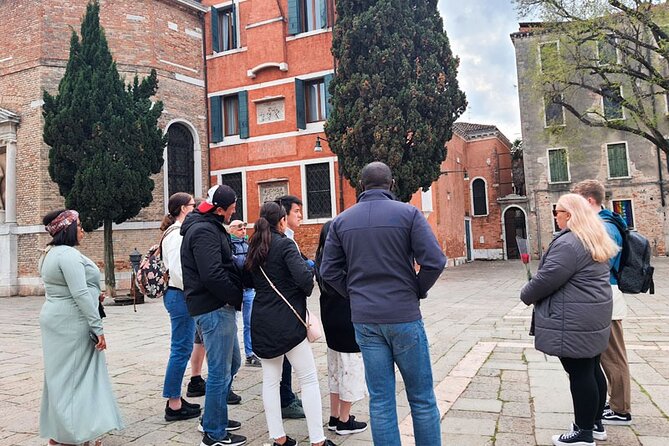
The tour also includes moments that help balance the big-name sights with Venice’s living rhythm. Campo Santa Margherita is a good example. It feels more like a neighborhood place to pause and observe rather than a highlight designed for cruise-ship foot traffic.
Then there’s Basilica di Santa Maria Gloriosa dei Frari, where Titian is buried. This is where art history becomes less abstract. Your guide can connect Titian to Venice’s status and patronage culture, and that makes the city’s artistic heritage easier to recognize when you wander on your own later.
If you love art and you like history that doesn’t feel like a lecture, these stops are the sweet spot. You’re still outdoors, still moving, but the story becomes more human—people, artists, institutions, and what they signaled.
Piazza San Marco Finish: How to Use the Ending Instead of Just Reaching It
You finish at St. Mark’s Square (Piazza San Marco), and this is the part where the tour pays off long after the last bridge. By the time you arrive, you’re not just standing in front of something famous. You’re arriving with context.
Your guide’s recommendations for where to eat and how to spend the rest of your time help you avoid two common mistakes: eating too far from where you’re staying, or spending the rest of your day only in the most obvious spots. The end location is prime territory, so your next steps matter.
Also, remember the key limitation: this tour is mainly about walking and seeing key areas, not going deep into interior sites. You’ll get orientation and explanations, but if there are places you truly want to enter (churches, museums, viewpoints), plan those for another time.
If St. Mark’s is your priority, treat the tour as your “planning session with legs.” You’ll know what to target next.
Price and Pace: Does $48.37 Feel Fair for Two Hours?
At $48.37 per person for about 2 hours, the price is basically paying for three things: a local guide, a curated route across major districts, and time you don’t spend getting lost.
For first-timers, that’s often worth it. Venice takes time to understand. You can spend that time wandering alone and still enjoy it, but the guide compresses the learning curve. With group size capped at 15, you’re not stuck in a massive crowd where questions disappear.
Pace is the tradeoff. You’re walking continuously, and you should expect stairs and bridge transitions. If you’re traveling with someone who needs frequent breaks, this may feel like hard work.
One more value detail: the tour is usually booked about 45 days in advance, so if your schedule is fixed, reserve early. In peak season, that timing can help you choose either morning or afternoon.
Who Should Book This Venice Walking Tour (and Who Might Prefer a Different Style)
This tour fits best if you want:
- A clear orientation across Rialto, San Marco, and nearby districts without spending half a day reading maps.
- A local guide who can explain how Venice’s maritime past connects to what you see today.
- Practical tips on eating and what to do next once you reach St. Mark’s Square.
It might not fit if:
- You want lots of seated time, coffee stops, or a slow museum-style route.
- You struggle with stairs and frequent standing.
- You’re traveling with kids who need constant entertainment or a more flexible pace.
There’s also the format reality: some people reported sound issues with headsets on their day. You can’t predict that, but if you’re sensitive to audio, arrive promptly so you’re positioned well, and don’t hesitate to let the guide know if you can’t hear.
Should You Book This Venice Sightseeing Small Group Walk?
If this is your first visit to Venice and you have limited time, I’d book it. It’s one of the fastest ways to get your bearings while still seeing real city texture—bridges, campi, and the routes that connect major landmarks.
Skip it if your dream Venice day is mostly inside buildings, mostly relaxing, or mostly barrier-free. Venice walking tours reward curiosity, not speed-for-speed’s sake.
If you do book, choose your itinerary based on comfort: morning usually feels better for heat, and afternoon can work if you’re ready for a warmer walk. Then use the ending in St. Mark’s as your launchpad for the rest of your trip.
FAQ
How long is the Venice sightseeing small group walking tour?
It runs for about 2 hours.
How many people are on the tour?
The group is limited to a maximum of 15 travelers.
Where does the tour start and end?
It starts at Campiello dei Squelini in Dorsoduro and ends at Piazza San Marco (St. Mark’s Square).
Is the tour offered in English?
The tour is offered in English. The private option can be done in English, Spanish, or German.
What are some of the main sights on the route?
You’ll see highlights including Ponte di Rialto, Casa di Marco Polo, Scuola Grande di San Rocco, Basilica dei Santi Giovanni e Paolo (San Zanipolo), and Piazza San Marco (St. Mark’s Square).
Are there stairs on this tour?
Yes. The walking route includes many stairs and bridges, which can be a challenge if you don’t do stairs well.
What does the tour cost?
The price is $48.37 per person.
Is hotel pickup included?
No. Hotel pickup and drop-off are not included.
Is there an extra fee for day visitors to Venice?
On certain dates, visitors staying outside Venice may need to pay a €5 access fee. Check the official guidance at https://cda.ve.it for dates and exemptions.
What is the cancellation policy?
You can cancel for a full refund up to 24 hours in advance. If canceled due to poor weather, you’ll be offered a different date or a full refund.