REVIEW · VENICE
The Essence of Venice in a Stress Free Small group Walking Tour
Book on Viator →Operated by Stress Free Tours - Guided Tours and drivers in Rome and Italy · Bookable on Viator
Venice makes sense on foot. This stress-free small-group walk is built for first-timers and repeat visitors alike, with smart commentary and key sights like the Rialto Bridge along the way. You’ll also slip into less-traveled lanes and squares that most people miss when they only chase the postcard highlights.
Two things I like a lot: you get a real overview without feeling rushed, and you’re guided by locals who explain what you’re actually seeing. In past groups, guides such as Michaela, Julia, Valentina, Flavia, and Annalisa have been praised for answering questions clearly and keeping the pace easy to follow.
One thing to plan for: the tour starts at Campiello dei Squelini by a colored wall, and one unhappy review pointed to a last-minute meeting-point change that left them scrambling. If you’re the type to rely on spotty phone data, make sure you’re able to check updates before you arrive.
In This Review
- Key Things You’ll Notice on This Venice Walk
- A Stress-Free Venice Intro in About Two Hours
- Campiello dei Squelini: Where the Walk Starts (and Why It Matters)
- The Squares That Give You Bearings: Passing Through Venice’s Everyday Map
- Rialto Bridge Without the Guesswork: Why This Part Works
- Finishing at St Mark’s Square: Your Next Move Is Already Planned
- Guide Style Makes the Difference: What the Best Reviews Have in Common
- Price and Value: Is $42.33 Worth It?
- Getting the Most From the Walk: Practical Tips That Actually Help
- Who This Tour Suits Best (And Who Should Skip It)
- Should You Book This Venice Walking Tour?
- FAQ
- How long is the Venice walking tour?
- Where does the tour start?
- Where does the tour end?
- What sights are included?
- Is the tour a small group?
- What language is the tour offered in?
- What’s included in the price?
- What’s not included?
- Do I need to pay an access fee?
- Is the tour dependent on weather?
- Are service animals allowed?
Key Things You’ll Notice on This Venice Walk
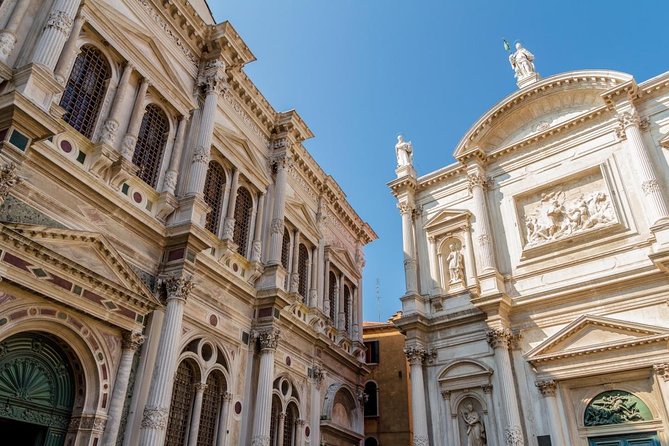
- Small-group feel: capped at 10 in the tour description, with a maximum of 20 listed by the operator, and you’ll feel it either way
- Rialto without the chaos: the iconic bridge is included, plus the squares that explain why it matters
- Carlo Goldoni’s Venice angle: a stop east of Rialto ties the city’s story to a famous playwright
- Local stories, not a script: guides are praised for humour, patience, and Q&A time
- End at St Mark’s Square: you finish right where many people want to go next
A Stress-Free Venice Intro in About Two Hours
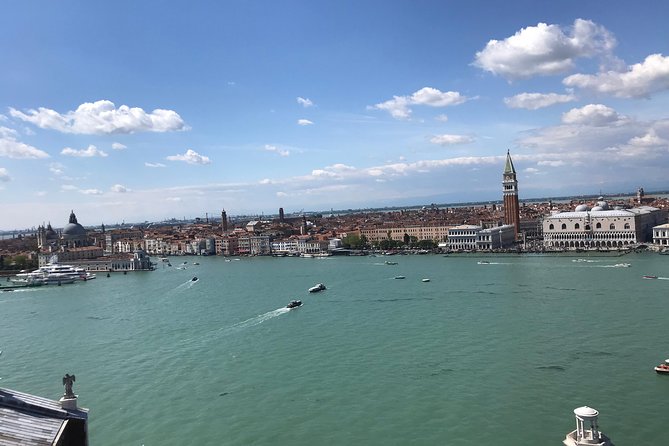
Venice can overwhelm you fast. The streets crisscross, landmarks repeat, and you can lose time just figuring out which direction you’re headed. This tour is designed to fix that problem early: you start in a local square area, then move through a sequence of campi (public squares) and key sights so you learn how the city is laid out—without needing water taxis or a complicated plan.
The tour runs about 2 hours. That length is the sweet spot. It’s long enough to see major highlights and a few lesser-known corners, but short enough that you’re not totally exhausted before your main Venice time (wandering, eating, or museum hopping). At $42.33 per person, it’s not a budget-only option, but the value is in the guided context: the commentary turns “pretty buildings and bridges” into something you can connect.
The crowd control angle is also real. This is marketed as a small-group walking tour (with a cap of 10 in the description, and a max of 20 listed). Either way, it’s much easier to hear the guide and keep up than in big bus-style groups, especially on Venice’s narrow lanes and over bridge steps.
You can also read our reviews of more walking tours in Venice



Campiello dei Squelini: Where the Walk Starts (and Why It Matters)
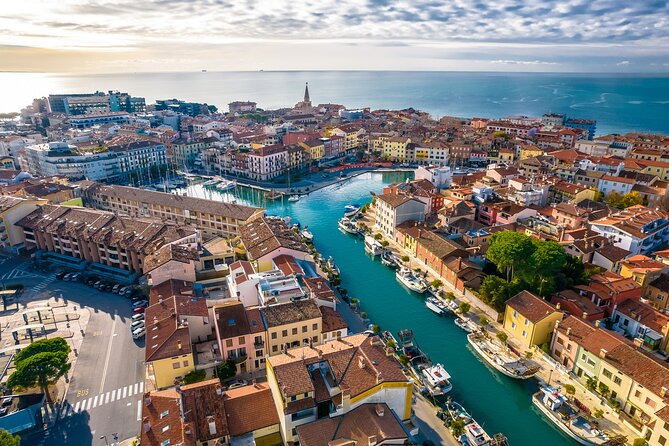
You meet at Campiello dei Squelini, 30123 Venezia VE, by a colored wall. That detail sounds minor, but in Venice it’s everything. Small-group walking tours depend on finding the group quickly, because once you start threading lanes and crossing bridges, doubling back costs time.
This first stop also sets the tone. From there, you move into the world of the campi—Venice’s everyday public spaces. One of the early squares is described as one of the city’s largest, originally dedicated to grazing and agriculture. That’s a great “lightbulb” lesson for first-timers: you realize Venice wasn’t built as a museum set. These spaces had practical uses, and the city’s layout grew around them.
Practical tip: wear shoes that can handle bridge climbs and damp stone. A lot of guides keep a calm pace, but Venice walking is still walking—plus stairs. One review explicitly advised to bring walking shoes, and I agree. You’ll be grateful you did.
The Squares That Give You Bearings: Passing Through Venice’s Everyday Map
After the opening area, the route focuses on multiple important squares—big open spaces that function like navigation points. Even when you’re not counting steps, these squares help you “map” Venice in your head. You start to recognize patterns: where a major bridge pulls attention, where a monument anchors a square, and how streets funnel you toward bigger spaces.
One highlighted stop is east of the Rialto Bridge, centered on a monument dedicated to Carlo Goldoni. That’s a clever way to teach Venice beyond architecture. When the guide points out cultural landmarks like this, you learn how people lived, worked, and shaped public life—not just what happened to buildings after they became famous.
Another square on the way is described as hosting unique landmarks, though the exact name isn’t provided in the tour details you gave me. That’s common on some walking routes: you’ll get a “here’s what to notice” stop, even if the listing doesn’t emphasize a single monument. The key value is the guided interpretation—learning how to look at what’s in front of you.
Here’s what makes these square-to-square segments feel worth it: the guide commentary gives you a timeline. Reviews consistently praised the history and the way it’s delivered at a pace you can follow. Some guides (notably Julia and Flavia in past reviews) were mentioned for never rushing and for taking questions—so you’re not left reading plaques on your own while your group moves on.
Rialto Bridge Without the Guesswork: Why This Part Works
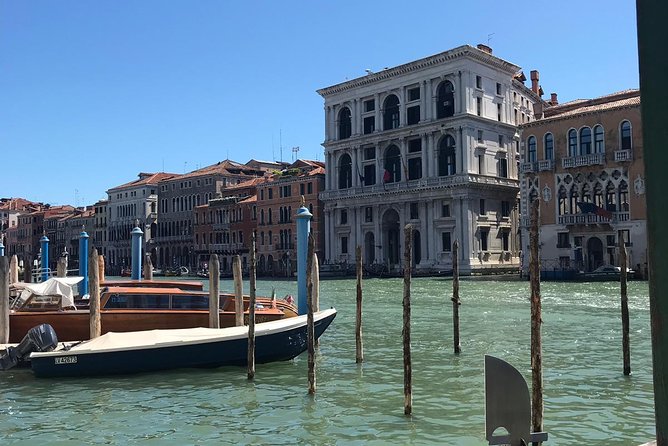
The Rialto Bridge is the big headline moment, and yes, it looks great in photos. But the tour’s real win is the lead-up. Instead of dropping you at Rialto with no context, you arrive with a better sense of why the area is so central—because you’ve already seen the squares, monuments, and urban logic that connect to it.
The Rialto section also tends to be where you feel the “Venice effect.” Narrow lanes widen near plazas. You start hearing more voices and seeing more vendors. And you begin to understand the city’s rhythm: bridges aren’t just crossings—they’re choke points for daily life and for tourism flows.
One practical plus from a review: this route is walked end-to-end, and the group didn’t require water taxis. That matters because water transport can add cost, wait time, and weather risk. A walking tour also keeps you close to the city’s texture—stone, reflections, small doorways, and the way locals actually use the space.
Drawback to keep in mind: Rialto and nearby areas can feel packed. Even with a smaller group, you may need to pause, step aside, or wait for space to move. That’s not a tour problem—it’s Venice during peak times. If you’re going on a very crowded day, plan to accept some slowdowns and focus on the guide’s directions.
Finishing at St Mark’s Square: Your Next Move Is Already Planned
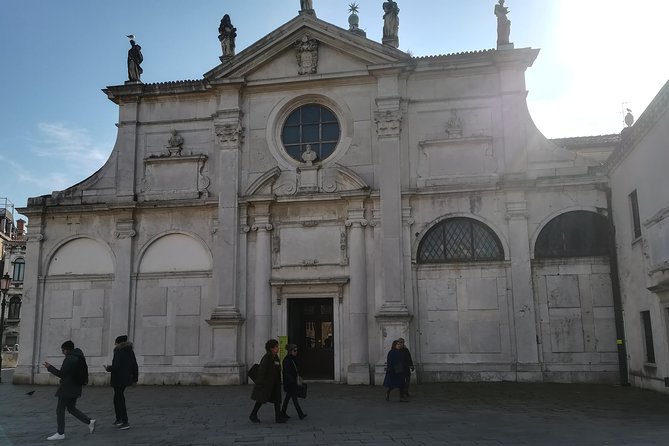
Your tour ends at St. Mark’s Square (Piazza San Marco), 30124 Venezia VE. Ending here is smart because it’s a natural “hub” for your next choices. You’re dropped right where most first-time plans go anyway—church visits, wandering by the waterfront edges, and photo moments.
But there’s also a real reason St Mark’s is the right finish line: after you’ve learned Venice’s basic structure on smaller streets and squares, St Mark’s feels bigger and clearer. The city doesn’t feel random anymore. It feels connected.
One small note from how these walks work in general: many people want time to soak up the square atmosphere at the end. If that’s you, don’t book a hard-to-reach appointment immediately after. Give yourself buffer time to linger, then continue at your pace.
Guide Style Makes the Difference: What the Best Reviews Have in Common
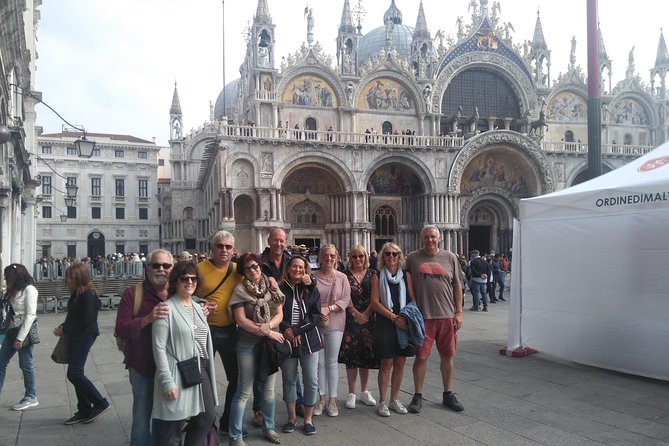
The strongest praise across the reviews isn’t about fancy extras. It’s about the human side—guides who slow down when needed and make sure you understand what you’re looking at.
A few patterns show up clearly:
- Local perspective matters: guides like Julia and Valentina were praised for explaining what you’d otherwise miss on your own.
- Questions are welcome: multiple reviews mention that the guides answered questions in detail and didn’t rush.
- Good pacing: guides were described as keeping a comfortable speed, even when people wanted to take photos or ask for route help.
- Humour and personality: people enjoyed that the walk felt lively, not like a lecture.
That last point is important in Venice. When you’re surrounded by sensory overload, a guide who can keep things engaging makes it easier to stay oriented. Even a refresher visit got positive notes, with people enjoying the history and the way it connected past life to present-day Venice.
If you care about conversation and context, this kind of small-group structure is exactly what you want. If you only want a passive sightseeing checklist, you might find any walking tour a bit too interpretive.
Price and Value: Is $42.33 Worth It?
Let’s talk value in a practical way. At $42.33 for about 2 hours, you’re paying for:
- a local expert to explain what you’re seeing
- a route that hits major landmarks like Rialto
- the small-group setup that makes questions and pace manageable
- a format that keeps you walking instead of dealing with transfers
That can be a great value if you’re new to Venice, because you buy time and clarity. Without a guide, you can still see Rialto and squares—sure. But you’ll likely spend more time trying to piece together what you’re looking at, and you might miss the “why” behind the city’s layout.
On the other hand, one review didn’t treat it as a top highlight and mentioned that the tour felt more like a general overview. That’s a fair warning if you already know Venice well or if you’re craving very specific experiences (like a museum deep dive or craft-focused itinerary). In that case, you may want a different type of tour that matches your level of interest.
My take: for most first-timers, the price feels justified because it compresses orientation + history into a short, walkable afternoon.
Getting the Most From the Walk: Practical Tips That Actually Help
Venice walking tours succeed or fail based on comfort and readiness. Here are the basics you should plan for with this one.
Wear solid shoes. Stone streets, bridge steps, and occasional uneven surfaces are normal. If it rains, it’s still the same route. A review mentioned the guide handled pouring rain well—still, your feet will feel it.
Arrive early enough to find the colored wall. The meeting point is specific. Don’t treat it like a vague “nearby” spot. If you’re running late, check for updates as soon as you can.
Bring your phone for messages. One negative review described a meeting-point change that wasn’t communicated early enough for them to notice. That’s a rare situation, but it’s a good lesson: keep your ability to check updates available right before and during the walk window.
Expect a guided pace with pauses. The tour includes history commentary and time at landmarks. That’s the point. Don’t plan a tight schedule right after finishing at St Mark’s Square.
Plan around the access fee on certain dates. The tour notes that on certain days, people staying outside Venice and visiting for the day may need to pay a €5 access fee. For details and exemptions, you’re directed to the link for Venice’s access rules. Don’t ignore this—costs can sneak up if you assume it’s included.
Who This Tour Suits Best (And Who Should Skip It)
This is a strong fit if:
- you’re visiting Venice for the first time and want your bearings fast
- you like walking routes that include the big icons plus context
- you enjoy history that you can ask questions about
- you want a calmer group size and a guide who explains without rushing
It may be less ideal if:
- you already know Venice well and want only “wow” moments without much background
- you dislike guided commentary and prefer self-guided photo time
- you have limited mobility (walking is the core format, and the route uses bridges and squares)
Should You Book This Venice Walking Tour?
If you want a first-pass understanding of Venice—Rialto, important squares, and a guided thread that ties it together—this tour is an easy yes. The best reviews focus on one thing: the guide experience. People repeatedly praised guides for staying patient, keeping a good pace, and showing parts of Venice that are easy to miss on your own.
If you’re price-sensitive or you already have a strong Venice background, you might feel it’s more of an orientation walk than a peak-excitement highlight. But for most visitors, orientation is the best money you’ll spend, because it makes the rest of Venice click.
Book it if you want a stress-free, small-group introduction that ends where your next adventure naturally begins: St Mark’s Square.
FAQ
How long is the Venice walking tour?
The tour lasts about 2 hours.
Where does the tour start?
You start at Campiello dei Squelini, 30123 Venezia VE, Italy, by the colored wall.
Where does the tour end?
The tour ends at St. Mark’s Square (Piazza San Marco), 30124 Venezia VE, Italy.
What sights are included?
The route includes key Venice landmarks such as the Rialto Bridge, plus several major public squares and a stop tied to Carlo Goldoni.
Is the tour a small group?
Yes. It’s described as capped at 10 people, and the operator information lists a maximum of 20 travelers, so group size can vary.
What language is the tour offered in?
The tour is offered in English.
What’s included in the price?
The tour includes a local expert, pickup from the designed meeting point, and the small-group walking tour itself (plus a mobile ticket).
What’s not included?
Gratuities are not included (gratuities are recommended). Food and drinks are not included, and hotel or station pickup/drop-off is not included.
Do I need to pay an access fee?
On certain dates, day visitors staying outside Venice may need to pay a €5 access fee. Check the official page linked in the tour details for which days apply and for exemptions.
Is the tour dependent on weather?
Yes. It requires good weather. If it’s canceled due to poor weather, you’ll be offered a different date or a full refund.
Are service animals allowed?
Yes, service animals are allowed.