REVIEW · VENICE
Private Best of Venice Walking Tour with St Mark’s Basilica
Book on Viator →Operated by Avventure Bellissime · Bookable on Viator
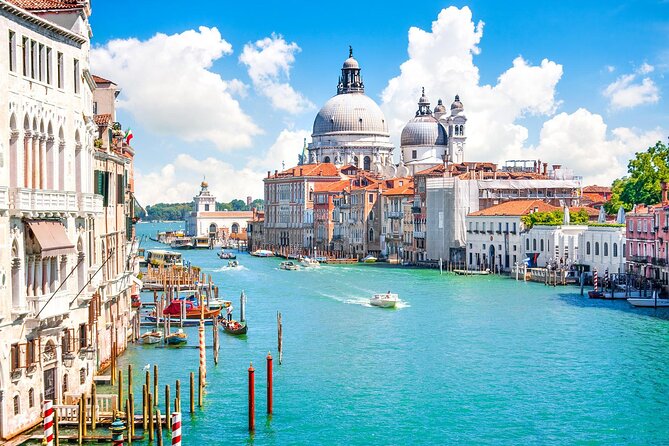
Skip the worst of St. Mark’s lines for Venice gold. This private-upgrade walking tour centers on Piazza San Marco and the Basilica di San Marco, with just enough history to make the city click fast. You’ll also get canal-side and alley time, so your trip isn’t only crowds and camera angles.
I especially like the built-in time savings: skip-the-line St. Mark’s tickets plus a guide who sets context so the square makes sense. I also like that you often travel with audio support, including radio headsets for larger groups, so you don’t miss stories while you’re moving through busy streets. One thing to keep in mind: inside the basilica is tightly time-capped, so even with priority entry, your actual viewing time is short.
In This Review
- Key things I’d plan for
- Why this St. Mark’s walking tour works for first-time Venice
- Piazza San Marco: your 15-minute map of medieval power
- Basilica di San Marco: skip the line, then respect the clock
- Dress code and entry rules you should take seriously
- When the basilica can shift your plan
- Peak-season timing: skip-the-line is truly worth it
- Campo Santa Maria Formosa: a quick stop with a big identity
- Calle time and palazzos: Venice as lived-in space
- What to watch for on the walk
- Price and value: what you’re really paying for
- Pace, crowd reality, and how to get the most out of 2 hours
- When plans change: closures, high water, and timed entry
- Should you book this Venice tour with St. Mark’s Basilica?
- FAQ
- How long is the Private Best of Venice Walking Tour with St. Mark’s Basilica?
- Does the tour include skip-the-line tickets to St. Mark’s Basilica?
- Is St. Mark’s Basilica visit always guaranteed?
- What dress code do I need for St. Mark’s Basilica?
- Do I need ID to enter the basilica?
- Are radio headsets provided during the tour?
- Where does the tour start and end?
Key things I’d plan for
- Skip-the-line access that matters at St. Mark’s, with extra importance during peak months (April to October).
- Audio help in the crowd, since radio headsets are used when the group grows beyond 8 people.
- A guided hit at the big architecture first (square layout, the Doge’s Palace area, and the bell tower views).
- A quick change of pace to calmer Venice via calle and smaller church stops like Santa Maria Formosa.
- Practical entry rules you must follow, including dress code and bringing your ID/passport.
Why this St. Mark’s walking tour works for first-time Venice
Venice is a city where a good plan saves your energy. If you only wander, you can end up circling the same hotspots and still miss the why behind the buildings. This tour is built for that problem. It starts at the center of it all, then threads you through a short route that connects politics, art, and everyday life.
The “private” part comes as an upgrade, which can make the experience feel more personal without turning it into a marathon. The standard format keeps group size capped at a maximum of 20, and you may get radio headsets if the group is larger than 8. That’s not a small detail in Venice, where you’re constantly dodging foot traffic and crossing from shade to sun.
And the real value is St. Mark’s Basilica. The cathedral’s interior is the main event, but the line situation around the square can be brutal. With reserved entry, you spend less time waiting and more time actually looking.
You can also read our reviews of more walking tours in Venice



Piazza San Marco: your 15-minute map of medieval power
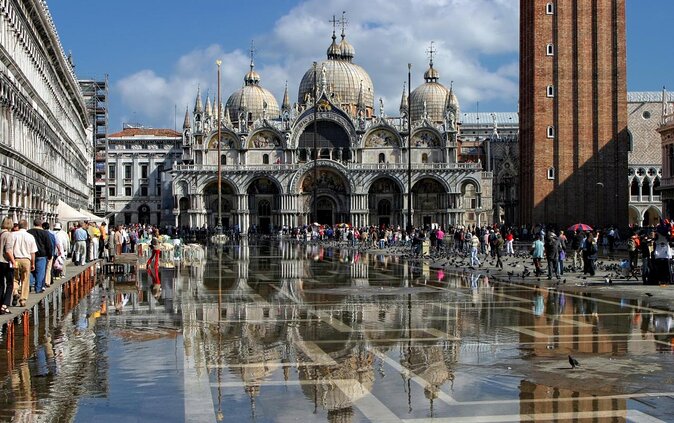
You’ll begin at Giardini Reali in Piazza San Marco. From the start, the guide focuses on how Venice organized itself when it was a medieval maritime power. That matters because the square can look like a single “pretty postcard” at first glance, but it’s really a stage for government, wealth, and public ritual.
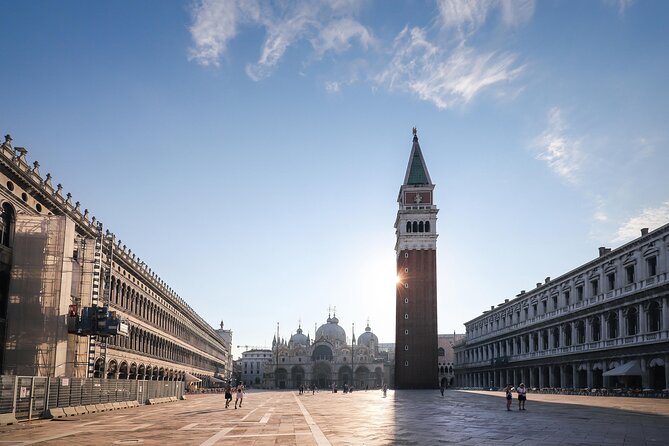
What I love about this orientation is that it helps you see the landmarks as a set, not as separate photo stops. In this area, you’ll get the big-picture layout and what to notice around:
- the Doge’s Palace area (the political center of the state)
- the iconic bell tower (how it fits into the square’s identity)
- the geometry of Piazza San Marco itself, which affects how you move and where crowds compress
Practical note: this is also where timing matters. If you’re visiting in high season, getting your bearings early makes the rest of the walk easier. You’ll be less likely to drift into the busiest corridors at the wrong moment.
Basilica di San Marco: skip the line, then respect the clock
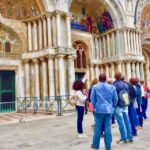
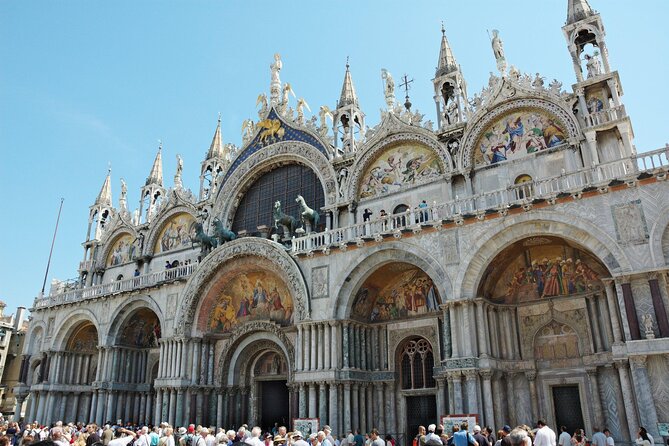
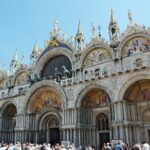
This is the heart of the tour. You stop in front of the basilica’s ornate exterior, then move straight inside with skip-the-line tickets. The exterior is Italo-Byzantine in style, which is a big hint: Venice didn’t build its identity from scratch. It borrowed, adapted, and turned outside influences into its own brand of luxury.
Inside, expect the things that make St. Mark’s feel like it’s covered in light:
- the soaring domed ceiling
- ornate altars
- glimmering details made by generations of Venetian goldsmiths
- marble floors with intricate inlaid mosaics
Now, here’s the main consideration: your time inside is limited. Even though your stop length is listed at about 30 minutes, the basilica experience is capped by restrictions on how long each group can spend inside. In practice, that usually means a short viewing window rather than a slow, unhurried wander. That’s why I think this tour is best when you want a guided overview that gets you oriented and awed fast.
Dress code and entry rules you should take seriously
St. Mark’s is a place of worship, so bring yourself to comply with the dress requirements: no shorts, and no sleeveless tops. Knees and shoulders must be covered for both men and women, or entry can be refused.
Also, bring your ID or passport. It’s mandatory for entry into the basilica. And large bags aren’t allowed inside, so pack light for this stop.
When the basilica can shift your plan
Even with skip-the-line tickets, closures can happen due to religious functions. The tour info is clear that these are outside the operator’s control, and discounts or refunds won’t be issued in those cases. High water can also keep the basilica skip-the-line entrance closed. If you’re traveling at a time when acqua alta is possible, keep a flexible mindset.
You can also read our reviews of more private tours in Venice

Peak-season timing: skip-the-line is truly worth it
The tour notes that from April to October, skip-the-line entrance is compulsory due to crowd levels. Outside those months, the basilica doesn’t offer a fast entry service to everyone, which is another reason the booked access is valuable if you’re going in peak season.
Campo Santa Maria Formosa: a quick stop with a big identity
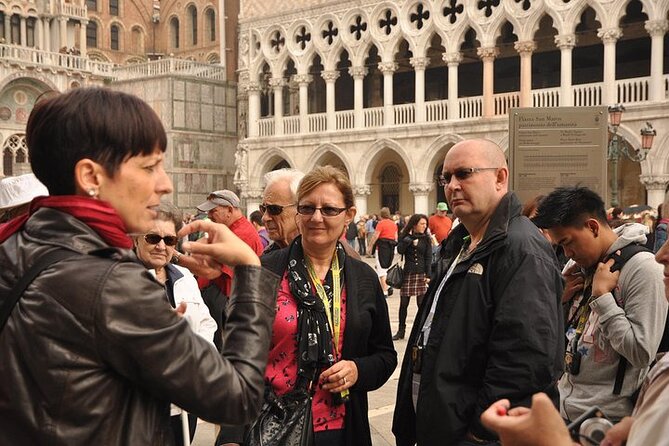
After St. Mark’s, you pivot away from the main stage and head to Campo Santa Maria Formosa for a short visit and orientation. This is one of those stops that helps you see Venice beyond the “everyone goes there” route.
Santa Maria Formosa is dedicated to the Holy Virgin, and the tour connects the site with Renaissance architecture and the history behind the church’s name. Even if your time here is brief, it adds an extra layer to your mental map: not all of Venice’s most important art and architecture is concentrated only at the lagoon’s most famous square.
A practical tip: if you’re photographing, this is a good moment to switch lenses or re-check your settings. The light around smaller squares can feel different than the bright stone glare near St. Mark’s.
Calle time and palazzos: Venice as lived-in space
After the formal stops, the walking becomes more about flow—moving through narrow calle (alleys), crossing small squares, and catching views of canals and palazzos. This part is where the city starts to feel like Venice, not like a checklist.
The tour route includes quieter streets and lesser-known palaces with Gothic and Renaissance architecture. You’ll learn what daily life looked like for Venetian nobility, which changes how you read the buildings. Instead of seeing windows and stonework as decoration, you start noticing what the architecture implies about status, wealth, and power.
You might also pass by or focus on spots mentioned as part of the walk, like Santa Maria Formosa church and areas connected to Calle Paradiso. The big value here is pacing: you get a break from the densest crowd zones while still staying close enough to stay efficient.
What to watch for on the walk
- Keep an eye on transitions from grand facades to quiet side streets. That contrast is where Venice’s story lives.
- Use the smaller squares as mini-rest stops. Even 2–5 minutes off the main pressure helps, especially on hot afternoons.
- If it’s raining, take the walk anyway. The operator states the tour runs rain or shine, and you’ll still get the architectural and story context without losing the whole day.
Price and value: what you’re really paying for
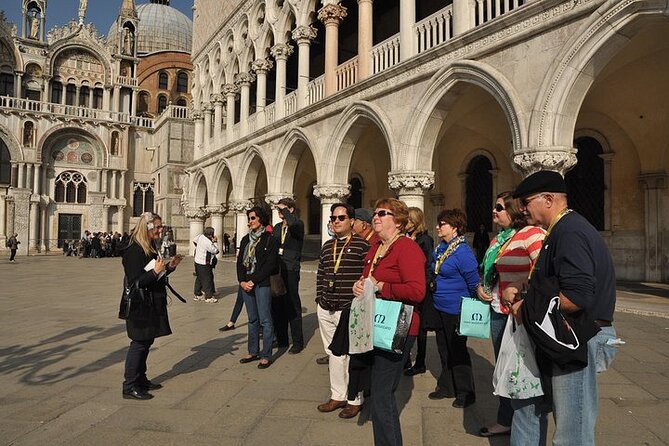
At $242.05 per person for about 2 hours, this isn’t a “cheap walk.” It’s priced like a practical shortcut.
Here’s where the value comes from:
- Skip-the-line St. Mark’s access (huge time and stress saver)
- A professional local English-speaking guide who ties Venice’s architecture to politics and daily life
- Tickets included for St. Mark’s Basilica
- Radio headsets when group size is larger, which improves the experience when you’re squeezed through crowded areas
You’re also paying for efficiency. If you’re time-pressed—especially as a first-time visitor—this tour gives you a guided framework in one compact block. Without it, you can still visit St. Mark’s, but you’ll lose time in queues and you might miss the connective tissue that turns buildings into story.
What about the private-upgrade angle? If you’re celebrating, traveling with family, or simply hate group pacing, paying for more personal attention can feel like good money rather than extra spending.
The main drawback of the price is the same trade-off as most short tours: you won’t have hours inside the basilica. If your goal is a long, slow study with deep artwork time, you may prefer a longer private experience. But if you want the “best of Venice” quickly and correctly, this tour’s cost-to-time ratio can make a lot of sense.
Pace, crowd reality, and how to get the most out of 2 hours
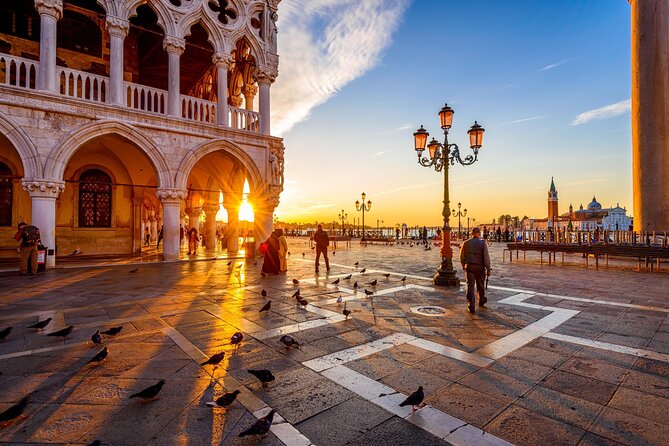
Two hours in Venice can feel long or short depending on weather and crowds. This tour is designed for real-world movement: quick orientation at the square, priority basilica entry, then a calmer loop into calle and side sights.
I’d come prepared for some walking on uneven stone and narrow passages. Wear shoes that handle slick surfaces, especially if rain hits. If you’re going in hotter months, plan for sun and heat; the routes include quieter streets, which can feel like relief from the busiest areas.
Audio tip: if you’re given headsets, use them. Reviews associated with this tour format mention guides speaking through a microphone into wireless earphones, and that kind of setup is exactly what helps you hear clearly while moving through crowds.
Guide styles can vary, but you may encounter guides with strong storytelling energy. Names that show up in past tour experiences include Donatella, Francesca, Christina, Lara, Lucia, Andrea, Alessandro, and others. The common thread is keeping the pace steady while making the sights easier to understand.
When plans change: closures, high water, and timed entry
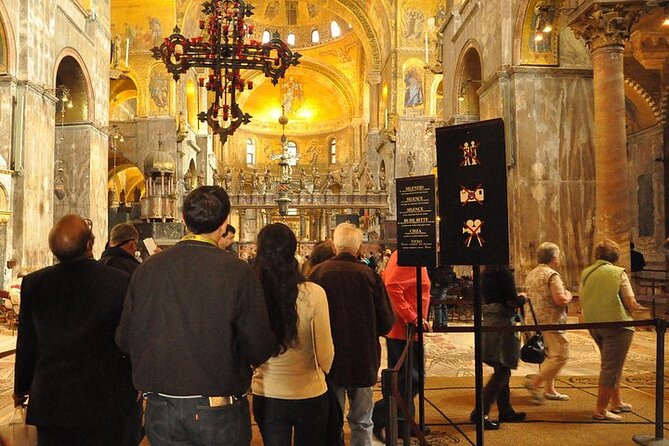
Venice can throw you curveballs. St. Mark’s can close temporarily due to religious functions, and in those cases the itinerary may adjust. High water can also shut the skip-the-line entrance, so you might need to be flexible.
Also remember: the basilica’s internal time is controlled. That’s not a “guide choice.” It’s part of how St. Mark’s manages visitor flow. If you’re expecting a leisurely interior visit, you’ll feel the difference.
Finally, there’s an access fee that can apply on certain dates for day visitors staying outside Venice. The tour info points you to the city’s website for which days and exemptions. If you’re doing a day trip, it’s worth checking ahead so you aren’t surprised by an extra charge.
Should you book this Venice tour with St. Mark’s Basilica?
Book it if:
- You’re on a first trip and want St. Mark’s done well without losing time in queues.
- You like short, guided walks where you get context while you move.
- You want a mix of Piazza San Marco plus quieter calle stops like Campo Santa Maria Formosa.
- You’re traveling in April to October and want the skip-the-line advantage when it matters most.
Skip it (or switch plans) if:
- You want hours inside the basilica for slow art viewing.
- You hate walking or you need very long rests between stops.
- You’re going during a time when you know access closures and high water are likely, and you only have one fixed window to make it happen.
FAQ
How long is the Private Best of Venice Walking Tour with St. Mark’s Basilica?
It runs about 2 hours, approximately.
Does the tour include skip-the-line tickets to St. Mark’s Basilica?
Yes. You get skip-the-line tickets for the basilica visit.
Is St. Mark’s Basilica visit always guaranteed?
It can be affected by closures due to religious functions. High water can also close the skip-the-line entrance. In those cases, closures are beyond the operator’s control.
What dress code do I need for St. Mark’s Basilica?
You must cover knees and shoulders. That means no shorts and no sleeveless tops for both men and women.
Do I need ID to enter the basilica?
Yes. ID cards and passports are mandatory to enter inside St. Mark’s Basilica.
Are radio headsets provided during the tour?
Radio headsets are included when the group has more than 8 participants.
Where does the tour start and end?
It starts at Giardini Reali in Piazza San Marco and ends in Piazza San Marco.
If you want a smart, time-saving way to see the core of Venice with St. Mark’s done efficiently, this is a strong pick. It’s short, focused, and built for getting you looking at the city instead of waiting on it.