REVIEW · VENICE
Byzantine Venice Walking Tour & Saint Mark’s Basilica
Book on Viator →Operated by Venice Events srl · Bookable on Viator
St Mark’s Basilica is a crowd magnet. This small-group tour brings you in with skip-the-line entry and keeps you on track with headsets, so you can actually hear the story while Venice does its usual busy thing.
I like how the route mixes the obvious icons with real Venice streets. You get a guided stroll from Piazza San Marco toward the calmer Castello area, then you return for a focused inside look at the mosaics and marble.
One heads-up: the experience can be a bit rushed inside the basilica, and add-on costs (like the Pala d’Oro) may pop up once you’re there. Audio can also be hit-or-miss in heavy crowds.
In This Review
- Key things to know before you go
- Why this tour works: St Mark’s without the chaos
- The walk outside: from Piazza San Marco to Castello’s calli
- San Zanipolo stop: Doges, the Colleoni horse, and a local landmark
- Marco Polo and the theater layer: Casa di Marco Polo
- Back to the square: how the basilica portion is really organized
- St. Mark’s Basilica essentials: what’s included, what costs extra
- Dress and bag rules that can trip you up
- The guide factor: when the storytelling really lands
- Headsets, crowding, and pace: the real-world logistics inside
- Price and value: is $85.22 a good deal?
- Who should book this tour (and who should pass)
- Quick plan tip: make the most of the rest of your Venice day
- Should you book the Byzantine Venice Walking Tour & St. Mark’s Basilica?
- FAQ
- How long is the Byzantin Venice walking tour with St. Mark’s Basilica?
- Where does the tour start and end?
- Is St. Mark’s Basilica entry included?
- Are headsets provided during the tour?
- What language is the tour commentary offered in?
- Is the Pala d’Oro included?
- Are the museum areas and Loggia dei Cavalli included?
- What should I wear inside the basilica?
- Can I bring a backpack into the basilica?
- Does the tour run in bad weather?
Key things to know before you go
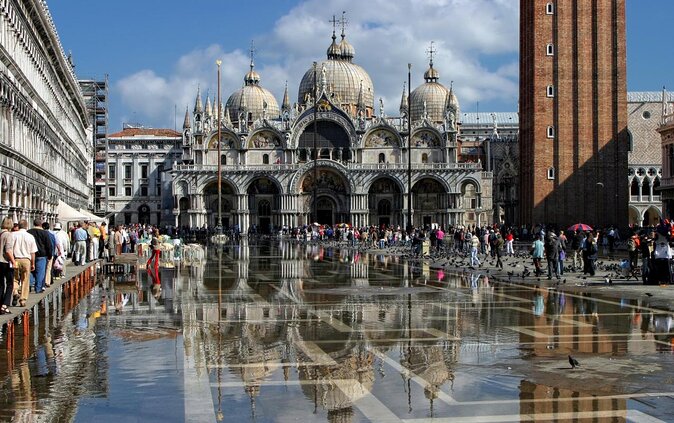
- Skip-the-line St. Mark’s Basilica entry with a guided plan that saves time in peak crowds
- Headsets included, which is a big deal in a noisy, echoing basilica
- Small group size (max 20) helps the guide keep control of the pace
- Castello walking loop takes you past neighborhoods you don’t normally see on quick photo tours
- Extra fees are common for specific sights inside the basilica, including the Pala d’Oro and upper exhibits
Why this tour works: St Mark’s without the chaos
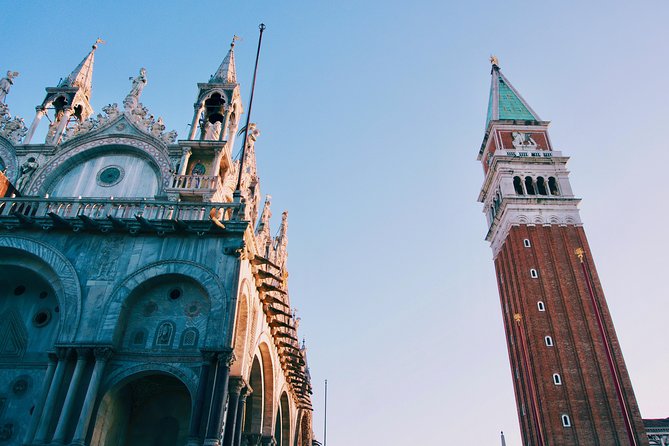
St Mark’s Square is spectacular, but it’s also a maze of lines, tour groups, and people stopping dead in the middle to take photos. The value here is that you get a structured route and a direct ticket into St. Mark’s Basilica. That alone matters. You’ll spend less time queueing and more time looking at what’s actually worth seeing: the mosaics, the gold work, and the details most people miss.
The walking portion also matters. Instead of only doing the “square, photo, back out” routine, this one includes time in Castello and nearby sights around the basilica. That gives you a better sense of how Venice’s power center connects to everyday streets and smaller squares.
And the headset setup is not a small thing. Inside the basilica, sound carries weirdly. With personal audio, you’re less dependent on shouting over the crowd—though you should still test your headset quickly when you’re outfitted.
You can also read our reviews of more walking tours in Venice


The walk outside: from Piazza San Marco to Castello’s calli
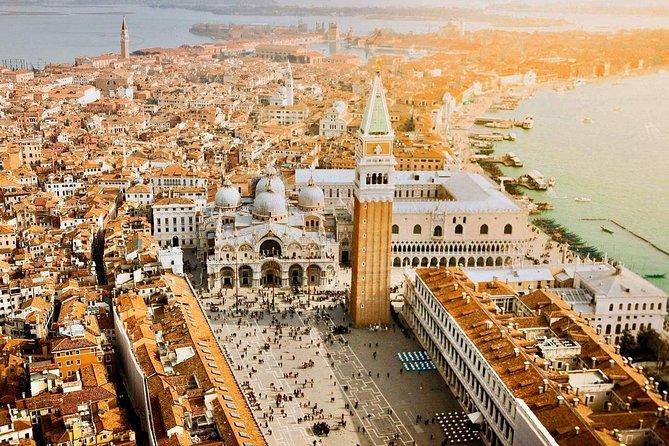
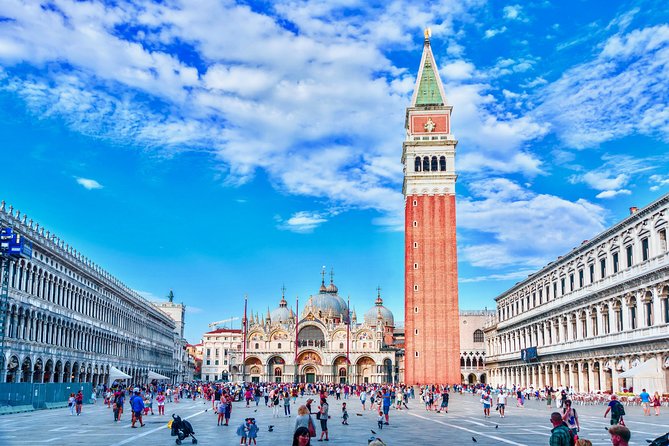
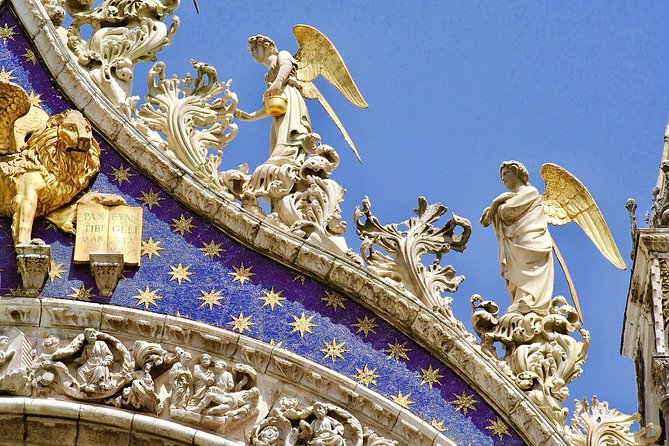
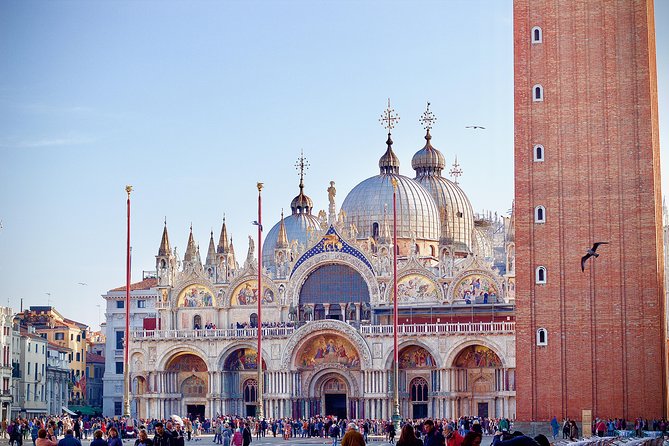
The tour starts with a square introduction at Piazza San Marco, with a guide pointing out the architectural lineup: St. Mark’s Basilica itself, the Doge’s Palace (the old seat of Venice’s government), and the Renaissance clock tower. You’ll also get context around the ornate bell area crowned by the winged lion statue, plus nearby highlights like the Sansovino library.
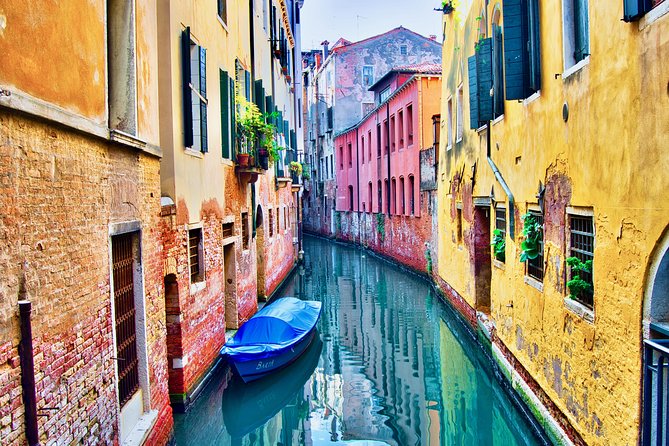
Then you move away from the main postcard zone into Castello, where the pace changes. Venice’s calli (narrow lanes), campi (open squares), bridges, and canals feel more lived-in here. You’ll spend time at Campo Santa Maria Formosa, one of the bigger squares in the area, anchored by its church dedicated to the Holy Virgin.
This is the part I think works best if it’s your first or second day in Venice. You’re learning the city’s layout while the guide explains what you’re looking at. That makes your future wandering easier—you won’t just be following signs, you’ll understand why certain areas connect.
Time note: the schedule allocates about 10 minutes for the first square intro and then roughly 30 minutes at Campo Santa Maria Formosa. It’s not a long neighborhood hike. It’s enough to give you bearings without turning your day into a marathon.
San Zanipolo stop: Doges, the Colleoni horse, and a local landmark
Next you head toward Campo Santi Giovanni e Paolo, better known for the church of Basilica dei Santi Giovanni e Paolo (San Zanipolo). This stop is about seeing another important piece of Venice’s skyline and power story—especially because this church is the resting place of several Doges.
You’ll also notice the equestrian monument of Bartolomeo Colleoni, one of those Venice “wait, what is that?” moments. It’s a reminder that the city wasn’t only art and romance—it was also armies, mercenaries, and political ambition.
A practical thing: the church stop is listed as “not included” for admission, so you should treat this as a look-at-the-exterior and surrounding-area kind of moment. If you were hoping for a full interior visit here, you’ll be disappointed.
Marco Polo and the theater layer: Casa di Marco Polo
The itinerary then points you toward the area associated with Casa di Marco Polo. The guide ties it to Marco Polo’s status as the famous Venetian merchant. You’ll also be shown the Malibran theatre nearby.
Even if you don’t go inside either place (admission isn’t included), the context helps. Venice loves to build whole careers of legends on top of street-level real estate. Knowing where the stories sit makes later visits click.
If you’re a Marco Polo fan, I’d treat this stop as your “orientation moment” rather than a full museum-style experience.
Back to the square: how the basilica portion is really organized
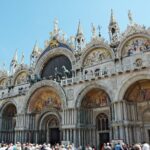
After walking, you return to Saint Mark’s Square for the official basilica time. This part is where the tour earns its keep. The guidance focuses on the Golden Basilica as the Doge’s private chapel and walks you through the visual language of golden mosaics, plus impressive marble inlay flooring.
What makes this section feel worth it is that the guide doesn’t just name things. You get direction for how to look: where to find the important mosaic scenes, how the space was used, and why the basilica is often described with an Italo-Byzantine style mix.
The stop runs about 50 minutes inside, with the broader tour totaling about 2 hours 30 minutes. That’s a tight window for one of Europe’s most crowded interiors. So if you’re hoping to stand quietly for an hour absorbing every detail, plan for some time later on your own.
St. Mark’s Basilica essentials: what’s included, what costs extra
Entry to St. Mark’s Basilica is included, and that’s the big win. You skip the long wait and go in as part of a group plan. Once inside, you should expect a guided highlight path that emphasizes mosaics, murals, and the craftsmanship that makes St. Mark’s feel almost engineered for light.
Two add-ons you should know about ahead of time:
- Pala d’Oro (the golden altar): costs €5.00 per person and is not included.
- Museum and Loggia dei Cavalli on the 1st floor: costs €14.00 per person and is not included.
There’s also a note that the tour highlights include access to the basilica’s upper level, including the terrace. In practice, the upper-level experience can involve separate areas or timed add-on exhibits, so I’d treat the terrace as part of the value story, and still budget extra if you want the full upper-level attractions.
Dress and bag rules that can trip you up
Inside the basilica, you need shoulders and knees covered. That rule is firm. If you show up in light summer clothing, you may need to improvise with what you carry.
Also, backpacks are not allowed inside. If you have a day bag or bigger pack, plan to stash it before you join the basilica entry line. A lack of clarity here has caused real stress for some visitors—so do yourself a favor and keep it simple.
The guide factor: when the storytelling really lands
The quality of the tour often comes down to the guide. The best moments tend to be when the guide connects what you’re seeing to the people who shaped Venice. In the tour description, you’ll hear tales tied to figures like Marco Polo and Casanova.
And from feedback you can’t ignore, guides with great presence make the difference. One guide mentioned by name is Iphigenia, singled out as a terrific, enthusiastic guide. When the guide has a good voice and a good rhythm, St. Mark’s turns from a checklist into an actual story.
The flip side is when audio or pacing gets off. Several visitors note issues like accents that are hard to catch or headset problems in crowded conditions. That doesn’t mean the tour is bad—it means you should be ready to advocate for yourself slightly. If your headset is quiet or unclear, ask the staff right away.
Headsets, crowding, and pace: the real-world logistics inside
This tour uses personal audio with headsets, and that’s a strong plus. In a building where everything echoes, hearing the guide matters more than people think.
That said, basilica crowds can make it harder to hear even with gear. Some people report equipment interference or that the audio is less than ideal. If you want the best chance of understanding, do these two things:
- Put your headset on immediately and confirm it’s working before the group moves deep into the basilica.
- Stay close enough to the guide that your position isn’t fighting the acoustics.
Pace is another factor. The tour aims to cover square context plus a guided basilica pass in limited time. In crowded environments, guides can end up moving fast. If you’re the type who likes slow looking, you may need to plan a return visit later (St. Mark’s rewards it).
Price and value: is $85.22 a good deal?
At $85.22 per person, you’re paying for three main things:
- Guided interpretation (so St. Mark’s feels understandable, not random)
- Basilica access (included)
- Time saved by skipping the long line
For many first-time visitors, that value equation is strong. St. Mark’s is one of those places where time wasted in queueing steals your energy—and you end up staring at faces instead of mosaics.
But there are “watch your wallet” moments. The tour is not fully all-inclusive. You should expect add-on fees inside the basilica for specific highlights like the Pala d’Oro (€5) and upper-level museum/loggia areas (€14). If you decide on those on the spot, your final spend climbs.
Still, the tour can be worth it because the included basilica entry plus the guided route reduces your friction. You’re not just paying for a ticket; you’re paying for someone to help you make sense of an intense place.
Who should book this tour (and who should pass)
This works well if you:
- Want a first-pass orientation to St. Mark’s Square plus a walk into Castello
- Appreciate guided looking more than independent wandering
- Hate long queues and prefer a planned entry
It’s less ideal if you:
- Want a deep, slow history lecture with unlimited time inside the basilica
- Are extremely sensitive to audio quality or accents
- Carry a larger backpack and don’t want to deal with restrictions
Also, pay attention to expectations around the square. The tour title includes a walking tour of Venice and St. Mark’s Basilica, but the practical focus leans heavily toward the basilica experience. You’ll see the square’s highlights and get orientation, but your biggest payoff is the time inside.
Quick plan tip: make the most of the rest of your Venice day
Once you finish back near Piazzetta dei Leoncini (end point), you’ll have a clearer mental map for wandering. I’d use that energy to:
- Revisit the square at a quieter hour for photos.
- Add one interior stop in an area you walked through (Castello) so your day feels connected, not chopped.
St. Mark’s is the anchor. Castello is the payoff for understanding where you are when you step away from it.
Should you book the Byzantine Venice Walking Tour & St. Mark’s Basilica?
If you’re visiting St. Mark’s for the first time and you want a guided, organized way to see both the square and the basilica without losing hours in line, I’d book it. The small group size, headset support, and included basilica entry are the core reasons.
Just go in with two smart expectations: you’ll likely spend most of your “big time” inside the basilica, and you should expect add-on fees for select interior treasures like the Pala d’Oro and upper-level exhibits. If you’re okay with that, this is a practical way to experience one of Venice’s most intense places.
FAQ
How long is the Byzantin Venice walking tour with St. Mark’s Basilica?
It runs about 2 hours 30 minutes.
Where does the tour start and end?
The meeting point is TU.RI.VE. Meeting Point on Calle larga de l’Ascension, and the tour ends outside the basilica area at Piazzetta dei Leoncini in St. Mark’s Square.
Is St. Mark’s Basilica entry included?
Yes, entry to St. Mark’s Basilica is included.
Are headsets provided during the tour?
Yes. You’ll receive a personal audio system and headset for the guide’s commentary.
What language is the tour commentary offered in?
It’s offered in English (and also listed as available in French, Spanish, or German).
Is the Pala d’Oro included?
No. The Pala d’Oro costs €5.00 per person and is not included.
Are the museum areas and Loggia dei Cavalli included?
No. The museum and Loggia dei Cavalli on the 1st floor cost €14.00 per person.
What should I wear inside the basilica?
You need shoulders and knees covered.
Can I bring a backpack into the basilica?
No. Backpacks are not allowed inside the basilica.
Does the tour run in bad weather?
It operates rain or shine, but it may be affected by high tides.