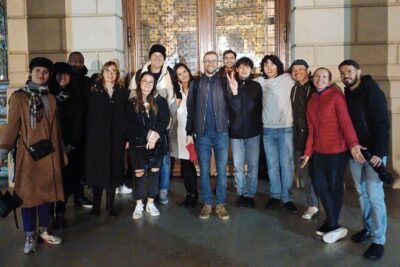
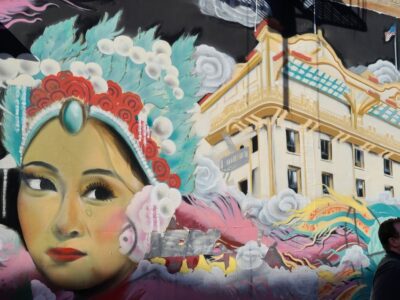
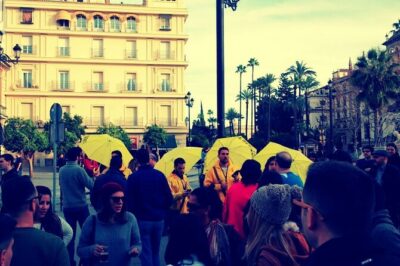
One walk, and Tbilisi starts making sense fast. I love how the route mixes big-name landmarks with smaller, easy-to-miss corners of Old Town, so you’re not just collecting photos. I also like the steady rhythm: short stop times keep things moving, and the guide adds context as you go. One possible drawback: you’ll be on your feet for up to about 3.5 hours, and some sections feel steep or uneven.
For the price, this tour is hard to beat. It’s an English-speaking, small-group walking tour with free admission at many key stops, plus a mobile ticket and local guide guidance throughout. The main consideration is the dress code at places of worship, since you’ll need knees and shoulders covered to enter.
In This Review
- Key highlights you’ll feel right away
- Freedom Square to Old Town: a route that teaches the city
- Price and logistics: what you get for $9 (and what you don’t)
- Pace, footwear, and the dress code reality check
- Stop 1: Svobody (Freedom) Square, and why names matter in Tbilisi
- Stop 2: Tbilisi Wall Ruins, where the old city still whispers
- Stop 3: Anchiskhati Basilica, the “oldest-surviving” anchor
- Stop 4: Bridge of Peace, a modern line over the Kura River
- Stop 5: Shardeni Street, pedestrian charm with real local energy
- Stop 6: Old Town Tbilisi, built for wandering (and eating)
- Stop 7: Rezo Gabriadze Marionette Theater, culture that feels handmade
- Stop 8: Sergey Paradzhanov Monument, film legend in public space
- Stop 9: Sayat-Nova Monument, poetry and faith overlapping
- Stop 10: Aerial Tramway area (not included), instant skyline payoff
- Stop 11: Sioni Cathedral, another major Georgian Orthodox landmark
- Stop 12: Kartlis Deda, the 1958 statue with attitude
- Stop 13: Jumah Mosque, a surprise for first-timers
- Stop 14: Rike Park, a modern reset by the water
- Stop 15: Great Synagogue of Tbilisi, history in eclectic architecture
- Stop 16: Sculpture of the Toaster, the city’s playful side
- Stop 17: Sofiko Chiaureli monument, Soviet-era culture made visible
- Stop 18: Meidan Bazaar, for souvenirs and a quick browse
- Stop 19: Monument Fountain Falcon and Pheasant, a legend in metal and stone
- Stop 20: Dzveli Tbilisi Sulphur Waterfall, city steam you can see
- Guides you’re likely to get: what stands out from the experience
- Should you book this Tbilisi walking tour?
- FAQ
- How long is the walking tour?
- How much does the tour cost?
- What language is the tour offered in?
- Is admission included for the stops?
- Are there any extra ticket costs besides the tour price?
- Where does the tour start and end?
- What should I wear for churches and other religious sites?
- What’s the group size?
- What if the weather is poor?
Key highlights you’ll feel right away
- Old Town orientation fast: Freedom Square through the historic core in one logical loop
- Iconic sights on a walkable plan: Freedom Square, Bridge of Peace, Narikala views via tram area
- Photo-friendly moments built in: city angles, courtyards, and skyline lookouts
- Small group size: capped at 12–15 people depending on the operating cap
- A guide who tells the story: names like Jonah, Koba, Oksana, Tamara, and Nini show up often in standout feedback
- Real variety of faiths and eras: churches, a mosque, a synagogue, and a mix of monuments
Freedom Square to Old Town: a route that teaches the city
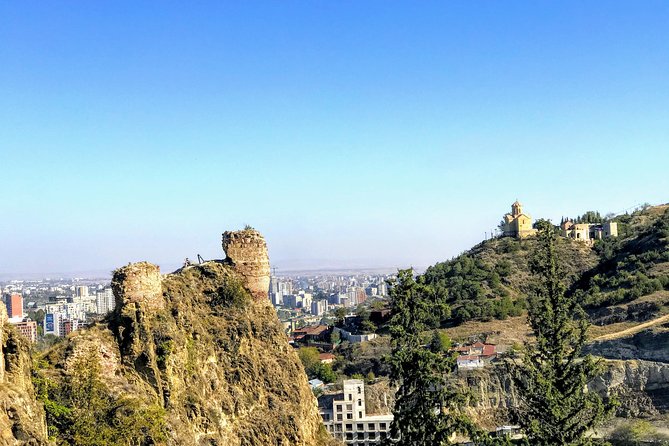
This is the kind of Tbilisi intro walk that helps you stop guessing. Freedom Square anchors the start, and from there the route turns into a layered walk through empires, faiths, and everyday life. Even if you’ve only seen Tbilisi from postcards, the streets here explain why the city looks the way it does.
The tour runs about 2.5 to 3.5 hours, with short breaks at each highlight. That matters because Tbilisi is compact, but the details are not. You’ll see a lot without feeling like you’re being rushed like a human conveyor belt.
You can also read our reviews of more walking tours in Tbilisi

Price and logistics: what you get for $9 (and what you don’t)
At $9 per person, the value is mostly about structure. You’re paying for an English-speaking local guide and a route that hits the right “why does this matter?” points, rather than spending half the day wondering what to look at next.
Many listed stops are free to enter. You’re not buying a stack of museum tickets just to get the skyline and church-photo combo. The one big thing to plan for is that the aerial tramway (to Narikala) is not included, so if you want that ride, budget extra and accept it as part of the itinerary rather than the baseline.
Also, this tour uses a mobile ticket and does not include hotel pickup. You meet at Freedom Square and finish back at the same meeting point. For most visitors, that’s simple and low-stress.
Pace, footwear, and the dress code reality check
This is a walking tour with a moderate fitness level. You don’t need to be an athlete, but you should expect hills, uneven paving, and lots of “let’s stop here for two minutes” moments.
The dress code is real. For places of worship and selected museums, you’ll need knees and shoulders covered. That means no shorts and no sleeveless tops for men or women. If you show up dressed for the beach, plan on missed entry and a cranky start to your photo session.
Stop 1: Svobody (Freedom) Square, and why names matter in Tbilisi
Freedom Square is not just a pretty plaza. It’s a quick history lesson in stone and signage. The square has carried multiple names over time—Imperial Russia eras, Soviet-era labels, and the Freedom Square identity you’ll recognize today.
This is a strong opener because it gives you a mental map right away. From here, you can “read” the city as you walk: power, politics, and public space have always shaped Tbilisi.
Stop 2: Tbilisi Wall Ruins, where the old city still whispers
Next comes the Tbilisi Wall Ruins—a small stop that’s big on atmosphere. You’re walking through parts of the city’s older fabric, and it helps you understand why Old Town feels layered rather than polished.
This is also a good pause for photos, especially if the light is kind. Don’t rush the view. The magic here is noticing what’s left behind, not only what’s been rebuilt.




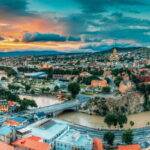
Stop 3: Anchiskhati Basilica, the “oldest-surviving” anchor
Anchiskhati Basilica of St Mary dates from the sixth century and is the oldest surviving church in Tbilisi. That’s the kind of fact that can sound abstract—until you’re standing in front of it.
This stop is also a practical one: it reminds you why the dress code matters. You’ll want covered shoulders and knees so you can enter smoothly, spend your time inside, and still enjoy the outside architecture afterward.
Stop 4: Bridge of Peace, a modern line over the Kura River
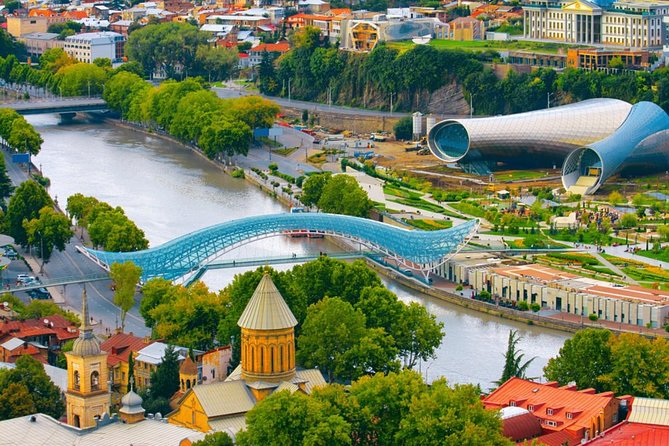
The Bridge of Peace opened in 2010 and crosses the Mtkvari River (the Kura). It’s one of Tbilisi’s newer attractions, and the contrast with Old Town is part of the point.
I like this stop because it gives you a breath of “present-day Tbilisi” before the walk leans deeper into older streets again. It’s also a great viewpoint for photos when the river catches the light.
Stop 5: Shardeni Street, pedestrian charm with real local energy
Shardeni Street is famous for a reason: it’s pedestrian, attractive, and easy to wander. This is one of the places where you’ll feel how the city actually lives—street-level scenes, small stops, and the kind of atmosphere you can’t get just by looking from a distance.
Plan to slow down here. It’s not just a photo corridor; it’s a street where you can decide what you’ll want later for dinner, coffee, or an after-walk stroll.
Stop 6: Old Town Tbilisi, built for wandering (and eating)
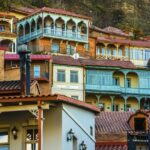
Old Town is where Tbilisi shifts from landmarks to daily life. The walk includes theater and older buildings, but the real draw is the mix of narrow streets, places to pause, and lots of places to grab food.
This is also the point where I’d use the guide’s suggestions. If your guide names specific spots—especially for classic Georgian dishes—it’s worth following their instinct. Old Town can be overwhelming when you’re hungry, and a local helps you avoid the “same menu everywhere” trap.
Stop 7: Rezo Gabriadze Marionette Theater, culture that feels handmade
The Rezo Gabriadze Marionette Theater opened in 1981 and is beloved in Tbilisi’s cultural scene. It’s the kind of stop that feels different from the usual church-and-square route.
Even if you don’t go inside, the theatre adds texture. It signals that the city’s creative side isn’t separate from daily life—it’s right here on the route.
Stop 8: Sergey Paradzhanov Monument, film legend in public space
Sergey (Parajanov) is remembered through cinema classics like Shadows of Forgotten Ancestors and Sayat-Nova. His monument adds an art-and-history thread to the walk, which I appreciate. Too many city tours focus only on architecture; this one also gives you a sense of Tbilisi’s creative identity.
If you like film, take an extra minute here. The names behind the stone help you connect Georgia’s cultural reputation to real people you can point at on a map.
Stop 9: Sayat-Nova Monument, poetry and faith overlapping
The Sayat-Nova monument opened in 2009 and sits near the northern wall of St Kevork Armenian church. It connects to the story of Sayat-Nova (Harutyun Sayadian), who is said to have been killed near the church and is buried there.
This stop lands best if you don’t rush through it. The meaning is in the location as much as the sculpted figure. Also, it’s a reminder that this city’s identity is shared across communities.
Stop 10: Aerial Tramway area (not included), instant skyline payoff
The aerial tramway opened in 2012 and connects Rike Park with Narikala. The ride is not included, so treat it as an optional add-on you can decide in real time.
What makes it worth considering is obvious: Narikala sits above the city. If you want that high view without spending your afternoon climbing stairs, this is the easiest way along the walk’s route.
Stop 11: Sioni Cathedral, another major Georgian Orthodox landmark
Sioni Cathedral of the Dormition is a Georgian Orthodox cathedral in central Tbilisi. It’s named after Mount Zion in Jerusalem, following a medieval naming tradition.
Again, dress code matters. This is a place where you’ll want to enter respectfully, then take your time with details rather than “blink-and-move” tourism. If you’re short on time later, still don’t skip the outside angles here.
Stop 12: Kartlis Deda, the 1958 statue with attitude
Kartlis Deda is a 20-meter aluminum statue erected in 1958 for Tbilisi’s 1500th anniversary. The figure is based on Georgian national dress, designed by sculptor Elguja Amashukeli.
It’s the kind of landmark you might pass quickly on your own. On a guided walk, it becomes more interesting because you connect it to the city’s big celebration milestone and the statue’s visibility on Sololaki hill.
Stop 13: Jumah Mosque, a surprise for first-timers
The Jumah Mosque sits in the heart of Old Town, and the architecture is such that you may not realize it’s a mosque at first glance. It’s also noted for a rare arrangement: Shias and Sunnis are said to pray together, and the mosque is open to visitors of all religions or beliefs.
This is one of the better “learn something without it feeling like a lecture” stops. It also reinforces the message: Tbilisi isn’t one-style, one-faith, one-era. It’s layered, and that’s why it feels personal.
Stop 14: Rike Park, a modern reset by the water
Rike Park is a public recreation area popular with families and tourists. It’s a useful breather zone after older streets and stone monuments.
If you’re planning photos or you need a quick rest, this is where you do it without guilt. The scenery here is also ideal for catching the river and thinking about how the city’s neighborhoods connect.
Stop 15: Great Synagogue of Tbilisi, history in eclectic architecture
The Great Synagogue (also called the Georgian Synagogue) was built from 1895 to 1903 in an eclectic style. It was built by Georgian Jews from Akhaltsikhe who migrated to Tbilisi in the late 19th century.
This stop adds a lot because it broadens the “center of the story.” Tbilisi is famous for its Old Town scenes, but its identity also includes communities that shaped the city’s architecture and public life.
Stop 16: Sculpture of the Toaster, the city’s playful side
Yes, it’s exactly as weird as it sounds: a sculpture of a man holding a horn, modeled on an ancient Colchian statuette and nicknamed tamada. This is a palate cleanser stop, and I mean that literally.
It helps the walk feel human instead of only solemn. After cathedrals and memorials, a quirky sculpture gives your brain a break.
Stop 17: Sofiko Chiaureli monument, Soviet-era culture made visible
Sofiko Chiaureli was a Soviet Georgian actress, and this monument keeps her in the public conversation. It’s another example of how this route doesn’t treat history as only medieval or only religious.
If you like theatre or cinema, it’s a nice extra thread. If you don’t, it still shows how Tbilisi honors artists across time.
Stop 18: Meidan Bazaar, for souvenirs and a quick browse
Meidan Bazaar is included for anyone who wants a shorter stop to browse. If you’re not into searching all day for small gifts, this helps you keep momentum and still walk away with something.
This is also a good place to check your energy level. If you’re tired, you can keep it short. If you’re curious, you’ve got room to wander.
Stop 19: Monument Fountain Falcon and Pheasant, a legend in metal and stone
This monument symbolizes a legend about Tbilisi’s establishment in the 5th century by King Vakhtang Gorgasal. It’s a story you’ll likely hear again in other forms during your trip, and seeing it here makes the legend feel less abstract.
It also gives you another photo angle before the final stop. Don’t underestimate how often the “last third” of a walking tour becomes the best photos.
Stop 20: Dzveli Tbilisi Sulphur Waterfall, city steam you can see
The tour ends with Dzveli Tbilisi Sulphur Waterfall, described as a real waterfall in the city center. If you’ve heard about Tbilisi’s sulfur baths, this stop helps make the connection physical.
This is where Tbilisi becomes sensory. Even if you don’t linger long, you’ll remember the vibe: water, steam, and that unmistakable city character.
Guides you’re likely to get: what stands out from the experience
What I like about this tour model is that the guide can change the feel of the day, and the feedback names a consistent type of performance: storytelling that stays clear, plus patience with questions and slow walkers.
You’ll see names like:
- Jonah, praised for turning Old Town into a story you can actually picture, plus photo-friendly moments
- Koba, highlighted for making the walk engaging and for pointing people toward places to eat, including classic khinkali suggestions
- Oksana and Tamara, described as friendly and relaxed while still packing in history and details
- Nini and Gio, praised for spotting small details you’d miss on your own and giving practical recommendations
- Liza and Aleksi, noted for humor, warmth, and not overwhelming people with vague facts
If you want the city to feel personal instead of like a checklist, that guide skill matters as much as the route.
Should you book this Tbilisi walking tour?
Yes, if you want an easy first pass through Old Town with major sights, religion landmarks, and quirky monuments, all in one plan. It’s also a great value for $9, especially because many key stops are free to enter and the guide gives you context so the photos actually mean something.
Book it early in your trip so the city map stays in your head. And pack for the practical reality: wear shoes for walking, and plan your outfit around the dress code if you want to enter churches, mosques, and other sacred spaces.
FAQ
How long is the walking tour?
It runs about 2 hours 30 minutes to 3 hours 30 minutes.
How much does the tour cost?
The price is $9.00 per person.
What language is the tour offered in?
It’s offered in English.
Is admission included for the stops?
Many stops list free admission tickets, but the aerial tramway is not included.
Are there any extra ticket costs besides the tour price?
The aerial tramway in Tbilisi is not included in the tour cost.
Where does the tour start and end?
It starts at Freedom Square (listed at Burberry on Shalva Dadiani Street) and ends back at the same meeting point.
What should I wear for churches and other religious sites?
You’ll need knees and shoulders covered. No shorts or sleeveless tops.
What’s the group size?
It’s listed as a small group, with a maximum of 12 people, and an overall maximum of 15 travelers.
What if the weather is poor?
The experience requires good weather. If it’s canceled due to poor weather, you’ll be offered a different date or a full refund.