REVIEW · TBILISI
Old Tbilisi Tour: Private Walking Tour With Wine Tasting
Book on Viator →Operated by We Are Georgia Tours · Bookable on Viator
Old Tbilisi is small enough to feel personal, then huge when you look up. I like that this private, 2–3 hour walk mixes the classic postcard stops with quick history you can actually remember, plus a Georgian wine tasting at the end. One thing to consider: you’ll be on your feet for a while, including the climb/walk up to Narikala, so comfy shoes help.
What makes this tour feel practical is the flow: Narikala Fortress for the big city views, Old Town on foot for the atmosphere, and then a glass-bridge moment that snaps you back into modern Tbilisi. I also love the way the guide keeps the pace flexible, which matters when you want photos, slower storytelling, or a short adjustment if the cable car isn’t running. If you’re not into alcohol, check in about the tasting format ahead of time so it matches what you want.
In This Review
- Key highlights to know before you go
- Old Tbilisi in two to three hours: pace, payoff, and price value
- Starting in Metekhi and walking into Tbilisi’s story
- Narikala Fortress by cable car: the viewpoint that splits the city in two
- Kartlis Deda on Sololaki hill: the wine-bowl greeting and enemy sword
- Abanotubani sulphur baths: legend, steam, and the warm math of 47°C water
- Leghvtakhevi Gorge waterfall: a cool inner-city break from Old Town heat
- Jan Shardeni Street (Chardin Street): color, coffee-scented night energy, and late hours
- Sioni Cathedral: a 17th-century church anchored by a much older relic
- Bridge of Peace: glass, lamps, and a modern Tbilisi reset
- Metekhi Cathedral finish: St. Shushanik legend and Mtkvari river views
- Wine tasting that actually works at this point in the walk
- Cable car timing tip: when to chase the best light
- What to ask your guide before you start
- Should you book this Old Tbilisi tour with wine tasting?
- FAQ
- How long is the Old Tbilisi private walking tour?
- How much does the tour cost?
- Is the tour private?
- What’s included in the price?
- Do I need to buy the cable car ticket separately?
- Where is the tour meeting point?
- Is there hotel pickup or drop-off?
- What language is the tour offered in?
- Is the walking intense?
- Is there a cancellation policy?
Key highlights to know before you go
- Narikala Fortress cable car included, saving time and effort for the best viewpoint
- Georgian wine tasting included, a relaxed finish that fits Georgian food-and-wine culture
- Private tour means real pacing control, from a quick overview to slower, question-filled wandering
- Old Town route hits both sides of Tbilisi: ancient sites, Soviet-era art, and modern bridges
- Iconic viewpoints and details, like the Bridge of Peace’s 10,000 lamps and views from fortress walls
- Guides are praised for balancing facts and comfort, with people naming guides like Luka, Lela, Mirian, Mariam, Khatia, and Marian
Old Tbilisi in two to three hours: pace, payoff, and price value

This tour is built for a sweet spot: you get a real sense of orientation without turning your day into a long hike marathon. At around 2 to 3 hours, it works well as either your first taste of Tbilisi or a mid-trip reset after you’ve already seen a few sights on your own.
The price is $39 per person, and the value isn’t only the walking. You’re also getting a wine tasting and a cable car ticket included. That matters because those two things often cost extra when you try to stitch together an itinerary yourself—especially the cable car, which is part of the experience, not just transport.
This is a private tour, so you’re not stuck in a slow moving line. That also makes it easier to ask for adjustments on the spot—more photos at a viewpoint, less time at a church door photo-op, or extra explanation if a topic grabs you.
Who it suits best: people who want an efficient Old Town route, couples or small groups who want quiet pacing, and anyone who likes their sightseeing paired with a cultural stop (wine). If you’re looking for a deep, academic lecture for hours, you might want more time than this tour offers.
You can also read our reviews of more walking tours in Tbilisi


Starting in Metekhi and walking into Tbilisi’s story
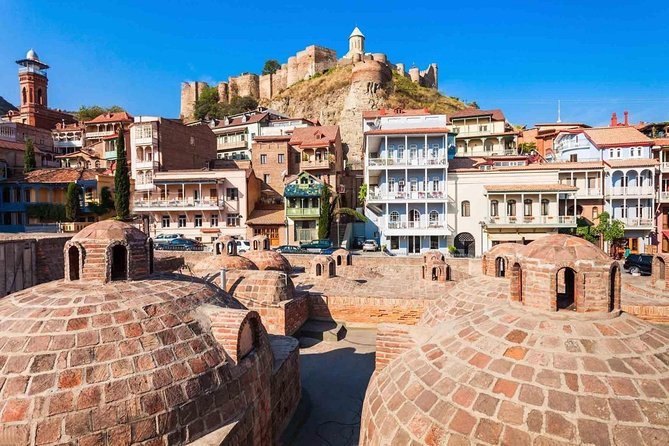
The tour meets at the Metekhi church of the Nativity of the Mother of God (MRR6+3FM, Metekhi St). From there, the plan centers on Old Town landmarks that sit close enough for a satisfying walk, but not so close that you miss the geography.
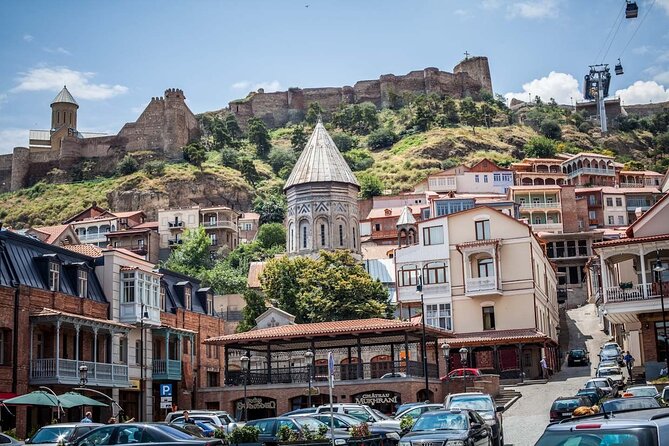
I like how the route takes you through different Tbilisi moods in a compact loop. You’ll start with high-ground views (Narikala), descend into the thermal-bath area (Abanotubani), then float through inner-city nature (Leghvtakhevi waterfall) before shifting to church landmarks and the Peace Bridge.
One practical consideration: there’s a moderate physical fitness requirement. This isn’t an all-flat stroll. Expect walking on uneven Old Town streets and some steps around key sights, especially around Narikala Fortress.
Also, there’s no hotel pickup. You’re responsible for getting to the meeting point, and the good news is that Metekhi is a straightforward starting point for exploring the river and Old Town afterward.
Narikala Fortress by cable car: the viewpoint that splits the city in two
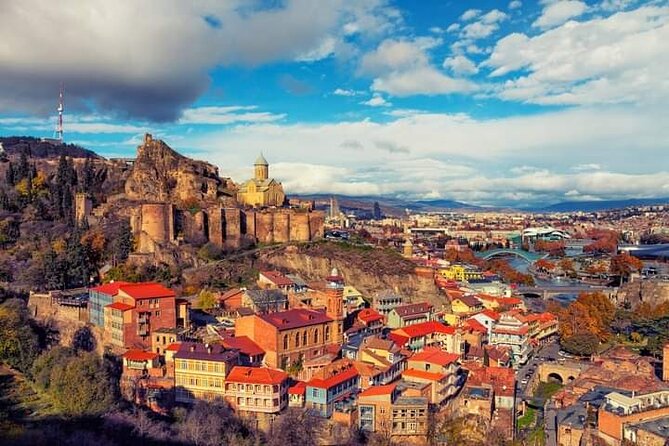
Narikala Fortress is where the tour changes gears from street-level to “wow, look at that” territory. You take the cable car up to the fortress area, and then you can walk around the castle grounds and viewpoints.
Here’s what makes Narikala more than a viewpoint: the site’s layers are stacked. The structure dates back to the 4th century as a Sasanian citadel called Shuris-tsikhe, then it was expanded by the Umayyads in the 7th century. Later, king David the Builder (1089–1125) added more, and the Mongols renamed it Narin Qala, meaning Little Fortress. Most of what you’ll see today dates from the 16th and 17th centuries, with earthquake damage affecting parts in 1827.
From the fortress walls, the view is one of those rare contrasts you can feel with your eyes. One side shows a busy, hectic city, while the other side opens toward a quiet, peaceful forest area known as the Botanical Garden.
Time-wise, the fortress stop runs about 20 minutes with the ticket included, so you’re not stuck waiting around. If you’re into photos, this is the stop where you slow down. If you prefer quick facts and moving, the guide can keep it efficient.
A small thing to plan around: cable car schedules can vary, and you may hear about closures. In at least one experience, the guide adjusted the plan when the cable car had issues, so you’ll want to stay flexible rather than treat the cable car as your only possible route to the best view.
Kartlis Deda on Sololaki hill: the wine-bowl greeting and enemy sword

After Narikala, the tour moves to Kartlis Deda, the towering statue on Sololaki hill. This is a quick stop (about 10 minutes), but it’s a strong symbol that helps you read Tbilisi’s public art.
The statue was erected in 1958 for the city’s 1500th anniversary. The sculptor was Elguja Amashukeli, and the figure is a 20-metre aluminium woman in Georgian national dress.
The meaning is simple and direct: in her left hand she holds a bowl of wine to greet visitors as friends, and in her right hand she holds a sword for those who come as enemies. If you’re doing this tour early in your trip, this stop acts like a translation key—everything you see afterward feels more connected to Georgian identity.
It’s also a good chance to catch your breath. Since the statue is a landmark you can see from multiple angles, you can decide how much time you want for photos and how quickly you want to move on.
Abanotubani sulphur baths: legend, steam, and the warm math of 47°C water
Next comes Abanotubani, the sulphur-bath area that sits right in Old Town. The stop is about 20 minutes, and it’s free to enter.
This is one of those places where history is still practical. The legend ties it to the founding of Tbilisi in the 5th century AD: sulphur water naturally flows from the soil here, supplying an enormous amount of water daily—about 3,000,000 liters—with an average temperature of 47°C.
Even if you don’t soak, you’ll feel why this matters. The area has that slightly steamy, timeless quality you can’t fake. If you’re the kind of person who likes to understand what people actually used in daily life, this stop delivers.
Possible drawback: since you’re walking through a working neighborhood area, it’s not a museum setting. You’ll get the atmosphere, but it’s not guaranteed to be quiet and staged.
You can also read our reviews of more food & drink experiences in Tbilisi

Leghvtakhevi Gorge waterfall: a cool inner-city break from Old Town heat
Right in the middle of the capital, the tour stops at Leghvtakhevi Waterfall in the gorge area. It’s small, but it’s perfectly formed—think inner-city nature with good pathways that cross a lock bridge.
This stop is only about 10 minutes, but it’s the kind of pause that makes the rest of the walk feel easier. In summer, it’s also a practical escape from heat, because you’re near cool, damp air.
If you’re planning your day, I’d treat this as a breathing point. Take your photos quickly, then move on. The tour keeps energy rather than letting any one spot swallow the schedule.
Jan Shardeni Street (Chardin Street): color, coffee-scented night energy, and late hours
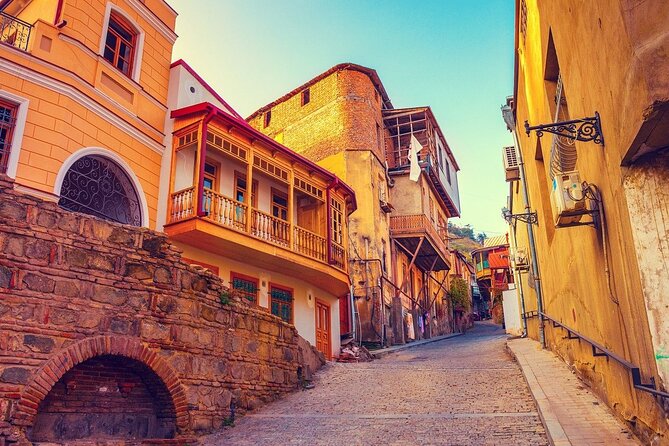
After the waterfall, the tour heads to Jan Shardeni Street, also known as Chardin Street. This is about 10 minutes and free to enter.
This street is famous for its nightlife that can run until 5 a.m. So even on daytime or earlier evening, it helps to know the context: you’re walking through a spot that clearly shifts gears after dark.
Jean Chardin, the French traveler who visited Georgia in the 18th century, is the naming story. If you like Georgian culture through small details, that connection is a nice touch—it ties a present-day street to a long European curiosity about Georgia.
Practical tip: if you want dinner or a drink later, this is a great place to remember. The tour gives you the orientation now, so you can come back with less hunting later.
Sioni Cathedral: a 17th-century church anchored by a much older relic
Sioni Cathedral Church is one of the holiest places in Georgia, and the tour stops here for about 10 minutes with admission included.
The first church on this site was built in the 5th century by order of Vakhtang Gorgasali. The present temple you’ll see is a 17th-century building, and it keeps the fourth century St. Nino’s original cross.
This blend of eras is what makes Sioni hit. You’re not just looking at one time period—you’re standing in a place that carries a long thread through Georgia’s religious story.
Possible drawback: like most churches, it’s a sacred site, so you may need to be mindful about how long you linger and how loudly you move through the space.
Bridge of Peace: glass, lamps, and a modern Tbilisi reset
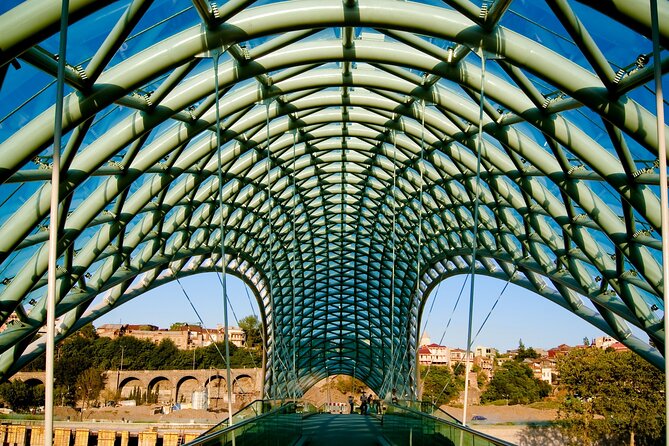
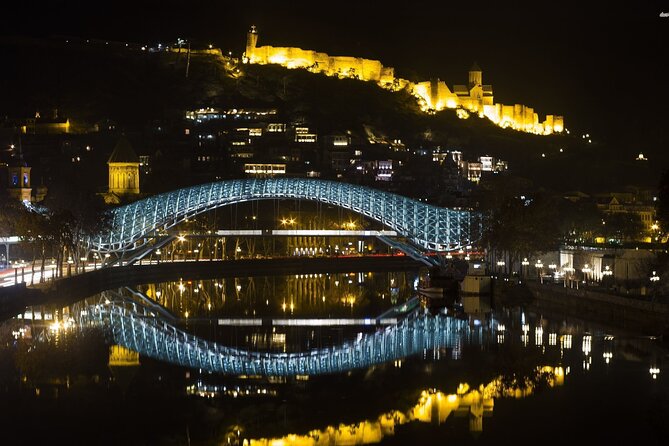
The Peace Bridge is one of those sights you almost can’t ignore once it’s in front of you. It’s a beautiful walking glass bridge, officially opened in 2010, and it’s 156 meters long.
Here’s the detail I’d file away: it has 10,000 lamps. That’s not just trivia. When you stand there, the bridge feels designed for a light show, which is why it’s so photogenic.
The stop is about 20 minutes and free. I like using this part of the tour as a reset: you’ve gone from fortress history to bathhouse legend to waterfall cooling. Now you’re crossing into the modern city’s showpiece.
Metekhi Cathedral finish: St. Shushanik legend and Mtkvari river views
You’ll make your way through Rike Park to St. Mary’s Cathedral of Metekhi on the left bank of the river Mtkvari. The tour all ends back at the meeting point.
This stop runs about 20 minutes and is free. A key detail is the legend that the remains of St. Shushanik can be found here. You’ll also hear interesting info tied to the yard and a statue of Vakhtang Gorgasali.
This is a good finale because it ties geography back together: you’re finishing near the river and the Metekhi area, with the whole route feeling like a guided loop through the city’s identity.
Wine tasting that actually works at this point in the walk
The tour includes wine tasting as part of the experience, which is exactly how I like culture stops to be done: not stuck in the middle of a museum shuffle, but placed when you’re ready to sit, reflect, and chat.
Georgian wine culture isn’t treated like a single glass and done. The symbol of Kartlis Deda holding a bowl of wine makes the tasting feel like a continuation, not a random add-on. And several guides are praised for choosing a tasting spot that feels local and comfortable—one tasting experience even ended with people continuing the wine on a rooftop patio afterward.
In at least one case, the wine tasting also included chacha. If that matters to you, ask your guide what’s offered in the tasting so you know what to expect.
Also, if you’re the type who wants to eat well after the tour: guides often point you toward solid Georgian food options with fair prices. That’s a practical benefit because a good tasting should come with a food plan.
Cable car timing tip: when to chase the best light
Cable car timing can change how the Narikala views feel. One guide advice I’d take seriously: in summer, the best time for the cable car is around 7:30 p.m., when the city light turns softer and the viewpoints feel more magical.
Even if you’re not traveling in peak summer, the general idea holds: late afternoon into early evening often gives better color and fewer harsh shadows. If you want the city to look like a postcard, ask your guide what time works best for your day’s schedule.
What to ask your guide before you start
This is a private tour, so you can steer it. I’d ask these right away:
- Where do you recommend I spend extra time for photos at Narikala?
- Is there a specific style of Georgian wine you think I should start with?
- Can you tailor the pace if I want more walking or more stops?
- If the cable car has issues, what’s the backup plan to still get the viewpoint?
Guides on this route are repeatedly praised for balancing history and readability—enough detail to understand what you’re looking at, without turning the tour into a long lecture. If you care about context, ask for the “why this matters” version, not just dates.
Should you book this Old Tbilisi tour with wine tasting?
Book it if you want a high-value Old Town introduction in a short window: Narikala Fortress with cable car views, signature church landmarks, and iconic modern Tbilisi moments like the Peace Bridge—plus wine tasting included. It’s also a strong pick for first-time visitors who want an efficient route with a real local guide guiding what matters.
I wouldn’t book it if you dislike walking for 2–3 hours, or if alcohol tasting is a dealbreaker for you (you’ll want to confirm options first). And keep weather in mind: the experience requires good weather, so if conditions are poor, you may need a different date.
If your goal is to get oriented fast, learn the meaning behind the symbols, and end with Georgian wine instead of rushing to another activity, this is a very sensible plan for Tbilisi.
FAQ
How long is the Old Tbilisi private walking tour?
It runs about 2 to 3 hours.
How much does the tour cost?
The price is $39 per person.
Is the tour private?
Yes. It’s private, so only your group participates.
What’s included in the price?
The tour includes guide service, wine tasting, and a cable car ticket.
Do I need to buy the cable car ticket separately?
No. The cable car ticket is included.
Where is the tour meeting point?
It starts at Metekhi church of the Nativity of the Mother of God (MRR6+3FM, Metekhi St, Tbilisi, Georgia).
Is there hotel pickup or drop-off?
No. Hotel pickup/drop-off is not included.
What language is the tour offered in?
The tour is offered in English.
Is the walking intense?
It’s listed as requiring moderate physical fitness, so you should be comfortable with walking and moving between sights.
Is there a cancellation policy?
You can cancel up to 24 hours in advance for a full refund.