REVIEW · SOFIA
Private city walking tour of Sofia
Book on Viator →Operated by 365 LTD · Bookable on Viator
Sofia’s story is everywhere you look. This private city walking tour stitches together the landmarks and the personal human stories behind them, so you don’t just pass buildings. I like that it stays hands-on and on foot, and I also like that you get a certified local guide who can explain what you’re seeing as you go. On this kind of route, that matters.
The strongest part is the guide-to-guest attention. In particular, I saw praise for guides such as Vasil and Mina for keeping people focused with facts, stories, and an infectious love for Sofia, not a rehearsed lecture. The second big win for me is the mix of Sofia’s identities in one walk: Orthodox and Catholic sites, the Banya Bashi Mosque, the synagogue, plus Roman traces and government-era architecture.
One thing to plan for: several stops have admission tickets not included, so your total out-of-pocket cost can creep up depending on what you want to enter fully.
In This Review
- Quick takeaways
- St Nedelia to the Palace of Justice: tragedy, court power, and Catholic roots
- Saint Sofia monument and ancient Serdica: the city’s name and what’s under your feet
- St Petka of the Saddlers and Banya Bashi Mosque: Ottoman-era Sofia in miniature
- Sofia Synagogue and the story of Bulgarian Jewish life
- Regional History Museum: thermal baths, then government showpieces
- National Guards, presidential symbolism, and a quick camera moment
- Oldest traces: museum inside a former mosque and the Roman Rotunda
- Ivan Vazov National Theater to the National Art Gallery: art and authors in plain view
- Saint Nikolas Russian Church and the Unknown Soldier memorial: wishes and remembrance
- St Sofia Church and St Alexander Nevski: ending at Sofia’s name and biggest landmark
- Price and what you really get for $183.90 per person
- The walking style and pace: who will love it
- Booking advice: should you sign up?
- FAQ
- FAQ
- How long is the Sofia private city walking tour?
- What does the tour cost?
- Is the tour offered in English?
- Is this a private tour or shared group?
- Where does the tour start and where does it end?
- Is a mobile ticket included?
- Are admission tickets included for all stops?
- What’s included with the price?
- Are service animals allowed?
- Is free cancellation available?
Quick takeaways
- A private 2-hour walk: just your group, so the pace can match you
- Many religions, one route: Orthodox, Catholic, Muslim, Jewish, and Roman-era traces
- Some stops are free, others aren’t: you’ll likely pay at a few indoor sites
- Thermal water tasting is part of the museum stop, if you’re up for it
- Ends at Sofia’s headline cathedral: a satisfying finish point with big visuals
St Nedelia to the Palace of Justice: tragedy, court power, and Catholic roots
You start at the Orthodox Cathedral of Saint Nedelia in the Old City center. Even before you move far, your guide sets the tone with a quick historical introduction tied to a tragic event and its impact on Bulgaria. The key here is that it frames the buildings as living markers of real life, not just pretty stone.
From there, you shift to the Palace of Justice area. This is where Sofia starts to show its official power. You get close enough to take in the building’s scale, and your guide’s explanation helps you connect the court-courtroom vibe to the city’s wider story.
Then the route turns to faith and community scale: you’ll see Sofia’s biggest Catholic church and hear about the small Catholic community that surrounds it. That contrast is worth it. Sofia often feels like one culture from far away, but on a good walk, you notice the layers.
Practical note: this stretch is heavy on meaning. If your goal is mostly photos, you can still do it—but you’ll get more out of it if you’re willing to listen for a few minutes at a time.
You can also read our reviews of more walking tours in Sofia

Saint Sofia monument and ancient Serdica: the city’s name and what’s under your feet
Next comes the Monument of Saint Sofia, patron of the city. It’s a very visible statue, and there’s also a built-in conversation about controversy. That kind of detail is useful in Sofia, because you’ll often see locals treat landmarks as part fact, part debate.
Right after that, the mood changes under your feet. You visit the Ancient Serdica Archaeological Complex, which sits below the modern city center. This is one of the most practical stops for first-timers because it makes the geography click: Sofia did not pop up out of nowhere. It grew over older ground, and you’re walking near the proof of it.
If you like cities where you can physically feel time layers, you’ll enjoy this sequence. Even when the excavation areas are short stops, they help you understand why the rest of the itinerary feels so “stacked.”
St Petka of the Saddlers and Banya Bashi Mosque: Ottoman-era Sofia in miniature
After Serdica, you make a quick stop at the Church of St Petka of the Saddlers, described as a small church at the heart of Sofia dating back to the Ottoman period. The value here is scale. Sofia’s big-name sights can swallow your attention, but a smaller, older church gives you a sharper sense of how long certain communities have been shaping the city.
Then you’re at Banya Bashi Mosque. Today it’s described as Sofia’s only functioning mosque. That single sentence matters: it turns a “sight” into something still used, still part of daily life. Your guide shares the story of the Bulgarian Muslim community, so you don’t walk away thinking it’s just an old exterior.
This is a great moment to ask your guide for context on how religious communities lived side by side through different eras. The itinerary sets it up so you can see the connections instead of treating each building as a standalone postcard.
Sofia Synagogue and the story of Bulgarian Jewish life
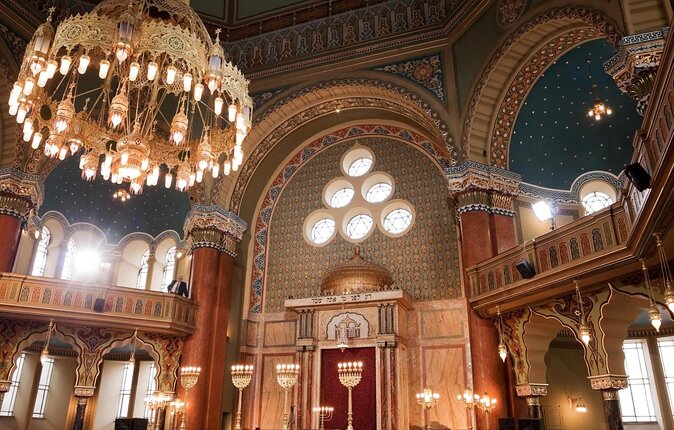
The tour continues to Sofia Synagogue, noted as the biggest on the Balkan peninsula. Your guide shares the extraordinary history of the Bulgarian Jewish community, which is exactly the kind of human detail that keeps a religious site from turning into a quick photo stop.
I like this part of the walk because it shifts the focus from architecture to community. Sofia’s main cathedral and government buildings can dominate the imagination, but the synagogue stop reminds you that a major city is also made of neighborhoods, migration, resilience, and cultural continuity.
One practical consideration: this is also a stop where entry may require tickets that aren’t included. If you want inside time, budget accordingly and keep your energy for a quick walk between viewpoints.
Regional History Museum: thermal baths, then government showpieces
After the religious sites, the tour moves into the city’s more social-and-museum side at the Regional History Museum of Sofia. Here you’ll learn the building used to be Sofia’s Central Mineral Baths. Even better, you’ll be able to taste the famous thermal waters during this stop.
That tasting detail is small, but it’s memorable because it’s sensory. Walking tours can sometimes feel like you only look and listen; this one adds a physical element that makes the city feel real.
Then you step into the power corridor of modern Bulgaria. You’ll see the National Assembly of Bulgaria as well as the Council of Ministers and the Presidency buildings as part of the same government-focused sweep. The tour explains that the Largo of Sofia was constructed by the new communist power after World War II, with symbolism meant to show the strength of the regime.
If you’re the kind of traveler who likes seeing how politics leaves shapes on a city plan, this section will click. If not, just treat it as a guided reading of the architecture—stone can tell you more than you expect.
National Guards, presidential symbolism, and a quick camera moment
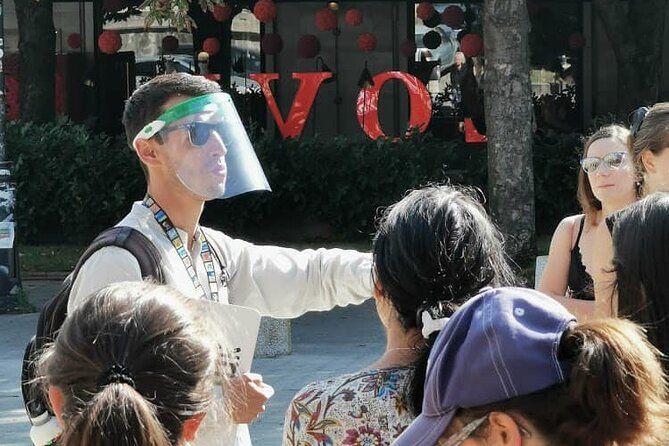
Right at the Presidency Building, you’ll notice the Bulgarian National Guards always in front. Your guide explains the symbolism around the unusual job and even lets you take a picture with them.
That’s a nice reset point in the itinerary. You go from museum sensory experience into large political architecture, and then you get a brief, photo-friendly human moment that doesn’t feel forced. It’s also a good time to stretch your legs before the next set of older-than-you-thought sites.
Oldest traces: museum inside a former mosque and the Roman Rotunda
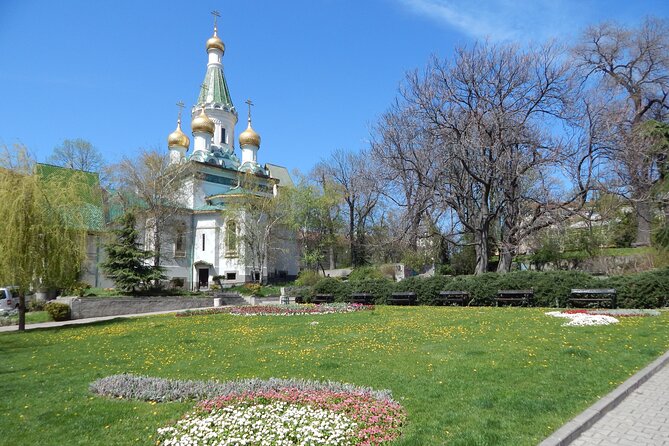
Next up is the National Archeological Museum of the Bulgarian Academy of Sciences. The tour notes it was once a mosque and is now Sofia’s oldest museum. That combination makes it fascinating: the building carries layered purpose, and the guide’s framing helps you see why the venue matters beyond collection labels.
Then comes Saint Georgi Rotunda Church, described as Sofia’s oldest building and well hidden, with roots in Roman past. This stop is ideal if you want the feeling of finding something rather than being led to it on a massive plaza. Even a short stop can feel satisfying when the guide points out why it has stayed “under the radar.”
If your feet are tired, you’ll still get value here because the stop timing is short and the guide’s storytelling is meant to sharpen your attention, not wear you out.
Ivan Vazov National Theater to the National Art Gallery: art and authors in plain view
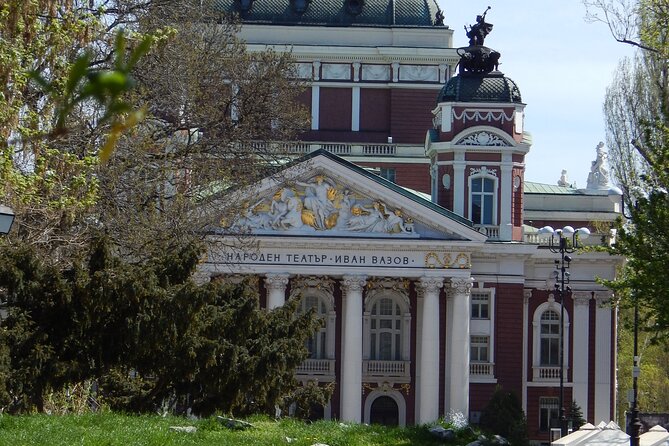
The walk continues to Ivan Vazov National Theater, described as one of Sofia’s most beautiful buildings and dedicated to Bulgaria’s beloved author Ivan Vazov. This is a straightforward literary-to-architectural connection that helps you place the theater in cultural life, not just as scenery.
You also pass through a park that locals favor. The point isn’t just greenery; it’s the sense of youthful energy in the middle of all that history.
Later you reach the National Art Gallery, housed in Bulgaria’s former Royal Palace. Your guide ties it to the National Ethnographic museum too, plus shares the story of the yellow cobblestones surrounding it. Details like that are worth paying attention to in Sofia because they make the streets feel designed, not accidental.
Saint Nikolas Russian Church and the Unknown Soldier memorial: wishes and remembrance
At Saint Nikolas Russian Church, the tour highlights a tradition of wishes. The guide invites you into the story and explains how the church connects to that belief. If you like small rituals and local meaning, this stop can be more personal than it looks from outside.
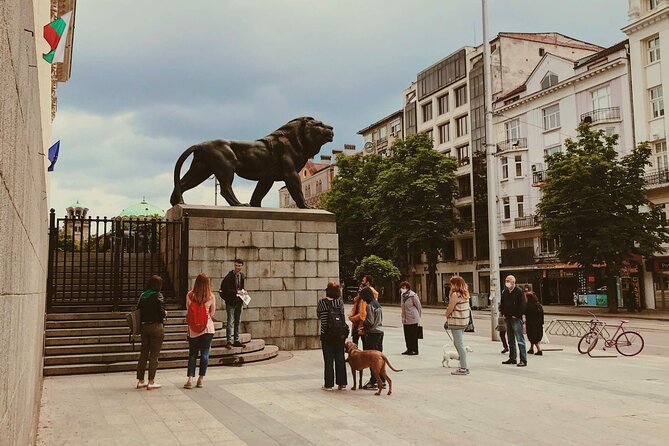
Then you head to the Monument of the Unknown Soldier: a memorial complex with a lion statue dedicated to all Bulgarian heroes. This is the kind of site where the architecture and the symbolism work together. Your guide helps you read it as remembrance, not just stone.
These memorial-style stops are brief, but they give the walk emotional balance. After so many faith narratives and political eras, you end up with an anchor about collective identity.
St Sofia Church and St Alexander Nevski: ending at Sofia’s name and biggest landmark
The next-to-last stretch focuses on St Sofia Church, with the tour explaining the story behind the church that gave the city its name. This is one of those moments where a city’s identity becomes literal. You start connecting Sofia’s name to the places you’ve already visited, even if you didn’t realize you were building that map.
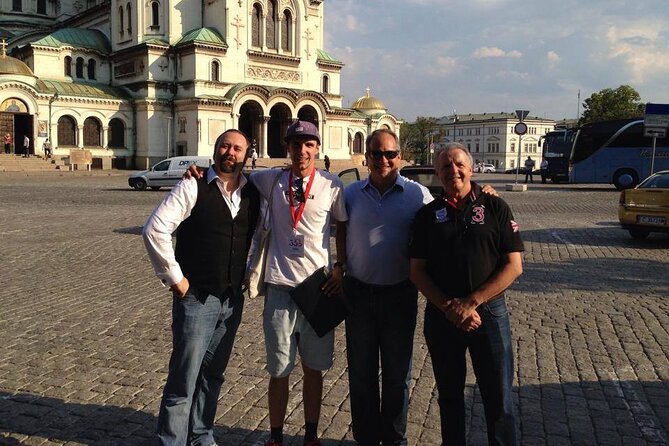
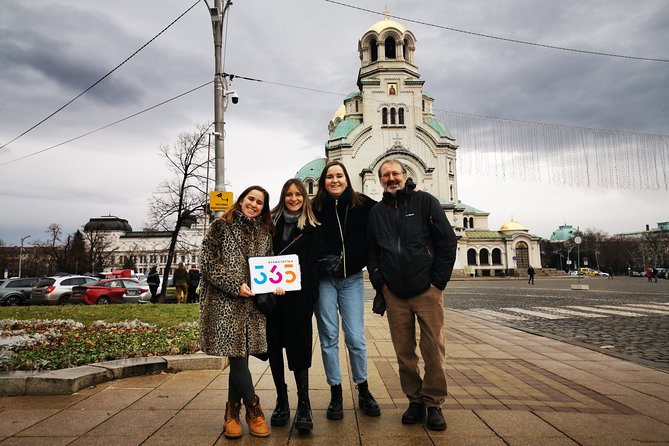
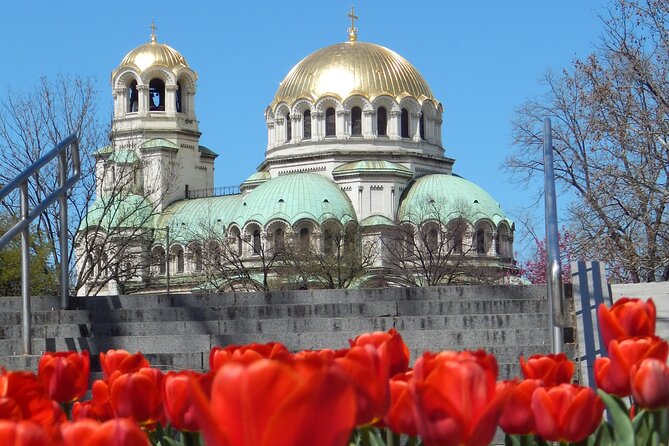
Finally, you reach St. Alexander Nevski Cathedral, described as Sofia’s most famous landmark and the tour’s end point. Here you get the architecture and history, plus more of what makes this cathedral feel like the headline of the city.
If you’re doing this early in your trip, it also works as a mental reset. You finish the walk with the biggest visual reference point, so it becomes easier to navigate the city after.
Price and what you really get for $183.90 per person
At $183.90 per person for about 2 hours, this is not a budget-only stroll. It’s priced as a private experience with a certified local guide, and the value depends on how much you want a guided storyline versus self-guided wandering.
Here’s the practical way I’d think about it:
- You’re paying for direction: a guide who ties together Orthodox, Catholic, Ottoman-era, Muslim, Jewish, and Roman-era threads into one walk.
- You’re also paying for time efficiency: many central sights get covered without you having to plot an ideal route.
- Your cost can shift slightly because several stops have admission tickets not included, while a few are free (like the Monument of Saint Sofia and the Ancient Serdica Archaeological Complex).
If you split the decision with family or friends, group discounts are mentioned, which can make the price feel much more reasonable. Also, this tour is offered in English and has a mobile ticket, which usually makes pre-trip planning smoother.
The walking style and pace: who will love it
This tour is designed for most travelers and is private, meaning you can keep your attention on what matters to you. It also runs near public transportation, which is useful if you’re pairing it with other plans the same day.
This suits you best if:
- You want your first view of Sofia’s center with context.
- You like stories that connect buildings to real events and real communities.
- You’re happy to do lots of short stops rather than one long museum.
It may be less ideal if:
- You want a mostly casual, low-listening walk.
- You hate admission uncertainty, since multiple stops list tickets as not included.
Booking advice: should you sign up?
I’d book this tour if you want Sofia to make sense fast. The itinerary is built like a guided reading of the city: faiths side by side, time periods layered, and political architecture explained in human terms. The fact that guides like Vasil and Mina are praised for staying engaging is a good sign if you’re trying to avoid the passive, stop-and-go version of “culture.”
Before you book, decide how many indoor entries matter to you. If you’re happy with mostly exterior views, your costs stay predictable. If you want to go inside every ticketed stop, you should budget for that too.
FAQ
FAQ
How long is the Sofia private city walking tour?
It lasts about 2 hours.
What does the tour cost?
The price is $183.90 per person.
Is the tour offered in English?
Yes, it’s offered in English.
Is this a private tour or shared group?
It’s a private tour/activity, so only your group participates.
Where does the tour start and where does it end?
You start at Orthodox Cathedral Saint Nedelia, Old City Center (pl. Sveta Nedelya 20, 1000 Sofia). It ends at ploshtad Sveti Aleksandar Nevski in Sofia Center (pl. Sveti Aleksandar Nevski, 1000 Sofia).
Is a mobile ticket included?
Yes. A mobile ticket is included.
Are admission tickets included for all stops?
No. Some stops are marked as free, while several stops list admission tickets as not included. Plan for the possibility that you may need tickets at certain churches/mosques/synagogue and other indoor locations.
What’s included with the price?
A certified local tour guide is included.
Are service animals allowed?
Yes, service animals are allowed.
Is free cancellation available?
Yes. You can cancel up to 24 hours in advance for a full refund.