REVIEW · SOFIA
Guided Walking Tour of Sofia
Book on Viator →Operated by City Tour Ltd. · Bookable on Viator
Sofia’s layers unfold on foot. I especially love the small-group attention and the free-entry church stops that keep your time focused. The one drawback to plan for is the steady walking, especially in hot weather and bright sun.
I like how the route strings together Sofia’s big eras in a very human way: Roman foundations, early Christian churches, Orthodox traditions, and even the political punch of the 20th century. You’ll meet at the entrance area of Alexander Nevsky Cathedral and finish at Vitosha Boulevard, right where you’ll want to keep exploring on your own.
This tour is built for English speakers and moves at a real city-pace, not a museum crawl. The format is set up as up to 10 people for personal attention, while the activity also lists a maximum of 24 travelers overall—so it’s usually small, but you should still bring water and comfy shoes just in case.
In This Review
- Key highlights you’ll feel right away
- Why this 2-hour walk is a smart way to start in Sofia
- Start at Alexander Nevsky Cathedral: Sofia’s symbolic center
- St. Sofia Church: early Christian architecture you can actually enter
- The Tsar Liberator monument: politics in bronze, history in motion
- Russian Church: notice the style, then connect it to identity
- Ivan Vazov National Theater: the capital’s public face
- Ancient Serdica under the city: Roman remains in an unexpected spot
- Presidency and the communist-era layer: power and architecture
- Central mineral springs: a short cultural detour with real purpose
- Rotunda of St George: Sofia’s best-preserved ancient temple
- Sveta Nedelya Orthodox Cathedral: a square shaped by history
- Sofia Court House: the architecture hits, and the interior is the star
- End at Vitosha Boulevard: use the momentum
- A word on guides: what makes the tour feel worth it
- Practical tips so you enjoy every stop
- Should you book this Sofia guided walking tour?
Key highlights you’ll feel right away
- Roman Serdica ruins in the middle of the city, including remains tied to the 2015 subway discovery
- Early Christian classics you can step into, like the Rotunda of St George and St. Sofia Church
- Big symbolic landmarks in a short walk, starting with Alexander Nevsky and ending near Vitosha Boulevard
- Orthodox and Russian influences on clear display, from the Russian Church style to multiple cathedrals
- Live guide energy and Q&A time, with guides praised for patient answers and lively storytelling
- A practical 2-hour orientation loop, ideal on day one or day two in Sofia
Why this 2-hour walk is a smart way to start in Sofia
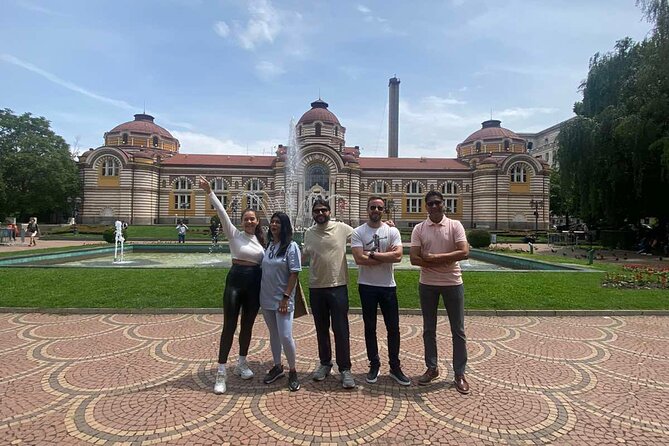
Sofia isn’t one “main attraction.” It’s a stacking tower of eras—Roman, early Christian, Ottoman-era influences, Orthodox life, and the hard edges of the 20th century. This tour makes that understandable fast, because you see the evidence in order, with minimal backtracking.
The price—$48.39 for about 2 hours—may sound like a lot until you remember what you’re getting: a professional live guide, a tight route in the city center, and free admission tickets listed for the stops. For many people, the value isn’t just the sites. It’s the way the guide turns architecture into context you can carry with you for the rest of the trip.
One practical note: even though this is “just a walking tour,” it’s still a real walk. Wear comfortable shoes and plan for weather. The route keeps you outside for long stretches, so sun, heat, or rain will affect how enjoyable it feels.
You can also read our reviews of more walking tours in Sofia

Start at Alexander Nevsky Cathedral: Sofia’s symbolic center
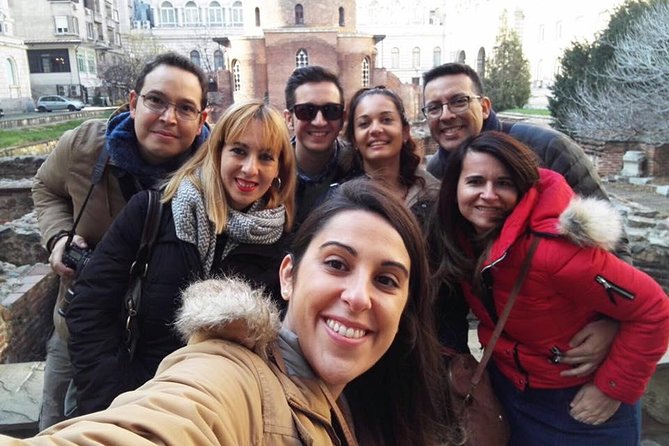
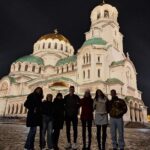
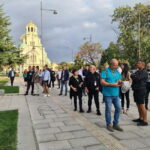
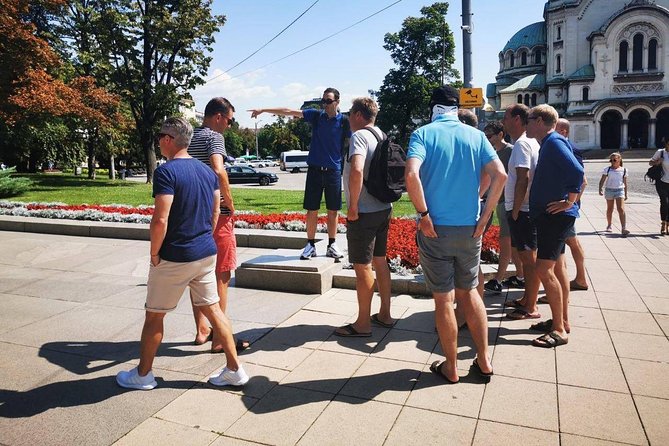
You begin at the Patriarchal Cathedral St. Alexander Nevsky entrance area in Sofia Center. This is the right opening move because the cathedral functions as a visual shorthand for the city—big, unmistakable, and loaded with meaning.
From there, your guide explains the story of Alexander Nevsky Cathedral—how and when it was built, and why it became such a powerful symbol of the capital. You’ll spend about 15 minutes, with admission handled as free on the tour schedule.
What to watch for: don’t just scan for “pretty church.” Let your eyes connect details back to the guide’s explanation—especially the reason the cathedral became a civic icon, not only a religious one.
St. Sofia Church: early Christian architecture you can actually enter
Next you’ll head to Saint Sofia Church, one of the most valuable Early Christian pieces in Southeastern Europe. This stop is short—about 10 minutes—but the payoff is that you can enter, and the tour is built around that moment.
The key idea here is preservation. The church is described as the best-preserved basilica in the area, so you’re not just looking from outside. You’re seeing a surviving piece of early Christian architecture in a way that helps you understand what “early” means in real stone and layout.
If you’re a detail person, this is where you’ll appreciate a guide who can point out what makes a basilica a basilica. If you’re not, you’ll still come away with a clearer picture of how these early spaces shaped later church design.
The Tsar Liberator monument: politics in bronze, history in motion
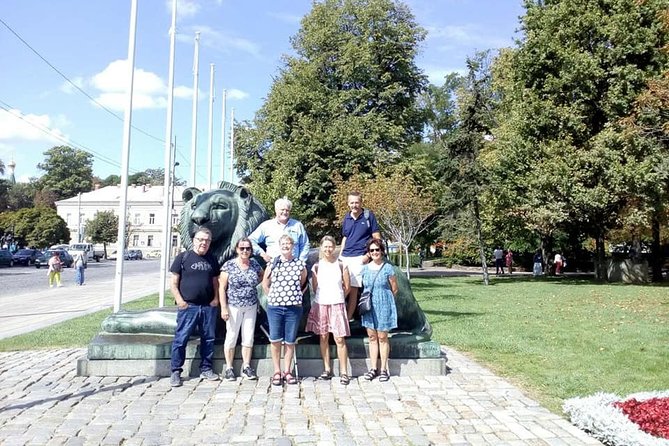
A quick walk brings you to the Monument of Tsar Liberator, an equestrian monument in the center of Sofia. This is about 5 minutes, and it’s powerful because it’s not a building you enter—it’s a statement you read with your eyes.
Your guide ties the monument to the story of why it’s there and what it represented at the time. You’ll be using this stop to connect symbolism to history, which makes the next Orthodox and later political sights easier to understand.
Russian Church: notice the style, then connect it to identity
Then it’s off to the Church of St. Nicholas the Wonderworker (often called the Russian Church). You’ll spend about 5 minutes, enough time to take in the look and then hear what your guide says about its background.
This church is known for its Russian Revival Epoque style, and that matters. Architecture is identity made visible—so this stop helps you see how Russian cultural influence shows up in Sofia’s religious landscape.
Even if you’re moving quickly, I suggest pausing long enough to look at the overall form first. After that, let the guide’s explanation help you connect style choices to the story of the community and the era.
You can also read our reviews of more guided tours in Sofia
Ivan Vazov National Theater: the capital’s public face
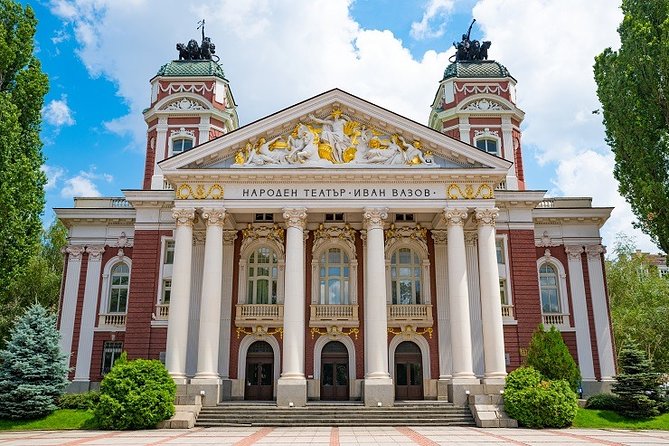
Your next short stop is the National Theater Ivan Vazov. It’s described with a Neoclassical look and gold plated decoration, and the design is credited to Viennese theatre architects—a neat detail because it shows Sofia was never isolated from European cultural trends.
You’ll get about 5 minutes here. You’ll see the building from the right distance so you can appreciate its visual role: it’s not only a place for performances; it’s a landmark for the city’s cultural self-image.
If you want one takeaway from this stop, it’s this: Sofians built institutions that made them feel part of a broader European rhythm, not just part of an empire’s shadow or a local tradition.
Ancient Serdica under the city: Roman remains in an unexpected spot
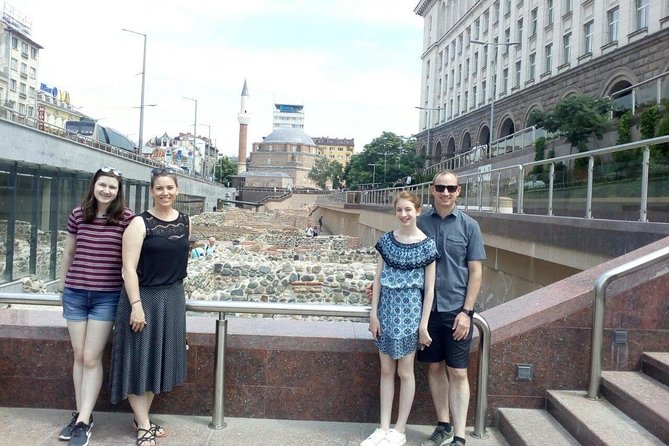
Now the tour does something I really like: it takes you to Roman Serdica remains that were found during subway work in 2015, right between the Presidency and the Council of Ministers area. You’ll spend around 10 minutes on this stop.
There’s something almost mind-bending about Roman layers being discovered in modern construction. This isn’t history in a distant location—it’s history found while building the city you’re standing in.
What to look for: don’t treat it like a random ruin. Let your guide connect the discovery to the broader story of Sofia—how the city’s past keeps showing up when you least expect it.
Presidency and the communist-era layer: power and architecture
From Roman remains, you move into the 20th-century political story with the Presidency Building and Parliament area. You’ll see both mainly from the outside, with your guide giving context about who built them, when, and interesting facts from the communist period.
This stop is only about 5 minutes, but it works because you’ve already been through the religious and Roman portions. That means when you look at these buildings now, they feel less like plain government structures and more like part of Sofia’s shifting identity.
A useful way to approach it: focus on what the buildings communicate—authority, order, permanence. Then match that to what your guide says about the period.
Central mineral springs: a short cultural detour with real purpose
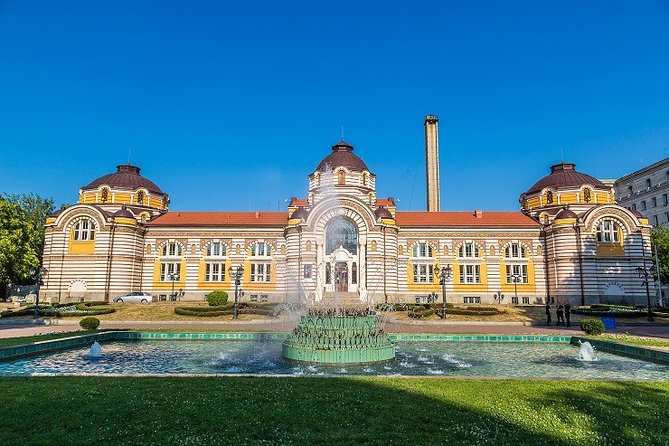
Next comes Central Hall and the story of mineral springs near the Central Market area (Halli). This is another short stop—around 5 minutes—but it’s one of the best “small things” on the whole walk.
The tour highlights the earliest documentary of the oldest springs in Sofia being next to the market area, and says the springs were known and used in ancient times. So yes, you’re walking past something physical that ties to everyday life, not just monumental architecture.
Why it’s valuable: you get a reminder that cities run on practical stuff. Water mattered, commerce mattered, and people organized around natural resources long before modern plumbing.
Rotunda of St George: Sofia’s best-preserved ancient temple
The tour then heads to the Rotunda Church of St George. This is described as a temple of early Christianity and the best-preserved building from ancient times in Sofia.
You’ll spend about 5 minutes, but this stop is the kind you don’t want to rush. Even in a quick timeframe, a good guide can help you notice why this building survives as an anchor point for the early era.
If you’re comparing places you visited later, this is one of the best reference sites. It sets the baseline for “early Christianity” in Sofia in a way that other churches will start to echo later.
Sveta Nedelya Orthodox Cathedral: a square shaped by history
Next is Saint Nedelya Orthodox Cathedral (Church “Sveta Nedelya”). You’ll spend about 5 minutes here as well.
The guide’s job at this stop is to connect the church to the patron Saint Nedelya, and also to help you read the surrounding square as a historical crossroads. The square is described as a central point known for historical events during royalism.
Even if you don’t know the dates, you’ll understand the idea: public squares are where power, ceremony, and conflict show up. This stop helps you see that Sofia’s history isn’t only in buildings. It’s in where people gathered.
Sofia Court House: the architecture hits, and the interior is the star
Then you reach the Sofia Court House, known as the Palace of Justice. The description calls out its beautiful architecture and notes it’s famous for a rare interior.
You’ll spend about 5 minutes, and because the tour is a walking loop, you may not get deep time inside depending on access. Still, you’ll know what to notice: exterior architecture cues, plus the fact that the interior is considered special enough to make this stop worthwhile.
This is a good moment to slow down just a touch. A palace of justice is built to communicate authority—so take a moment to see how that communication plays on the street.
End at Vitosha Boulevard: use the momentum
The final stop is at the beginning of the pedestrian area of Vitosha Boulevard. It’s only listed as about 5 minutes, but ending here is smart: it’s a natural transition point from guided history to independent wandering.
After two hours packed with Roman remains, early Christian sites, Orthodox churches, and political-era landmarks, your brain will be buzzing. Vitosha Boulevard is a great place to turn that buzzing into choices—coffee, museum browsing, or simply people-watching while everything you learned stays fresh.
A word on guides: what makes the tour feel worth it
The biggest reason this tour earns strong marks is the live guide. Different guides are named in the experience feedback—Diana, Jivko, Peter, and Petar—and the common thread is how they keep the walk moving while explaining the “why” behind the “what.”
Some guides are praised for fun, timely explanations and impeccable English. Others get credit for being patient and answering questions fully. That matters because church architecture and city history can get dry fast if your guide only recites dates. Here, the guide’s job is to help you see patterns: how religions shaped buildings, how politics shaped monuments, and how modern Sofia still sits on older foundations.
One fair consideration: pace and energy can be personal. There are cases where people felt the guide’s style didn’t match what they wanted, or that late timing and heat made the experience harder. If you’re sensitive to heat, ask early about shade breaks and keep water with you.
Practical tips so you enjoy every stop
- Bring comfortable walking shoes. This tour is a city-center walk with multiple short segments, and you’ll be on your feet the whole time.
- Plan for weather. It’s mostly outside, so hot days can feel long. Rain can also change how you experience entrances and cover.
- Arrive a bit early at Alexander Nevsky. Starting on time helps the guide keep a comfortable rhythm.
- Use the guide as your translator. When you get inside churches, don’t wait for the next big story. Ask one question while you’re there.
- Think of this as orientation. Two hours is excellent for getting your bearings and spotting what you’ll want to revisit longer.
Should you book this Sofia guided walking tour?
Yes—if you want a fast, organized overview of Sofia’s most important layers without spending your first days figuring out route logic. The strongest reason to book is the combination of small-group format, professional live guide, and free-entry tickets at multiple key stops. You also end in a practical place (Vitosha Boulevard) rather than back at square one.
Skip it or reconsider if you’re expecting a slow-paced deep dive into one era only. This is a “see the connections” tour, not a long research expedition. Also, if heat is a big deal for you, plan your timing and bring supplies—this route is designed for walking.
If you’re visiting Sofia for the first time and want to understand what you’re seeing, this is a solid, high-value introduction.