REVIEW · SARAJEVO
Sarajevo Essential Full Walking Tour
Book on Viator →Operated by Spirit Tours Sarajevo · Bookable on Viator
Sarajevo changes fast when you walk it. This small-group walking tour strings together the city’s major religious and historic landmarks, from Austro-Hungarian grandeur to Ottoman streets, in just 1–2 hours. What I like most is how quickly it helps you get your bearings and see why Sarajevo’s mix of cultures isn’t just a slogan.
I also really value the human touch: the guide quality gets standout praise, including guides like Adnan (Ado), who makes complex history easy to follow and encourages questions. And in a smart way, the route leans heavily on free-entry sights, so you can spend your time learning instead of paying entry fees at every corner.
The main thing to consider is pacing: you’ll spend only about 5–10 minutes per stop, so if you want slow museum time, plan to add extra hours elsewhere.
In This Review
- Key points before you go
- Sarajevo’s Essential Full Walking Tour: What You’re Really Getting
- Starting at Spirit Tours on Ferhadija: Easy Logistics for a Quick Hit
- From Sacred Heart Cathedral to the Jewish Museum: First the Catholic Story
- Ferhadija St. and “Meeting of Cultures”: The City Explains Itself
- Gazi Husrev-Beg Mosque, Sebilj Fountain, and Baščaršija Square: Ottoman Power in the Streets
- Bezistan and Taslihan: Covered Market Life and Ottoman Foundations
- Vijećnica (Sarajevo City Hall) and the Austro-Hungarian Glow
- Cumurija Bridge and the Spite House Area: Old Stories in Everyday Streets
- Emperor’s Mosque and Latin Bridge: When Sarajevo Steps Into World History
- Orthodox Sarajevo and the “All Man Multicultural” Monument: Three Faiths in Close Range
- Sarajevo Rose: A Mortar-Shell Memorial Made Concrete and Red
- Value Check: Is $18.15 a Smart Spend?
- Who Should Book This Sarajevo Walking Tour (and Who Might Not)
- Should You Book This Sarajevo Essential Full Walking Tour?
- FAQ
- How long is the Sarajevo Essential Full Walking Tour?
- What’s the price per person?
- Is the tour offered in English?
- Where do I meet for the tour?
- Is pickup available?
- Are entrance tickets included?
- Is food or drinks included?
- What’s the maximum group size?
- Is the tour suitable for most people?
- Can I cancel for a full refund?
Key points before you go

- A tight 1–2 hour loop through 16 top Sarajevo sights without dragging your feet across town
- Most stops are free, with only a couple noted as not included
- English-speaking guides that keep the story clear and grounded in local life
- Ottoman Old Town highlights like Gazi Husrev-Bey Mosque, Bezistan, and Kazandžiluk
- World-history stakes at Latin Bridge, tied to the assassination that helped trigger WWI
- Top guide praise, including Adnan (Ado) for being easy to listen to and question-friendly
Sarajevo’s Essential Full Walking Tour: What You’re Really Getting
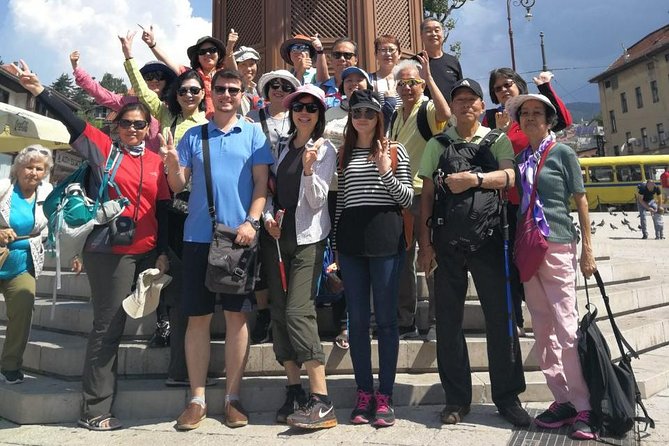
This isn’t a “stand in one place and take photos” kind of tour. It’s a walking route built to explain Sarajevo as a living overlap of faiths, languages, and empires. You’ll move through the center and Old Town areas where the city’s layers show up in stone, street craft, marketplaces, and monuments.
The best part is the structure. Even though the stop times are short, you’re not just being shown buildings. You’re getting the why behind them—how Sarajevo became a crossroads where Catholic, Orthodox, Muslim, and Jewish heritage sit close enough to affect daily life.
It also fits real travel rhythms. At $18.15 per person for an experience that runs roughly 1–2 hours, you’re paying mostly for interpretation and direction. The route does a lot of the expensive thinking for you, and it includes guided time that would normally take you hours to piece together on your own.
You can also read our reviews of more walking tours in Sarajevo
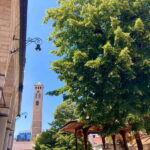
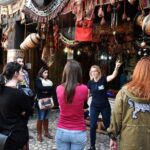
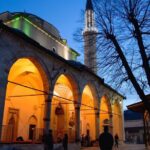
Starting at Spirit Tours on Ferhadija: Easy Logistics for a Quick Hit
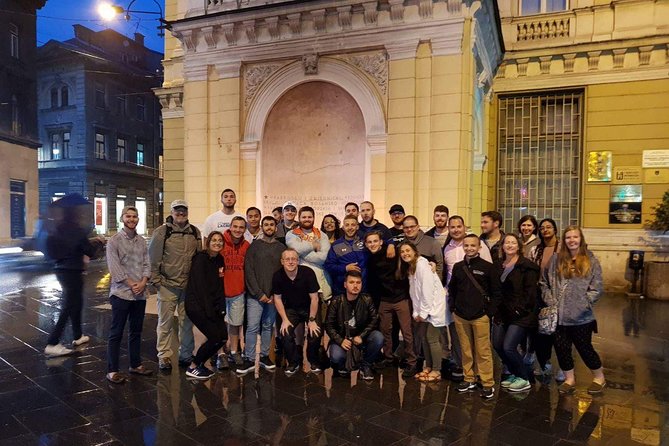
Your meeting point is the Spirit Tours office at Ferhadija 19 in Sarajevo’s central area. The tour ends back at the same meeting point, which keeps navigation simple—no stress about getting lost on the way out.
If you need pickup, it’s offered if arranged in advance, and that can mean meeting at your hotel/apartment/hostel. The tour is also listed as near public transportation, which matters if you’re mixing this with other sightseeing and want to keep transfers low-effort.
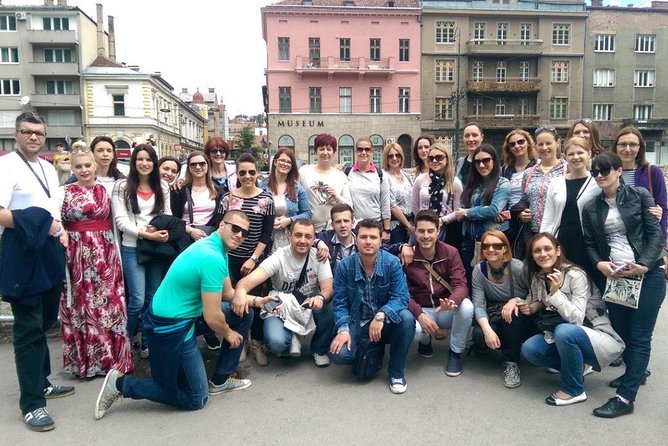
Group size is capped at 50 travelers, so it’s not a giant crowd. It still works best if you’re comfortable walking and standing for brief explanations. This is the kind of tour where you’re moving most of the time, listening and looking in quick bursts.
From Sacred Heart Cathedral to the Jewish Museum: First the Catholic Story
You start with the Cathedral of Jesus’ Sacred Heart, built in 1889 in a Neo-Gothic style. It’s the biggest Catholic church in Sarajevo and the seat of the Archdiocese of Vrhbosna. Even if Gothic details aren’t your thing, this stop sets a key theme: Sarajevo wasn’t only Ottoman. It was also shaped by Central European rule and Catholic institutions.
You’ll have about 10 minutes here, and the cathedral entry is listed as free. The tour time is enough to notice the style and understand its role, without turning it into a long church visit.
Then the route moves you to the Museum of the Jews of Bosnia and Herzegovina, located within the City Museum of Sarajevo, in what’s described as the oldest synagogue in the country. This is one of those stops that feels short on the clock but important for context. You get a focused introduction to Jewish heritage and presence in Bosnia, not as a side note, but as part of the city’s core story.
One practical detail: admission to this museum is not included. If you’re the type who likes to pause and read, you may want to budget a bit of extra time or money to do it properly.
Ferhadija St. and “Meeting of Cultures”: The City Explains Itself
A short walk brings you to the message of Sarajevo Meeting of Cultures on Ferhadija St., near Gazi Husrev Bey’s Bezistan. It’s basically a visual statement about Sarajevo’s identity: multiple cultures overlapping in a way that shaped daily life.
This stop is quick—around 5 minutes—and it’s free. But it’s a useful reset point. After you’ve seen the Catholic cathedral and the Jewish museum, this helps you “connect the dots” so the Ottoman and market streets ahead don’t feel random.
Think of it as a sentence before the next paragraph of the story.
Gazi Husrev-Beg Mosque, Sebilj Fountain, and Baščaršija Square: Ottoman Power in the Streets
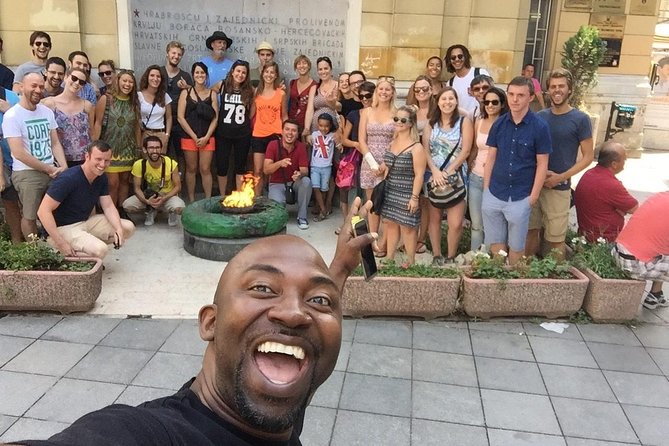
Next comes the Gazi Husrev-beg Mosque, built in the 16th century. It’s described as the largest historical mosque in Bosnia and Herzegovina and one of the most representative Ottoman structures in the Balkans. This is where you’ll feel how Ottoman Sarajevo organized public space around faith, community, and architecture.
You’ll spend around 10 minutes, and it’s listed as free. Even if you’re not a religious-history expert, this is the kind of place where the building’s scale and presence carry meaning on their own. The guide role matters here: you’ll understand what you’re looking at instead of just admiring it.
From there, the tour reaches Baščaršija Square and the Sebilj Brunnen (Fountain). This is an Ottoman-style wooden fountain built by Mehmed Pasha Kukavica in 1753. The Sebilj is free to see, and the stop is only about 5 minutes, but it’s one of those landmarks people remember later because it’s so tied to the atmosphere of the square.
Next up is Kazandžiluk, the coppersmith street. You’ll see the authentic look of the street, and the tour highlights that the craft still exists there. This stop is short (about 10 minutes) and free, but it’s one of the most satisfying because it connects architecture to ongoing work. It’s not just preserved; it’s active.
Bezistan and Taslihan: Covered Market Life and Ottoman Foundations
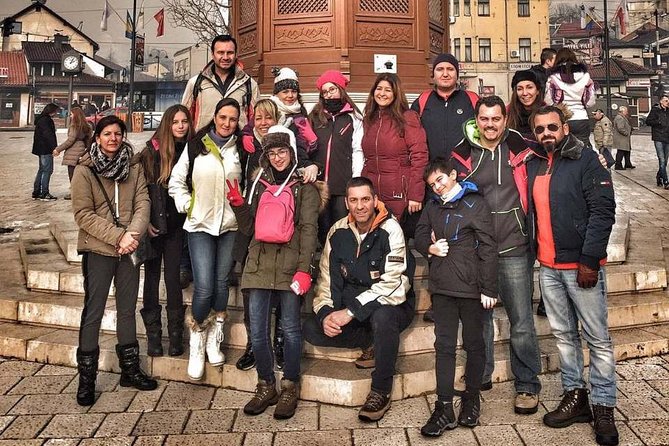
If you’ve ever wondered how trade worked in Ottoman cities, Gazi Husrev Beg’s Bezistan is a strong answer. This covered bazaar is described as one of the preserved bezistans from the Ottoman period. It was built in 1555 in Baščaršija and still serves its trade function.
This stop is brief—around 5 minutes—and it’s free. But a good guide will help you notice what makes a bezistan different from an open market: shelter, rhythm, and continuity of business life.
Then comes Taslihan, built in 1543 as Ghazi Husrev-Bey’s waqf. The description notes it once had a fountain, mosque, yard, shops, and storage rooms—and that it was severely damaged in fires. Taslihan is another 5-minute stop and free, but it points to the bigger idea: Ottoman institutions weren’t just “religion buildings.” They were also economic and social infrastructure.
These two stops together—Bezistan and Taslihan—are some of the best places on the route for you to learn how Sarajevo functioned day to day centuries ago.
Vijećnica (Sarajevo City Hall) and the Austro-Hungarian Glow
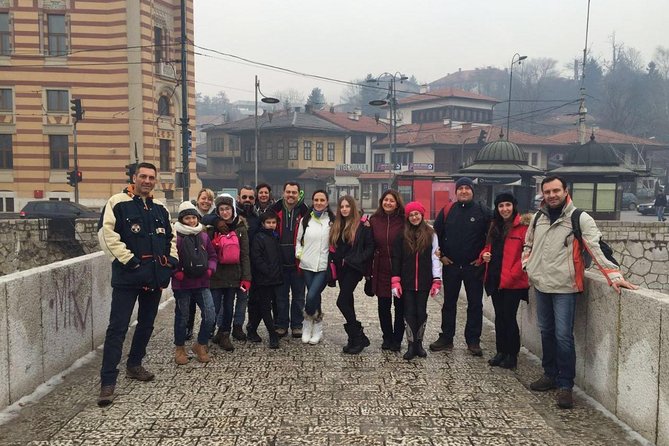
Now you shift to Austro-Hungarian Sarajevo and one of the city’s most recognizable landmarks: Sarajevo City Hall, also known as Vijećnica. It’s described as the most extravagant building constructed during Austro-Hungarian occupation and a symbol of the meeting of world civilizations.
The stop is about 10 minutes, and admission is noted as not included. That means you can still appreciate the exterior and symbolism during the tour, but if you want to go inside, you’ll need to plan separately.
Adjacent to this area, the route also passes Hotel Europe. It’s described as an Austro-Hungarian building with external splendour in the center of Sarajevo, just a few steps from the tourist Old Town core. It’s a quick visual stop, about 5 minutes and free, but it reinforces the Austro-Hungarian mood in the wider streetscape.
This section is where the tour really earns its name. You’re not only seeing different religions. You’re seeing different ruling influences layered into the city’s physical look.
Cumurija Bridge and the Spite House Area: Old Stories in Everyday Streets
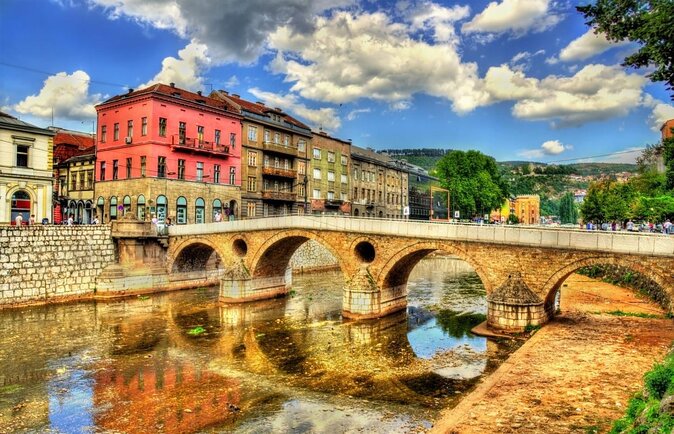
Then you’ll walk near Cumurija Bridge, a popular bridge with the Spite House nearby. The tour description gives a colorful origin story for the house’s nickname: out of stubbornness, the owner’s decisions helped make it known as the Spite House. Today, it’s linked with a protected cultural and historical heritage site and is described as a popular national restaurant.
This stop is short—about 5 minutes and free. Still, it’s a good reminder that local history doesn’t always show up as a big museum sign. Sometimes it’s built into small decisions and quirky legends that people keep repeating because they’re part of the character of the place.
Emperor’s Mosque and Latin Bridge: When Sarajevo Steps Into World History
A big turning point comes with the Emperor’s Mosque, described as Sarajevo’s oldest mosque. It’s mentioned as one of the oldest in Bosnia and Herzegovina and presumed to have been built soon after the city’s founding in 1462 by Isa Bey Ishaković, in honor of Sultan Mehmed II.
This stop is only about 5 minutes and free, but it’s powerful because it anchors the Ottoman presence early on. You’re not just seeing Ottoman style; you’re hearing about the city’s early formation.
Then you move to Latin Bridge, also known as Principov Most. This is the place where Gavrilo Princip assassinated Archduke Franz Ferdinand and Sofie, described as happening just a few meters away from the bridge. That incident—often called the Sarajevo Assassination—is described as the beginning of World War I.
You’ll have around 10 minutes here, and it’s free. If you’re the kind of traveler who likes to understand why a site matters beyond its aesthetics, this is your moment. The guide helps you connect the physical setting to a chain of events that reshaped Europe, and you’ll feel how one street-level spot can carry global weight.
Orthodox Sarajevo and the “All Man Multicultural” Monument: Three Faiths in Close Range
Next, the tour includes Centar, described as the Cathedral Church of the Nativity of the Theotokos, and stated as the largest Serbian Orthodox church in Sarajevo and one of the largest in the Balkans. It’s a 5-minute stop and free.
This matters because it completes the “faith map” of the city’s core. After Catholic, Jewish, and Muslim heritage, you get a clear view of Orthodox presence in the center.
Right after, you’ll see the Monument All Man Multicultural. It’s positioned between three major religious symbols—Catholic cathedral, Muslim mosque, and Christian Orthodox church. The tour description notes the wording is carved in Italian and Bosnian, with the idea that the multicultural human is constructing the world.
The stop is about 10 minutes and free. It’s a simple concept in words, but seeing it placed where multiple faith landmarks sit nearby makes it feel more grounded than just a motivational message.
Sarajevo Rose: A Mortar-Shell Memorial Made Concrete and Red
The last stop is Sarajevo Rose, a memorial made from a concrete scar caused by a mortar shell explosion, later filled with red resin. You’ll spend about 10 minutes, and it’s free.
This isn’t the kind of monument you rush through. Even without extra background, you can feel the intent: remembrance made physical and visible. It’s also a reminder that Sarajevo’s history isn’t only about empires and architecture—it’s about conflict and the cost of living through it.
The tour’s final stretch lands with an emotional note. It’s short, but it sticks.
Value Check: Is $18.15 a Smart Spend?
For $18.15, you’re buying three things: a guided route, interpretation you’d otherwise have to research on your phone, and a structure that covers major sites efficiently.
The included part is solid for the price: you get a local guide and a professional guide, with the tour offered in English. And most stops are listed as free—cathedral, mosques, fountains, streets, bridges, and the memorial—so you’re not nickel-and-dimed all day.
Two items you should mentally flag: the Museum of the Jews of Bosnia and Herzegovina and Sarajevo City Hall (Vijećnica) are noted as not included. If those are priorities for you, check your plan and budget accordingly.
Also note what’s not included: food and drinks. That’s normal for a walking tour, but it means you should bring water or plan to eat nearby after.
Where this tour earns extra credit is guide quality. The tour has strong praise for guides—especially for Adnan (Ado)—for being easy to listen to and for being the kind of person who can handle questions well when the group is small. That question-friendly style makes a big difference on a short route, because you can steer the conversation toward what you care about.
Possible drawback, again: the experience is designed for quick orientation. If you want long readings, deep museum time, or a slower pace, you may leave wanting more.
Who Should Book This Sarajevo Walking Tour (and Who Might Not)
This works best if:
- you’re in Sarajevo for a short time and want quick orientation
- you like cities where religious and political history overlap on the street level
- you enjoy seeing craft and markets as part of the story, like Kazandžiluk
- you want a guide to explain what you’re looking at without turning the day into homework
It might not be ideal if:
- you prefer long museum visits or in-depth ticketed entry time
- you dislike tight stop schedules and lots of “look, listen, move” pacing
- you want a more flexible route based on your own interests rather than a set circuit
Should You Book This Sarajevo Essential Full Walking Tour?
Yes, I’d book it if you want a fast, guided, culturally focused walk that covers the city’s biggest landmarks in one go—especially if you don’t want to spend your first day triangulating sites on your own. The price is reasonable for guided time, and the heavy mix of free stops means you’re paying mainly for context.
If you’re the type who cares most about interiors—museum exhibits or Vijećnica inside—then treat this as your orientation and plan a follow-up. Do the walk first, so the second visit makes sense.
In short: this is a smart first-day tour. It helps you understand Sarajevo as a place where multiple worlds shaped the streets you’re standing on.
FAQ
How long is the Sarajevo Essential Full Walking Tour?
It lasts about 1 to 2 hours.
What’s the price per person?
The price is $18.15 per person.
Is the tour offered in English?
Yes, it’s offered in English.
Where do I meet for the tour?
The meeting point is at Spirit Tours, Ferhadija 19, Sarajevo 71000, Bosnia and Herzegovina.
Is pickup available?
Pickup is offered if you request it in advance, and it can be arranged from your hotel/apartment/hostel.
Are entrance tickets included?
Many stops are free, but the Museum of the Jews of Bosnia and Herzegovina and Sarajevo City Hall (Vijećnica) are listed as not included.
Is food or drinks included?
No, food and drinks are not included.
What’s the maximum group size?
The tour has a maximum of 50 travelers.
Is the tour suitable for most people?
Most travelers can participate, and service animals are allowed.
Can I cancel for a full refund?
Yes. You can cancel for a full refund if you cancel at least 24 hours before the experience’s start time. If you cancel less than 24 hours before, the amount paid is not refunded.