REVIEW · CHESTER
Fascinating Walking Tours Of Roman Chester With An Authentic Roman Soldier
Book on Viator →Operated by Roman Tours · Bookable on Viator
Roman Chester comes alive on a 90-minute walk. You’ll follow a Roman soldier guide through the city’s Roman bones, from big outdoor remains to smaller archaeology you’d miss on your own. It’s built around what’s still there, plus what excavations and evidence can actually tell us.
I love two things most. First, the hands-on Roman details and easy Q&A—guides share stories, then answer even the odd questions with a straight face. Second, I like that stops aren’t just photo ops: you’ll see how reconstructions work, like the hypocaust system in the Roman Gardens, using real materials and evidence.
One consideration: you’re out walking, so wear proper shoes and expect the pace to be a bit brisk. Also, the tour is marked as weather-dependent, so plan for possible rescheduling if conditions are poor.
In This Review
- Key Things I’d Focus On
- First Stop: Town Hall Meeting Point and How the Walk Flows
- Roman Amphitheatre: Where Chester’s Roman Spectacle Still Shows
- City Walls Built on Fortress Foundations (and Still Over 5 Meters Tall)
- Roman Gardens and the Hypocaust: Heating the Baths the Roman Way
- The Roman Soldier Experience: Costumes, Kit, and Plenty of Questions
- Price and What Your $16.64 Actually Buys
- Timing, Weather, and What to Wear in Chester
- Who Should Book This Roman Chester Walk?
- Should You Book It?
- FAQ
- How long is the Roman Chester walking tour?
- How much does the tour cost?
- Where does the tour start?
- Where does the tour end?
- What are the main sights on the route?
- Is admission included for the amphitheatre and Roman gardens stops?
- What language is the tour offered in?
- What group size should I expect?
- Is the tour refundable if the weather is bad?
Key Things I’d Focus On

- A Roman soldier guide you can talk to, with humour and frequent question time
- Roman Amphitheatre stop with an admission ticket that’s free
- City walls over 5 meters high in places, showing real fortress fabric
- Roman Gardens hypocaust display, tied to excavation finds like pila stones and mosaics
- Small groups (max 15), which makes the walk feel personal instead of rushed
First Stop: Town Hall Meeting Point and How the Walk Flows
You start at Town Hall on Northgate St (Chester CH1 2HJ). It’s a nice central launch point—easy to find, and convenient if you’re using public transport to get into town.
This tour runs about 1 hour 30 minutes, and the group size is capped at 15. That matters more than it sounds. With a smaller crowd, you get real time for questions, and the guide can keep the story moving without losing half the group every time someone asks why something was built a certain way.
You’ll also use a mobile ticket, and the tour is offered in English. Service animals are allowed, and the general note is that most people can participate—just keep in mind there’s an outdoor walking component and you’ll be moving from stop to stop.
Roman Amphitheatre: Where Chester’s Roman Spectacle Still Shows

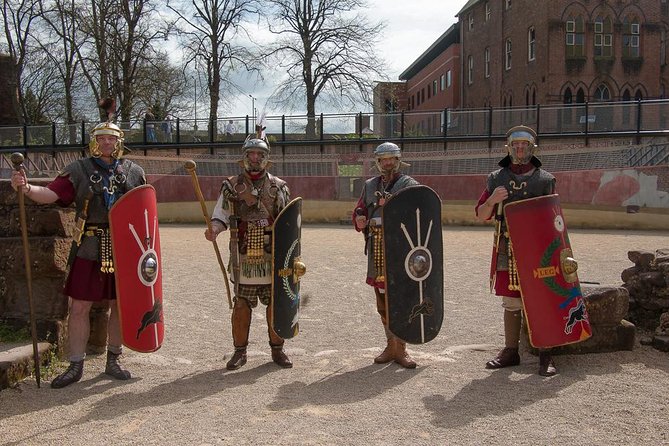
The tour opens at the Chester Roman Amphitheatre. This is billed as Britain’s biggest amphitheatre, and what’s cool here is how the guide connects the place to the human reality behind it—people who fought and died, not just an old structure.
You’re typically there for around 15 minutes. That’s short, but it’s deliberate: the tour doesn’t try to turn this into a museum hour. Instead, it uses the amphitheatre to set the baseline story, then carries you onward to the walls, gardens, and other evidence points that explain daily life and Roman presence in Chester.
Admission is listed as free for this stop. For you, that means your money is going mainly toward the interpretation—the way an authentic soldier-guide translates archaeology into something you can picture. If you love facts but hate dry lectures, this is where the tone gets set.
Practical tip: this is a good spot to ask early questions. Guides tend to run the tour like a story with pauses, and starting with questions here helps you “read” the next ruins better.
City Walls Built on Fortress Foundations (and Still Over 5 Meters Tall)
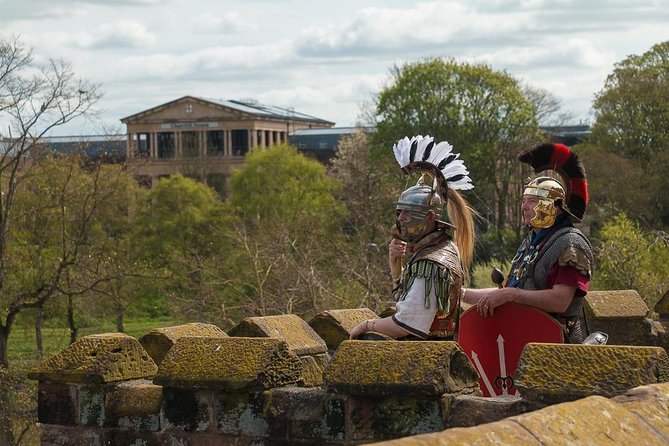
From there, you’ll move toward the city walls and Roman fortress remains. The emphasis here is that parts of the walls were built on the foundations of Britain’s biggest Roman fortress. Some sections of the original Roman walls still stand over 5 meters in height, which is one of those details that changes how you look at Chester.
Instead of thinking of the walls as medieval by default, you get a different lens: you see a living timeline—how later builders used earlier military groundwork. The guide’s job is to point out what’s genuinely Roman, what’s later, and how evidence helps you separate layers when stone starts to look similar at street level.
Time-wise, this is part of the “walk-and-explain” rhythm. You don’t get a long sit-down here. You get a guided way to look—like where your eyes should go first, and what features matter when you’re standing next to a ruin that has no labels.
One drawback to be aware of: the tour is short per stop, so if you’re the type who wants to spend 45 minutes sketching a single stretch of wall, you may feel a little time pressure. On the bright side, it keeps the momentum and makes the whole outing feel like an efficient introduction.
Roman Gardens and the Hypocaust: Heating the Baths the Roman Way
Next comes Chester Roman Gardens. This stop is built around a reconstructed Roman hypocaust system, using original pila stones and reconstructions of mosaic floors found during excavations of Roman military baths.
Here’s why this part is so valuable: a hypocaust is one of those Roman technologies that sounds technical until you see the setup. The tour frames it as a practical system—heat produced and carried underneath floors—then uses the archaeological materials to explain how it worked and why those elements were moved to this location.
You’ll be there for about 15 minutes again. The short time works because the point isn’t to master building engineering. The point is to understand the big idea: the Romans weren’t just decorating; they were building infrastructure for comfort, routine, and public bathing.
In my view, this is also the stop where the soldier-guide style really helps. When you have a costumed guide explaining underfloor heating like it’s a mission you can picture, the tech stops feeling like a textbook diagram.
Minor consideration: mosaics and pila stones are still “archaeology objects” more than “big dramatic ruins.” If you want only large exterior sites, you might find this more interpretive than scenic. But if you like learning how Romans lived, it’s one of the most memorable moments.
The Roman Soldier Experience: Costumes, Kit, and Plenty of Questions
This is the kind of tour where the guide doesn’t just talk at you. You follow an authentic Roman soldier theme, and the best guides turn it into interaction.
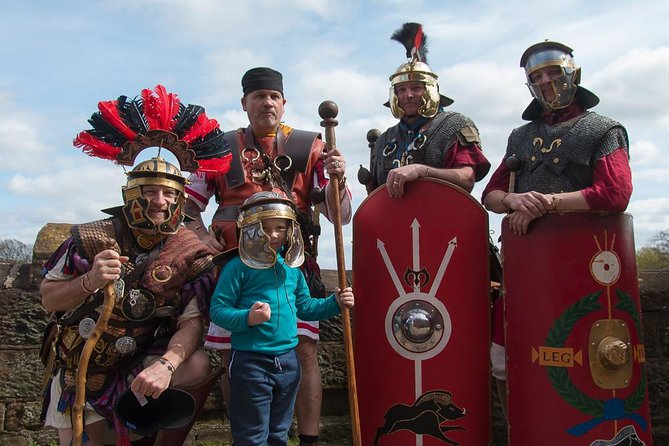
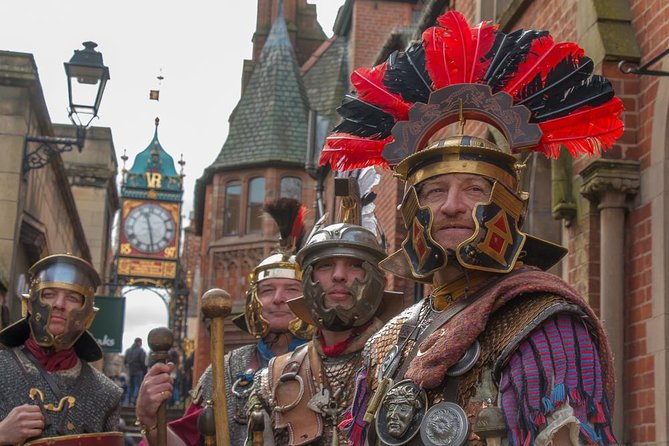
From the experience details, guides often bring a custom-made legionary kit, and some include hands-on moments with reproduction pieces and, at times, real artefacts. That hands-on element is more than novelty. When you can physically see materials, how something sits, and what a kit includes, it makes Roman daily life feel less distant.
You also get humour and quick-fire Q&A. Names that have been associated with this tour include Marcus (often with the title Optio), Julius, Faustus, and others. The point for you: multiple guides are clearly comfortable mixing storytelling with direct answers, and the vibe isn’t stiff.
If you’re traveling with kids or teens, this style tends to work well. Several guides are noted for keeping questions flowing and making the tour fun even in bad weather. If you’re a hardcore ancient history fan, you’ll still get value because the talk stays rooted in archaeology and extant remains, not just legends.
One practical note for your expectations: because it’s a walking tour with a cap of 15, you’ll get a lot of direct attention, but you won’t have time for super long digressions. Save your deepest questions for the moments the guide clearly opens up the floor.
Price and What Your $16.64 Actually Buys
At $16.64 per person, this is priced like an affordable, guided primer to Roman Chester—especially for a guided outing that lasts about 90 minutes.
What makes it good value is that the main named stops include items listed as free admission (the amphitheatre and the Roman Gardens). You’re not paying extra entry fees at those stops in the way you often do with other tours.
So what are you paying for? Mainly:
- the guide’s storytelling and interpretation
- the soldier theme that makes the material easier to remember
- the small-group format (max 15) so you actually get answers
Also, this tour is commonly booked about 14 days in advance on average. That suggests it doesn’t always have last-minute availability, especially on busy days. If you’re aiming for a specific date or time window, booking earlier is usually the safer move.
Timing, Weather, and What to Wear in Chester
Chester weather can change quickly, and this experience is listed as requiring good weather. If conditions are poor, it may be canceled and you’ll be offered another date or a full refund.
Because stops include outdoor walking plus short indoor or sheltered moments (some guides are known to take you into spaces like cellars/basements for remains), dress like you’re going to be outside for most of the tour. Good grip shoes help. Layers help. If you bring an umbrella, keep it practical so you don’t fight it every time the group moves.
You’re also outdoors enough that you’ll want to pace your energy. Since each stop is around 15 minutes, you won’t get long breaks. Plan to start the day with decent fuel—then let the tour do its job as an efficient Roman orientation.
Who Should Book This Roman Chester Walk?
This is a smart pick if you want Roman Chester in a single shot. It’s also ideal if you like real evidence. The tour is built around archaeological remains and explanations of what the finds mean—like how hypocaust elements and mosaics connect to the baths.
You’ll also enjoy it if you like guides who can teach without turning it into a lecture. The soldier theme adds a memorable layer, but the real value is the blend of archaeology, practical explanation, and humour.
It may not be the best fit if you need:
- long museum-style time
- deep specialist content without a story structure
- zero walking (it’s a walking tour first)
Should You Book It?
If you’re weighing this against other ways to see Chester, I’d lean yes—especially if you want an entertaining, evidence-based Roman intro delivered by an authentic Roman soldier guide.
The numbers are strong: a 4.9 rating with 1,231 reviews and a recommendation rate of 99%. More importantly, the repeated theme in the experience is consistent: guides are engaging, answer questions well, and point out Roman details you’d otherwise miss.
My advice: book it if you’re in Chester for a day or two and want your bearings fast with Roman context. Skip it only if you dislike costumes, dislike guided walking tours, or are expecting long stops at each site.
FAQ
How long is the Roman Chester walking tour?
It runs for about 1 hour 30 minutes.
How much does the tour cost?
The price is $16.64 per person.
Where does the tour start?
It starts at Town Hall, Northgate St, Chester CH1 2HJ, UK.
Where does the tour end?
The tour terminates at the Roman Amphitheatre area. The end location listed is 23 Little St John St, Chester CH1 1RF, UK.
What are the main sights on the route?
You’ll visit the Chester Roman Amphitheatre, Roman Gardens (with a hypocaust system), and Roman city wall/foundation remains.
Is admission included for the amphitheatre and Roman gardens stops?
Both the amphitheatre and the Roman Gardens stops are listed with admission ticket free.
What language is the tour offered in?
The tour is offered in English.
What group size should I expect?
The tour has a maximum of 15 travelers.
Is the tour refundable if the weather is bad?
Yes. The experience requires good weather; if it’s canceled due to poor weather, you’ll be offered a different date or a full refund.