REVIEW · SARAJEVO
Sarajevo Grand Walking Tour
Book on Viator →Operated by Insider Ltd · Bookable on Viator
Sarajevo turns corners fast. This 3-hour guided walking tour strings together the city’s turning points, from the Latin Bridge gunshot that sparked World War I to the places that show how faiths and cultures have lived side by side here. You’ll cover a lot of ground at street level, with stories and context that connect the buildings to real events.
I love the way the guide keeps the pace human while still giving you full narration—the kind that helps the dates stick (and yes, some guides share personal context from the 1990s era, like the way one guide, Ilma, is known for making history feel grounded). I also love the practical structure: you get a route that hits major landmarks in a tight loop, plus a city map and an English-speaking guide, so you can keep exploring after the tour.
One possible drawback: it’s still a walking tour, so you’ll move from stop to stop fairly quickly. If you want slow, linger-at-every-doorstep sightseeing, you might feel a bit rushed, and weather matters since the tour requires good conditions.
In This Review
- Key highlights you’ll feel on the ground
- Getting Oriented Fast: Why This 3-Hour Walk Works in Sarajevo
- Price and Value: What $20.57 Buys You (and What It Doesn’t)
- Where the Tour Starts: Meeting Point and How to Prepare
- Latin Bridge to Mejdan Park: The Moment WWI Changed Everything
- Emperor’s Mosque to Franciscan Church: Seeing Sarajevo’s Faith Map Close-Up
- Brewery, a Modernist House, and the Spite House: When Sarajevo Gets Unusual
- Sarajevo City Hall and Kovači Cemetery: East-West Beauty Meets Loss
- Kovači Street to Baščaršija: Ottoman-Layered Streets You Can Taste
- Sebilj Fountain and Morica Han: The Old Town’s Social Heart
- Gazi Husrev-beg Mosque and the Meeting of Cultures: Calm, Then Symbol
- Old Jewish Temple, Catholic Cathedral, and Serbian Orthodox Church: Four Faiths, One City Story
- Markale Market and the Eternal Flame: Daily Life to Remembrance
- What the Best Guides Do Well (So You Know What to Expect)
- Who Should Book This Walk—and Who Might Want Something Different
- Should You Book the Sarajevo Grand Walking Tour?
- FAQ
- Is the tour offered in English?
- How long is the Sarajevo Grand Walking Tour?
- What’s included in the ticket price?
- Do I need to buy admission tickets for the stops?
- What if the weather is poor?
- Can I get a refund if plans change?
Key highlights you’ll feel on the ground
- Latin Bridge to Baščaršija: a line through Sarajevo’s big eras, from imperial assassination history to Ottoman-market life
- Multiple faiths in one walk: Emperor’s Mosque, churches, Serbian Orthodox Cathedral, and the Old Jewish Temple in the same day’s story
- Sarajevo Brewery and local streets: not just monuments—industrial history and metalwork streets show daily life
- War memorials with context: Kovači Cemetery and the Eternal Flame are placed in the timeline, not dropped in as afterthoughts
- Guides who tell with personal color: people have praised guides like Haris and Hana for making complex history easy to follow
Getting Oriented Fast: Why This 3-Hour Walk Works in Sarajevo
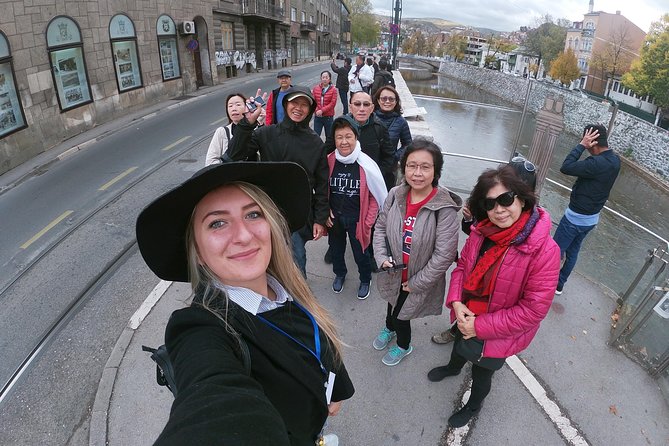
Sarajevo is one of those cities where names, empires, and religious communities pile up close together. A self-guided stroll can work, but it’s easy to walk right past meaning. This tour is built to give you that first mental map fast—so you can later choose what to revisit with less guesswork.
The route is also practical. In about three hours, you hit landmark after landmark without hopping around with complicated transport. It’s a maximum group size of 30, so you get conversation without feeling swallowed by a crowd.
If you’re on a first day, this is a strong move. One guest advice that matches what I’d recommend: book early so the rest of your stay becomes easier. Once you understand the city’s “why,” the “what” (architecture, streets, markets) starts clicking.
You can also read our reviews of more walking tours in Sarajevo
Price and Value: What $20.57 Buys You (and What It Doesn’t)
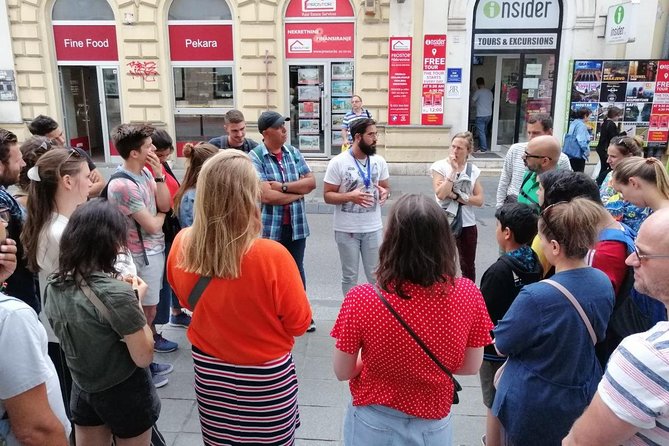
At about $20.57 per person for a roughly 3-hour guided walk, the value is mostly in the human part. You’re paying for a guide who connects sites into a timeline you can actually remember. For this price, that’s a bargain in any European city.
Also, many of the stops are listed as admission ticket free, meaning you’re not paying separate entry fees as the tour progresses. The big exception is that lunch and drinks aren’t included. You’ll also want to budget for your own coffee or snack if you get hungry mid-walk.
Bottom line: you’re buying an efficient orientation. It’s less about checking off museum rooms and more about understanding Sarajevo at street level.
Where the Tour Starts: Meeting Point and How to Prepare
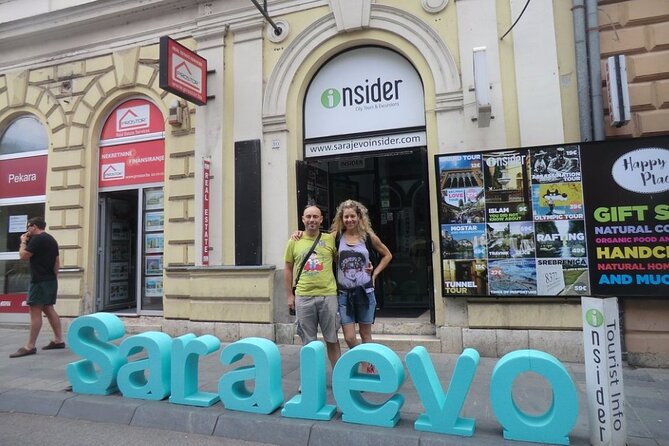
Meet at Sarajevo Insider – City Tours and Excursions at Zelenih beretki 30. The tour ends back at the same meeting point, which is convenient if you’re using this as your main “anchor” for the day.
You’ll be near public transportation, and service animals are allowed. In other words, it’s designed to be straightforward to join without major logistical headaches.
Bring the kind of clothing you’d wear for a city walk that could run into changing weather. One guest noted the value of warm clothes, and another mentioned rain near the end while the guide adjusted. Since the experience requires good weather, having a light rain layer in your daypack is smart—just in case.
Latin Bridge to Mejdan Park: The Moment WWI Changed Everything
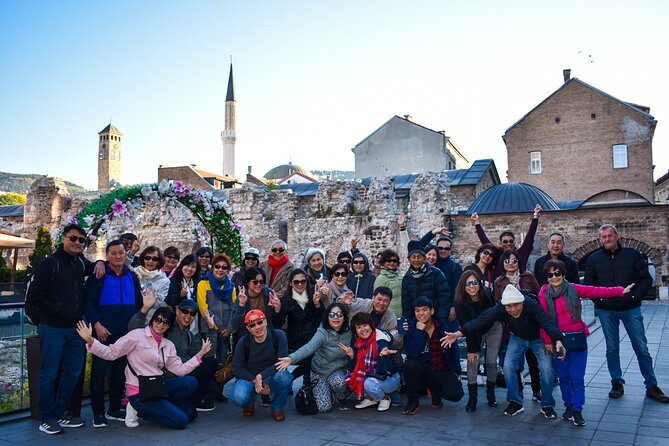
Your walk begins at the Latin Bridge area, tied to the assassination of Franz Ferdinand—the event that helped ignite World War I. This stop is powerful because it’s not a distant-history exhibit. It’s a physical spot you can stand near, and the story makes the building blocks of 20th-century history feel more immediate.
From there, you move toward Mejdan Park by the Miljacka River. This little pause matters. After heavy history, the green space gives your brain a reset and gives you a better feel for Sarajevo’s river corridor—where the city’s different layers feel close together.
Even if this is the first time you’re hearing the World War I Sarajevo story, the way the tour frames it helps you understand why the city became so strategically and politically significant.
Emperor’s Mosque to Franciscan Church: Seeing Sarajevo’s Faith Map Close-Up
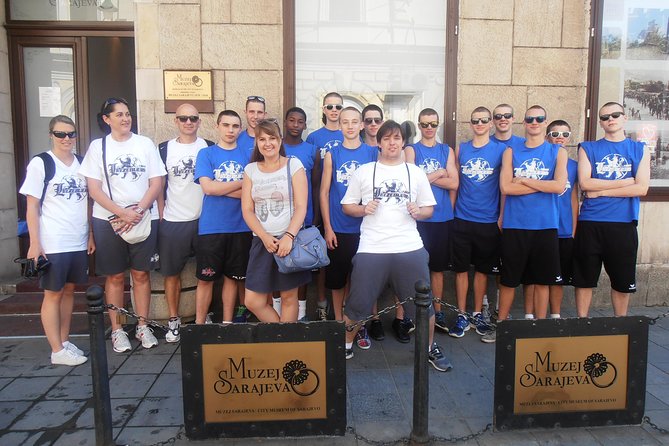
Next up is Emperor’s Mosque, described as Sarajevo’s oldest mosque. This is the kind of stop where you learn to notice details beyond just the facade—how centuries of Islamic heritage shape the city’s look and rhythm.
Then comes Franciscan Church of Saint Anthony, a neo-Gothic building that signals the Catholic presence in Sarajevo. Having the mosque and this church in the same walking flow is not just about pretty architecture—it’s how you see Sarajevo’s identity as a crossroads. You’re not just taking photos; you’re watching the city explain itself.
A simple trick: at each religious building, slow your looking for a minute. Read what’s around you. The tour narration helps, but your own “pattern noticing” turns this into real memory.
Brewery, a Modernist House, and the Spite House: When Sarajevo Gets Unusual
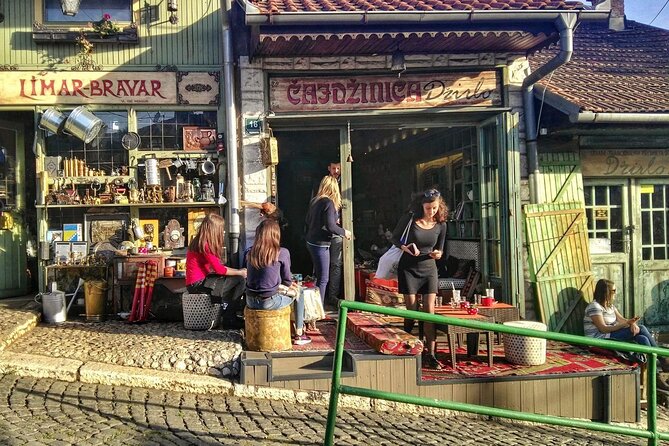
Not every Sarajevo tour spends time on industry and oddball architecture. Here you get Sarajevska Pivara (Sarajevo Brewery), described as Bosnia’s oldest industrial complex tied to traditional beer production. It’s a smart reminder that cities aren’t only their wars and cathedrals. They also have the businesses and routines that keep people going.
Then you’ll see the Bosnian House Bicakcic-Hadzisabanovic, described as a modernist architectural gem. This stop helps balance the tour. You don’t want only Ottoman arches and Austro-Hungarian facades in your head. Sarajevo also modernized, and this shows a different kind of creativity.
Finally, the House of Spite (built “brick by brick”) is the fun story break. It’s one of those Sarajevo anecdotes that sticks because it’s so human—someone pushed back, literally, by refusing to let a neighbor’s plan win. If you want a “laugh-then-learn” moment, this is it.
Sarajevo City Hall and Kovači Cemetery: East-West Beauty Meets Loss
At Sarajevo City Hall, you’ll see the neo-Moorish style that blends East and West influences. City Hall isn’t just a photo stop; it’s a clue to how Sarajevo looked when it wanted to project status and unity under older political structures.
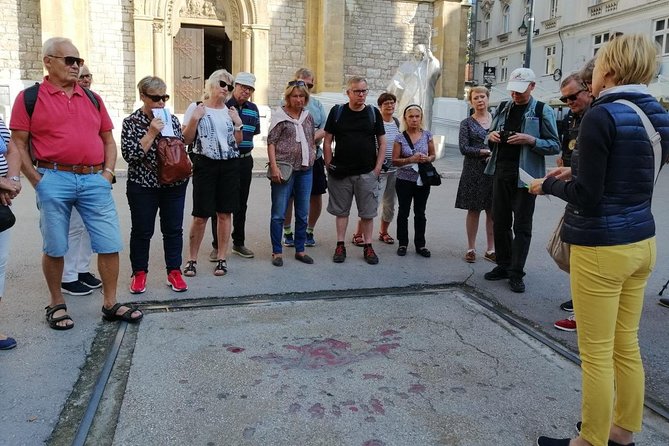
Then the mood shifts at Kovači Cemetery, a national memorial for Bosnia’s defenders from the 1992–1995 war. This part matters because it refuses to keep the war era as a headline. Instead, it gives you a place for reflection inside the city landscape.
Many guides are careful here, using the setting to explain meaning without sensational drama. It helps if you approach this stop with a quiet mindset and a moment to absorb. You don’t have to “get through it.” Let it land.
Kovači Street to Baščaršija: Ottoman-Layered Streets You Can Taste
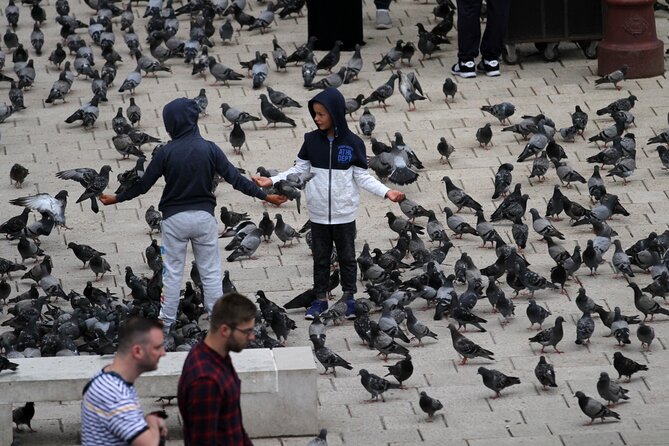
Walking continues through Kovači Street, known for Ottoman-era charm and local shops. Then you reach Baščaršija, the Old Town market center.
This is where the city stops being a timeline and becomes a living place. Baščaršija gives you texture: shopfronts, smells, movement, and the feeling of Ottoman Sarajevo as the city’s everyday center. It’s not just pretty. It’s functional. People still come here for goods, food, and conversation.
Next you’ll pass Bravadžiluk & Kazandžiluk Streets, tied to traditional metalwork and local culinary culture. Even if you don’t buy anything, it’s worth watching artisans at work if the day allows it. The tour gives you the map of what these streets were for, which changes how you see the storefronts.
Sebilj Fountain and Morica Han: The Old Town’s Social Heart
At Sebilj Brunnen (Sebilj Fountain), you’ll learn the local legend tied to returning to Sarajevo. This is one of those “small” stops that becomes memorable because it connects a landmark to a story, and then you can watch people gather in the same space later.
Then you move to Morica Han, described as Sarajevo’s last Ottoman inn. An inn is a city’s meeting place. You understand it better after you’ve seen the surrounding streets and marketplaces, because it fits into a bigger idea: people, trade, and hospitality kept Sarajevo functioning across eras.
If you like architecture that has a working purpose (not just a museum one), you’ll appreciate this stop.
Gazi Husrev-beg Mosque and the Meeting of Cultures: Calm, Then Symbol
Gazi Husrev-beg Mosque is a major stop, described as a 16th-century spiritual masterpiece. A mosque here is more than a building. It’s a reminder that Sarajevo’s identity is shaped by lived religious practice, not only by art history.
After that, you’ll stand at Sarajevo Meeting of Cultures, described as a symbolic crossroads of East and West. This stop works best after the earlier faith stops because you can connect the idea to what you just saw—different communities occupying the same urban story.
Take a minute at this point to look around. The narration helps you interpret what you’re seeing, but your eyes complete the picture.
Old Jewish Temple, Catholic Cathedral, and Serbian Orthodox Church: Four Faiths, One City Story
One of the strongest parts of this walk is that it doesn’t treat faith as separate chapters. It layers them.
You’ll visit the Museum of the Jews of Bosnia and Herzegovina, tied to the Old Jewish Temple and the priceless Sarajevo Haggadah. Even if you don’t go deep inside for long, you’ll understand the significance: Sarajevo’s Jewish heritage is a core piece of the city’s identity, not a sidebar.
Then comes Katedrala Srca Isusova (Cathedral of the Sacred Jesus Heart), described as Sarajevo’s grand Catholic cathedral and often compared to the city’s Notre Dame. You’ll also see the Serbian Orthodox Cathedral, known for striking murals and domes.
This sequence is powerful because you’re not just collecting different buildings. You’re getting the sense that Sarajevo’s streets were shaped by people who belonged to different traditions, yet shared the same city walls and public spaces.
Markale Market and the Eternal Flame: Daily Life to Remembrance
At Pijaca Markale (Markale City Market), the tour turns toward daily life. Markets are how a city stays itself. You’ll get a chance to experience that normal human rhythm—snacks, produce, chatter—right after heavier memorial stops.
Finally, Eternal Flame is a poignant World War II monument tied to remembrance and resilience. It’s a fitting end because it shifts the lens from Sarajevo’s many eras into one shared theme: survival and memory.
If you’re the type who likes your history lessons to connect to real places people still use, this ending hits the mark.
What the Best Guides Do Well (So You Know What to Expect)
This tour’s biggest differentiator is the guide style. Multiple guides named in connection with this experience—people like Ilma, Haris, Hana, Suad, and others—are praised for making complex history easier to follow and for using personal perspective to humanize events.
You can also expect engagement. One guest noted their guide made time to answer lots of questions. Another mentioned the guide stayed flexible when rain hit late in the walk.
If you want the best result, come with a couple of questions in mind, like:
- Why did Sarajevo become such a flashpoint in the 20th century?
- How did the different empires and religious communities shape daily life?
Your questions help the guide aim the narration.
Who Should Book This Walk—and Who Might Want Something Different
This tour is a great fit if you want:
- A first-day orientation so you can explore with confidence afterward
- A walking route that connects WWI origins, Ottoman-era streets, Austro-Hungarian-era architecture, and war memorial meaning
- A guide-led explanation rather than staring at plaques and hoping it all clicks
You might prefer a different format if you:
- Hate walking and want a mostly seated experience
- Need long, slow time inside museums or churches (this is a moving route with shorter stop durations)
- Are traveling only for food shopping or only for one specific era, like purely Ottoman or purely war-history
Should You Book the Sarajevo Grand Walking Tour?
If you want to understand Sarajevo as a whole—one city, many layers—this is an excellent value pick. The guide-led narration, the mix of landmarks, and the free-entry style stops make it efficient without feeling like a checklist.
Book it especially if you’re on a short visit and you want your first “wow” moment to be more than scenery. Wear comfortable shoes, dress for the weather, and bring curiosity. You’ll leave with a mental map—and with a city story you can actually tell back.
FAQ
Is the tour offered in English?
Yes. The tour is offered in English.
How long is the Sarajevo Grand Walking Tour?
It runs for about 3 hours.
What’s included in the ticket price?
You get a guide and a city map. Lunch, coffee/tea, and all fees and taxes are not included.
Do I need to buy admission tickets for the stops?
The stops in the route are marked as admission ticket free.
What if the weather is poor?
The experience requires good weather. If it’s canceled due to poor weather, you’ll be offered a different date or a full refund.
Can I get a refund if plans change?
Free cancellation is available up to 24 hours in advance for a full refund. If you cancel less than 24 hours before the start time, you won’t receive a refund.