REVIEW · BERGEN
Bergen: Past & Present Small Group Guided Walking Tour
Book on GetYourGuide →Operated by I Love Bergen · Bookable on GetYourGuide
Bergen feels like it has two clocks. This small-group walk connects medieval fort power, Hanseatic trade, and today’s streets in one smooth loop of sights and stories. I especially love how the route blends big landmarks with local lanes you’d miss on your own.
What I like even more is the second half: you don’t just hear history, you learn how people actually live in Bergen now—work routines, house prices, and even how locals deal with rain. And you’ll likely get stops and advice that make the city easier to explore after the tour.
The one catch: you’ll walk on uneven cobblestones and there are some uphill stretches. It runs in all weather, and it’s not a good fit if you have mobility limitations. Bring an umbrella and good shoes.
In This Review
- Key Things That Make This Bergen Tour Worth Your Time
- Getting Oriented Fast: Why This Tour Works on Your First Day
- Bergenhus Fortress: Where the Medieval Timeline Gets Real
- Bryggen and the UNESCO Alleys: Trade History You Can Walk Through
- Small Stops That Add Up: Wesenbergsmauet, Fjellgaten, and Skostredet
- Fløibanen Photo Stop: Views and a Change of Pace
- The Second Half: What Life in Bergen Looks Like Now
- Practical Details That Actually Matter in Bergen
- Price and Value: Why $26 Is a Sensible Bet for Two Hours
- Should You Book This Bergen Past & Present Walk?
- FAQ
- FAQ
- How long is the Bergen Past & Present walking tour?
- How much does the tour cost?
- Where does the tour start?
- Is the tour guided in English?
- Does the tour run in bad weather?
- What should I bring for the walk?
- Are there museum or building entrance fees included?
- Where does the tour end?
- Is this tour suitable for people with mobility impairments?
- Can I cancel and get a full refund?
Key Things That Make This Bergen Tour Worth Your Time
- Fortress-to-fjord stories: medieval Bergenhus, then the UNESCO Bryggen trade world, then present-day neighborhoods.
- Local-authorized guides: you’ll hear from guides who live in Bergen year-round and can answer real-life questions.
- Håkon Håkonsson in context: the fortress becomes a timeline, not just a pile of stone.
- Bryggen alley focus: you’re guided through the 300-year-old lanes tied to 400 years of Hanseatic League trade.
- Photo-stop planning: you get designated moments for pictures, including around Fløibanen and the Bryggen-area views.
- Food and café pointers: the tour ends with recommendations so your next hours are easier to plan.
Getting Oriented Fast: Why This Tour Works on Your First Day
If Bergen is new to you, the biggest problem is simple: the city looks gorgeous, but it’s hard to connect what you see with what it means. This tour solves that by moving from the fortress (power and protection), to Bryggen (trade and wealth), to the nearby residential streets (how life continues).
The pacing is also smart for a 2-hour walk. It’s not a “rush past everything” situation. You get short guided sections at the key stops, plus time for photos and questions. And because the group is limited—partly because some sections go through areas with residences—you’re less likely to feel like you’re walking with a crowd that won’t slow down.
Expect to start near the center, either at Bradbenken 1, Norsildmel AS or at Bergenhus Fortress (the exact meeting point can vary by option). The walk often finishes near the fishmarket area, at Strandkaien 1A.
You can also read our reviews of more walking tours in Bergen

Bergenhus Fortress: Where the Medieval Timeline Gets Real
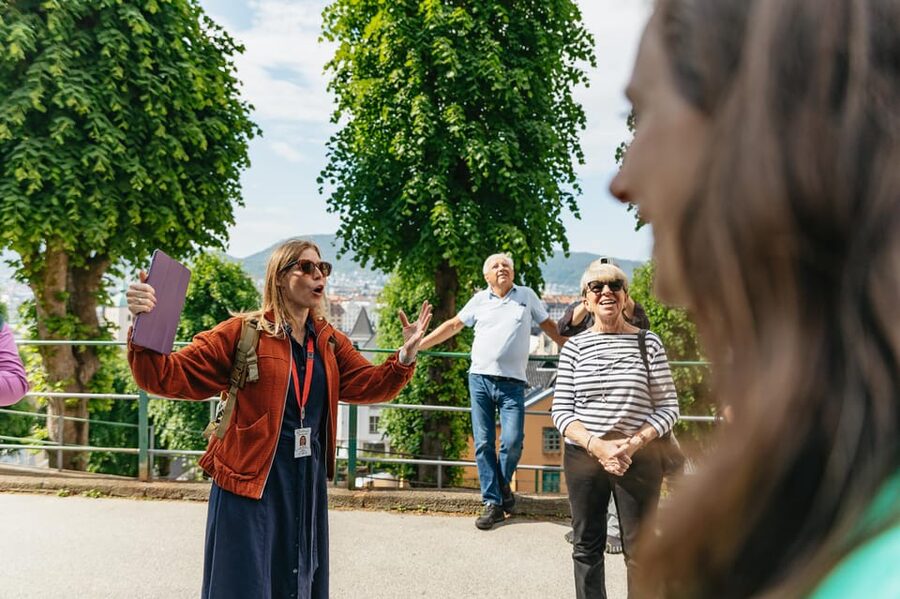
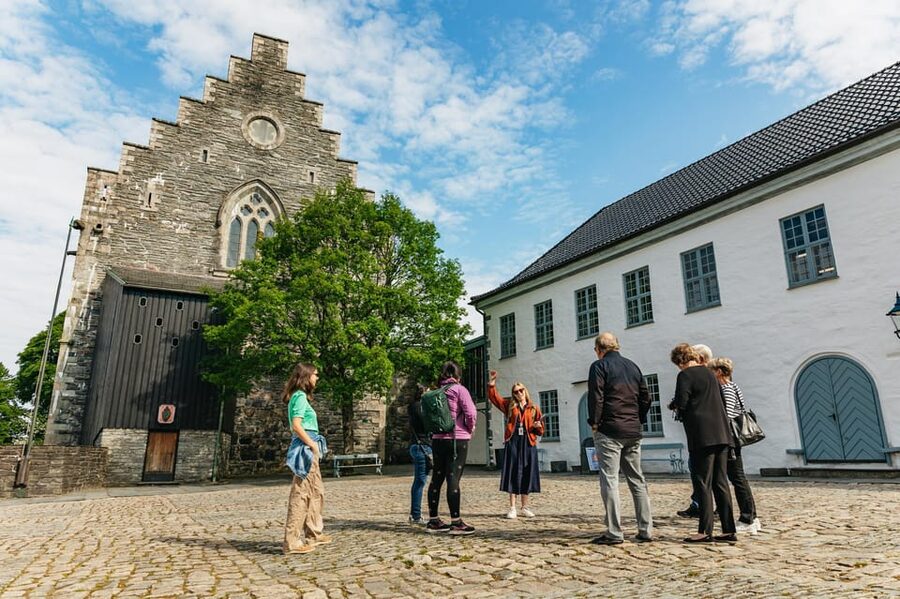
The first half starts at Bergenhus Fortress, around 30 minutes of guided time. This is the place to go if you want Bergen’s story to have a backbone: who had power, why the city mattered, and how the fortress shaped the city’s future.
Here’s what you can expect the guide to cover:
- The medieval roots of Bergen, including King Håkon Håkonsson and the fortress’s role in building strength for Norway.
- The coronation of Håkon Håkonsson being described as the first historic mention of Bergen as a rainy city. It’s a fun detail because it connects directly to the weather you’ll likely experience today.
- Bergen’s shifting political control over time, including periods under Denmark and Sweden, and then the Nazi occupation.
- How the fortress is used today—so you’re not stuck thinking only about the past.
One practical thing: fortress areas can involve stairs or uneven ground depending on where you stand for photos. If you’re comfortable walking outside a smooth “park path,” you’ll be fine.
Bryggen and the UNESCO Alleys: Trade History You Can Walk Through
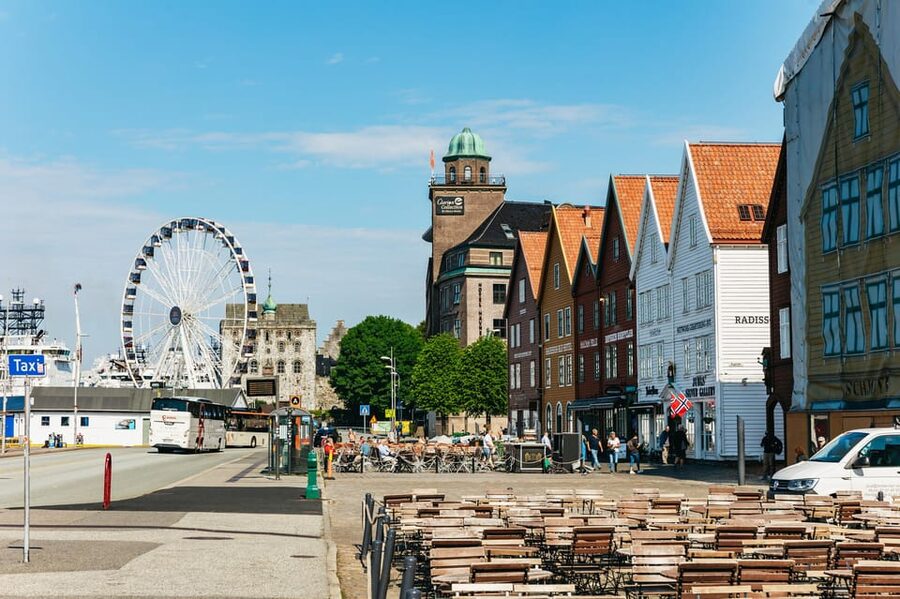
Next up is Bryggen, Bergen’s UNESCO World Heritage Site, guided for about 30 minutes with time for a photo stop and sightseeing. This is where Bergen stops being just a pretty harbor and starts becoming a trading machine.
The story you’ll get centers on:
- Around 1,000 years of trade history connected to the city’s founding and growth.
- The Hanseatic League, the German trading organization that operated here for about 400 years.
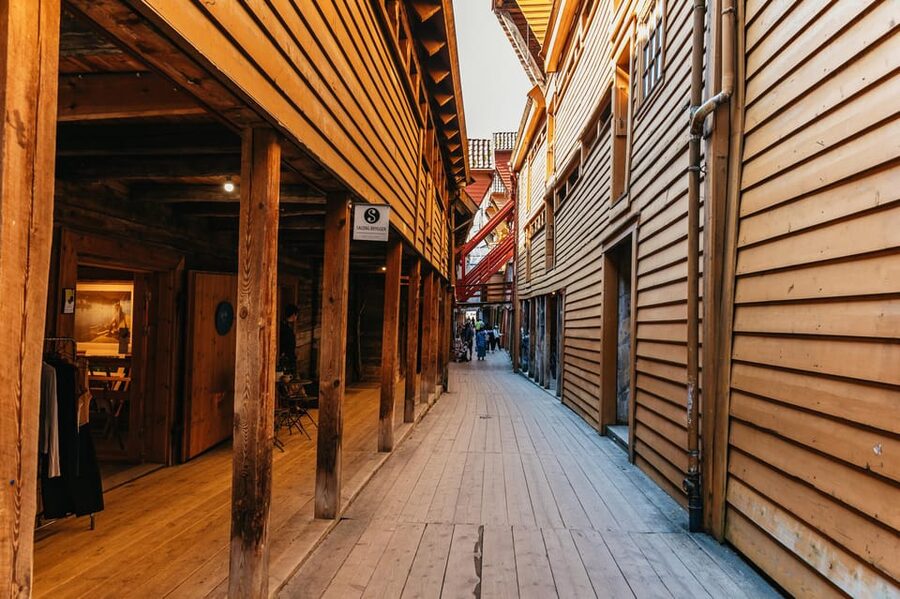
- The 300-year-old alleys around Bryggen, where trade life isn’t an abstract concept—it’s tied to the street layout and the narrow lanes themselves.
- A look toward St. Mary’s Church, described as the oldest building in Bergen, which helps anchor the tour in older times beyond the waterfront.
Bryggen is busy at many times of day, so a guided approach is useful. You’ll know where to look and why certain lanes matter. You’ll also get a sense of what people did there—not just what it looks like.
Small Stops That Add Up: Wesenbergsmauet, Fjellgaten, and Skostredet
After Bryggen, the tour moves into shorter guided segments at specific spots (each around 15 minutes), including photo stops and close-up context.
Two of the stops are:
- Wesenbergsmauet 16
- Fjellgaten 2
These addresses sound like random picks until the guide connects them to Bergen’s evolution—street-level clues that help you understand how the city grew and adapted. That’s where walking tours earn their keep: you notice details you would’ve walked past.
Later, you’ll also spend guided time at:
- Skostredet
Think of these as “Bergen in miniature” moments. The waterfront tells one story; these smaller lanes tell how daily life, buildings, and trade connections fit together.
If you care about photos, these sections are helpful because the guide typically gives a moment to reset and capture angles. That matters in Bergen, where the light changes fast and the weather can shift in minutes.
Fløibanen Photo Stop: Views and a Change of Pace
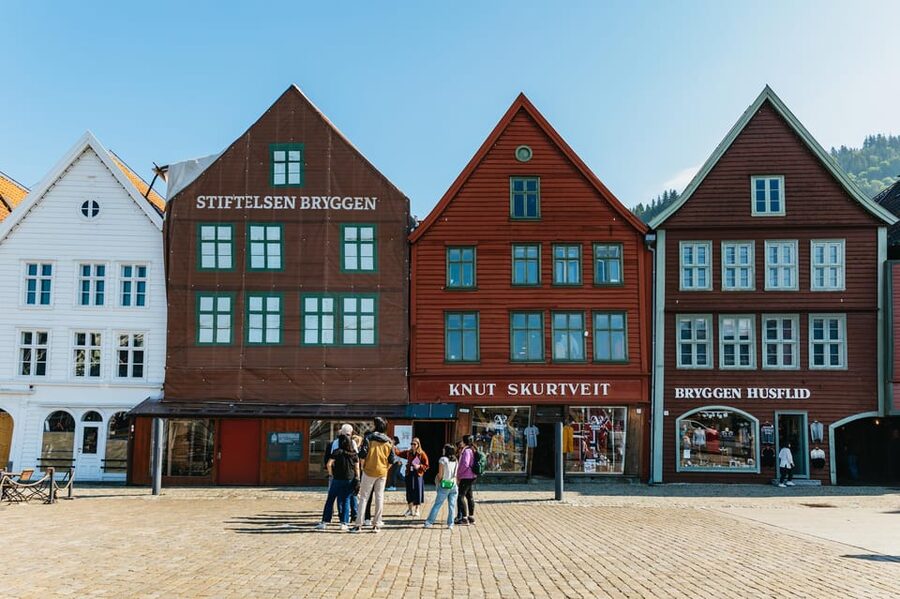
There’s a stop connected to Fløibanen, the funicular area. In this tour, it’s handled as a photo stop plus guided time (around 15 minutes). Even if you don’t take a ride, the viewpoint area is useful because it gives your brain a map of where everything sits.
What you’ll likely appreciate here:
- A clearer sense of Bergen’s layout after you’ve walked the historic lanes.
- A different “angle” on the city compared with Bryggen and the fortress grounds.
- Another checkpoint where the guide ties geography to story.
This is also a good time to ask questions. By now you’ve heard enough context to understand what you want to know next.
The Second Half: What Life in Bergen Looks Like Now
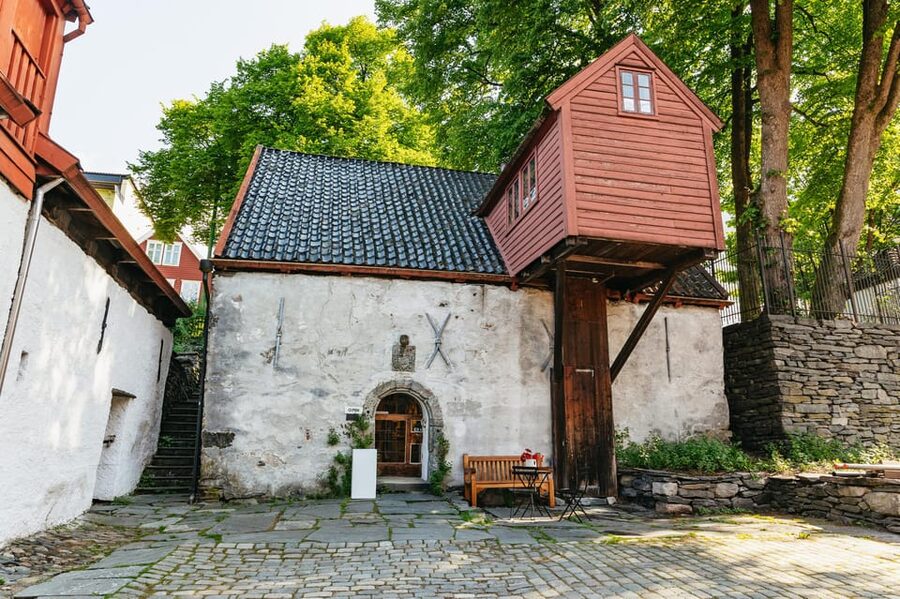
This is the part I’d prioritize if you’re deciding whether to do a walking tour at all. After the “touristy” layers, the guide takes you into neighborhood streets around Bryggen for the real-day picture of Bergen.
The route here is flexible. The guide chooses the path based on what they find most interesting locally, which is a big reason this tour doesn’t feel copy-paste.
You can expect themes like:
- House prices and what living here can feel like.
- Work life and the rhythms of the city.
- What people do for fun.
- Practical talk about how locals handle the rain.
- Street-level observations that connect back to the historic parts you just learned.
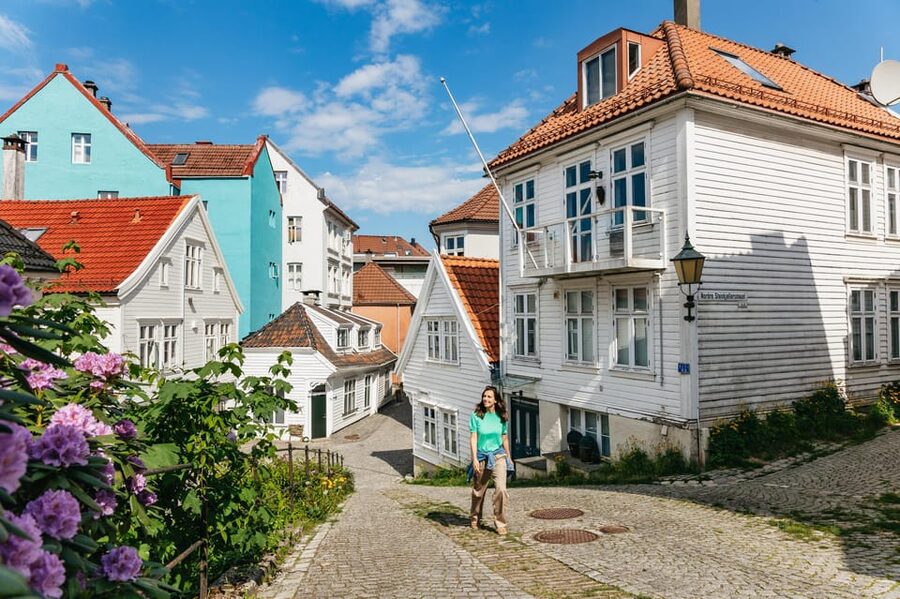
And yes, it’s also scenic. You’re walking through some of Bergen’s most picturesque sections, not just the most photographed.
A small but charming detail from the tour vibe: you might end up greeting local cats along the way.
Practical Details That Actually Matter in Bergen
This tour is straightforward, but Bergen walking has rules of its own.
- Bring an umbrella. You’re walking in real weather, not staged weather.
- Wear shoes for uneven cobblestone paths and some uphill stretches.
- The tour runs regardless of weather, so plan layers.
- It’s not suitable for people with mobility impairments, mainly because of the walking surfaces.
Group size is limited. That helps you stay together, keeps the pace comfortable, and makes it easier to ask questions—especially in residential areas where you don’t want a huge crowd.
English and German live guide options are available.
Price and Value: Why $26 Is a Sensible Bet for Two Hours
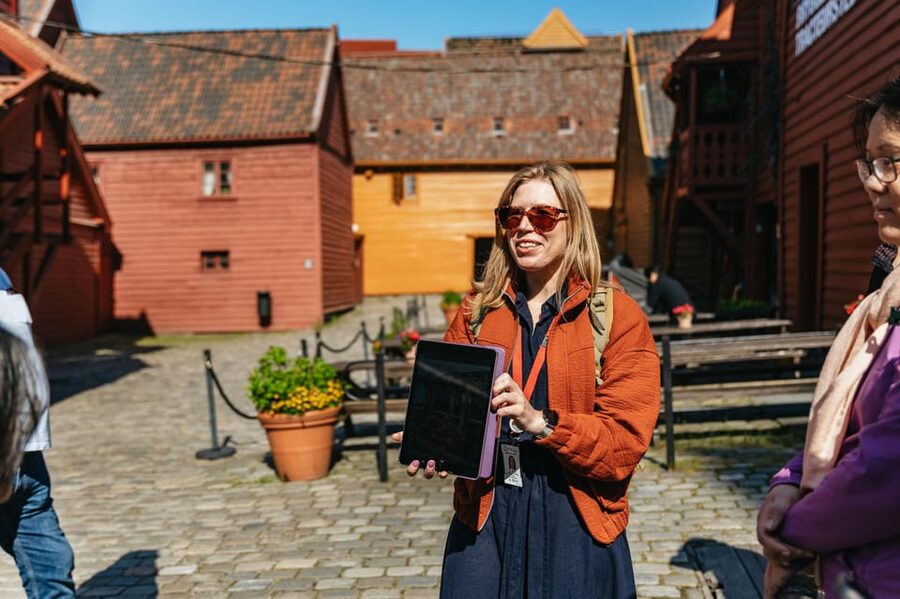
At about $26 per person for a 2-hour guided walk, this is priced like an orientation—not a high-end museum day.
Here’s where the value comes from:
- You’re paying for a local-authorized guide who can connect the fortress, Bryggen, and today’s neighborhoods into one storyline.
- The tour doesn’t rely on museum ticketing. Entrance fees aren’t included, but that also keeps the experience focused on streets, buildings you can see from the outside, and walking context.
- You get practical “what to do next” guidance at the end, including favorite café and restaurant recommendations.
If you’re only in Bergen for a short time, this tour is a fast way to learn the city’s logic. If you have more days, it becomes a springboard—because you’ll know where to return and what to look for.
Should You Book This Bergen Past & Present Walk?
I’d book it if you want:
- A first-day orientation that makes Bergen’s landmarks make sense.
- A mix of medieval storylines and real-life talk about how people live now.
- A guide who answers questions and gives solid food and coffee suggestions for afterward.
I’d skip it if:
- You need step-free routes or smooth surfaces.
- You dislike walking in rain and uphill sections, since it runs in all weather.
- You only want one type of experience (all fortress, all waterfront). This tour is intentionally mixed.
If you like your travel with context—stone plus street plus today—this is an efficient, local-feeling way to start.
FAQ
FAQ
How long is the Bergen Past & Present walking tour?
The tour lasts about 2 hours.
How much does the tour cost?
It costs $26 per person.
Where does the tour start?
The meeting point can vary depending on the option booked, including Bradbenken 1, Norsildmel AS, or Bergenhus Fortress.
Is the tour guided in English?
Yes. The live guide operates in English (and also in German).
Does the tour run in bad weather?
Yes. The tour takes place regardless of the weather.
What should I bring for the walk?
Bring an umbrella. You’ll also want shoes for uneven cobblestones and some uphill walking.
Are there museum or building entrance fees included?
No. Museum and building entrances are not included, and you won’t need them for this tour.
Where does the tour end?
The tour has drop-off locations that include Strandkaien 1A in Bergen, Norway, near the fishmarket area.
Is this tour suitable for people with mobility impairments?
No, it is not suitable for people with mobility impairments.
Can I cancel and get a full refund?
You can cancel up to 24 hours in advance for a full refund.