REVIEW · LONDON
Roman Ruins to Blitz Bombings: A Walking Tour of London’s Fiery History
Book on Viator →Operated by Historic London Tours · Bookable on Viator
London has layers, and this walk shows them. You’ll follow a guided route that connects old Roman-era traces to Second World War scars, with a local storyteller named Tom keeping the pace lively. I liked the small-group feel and Tom’s storytelling style, which makes big landmarks feel personal instead of like postcards.
Two things I really enjoyed: the short, focused stops that let you look closely, ask questions, and still move on before you get bored, and the mix of sights where some are free to enjoy on your own. You also get points for practical context, like what to watch for outside major buildings and how London kept getting rebuilt after shocks.
One possible drawback: you’re on your feet for most of the 2 hours, and the walking adds up. If you have mobility limits, you should think carefully and consider asking about an alternative, and you’ll definitely want comfortable shoes.
In This Review
- Key highlights to know before you go
- Roman Ruins to Blitz Bombings: what this 2-hour route really teaches
- Meeting at Trinity Square and the pace you should expect
- Tower of London: a royal palace with serious backstory
- St Dunstan in the East: a medieval church turned gardens
- The Monument to the Great Fire of London and London Stone legends
- Bank of England Museum, Guildhall, and St Paul’s: institutions that shaped the rebuild
- Small-group touring with Tom: why the guide matters here
- Price and value at $27.78: what you’re actually buying
- Who should book this walking tour—and who should pause
- Should you book this London history walk?
- FAQ
- Where does the tour start and end?
- How long is the walking tour?
- What is the group size limit?
- Is the tour offered in English?
- Is the ticket mobile?
- Which attractions require separate admission tickets?
- Which stops are free?
- Is the tour near public transportation?
- Are service animals allowed?
- What is the cancellation policy?
- Is this tour suitable for people with mobility issues?
Key highlights to know before you go
- Tom leads with clear, engaging answers and stays friendly if you have questions.
- Max 15 people means you’re not swallowed by a huge group.
- A mix of iconic sites and quick “why it matters” moments instead of long museum marathons.
- Some stops are free (so you can enjoy more even if you skip optional entries).
- You’ll walk a route, so plan for time on sidewalks and curb cuts.
Roman Ruins to Blitz Bombings: what this 2-hour route really teaches
London’s history can feel like a pile of dates. This tour turns it into a timeline you can see as you walk—starting with deep-time traces, then moving forward into power, fire, and war. The magic is how the guide links each stop to the next era, so you leave with a sense of cause and effect.
You’ll spend about two hours on the move, with brief visits at each stop (think five minutes each), plus walking time between them. That structure keeps you from getting information fatigue, which is a big deal on a city like London where there’s always another “must-see” pulling at your sleeve.
Also, the tour’s theme isn’t just decorative. It’s about what survives, what gets erased, and what gets rebuilt—with reminders hiding in plain sight. Even when a place looks calm today, the story behind it can be intense.
You can also read our reviews of more walking tours in London



Meeting at Trinity Square and the pace you should expect
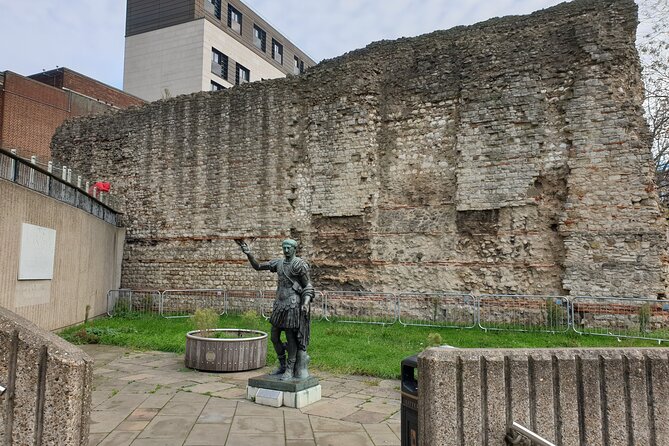
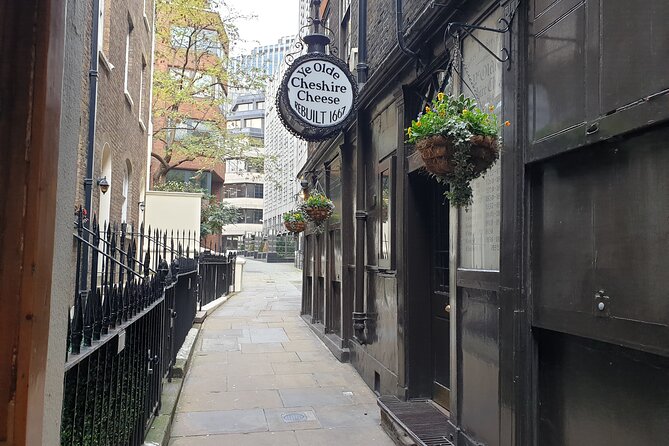
The tour starts at 38 Trinity Square, London EC3N 4DJ and ends at Ye Olde Cheshire Cheese, 145 Fleet St, London EC4A 2BP—outside the pub on Fleet Street. The end point is not far from Blackfriars Station, which makes it easy to connect to the rest of your day.
You’ll be in a small group (up to 15). That helps a lot when you want to ask questions, because you’re not yelling across a crowd. Based on what people liked most, Tom’s approach makes it easy to stay engaged without feeling lectured.
What to plan for: you’ll be walking between stops, not just standing in one spot. If you’re the type who gets sore legs fast, this is still doable for many people, but it’s not a sit-and-stare experience. If you’re traveling with mobility needs, do your homework and be honest with yourself about how far you can comfortably walk in two hours.
Quick prep tips that help immediately:
- Wear shoes you can stand and walk in for the full route.
- Bring water and keep an eye on the weather (London can change fast).
- If you want optional entries at ticketed sites, build in extra time later.
Tower of London: a royal palace with serious backstory
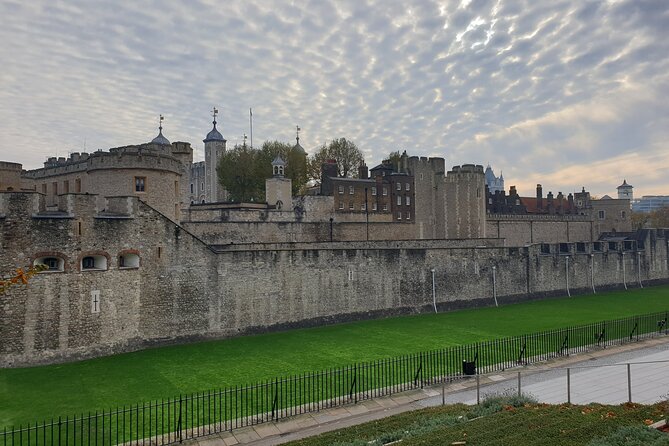
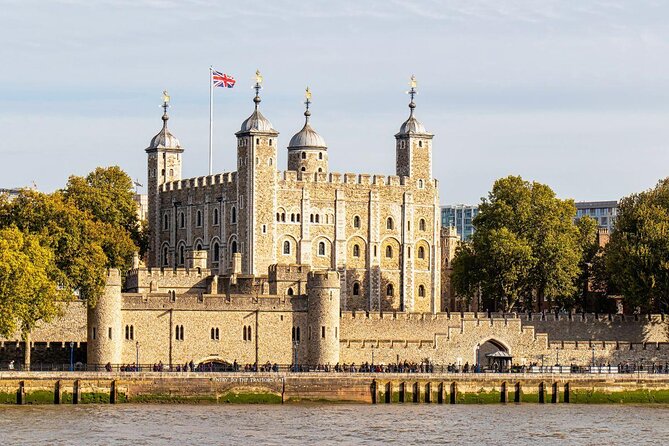
Your first stop is the Tower of London, described as Europe’s oldest surviving royal palace. Even if you’ve seen it from a distance before, the guide helps you notice what that label really means: continuity of power, repeated conflict, and the way the city organized itself around this kind of stronghold.
This is one of the stops where the tour helps you understand the place even if you don’t buy admission. Tower entry is not included, so you may just get a look and a quick orientation rather than a full walkthrough inside. That’s fine if you’re using the tour as your “here’s how London’s story works” primer.
The value here is perspective. You start your timeline with a landmark that matters across centuries, then later stops show you other kinds of disasters—fire and bombing—that changed London’s shape. It’s easier to understand why rebuilding mattered when you begin with a site built to endure.
St Dunstan in the East: a medieval church turned gardens
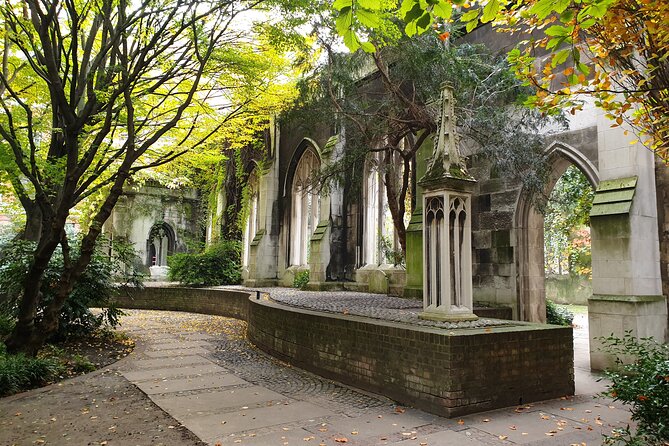
Next comes St Dunstan in the East, where you’ll find the gardens of a medieval church that was destroyed in the Second World War. This stop hits in a different way than the major palaces and big tourist monuments. It’s quiet, reflective, and it turns history into something human-sized.
The tour gives you time to take it in, and this one is free. That matters because it keeps the tour balanced—big headline London attractions are scattered with small, meaningful places where you don’t need extra tickets just to feel the story.
A good moment here is letting the guide’s explanation change how you look at the site. Instead of thinking of it as a ruin you pass through, you start seeing it as a physical reminder of how the Blitz reshaped the city’s religious and everyday spaces.
The Monument to the Great Fire of London and London Stone legends
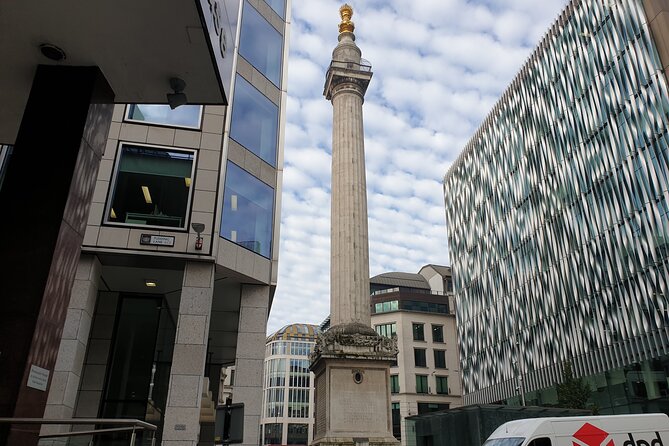
Then you walk over to the Monument to the Great Fire of London, tied to the 1666 disaster. This is not an abstract topic—this landmark is built to mark the moment London burned and rebuilt. The tour’s quick stop helps you connect the scale of the Great Fire with the way fire safety and construction habits became part of the city’s identity after.
The Monument is not included in the tour admission, so plan to pay separately if you want to go inside or do anything that requires a ticket. Even without that, you still get the “why this exists” context, which is the thing people usually wish they had once they’re already there.
After that, you’ll see London Stone, described as a stone with legends attached to it. This is one of those locations where the attraction isn’t one big building or one museum room. It’s the story attached to a small object in a city that loves symbolism.
What I like about mixing the Monument with London Stone is the contrast. One is official and monumental; the other is legend and lore. Together, they show that London’s history isn’t only written in brick. It’s also carried in stories people repeat.
You can also read our reviews of more historical tours in London






Bank of England Museum, Guildhall, and St Paul’s: institutions that shaped the rebuild
From there, you shift into the places where London organized itself—money, governance, and the churches that anchored civic identity.
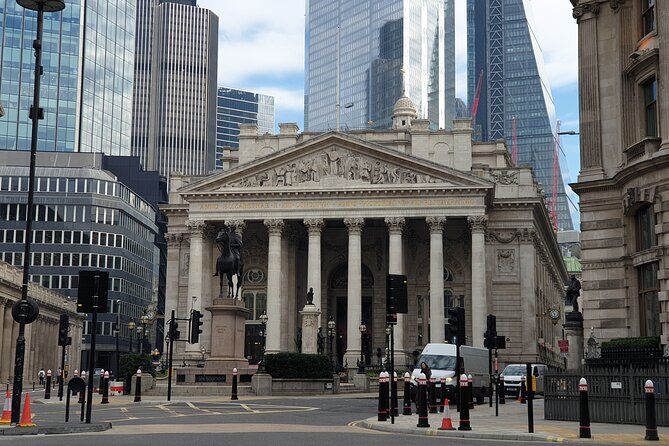
At the Bank of England Museum, you’re looking at the central bank of the UK. Tour admission here is not included, so treat it as a quick stop for orientation unless you plan to return with separate tickets. Still, this is a smart connection point in a tour with a Blitz theme: after catastrophes, someone has to manage finances and recovery, and institutions like this are part of that story.
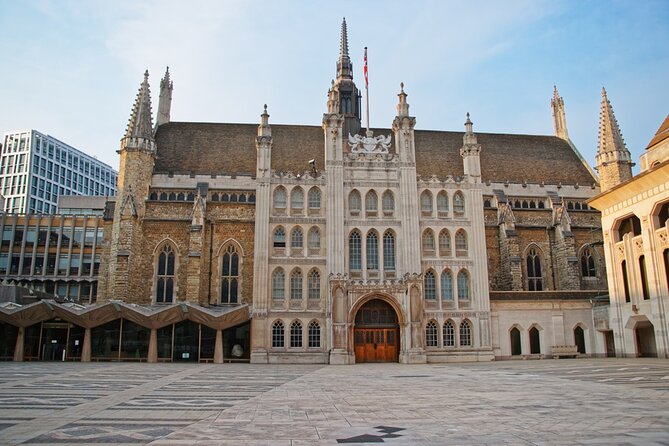
Next is Guildhall, a 15th-century hall connected to the Corporation of London. Again, entry is not included, so your time is best spent on the outside look and the guide’s explanation of why this building mattered. Places like Guildhall help you see how London governed itself, not just how it suffered.
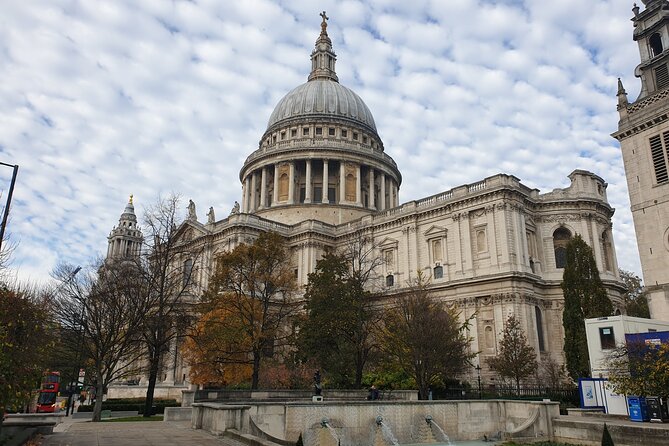
Finally, you’ll reach St Paul’s Cathedral, a seventeenth-century cathedral by Christopher Wren. Ticketed admission isn’t included, so you may focus on the cathedral’s presence and the historical context instead of planning a full interior visit during the tour window. But Wren’s name alone is enough to make this stop feel like a bridge: after fire and damage, architects and planners shaped what came next.
This cluster of Bank, Guildhall, and St Paul’s is valuable because it rounds out the tour. You get tragedy (fire, war) plus the systems that helped London keep functioning and reinvent itself.
Small-group touring with Tom: why the guide matters here
The thing people consistently praise is Tom. His style isn’t just memorized facts. It’s the way he keeps stories connected, and the way he answers questions without brushing them off.
I especially like that the tour doesn’t feel like a one-way script. You’re encouraged to ask, and Tom gives enthusiastic, pointed answers instead of vague ones. That’s how you remember a city: not just by seeing places, but by understanding what questions to ask while you’re standing there.
One more practical bonus: Tom also points out side sights and free museum options in the area where you can find Roman ruins and artifacts. You won’t be stuck thinking, okay, what now? You’ll get ideas you can follow immediately after the tour ends.
Price and value at $27.78: what you’re actually buying
At $27.78 per person, the price is mainly for your guided narrative and small-group attention, not for entry tickets. Several stops are explicitly marked as not included for admission—Tower of London, the Monument, Bank of England Museum, Guildhall, and St Paul’s Cathedral.
So here’s how I think about value: you’re paying for someone to help you interpret what you’re seeing in a tight timeline. If you also decide to enter ticketed attractions afterward, you’ll pay extra—but you’ll choose those entries with better sense of what matters most.
The tour also includes free access points like St Dunstan in the East and London Stone, so you’re not locked into paying for everything to get something meaningful out of the experience. That mix makes the tour work even if your budget is tighter.
One more timing note: the experience is booked on average 37 days in advance. That’s usually a sign of demand, especially with a max group size of 15. If you have a specific date in mind, you’ll feel safer booking ahead.
Who should book this walking tour—and who should pause
This tour is ideal if you love history but want it translated into street-level reality. It’s also good if you prefer a guided route that connects themes across centuries—Roman-era traces to the scars of the Blitz—without turning the day into a museum marathon.
You’ll probably get the most from it if you enjoy:
- Seeing the same city through multiple eras
- Asking questions and getting answers on the spot
- Using a guide as your “story navigator” before you explore on your own
Who should pause: anyone with mobility limits should think twice. Even though the tour is “only” two hours, it’s a walking route with multiple stops and lots of time standing outside. And while most people can participate, one important review caution is that the walk can feel long if you have mobility concerns. If that’s you, consider your ability to handle the sidewalks and the distance between stops.
Should you book this London history walk?
If you want a guided, story-driven way to understand London’s turning points—royalty at the Tower, tragedy at the Great Fire marker, war scars at St Dunstan, and the rebuilt city represented by places like the Bank and St Paul’s—this is an excellent fit. The small-group size and Tom’s approach are the real differentiators, and the route gives you both context and ideas for what to do next.
If you’re mainly chasing only inside-access tickets, you might not feel as satisfied because several major attractions require separate admission. But if you want the city’s timeline explained while you walk it, this tour is a strong use of a couple of hours in London.
FAQ
Where does the tour start and end?
The tour starts at 38 Trinity Square, London EC3N 4DJ, UK. It ends at Ye Olde Cheshire Cheese, 145 Fleet St, London EC4A 2BP, UK.
How long is the walking tour?
The tour lasts about 2 hours.
What is the group size limit?
The tour has a maximum of 15 travelers.
Is the tour offered in English?
Yes, it is offered in English.
Is the ticket mobile?
Yes, it includes a mobile ticket.
Which attractions require separate admission tickets?
Admission tickets are not included for the Tower of London, the Monument to the Great Fire of London, the Bank of England Museum, Guildhall, and St Paul’s Cathedral.
Which stops are free?
St Dunstan in the East and London Stone are listed as free.
Is the tour near public transportation?
Yes, it is near public transportation.
Are service animals allowed?
Yes, service animals are allowed.
What is the cancellation policy?
Free cancellation is available up to 24 hours in advance for a full refund.
Is this tour suitable for people with mobility issues?
Most travelers can participate, but the walk may be challenging for people who have mobility issues, since it is a walking route with multiple stops.