REVIEW · REYKJAVIK
Reykjavik Walking Tour – Walk with a Viking
Book on Viator →Operated by Your Friend In Reykjavik · Bookable on Viator
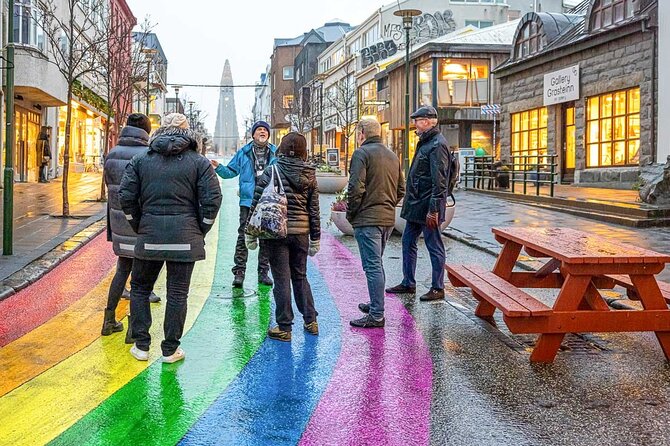
Vikings meet downtown Reykjavik on foot. This 2-hour guided walk pairs classic Iceland sightings with Viking-era stories, from the two-pillar Ingólfstorg square to Harpa Concert Hall and Hallgrímskirkja. You’ll also get practical tips on where to shop and eat—useful stuff when your plan is limited to a few hours.
I love two things right away: the small group size (12 max) keeps the pace friendly and the questions easy, and the guide storytelling is built around local context, with examples like Ester E, Bo, Einar, Robyn, and Óli popping up in past groups. The walk also hits a nice mix of old and new Reykjavik so you don’t feel stuck in one theme.
One thing to consider: this is a real outdoor walk in all weather conditions, so you’ll want proper layers. Also, most stops are free to enter, but the Settlement Exhibition has an extra admission cost.
In This Review
- Key highlights worth showing up for
- Why this walking tour works for a first day in Reykjavik
- Price and what $55.63 buys you (and what it doesn’t)
- How to start right: Ingólfstorgur and Austurstræti with the two stone pillars
- Aðalstræti’s oldest house: the quiet history stop you’ll remember
- The Settlement Exhibition: a Viking longhouse under the streets
- Austurvöllur, Tjörnin, and City Hall: where the city breathes
- Alþingi and the old graveyard: democracy and memory in one stretch
- Old Harbour to Harpa: maritime Reykjavik to glass-and-light Reykjavik
- Laugavegur and the Arnahöll viewpoint: shopping street plus city views
- Hallgrímskirkja finale: the big church, plus the Viking-style stories
- What this tour is best for (and who should skip it)
- Quick FAQ before you book
- FAQ
- What’s included in the walking tour price?
- How long is the Reykjavik walking tour?
- What language is the tour offered in?
- How big is the group?
- Where do I meet the guide?
- Does it run in bad weather?
- What if I need to cancel?
- Should you book Walk With a Viking in Reykjavik?
Key highlights worth showing up for
- Ingólfur Square start: meet at the two stone pillars, each over 3 meters tall
- Aðalstræti’s oldest house: a living historic building tucked beside modern streets
- The Settlement Exhibition peek: preserved remains of a Viking longhouse under the city streets
- Harpa’s light show effect: the building’s changing visuals are part of the experience
- End at Hallgrímskirkja (or next door): finish near the church or Einar Jónsson’s statue garden for easy photos and views
Why this walking tour works for a first day in Reykjavik
If Reykjavik feels small on the map, it can still take time to make it click. This tour solves that with a compact route that touches the city’s most recognizable landmarks without turning it into a sprint. You’re walking through neighborhoods where the past and present sit close together—often just a few blocks apart.
The value is also in the structure. With a group capped at 12, you’ll spend more time walking with context and less time standing around waiting for the loudest person to catch up. Past guests repeatedly call out the same sweet spot: an easy pace, frequent stops, and a guide who keeps the story going without turning it into a lecture.
The Viking theme is fun, but it’s not only about helmets. You’ll learn how Viking-era roots connect to today’s civic life, faith, and even local folklore. Expect the guide to weave in myths/legends alongside modern city reality—useful if you want to understand why Reykjavik feels the way it does.
You can also read our reviews of more walking tours in Reykjavik


Price and what $55.63 buys you (and what it doesn’t)
At $55.63 per person for about 2 hours, you’re paying for three things: a local guide, a tight downtown route, and a small-group format. That’s the good deal here. Reykjavik’s center is walkable, but without a guide you’d likely miss the story behind places like the Settlement Exhibition or the meaning behind Parliament’s long roots.
A quick reality check: food and drinks aren’t included. You’re also not buying museum access across the board; most stops are free, but the Settlement Exhibition isn’t. Still, the overall cost can feel reasonable because you’re getting a lot of “sightseeing + explanation” packed into one slot—especially if you’re only in town for a short visit.
One more small pricing note that matters for planning: this tour uses a mobile ticket, so you don’t need to fumble for paper vouchers at check-in.
How to start right: Ingólfstorgur and Austurstræti with the two stone pillars
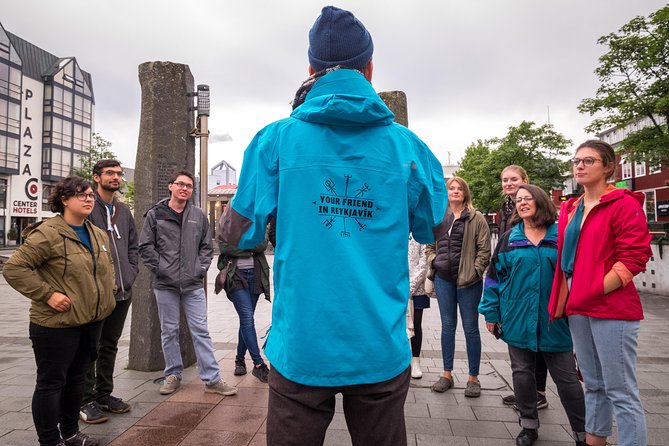
Your tour begins at Ingólfur Square in the center of Reykjavik, specifically by the two stone pillars (over 3 meters high). It’s an easy meeting point once you know what to look for: your guide is typically wearing a light blue jacket with Your Friend in Reykjavik on the back.
Why this start matters: it gets you oriented fast. Those pillars mark a point you’ll actually want to pass again later, and it anchors the route so you understand how the city’s streets flow outward. Plan to arrive 5 minutes early so you’re not stressed in the cold wind (or rain, or snow—Reykjavik keeps it entertaining).
This first segment is also where the guide’s tone sets your expectations. Many guests rave about guides who combine local history with humor and quick context, and that’s usually exactly what you want on day one.
Aðalstræti’s oldest house: the quiet history stop you’ll remember
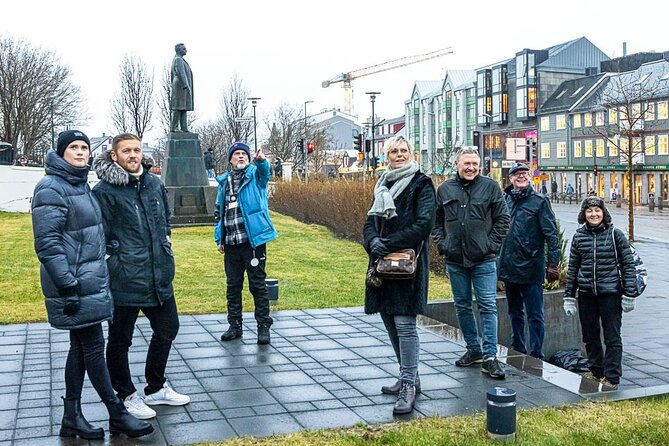
Next you’ll move to Aðalstræti, where you see one of Reykjavik’s oldest houses. This isn’t a theme-park replica. The building is described as a living testament to the city’s past, meaning you’re looking at a structure that connects directly to how the city evolved.
The main value here is atmosphere. While other stops are big “wow” landmarks, this one slows you down. You get a sense of how old Reykjavik sat among newer construction—like a time layer you can still spot with your own eyes.
The potential drawback is also obvious: it’s a quick stop. You’re not touring a full interior experience. If you want longer history lectures, this may feel like a brief taste rather than a meal.
The Settlement Exhibition: a Viking longhouse under the streets

Then comes the most Viking-leaning moment: The Settlement Exhibition. The big idea is simple and cool—remains of a Viking longhouse are preserved and displayed beneath the city streets. Your guide walks you past the exhibit and explains what you’re seeing, using it as a springboard for Iceland’s wider story.
This is where the Viking angle gets real. Instead of just hearing legends, you’re looking at physical remnants. It helps you understand why Viking history matters in Reykjavik beyond costumes and flags.
Worth noting: this stop’s admission isn’t included. The other landmarks on the walk are listed as free entries, so you’ll want to budget for this one extra ticket.




Austurvöllur, Tjörnin, and City Hall: where the city breathes
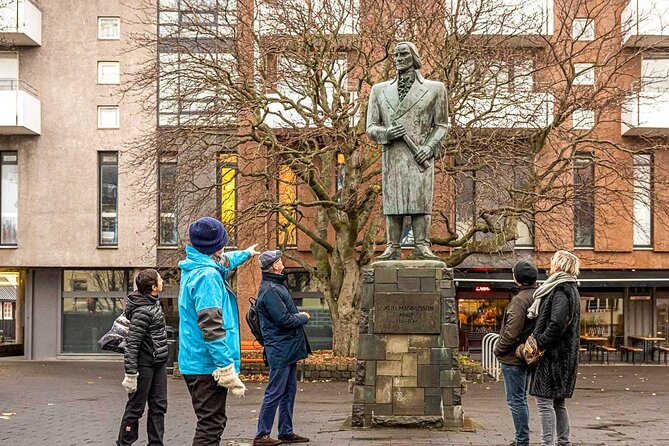
The tour doesn’t stay trapped in museum-land. You’ll spend time around Austurvöllur square, a central gathering area with cafes and historic surroundings. It’s a good pause, and it’s also a reminder that Reykjavik is a working city, not only a sightseeing stop.
From there you’ll continue to Lake Tjörnin, a small urban lake right in town. This is the “sit for a moment” stop: you’ll get water reflections, birds, and a calmer feel without leaving the center. If the wind is strong, you might appreciate that it’s not always a constant shuffle like some walking routes.
After that, you visit Reykjavik City Hall (the City Council House). This stop adds a civic layer. You get a quick look at the halls and the idea of local governance, with artwork and the sense that Reykjavik’s civic identity is part of its story.
Potential consideration here: these stops are shorter (often around 5–10 minutes each), so you’ll want to listen for what the guide highlights. Don’t just photograph; ask the one question you’d forget later.
Alþingi and the old graveyard: democracy and memory in one stretch
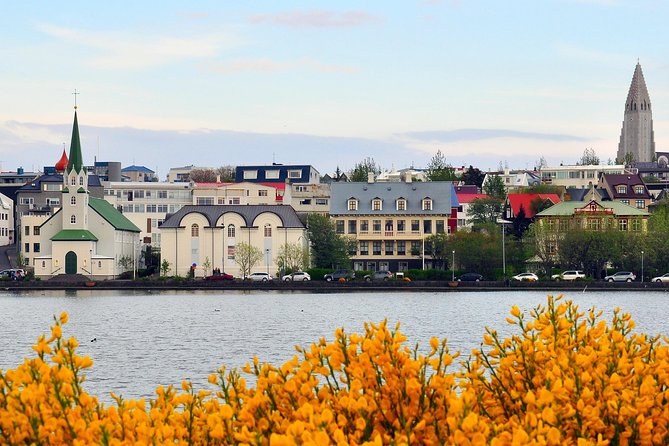
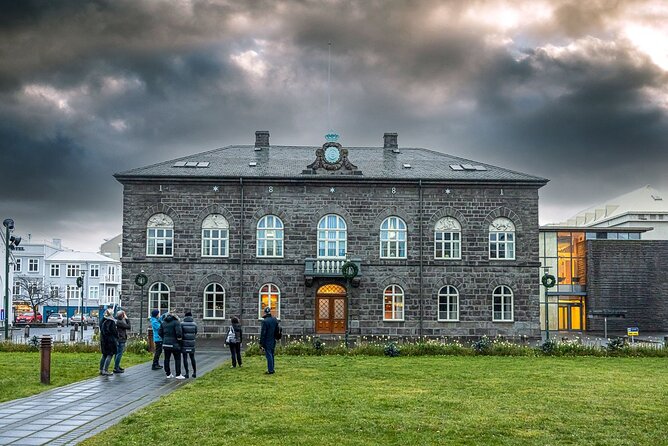
Next up is Alþingi (Althingishus), Iceland’s Parliament building. This is one of those locations where the symbolism is part of why people care. The tour connects the institution to its deep roots, tracing back to 930 AD, and shows how Iceland’s political identity has evolved over centuries.
Then you visit Kirkjugarðurinn Suðurgötu, Iceland’s oldest graveyard. This is a quieter stop, with weathered headstones and a reflective mood. It’s also a reminder that Iceland’s story includes real people, not just legends.
Why this pairing works: it connects governance and memory. You’re seeing how a society honors its past while building institutions for the present. If you like history that feels human (not just dates and facts), this section is usually a highlight.
Old Harbour to Harpa: maritime Reykjavik to glass-and-light Reykjavik
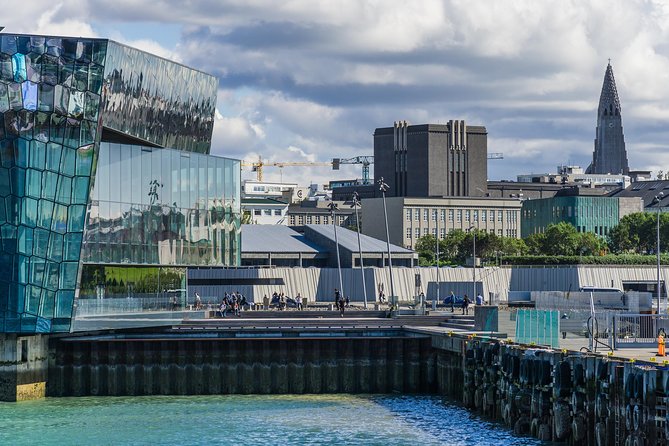
The walk continues to Old Harbour, a maritime area with cobbled streets, colorful buildings, and boats tied up along the waterfront. This stop gives you a different Reykjavik vibe. It’s still central, still walkable, but it feels more sea-connected—like the city grew up with the ocean.
After the harbor, you head to Harpa Concert Hall and Conference Centre. Outside, it’s famous for its crystalline facade look. Inside, the guide points you toward the experience people remember most: the ever-changing display, with lighting effects that shift patterns and colors.
This is where the tour gets especially fun if you like a “modern Iceland” moment. You aren’t just hearing about culture—you’re standing in front of architecture that actively changes what you see.
Time here can be short, so don’t plan to treat this like a full performance visit. Instead, think of it as an architectural intro and photo-friendly stop.
Laugavegur and the Arnahöll viewpoint: shopping street plus city views
You then walk along Laugavegur, Reykjavik’s main street. Expect shops, cafes, and that easy downtown energy where you can pop into places after the tour. This is one of the practical sections. Your guide’s tips on where to shop and eat tend to make sense because you’re seeing the street layout at the same time.
After Laugavegur, the tour heads toward Arnahöll, a hill viewpoint overlooking downtown. It’s a relaxed “take the air and look around” moment. You’ll get views of colorful rooftops, the tall silhouette of Hallgrímskirkja, and the mountains beyond (depending on weather and visibility).
If you’re traveling in winter or windy shoulder seasons, this segment is a reminder to dress for cold air. Short climbs feel longer when the wind hits.
Hallgrímskirkja finale: the big church, plus the Viking-style stories
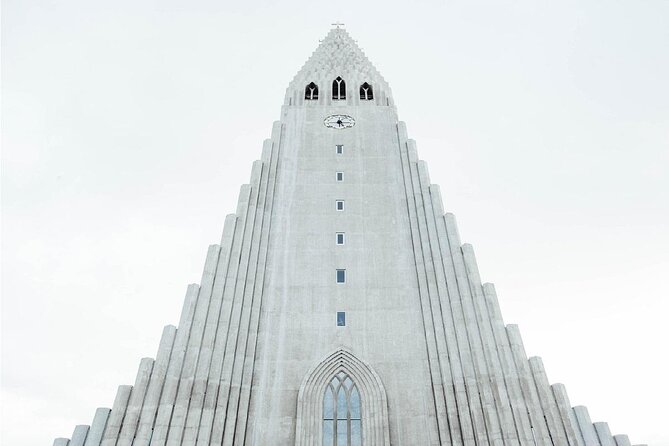
Finally, you end at Hallgrímskirkja (or you may finish near Einar Jónsson’s statue garden, which is next door). Hallgrímskirkja is the standout architecture stop—the one everyone spots when they first look at Reykjavik from a distance.
This last part is about turning your photos into real memories. Your guide will bring in fun stories and context, not just a checklist of facts. Past guest notes often mention the guide adding quirky humor and making the stop feel like part of the overall narrative, not a random final stop.
Also, don’t treat the final moments as a rush to leave. Use them to orient yourself for the rest of your day. If you’re planning dinner nearby or want to find your way back to the main shopping street, finishing here sets you up well.
What this tour is best for (and who should skip it)
This is a strong pick for:
- First-time visitors who want downtown bearings fast
- People who like history mixed with everyday city life
- Travelers who want a guide to point out what matters at each landmark
- Anyone who prefers a 12-person maximum group (not a crowd)
You might skip it if:
- You hate walking in weather and would rather sit in warm museums
- You want a full museum ticket tour rather than quick stops
- You’re looking for a deeply technical Viking lecture only (this is Viking-themed, but it’s also civic and city-life focused)
For most people, it’s an excellent “start here” activity—especially if you’re trying to make only one or two sightseeing plans before branching out on your own.
Quick FAQ before you book
FAQ
What’s included in the walking tour price?
The tour includes an expert local guide and a small group format (12 people max). Food and drinks aren’t included, and The Settlement Exhibition admission is not included.
How long is the Reykjavik walking tour?
The duration is about 2 hours.
What language is the tour offered in?
The tour is offered in English.
How big is the group?
The group maximum is 12 travelers.
Where do I meet the guide?
Meet at Ingólfstorgi 1, 101 Reykjavík, Iceland at Hlöllabátar / Ingólfstorgi. Arrive about 5 minutes early.
Does it run in bad weather?
Yes, it operates in all weather conditions. You should dress appropriately.
What if I need to cancel?
You can cancel for free up to 24 hours in advance for a full refund. If it’s canceled due to poor weather, you’ll be offered a different date or a full refund.
Should you book Walk With a Viking in Reykjavik?
Yes, if you want a practical orientation of downtown Reykjavik with Viking-flavored storytelling and real landmarks packed into one easy morning or afternoon slot. The small-group size, the guide-led pacing, and the mix of stops—from Harpa’s shifting facade effects to Alþingi’s long roots—make this a high-value use of a limited travel day.
Just go in with the right expectations: it’s mostly a walk with short stops, not a long museum day. If you dress for wind and rain and bring a flexible mindset, you’ll leave with a much better map of the city in your head—and a few good spots to revisit when you’re ready to wander.