REVIEW · REYKJAVIK
Reykjavík Small group Walking Tour – by CityWalk
Book on Viator →Operated by Free walking Tour Reykjavik CityWalk · Bookable on Viator
A good first day needs a map in human form. This Reykjavík small-group walking tour is a tight, two-hour orientation packed with landmark stops and the kind of city backstory you usually only learn after asking locals a hundred questions. You start at Hallgrímskirkja, move through the center, and end near Austurvöllur or Tjörnin, so your legs and your bearings both improve fast.
What I like most is the balance of big sights and real context. You get quick visits to places like Hallgrímskirkja, Harpa, and the Old Harbour, but the guide also explains why they matter in Iceland’s larger story. I also like the small group size (up to 12), plus frequent chances to step indoors when the weather turns mean.
One consideration: this is billed as a walking tour, but the route is fairly compact and the time at each stop is short. If you were hoping for a long, big-distance march, you might find the two hours feel short, especially in cold or windy conditions.
In This Review
- Key highlights worth planning around
- Entering Reykjavik with Hallgrímskirkja as your compass
- Your 2-hour route: from church views to City Hall warmth
- Hallgrímskirkja: why Reykjavik’s biggest church feels personal
- Rainbow Street and the National Theatre: art, shops, and city identity
- Arnarholl Statue: Ingólfur Arnarson and the first-settler story
- Harpa Concert Hall: impressive design, flexible stop timing
- Old Harbour and fishing history: where the city earned its edge
- Parliament House (Althingishus): politics explained without the headache
- Reykjavík City Hall and the big Iceland map inside
- Who this tour suits best (and who may want more time)
- Price and value: what $53 buys you in Reykjavik terms
- Booking timing and weather reality
- Should you book this Reykjavik small-group walking tour?
- FAQ
- How long is the Reykjavik small-group walking tour?
- Where does the tour start and where does it end?
- Is the tour offered in English?
- How many people are in the group?
- Are there admission tickets included for the stops?
- Does the tour run in bad weather?
- What’s included, and what’s not?
Key highlights worth planning around
- Small group (max 12) keeps the pace comfortable and makes questions easier
- Hallgrímskirkja first so you understand the city’s visual landmark early
- Indoor warmth at key moments, including a stop at Reykjavík City Hall
- Photo-friendly stops across the center, including Harpa and Rainbow Street
- Local stories about settlers and politics, not just dates and names
- Harpa timing can shift, but the tour still finishes near it
Entering Reykjavik with Hallgrímskirkja as your compass
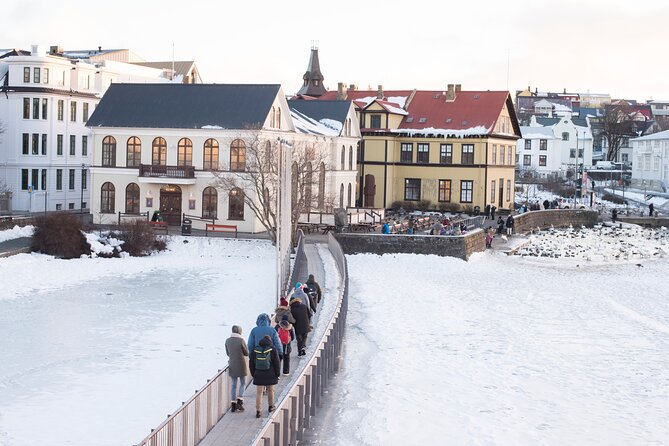
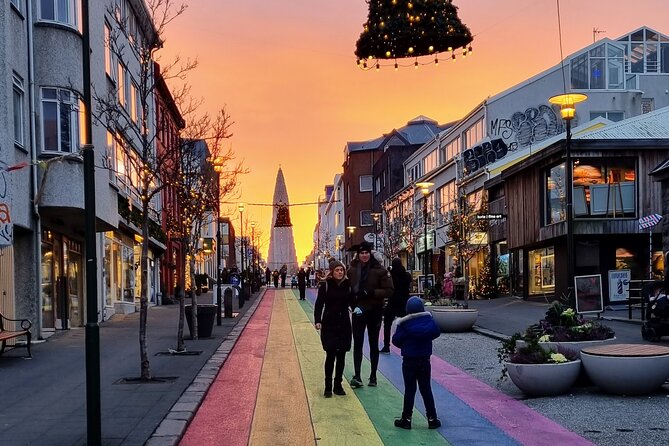
If Reykjavik is new to you, this tour is a smart way to start. Most cities feel confusing on day one because you’re looking at buildings without knowing the plot. Here, you get the plot fast. The tour begins at Hallgrímstorg, in front of Hallgrímskirkja, and that matters because the church’s shape is one of the first things you’ll notice walking around the city.
Hallgrímskirkja was designed by Guðjón Samúelsson, and the guide’s early explanation helps you see it as more than an impressive silhouette. You also get a practical win: you’re starting in the center, so by the time you finish, you’re close to major squares and waterfront areas.
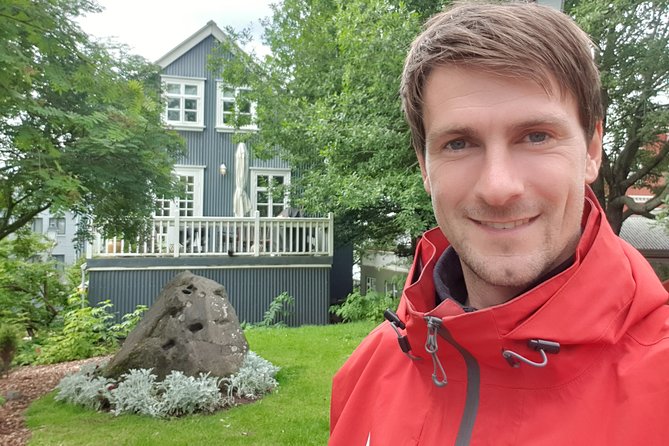
The mood is also friendly. Guides coming through this format are often described as funny and engaging, with a comfortable rhythm. Names that show up in the guide mix include people like Asi, Ryan, Asta, and Martyn, and the common thread is that they know how to translate Icelandic culture into something you can actually use while you walk.
You can also read our reviews of more walking tours in Reykjavik


Your 2-hour route: from church views to City Hall warmth
This tour runs about two hours and hits several major spots in sequence. The rhythm is built around short stops, photos, and a handful of stories at each location. That makes it ideal on arrival day, when you still haven’t figured out which streets you like or which landmarks you’ll want to return to.
You can expect the pace to be comfortable, with enough time to listen and look. The tour also operates in all weather, so you should dress like Reykjavik weather is always one decision away from rain or wind. A compact route plus quick indoor moments is exactly what you want when you’re wet, cold, or both.
Here’s how the walk plays out, stop by stop, and what each one gives you.
Hallgrímskirkja: why Reykjavik’s biggest church feels personal
The first stop is Hallgrímskirkja, and you’re there long enough to actually take it in—about 15 minutes. The church is free to enter during the stop (no special admission required as part of the tour), which is a big deal because Iceland tours often become expensive the minute you add museums and paid attractions.
What you gain here is orientation. Hallgrímskirkja isn’t just tall; it’s a landmark you’ll keep seeing from different angles. Learning a bit about its designer, Guðjón Samúelsson, and the idea behind its form helps you later recognize it instantly, even when you’re walking with a coffee in one hand and a camera in the other.
If it’s cold or windy, this stop is also one of your first chances to get inside early. Reviews also point out that indoor moments help you stay comfortable through the afternoon chills, and this is one of the earliest built-in benefits.
Rainbow Street and the National Theatre: art, shops, and city identity
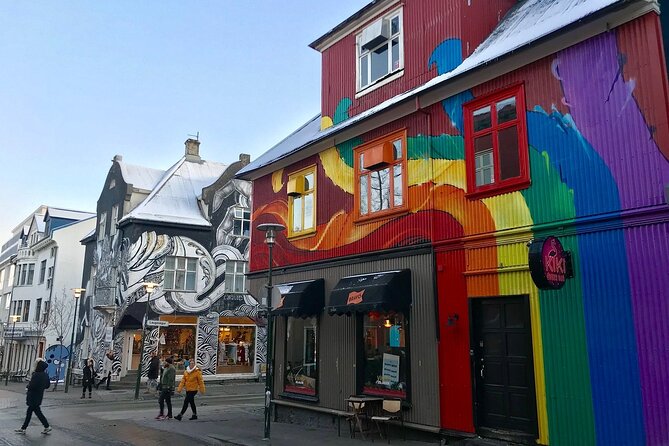
After the church, the route heads toward Rainbow Street, where you’ll pass galleries and shops. This is the part of the tour that feels more like atmosphere. You’re not there to study a single building; you’re there to understand the vibe of the center—where local businesses cluster, where creative spaces show up, and how the city looks when it turns into a place to browse.
Then you move past the National Theatre of Iceland, designed by Guðjón Samúelsson as well. That connection matters. When the guide ties these buildings together through design, you start to see Reykjavik’s architecture like a system instead of a random mix of styles. It’s also a helpful way to learn the difference between purely decorative landmarks and ones with a real cultural mission.
Photo tip: this is one of those stretches where you’ll get good shots without needing to “pose for landmarks” like you might at a museum. If you like quick street photos, keep your camera accessible here.
Arnarholl Statue: Ingólfur Arnarson and the first-settler story
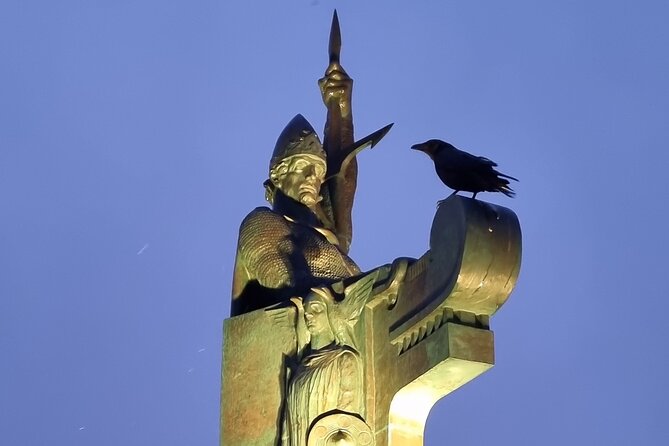
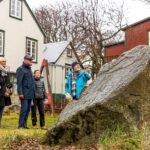
Next comes the Arnarholl statue, tied to Ingólfur Arnarson, often described as the Viking who is connected to Iceland’s first settlement. This stop is about 10 minutes and focuses on the story behind the statue—how early settlement is part myth, part historical memory, and part national identity.
This is where the tour shifts from city shapes to the people-shapes behind them. Iceland is young as a country in European terms, and the founding stories matter. When a guide explains the first settlers in plain language, it changes how you interpret everything else you see—harbors, political buildings, even modern neighborhoods.
The practical angle: if you’re planning to visit more museums later, this stop makes the stories easier to follow. Instead of absorbing facts in isolation, you’ll recognize themes.



Harpa Concert Hall: impressive design, flexible stop timing
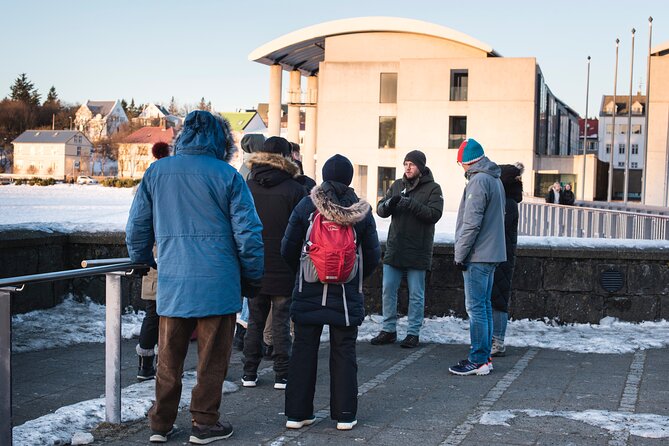
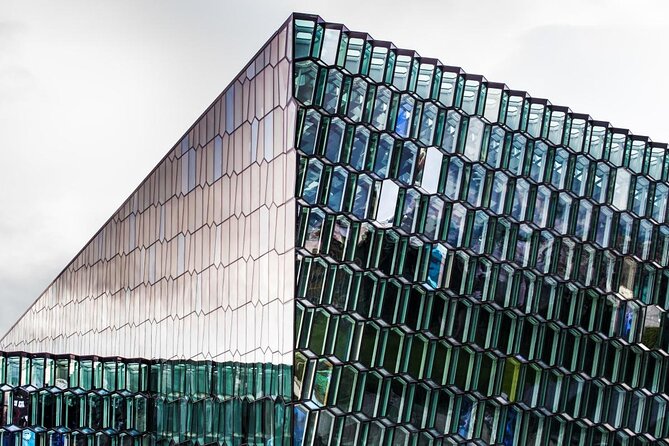
The tour includes time near Harpa Concert Hall and Conference Centre, which is famous for its striking look. The guide’s explanation (including the connection to architect Ólafur Elíasson, described as half Danish and half Icelandic architect) helps you see the building as intentional, not just dramatic.
Here’s the reality check: the route can change depending on conditions, so the tour cannot promise a full stop at Harpa itself. Still, it’s designed so the walk ends within walking distance from Harpa.
This flexibility is worth understanding because Harpa can be a high-demand photo spot and sometimes conditions affect how groups move. If Harpa is a must for you, I’d plan one extra visit outside the tour. But as an introduction, Harpa is absolutely a strong payoff—either you get a quick stop, or you get an easy walk to it when you’re ready for closer photos.
Old Harbour and fishing history: where the city earned its edge
Next up is the Old Harbour, where the guide shares the history of the harbor and the fishing industry. Expect about 10 minutes here. This is one of those stops that pays off even if you don’t stay long at the water.
Why? Because the harbor explains Reykjavik’s economy and its stubborn resilience. You start to understand why the city is built around the coast and why so many local stories revolve around boats, weather, and work that had to be done regardless of mood.
If you’ve never been to a fishing town, this is where your mental model changes. The Old Harbour is not just picturesque; it’s a working memory.
Parliament House (Althingishus): politics explained without the headache
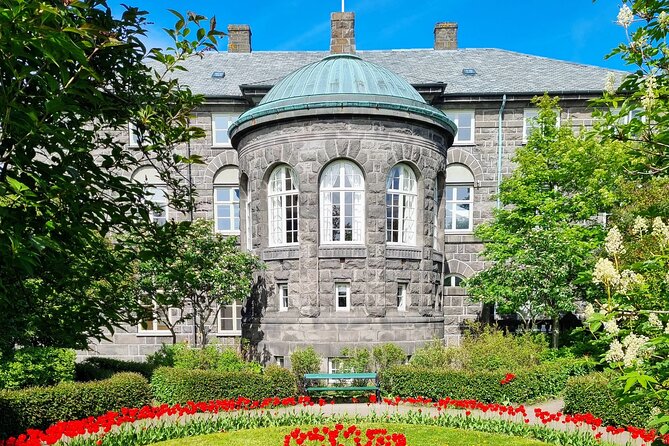
After the harbor, you’ll reach Parliament House (Althingishus) for another short stop focused on the history of Iceland, politics, and more. It’s around 10 minutes.
Even if you’re not a political nerd, this stop helps you connect Iceland’s independence and governance story to locations you can point at on the map. It turns “Iceland has a parliament” into something you can visualize.
The best part is that it doesn’t feel like a lecture. The guide’s job here is to make you feel that the location has meaning and that Iceland’s modern identity was shaped by decisions made in rooms like this.
Reykjavík City Hall and the big Iceland map inside
The final stops focus on central civic life, ending near Austurvöllur or by Tjörnin, where you can find City Hall. The Reykjavik City Hall is a favorite finish because it’s both photogenic and warm enough to matter in cold weather.
The tour includes an indoor stop here, about 10 minutes, and one of the highlights is that you’ll find a large map of Iceland inside. That detail seems small until you’re standing in front of it. Suddenly the geography isn’t abstract—it’s a visual tool for putting the country into perspective while you’re still in the capital.
For practical travelers, that ending location is also smart. Austurvöllur and Tjörnin are easy landmarks for navigating your next day, whether you’re heading out for a museum, a food stop, or a bus to the Blue Lagoon area.
Who this tour suits best (and who may want more time)
This works best for:
- First-time visitors who want context fast
- Travelers who like short stops, good stories, and photos without spending half a day in transit
- Families and independent travelers who want a guide to answer questions while you walk
It may feel less perfect if:
- You were hoping for long-distance walking and fewer stops
- You want a deep, slow museum-style experience rather than an overview
- You prefer tours with guaranteed, longer time at every single landmark (Harpa is subject to routing changes)
That two-hour format is also a double-edged sword. One critique that shows up is that the distance covered can feel modest. If you’re the type who counts steps, keep expectations realistic. The value here is the interpretation, not a huge mileage badge.
Price and value: what $53 buys you in Reykjavik terms
At about $53.21 per person, this tour sits in the “worth it if it saves you time” category. You’re paying for a local professional guide, small-group attention, and a route that strings together multiple major sights with minimal hassle.
The value improves further because several stops are listed with free admission tickets as part of the experience. That means you’re less likely to get stuck paying extra fees just to see the basics. You’re also getting the practical benefit of indoor stops, which can make the whole afternoon more comfortable and less miserable in Reykjavik weather.
If you’re deciding between this tour and building a self-guided route, the difference is simple: you trade flexibility for explanation. This format is designed to help you understand what you’re seeing while you’re seeing it, and that’s the part that makes it feel like more than a checklist.
Also, remember that drinks are not included and there’s no hotel pickup or drop-off. So budget for coffee on the way and plan to walk to the meeting point yourself.
Booking timing and weather reality
This is offered in English, and it runs in all weather conditions, which is Reykjavik for you. The key is to treat layers like part of your tour outfit, not a bonus. If you’re prepared for rain, wind, and sudden cold, the indoor stops (especially City Hall) feel like welcome breathing room.
One more practical note: the tour includes a mobile ticket, which is helpful because it reduces fuss once you’re at the meeting point. And since the group stays small (max 12), you’re less likely to get lost in a crowd.
If you’re also thinking about flexibility, you should know the experience has a free cancellation option if you cancel at least a day ahead. That can help if your first day is the one most likely to change because of weather.
Should you book this Reykjavik small-group walking tour?
Yes, if you want a fast, friendly start in the city center. I’d book it especially if it’s your first day and you want your bearings without guesswork. The stop selection hits major anchors—Hallgrímskirkja, Arnarholl, Harpa (often), Old Harbour, Althingishus, and City Hall—and the guide format is built for questions, pacing, and comfort.
I’d think twice only if you want a long walking route with minimal stops, or if you’re the type who needs guaranteed, long time at every single attraction on a fixed schedule. But for most people, this is exactly the right length and structure to set up the rest of your Reykjavik days.
If you do book it, come with one goal: ask your guide what you should do next based on your interests. That turns the tour from a good afternoon into smart planning for the rest of your trip.
FAQ
How long is the Reykjavik small-group walking tour?
It lasts about 2 hours.
Where does the tour start and where does it end?
It starts at Hallgrímstorg 1, 101 Reykjavík, Iceland, and ends at Austurvöllur or near Tjörnin by Reykjavík City Hall, within walking distance.
Is the tour offered in English?
Yes, it’s offered in English.
How many people are in the group?
The tour has a maximum of 12 travelers.
Are there admission tickets included for the stops?
The listed stops are marked as admission ticket free during the tour.
Does the tour run in bad weather?
Yes, it operates in all weather conditions, so you should dress appropriately.
What’s included, and what’s not?
Included is a local professional guide. Not included are drinks and hotel pickup and drop-off.