REVIEW · REYKJAVIK
Reykjavik Folklore Walking Tour: Meet the Elves, Trolls & Ghosts of Iceland
Book on Viator →Operated by Your Friend In Reykjavik · Bookable on Viator
A street full of myths, 90 minutes long. This walking tour threads Reykjavík’s oldest places with Iceland’s elves, trolls, ghosts, and even the guardian stories people still tell. You’ll move at an easy city pace, hearing folklore tied to real streets instead of generic legends.
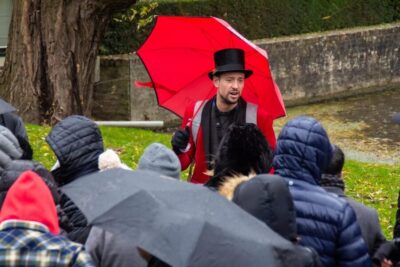
What I like most is the way the guide links myth to place, so the stories feel grounded as you pass the Cathedral of Christ the King, the oldest graveyard, and the lake of Tjörnin. I also love the energy many guides bring, with some guides using voices or even singing to make the creatures feel alive.
One drawback to keep in mind: it’s still a walking tour. If you’re not up for a steady stroll (one review flagged that it can feel like more walking than expected), bring good shoes and plan for weather changes.
In This Review
- Key highlights you’ll feel right away
- Getting oriented fast at Hlöllabátar and Ingólfstorgi
- Skúli Magnússon’s graveyard: the oldest cemetery feeling in town
- Cathedral of Christ the King: trolls and churches in the same frame
- Hólavallagarður and the Deacon of Dark River
- Tjörnin lake: where water monsters show up in the city center
- Reykjavik City Hall and a map of myths
- Alþingishúsið and Icelandic guardian spirits
- Austurvöllur Square finale near Parliament
- The guides make the difference: voices, humor, and real Iceland personality
- Price: why $55.63 can be a good value
- Who should book this folklore walk?
- Should you book this Reykjavik elves, trolls, and ghosts walking tour?
- FAQ
- How long is the Reykjavik Folklore Walking Tour?
- Where do I meet the guide?
- Where does the tour end?
- Is the tour in English?
- What’s included in the ticket price?
- Do I need tickets or pay entry fees for the stops?
- Does the tour run in bad weather?
- Is there a cancellation option if plans change?
- Can children join?
Key highlights you’ll feel right away
- A mythology walk through Reykjavík’s core: you’re not just sightseeing, you’re learning why these exact blocks matter
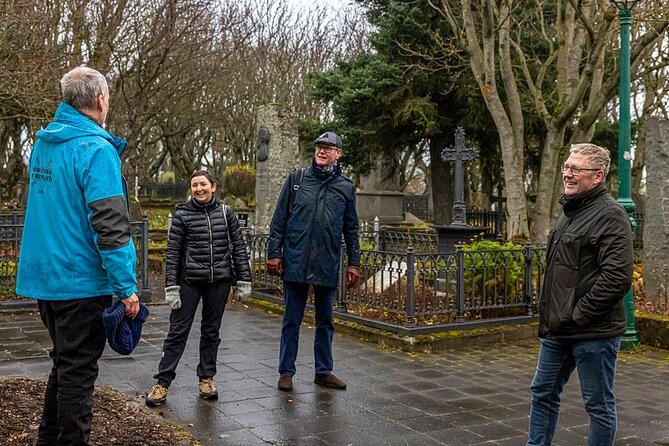
- Cemetery storytelling: you’ll visit the oldest graveyard dating around 900, plus Hólavallagarður
- The Deacon of Dark River: the famous ghost gets the spotlight at the second-oldest cemetery
- Tjörnin monster tales: the lake stop brings folklore to the water you see in front of City Hall
- Guardian spirits at Alþingishúsið: you’ll hear why protection stories are tied to major civic spaces
- Guides with real showmanship: several guides stand out for humor, voices, and even music (and they share local tips at the end)
Getting oriented fast at Hlöllabátar and Ingólfstorgi
If you’re new to Reykjavík, this is a smart first-night kind of tour. You meet in central Reykjavík at Hlöllabátar, Ingólfstorgi 1 and start from a place that’s easy to circle back to later. The meeting instructions are simple: be there about 5 minutes early so you don’t miss the intro.
This matters because you’re walking through the city’s older core, not far-flung viewpoints. You get bearings quickly—streets, squares, and the general layout of where the stories unfold. By the time you’re done, you’re usually better able to plan the rest of your trip, whether that means more museums or just another stroll on your own.
And since the tour runs in all weather conditions, you’ll want to dress for wind and rain. You’ll be outside long enough that your jacket and shoes matter more than your schedule.
You can also read our reviews of more walking tours in Reykjavik


Skúli Magnússon’s graveyard: the oldest cemetery feeling in town
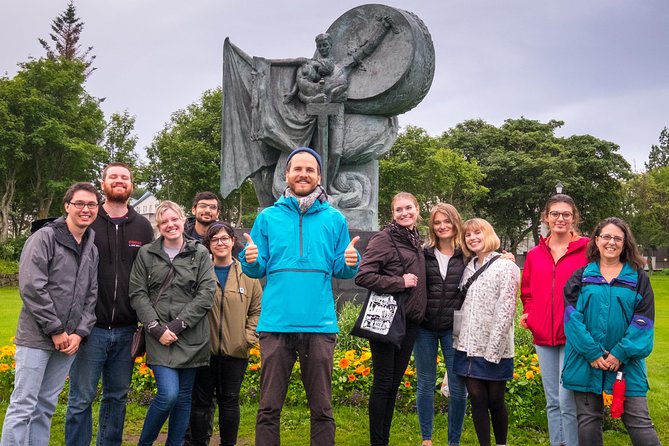
Your first big stop is the oldest graveyard in Iceland, dating to around year 900. Even if you’re not a “cemetery person,” this one hits because it’s a real, operating place in the middle of a modern city. That contrast is the whole trick: you’re hearing folklore, but you’re standing in history that’s still part of everyday Reykjavík.
Why this stop works:
- It gives weight to the rest of the myths. Ghost stories land better when you’re surrounded by generations, not just markers in a theme park.
- You get a sense of how Reykjavík grew around older sacred spaces, including the cemetery sections that shaped community memory.
A gentle caution: one review wished the group had more time at the cemetery to see older graves. The tour is built as a sequence of stops, so you get the highlight experience, not a slow, extended visit.
Cathedral of Christ the King: trolls and churches in the same frame
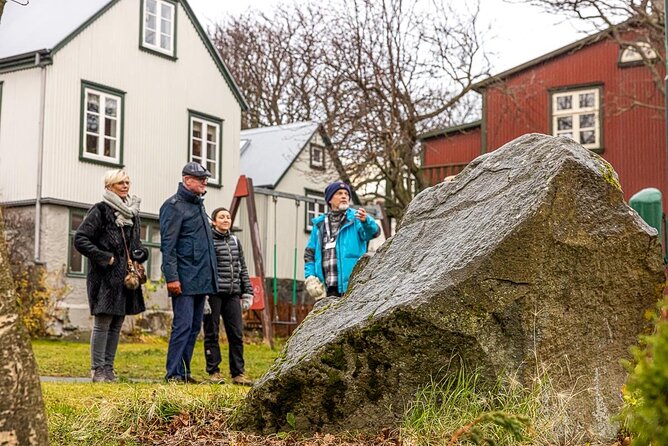
Next you’ll pass the Cathedral of Christ the King, with a folklore angle that leans into conflict—how the trolls of Iceland don’t like the church. This is one of those storytelling moments where the tour turns a landmark into a cultural clue.
Even if you don’t care about religion, you’ll probably enjoy this stop because it shows how folklore behaves like a living language. In Iceland, myth isn’t only for bedtime stories; it’s a way people explain order, taboo, and what’s safe.
What you should watch for: the tour’s tone is spooky and playful, but it can still reference faith and institutions. One guest reported feeling uncomfortable with how Christianity was handled during the outing. If you’re sensitive about religious jokes or direct comments, you may want to mentally prepare for a “myths vs rules” style of humor.
Hólavallagarður and the Deacon of Dark River
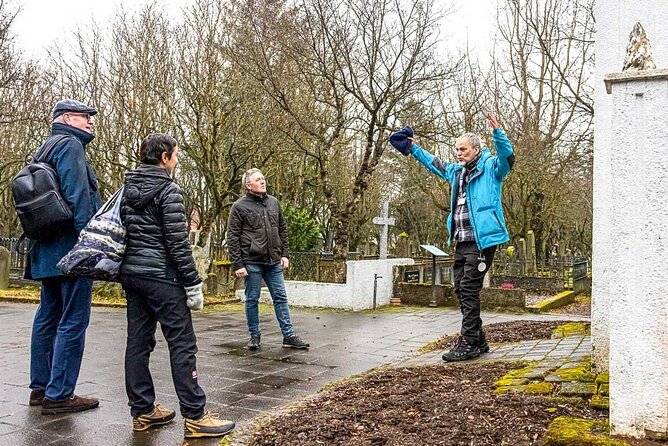
Then comes the spooky centerpiece: Hólavallagarður, the second-oldest cemetery in Reykjavík and a favorite haunting spot for the most famous ghost in Icelandic folklore—the Deacon of Dark River.
This is where the tour’s title starts to feel real. You’re walking among graves while the guide explains who the Deacon is, why he lingers in stories, and how the cemetery became part of the city’s ghost map. It’s not just “there’s a ghost here.” You’ll get the layers that explain why the story keeps returning.
The value here is atmosphere. Reykjavík can be stylish and modern on the surface, but this area helps you see a different side—the Reykjavík where people used to interpret the dark as something you could talk back to with stories.
Practical note: because it’s still a guided walk, you’ll get a solid focus on the key graves/areas rather than an ultra-detailed route through every older section.
Tjörnin lake: where water monsters show up in the city center
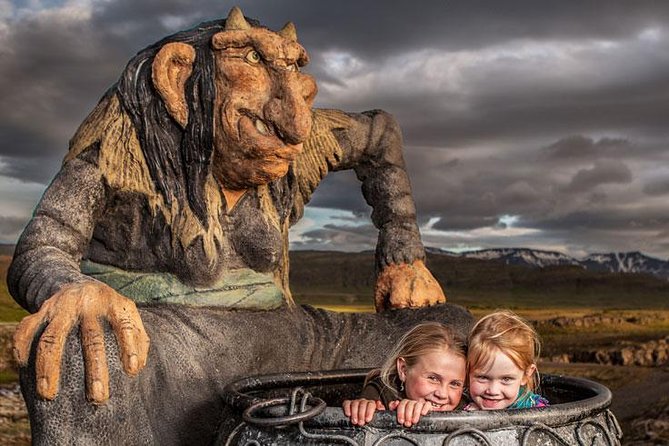
After the cemetery stops, the tour eases into a classic Reykjavík setting: Tjörnin, the small lake right in town. This is where you hear stories about Icelandic monsters, with the water as your immediate backdrop.
Why this is a smart pacing choice:
- It breaks up the heavier cemetery mood.
- It gives your brain a visual anchor. Instead of “imagine a monster,” you’re looking at the same water birds and reflections the stories are tied to.
If you’re photographing, Tjörnin is often a good place for quick shots between stops. And yes, you may see ducks and swans around the lake area while the guide narrates the creature lore.



Reykjavik City Hall and a map of myths
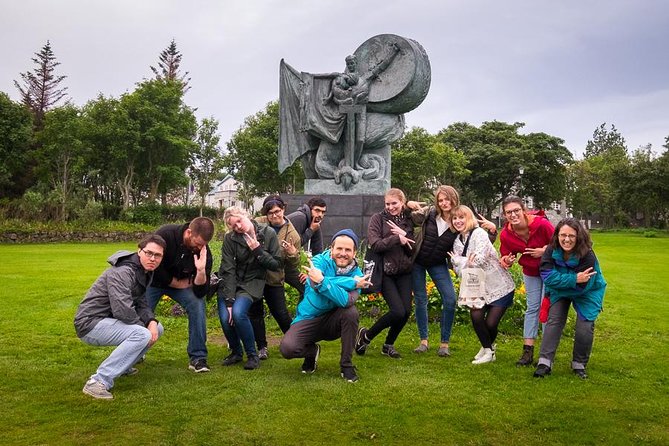
You’ll walk by Reykjavík City Hall and sometimes pause for a look at a large map of Iceland. This stop is less about one single monster and more about connecting the dots—where trolls and other creatures get placed across the country.
That matters if you want your trip to feel coherent. You’ll come away with a sense that Icelandic folklore has geography. Stories cluster around real natural features, routes, and settlement history. So when you later visit waterfalls, lava fields, or coastal towns, you’ll have a mental framework for the kinds of legends you might hear.
This is also a nice reset. If the earlier stops felt intense (cemeteries can do that), the City Hall segment usually feels lighter—still smart, but less heavy.
Alþingishúsið and Icelandic guardian spirits
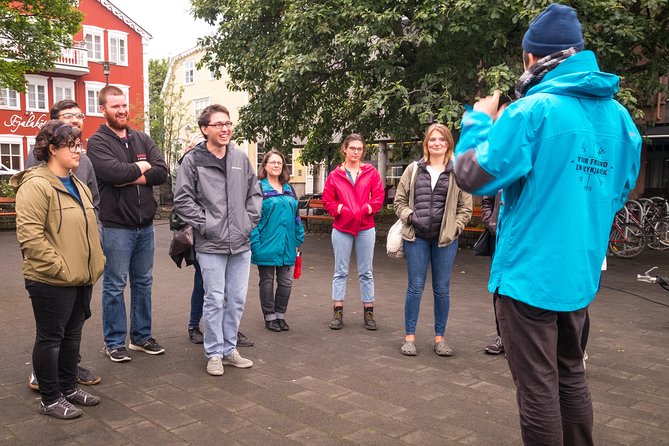
Next you’ll head to Alþingishúsið to hear about Icelandic guardian spirits. This is a clever stop because it places folklore into civic life. You’re not only learning about hidden creatures in nature; you’re learning about protective ideas tied to the systems people built for governance and community.
For me, this is one of the tour’s best “aha” moments. Guardian spirits are an example of how Icelandic belief often shows up as intention—protection, respect, and a sense that the world has forces you don’t fully control. Even if you don’t believe literally, the cultural logic is fascinating.
It’s short, but memorable, and it keeps the tour from becoming only creepy storytelling. You end up with both spooky and thoughtful.
Austurvöllur Square finale near Parliament
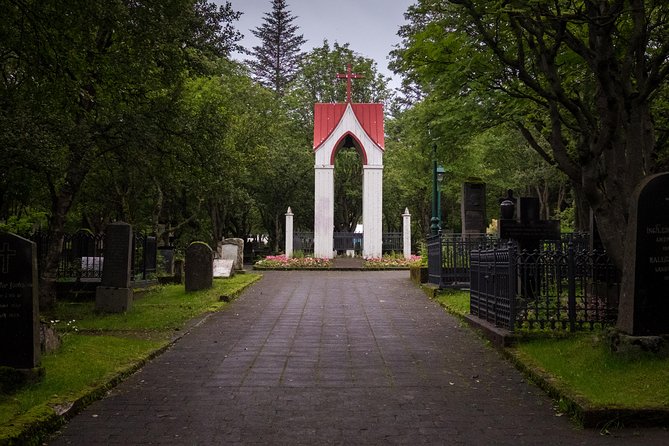
You finish at Austurvollur Square, close to where you started—specifically ending near the Parliament area at Austurvöllur (a short walk to get your bearings). This is a practical ending: you’re back in the central hub of Reykjavík, so it’s easy to move on to dinner or to join another activity.
Many guides also share local tips at the end, which can be genuinely useful. If you want to keep the folklore mood going, you’ll often have ideas for where to wander next without it feeling random.
Also, the “circle back” ending helps you feel like you completed a loop. That’s a small detail, but it’s how you start to feel at home in a new city.
The guides make the difference: voices, humor, and real Iceland personality
The strongest praise in the reviews isn’t about the locations—it’s about the guides. I saw repeated patterns:
- Guides like Ester and Steingrímur are described as fun, informative, and engaging.
- Bo/Po and Stefán get credit for animated storytelling and character voices.
- Mathias/Mathias and Magnus show up as funny and knowledgeable, with a strong pride in Icelandic folklore.
- Dúi is praised for storytelling with a great singing voice.
You don’t need to believe in elves to enjoy what this style does. Good storytelling makes myth feel like culture, not just trivia. It also keeps the walk lively during weather changes.
One more thing: the guides sometimes provide a bit of a “show.” A couple reviews mention guides taking photos and sending them by text afterward. That can be a nice bonus, though one review noted the “Your Friend in Reykjavík” logo appearing on photos and magnets.
Price: why $55.63 can be a good value
At about $55.63 per person for roughly 90 minutes, this isn’t a bargain in the “two dollars and a sticker” sense. But it can be solid value if you treat it as a paid storytelling experience plus prime-city orientation.
Here’s why it can work:
- You’re paying for a professional guide (and live entertainment is included).
- Major stops are free admission on the tour timeline, so you’re not paying separate entry fees at each site.
- The route covers several famous landmarks and serious historical anchors (old graveyard, well-known cemetery, City Hall area, Alþingishúsið).
In plain terms: you’re buying time with a storyteller who can make these places make sense. If you like that kind of guided experience—especially at night or in cold weather—this price often feels fair.
If you hate walking, or you only want hard facts and museum-style explanations, you may find the $55 harder to justify. This tour leans into myth and atmosphere, not only dates.
Who should book this folklore walk?
This is a great fit if you:
- Want an easy first tour in Reykjavík that gives you city bearings
- Like folklore told in a grounded way—tied to real streets, squares, and cemeteries
- Enjoy guides who bring humor and performance into the stories
- Want something that feels Icelandic beyond waterfalls and hot springs
It may be less ideal if you:
- Are very sensitive to religious references or jokes (one review mentioned feeling ridiculed about Christian faith)
- Have limited tolerance for walking distances during 1.5 hours in weather
- Expect a long, detailed cemetery tour with lots of time inside the grounds
Should you book this Reykjavik elves, trolls, and ghosts walking tour?
Yes, I think you should book it if you want Reykjavík to feel personal, not just photographed. The route is compact and central, the storytelling focuses on Iceland’s invisible inhabitants, and the best part is the guides—many are praised for humor, voices, and making the culture feel alive.
If you’re on the fence, here’s an easy test: ask yourself whether you’d rather hear stories tied to the oldest cemetery blocks and Tjörnin lake than simply check off landmarks. If your answer is yes, this is a strong choice. If your answer is no, you might prefer a more traditional history walk or a museum day.
FAQ
How long is the Reykjavik Folklore Walking Tour?
It runs for about 1 hour 30 minutes.
Where do I meet the guide?
You meet at Hlöllabátar, Ingólfstorgi 1, 101 Reykjavík. You should arrive about 5 minutes early.
Where does the tour end?
It ends near Austurvöllur Square in central Reykjavík, close to the Parliament building (around Jón Sigurðsson, Austurvöllur).
Is the tour in English?
Yes, the tour is offered in English.
What’s included in the ticket price?
You get a professional guide and live entertainment.
Do I need tickets or pay entry fees for the stops?
Admission at the listed stops is included as ticket free on the tour’s timeline.
Does the tour run in bad weather?
Yes. It operates in all weather conditions, so dress appropriately.
Is there a cancellation option if plans change?
You can cancel for a full refund if you cancel at least 24 hours in advance. If you cancel less than 24 hours before, the amount is not refunded.
Can children join?
Children can join, but they must be accompanied by an adult. Service animals are allowed too.