REVIEW · WARSAW
Warsaw: Old Town Guided Walking Tour
Book on GetYourGuide →Operated by Walking Poland Group · Bookable on GetYourGuide
Warsaw has a way of telling hard truths—and doing it on beautiful streets. This Old Town guided walking tour mixes UNESCO sights with WWII context, so you see the city and understand why it looks the way it does today. I especially like the quick, clear way the guide connects Sigismund’s Column and the Old Town core to the Royal Castle story, then carries you forward to the memorials in the same easy walking flow. You’ll also get practical stops for photos, like the Warsaw Mermaid at Market Square and the terrace viewpoints.
The one thing to factor in: the tour covers serious WWII themes, including the Jewish ghetto area and the Uprising, so it’s not only postcard sightseeing. If you prefer a lighter, purely scenic walk, you might find the subject matter heavy; it’s handled with respect, but it still hits.
In This Review
- Key Highlights to Expect
- Getting Oriented at Sigismund’s Column
- Old Town Market Square and the Warsaw Mermaid Photo Moment
- The Narrowest House Façade: Warsaw’s Quirky Brain
- St. John’s Cathedral and the Jesuit Church: Faith, Power, and Art
- The City Wall Remnants and the Barbican
- The Old Town Viewing Terrace: Where the Pieces Make Sense
- Royal Castle Gardens: A Calm Shift in Pace
- New Town and Marie Curie’s Birthplace: Science in the Middle of It All
- Jewish Heritage at the Ghetto Boundary Markers
- Remembering the Ghetto Wall Monument and the 1943 Uprising
- Warsaw Uprising of 1944 Monument: Why This City Rebuilds Itself
- How the Guide Keeps This Feelable in 2 Hours
- What the Price Feels Like (and Why It’s Not Just $13)
- Practical Tips Before You Go
- Should You Book This Warsaw Old Town Tour?
- FAQ
- Where does the tour start?
- How long is the Warsaw Old Town guided walking tour?
- How much does it cost?
- What’s the group size like?
- What languages are offered?
- Is the tour only about the Old Town?
- What’s included in the price?
Key Highlights to Expect
- Sigismund’s Column start point that instantly gives you Warsaw orientation and timing for the day
- Market Square + the Warsaw Mermaid for classic Old Town photos in a real public space
- Church stops that explain power and culture, including St. John’s Cathedral and the Jesuit Church
- City wall remnants and the Barbican that make the defense story feel physical
- Royal Castle gardens for a calmer, regal change of pace from the streets
- WWII memorial focus at the Ghetto boundary markers and the Warsaw Uprising of 1944 monument
Getting Oriented at Sigismund’s Column
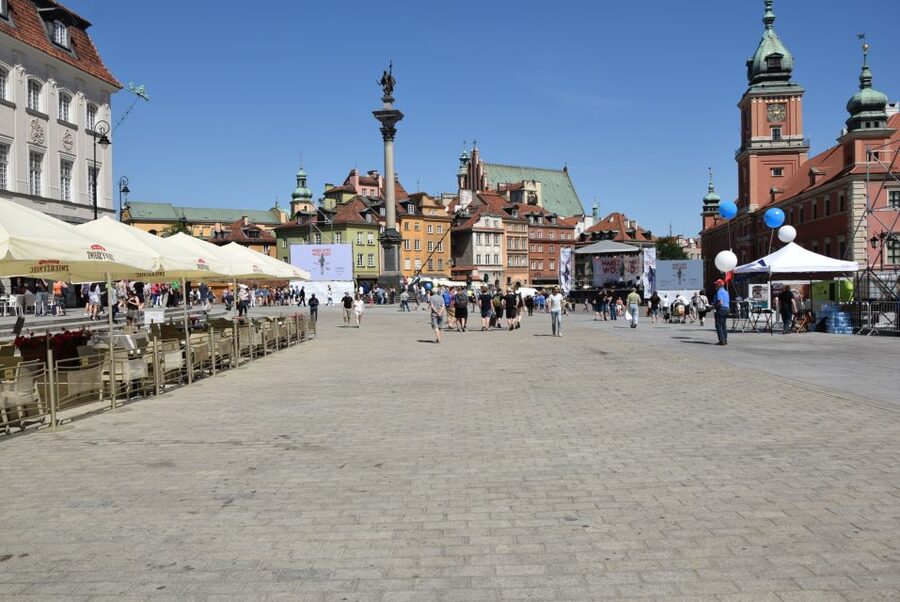
The tour kicks off at Castle Square, in front of the 22-meter-high Sigismund’s Column. That’s a smart move. It gives you a central landmark, so the walk doesn’t feel like you’re just drifting from one site to the next.
From the beginning, the guide frames what you’re about to see: Old Town as a UNESCO core, but also as a place rebuilt and reinterpreted after the worst of the 20th century. It’s a faster way to learn the city than trying to piece it together from maps and museum labels.
You can also read our reviews of more walking tours in Warsaw


Old Town Market Square and the Warsaw Mermaid Photo Moment
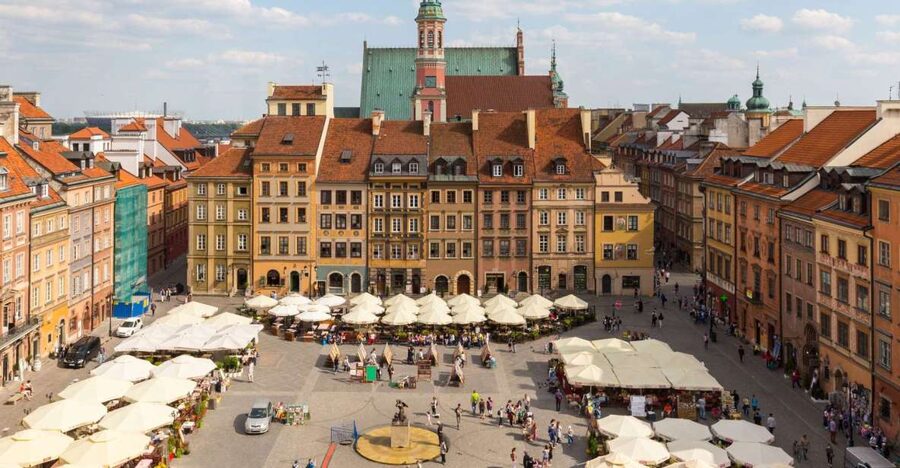
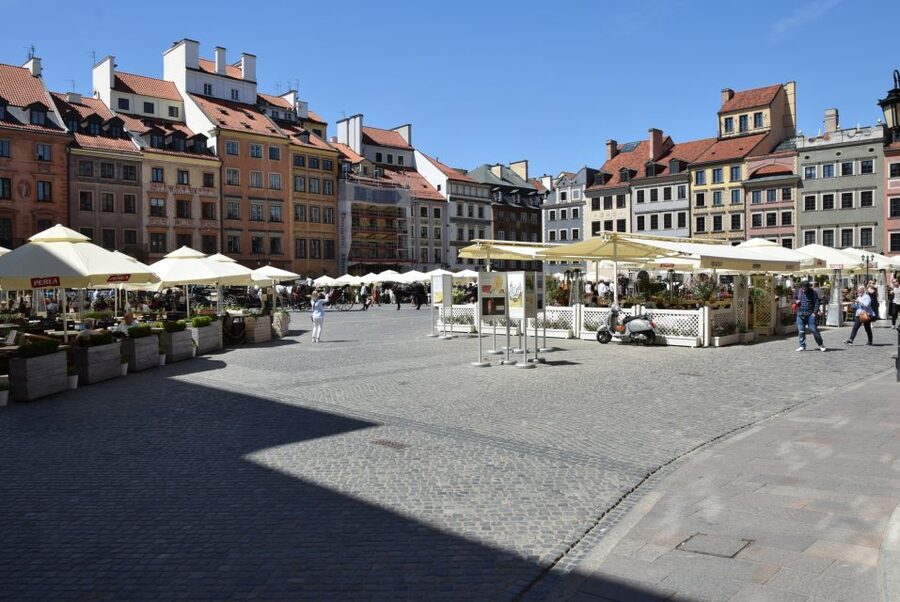
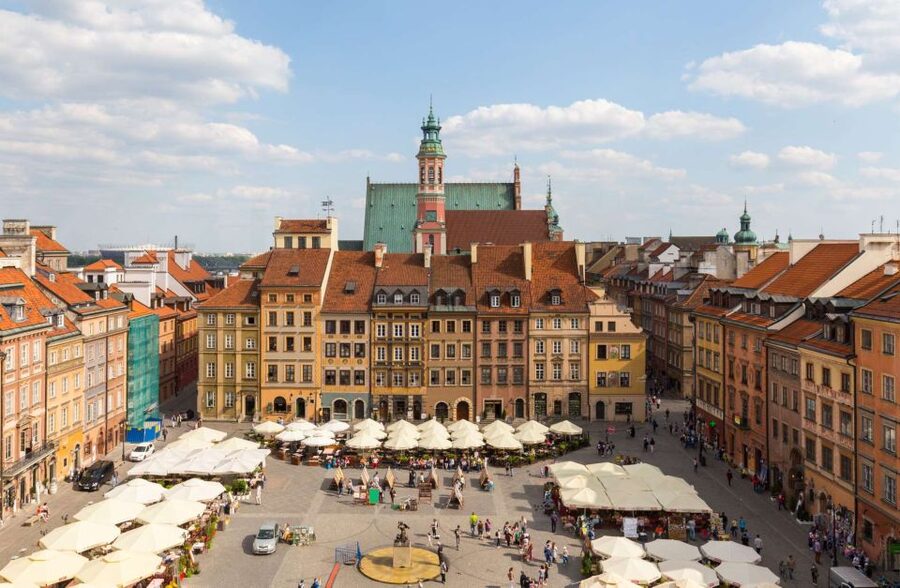
Next comes Rynek Starego Miasta (Old Town Market Square)—the heart of it all. You’ll get the iconic view most people come for, including the Warsaw Mermaid statue that anchors the square’s identity.
What I like here is the guide’s approach: you’re not only looking at pretty buildings. You’re learning what the square meant as a gathering place, how it shaped daily life, and why symbols matter in cities with long memories. Even if you’ve seen photos online, standing there helps everything click.
If you want pictures, go in with a plan. Aim for a quick shot with the Mermaid, then reposition for architecture lines. Market Square is always a public space, so the best photos come from moving a few steps rather than waiting for the perfect moment.
The Narrowest House Façade: Warsaw’s Quirky Brain
Then you’ll slow down at one of those charming oddities that feels like a private joke between the city and its visitors: the narrowest house façade. It’s short, but it does something valuable. It shows how Warsaw used space in practical ways, even when constraints were real.
This stop also helps you understand the Old Town “texture.” Warsaw isn’t just grand palaces and big monuments. It’s also the tight, human scale of streets where everyday decisions shaped the look.
St. John’s Cathedral and the Jesuit Church: Faith, Power, and Art
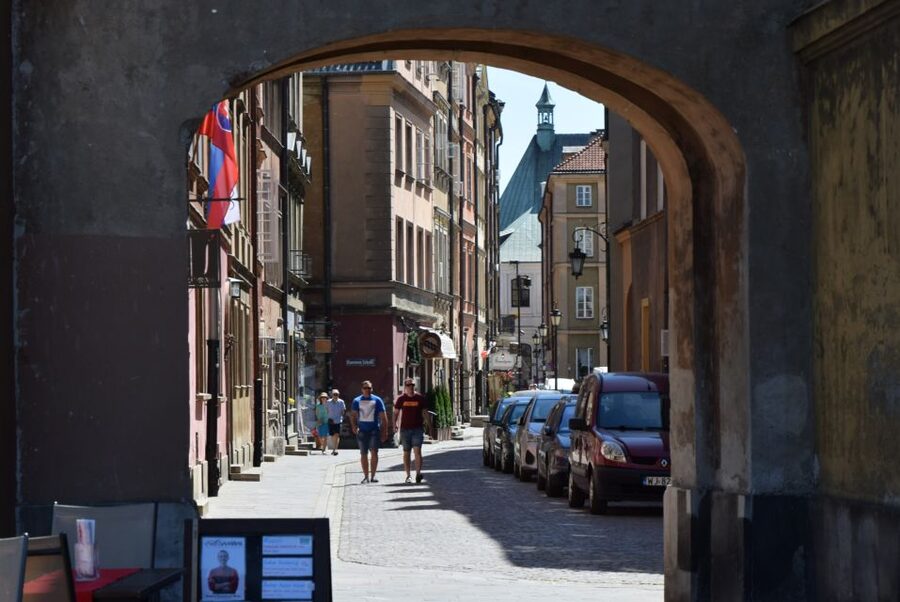
The tour moves into the religious landmark zone, with St. John’s Cathedral and the Jesuit Church on the route. These aren’t just buildings to pass by. The guide explains why they matter in the way cities organize influence—who funds, who gathers, and what styles say about the era.
I find church stops like this are a good “pause” in an otherwise fast walking tour. You get contrast: stone, detail, and story. Even if churches aren’t your top priority at home, the way the guide connects them to Warsaw’s broader narrative makes the architecture feel less abstract.
The City Wall Remnants and the Barbican
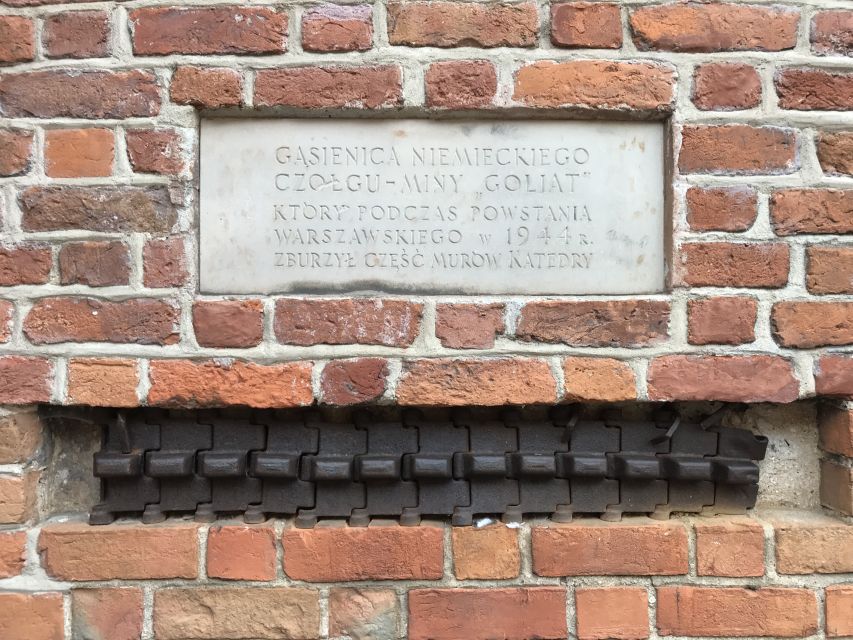
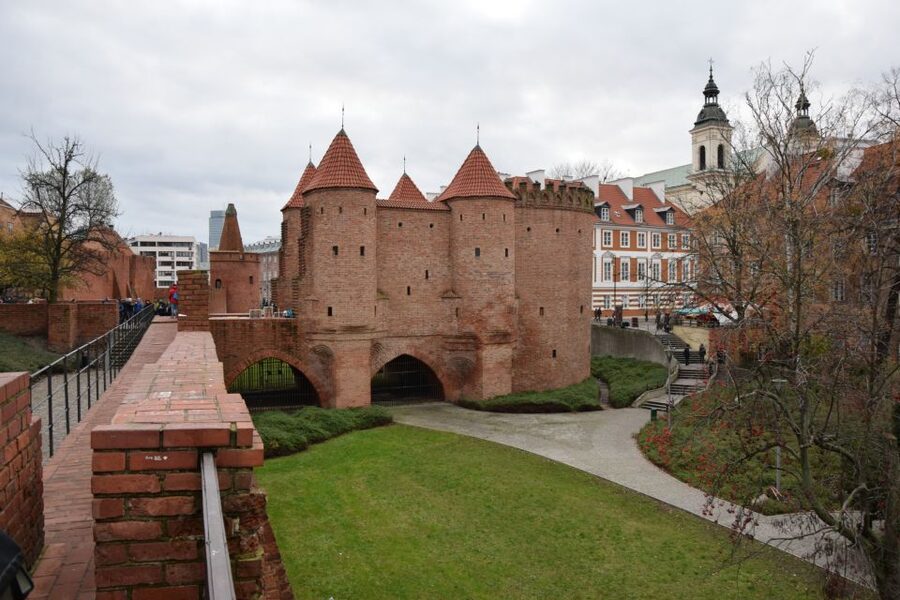
After the church context, you’ll hit the defensive side of Warsaw: the city wall remnants and the Barbican. This is one of the most useful parts of the walk because it turns “history talk” into something you can see and picture.
Walls and gates make sense even when you don’t know the timeline. You start understanding what it meant to protect a city, how space worked at the edge of town, and why certain structures got built to last.
If you’re the type who likes city planning and fortifications, you’ll enjoy this stretch. If not, it still works because it’s visual. You’ll just look longer.
You can also read our reviews of more guided tours in Warsaw

The Old Town Viewing Terrace: Where the Pieces Make Sense
The tour includes a viewing terrace in the Old Town where you get panoramic perspective over the river area and the cityscape. This stop is more than a photo break.
It’s a way to “hold” the tour in your head. After walking narrow streets and reading the city through monuments, the view gives you scale. Warsaw stops being a list of sights and starts feeling like a place with layers.
Bring your phone battery habits. Even with short stops, you might take more photos than you planned.
Royal Castle Gardens: A Calm Shift in Pace
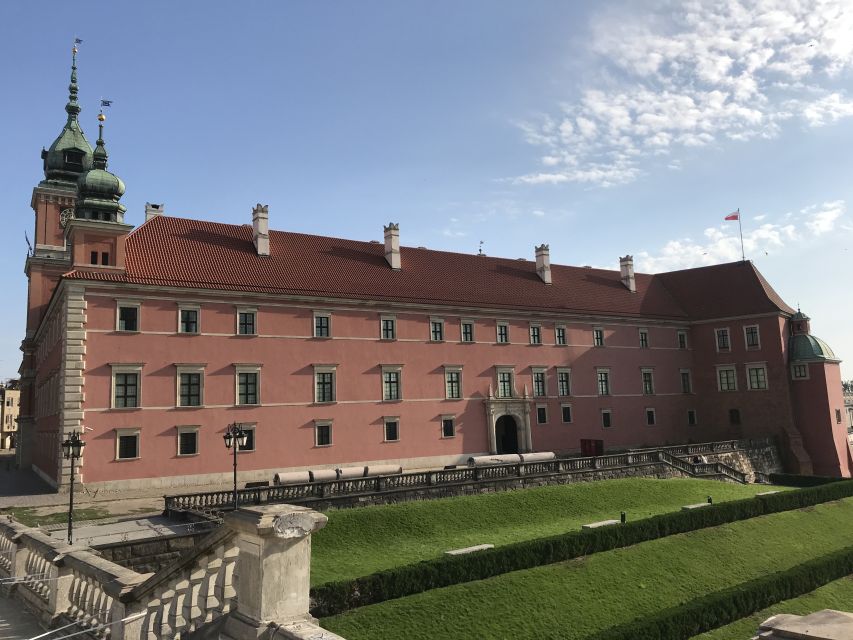
Then you transition to Warsaw Royal Castle gardens and the Royal Castle area. This is a welcome change from the denser Old Town core. The gardens add breathing room, and the castle setting gives you the grandeur you expect, without needing to line up for a separate full attraction.
What you learn here is how royal space functioned: power had a physical address, but it also shaped how people moved through the city around it. The guide ties the castle and gardens into the larger theme of Warsaw’s identity—royal, civic, and later, resilient.
This segment is also a good “reset” if the WWII stories earlier in the walk are starting to feel heavy.
New Town and Marie Curie’s Birthplace: Science in the Middle of It All
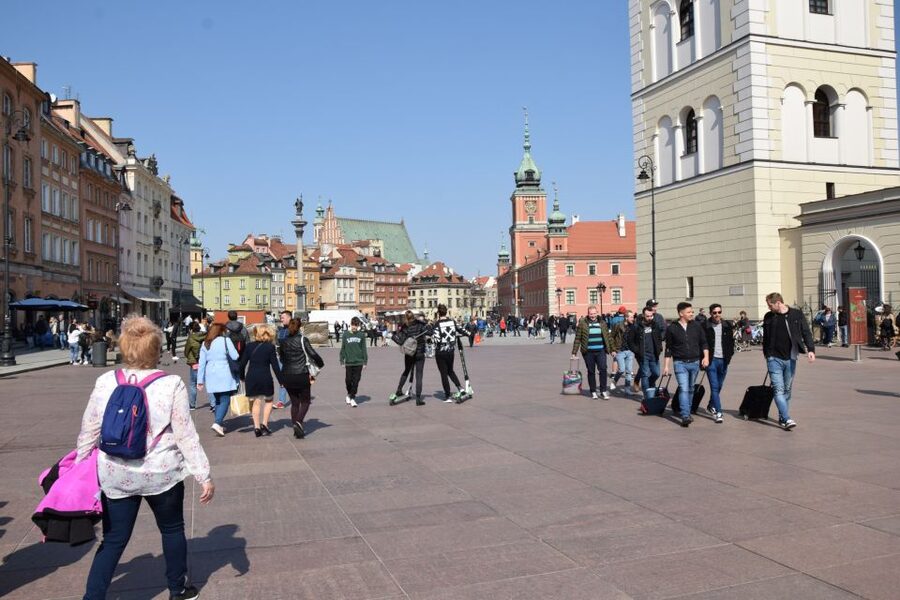
The route continues toward New Town and includes a visit to Marie Curie’s birthplace. That’s a smart pairing with the Old Town and WWII memorial material because it widens the story beyond war and rebuilding.
You get reminded that Warsaw is not only defined by what happened to it. People also created new knowledge, new careers, and new futures. Even in a short walk, it helps balance the emotional weight of the memorial stops.
If you like a city tour that includes at least one “human achievement” moment, this is the one that usually lands well.
Jewish Heritage at the Ghetto Boundary Markers
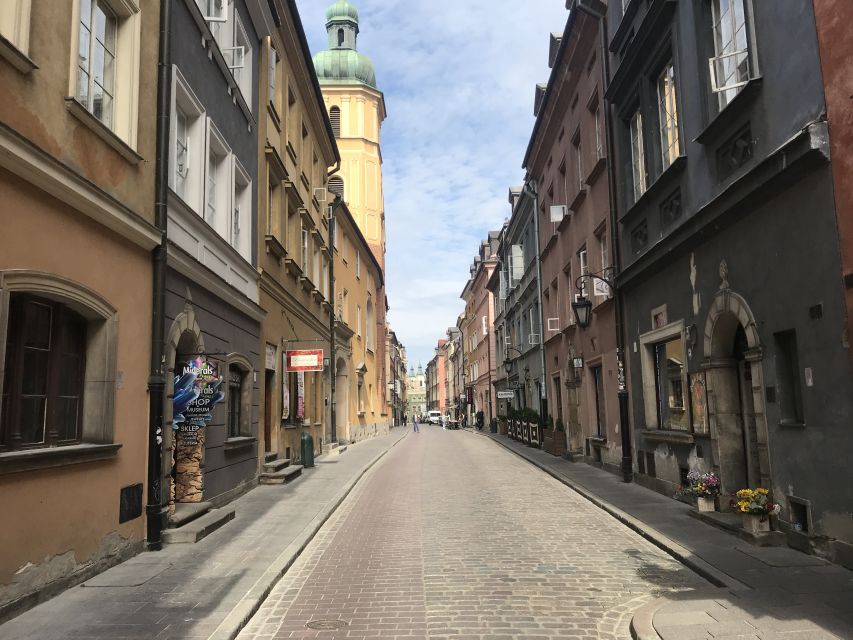
One of the most important sections comes next, with Warsaw ghetto boundary markers and related Jewish heritage context. The guide explains the significance of the Jewish community in Warsaw and the dramatic WWII episode that followed.
This part matters because it turns a neighborhood into a historical reality. You’re not just seeing a marker; you’re learning what it represented and why the city remembers it with care.
You may feel the tone shift here. That’s normal. Guides on this route are known for keeping it respectful while still giving you clear context, so you leave with understanding rather than vague impressions.
Remembering the Ghetto Wall Monument and the 1943 Uprising
The walk also includes the Ghetto Wall Monument and discussion of the Jewish Uprising of 1943. The guide connects this uprising to wider WWII history, but keeps the focus on what the resistance meant for the people involved.
If you’ve ever wondered why monuments can feel both specific and universal, this is where you’ll feel it. The story is anchored locally in Warsaw’s Jewish history, but it also reflects a human struggle seen across Europe.
Take a moment here. You won’t gain anything by rushing. Stand, read, and let the guide’s framing settle.
Warsaw Uprising of 1944 Monument: Why This City Rebuilds Itself
The tour finishes the WWII arc at the Monument of the Warsaw Uprising of 1944, with guided time at the site. This is one of the tour’s most meaningful stops because the guide explains what made the uprising heroic—and what its consequences were.
It’s not presented as a neat lesson. It’s presented as a defining chapter that shaped the city’s later rebuilding and identity. That’s why it pairs so well with the Old Town sights. You’re seeing the results of survival and reconstruction while learning the price that came before it.
How the Guide Keeps This Feelable in 2 Hours
The tour lasts about 2 hours, which is a tight window for this many themes and stops. The key is pacing. The route stays walkable and organized, with enough breaks to handle photos and quick questions.
A lot of the reviews for this tour highlight guides who mix facts with humor—without turning serious moments into a joke. Names you might hear associated with the experience include Anthony, Antony/Antonis, Antek, Thomas, Magda, and Andrew, and the common thread is a strong ability to keep attention while explaining difficult history.
Group size is kept small, maximum 25–30 people. That matters because you’re less stuck behind a wall of shoulders at narrow spots. You can ask questions when the guide stops, and you’re more likely to hear the details without straining.
What the Price Feels Like (and Why It’s Not Just $13)
The listed price is $13 per person for a 2-hour guided walking tour. That’s the kind of cost that can feel almost too good for the amount of guiding, but the value comes from more than walking.
This tour includes a licensed city guide and a route that blends UNESCO Old Town highlights with memorial sites and context that you won’t reliably get from guidebooks alone. You also get a guided structure that helps you avoid getting lost or missing key “why” points.
One additional detail: this experience is described as a general pay-what-you-wish style tour. The amount you pay covers a reservation fee and the guide’s payment. If you do decide to tip further, it fits the local spirit of rewarding good guiding.
Practical Tips Before You Go
Start time matters. You should arrive 5 to 10 minutes early at Castle Square, and look for the guide holding a white umbrella. This is the easiest way to match up with the right group quickly.
Dress for weather. Reviews repeatedly mention cold conditions and rain, and guides respond by keeping things comfortable when needed. Still, plan like you’re outside the whole time. Layers beat one heavy coat.
Also, if you want a smooth experience, come with one mindset: this is a “learn and walk” tour, not a fast sprint for selfies. When you let the guide’s sequence guide you, the city story makes more sense.
Should You Book This Warsaw Old Town Tour?
Book it if you want a first-time Warsaw introduction that connects beauty with context. This is especially good if you like walking tours that include both iconic Old Town sights (Market Square, Mermaid, churches) and the must-know WWII chapters (ghetto markers and the Uprising monument) in one organized route.
Skip it if you prefer an all-scenery itinerary with minimal history weight. You’ll still see plenty of architectural highlights, but the emotional center of the tour is Warsaw’s 20th-century story.
If you fall in the middle—curious, respectful, and ready to learn—this is a strong value pick for the time you have.
FAQ
Where does the tour start?
Meet your guide in Castle Square in front of the 22-meter-high Sigismund Column. The guide will be holding a white umbrella.
How long is the Warsaw Old Town guided walking tour?
The tour runs for about 2 hours.
How much does it cost?
The price is $13 per person.
What’s the group size like?
The tour is kept to a maximum of 25–30 people, even though it’s a walking tour format.
What languages are offered?
The live guide is available in English and German.
Is the tour only about the Old Town?
No. In addition to Warsaw Old Town highlights, it also includes stops in New Town, Marie Curie’s birthplace, and remembrance sites tied to Jewish heritage and the WWII era.
What’s included in the price?
You get a guided walking tour and a licensed city guide. This is also described as a pay-what-you-wish style tour, where the amount paid covers a reservation fee and the guide’s payment.