REVIEW · QUEBEC CITY
Quebec City: Old Quebec Classic Walking Tour with Funicular
Book on GetYourGuide →Operated by HQ Services Touristiques · Bookable on GetYourGuide
Old Quebec delivers in one short walk. You start in Lower Town, then use the funicular to climb to the Upper Town for big St. Lawrence River views and postcard sights like Château Frontenac.
What I like most is how the tour combines two best-of categories: the place itself (the tightly preserved Old Québec streets and landmarks) and the local context (a licensed guide turning key corners into stories). One heads-up: you’ll walk on cobblestones and uneven ground, and it’s not a good fit if you use a wheelchair or have mobility limits.
If you’re visiting for the first time and want a fast, well-paced overview, this is a strong choice. The included funicular ticket saves your legs, and the guide’s tips can help you plan the rest of your trip while everything is still fresh in your mind.
In This Review
- Key highlights to look for on this Quebec City walking tour
- Why this Lower Town to Upper Town route feels so efficient
- Getting started at 112 Rue Saint-Paul and how the flow works
- Lower Town route: Place Royale, the Mural, Fortifications, and Petit Champlain
- Place Royale: where the city’s story starts to make sense
- Québec City Mural: art that marks the vibe of the neighborhood
- Fortifications of Québec: stone and strategy
- Quartier Petit Champlain: the postcard lanes with an actual story behind them
- A quick Lower Town reality check
- Funicular ride up: the view, the shortcut, and the leg-saver
- What if the funicular is closed?
- Who will appreciate this section the most?
- Upper Town classics: Château Frontenac, Terrasse Dufferin, Notre-Dame, and City Hall
- Fairmont Le Château Frontenac: the icon you should see in real life
- Terrasse Dufferin: where the city is built for viewing
- Notre-Dame de Québec Basilica-Cathedral: stop, look up, then take it in
- Québec’s City Hall: the civic heartbeat
- The guide factor: why licensed local storytelling boosts the whole trip
- The best part: recommendations you can use right away
- Price and value: what $37 really covers
- Is it worth it if you plan to do other tours?
- Logistics that affect your comfort (without ruining the day)
- Pickup options can simplify your day
- Who should book this Quebec City Old Quebec classic
- Should you book this tour?
- FAQ
- Where does the tour meet?
- How long is the tour?
- What’s included in the price?
- What will we see on the tour?
- What languages are available?
- Is pickup included?
- Is this tour wheelchair accessible?
Key highlights to look for on this Quebec City walking tour
- Lower Town first: see Place Royale, the Québec City Mural, Fortifications of Québec, and Petit Champlain in a logical route
- Funicular ride: a scenic ascent that gives you river views without a steep slog
- Upper Town classics: Château Frontenac, Terrasse Dufferin, Notre-Dame de Québec Basilica-Cathedral, and City Hall
- Photo-friendly timing: viewpoints along the river climb and the Upper Town stops
- Licensed guide with smart recommendations: you’ll often get practical suggestions for what to do next
- Small groups (up to 12): easier to hear the guide and ask questions
Why this Lower Town to Upper Town route feels so efficient
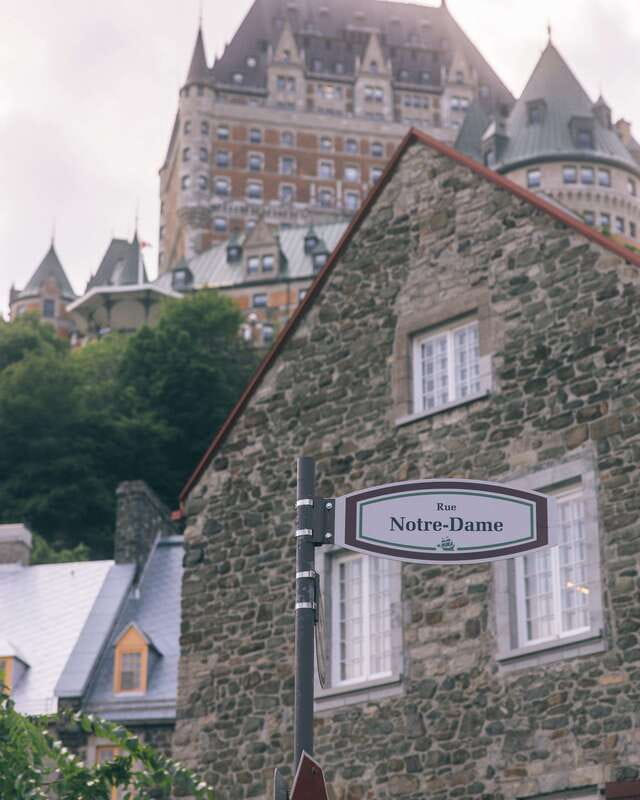
Quebec City can feel like two different worlds stacked on top of each other: Lower Town’s compact streets and Upper Town’s dramatic lookout energy. This tour gets you oriented fast by walking the Lower Town first, then using the funicular to do the climb.
I like the momentum here. You’re not stuck doing random wandering or backtracking. The order matters: you learn the city’s layout and then see how the Upper Town sites connect to the same story—just from higher ground.
The other efficiency is simple: you get a guided plan that hits top sights in about 2 hours. Add the walking time, and it becomes a great “day-one” activity when you still want to figure out where everything is.
You can also read our reviews of more walking tours in Quebec City

Getting started at 112 Rue Saint-Paul and how the flow works
You’ll meet your guide at 112 Rue Saint-Paul, Québec, QC (the yellow building). That’s a central Lower Town location, so it’s easy to link with other Old Quebec plans before or after.
A practical detail: the meet-up and drop-off points are in different parts of town. That’s not a problem as long as you’re comfortable finishing in the Upper Town area. It’s also why the funicular ride is such a big part of the experience—you’ll end the climb already.
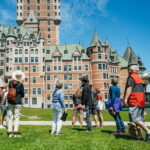
Group size is typically small, with groups up to 12 people. Several guides in past tours (like Luis, Sam, Peter, and Dennis) were praised for keeping the pace workable and for answering questions without making it feel like a lecture.
Lower Town route: Place Royale, the Mural, Fortifications, and Petit Champlain
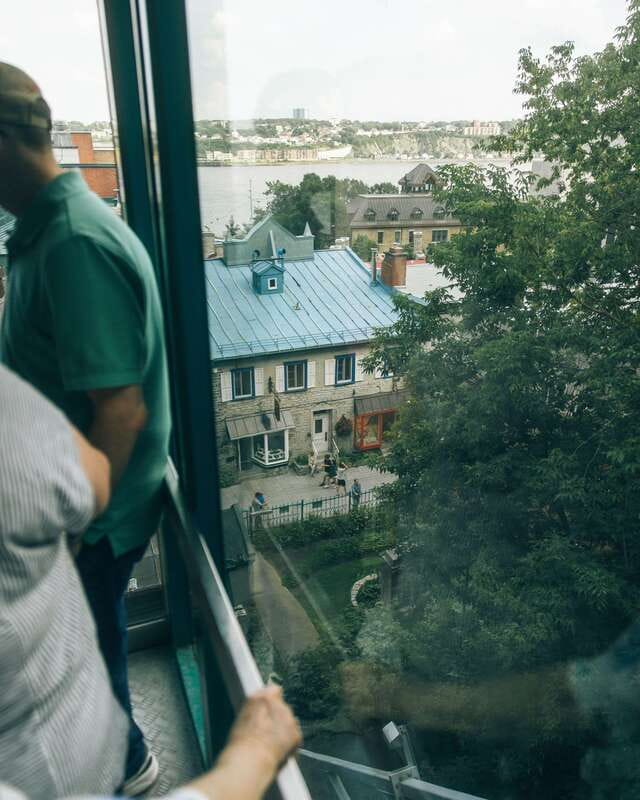
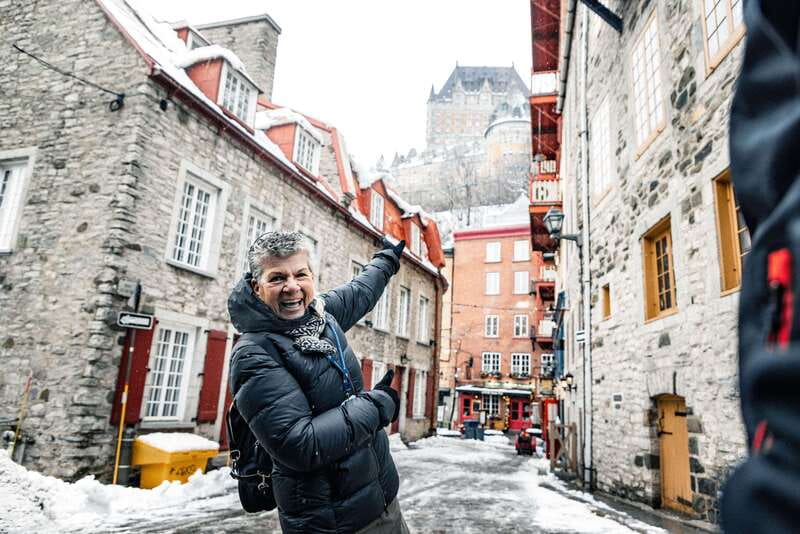
The Lower Town section is where you get the “I get it now” moment about Quebec City. This part is compact, historic, and built for slow looking even if the schedule moves at a good clip.
Place Royale: where the city’s story starts to make sense
Place Royale is one of the anchors for understanding early Quebec. It’s the kind of spot where you can see how the civic and religious life grew around key points in the city.
Your guide’s job here is to connect what you’re seeing to how the city formed and evolved. I find this is the difference between taking a few photos and actually understanding why the streets feel the way they do.
Québec City Mural: art that marks the vibe of the neighborhood
The Québec City Mural is a visual shortcut to the neighborhood’s identity. Instead of treating it like a random wall, you’ll get context—what it represents and why it’s there.
If you like travel photos with meaning (not just the scenery), this stop helps.
You can also read our reviews of more city tours in Quebec City




Fortifications of Québec: stone and strategy
The Fortifications of Québec stop gives you a reality check. This city wasn’t built only to be pretty—it was built to defend. Your guide can point out what to notice so you’re not just staring at old walls.
Look for how the fortifications shape the feel of the area. Even if you don’t walk every section like a full history walk, you’ll leave understanding why these structures influenced how people lived here.
Quartier Petit Champlain: the postcard lanes with an actual story behind them
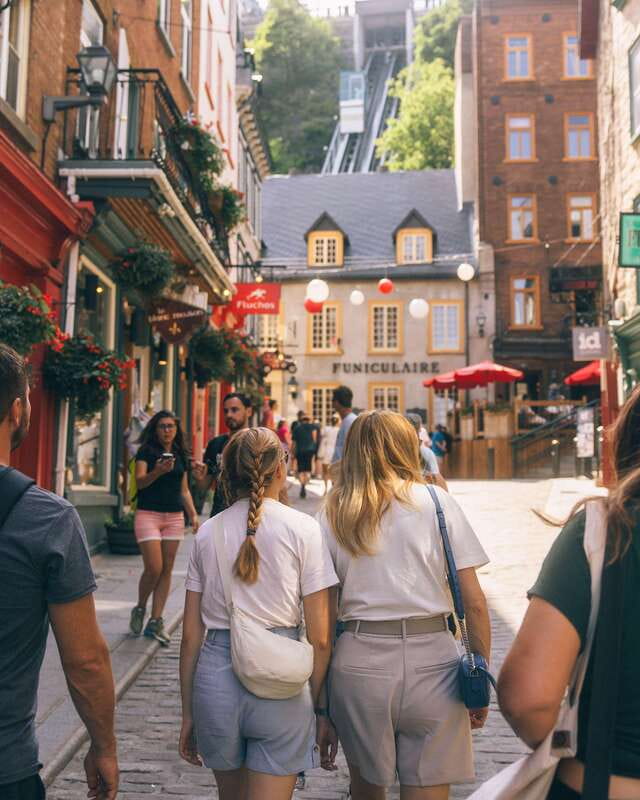
Petit Champlain is charming in the best way: tight streets, historic atmosphere, and that “how did I miss this place?” feeling. It’s also a strong place to slow down for photos because the streets are meant for it.
Just plan your pace. Even on a good day, this area can be busy, and cobblestones make you pay attention to footing.
A quick Lower Town reality check
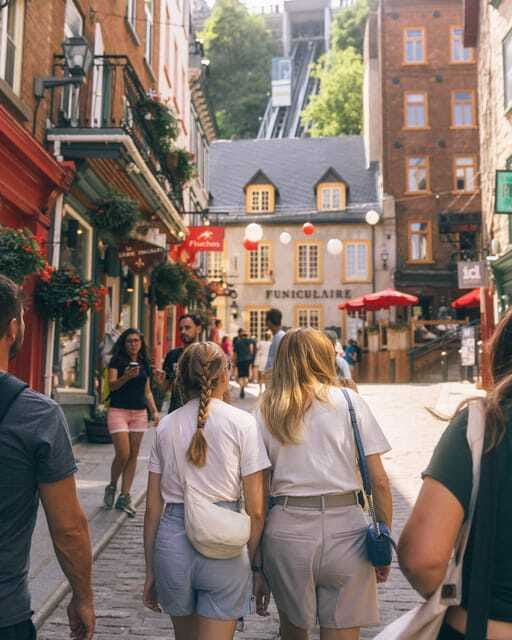
This part of the tour is walking. Some streets are cobblestoned and uneven, so the “bring comfy shoes” advice is not a suggestion—it’s survival. If your feet get unhappy fast, use this tour as your leg-friendly way to see a lot before you start doing extra sightseeing.
Funicular ride up: the view, the shortcut, and the leg-saver
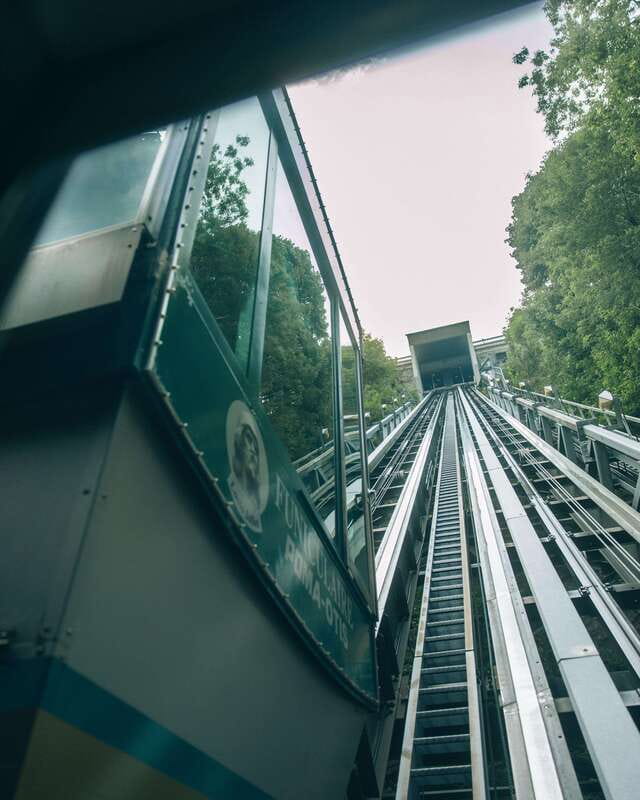
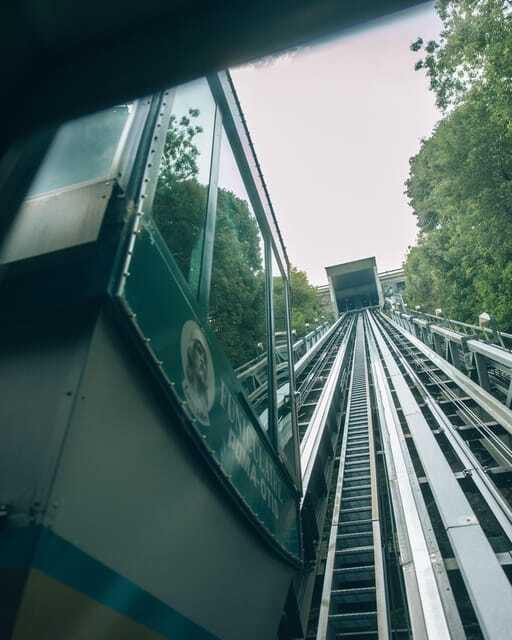
Then comes the key move: the funicular ride up to the Upper Town. It’s not only practical—it’s one of the easiest ways to appreciate Quebec City’s dramatic elevation.
On the climb, you’ll get scenic views of the St. Lawrence River. It’s the moment where the city stops being a set of attractions and starts reading like a place with geography that shaped everything.
What if the funicular is closed?
Here’s the good part: the tour includes a plan B. If the funicular is closed, they can arrange cab transport so you don’t have to walk up the hill. Another option may be a ticket for later use, depending on what you choose. This matters because the funicular is a big part of the value.
Who will appreciate this section the most?
If you’re visiting for a short time, the funicular ride is a huge win. It reduces strain and helps you stay energized for the Upper Town stops, which are the big photo and landmark moments.
Upper Town classics: Château Frontenac, Terrasse Dufferin, Notre-Dame, and City Hall
Once you’re up, the Upper Town stops feel like the city showing off—architectural drama, lookout energy, and the classic Quebec skyline you’ve seen in photos.
Fairmont Le Château Frontenac: the icon you should see in real life
You’ll visit the area around Fairmont Le Château Frontenac, and it’s one of those sights that’s even better when you’re actually there. It’s a landmark that anchors the visual identity of the Upper Town.
Your guide will help you place it in the bigger city story, not just as a hotel facade. Expect explanation around why this spot matters, and use the time to get a few angles—especially if the light is cooperating.
Terrasse Dufferin: where the city is built for viewing
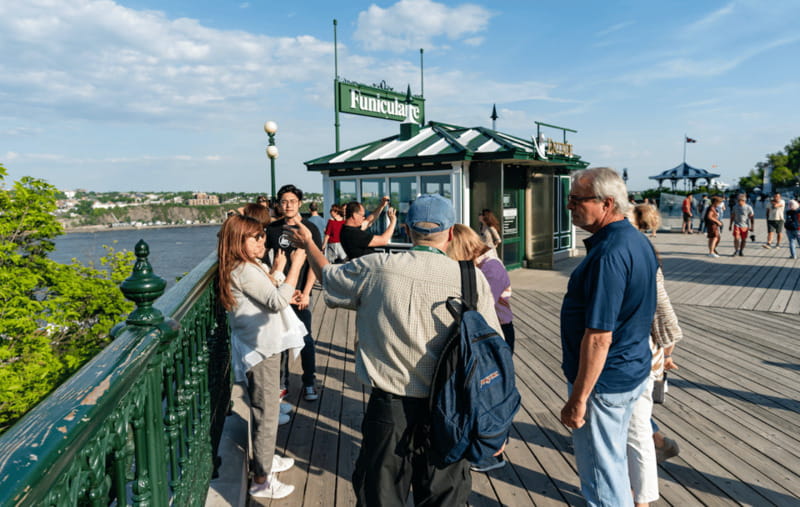
Terrasse Dufferin is a strong viewpoint. It’s also where you can breathe for a minute, take in the scenery, and reset between stops.
If you enjoy that “stand here and watch the city move” feeling, this is one of the best breaks in the route.
Notre-Dame de Québec Basilica-Cathedral: stop, look up, then take it in
The Notre-Dame de Québec Basilica-Cathedral stop is a change of mood. Instead of outdoor skyline views, you’ll focus on the cathedral’s presence and the role it plays in the city’s identity.
Even if you don’t go inside on this specific tour, you’ll get the context that helps it click. It’s also a great place to slow down your pace, because this is the stop you’ll want to absorb rather than rush.
Québec’s City Hall: the civic heartbeat
Ending with the City Hall area gives the tour a satisfying arc. You’re moving from iconic architecture to civic identity, which helps connect what you saw earlier in Lower Town to how the city functions now.
It’s a practical wrap-up stop because it anchors your understanding of where you are and what the Upper Town represents.
The guide factor: why licensed local storytelling boosts the whole trip
This tour’s quality depends heavily on the guide, and the track record here is strong. A lot of the most positive comments center on guides who made the city feel alive and answered questions with confidence.
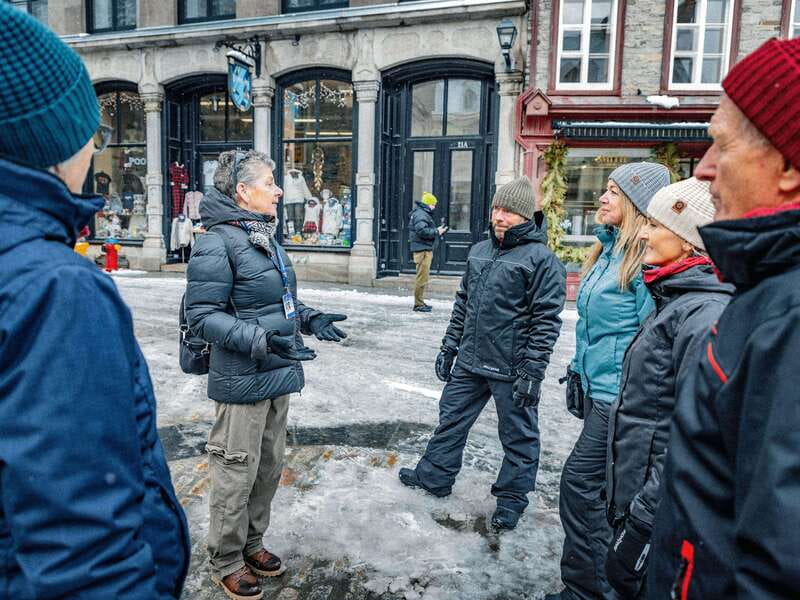
In particular, I’d watch for guides like Luis and Sam, who were repeatedly praised for turning history into something you can picture. Others, like Anais and Murielle, were noted for being patient and for adapting to conditions—like providing extra warmth on cold days.
That last part sounds small, but it matters when you’re walking for hours in winter or shoulder seasons. If your guide offers small help, it changes how comfortable the whole experience feels.
The best part: recommendations you can use right away
Another common theme is that guides didn’t just talk about the landmarks. They gave suggestions for what to do next—shops, food, and follow-up stops—so you walk away with a plan rather than just photos.
If you’re the type who likes a simple itinerary, this is a great way to get one without overthinking.
Price and value: what $37 really covers
At $37 per person for a 2-hour walking tour with a funicular entry ticket and a licensed local guide, you’re not just paying for movement. You’re paying for access to an efficient route and local interpretation.
Here’s the value equation I’d use:
- Guide time: you’re getting a structured overview rather than guessing your route
- Funicular ticket included: you’re saving money and energy on the climb
- Major landmarks in one go: you cover both Lower Town and Upper Town highlights
Yes, you’ll still need to budget for personal drinks and snacks, since they’re not included. And you should plan on a tip. A 15–20% tip is strongly recommended at the end of the visit, and it’s worth considering for guides who manage pace, questions, and small weather issues.
Is it worth it if you plan to do other tours?
If you’re doing museum-heavy days later, this walking tour is a smart warm-up. It helps you understand what you’re looking at when you see specific buildings again.
If you hate guided tours, it’s still one of the better options because the route stays tight and the funicular prevents the hike frustration that can come with other Old Quebec walks.
Logistics that affect your comfort (without ruining the day)
A few practical notes help you have a smoother experience:
- Cobblestones and uneven ground mean you’ll want comfortable shoes more than fashionable ones.
- The tour isn’t suitable for wheelchair users or people with mobility impairments, since it’s a walking-focused route with uneven terrain.
- The meeting point is in Lower Town, and the tour ends in a different part of town—so have a rough plan for how you’ll get back or move on.
Pickup options can simplify your day
If you choose a private option, hotel pickup is available. If you’re in or near Old Quebec, you’ll likely find the most convenient pickup locations include 112 Rue Saint-Paul (Lower Town) and the Museum of Civilization area. If you’re staying outside Old Quebec, pickup may be set at the Tourny Fountain (Upper Town) or the Maison Historique Chevalier (Lower Town near the ferry).
Even without pickup, the meeting point is close enough to connect with many central plans.
Who should book this Quebec City Old Quebec classic
This tour fits best if you:
- are visiting for the first time and want a grounded overview fast
- want a split view of Quebec City (Lower Town feel, Upper Town icon moments)
- want the funicular included so you’re not spending your energy climbing
It may not be ideal if you:
- need wheelchair access or have limited mobility
- hate uneven walking surfaces
- are only in town long enough to do zero walking
The good news is that the group size stays manageable. People reported that even when it was crowded, the guide kept the experience working and helped the whole group stay oriented.
Should you book this tour?
I’d book it if you want a first-pass of Quebec City that feels organized, scenic, and genuinely useful. The big reasons are the route efficiency (Lower Town to Upper Town), the included funicular that saves your legs, and the fact that licensed guides consistently bring the city’s layout and landmarks into focus.
Skip it or consider an alternative if walking uneven ground is a problem for you, or if you already know Quebec City so well that you don’t need a guided overview.
If you’re arriving with a camera and limited time, this is one of the simplest ways to leave Old Quebec feeling like you understand where everything fits.
FAQ
Where does the tour meet?
You meet at 112 Rue Saint-Paul, Québec, QC (yellow building).
How long is the tour?
The tour lasts about 2 hours (often described as 2 to 3 hours depending on timing).
What’s included in the price?
The tour includes the walking tour, a licensed local guide, and 1 funicular entry ticket. Optional hotel pickup is available if you select the private option.
What will we see on the tour?
You’ll see Place Royale, the Québec City Mural, the Fortifications of Québec, Quartier Petit Champlain, then the Upper Town sights including Fairmont Le Château Frontenac, Terrasse Dufferin, Notre-Dame de Québec Basilica-Cathedral, and Québec’s City Hall.
What languages are available?
The tour is offered in French, Spanish, and English.
Is pickup included?
Pickup is optional. It’s included with the private option. If you’re on the group option, hotel pickup and drop-off aren’t included, though your guide can meet you at set locations in Old Quebec or nearby.
Is this tour wheelchair accessible?
No. It’s listed as not suitable for wheelchair users or people with mobility impairments.