REVIEW · PALERMO
Palermo: Markets and Monuments City Center Walking Tour
Book on GetYourGuide →Operated by Cavallaro Fabrizio · Bookable on GetYourGuide
Palermo hits you in the senses fast. I love how this walk gives you Palermo Cathedral inside access and a guided thread through Norman-era Palermo, not just photos from the sidewalk.
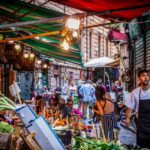
What I like even more is the stop at Capo street market, where you can actually taste the local street food—panelle, crocché, sfincione, and arancina—rather than just reading about it. One thing to plan for: the cathedral has a strict dress code, and luggage or large bags aren’t allowed.
My favorite guides here (notably Fabrizio) keep the tone practical and easy to follow, with details that help you understand what you’re looking at. The only real drawback is that you’re on your feet for a lot of the 2–3 hours, so comfortable shoes are not optional.
In This Review
- Key things to know before you go
- Walking Palermo in 2–3 Hours: the big payoff
- Starting points and how the first minutes set the tone
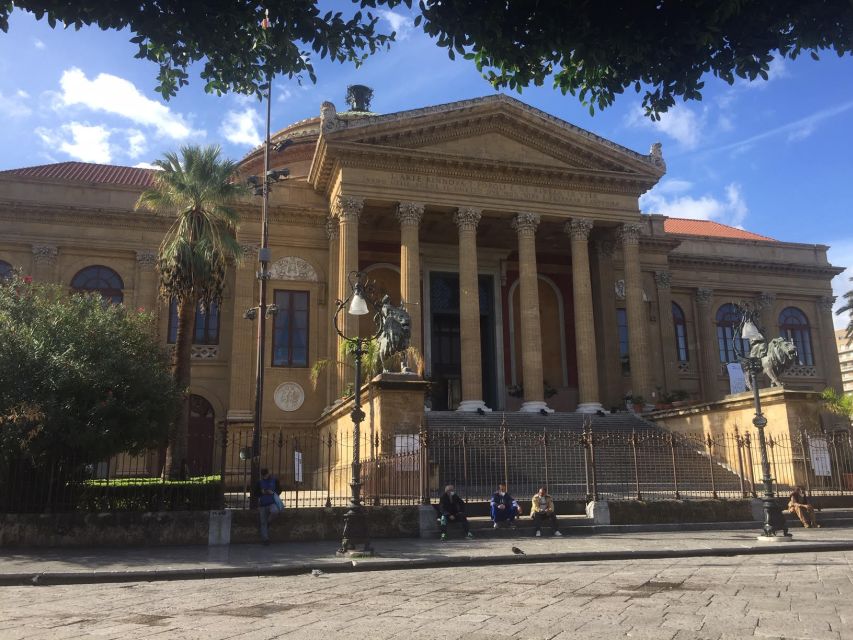
- Teatro Massimo: seeing why Palermo’s opera matters
- Porta Carini and getting oriented before you hit the market
- Capo street market: the sensory highlight (and where to spend your appetite)
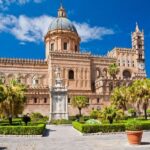
- Palermo Cathedral: dress code, then 12th-century details you can actually read
- Cassaro and the movement between monuments
- Quattro Canti (Baroque Villena Square): finishing in the historic heart
- Palazzo Pretorio and Fontana Pretoria: the story behind the nudity
- Bellini Square churches: Norman-era Palermo in walking distance
- Santa Caterina stop: small timing, real payback
- What you’ll actually carry through the tour
- Price and value: is $41 really fair here?
- Who this tour suits best
- Should you book the Palermo Markets and Monuments City Center Walking Tour?
- FAQ
- FAQ
- How long is the Palermo Markets and Monuments City Center Walking Tour?
- How much does the tour cost?
- What’s included in the price?
- What is not included?
- Where does the tour start?
- What sights are visited during the tour?
- What street food can I try?
- What languages is the tour offered in?
- What should I wear for Palermo Cathedral?
- Is luggage allowed on the tour?
Key things to know before you go
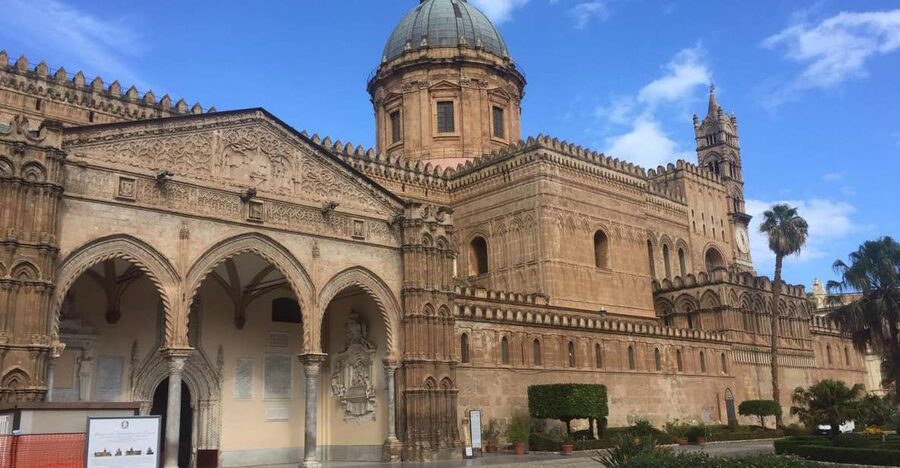
- Palermo Cathedral entry inside included so you can see the real Norman-era details, not only the exterior.
- Teatro Massimo is the first big “wow” stop, tied to why opera here is famous for its acoustics.
- Capo street market is the sensory highlight, with chances to taste classic Palermo street food.
- Quattro Canti (Baroque Villena Square) finishes the walk in the historic heart of the city.
- Praetorian Palace and Fontana Pretoria bring in the “square of shame” story, thanks to the fountain statues.
- Bellini Square churches (San Cataldo and Martorana) connect you to UNESCO-listed Norman Palermo.
Walking Palermo in 2–3 Hours: the big payoff
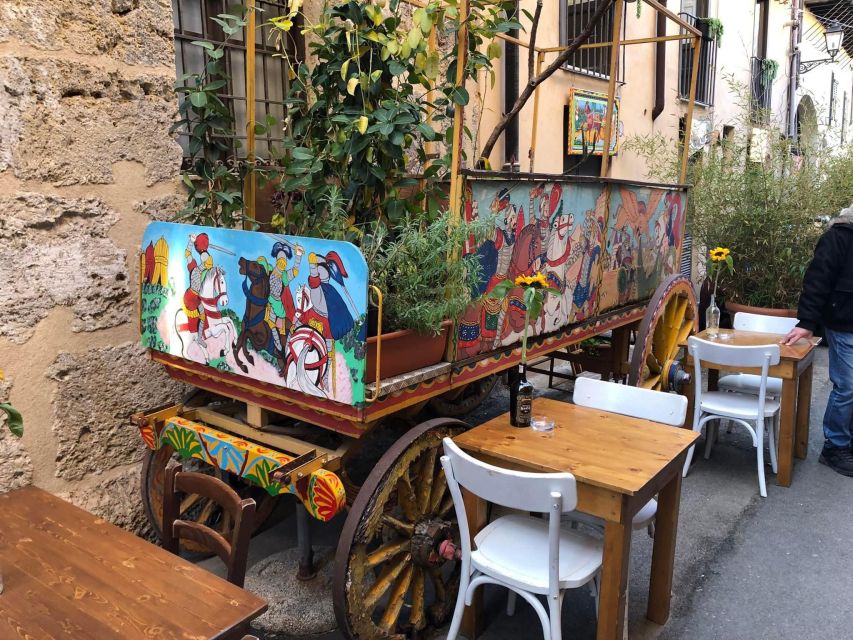
This is the kind of tour that gives you fast orientation. You start near Teatro Massimo, then work your way through central landmarks—churches, palaces, and squares—while also threading in the street-life that makes Palermo feel like Palermo.
At $41 per person, the value is mainly in two places: you get a professional guide and entrance to Palermo Cathedral. Food isn’t included, but the market portion gives you the chance to buy and taste the classics in the real setting where locals eat.
You’ll want to go in with the right mindset. This is not a slow museum crawl. It’s a “look, walk, learn, taste if you want” experience through the core of the city.
You can also read our reviews of more walking tours in Palermo
Starting points and how the first minutes set the tone
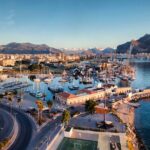
The tour has two starting options, including Feltrinelli Librerie on Via Orologio 11. If you’re coming from a cruise, there’s also a pickup option close to the port. Either way, the first stretch matters: you’re guided toward the city’s major anchor point—Teatro Massimo—so your brain has a reference point early on.
From there, the route starts to make sense fast: you pass key streets and landmarks, then you hit the market zone before you’ve had time to get bored. That sequencing is smart. You’re not stuck in monuments only; you get people, shops, and smells right away.
Teatro Massimo: seeing why Palermo’s opera matters
Your first major stop is Teatro Massimo. The guide explains it as Italy’s largest opera house and highlights the reputation for perfect acoustics.
Even if opera isn’t your thing, this stop helps you understand Palermo’s ambition. It’s the city showing it can do grand, European-scale culture, not just street life. And the timing is good: you’re fresh, not tired, and ready to take in a big architectural moment.
Porta Carini and getting oriented before you hit the market
You’ll pass Porta Carini, then continue toward the areas where the walking turns more “street.” This is where the tour earns its keep. It’s not only listing sights—it helps you learn how these neighborhoods connect.
This portion also gives you a practical advantage: once you’ve seen the route once with a guide, you’re much more likely to navigate on your own afterward. Palermo can feel like a maze if you arrive cold.
Capo street market: the sensory highlight (and where to spend your appetite)
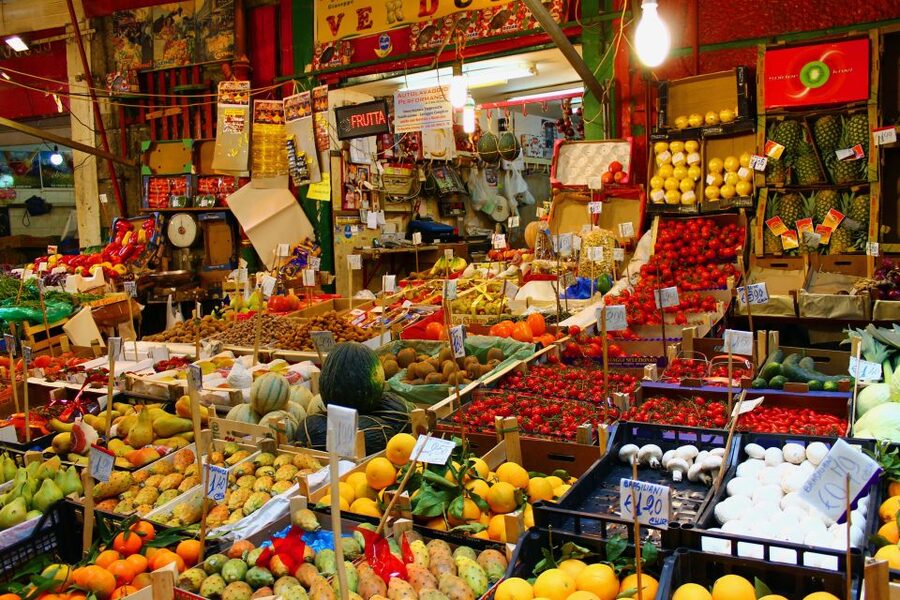
Then comes the main pulse: Capo street market. You’ll visit and get a guided walk through the stalls, with time to observe the textures and colors—textiles, foods, and the everyday energy that fills the lanes.
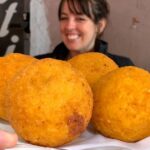
This is where the tour shifts from “sightseeing” to “doing.” You can buy and taste popular Palermo street food, including:
- panelle
- crocché
- sfincione
- arancina
Here’s the practical tip: if you’re the type who likes to try a few bites but not commit to a full meal, this is the best moment to do it. You’re focused, you have the guide for context, and you’re not rushing through hunger afterward.
One potential consideration: markets can be crowded and noisy. That’s part of the point. Just don’t plan to wear your fanciest outfit or expect quiet conversation in the middle of stall life.
You can also read our reviews of more city tours in Palermo
Palermo Cathedral: dress code, then 12th-century details you can actually read
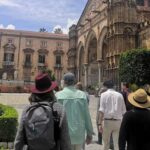
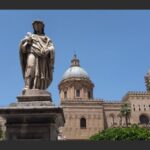
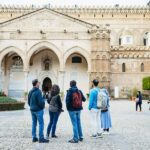
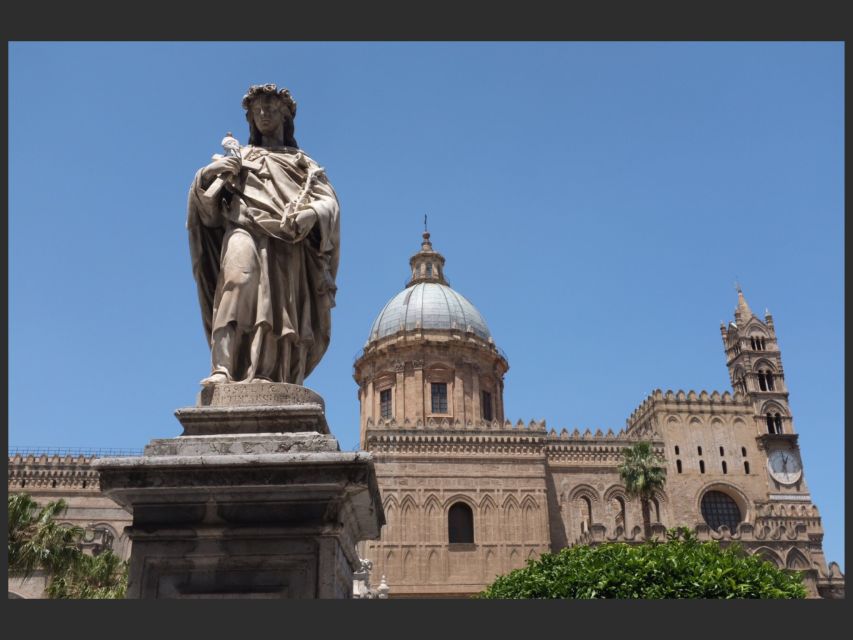
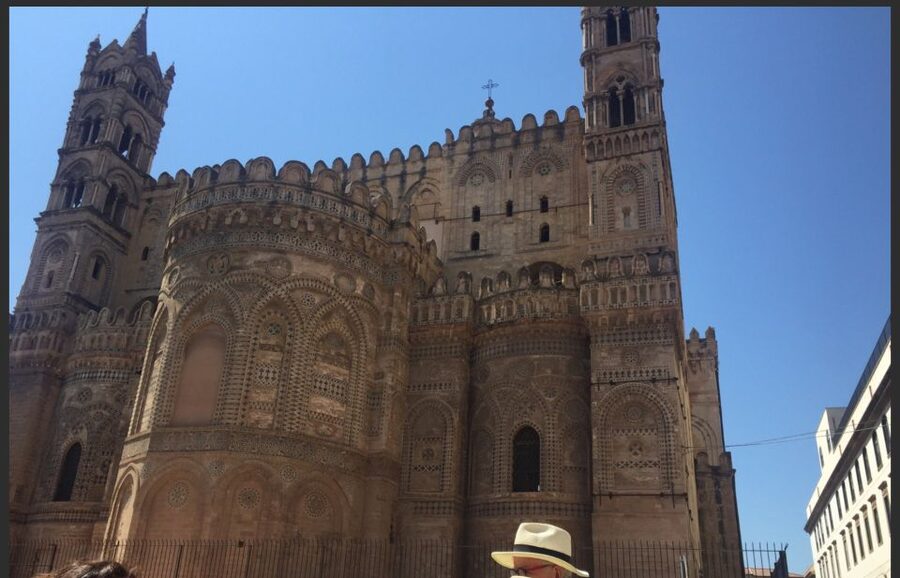
The tour includes entrance to Palermo Cathedral and gives you time inside with the guide. This is a big deal because the interior is where the architecture and power of the Norman-era influence become concrete.
Plan for the cathedral dress code:
- Men: no shorts and no tank tops (bermudas and T-shirts are allowed)
- Women: no shorts, no miniskirts, and no tops (bermuda shorts and T-shirts are allowed)
- At the entrance, you can buy a light jacket for 1€ to cover shoulders and legs
My advice: check what you’re wearing the night before. It’s an easy fix, but it can feel awkward if you arrive under-dressed and have to adjust on the spot.
Why cathedral time is worth it: outside, you can admire the building. Inside, you can understand why Palermo’s layers matter—this is the kind of site where details reward your attention.
Cassaro and the movement between monuments
You’ll walk along Cassaro (a main central artery), mostly passing through as you connect one landmark area to the next. This segment is less about one single photo and more about rhythm.
It helps you learn the city’s flow: where the wide streets are, where the lanes tighten, and how squares open up. If you’ve ever felt lost in an Italian historic center, you’ll appreciate how much this “in-between” walking teaches you.
Quattro Canti (Baroque Villena Square): finishing in the historic heart
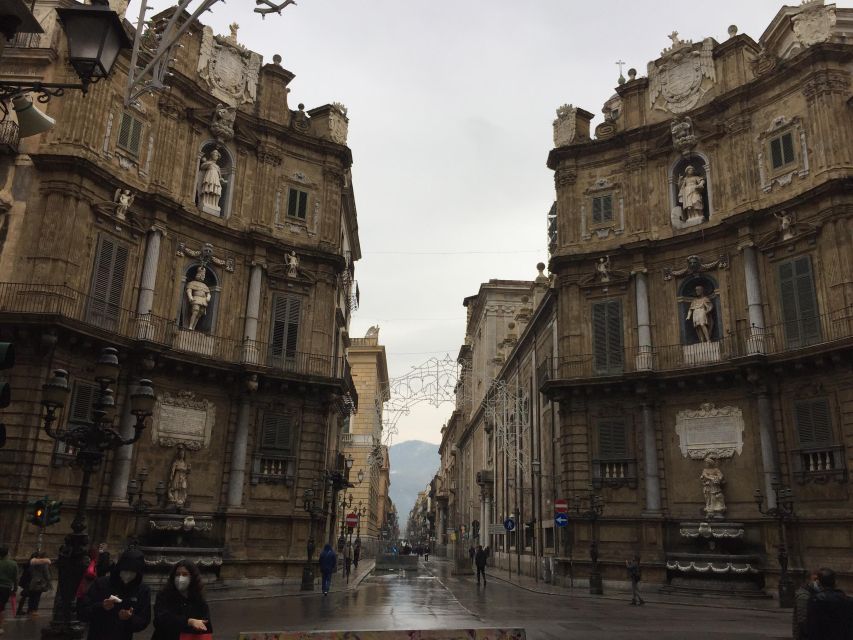
The tour ends at Quattro Canti, also called Baroque Villena Square—the “Four Corners” built in the early 1600s where two main streets cross: Corso Vittorio Emanuele and Via Maqueda.
This is a great finish because Quattro Canti is visually structured. Baroque corners have a way of making the city look “mapped.” After all the walking, it’s satisfying to end at a place that’s easy to remember.
If you want to keep your momentum afterward, this is an ideal place to step out and continue exploring nearby streets on your own.
Palazzo Pretorio and Fontana Pretoria: the story behind the nudity
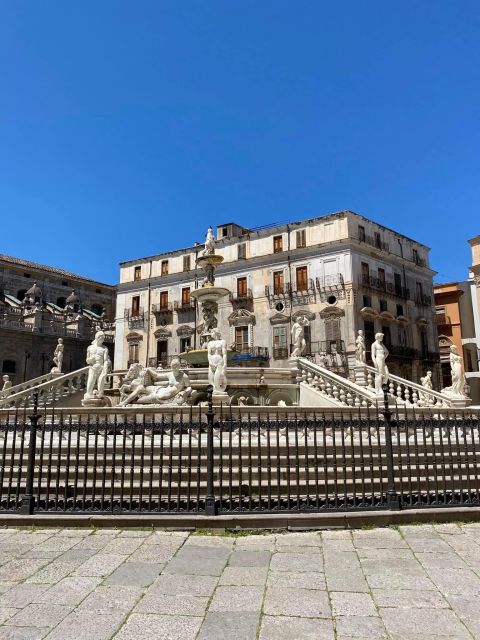
Along the route you’ll visit Palazzo Pretorio and Fontana Pretoria, at Pretoria Square.
Locals call the square the square of shame because of the nudity of the fountain statues. It can sound like a gimmick, but it’s actually a quick doorway into how public art can shock, provoke, and still become part of everyday city life.
This is another spot where a guide helps. Without context, you might just see “statues.” With context, you start noticing how power and presentation show up in stone and water.
Bellini Square churches: Norman-era Palermo in walking distance
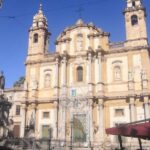
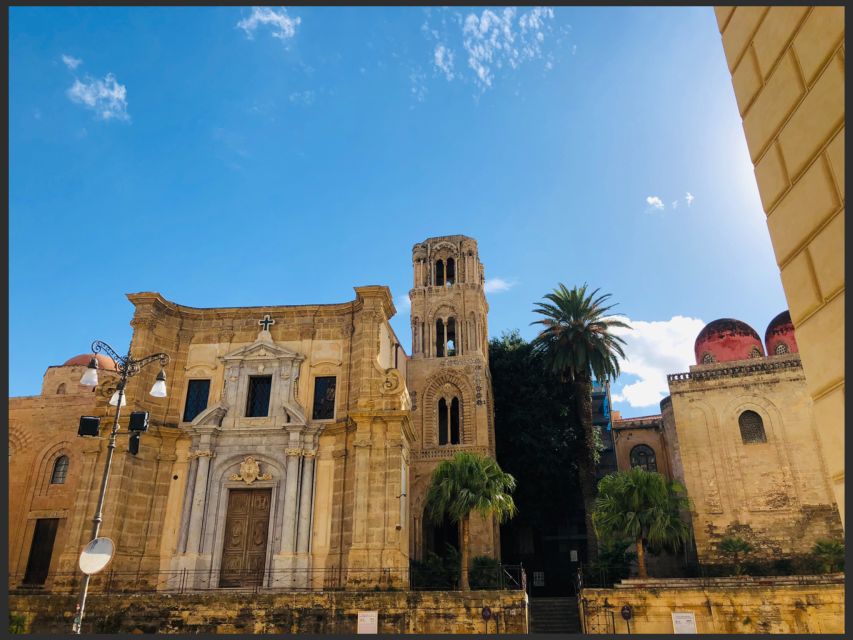
Then you move toward Bellini Square, where you see more Norman Sicily–era churches and UNESCO World Heritage sites.
Two named highlights here are:
- Martorana Church
- Church of San Cataldo
The tour includes guided visits to both, plus Chiesa di Santa Caterina. This cluster is valuable because it lets you compare similar time periods and influences within a short walk. You’ll start spotting patterns in style and symbolism—especially once the guide gives you a framework for what you’re seeing.
Santa Caterina stop: small timing, real payback
Chiesa di Santa Caterina is on the route with a guided visit. It’s not always the headline in promotional material, but these “supporting” churches are where you often feel you get more than a checklist.
Think of it like this: Palermo isn’t only big monuments. It’s also the smaller stops that make your understanding feel grounded.
What you’ll actually carry through the tour
This is a practical walking tour. The “carry” is mostly physical:
- You’ll be on your feet for most of the 2–3 hours.
- You’ll want comfortable shoes.
- Bring water and you might want snacks if you’re sensitive to meal timing.
Also: no luggage or large bags. If you’re coming from a day trip with stuff, you’ll want that packed and dealt with before the tour.
Price and value: is $41 really fair here?
At $41 per person, the price is reasonable because it bundles:
- a professional guide
- entrance to Palermo Cathedral
- and a pickup option close to the port for cruise passengers
Food and drinks are not included, but the market portion gives you the chance to buy and taste local favorites. That’s actually part of the value: you can match your spending level. Want one bite? Great. Want a fuller street-food snack? Also fine.
The other value is the structure. You’re not just jumping between distant sites. The route connects theaters, cathedrals, palaces, fountains, and market lanes into one coherent loop.
Who this tour suits best
This one fits best if you:
- like city walking tours that teach you what you’re seeing
- want market time plus monument time (not just one)
- enjoy street food and want the guide’s help for what to try
- prefer an organized route in a historic center that can be easy to get turned around in
It may be less ideal if:
- you hate walking in crowds
- you’re not willing to follow a cathedral dress code
- you don’t want to plan around a lot of on-foot time within 2–3 hours
Should you book the Palermo Markets and Monuments City Center Walking Tour?
If you want a quick, high-signal introduction to Palermo’s core, I’d book it. The standout combination is market life + major landmarks + Cathedral entry. You get enough variety to keep it interesting without turning it into an all-day sprint.
Book it if you can handle a dress-code check and you’re happy to walk. Bring the right outfit for the cathedral (or plan on the 1€ jacket), wear comfortable shoes, and keep some cash for street food. That’s the formula that turns this tour from “nice” into memorable.
FAQ
FAQ
How long is the Palermo Markets and Monuments City Center Walking Tour?
The tour lasts 2 to 3 hours.
How much does the tour cost?
It costs $41 per person.
What’s included in the price?
You get a professional guide and entrance to the Palermo Cathedral. There is also a pickup option close to the port for cruise passengers.
What is not included?
Entrance fees to monuments and museums (other than the Palermo Cathedral) are not included, and food and drinks are not included.
Where does the tour start?
The meeting point may vary depending on the option booked. One option is Feltrinelli Librerie, Via Orologio, 11.
What sights are visited during the tour?
You’ll see Teatro Massimo, Capo street market, Palermo Cathedral, the Praetorian Palace and Fontana Pretoria area, Martorana Church, Church of San Cataldo, Church of Santa Caterina, and finish at Quattro Canti (Baroque Villena Square).
What street food can I try?
You can buy and taste popular street food such as panelle, crocché, sfincione, and arancina.
What languages is the tour offered in?
The live guide speaks Italian and English.
What should I wear for Palermo Cathedral?
A dress code is required. Men cannot wear shorts or tank tops. Women cannot wear shorts, miniskirts, or tops. Bermudas and T-shirts are allowed. You can buy a light jacket at the entrance for 1€ to cover shoulders and legs.
Is luggage allowed on the tour?
No luggage or large bags are allowed.