REVIEW · PALERMO
Discover the Charm of Palermo: A 3-Hour UNESCO Sites Walking Tour
Book on Viator →Operated by Towns of Italy · Bookable on Viator
Palermo hits you with layers. In just about 3 hours, you’ll connect baroque streets, Norman-Arab architecture, and local food stops into one easy route through the historic center.
I especially like how the tour mixes big-picture orientation with concrete details you can actually see—think Teatro Massimo acoustics and the mosaic story behind the Palatine Chapel area. I also like that the ending treat is built in, so you’re not just looking at monuments—you’re tasting the city.
One thing to plan for: the walk is timed and moves along at a good pace. If you’re hoping for tons of time inside every site, note that Palatine Chapel access isn’t included, so you may want a return visit for the mosaics.
In This Review
- Key Things You Should Notice on This Palermo Walk
- Why This 3-Hour UNESCO Palermo Walk Works Fast
- Meeting at Via Volturno and What 3 Hours Feels Like
- Teatro Massimo and the Big-Sound Moment in Piazza Verdi
- Market Palermo: Piazza Caracciolo, the Via Bandiera Crossing, and Street Food Energy
- San Domenico Square: A Church That Plays Political and Cultural Roles
- Garraffo Fountain and the City’s Power in Plain Sight
- The Descent of the Judges: Calata dei Giudici Explained
- La Martorana (Santa Maria dell’Ammiraglio): A Norman-Arab Story With Greek and Albanian Threads
- Piazza Pretoria: The Fountain That Looks Like a Whole Sculpture Park
- Quattro Canti (The Four Corners): Palermo’s Street-Level Stage Set
- Cattedrale di Palermo: Going Inside One Norman Masterpiece
- Villa Bonanno Garden: Palm Trees, Roman Mosaics, and a Quiet Pause
- Palazzo dei Normanni and the Palatine Chapel: Arab-Norman Art From the Core
- Price and Value: Is $31.88 a Fair Deal?
- Who Should Book This Tour (and Who Might Want a Different Plan)
- Should You Book This Palermo UNESCO Walking Tour?
Key Things You Should Notice on This Palermo Walk
- Licensed English guide with stories that turn architecture into real cause-and-effect
- Cathedral admission included, so you get inside one of Palermo’s key Norman monuments
- UNESCO-linked Norman-Arab sites you’ll understand from street level, not just from photos
- Market stops that show everyday Palermo life, not only sightseeing
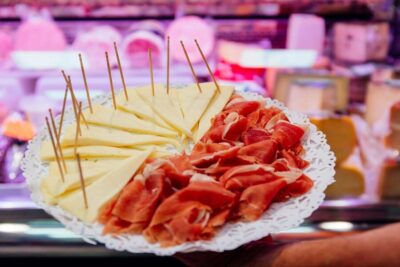
- Food included: typical Sicilian cannolo or granita
- Small group size (max 20) and an audio system that helps you hear clearly
Why This 3-Hour UNESCO Palermo Walk Works Fast
Palermo can feel like a puzzle at first. This tour solves part of it for you by stitching together the city’s main “why” moments: who built what, what got layered over time, and what still shows on the streets today.
The route is also smart for limited time. You’re not trapped in one neighborhood. In a short span you’ll move from grand public spaces (like Teatro Massimo and Quattro Canti) into tighter lanes where markets and daily routines take over.
And yes, the tour adds actual context. One guide named Valeria stood out in the feedback for making the history feel usable, not like a lecture. Another guide, Fabio, was praised for clear explanations and an ability to talk about life and history together. That’s the difference: you walk away with streets that make sense.
You can also read our reviews of more walking tours in Palermo
Meeting at Via Volturno and What 3 Hours Feels Like
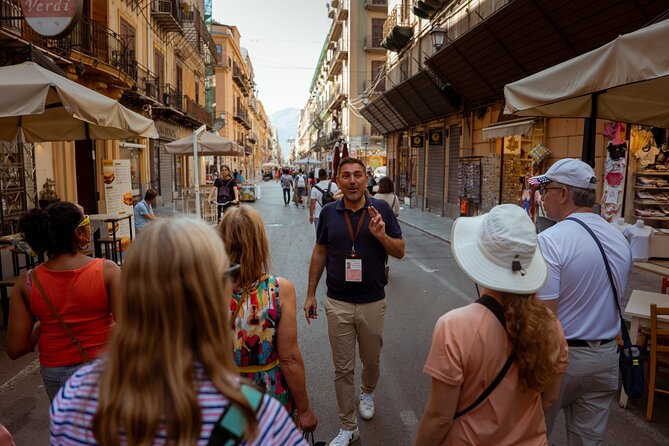
You meet at Via Volturno, 44 (90138 Palermo). The tour loops back to the meeting point, so you’re not scrambling to find your way afterward.
It runs for about 3 hours, with frequent stops built into the plan. The pacing is quick enough that you’ll cover a lot, but several people noted there are rest breaks along the way. Still, if you’re a slow walker, bring that up in advance—your tour provider says they’ll do their best to accommodate special needs and mobility concerns.
One practical note from experience: Palermo streets can get crowded, and cars and motorcycles sometimes push through areas that look pedestrian. In the narrow alleys, you’ll want to keep close to your guide and stay alert while still taking in the scenery.
Teatro Massimo and the Big-Sound Moment in Piazza Verdi
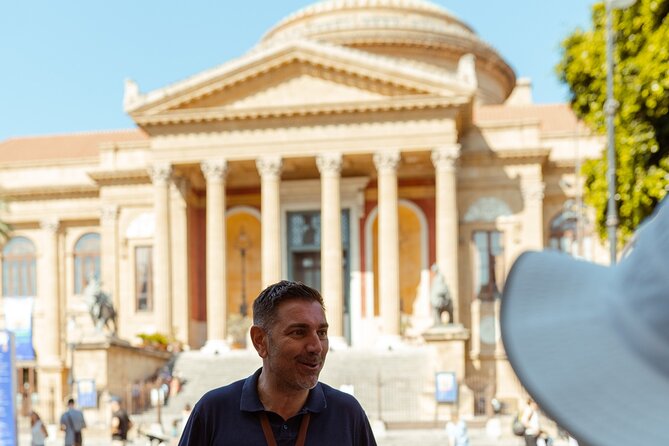
The tour starts in the area of Teatro Massimo Vittorio Emanuele on Piazza Verdi. Even from the outside, it’s a statement building. It’s described as the biggest opera house in Italy and, at the time of its opening, among the largest in Europe, dedicated to King Victor Emanuel II.
What’s worth paying attention to here is the detail about its acoustics. The guide’s job is to help you understand why an opera house like this wasn’t just about art—it was about civic pride and engineering. Even if you don’t go inside, the scale tells the story.
From there, you’ll drift toward the Galleria delle Vittorie area. It was once a commercial mall with a central entrance on Via Maqueda, and today its condition reflects how time changes city plans. There’s a sense of Palermo moving forward while still carrying old structures.
Market Palermo: Piazza Caracciolo, the Via Bandiera Crossing, and Street Food Energy
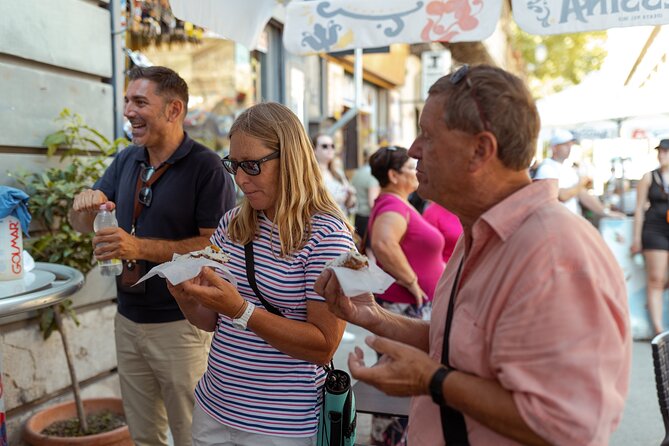
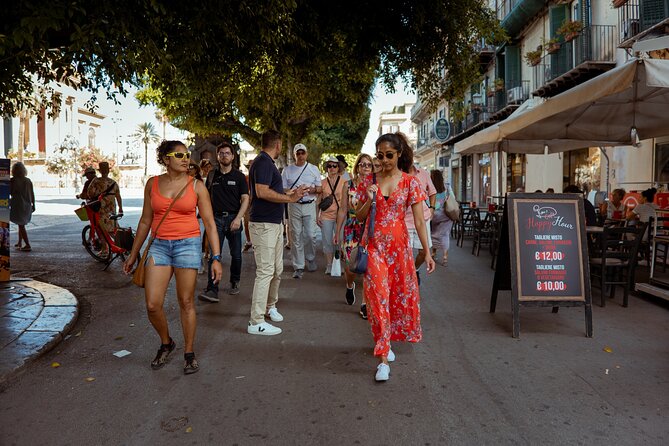
One of my favorite parts of this tour is that it doesn’t treat Palermo like a museum. You’ll cross via Bandiera and see the kind of open-air market vibe that makes the city feel like it’s always in motion.
Then you’ll move toward the Piazza Caracciolo market area. You’ll hear the origin of the name la Bucceria, tied to the French boucherie (butcher’s shop). That sort of detail helps you understand why the market feel exists: it’s a long-running pattern, not a random tourist stop.
If you love to eat while you learn, you’re in the right place. One guide-led group even highlighted a coffee stop during the walk, and people consistently mention that the food is a real payoff, not a rushed afterthought.
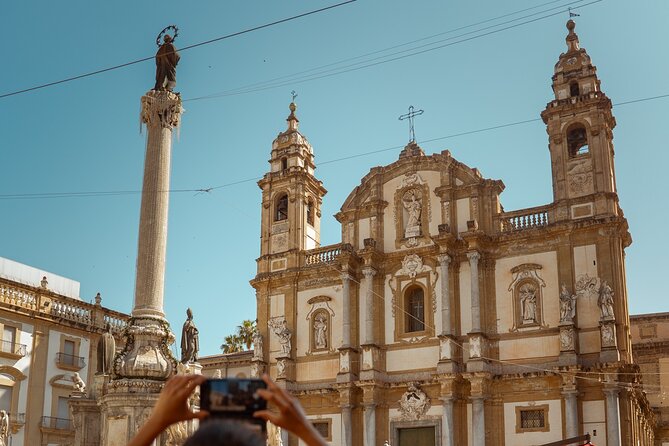
San Domenico Square: A Church That Plays Political and Cultural Roles
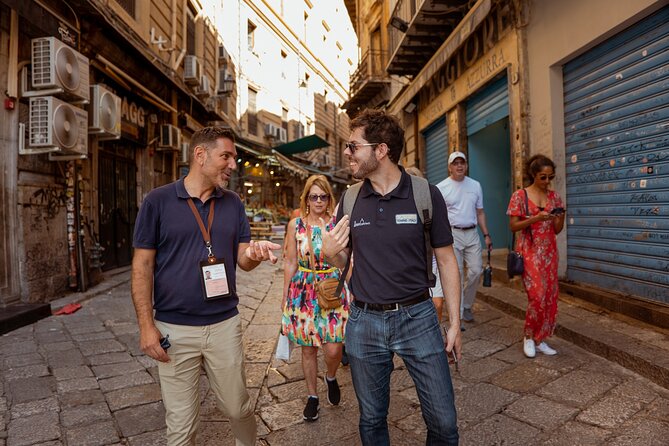
Next up is Chiesa di San Domenico in its square. It’s often mentioned as coming right after the Cathedral in terms of prominence. The tour frames it as more than a pretty church: it’s also called the Pantheon of the illustrious men of Sicily.
And there’s a very specific note tied to modern history—the church is considered a symbol in the fight against the mafia. That contrast is important in Palermo. The city’s story isn’t only about kings and architects. It’s also about who holds power and how communities react.
You get a short time here (and the admission ticket is free per the tour plan). That means the guide’s explanations matter. This isn’t the stop where you want to wander slowly; it’s the stop where you listen closely.
Garraffo Fountain and the City’s Power in Plain Sight
You’ll pass by the Garraffo Fountain (Fontana del Garraffo) in Piazza Marina, down the ancient Cassaro street—now Via Vittorio Emanuele. Garraffo is a baroque fountain, and the key is learning to see baroque art as public messaging. It’s decoration, yes, but it’s also about turning water, stone, and money into visible authority.
From there, the route continues toward the Palermo Stock Exchange history. The exchange was active until 1997, when institutions were unified into the single Italian Stock Exchange. Trading began in 1845, with earlier activity noted as far back as 1840, and it operated for about a century from Palazzo delle Finanze.
This part might sound niche, but it isn’t random. It helps you grasp that Palermo’s importance wasn’t only religious or artistic. It was economic too, with other Sicilian exchanges active before World War I (Messina, Catania, Agrigento).
The Descent of the Judges: Calata dei Giudici Explained
Next comes the descent of the Judges, also called calata dei giudici. The naming connects to the Judges of the Praetorian Court, who lived in the monastery of S. Caterina. You’ll hear about how the court worked, including that civil cases and criminal cases had different roles.
The practical value for you: you start to see why certain street patterns in Palermo feel “official.” The city isn’t only arranged by buildings. It’s also shaped by institutions, where people lived, and how authority was administered.
La Martorana (Santa Maria dell’Ammiraglio): A Norman-Arab Story With Greek and Albanian Threads
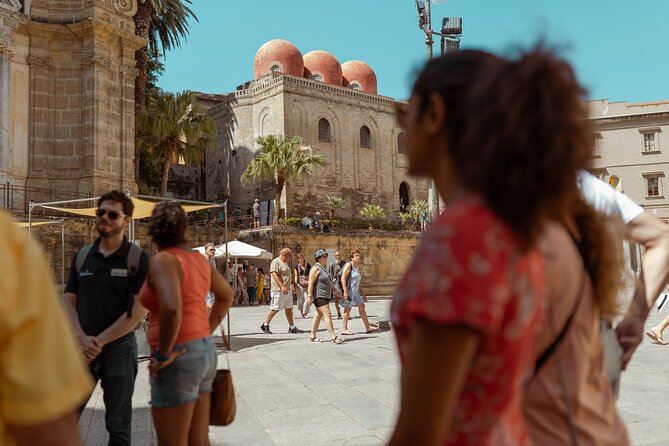
One highlight that many people remember is Santa Maria dell’Ammiraglio, also known as La Martorana. It sits near piazza Bellini and connects to the nearby Benedictine convent founders, Goffredo and Eloisa de Marturano.
Here’s the UNESCO-style idea in street form: built between 1143 and 1185 by Greek admiral George of Antioch, the church is a blend that points back to Greek-Byzantine Christianity inside a broader Norman-era context. The tour notes that the Greek-Byzantine clergy still officiates in ancient Greek or Albanian language, linked to the Eparchy of Piana degli Albanesi of the Italo-Albanian Catholic Church.
If you like architecture for its human stories, this is the stop. It makes the city’s cultural overlap feel real, not decorative.
Piazza Pretoria: The Fountain That Looks Like a Whole Sculpture Park
Piazza Pretoria sits near the Kalsa district and is close to Quattro Canti. The tour frames it as unusual because it’s known for a garden that originally lacked palaces—then the fountain arrived.
You’ll hear about the fountain being created for the garden of don Luigi de Toledo in Florence. In Palermo, the plot history includes pressure to obtain the land in 1551 from the nuns of San Domenico al Maglio. The Florentine sculptor Francesco Camilliani was commissioned, and he was a student of Baccio Bandinelli.
The practical takeaway: when you see the sculptures and fountain arrangements here, don’t treat them as random. The guide helps you read them as imported taste and local ambition meeting in the center of town.
Quattro Canti (The Four Corners): Palermo’s Street-Level Stage Set
Quattro Canti is one of Palermo’s most recognizable squares, and the plan gives you good time here. Four buildings form the corner square, built between 1608 and 1620. Decorative elements and sculptures were completed by 1663.
This is where the architecture becomes a map. Quattro Canti acts like a starting point for walking Palermo because the geometry gives you orientation. You’ll also likely see how baroque design was meant to be experienced while moving through streets, not only standing still.
If you’re photographing, do it here. Even if you’re not chasing perfect shots, this spot is easy to understand. It’s a visual anchor.
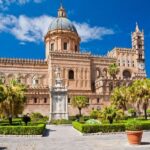
Cattedrale di Palermo: Going Inside One Norman Masterpiece
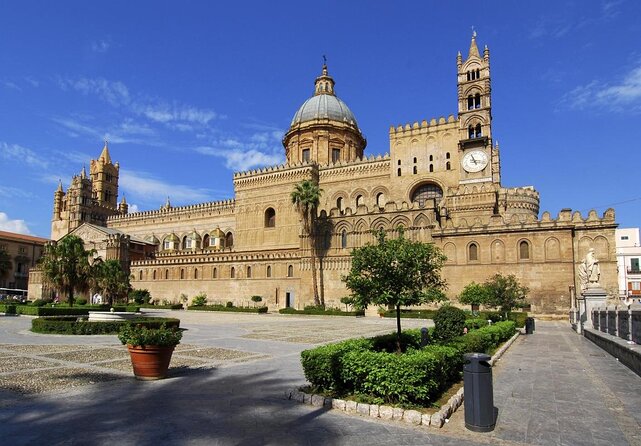
Now for the big included interior: the Cathedral of Palermo (Cattedrale di Palermo). The tour includes the admission ticket, and that matters because this is one of the main reasons to book.
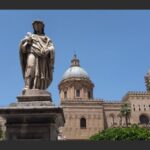
The cathedral is presented as a Norman architecture treasure. It was built in 1184 by the Normans as a reconverted Christian church on the site of a Muslim mosque, previously built over a Christian basilica. That layered site history isn’t trivia—it’s the whole point of Palermo.
One of the most memorable details you’ll hear is the mix of styles across centuries: Gothic to Medieval, Arabic (with an actual passage from the Koran engraved on one of the columns), and later Neoclassical.
There’s also a competitive angle: it was built in beauty terms to surpass Monreale. That gives the cathedral extra bite. You see it less like a single finished masterpiece and more like a high-stakes project.
Plan to take your time inside within the tour’s flow. People praised the cathedral experience when their guide pointed out significant areas rather than letting everyone drift.
Villa Bonanno Garden: Palm Trees, Roman Mosaics, and a Quiet Pause
After the cathedral area, you’ll reach Villa Bonanno, located in Victory Square behind the Palace of the Normans. The garden is described as always open, planted with palm trees, and featuring statues and busts of Palermo’s famous people.
This stop is a nice change of pace. You’re in a calmer patch while still staying in the historic center. And there’s a strong archaeological connection: mosaics from Roman patrician houses were found nearby, including mosaics of the seasons and Orpheus, with those pieces kept at the National Archaeological Museum.
You’ll also notice an adjacent fountain with a monument to Philip V. The plan connects it to a 19th-century work, and it notes design involvement linked to 1661 and the participation of Serpotta (as described in the tour info). Even if you only see parts, the guide makes the garden feel like a clue box for Palermo’s past.
Palazzo dei Normanni and the Palatine Chapel: Arab-Norman Art From the Core
The last major attraction area is Palazzo dei Normanni, also called the Royal Palace (Palazzo Reale). The tour describes it as extraordinary and as chronicling Palermo from early Punic settlements to later periods.
The star connection is the Cappella Palatina (Palatine Chapel). The tour highlights it as Arab-Norman art and notes it has been a World Heritage site since 2015.
Here’s the key consideration for your expectations: the tour is set up around learning from the outside, and admission to this palace area isn’t included in the tour plan. One disappointed note in the feedback said they wished they could go inside more, especially for deeper Palatine Chapel mosaic viewing.
That doesn’t make this a bad stop. It means you should treat it as an orientation and motivation point. If the mosaics are your main goal, add a separate visit after the walk while your new context is fresh.
Price and Value: Is $31.88 a Fair Deal?
At $31.88 per person for about 3 hours, the value comes from what’s included.
You get:
- a licensed English-speaking guide
- cathedral admission
- a typical Sicilian cannolo or granita
- the core monuments and UNESCO-linked context in one walk
- a mobile ticket
If you’re trying to compress a first-day plan, this price often ends up feeling reasonable. You’re not paying only for walking access—you’re paying for a guide to connect the architecture, street names, and institutional history into something you can carry with you.
Also, people praised the sound setup. One comment mentioned the amplification system helped everyone hear clearly. That’s not glamorous, but it’s huge when you want to follow the story without straining.
Who Should Book This Tour (and Who Might Want a Different Plan)
This tour is a great match if you:
- want a first-day orientation through central Palermo
- enjoy architectural details tied to real political and cultural history
- like market walking and food as part of the learning
- want a short program that covers several major stops without a full day commitment
You might consider a different plan if you:
- want maximum inside time at each major site (especially the Palatine Chapel area)
- dislike moving at a quick pace even with rest breaks
- need lots of time for shopping or lingering in markets (your route keeps you moving)
Should You Book This Palermo UNESCO Walking Tour?
If your goal is to understand Palermo fast—how the Norman-Arab mix shows up in churches and palaces, how baroque squares are designed to orient you, and how everyday markets fit beside UNESCO-level sites—this tour is a strong booking.
Book it if you like structure. The route has a clear order, it includes the Cathedral interior, and the guides you’ll be paired with (people mentioned Valeria, Renata, Fabio, Simone, Peter, and more) tend to focus on turning the city into stories you can reuse the next day.
Skip it only if your top priority is long, slow museum-style time inside the Palatine Chapel mosaics. In that case, you can still enjoy the walk, then plan a separate indoor visit later.