REVIEW · NEW ORLEANS
New Orleans Cemetery Walking Tour
Book on Viator →Operated by Haunted History Tours · Bookable on Viator
Above-ground tombs beat the postcard. This New Orleans Cemetery Walking Tour brings you through the oldest graveyards with a licensed guide and explains the city’s unusual above-ground burial tradition right in place.
I especially love how the walk connects big moments to small details. The Hurricane Katrina Memorial stop ties loss to an older burial practice, and the guide helps you notice why tombs are built and decorated the way they are—often to reflect family status and local culture.
One trade-off: it is a real walking tour with little built-in downtime. Bring comfortable shoes, and if you go in the afternoon, pack sun protection since some stretches have limited shade.
In This Review
- Key things to know before you go
- Where 5101 Canal Blvd puts you in the French Quarter
- Why a licensed guide matters in New Orleans cemeteries
- Walking pace, weather, and what to wear for two hours
- Stop One: the Hurricane Katrina Memorial and the potter’s field story
- The cemetery crossroads where multiple graveyards meet
- Above-ground burial: what shaped the tombs you see
- Famous tombs, mourning symbolism, and how guides keep it human
- Price and value: $30 for a licensed, legal cemetery walk
- Morning vs afternoon: choosing the right start time
- Who should book (and who should skip)
- Should you book this New Orleans Cemetery Walking Tour?
- FAQ
- How much is the New Orleans Cemetery Walking Tour?
- How long is the tour?
- Where does the tour start?
- What is included in the price?
- Is food or drinks included?
- Are there morning and afternoon departure times?
- Is the tour in English?
- Is it a walking tour?
- What if the weather is bad?
- Can I cancel for a full refund?
Key things to know before you go

- Licensed, legal access: a guide is required to enter these cemeteries properly.
- Above-ground burial explained: you learn how and why New Orleans graves were built above ground.
- Katrina Memorial stop: you’ll hear the story behind an older potter’s field turned memorial.
- Smart pacing, but lots of walking: expect steady movement for about two hours.
- Small group size: capped at 28 people, which helps keep it conversational.
- Morning or afternoon departure: pick the time that fits your energy level and shade tolerance.
Where 5101 Canal Blvd puts you in the French Quarter

The tour starts at 5101 Canal Blvd, in the French Quarter area, and it ends back near the same meeting point. That back-to-start setup is handy because you can plan dinner or a later stroll without losing a chunk of time on logistics.
Getting there is usually straightforward. The tour is near public transportation, and one nice practical detail is that a streetcar line ends close to the pick-up spot, so you can avoid the parking headache.
You’ll get a mobile ticket, so have your phone ready before you arrive. Since you meet your licensed guide at the start point, it helps to arrive a few minutes early so you don’t end up rushing onto the sidewalk hunt-and-peck game.
You can also read our reviews of more walking tours in New Orleans



Why a licensed guide matters in New Orleans cemeteries

In New Orleans, access is not casual. This tour uses a licensed local guide because that’s the only legal way to enter and move through these cemetery grounds. That means you’re not just hearing stories from behind a fence—you’re learning in the actual spaces where the city’s burial traditions play out.
The group stays limited (maximum 28 people), which makes the experience feel more like a guided walk than a crowded shuffle. I also like that the guide is responsible for pacing you through the cemeteries, since these spaces have their own flow and rules.
Expect an educational approach. The tone is not built around jump scares or spooky theatrics. Instead, the guide focuses on how people mourned, what vaults and tombs mean, and how local history shows up in the stones.
Walking pace, weather, and what to wear for two hours
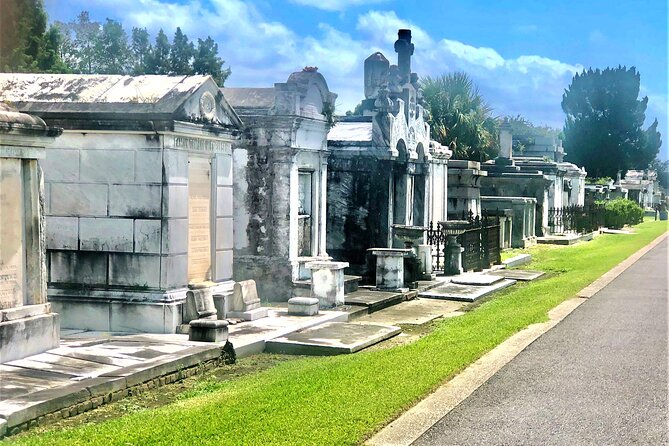
This is about a 2-hour walking tour, and the physical rhythm is steady. Even though parts of the route may be mostly flat, you should plan on a full-on walk with no guaranteed places to sit.
Wear comfortable shoes you trust. One rougher sidewalk section can pop up, and New Orleans trees love their roots—so shoes matter more than people think they will.
Weather is part of the deal. The tour operates in all weather conditions, so dress for heat, sun, rain, or wind. If you’re going in the afternoon, also consider that shade can be scarce on some stretches, so a hat and water can be smart even if you’re not expecting to sweat.
Service animals are allowed, and the tour is listed as requiring a moderate physical fitness level. If you know you struggle with prolonged walking, this is the one point where you’ll want to think twice.
Stop One: the Hurricane Katrina Memorial and the potter’s field story
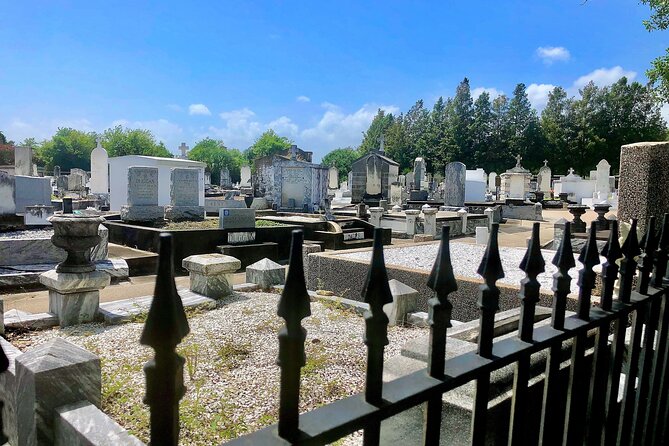
The first featured stop is the Hurricane Katrina Memorial, with about 10 minutes scheduled there. This is where the tour slows down emotionally and connects tragedy to a burial history lesson.
You’ll hear the story of people lost in Hurricane Katrina, and how an older potter’s field became a memorial for those lost souls. Even if you already read about Katrina, hearing it tied directly to a cemetery setting lands differently. The city’s stones turn the story from headline to place.
Practically, this stop is also a good time to re-orient yourself. After that, you keep moving into the wider cemetery district and start picking up more of the visual language behind tomb design and burial traditions.
The cemetery crossroads where multiple graveyards meet

A key next moment is visiting a spot in the city where numerous cemeteries meet at a crossroads. This isn’t just a neat geography fact. It helps you understand why New Orleans burial grounds feel so central to the city’s map and memory, not tucked away on the edge.
At a crossroads like this, it gets easier to compare styles and read patterns. Even without memorizing names, you’ll notice how tombs vary, how families mark territory, and how the design of above-ground structures creates a kind of outdoor “family record.”
The guide will point out details you might otherwise miss—small architectural cues, layout choices, and symbolism that connects the dead to the living community that built these monuments.
If you’re the kind of person who likes to look closely, this section rewards you. If you’re expecting quiet, it’s still peaceful, but it’s not a nap-stop. You’ll keep learning while you walk.






Above-ground burial: what shaped the tombs you see
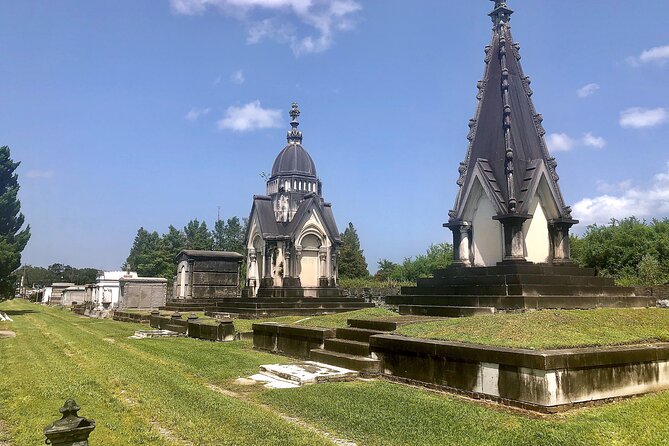
The big theme you’ll carry through the tour is New Orleans above-ground burial. The city’s burial traditions were shaped by history, culture, and climate—so tombs and vaults aren’t just decorative. They are built to function in local conditions and reflect local values.
You’ll learn why graves in New Orleans often take the form of elaborate structures rather than simple ground plots. The guide also explains how these vaults can communicate wealth and status. In other words, families didn’t only memorialize someone—they used the tomb to send a message about the family’s place in the world.
As you move through the cemeteries, pay attention to how the guide frames symbolism. Once you learn what to look for, the stonework becomes a readable language: markers, ornamentation, placement, and style all help tell the story.
Also, it’s a good reminder that “old” doesn’t mean “random.” Even if some structures look strange at first glance, they’re part of a system. The tour helps you see that system instead of treating everything like eerie decoration.
Famous tombs, mourning symbolism, and how guides keep it human
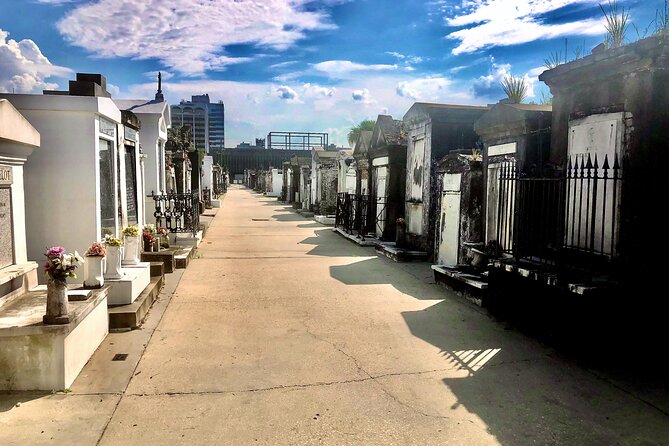
One reason this tour earns such strong ratings is how the guides handle the balance of facts and personality. On the walks, you might hear names such as Vee, John, Drew, Thorn, Christian, or Captain Neil—each bringing their own style, from humor to careful storytelling.
What I like is that the focus stays on meaning. The tombs aren’t just famous; they’re introduced with context: who the person was, what the monument style signals, and how mourning customs shaped the way New Orleans builds memory.
The guides also tend to point out practical visual details—like where your eye should land first on a vault or which design elements connect to family identity. That makes the tour feel less like a lecture and more like learning a local way of reading the world.
You’ll finish with a new mental map of New Orleans. Not just where the cemeteries are, but how the city thinks about death, community, and legacy.
Price and value: $30 for a licensed, legal cemetery walk

At $30 per person, this is one of those deals that feels fair because it’s not just storytelling—it’s access. Since you’re paying for a licensed guide to legally enter and move through cemeteries, that cost isn’t “just for talking.”
You also get about two hours of guided time around multiple sites, including the Hurricane Katrina Memorial. It’s compact but structured, which matters in a city where time is always being spent walking, waiting, and deciding.
Booking demand is strong. The tour is commonly booked about 17 days in advance on average, so if your dates are fixed, I’d secure your spot early.
If you’re the kind of person who enjoys history but hates museum lectures, this is a good compromise. You get the information in outdoor places where it belongs.
Morning vs afternoon: choosing the right start time
The tour offers a choice of late morning or early afternoon. For many people, that choice is really about weather and comfort.
A late morning start can be easier on the body and helps you avoid peak sun. One practical tip I really like: arrive early enough to grab beignets and a café au lait near the start area. It’s a classic New Orleans move and it also gives you a calmer routine before the walking begins.
If you choose early afternoon, be ready for more sun exposure. On some days, there is very little shade along parts of the route, so plan for it with a hat and water. The walk is still manageable, but your comfort depends on the day.
Who should book (and who should skip)
This tour fits you best if you want New Orleans culture in a form that feels real, not staged. It’s ideal for history lovers, curious walkers, and anyone interested in understanding how above-ground burial traditions shape the city.
You’ll also enjoy it if you like learning with personality. The guides can be funny without turning the subject into a joke.
Skip it if you need lots of resting time during a tour or if prolonged walking is a challenge for you. This isn’t a sit-down experience.
And if you’re only looking for scares, this will feel more academic than spooky. The focus is education about death, mourning, and local history.
Should you book this New Orleans Cemetery Walking Tour?
I think you should book if you want legal access, real cemetery context, and a guided explanation of why New Orleans burial traditions look the way they do. At $30 for about two hours, it’s a strong value when you factor in the guide-led entry and the chance to see multiple sites in one outing.
Do it sooner rather than later if your schedule is tight, since booking can happen well ahead of time. Then show up ready to walk, with good shoes and weather-appropriate gear. If you do that, you’ll come away with more than creepy photos—you’ll have a clearer picture of how this city remembers.
FAQ
How much is the New Orleans Cemetery Walking Tour?
It costs $30.00 per person.
How long is the tour?
The tour lasts about 2 hours.
Where does the tour start?
The meeting point is 5101 Canal Blvd, New Orleans, LA 70124, USA.
What is included in the price?
A local guide is included.
Is food or drinks included?
No. Food and drinks are not included.
Are there morning and afternoon departure times?
Yes. You can choose a late morning or early afternoon departure.
Is the tour in English?
Yes, it is offered in English.
Is it a walking tour?
Yes. It’s described as a walking tour and you’ll want comfortable shoes.
What if the weather is bad?
The tour operates in all weather conditions, and you should dress appropriately. If it’s canceled due to poor weather, you’ll be offered a different date or a full refund.
Can I cancel for a full refund?
Yes. Cancellation is free up to 24 hours in advance for a full refund. If you cancel less than 24 hours before the start time, the amount paid is not refunded.