REVIEW · NEW ORLEANS
French Quarter Historical Sights and Stories Walking Tour
Book on Viator →Operated by Lucky Bean Tours · Bookable on Viator
The French Quarter has a backstory you can hear. This 2-hour walk through New Orleans oldest neighborhood connects major stops like Jackson Square and the St. Louis Cathedral with the smaller details most people miss. It also comes with real-time suggestions for where to shop and eat once you’re back on your own feet.
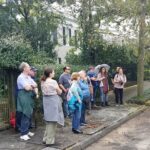
What I like most is the way the guide turns famous scenes into something you can actually picture and remember. I also love the small-group setup (max 12) and the fact that stops are basically no-fuss, with no paid entry for the sights listed. The tour is often led by friendly guides such as Tim, Scott, Renée, Lesley, and Libby, and their style shows up repeatedly in how smoothly they answer questions.
One drawback to keep in mind: 2 hours is tight, so you get the story behind key landmarks, not an exhaustive walk through every alley and courtyard.
In This Review
- Key Highlights You Can Feel Immediately
- Why a French Quarter Stories Walk Beats Wandering Alone
- Start at Instrument Men, Finish in Jackson Square
- French Quarter First: The Oldest Neighborhood, Explained
- French Market: History You Can Hear While You Browse
- St. Louis Cathedral: Late 18th-Century Faith and Survival
- Mississippi River Stop: The City’s Lifeline (and Your Daily Reminder)
- Royal Street: Shopping, Street Performers, and Story Leads
- Jackson Square: A Crossroads of French, Spanish, American, and Caribbean
- What Makes the Guide Matter (Beyond Facts on a Sign)
- Price and Value: $35 for Two Hours of Real Local Context
- Who This Walking Tour Fits Best
- Practical Tips Before You Go
- Should You Book This French Quarter Walking Tour?
- FAQ
- Is the tour guided?
- How long is the French Quarter Historical Sights and Stories Walking Tour?
- Where does the tour start and end?
- How many people are in the group?
- What language is the tour offered in?
- What should I bring?
- Are entrance fees included for the sights?
- Can I cancel and get a full refund?
Key Highlights You Can Feel Immediately
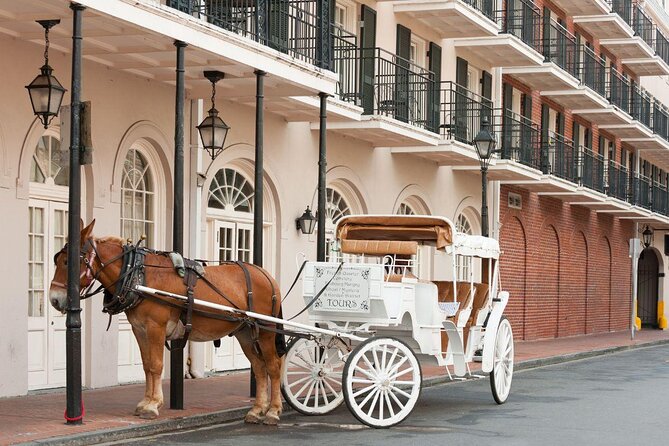
- Small group size (up to 12): easier to hear, and quicker to ask questions
- Major sights without ticket friction: planned stops are free to enter
- A guide who connects architecture to culture: France, Spain, American influence, and Caribbean flavor all show up in the talk
- Practical local pointers: shopping and dining suggestions you can use right away
- Route ends at Jackson Square: easy to keep exploring after the tour
- Works in real weather: it runs in all conditions, so plan clothing accordingly
Why a French Quarter Stories Walk Beats Wandering Alone
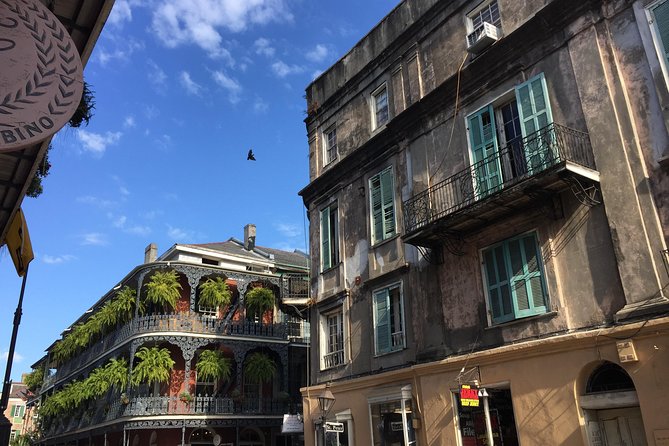
The French Quarter can feel like one long postcard. The difference on this tour is that you start understanding what you’re seeing. Buildings aren’t just pretty ironwork here—they’re clues to who lived, worshiped, traded, and argued over centuries.
You also avoid the common first-timer problem: you look at landmarks, take photos, and still feel like you missed the meaning. With a pro guide, you get the context that makes the Quarter click. And if it’s your second (or fifth) visit, the architecture-focused explanations and the culture-to-streets connections still add layers you can’t easily get from aimless wandering.
You can also read our reviews of more walking tours in New Orleans


Start at Instrument Men, Finish in Jackson Square
The walk begins at Instrument Men, 400 Dumaine St, and ends at 701 Decatur St, in the middle of Jackson Square. That end point matters. Jackson Square is the heart of the Quarter, and finishing there means you can roll right into your next plan without needing extra transit.
Timing-wise, it’s an easy-going 2 hours on foot with several short stops. Expect enough time to absorb stories and look around, not a marathon. There’s also no need to stress about language—the tour is offered in English—and you’ll use a mobile ticket to check in.
One more smart detail: the tour runs on multiple daily departures (choose from three). That helps you match the walk to your day—whether you want it early to set your bearings or later when you’re ready to pick specific streets to revisit.
French Quarter First: The Oldest Neighborhood, Explained
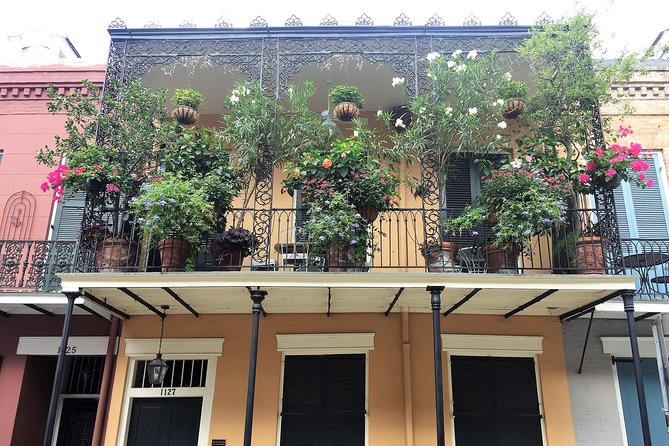
The tour kicks off right in the French Quarter itself, where you’ll get the big-picture framing. This stop is about turning the neighborhood from scenery into story. The focus is on what makes this area distinct: it’s where you can see layers of French and Spanish influence alongside American and Caribbean identity.
The guide’s job here is to give you a mental map. You’ll learn how to read the architecture as you walk—what certain styles suggest about the people who built them and how the Quarter evolved into what you see today. Even if you’ve walked these streets before, this kind of explanation often changes how you notice doorways, street corners, and building details.
Practical note: since this is the start, arrive with comfortable walking shoes and a little patience for the first minute of orientation. After that, the pace stays steady.
French Market: History You Can Hear While You Browse
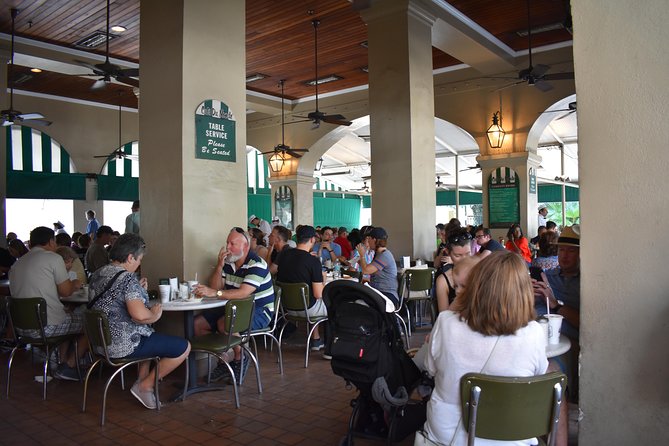
Next up is the French Market. This area has the sound of commerce all around—people moving, vendors calling, and that lively market energy that makes the Quarter feel alive rather than museum-like. The guide brings the backstory so you’re not only shopping or snacking (food isn’t included, but you can spend on your own).
The best part of this stop is how it anchors the story of the Quarter in everyday life: trade, community gathering, and the practical reasons this neighborhood mattered. You’ll come away with a better sense of what the French Market represented historically—and why it still draws people now.
A consideration: markets can get crowded. If you’re sensitive to noise or tight spaces, you’ll want to keep an easy pace and let the group flow around you.
St. Louis Cathedral: Late 18th-Century Faith and Survival
The walk then heads to St. Louis Cathedral, described as a beautiful basilica built in the late 18th century. This isn’t just a pretty stop. The stories tied to the cathedral cover the moments that shaped the city—both tragic and triumphant.
What you’ll likely appreciate most here is the way the guide connects religion and public life. In New Orleans, faith isn’t only inside; it’s part of the neighborhood’s rhythm. When you understand that, the cathedral becomes more than an architectural landmark. It becomes a witness.
Tip: take a minute to look at the building as a whole before you focus on close details. The guide’s framing helps you see it in context.
You can also read our reviews of more historical tours in New Orleans





Mississippi River Stop: The City’s Lifeline (and Your Daily Reminder)
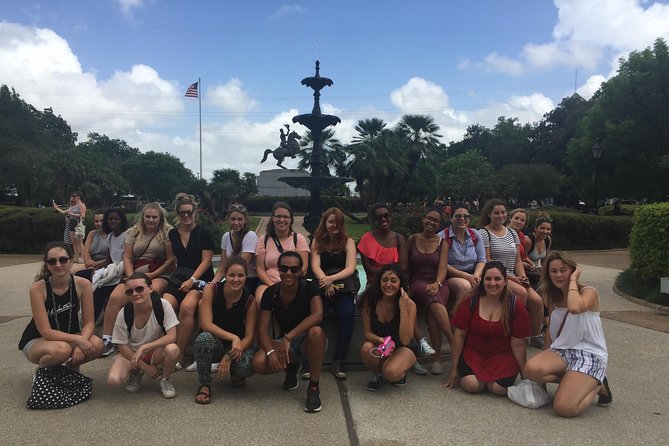
You’ll then reach a Mississippi River moment on the route. The river is presented as the force that gave the city life, and you also get a reminder that we don’t always treat the river gently—day-to-day, it’s a bigger presence than most people realize.
You’ll hear a big fact that sticks: the Mississippi is the third largest river in the world. Even if you already knew that, the tour’s point is more practical than trivia. It helps you connect why New Orleans grew where it did and why the water matters to how the city functions.
If you like photos, this is a good time to pause and frame the view. If it’s hot, this is also a moment to use the water you brought and reset your pace.
Royal Street: Shopping, Street Performers, and Story Leads
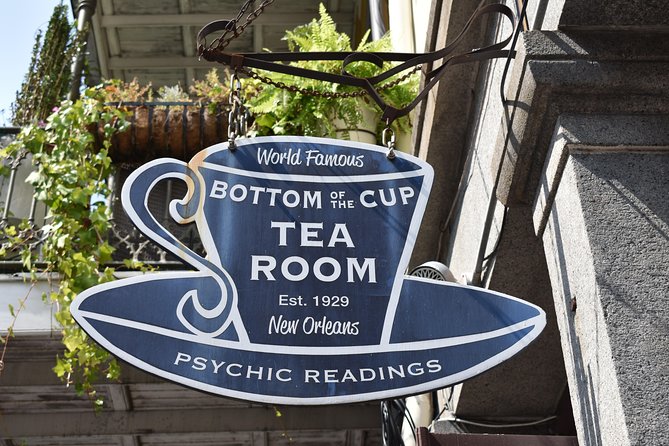
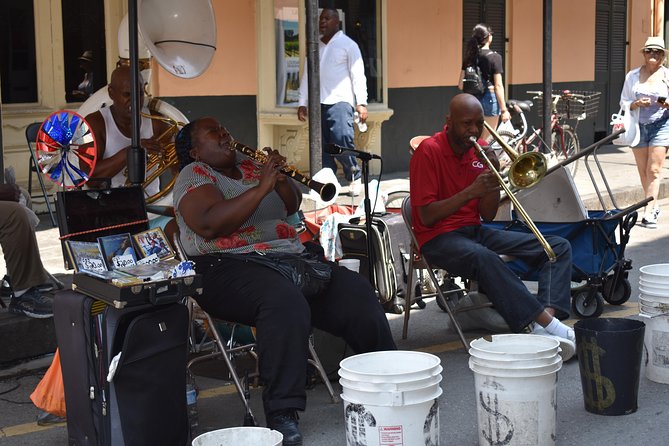
Next comes Royal Street, one of the Quarter’s best-known stretches for shopping and sights. On this stop you get the Quarter’s texture: street performers, famous restaurants, and the constant motion of people looking for something—souvenirs, art, or just a reason to slow down.
The guide’s value here is the story layer and the practical filter. You’ll likely get recommendations for what to browse for, how to enjoy the street without getting overwhelmed, and where your money is more likely to land in a place worth repeating later.
One consideration: Royal Street can be more crowded than other spots. It’s still a great stop, but keep expectations realistic. This isn’t a quiet photography shoot; it’s part of the Quarter’s real-time energy.
Jackson Square: A Crossroads of French, Spanish, American, and Caribbean

The walk ends at Jackson Square, framed as the heart of New Orleans and the place where the city’s mixed identity shows itself clearly. The tour connects the square to the French and Spanish roots, then to American and Caribbean influences—so it feels like more than a scenic landmark.
If you’ve never been, you’ll get a sense of why people keep returning here. If you have been, you’ll likely notice you were viewing it as scenery before. With the context from the guide, it reads more like a stage set where New Orleans history keeps showing up in real ways.
Because you finish here, you can decide what to do next based on your new understanding: sit for a bit, take another lap, or branch off into nearby streets.
What Makes the Guide Matter (Beyond Facts on a Sign)
This tour earns its high marks for one main reason: the guide doesn’t just recite facts. You get a voice that connects architecture, religion, local politics, and daily life into a story you can carry with you.
You can also see a pattern in the way guides handle questions. Names like Tim and Scott are repeatedly noted for being friendly, funny, and quick to answer. That matters because French Quarter history can be confusing at first glance—so when you can ask questions and get straight answers, you leave feeling oriented, not overwhelmed.
You’ll also get those “what should I do next” recommendations. The tour includes insider-style suggestions for shopping and dining, which is ideal if you’re trying to make smart choices without spending hours researching.
Price and Value: $35 for Two Hours of Real Local Context
At $35 per person for around 2 hours, this tour can be a strong value if you’re trying to do two things at once: see the headline sights and understand how they connect.
Here’s why that price works:
- You’re paying for a professional guide, not just a route.
- The planned highlights are essentially free to enter, so you’re not stacking surprise costs.
- The small group size (max 12) helps you actually hear the guide and ask questions.
- You’re ending at Jackson Square, so the tour naturally sets you up for more exploring.
If you’re short on time—maybe you’re in town for a long weekend—this is the kind of booking that makes the rest of your day easier. You’ll know where to go, what to notice, and what to skip.
Who This Walking Tour Fits Best
This tour works well for:
- First-timers who want a clear orientation fast
- Repeat visitors who want new angles on architecture and local context
- Solo travelers who appreciate a group size that doesn’t feel like a crowd
- Families—there are plenty of story threads that keep kids engaged, and the walk isn’t described as extreme
- People traveling with a service animal, which is allowed
Also, the tour is described as operating in all weather conditions. That’s a plus in a city where plans can change quickly. Just plan your outfit and don’t show up in shoes that hate uneven sidewalks.
Practical Tips Before You Go
A few things will make your experience smoother:
- Bring water, especially in warmer months. The itinerary keeps moving, and you’ll be happier if you don’t have to buy immediately.
- Wear comfortable walking shoes. The French Quarter streets are historic, not forgiving.
- Dress for all weather conditions. The tour runs even when conditions aren’t ideal, so you need to meet it halfway.
- It runs near public transportation, which helps if you’re not driving.
- If you’re traveling with questions, bring them. The guide’s role is built for back-and-forth.
- On special days with street events, reroutes can happen. For example, a parade situation required adjustment for at least one group, so flexibility helps.
Should You Book This French Quarter Walking Tour?
If you want your French Quarter visit to feel like more than a photo walk, this is a smart pick. At $35 with a pro guide, a max-12 group, and stops focused on big landmarks plus the stories around them, it’s well suited for anyone who wants meaning along with sightseeing.
Book it if:
- You’re in New Orleans for a short stay.
- You like architecture, history, and straight answers.
- You want shopping and dining guidance that saves time.
Skip it only if:
- You prefer to wander fully on your own with zero structure.
- You’re looking for a tour that covers every single street and building in the Quarter (this focuses on key landmarks and stories, not total coverage).
If you like your trips explained and your next steps suggested, book this one early in your visit so the rest of the Quarter makes more sense.
FAQ
Is the tour guided?
Yes. It includes a professional guide.
How long is the French Quarter Historical Sights and Stories Walking Tour?
It runs for about 2 hours.
Where does the tour start and end?
It starts at Instrument Men, 400 Dumaine St, New Orleans, and ends at 701 Decatur St in Jackson Square.
How many people are in the group?
The tour has a maximum of 12 travelers.
What language is the tour offered in?
The tour is offered in English.
What should I bring?
Bring water, especially in warmer months, and wear comfortable walking shoes. The tour operates in all weather conditions, so dress appropriately.
Are entrance fees included for the sights?
The stops listed are marked as free, and the tour includes the guide. Food and drinks are not included.
Can I cancel and get a full refund?
You can cancel up to 24 hours in advance for a full refund.