REVIEW · FLORENCE
Medici Legends & Renaissance Wonders: Florence Small Group Tour
Book on Viator →Operated by All Around Florence · Bookable on Viator
Medici Florence in under two hours. This walk threads the city’s big landmarks through the eyes of the Medici and the Renaissance, with a whisper system that helps you catch every word even when the streets get loud.
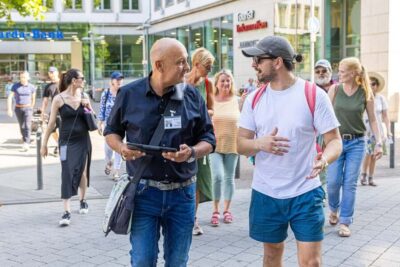
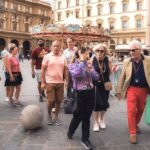
I love the small group size of 15, which makes it easier to ask questions and spot details during quick stops led by guides such as Manuel or Martina. One heads-up: the route also covers major Florence icons, so if you want only Medici-family focus in museum-depth detail, this one may feel slightly broad.
In This Review
- Key points at a glance
- A 12:15 Start That Works for First-Time Florence Planning
- Price and What You’re Really Paying For
- From San Lorenzo to the Medici Library: Power and Image-Making
- Basilica di San Lorenzo: Medici burials in the market district
- Biblioteca Medicea Laurenziana: when the Medici wanted to be thinkers, not just bankers
- Cappelle Medicee: Michelangelo’s New Sacristy and the theater of devotion
- Palazzo Medici Riccardi: the Medici banking house, in stone
- The Duomo Complex Explained (Without Needing a Full Museum Day)
- Florence Cathedral (Santa Maria del Fiore): Gothic ambition and marble storytelling
- Battistero di San Giovanni: Romanesque roots under a bigger skyline
- Brunelleschi’s Cupola: the brick dome that became the point
- Giotto’s Campanile: the tower you can’t ignore
- Palazzo Vecchio to Piazza della Signoria to Ponte Vecchio: Where Politics Meets the Street
- Palazzo Vecchio: town hall power in fortress form
- Piazza della Signoria: the meeting place that trained the city’s eye
- Ponte Vecchio: the old bridge that turned into a shopping street
- Palazzo Pitti to the Uffizi: Medici Legacy You’ll Want to Revisit
- Palazzo Pitti: the Medici residence becomes a grand treasury
- Uffizi Gallery: why timing and ticket planning matter
- Whisper System, Street Noise, and Why Pace Feels Different
- Managing Expectations: When the Medici Lens Feels Broad
- Who Should Book This Medici Legends & Renaissance Wonders Tour?
- Should You Book It?
- FAQ
- FAQ
- How long is the Medici Legends & Renaissance Wonders tour?
- What is the price per person?
- How many people are in the group?
- What language is the tour offered in?
- What’s included in the tour cost?
- Are admission tickets to the sights included?
- Where do you meet for the tour?
- Where does the tour end?
Key points at a glance
- Small group limit (15 people) keeps the vibe calm and questions easy
- Medici lens across top sights connects tombs, libraries, palaces, and the Duomo complex
- Very short time at each stop (~5 minutes) is great for orientation, not for long stays
- Most admissions aren’t included so you may need tickets if you want to enter
- Whisper system included helps in city noise, though audio can still vary on the street
A 12:15 Start That Works for First-Time Florence Planning

This is a “get your bearings fast” tour. You start at 12:15 pm in the area of Piazza di San Giovanni, right by Caffè Scudieri Firenze at Piazza di San Giovanni, 19R. The end is in the Ponte Vecchio area, which is a smart finish if you want to keep exploring after your guide drops you off.
The pacing is brisk by design. The tour is about 1 hour 45 minutes, and many stops are around 5 minutes each. That means you won’t do a slow, lingering Florence day. Instead, you get a structured hit list of places that explain how power, art, and politics shaped the city.
You can also read our reviews of more tours and experiences in Florence.
Price and What You’re Really Paying For
At $119.77 per person, you’re paying for three things: a licensed guide, a small group, and the whisper system. In Florence, that combo matters. The city rewards good context. A guide helps you translate what you’re seeing (tombs, libraries, palaces, cathedral symbolism) into something you can carry with you later.
Is it a bargain? It’s competitive for a guided experience that covers multiple major stops in central Florence—especially with a group cap of 15. The tradeoff is that admission tickets aren’t included for the listed sights, including big-ticket places like Uffizi. So think of the tour price as the guide and planning support, not as a full “all-doors-open” museum pass.
From San Lorenzo to the Medici Library: Power and Image-Making
The Medici story starts in the church where the family’s legacy is literally anchored.
Basilica di San Lorenzo: Medici burials in the market district
You’ll stop at Basilica di San Lorenzo, one of Florence’s largest churches. The standout detail here is the Medici connection: it’s the burial place for principal Medici family members, from Cosimo il Vecchio through Cosimo III.
Practical note: this stop is brief, so don’t expect a long look inside. With admission ticket not included, you’ll likely get the history and key features as you pause near the main areas. If you want more than a quick orientation, plan your own follow-up later with your entry ticket ready.
Biblioteca Medicea Laurenziana: when the Medici wanted to be thinkers, not just bankers
Next comes the Laurentian Library, built through the patronage of Medici pope Clement VII. The point of the library wasn’t only books; it was status. The Medici were signaling they weren’t just merchants and bankers. They wanted to look like intellectuals connected to ecclesiastical power.
This is also where the tour hints at architecture-as-politics. The library is known for design work attributed to Michelangelo and for its Mannerism style. Again, time is short, so your best move is to listen for what to notice: the forms, the sense of drama in the space, and why the Medici would invest so heavily here.

Cappelle Medicee: Michelangelo’s New Sacristy and the theater of devotion
At Cappelle Medicee, you’re in the realm of the Medici’s most intentional image-making. These chapels were built between the 16th and 17th centuries as extensions linked to Brunelleschi’s 15th-century church.
The tour context matters: the chapels are meant to celebrate the Medici family as patrons and Grand Dukes of Tuscany. One of the key highlights is the Sagrestia Nuova (New Sacristy), designed by Michelangelo. If you’re even slightly into how Renaissance art communicated power, this stop is a big reason the tour works.
Palazzo Medici Riccardi: the Medici banking house, in stone
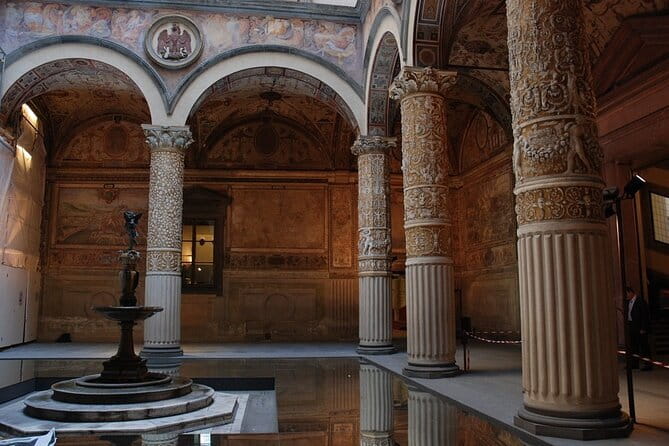
You’ll also pass Palazzo Medici Riccardi, commissioned for Cosimo de’ Medici, head of the Medici banking family. Construction ran from 1444 to 1484, which helps you place the family’s rise in real time.
This is another “pause-and-look” stop. You’ll learn how the building fits the family’s public identity. If you want to walk through the interiors, remember: admission isn’t included, so you’ll need your own ticket plan.
The Duomo Complex Explained (Without Needing a Full Museum Day)
After the Medici centers of power and culture, the tour shifts into Florence’s most famous religious and artistic complex—so you can see how major civic landmarks fit into the larger story.
Florence Cathedral (Santa Maria del Fiore): Gothic ambition and marble storytelling
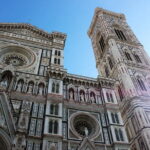
You’ll reach Cattedrale di Santa Maria del Fiore, often simply called the Duomo. Construction began in 1296, using a Gothic style associated with design by Arnolfo di Cambio. You’ll also hear how the cathedral complex is part of a UNESCO World Heritage Site that includes the baptistery and Giotto’s Campanile.
The façade is a major clue for understanding Florence’s visual language: white, green, and pink marble create the pattern that makes the Duomo look like a civic artwork, not just a church.
Battistero di San Giovanni: Romanesque roots under a bigger skyline
You’ll also stop at the Baptistery of Saint John (Battistero di San Giovanni). It’s one of the oldest buildings in Florence, built between 1059 and 1128 in Florentine Romanesque style.
This is a good moment to compare eras. The Medici route just taught you about Renaissance power-building. Here, you see how older foundations shaped the city’s spiritual geography—so later families had a “stage” ready for their own influence.
Brunelleschi’s Cupola: the brick dome that became the point
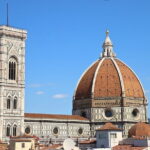
Then comes Cupola del Brunelleschi. The tour frames it as one of art and architecture’s lasting mysteries. What you’re meant to remember is scale and technique: it’s the largest brick dome ever constructed, and for its time it was the biggest in the world.
Even in a short stop, you can get a sense of why it became a symbol. If you’ve ever wondered how Florence engineered its way to world-class art, this is the place to start asking.
Giotto’s Campanile: the tower you can’t ignore
The Campanile di Giotto is adjacent to the Duomo and baptistery, and it’s treated as a showpiece of Florentine Gothic architecture. Expect to hear about the rich sculptural decoration and the polychrome marble look.
In a city like Florence, towers often get the same photo taken the same way. The guide’s job is to point out the details that make the tower feel like a whole program of art, not just a landmark.
Palazzo Vecchio to Piazza della Signoria to Ponte Vecchio: Where Politics Meets the Street
Medici Florence isn’t only churches and libraries. It’s also government, public space, and commerce.
Palazzo Vecchio: town hall power in fortress form
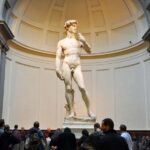
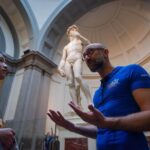
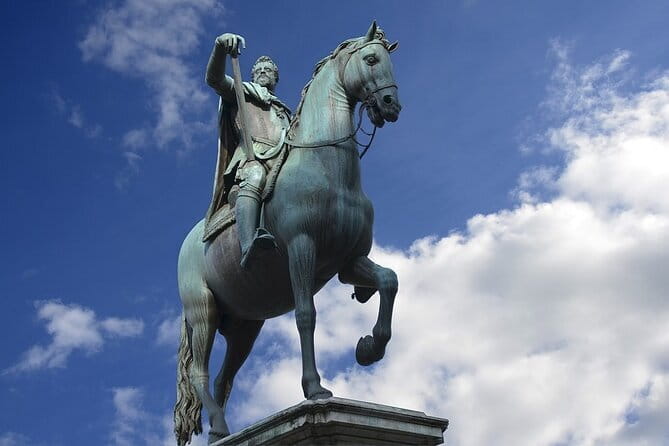
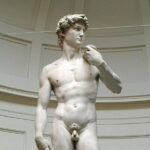
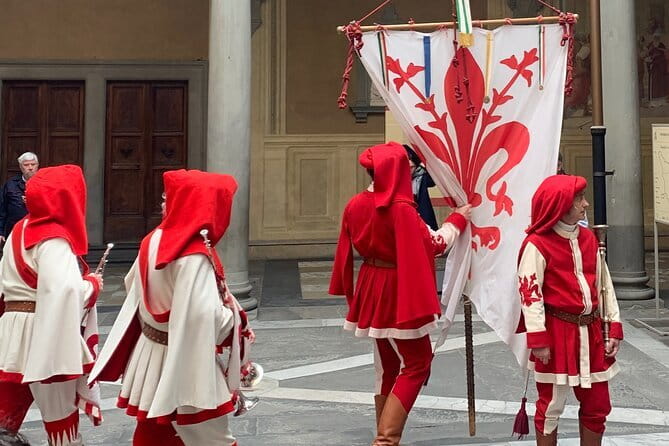
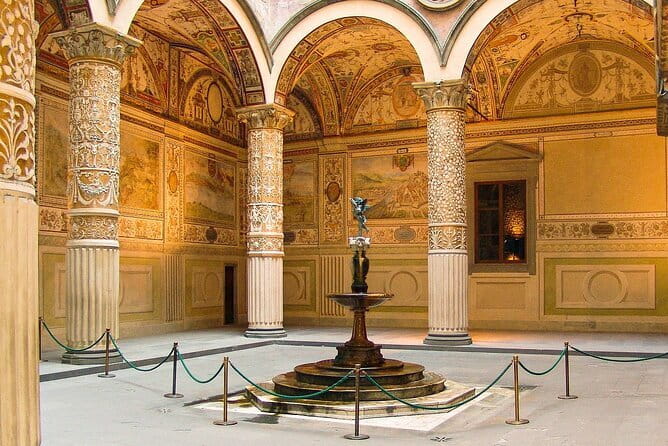
You’ll stop at Palazzo Vecchio, Florence’s town hall. It’s a massive fortress-palace vibe, and it’s one of Tuscany’s most important public places. In the square you’ll also see a copy of Michelangelo’s David and nearby you can find the Loggia dei Lanzi, known for statuary.
This is a helpful stop if you’re thinking in cause-and-effect: how did ruling families influence not just art, but the systems that staged art and controlled the city?
Piazza della Signoria: the meeting place that trained the city’s eye
Piazza della Signoria is the L-shaped square in front of Palazzo Vecchio. It’s a natural crossroads of daily life and landmark sightlines. The tour uses it as a bridge between the civic center and the museum corridor near the Uffizi area.
Even when time is short, this is a place where you can look around and understand why Florence keeps pulling you back to the same few squares.
Ponte Vecchio: the old bridge that turned into a shopping street
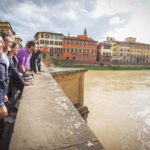
Finally, you reach Ponte Vecchio. The tour frames it as the oldest bridge over the Arno River, famous for the shops built along it. It also points out the shift over time: originally the stalls belonged to trades like butchers and tanners, while today the shops are mainly jewelers and art dealers.
This is one of the easiest stops to enjoy on a practical level. You can look left, look right, and you’ll already be thinking about where you want to walk next after the guided part ends.
Palazzo Pitti to the Uffizi: Medici Legacy You’ll Want to Revisit
This is where the tour turns the corner from “explain it” into “you’ll probably want more.”
Palazzo Pitti: the Medici residence becomes a grand treasury
At Palazzo Pitti, you’ll learn that the Medici bought it in 1549 and it became the chief residence of the ruling families of the Grand Duchy of Tuscany. Over time, the palace grew as a treasure house as later generations collected paintings, jewelry, and other luxuries.
Even if your stop is brief, this helps you understand why so many Renaissance masterpieces ended up in private hands in Florence—and why those collections matter in the modern museum world.
Uffizi Gallery: why timing and ticket planning matter
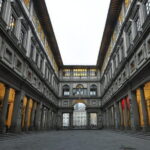
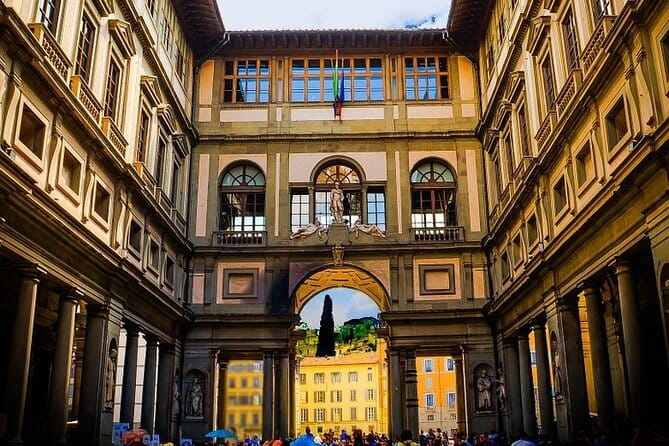
You end at Gallerie degli Uffizi. The tour highlights Uffizi as one of Italy’s most important museums, and one of the world’s best-known Renaissance painting collections. You’ll hear names tied to the museum’s brand: Michelangelo, Leonardo da Vinci, Raphael, and Botticelli, plus other masters.
The tour’s big claim is that you’ll experience the feeling of the museum across many halls, including works spanning from the 12th century up to the 16th century. But here’s the practical catch: admission tickets aren’t included in the tour price, even though Uffizi is part of the experience.
So what should you do? If you want to see inside in full, treat this tour as a guide-led introduction and plan your Uffizi ticket accordingly. If you show up without it, your day can turn into a shorter museum visit than you hoped.
Whisper System, Street Noise, and Why Pace Feels Different
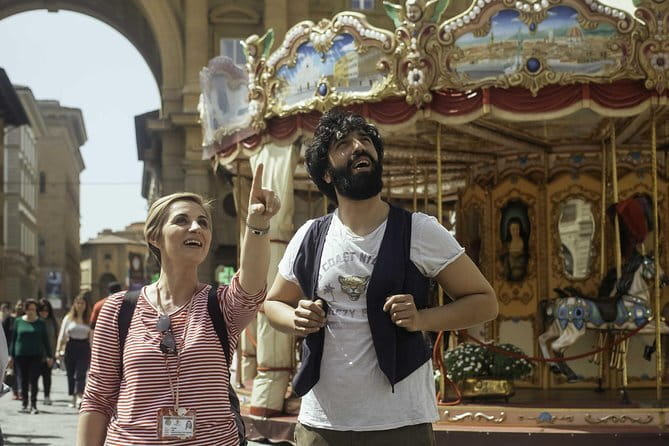
One of the real strengths here is the audio support. The whisper system is included, and that’s a big deal in Florence’s narrow streets where cars, scooters, and foot traffic can swallow a guide’s voice.
That said, audio can still depend on where you’re standing and how the group moves. If you use hearing aids or want extra clarity, it’s worth making sure the guide knows your needs at the start. Some guides on this route have checked in with guests who need that kind of support, so you’re not stuck silently struggling through the loud bits.
Pace is the other variable. Many people love how much gets covered. You’ll still want to accept a trade: short stops mean quick context, not slow looking. If you prefer extended time in one place, you’ll likely pair this with one follow-up day on your must-see museum or church.
Managing Expectations: When the Medici Lens Feels Broad
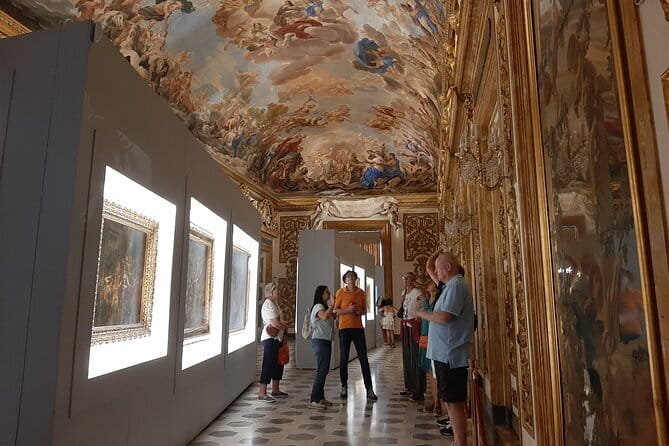
The tour is marketed as Medici-focused, but it still spends time on Florence’s headline attractions: Duomo complex, Ponte Vecchio, Palazzo Vecchio, and the Uffizi. That’s not a flaw. It’s how you get your bearings and learn how Renaissance power connects across the city.
Still, one potential disappointment is simple: if your main goal is a pure Medici-family deep study, you may feel like you only skim the surface in each location. The tour may give you the story threads, but you’ll want additional time at Medici-specific museums or interiors to fully unpack that family’s world.
A good way to handle it is to use this tour for orientation. Then pick one Medici site to go back to on your own with stronger time and your own pace.
Who Should Book This Medici Legends & Renaissance Wonders Tour?
Book it if:
- you’re in Florence for a short stay and want an organized first day
- you like history stories that connect architecture to politics and culture
- you want a small-group walk where you can ask questions
- you’re traveling with kids around 10 and up and want a guided way to keep interest
Consider a different plan if:
- you want long, slow museum time at interiors for the entire day
- you need step-by-step access to specific rooms, since admission isn’t included for the listed sights
- you need very strong audio clarity and can’t risk street-noise interference, even with a whisper system
Should You Book It?
For most first-time visitors, I think this is a smart buy. The value is in the structure: you get a Medici lens that makes Florence feel less random, plus a practical route through the city’s biggest icons. It’s not a replacement for a museum day. It’s the “story map” that helps your later visits click.
If you book, plan ahead for tickets for any interior access you want, especially Uffizi. Wear comfortable shoes, because you’re walking through the heart of Florence. And if you care about audio quality, mention your needs right away so you get the best chance at catching every line.
FAQ
FAQ
How long is the Medici Legends & Renaissance Wonders tour?
The tour runs for about 1 hour 45 minutes.
What is the price per person?
The price is $119.77 per person.
How many people are in the group?
The group is limited to a maximum of 15 travelers.
What language is the tour offered in?
The tour is offered in English.
What’s included in the tour cost?
It includes a licensed tour guide, a small group, and a whisper system.
Are admission tickets to the sights included?
No. The listed sights show admission ticket not included, including stops like San Lorenzo, the Medici sites, and Uffizi.
Where do you meet for the tour?
The meeting point is Caffè Scudieri Firenze, Piazza di San Giovanni, 19R, 50123 Firenze FI, Italy.
Where does the tour end?
The tour ends in the Ponte Vecchio area (50125 Firenze FI, Italy), and the exact endpoint can vary slightly within the area.