REVIEW · FLORENCE
Renaissance & Medieval Florence Guided Walking Tour plus mobile App
Book on Viator →Operated by CAF Tour and Travel · Bookable on Viator
Florence hits hardest when it’s explained in plain words. This 90-minute Renaissance walk strings together Medici power and the city’s biggest landmarks, with an expert guide and a handy self-guided app for after the tour. I especially like the tight focus on the Duomo complex and the way the route keeps pointing you toward what to look for next.
You’ll spend time in the San Lorenzo area, then move into Piazza del Duomo and Piazza della Signoria, before ending near Ponte Vecchio—so the whole day feels less like random wandering. One thing to watch: groups can sometimes include multiple languages, which can slow the pace at crowded stops, especially when the guide has to switch between versions of the narration.
Still, if you want a smart first pass through central Florence, this is a very workable way to get oriented fast.
In This Review
- Key things to know before you go
- Why San Lorenzo to Ponte Vecchio fits a 90-minute first day
- Meeting point on Via de’ Martelli and the VOX CITY app setup
- San Lorenzo: the Medici world behind the leather stalls
- Basilica di San Lorenzo cloister: Brunelleschi’s quiet break
- Piazza del Duomo: seeing the Cathedral complex as one design
- The Porcellino bronze pig: luck, superstition, and a very busy nose
- Piazza della Signoria: sculpture in the square plus Palazzo Vecchio
- Following the Vasari Corridor externally to Ponte Vecchio and Pitti
- Medieval Florence quarters: Dante’s neighborhood and quieter landmarks
- Price and value: what $30.04 buys you
- Small-group reality: pacing, questions, and language switching
- Who should book this tour (and who might skip it)
- Should you book the Renaissance & Medieval Florence guided walk?
- FAQ
- How long is the Renaissance & Medieval Florence walking tour?
- Where do I meet the guide, and where does the tour end?
- Is this tour offered in English?
- What’s included, and do I need tickets?
- Do I need to bring headphones?
- Is there free cancellation?
Key things to know before you go
- San Lorenzo to Ponte Vecchio in 90 minutes: a route built to connect Renaissance politics to major monuments.
- Medici art and architecture cues: you’ll get names and reasons, not just dates and statues.
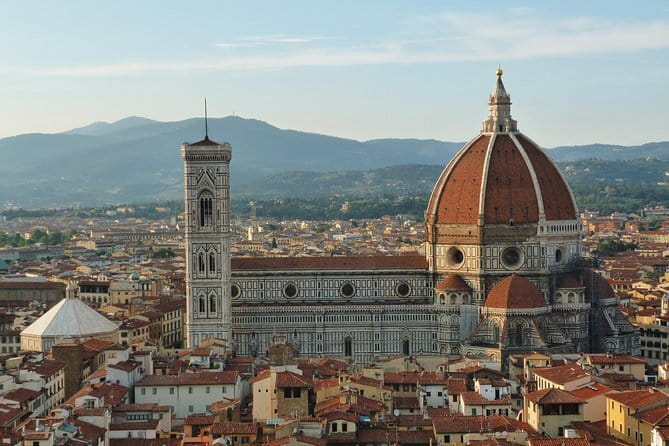
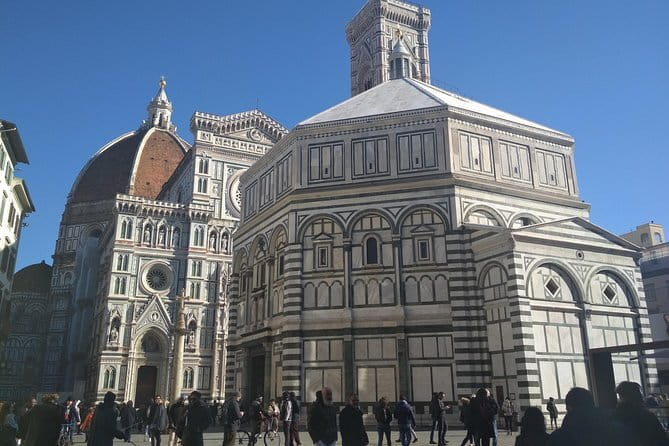
- Duomo complex orientation: Brunelleschi’s Dome, Giotto’s Bell Tower, and the Baptistery are explained as one system.
- Porcellino luck ritual: the bronze piglet is treated like a local tradition, not just a photo stop.
- Piazza della Signoria as an open-air gallery: Palazzo Vecchio plus famous sculpture in one view.
- VOX CITY app support: you get audio guidance tied to what you just walked through.
Why San Lorenzo to Ponte Vecchio fits a 90-minute first day
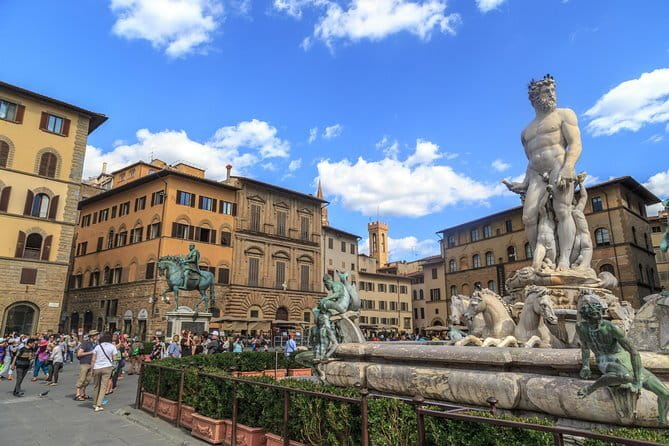
This route is built for people who only have a short window in Florence but still want the main story. You start on the Medici side of town, then walk toward the political and artistic heart of the city, finishing near the Arno and Ponte Vecchio. That flow matters because Florence can feel like a grab bag if you don’t know what connects it.
I like that the tour keeps moving between “power” and “place.” The Medici Chapels, the Duomo complex, Piazza della Signoria, and the external line of the Vasari Corridor are all connected by the same theme: who paid for art, and why.
The pacing is also realistic for the real Florence—busy corners, narrow streets, and lots of stone. You’ll be outside most of the time, so it’s a good match for travelers who don’t want ticket lines and museum time to eat the whole afternoon.
You can also read our reviews of more walking tours in Florence
Meeting point on Via de’ Martelli and the VOX CITY app setup
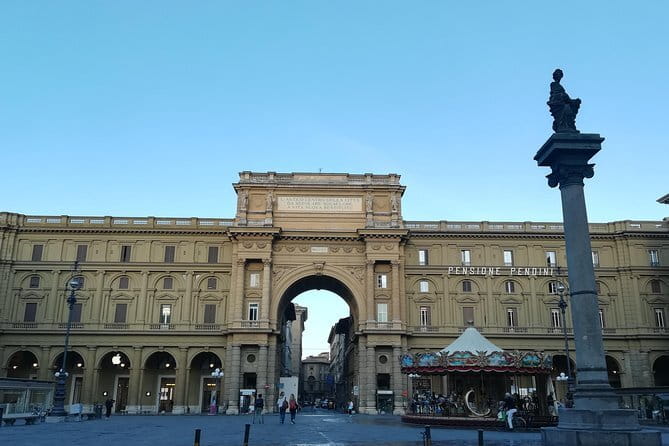
You meet at Via de’ Martelli, 50 (50122 Firenze) and the walk ends at Ponte Vecchio (50125 Firenze). The tour is designed as a guided walk with an added layer: a mobile guide app you can use after.
Here’s the practical part: you’ll download VOX CITY on your phone (iOS or Android). The assistant provides the credentials before the walking starts, so you’re not stuck figuring out login details mid-tour. You also need your own phone and headphones to enjoy the self-guided audio afterward, since smartphone headphones aren’t included.
Before you go, make sure your battery is decent and your volume works. You’re going to want the app while you’re still close to the stops, when everything is fresh in your head.
San Lorenzo: the Medici world behind the leather stalls
Your first big segment is the San Lorenzo neighborhood. This is where you’ll hear how the Medici family shaped Florence’s politics and art, and you’ll connect that story to places you can actually stand near.
You’ll also pass through the area’s open-air market scene—known for leather goods, clothing, and other everyday items. That matters because the Medici weren’t living in a separate museum. They were tied into the city’s trade and social life, and San Lorenzo shows that street-level Florence reality.
Key sights here include:
- Medici Chapels with design attributed to Michelangelo and Matteo Nigetti
- Palazzo Medici Riccardi, including its courtyard vibe
- Basilica di San Lorenzo plus the cloister designed by Brunelleschi
One reviewer detail that’s useful for your expectations: some people felt the group spent time mostly listening at specific spots rather than walking and talking more. So if you like a lighter, more “walk and chat” style, plan to bring a little patience for standing time—especially in colder weather.
Basilica di San Lorenzo cloister: Brunelleschi’s quiet break
At Basilica di San Lorenzo, you’re aiming for a specific kind of contrast: the Medici power story, followed by a calmer architectural moment. The tour highlights the cloister as an elegant, peace-filled space designed by Brunelleschi.
Think of it as a reset button in stone. After you’ve been among crowds and street noise, cloisters feel like Florence exhaling. It’s also a strong place to learn why Brunelleschi mattered beyond the famous dome—this tour frames him as an architect who shaped daily space, not just monuments.
Piazza del Duomo: seeing the Cathedral complex as one design

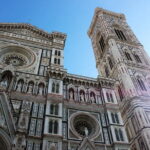
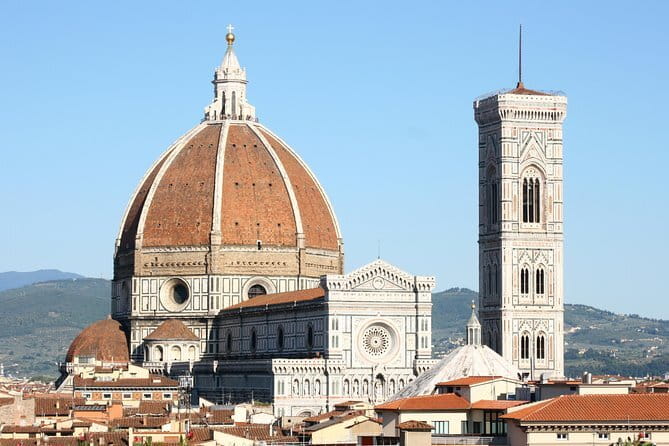
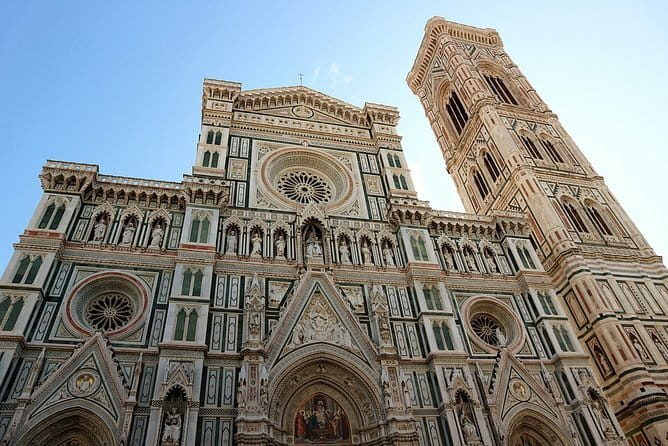
Next comes Piazza del Duomo, also known as Piazza del Duomo / Piazza del Duomo complex. This is where Florence stacks its visual highlights together, and a guide helps you avoid the usual “I saw the big building, now what?” feeling.
You’ll focus on:
- Cupola del Brunelleschi (the dome)
- Giotto’s Bell Tower
- The Baptistery of St. John, including the Gates of Paradise reference
The value here isn’t only the icons. It’s the architecture explanation. When you understand how the pieces relate, you start noticing alignment, materials, and why these structures sit as a unified statement in one square.
Ticket-wise: the itinerary notes free admission for the time you spend at key points like the Basilica area and the Duomo complex. Even with that, remember the tour’s general rule: entry to attractions isn’t included. So if you want to go inside anything beyond what’s planned, budget time and money for separate tickets.
You can also read our reviews of more guided tours in Florence


The Porcellino bronze pig: luck, superstition, and a very busy nose
Then you stop at Fontana del Porcellino in the Mercato della Paglia (Straw Market). The bronze piglet is famous for a simple tradition: rub his nose for luck.
This part is short, but it’s fun because it’s local folklore you can do without a ticket or a long line. It’s also a nice change of pace in the middle of big architecture and big art.
If you’ve got limited time in Florence, I actually like these quick rituals. They give you something memorable and slightly silly to anchor the day, right between Duomo and Piazza della Signoria.
Piazza della Signoria: sculpture in the square plus Palazzo Vecchio
From the piglet you move into Piazza della Signoria, a hub where politics, art, and daily life overlap. The tour treats it like an outdoor gallery, with Palazzo Vecchio dominating the square.
This is also where you’ll see famous sculpture, including Giambologna’s Rape of the Sabine Women. Even if you don’t know the art history terms, the guide’s context helps you understand what you’re looking at: why this is placed here, and what it signaled about the city.
Practical note: this is a crowded area. If the tour group is handling two languages, this is often where pacing can slow because everyone has to wait for the narration to switch back and forth. If cold weather is in your forecast, dress for standing, not just walking.
Following the Vasari Corridor externally to Ponte Vecchio and Pitti
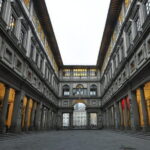
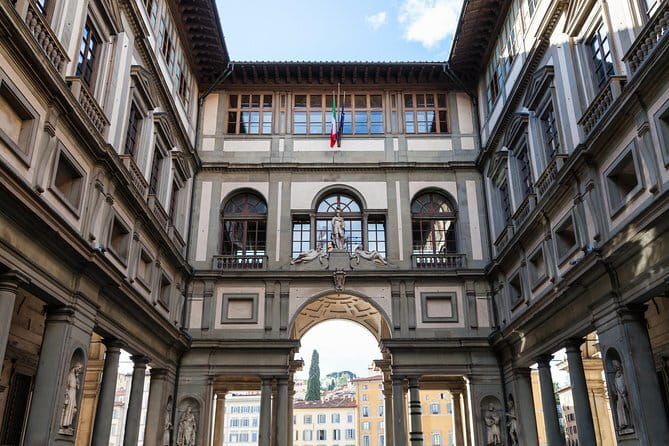
One of the more distinctive parts of this tour is how it references the Vasari Corridor. You won’t be walking inside it, but you’ll externally follow the celebrated corridor’s path, including views tied to the Uffizi Gallery courtyard.
Then you cross over to the Arno by walking near or over Ponte Vecchio, the famous “jewels bridge” and also the oldest bridge in Florence. The tour frames the bridge as a historic connector, not just a postcard.
You’ll finish this stretch near Pitti Palace, which is where the story expands from civic power into the broader world of elite residence and patronage. It’s a smart move because it helps you see Florence as connected neighborhoods, not isolated hotspots.
If you’ve never walked Ponte Vecchio before: expect crowds. The guide helps you keep your attention on the architectural and historical angle so you’re not just stuck in slow-moving traffic.
Medieval Florence quarters: Dante’s neighborhood and quieter landmarks
After the Arno, you shift into the city’s Medieval Quarters. This is where Florence stops feeling like only Renaissance monuments and starts feeling like an older city with layers.
You’ll learn that Dante Alighieri lived here, and you’ll visit or pass by landmarks including:
- Badia Fiorentina
- Bargello Palace (described as austere)
I like this part because it widens the lens. If your previous day was all domes and Medici patrons, medieval Florence adds texture—different styles, different moods, and a reminder that the city didn’t switch eras overnight.
Price and value: what $30.04 buys you
At $30.04 per person for about 1 hour 30 minutes, you’re paying for two things: a local guide with a structured route, and the support of the mobile app for your self-guided follow-up.
Compared with paying for multiple single-spot tours, this is economical for first-time orientation. You get the Duomo complex context, Piazza della Signoria context, and the Medici story threaded through several neighborhoods. That’s hard to replicate if you’re only reading a guidebook while standing in a crowd.
What’s not included is just as important. Smartphone headphones aren’t included, and entry to attractions is not included as part of the tour price. That means you should treat this as a “see and understand” walk, with potential extra tickets if you want to go deeper into museums or specific interior spaces.
Small-group reality: pacing, questions, and language switching
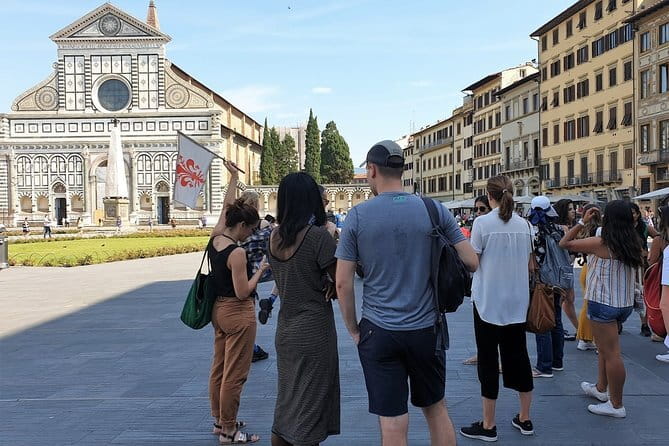
The tour has a maximum group size of 20 travelers, which is a sweet spot for a walking tour. With smaller groups, you’re more likely to get answers to questions and not feel like one face in the crowd.
From guide-name examples in the market, I’ve seen praise for hosts such as Marta, Helena, Larisa, Sylvia, and Maximilian. That’s a good sign for the overall guiding style, because this kind of tour needs more than reciting names. It needs to explain connections and help you spot what matters.
The main caution is languages. Even though the tour is offered in English, the reality on the ground can be that the group may include other languages and the guide switches. When that happens, the narration can take longer, and you may spend more time waiting while the guide repeats key points.
If you prefer an English-only experience, plan to ask a quick question at the meeting point about current group languages. It’s one of those small checks that can save a lot of frustration later.
Who should book this tour (and who might skip it)
This tour is a great fit if you:
- Want a first-day orientation to Florence’s most important Renaissance and medieval landmarks
- Prefer a guide to explain the Medici story and connect it to art and architecture
- Have limited time and want a route that ends near Ponte Vecchio
- Like the idea of using an app afterward, not just finishing and walking away
You might consider another format if you:
- Get impatient with standing in cold weather
- Really need an English-only narration (because language switching can slow things down)
- Want lots of time inside museums during the guided portion (this is not built around museum entries)
Should you book the Renaissance & Medieval Florence guided walk?
If you’re deciding between “wander alone” and “get the big picture,” I’d book this. For the money and the time, you get a sensible route that links Medici Florence to the Duomo complex, Piazza della Signoria, and the Arno crossings, with a medieval finale for balance.
Do it with two small preparations: bring comfortable shoes and your own headphone-ready setup for the VOX CITY app afterward. If you do that, you’ll finish with clearer priorities for what to explore next—rather than feeling like you just survived a highlight list.
FAQ
How long is the Renaissance & Medieval Florence walking tour?
The tour lasts about 1 hour 30 minutes.
Where do I meet the guide, and where does the tour end?
You start at Via de’ Martelli, 50, 50122 Firenze and end at Ponte Vecchio, 50125 Firenze.
Is this tour offered in English?
Yes, it’s offered in English.
What’s included, and do I need tickets?
You get local professional guides, access to the self-guided mobile city guide (VOX CITY), multilingual audio commentary for itineraries and interest points, and meeting point assistance. Entry to attractions isn’t included, though the itinerary lists some ticket-free time at major stops.
Do I need to bring headphones?
Yes. Smartphone headphones are not included, and you’ll need your own phone and headphones to use the app afterward.
Is there free cancellation?
Yes. You can cancel up to 24 hours in advance for a full refund.