REVIEW · NARA
Nara: Half-Day UNESCO Heritage & Local Culture Walking Tour
Book on GetYourGuide →Operated by MagicalTrip · Bookable on GetYourGuide
Nara is a shrine-and-temple day that walks fast. This half-day tour blends UNESCO sights (Todai-ji and Kasuga Taisha) with quieter streets in the old capital, plus the classic Nara Park deer moment. You’ll also get a meal that tastes like the area, not a generic set lunch.
I especially like how the route balances big-ticket monuments with small local details, like time in the traditional merchant-town lanes and a calm pause for views over Nara. I also love the practical flow: temple time, then deer time, then lunch, all with an English-speaking guide to keep the day coherent. One consideration: it’s still a walking tour. Wear comfy shoes and expect several stretches on foot.
In This Review
- Key highlights you’ll feel right away
- From Kintetsu Nara Station to old Nara: how the tour starts
- Kōfuku-ji and the calmer side of Nara’s town streets
- Todai-ji’s Great Buddha: why this temple takes two hours
- Kasuga Taisha lanterns and the walk that feels like a film scene
- Nara Park deer feeding: fun, rules, and a little reverence
- Merchant-town lanes: 110 Zōshichō and the Naramachi vibe
- Lunch in Nara: local vegetables and fresh meat
- Price and value: is $102 fair for 5 hours?
- Who should book this Nara half-day tour?
- Should you book MagicalTrip in Nara?
- FAQ
- How long is the Nara half-day tour?
- Where do I meet the guide?
- What time should I arrive?
- What’s included in the price?
- Is there a live guide, and what language is it in?
- Does the tour include Todai-ji and Kasuga Taisha?
- Can I request a vegetarian or gluten-free lunch?
- Is the tour suitable for vegans?
- Do I need to buy anything for the deer feeding?
- Is cancellation free?
Key highlights you’ll feel right away
- Todai-ji Temple and Kasuga Taisha Shrine UNESCO stops, with plenty of time to look closely
- Nara Park deer feeding using the crackers included in the tour
- Off-the-main-path Naramachi moments, including a look inside a traditional merchant home
- An old-capital shopping arcade and quiet back lanes, not just the busiest blocks
- Local lunch made with Nara vegetables and fresh meat (and help available for some dietary needs)
From Kintetsu Nara Station to old Nara: how the tour starts
The day begins near Kintetsu Nara Station, not JR Nara. Your meeting point is in front of the Gyokibosatsu statue near Exit 2 (East Exit), and your guide holds a board that says MagicalTrip. Show up about 10 minutes early, because the tour is run on time and the route moves with the group.
What I like about this start is how it gets you into Nara’s rhythm quickly. Instead of zooming straight to the loudest photo spots, you first walk past the shopping arcade and the older street fabric. It’s a good setup if you’re coming from Tokyo and want a different pace—less rush, more small storefronts and old building shapes.
This is also where you’ll get context for the whole day: how the area’s religious sites connect with everyday town life, and what you should notice when you’re inside temple and shrine grounds. That background matters, because later you’re not just ticking boxes—you know what you’re seeing.
You can also read our reviews of more walking tours in Nara
Kōfuku-ji and the calmer side of Nara’s town streets
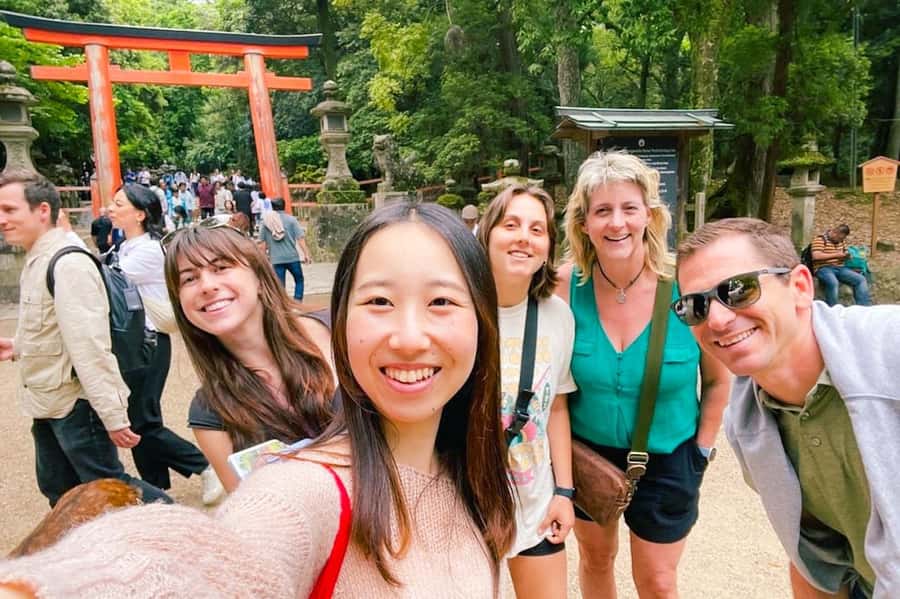
One of the clever parts of this tour is that it doesn’t treat Nara like a single straight line of monuments. After the meet-up, you’ll head to Kōfuku-ji for about 25 minutes. This stop helps set the tone: you get a strong sense of scale and sacred space before Todai-ji takes over the day.
Then the route shifts into “slow look” territory. You’ll walk through traditional old-town streets and spend time around smaller lanes that feel more lived-in than tourist-heavy corridors. There’s even a moment where you go inside a traditional merchant’s house to see how people used to live—and that’s one of those details that makes Nara stick in your mind after the photos fade.
Timing matters here. About 20 minutes later, you’ll have time for specific streets and views—like the quiet pause near that pyramid-shaped structure and the hill viewpoint over the city. If you’re sensitive to long stair-and-street days, these built-in pauses are a lifesaver.
Todai-ji’s Great Buddha: why this temple takes two hours
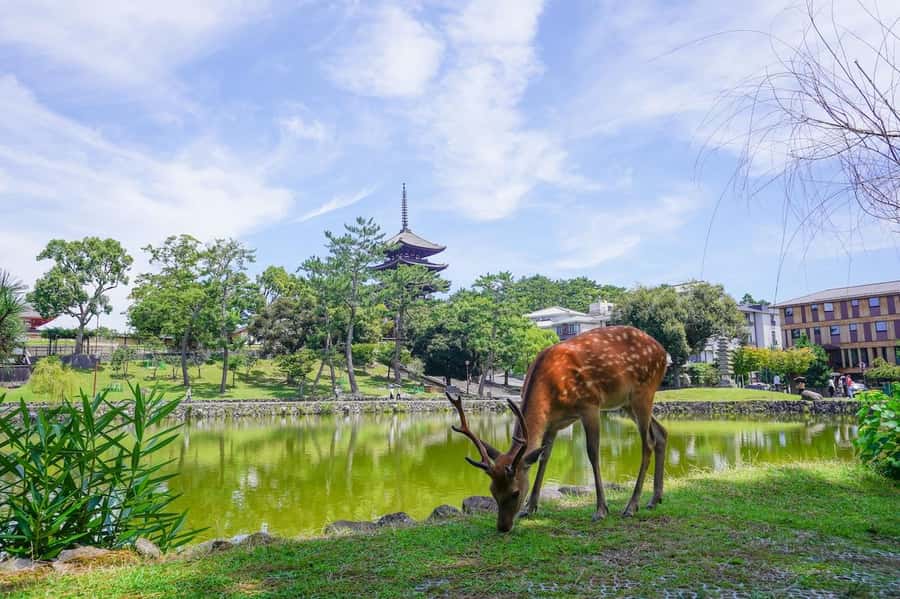
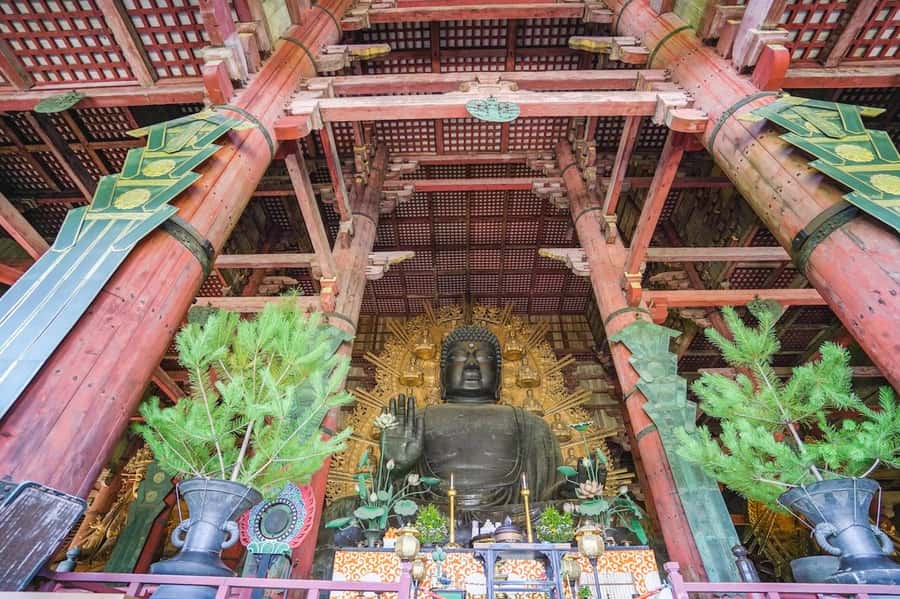
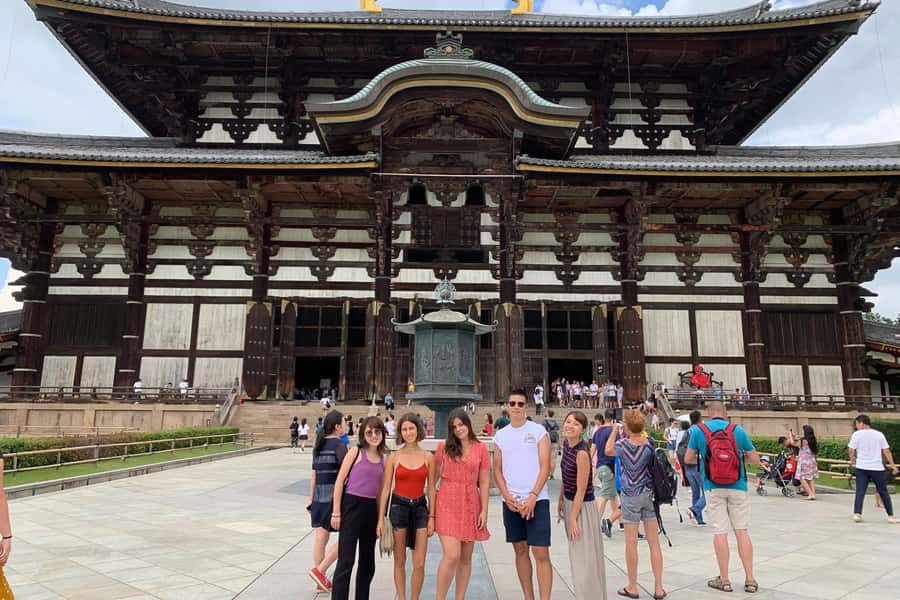
Next comes the headliner: Todai-ji, with about two hours on site. This is where you’ll see the famous massive temple setting and the Great Buddha. Two hours is a thoughtful amount of time. You’re not rushed through the “main thing,” and you can actually walk, stop, look up, and take in how the buildings frame the statue.
Here’s the real value of a guided visit: you learn what to notice in a place this large. Instead of feeling overwhelmed by crowds and scale, you get pointers for the right viewpoints and the right pacing—when to slow down, where to look, and how the grounds reflect the area’s religious culture.
Is Todai-ji just a big statue stop? Not on this tour. The guide’s job is to connect the visual wow with meaning, so you understand what you’re standing in front of. And because you have enough time, you can enjoy the quiet corners too, not only the busiest walkway.
Practical tip: bring your patience for crowd flow. Todai-ji is popular for a reason. The guide will keep the group moving at a comfortable walking pace, with short breaks along the way.
Kasuga Taisha lanterns and the walk that feels like a film scene
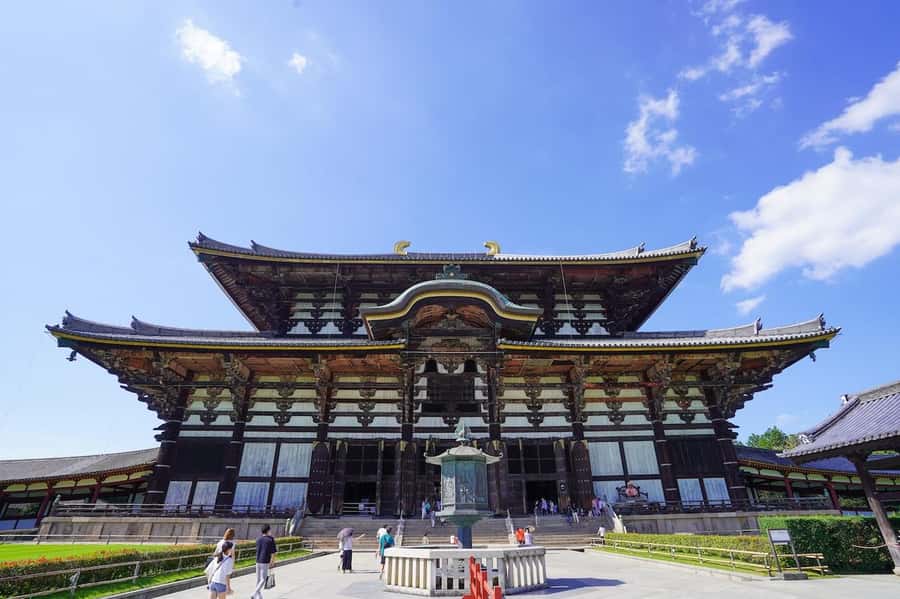
After Todai-ji, you shift toward Kasuga Taisha, with about 40 minutes at the shrine. This is the other UNESCO anchor, and it’s famous for its hundreds of lanterns. The atmosphere feels different from a temple: more open-feeling shrine paths, more visual rhythm, and a sense of ritual space.
I like that you don’t just arrive, snap, and leave. You get time to slow down and notice how the shrine’s details work together. The lanterns are eye-catching, but what makes this stop memorable is learning how the shrine tradition is expressed through those objects—and how people experience the space.
Between shrine areas, the route also includes a pathway segment (about 20 minutes). That’s where you get a breather from the densest sightseeing loops. It’s also a good chunk of time for photos from calmer angles and for watching the mix of visitors and locals.
If you’re the type who likes a “walk-through” day more than a “sit-and-watch” day, this part of the tour will feel satisfying.
Nara Park deer feeding: fun, rules, and a little reverence
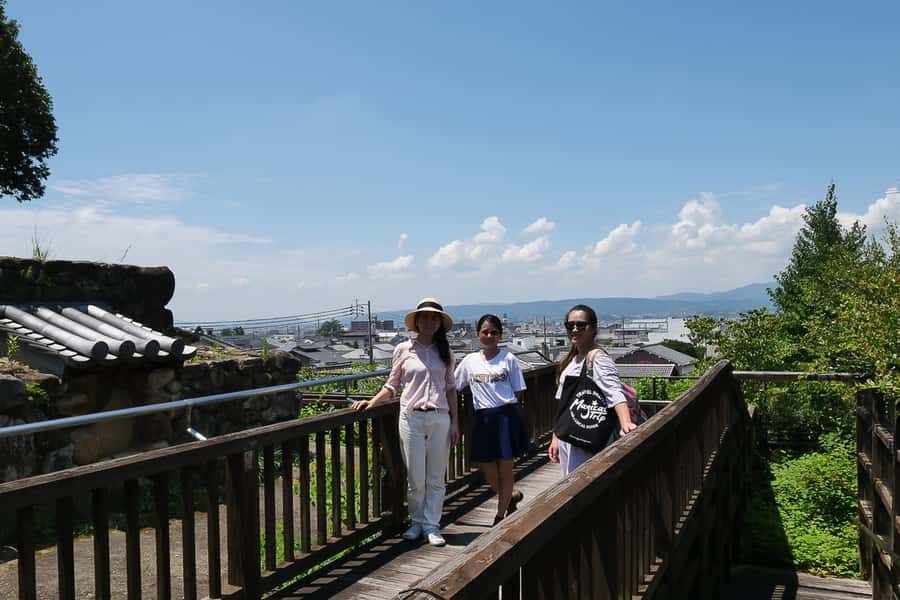
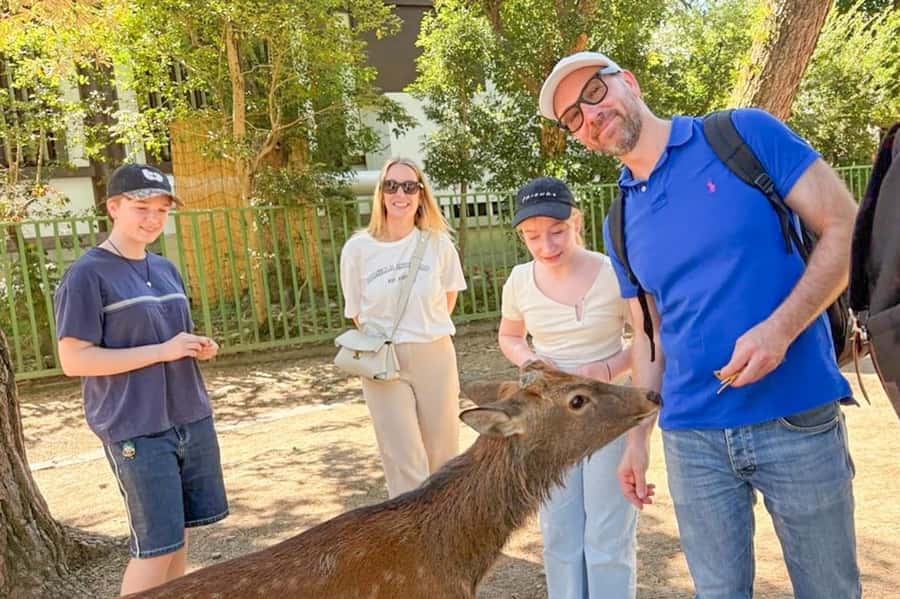
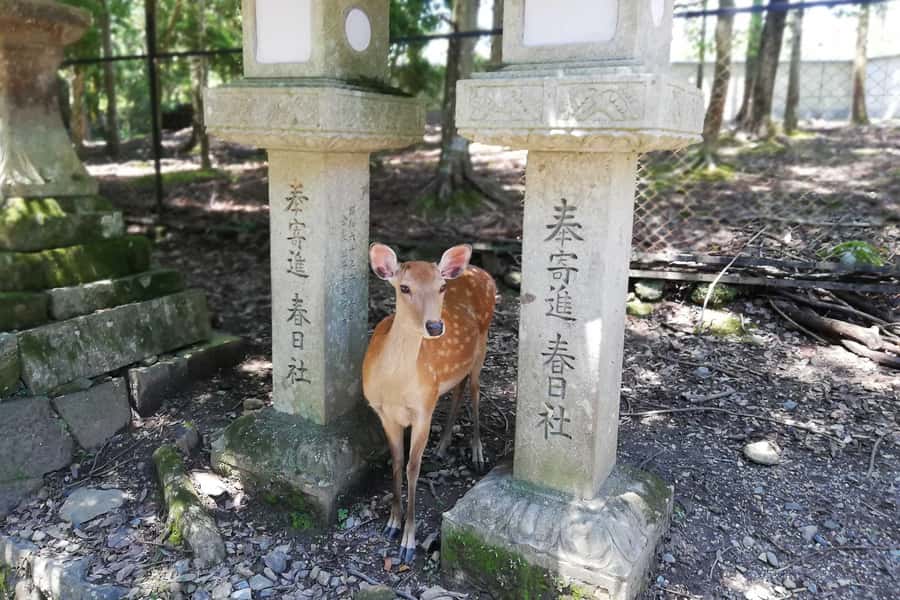
Then comes the iconic moment: Nara Park deer. You’ll meet the deer in the shrine/park area and spend time interacting with them using one packet of crackers included in the tour.
The guide shares why deer are treated as special here: locals have believed for over 1,200 years that deer are sacred divine messengers. That matters because the deer feeding isn’t presented as pure chaos. You’re guided into a respectful way of approaching, and you’ll probably find the deer are oddly polite once you’re following the pace and spacing your guide sets.
You’ll also get the hands-on experience that makes Nara feel like Nara. Even if you don’t care about temples and shrines, deer feeding is the emotional payoff. And if you want more than the single packet, plan ahead: it’s smart to pick up extra deer crackers at the shop before the park gets picked over. Crackers can run out in the busiest times, and you don’t want to scramble for more.
This part is also why I think the tour works especially well for first-timers. You get the big culture and the signature local encounter in one loop.
Merchant-town lanes: 110 Zōshichō and the Naramachi vibe
After deer and before the final stretch, the route includes a stop at 110 Zōshichō (about 15 minutes). The point here isn’t just another landmark—it’s a chance to see a different texture of Nara, closer to the traditional town feel.
Then you end with Naramachi street energy: the Shimononegi-michi pathway (about 20 minutes) and Naramachi Nigiwai-no-le (about 20 minutes). These segments help you picture how the city functions outside its UNESCO headlines. If Todai-ji and Kasuga Taisha are the “big ideas,” Naramachi is the “how it looks day-to-day” part.
You’ll also get the benefit of walking these areas with a guide rather than wandering. It’s easy to miss quiet lanes when you’re busy chasing the next postcard. On this route, the timing and sequencing help you see more variety in fewer hours.
Lunch in Nara: local vegetables and fresh meat
One of the best-value parts of a half-day tour is when lunch isn’t an afterthought. Here, lunch is included and you’ll spend about 45 minutes at a local restaurant.
The food is described as a Japanese dish using local Nara vegetables and fresh meat. That detail is huge for value and authenticity. It’s not just “you’ll eat something.” It’s aligned with the regional identity of Nara.
Diet notes you should take seriously:
- If you’re vegetarian or need gluten-free, you have to request in advance (by the day before). Requests on the day of the tour can’t be handled.
- The tour is not suitable for vegans and for people with gluten intolerance.
If you’re traveling with food limits, message your partner ahead of time. This tour can still work for you, but only if you plan your request before it’s day-of.
Also, keep a little cash handy. Extra snacks and drinks are available for purchase, and having yen (or at least some cash) makes it easy to top up without fuss.
Price and value: is $102 fair for 5 hours?
At $102 per person for about five hours, this tour is priced in a way that makes sense if you care about three things: (1) UNESCO access, (2) guided pacing, and (3) not having to figure out lunch.
Here’s what’s included that helps justify the cost:
- Entrance fees to the temples and shrines you visit
- Lunch
- A packet of crackers for the deer
When those elements are folded in, you’re paying mostly for the guide time and the route logic. And the route logic matters. A well-paced half-day in Nara can be tricky without local guidance, especially when you want the right balance of major sites plus quieter streets.
If you were doing this on your own, you’d still pay for entry and spend time figuring out sequencing. With a guide, you trade some flexibility for a smoother day and more context for what you’re seeing.
Who should book this Nara half-day tour?
This is a great pick if you:
- Want Todai-ji and Kasuga Taisha without building a complex plan
- Like walking, but don’t want an all-day endurance march
- Enjoy religious culture and want help understanding the difference in atmosphere between temples and shrines
- Really want the Nara Park deer feeding experience, with guidance on how to do it respectfully
- Prefer small-group energy (private or small groups are available), where questions aren’t getting swallowed by a big crowd
It’s less ideal if you:
- Need a vegan option or have gluten intolerance (the tour is not suitable for those needs)
- Expect a totally low-walking day
Should you book MagicalTrip in Nara?
If you’re looking at Nara for the first time and want a smart half-day that covers the UNESCO must-sees plus the local town feel, I’d book it. The combination of Todai-ji, Kasuga Taisha, deer feeding, and a lunch built around Nara ingredients is a strong package for five hours.
My final checklist for deciding:
- Can you handle comfortable walking shoes and several hours on foot?
- Are your food needs compatible with the tour rules (and can you request changes by the day before if needed)?
- Do you want a guided day with an English-speaking lead rather than free-form wandering?
If you said yes to those, this is an efficient, satisfying way to experience Nara beyond the loudest headlines.
FAQ
How long is the Nara half-day tour?
The tour lasts about 5 hours.
Where do I meet the guide?
Meet in front of the Gyokibosatsu statue near Exit 2 (East Exit) of Kintetsu Nara Station. Do not go to JR Nara station.
What time should I arrive?
Arrive about 10 minutes before the tour start time.
What’s included in the price?
Entrance fees for the temples and shrines visited, 1 packet of crackers to feed the deer, and lunch are included.
Is there a live guide, and what language is it in?
Yes. The tour has a live English-speaking guide.
Does the tour include Todai-ji and Kasuga Taisha?
Yes. It includes visits to Todai-ji Temple and Kasuga Taisha Shrine, both UNESCO World Heritage Sites.
Can I request a vegetarian or gluten-free lunch?
If you need a vegetarian or gluten-free lunch, you must request it in advance (by the day before). Requests on the day of the tour can’t be accepted.
Is the tour suitable for vegans?
No. The tour is not suitable for vegans.
Do I need to buy anything for the deer feeding?
You get 1 packet of crackers included. Extra snacks and drinks can be purchased separately, and it’s worth carrying some cash.
Is cancellation free?
You can cancel up to 24 hours in advance for a full refund.