REVIEW · BARCELONA
Jewish Walking Tour Barcelona by Expert Jewish Guide 2h
Book on Viator →Operated by barcelona dreaming · Bookable on Viator
Barcelona’s Jewish Quarter is hidden in plain sight.
On this 2-hour walking tour, you trace the layers of Jewish life through tight Gothic streets, old squares, and synagogue history without needing a map app. I especially like how it connects the political story of the city with the day-to-day reality of neighborhood life in El Call.
Two things I’d call out: the guide’s on-the-ground storytelling (names like Ella and Dina show up often in the experience) and the way you spot architectural details you’d otherwise miss in a hurry. One thing to keep in mind is that entrance-related costs aren’t included, and there’s a small onsite donation requested at the synagogue area.
In This Review
- Key highlights at a glance
- A 2-hour Jewish Quarter walk that’s built for the streets
- Meeting at Conesa Entrepans: quick start, easy navigation
- Placa de Sant Jaume: where politics and identity meet
- Major Synagogue: one of Europe’s oldest synagogue sites
- MUHBA – El Call: reading the lanes of everyday life
- Placa del Rei: where Jewish leaders met kings
- What makes the guide matter in this specific tour
- Price and value: what you’re paying for (and what you’re not)
- Logistics that actually affect your experience
- Who should book this Jewish Walking Tour Barcelona?
- Should you book it?
- FAQ
- How long is the Jewish Walking Tour Barcelona?
- What does the tour cost?
- Where do we meet for the tour?
- What language is the tour offered in?
- What’s included in the price?
- Is hotel pickup and drop-off included?
- Are entrance fees included?
- What is the cancellation window?
Key highlights at a glance
- Placa de Sant Jaume as the symbolic gateway to Jewish Barcelona
- Major Synagogue stop with a look at one of Europe’s oldest synagogue sites
- MUHBA – El Call and the winding lanes where daily life and tragedy intersect
- Placa del Rei and the political power orbit that shaped Jewish leaders’ roles
- A professional local guide who helps you read the neighborhood like a storybook, not a scavenger hunt
A 2-hour Jewish Quarter walk that’s built for the streets
Barcelona rewards slow walking. This tour is short on purpose: about 2 hours, paced for a neighborhood where corners, doorways, and street angles matter.
You’ll cover the heart of the Jewish Quarter around the Gothic area, with stops that move from a major public square to quieter lanes. That flow is useful. It helps you understand how power, community, and survival fit together in the same city blocks.
Also, you’re not stuck listening the whole time. It’s a hands-on kind of tour. You look up at architecture, then turn the next corner and the story changes. That rhythm is exactly what you want in Barcelona, where the “past” is still built into the sidewalks.
You can also read our reviews of more walking tours in Barcelona


Meeting at Conesa Entrepans: quick start, easy navigation
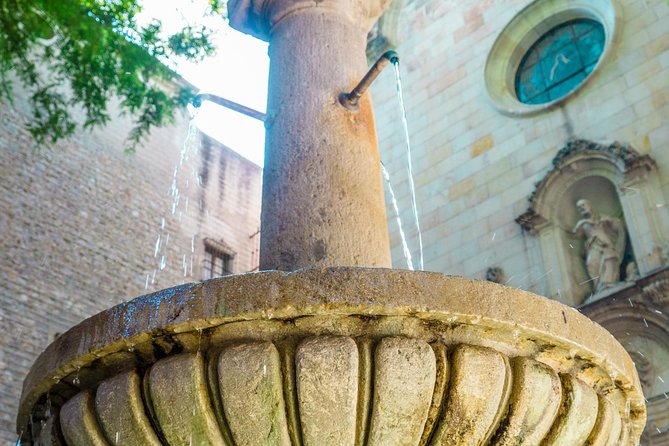
You’ll start at Conesa Entrepans in the Gòtic area, on Carrer de la Llibreteria, 1 (Ciutat Vella, 08002 Barcelona). The meeting point being in the Gothic Quarter is a win: you’re already near some of the city’s most walkable streets and public transport options.
The tour ends back at the same meeting point. That’s more convenient than it sounds. After a guided walk, you can step back into independent exploring right away without needing a new rendezvous point.
Placa de Sant Jaume: where politics and identity meet
Your first stop is Placa de Sant Jaume, described as Catalonia’s political heart. This matters because Jewish life in medieval Barcelona didn’t happen in a vacuum. Laws, rulers, and civic decisions shaped what was possible.
Spend your brief 15 minutes here with a guide who can translate what you see into context. Think of this square as the tour’s framing shot: it helps you understand why the later Jewish Quarter stops aren’t just “old buildings.” They’re connected to real decisions made at the center of power.
A practical note: squares can feel open and windy, even when the Gothic streets nearby offer shelter. Wear something you’re comfortable moving in, because you’ll go from open space into narrow lanes quickly.
Major Synagogue: one of Europe’s oldest synagogue sites
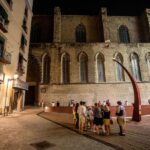
Next comes the Major Synagogue. The tour focuses on the ancient synagogue of Barcelona, widely described as one of the oldest synagogues in Europe.
This is the stop where the tour’s tone often shifts from “look at this place” to “understand what the place meant.” You’ll get a guided interpretation of the site’s historical importance and why it’s still a point of reference when people talk about the Jewish community in Barcelona.
Two things to expect here:
- Admission ticket costs aren’t included, so if there’s any ticketing related to the site, you’ll handle it separately.
- There’s a requested €5 per person onsite donation at the synagogue.
That donation detail is small, but worth flagging because it’s the one added cost that feels more like part of the experience than an optional add-on. If you want the best value, come prepared for that modest onsite payment.
MUHBA – El Call: reading the lanes of everyday life
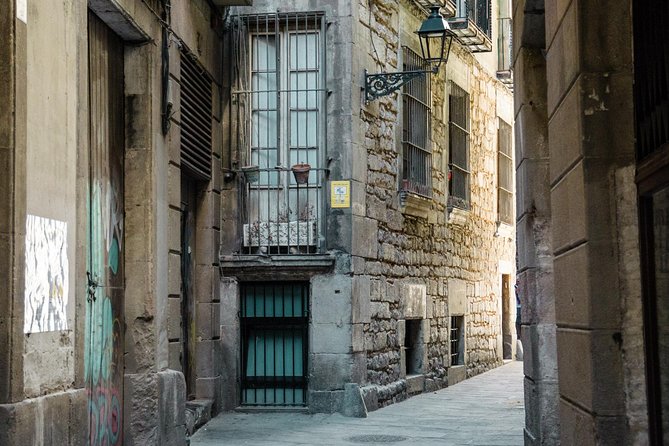
Then you head into MUHBA – El Call, with 30 minutes to explore. This is where Barcelona’s Jewish past becomes visible at street level. The stop description is clear: winding alleys that reveal centuries of Jewish life and tragedy.
What I like about focusing here is that it’s not just about major monuments. You’re learning how people lived in a neighborhood: where movement likely happened, how lanes funneled daily routines, and how urban design can shape community life.
In feedback about the guides, a common theme is careful attention to details you’d never notice on your own. Some guides also use maps and visual aids, which can really help if you’re the type who wants the “why” behind the architecture rather than just dates.
One practical consideration: the El Call area is walkable, but it’s still a historic neighborhood with narrow paths. Wear comfortable shoes you trust on uneven pavement.
You can also read our reviews of more guided tours in Barcelona


Placa del Rei: where Jewish leaders met kings
The final major stop is Placa del Rei, with another 30 minutes. This square is presented as a place where Jewish leaders served kings, and where “history changed forever.”
That framing is important. By the time you reach this stop, you’ve already seen a religious landmark and the lived-in alleys. Placa del Rei adds the political layer: the idea that Jewish community leadership wasn’t just local neighborhood activity. It intersected with royal power and the bigger story of who held influence in medieval Catalonia.
If you’re a history fan, this stop can feel like the missing chapter. If you’re not, it still works because the guide’s job is to turn abstract political history into something you can picture in the space you’re standing in.
What makes the guide matter in this specific tour
Because you’re walking through a dense, visually busy part of Barcelona, the guide’s role isn’t optional. It’s the whole point.
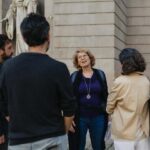
In the guide examples associated with this tour, names like Ella, Dina, Lilac, Leilah, Lilach, Eyal, and Alan come up in a way that signals something: these guides tend to be confident with architecture, local political context, and the way religion and society overlap in the Middle Ages.
A useful expectation to set: you’re likely to get more than a “here’s a building” speech. Many guides are described as:
- answering lots of questions without batting an eye
- bringing personal neighborhood perspective (one guide is noted as having lived in the area for 40+ years)
- using storytelling tools like maps and visual aids
That’s great value for you, because it turns a 2-hour walk into a memory you can explain later.
Price and value: what you’re paying for (and what you’re not)
The price is $96.79 per person for a tour lasting around 2 hours. That’s not bargain-basement tourism. But here’s why it can still feel fair: you’re paying for a professional local guide plus a structured route through multiple key points that are easy to miss or misunderstand without context.
Also, the tour includes:
- a professional local guide
- a 2-hour walking tour of Jewish monuments
What’s not included:
- hotel pickup and drop-off
- food and drinks
- entrance fees (and you should plan for ticket-related costs at sites)
- the €5 per person onsite donation request at the synagogue area
So, for best value, plan your logistics around being able to walk and budget a small extra onsite amount. If you go in thinking entrance tickets are included, you’ll feel surprised later. If you treat this as a guided interpretation walk where you may pay small onsite costs, it reads as a smart use of time.
Group discounts are listed too, which can make it more attractive if you’re traveling with others.
Logistics that actually affect your experience
A few practical points that change how enjoyable this is:
- It’s offered in English.
- It uses a mobile ticket, which helps if you’re juggling museums and transit apps.
- The tour is private in the sense that only your group participates. You won’t be stuck with a mixed-size crowd that breaks the pace.
- Most travelers can participate, but it’s still a walking tour. If you don’t like uneven cobblestones or you need long rest breaks, plan accordingly.
And yes, this part of Barcelona can swing between sunny and rainy fast. In feedback about the guides, there’s mention of guides keeping the stories flowing even during heavy downpours. That’s a good sign: the tour isn’t just dependent on perfect weather.
Who should book this Jewish Walking Tour Barcelona?
This is a strong fit if you:
- want a guided way to understand the Jewish Quarter’s meaning, not just take photos
- enjoy history that ties religion, politics, and daily life together
- like walking tours that help you “read” a neighborhood
It’s also a good choice if you’re short on time. Two hours can feel tight, but here it’s long enough to connect the public square, the synagogue site, the El Call lanes, and the final political square.
If you’re the type who needs lots of museum time indoors, this may not be your best match. This tour is about streets, interpretation, and guided context.
Should you book it?
If you want the Jewish Quarter explained clearly and connected to real places, I think this booking makes sense. The route hits high-impact points in about 2 hours, and the quality signal is strong in the guide names people associate with the tour, with many descriptions emphasizing strong storytelling, architecture attention, and the ability to answer questions.
Book it if:
- you value a guided walk through El Call and key Jewish-related sites
- you’re comfortable paying small onsite costs like the €5 donation and handling non-included entrance fees
- you want your history to feel like it belongs to the streets, not a lecture hall
Skip it only if:
- you dislike walking
- you want everything fully ticketed and paid in advance
- you’re looking for a food-focused tour (there’s no food included)
Overall, it’s a practical way to get your bearings in the Gothic side of Barcelona while learning a story that’s still built into the city.
FAQ
How long is the Jewish Walking Tour Barcelona?
The tour lasts about 2 hours.
What does the tour cost?
It costs $96.79 per person.
Where do we meet for the tour?
You meet at Conesa Entrepans, Carrer de la Llibreteria, 1, Ciutat Vella, 08002 Barcelona, Spain.
What language is the tour offered in?
The tour is offered in English.
What’s included in the price?
The price includes a professional local guide and a 2-hour walking tour of Jewish monuments.
Is hotel pickup and drop-off included?
No, hotel pickup and drop-off are not included.
Are entrance fees included?
No. Admission tickets/entrance fees are not included, and there’s a requested €5 per person donation onsite at the synagogue.
What is the cancellation window?
You can cancel for a full refund up to 24 hours before the experience starts.